-
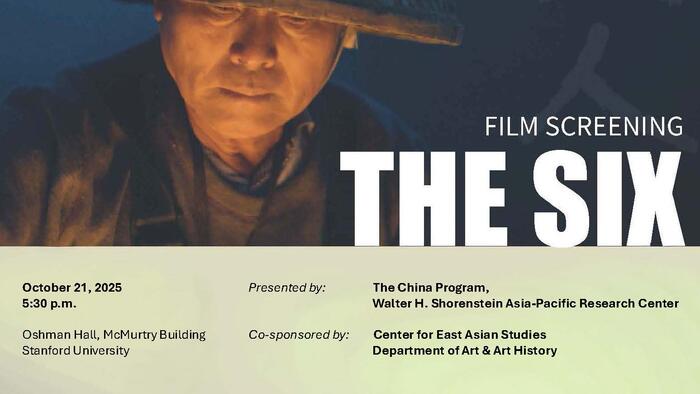
Flyer for the seminar "Meiji Restoration," part of a series reexaminning issues in modern Japanese politics and diplomacy, with a portrait of speaker Shinichi Kitaoka


This lecture is the first installment in the Japan Program's spring 2025 seminar series, Reexaminations of Major Issues in Modern Japanese Politics and Diplomacy.

Session 1: Meiji Restoration 


Meiji Restoration, or revolution, was not only the establishment of a centralized government but also a democratic revolution in terms of Japanese people's wider participation across classes and regions.

Join us for our 2025 spring quarter seminar series featuring Shorenstein APARC Visiting Scholar and Japan Program Fellow Dr. Shinichi Kitaoka, Emeritus professor at the University of Tokyo and a distinguished scholar in modern Japanese politics, as he presents new interpretations of six major issues in modern Japanese politics based on recent studies in Japan and his own experience as the Ambassador to the United Nations and the President of Japan International Cooperation Agency.

This seminar series re-examines several important and well-known issues in modern Japanese politics and diplomacy from the late 19th century to the 21st century based on the lecturer’s recent research and experience within the government. Topics include Meiji Restoration as a democratic revolution; the resilience of Taisho Democracy; the military as a bureaucracy; surrender and the American occupation; the Yoshida Doctrine and the regime of 1955; the development of ODA policy; and the recent development of security policy in the 21st century.

Catered dinner will be served at seminar sessions.

Speaker:

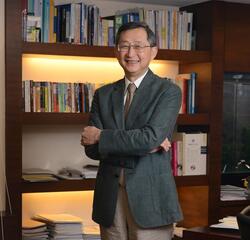
Headshot photo of Shinichi Kitaoka

Shinichi Kitaoka is the former President of the Japan International Cooperation Agency (JICA: 2015-2022) and Emeritus Professor, University of Tokyo. Previous posts include President of the International University of Japan (2012-2015), professor at University of Tokyo (1997-2012), Professor of National Graduate Institute for Policy Studies (GRIPS) (2012-), Professor of Graduate Schools for Law and Politics, the University of Tokyo (1997-2004, 2006-2012), Ambassador Extraordinary and Plenipotentiary, Deputy Permanent Representative of Japan to the United Nations (2004-2006), and Professor of College of Law and Politics, Rikkyo University (1985-1997).

Dr. Kitaoka’s specialty is modern Japanese politics and diplomacy. He obtained his BA (1971) and PhD (1976) from the University of Tokyo. He is also Emeritus Professor at Rikkyo University. He received many awards including the Medal with Purple Ribbon for his academic achievements in 2011.

1
Visiting Scholar, Japan Program Fellow, 2025
kitaoka_photo.jpg Ph.D.

Professor Shinichi Kitaoka joined the Walter H. Shorenstein Asia-Pacific Research Center (APARC) as Visiting Scholar, Japan Program Fellow for the spring quarter of 2025. He serves as Special Advisor to the President (former President) of the Japan International Cooperation Agency (JICA), as well as Emeritus Professor of the University of Tokyo and Rikkyo University. Previously, he was President of JICA. Dr. Kitaoka’s career also includes President of the International University of Japan (2012-2015), Professor of National Graduate Institute for Policy Studies (GRIPS) (2012-), Professor of Graduate Schools for Law and Politics, the University of Tokyo (1997-2004, 2006-2012), Ambassador Extraordinary and Plenipotentiary, Deputy Permanent Representative of Japan to the United Nations (2004-2006), and Professor of College of Law and Politics, Rikkyo University (1985-1997).

Dr. Kitaoka’s specialty is modern Japanese politics and diplomacy. He obtained his B.A. (1971) and his Ph.D. (1976) both from the University of Tokyo.

Date Label
Shinichi Kitaoka, Visiting Scholar at APARC and Japan Program Fellow, 2025
Date Label
Authors
Michael Breger
News Type
News
Date
Paragraphs

Three years after Russia’s full-scale invasion of Ukraine and the joint declaration of a "friendship without limits" by Vladimir Putin and Xi Jinping, the two leaders reaffirmed their partnership during a phone call, pledging continued coordination on foreign policy, security, and trade. Meanwhile, President Donald Trump’s controversial Oval Office meeting with Ukrainian President Volodymyr Zelensky and his administration's vitriolic foreign policy rhetoric have raised concerns that Washington may no longer be the reliable partner it once was. Moreover, amid ongoing U.S.-imposed tariffs, India is bracing for the fallout from Trump’s trade war, despite Prime Minister Narendra Modi’s February visit to the White House, which did not yield the concessions and Trump support New Delhi had hoped for.

The 2025 Oksenberg Symposium, titled China’s Strategic Relationships, brought together experts to discuss these evolving strategic relationships between China, the United States, Russia, and India, and to consider their perspectives and strategic adjustments in response to shifting internal and external political, economic, and social dynamics. The discussion, moderated by APARC’s China Program Director Jean Oi, featured panelists Da Wei of Tsinghua University, Alex Gabuev of the Carnegie Endowment for International Peace, Sumit Ganguly of the Huntington Program on Strengthening U.S.-India Relations at the Hoover Institution, and FSI Director Michael McFaul.

This convening followed Chatham House rules to encourage candor, so the following summary does not attribute comments to individual panelists.

A Partnership Without Limits

The panelists first focused on the increasingly complex relationships between Russia, China, and the United States. On the one hand, a growing China-Russia alignment across military, economic, and political domains has been well documented. On the other hand, Russia’s increasing dependence on China — especially after the war in Ukraine — has raised questions about the asymmetry of their partnership.

Even so, the relationship between the two nations remains strong, partly due to their shared distrust of the West. Although China has been cautious about fully endorsing Russia’s invasion of Ukraine, it has refrained from condemning the war, understanding the risks of destabilizing Russia or fostering a Western-aligned regime.

The View from New Delhi

India’s relationships with the United States and China are marked by a delicate balancing act. The U.S.-India partnership has strengthened over the years, driven by shared concerns about China’s growing assertiveness. Still, despite bipartisan support for this relationship, India’s historical experiences, particularly during the Cold War, have left a lingering distrust toward U.S. intentions. That wariness is now increasing under the uncertainties of the Trump administration.

India's relationship with China is complicated by military and economic disparities and by China’s strategic partnerships in South Asia, particularly with Pakistan. India's policy remains cautious, aiming to maintain a non-aligned stance while strengthening defense and trade ties with the United States and managing tensions with China, especially over border disputes.

Beijing’s Patience

U.S.-China relations took center stage at this year’s symposium. China’s rise as a global power has posed a complex challenge for U.S. foreign policy. Under the first Trump administration, China was portrayed as a revisionist power with expansionist ambitions. Trump’s rhetoric framed China as a strategic adversary, drawing comparisons to the Soviet Union under Stalin. This characterization contributed to the perception of a new Cold War and an accelerated decoupling of the two economies. In the second administration, tariffs and a looming trade war define the relationship.

From China’s perspective, the past decade has seen an overemphasis on its relationship with the United States., which at times strained its ties with Russia and India. China’s growing partnership with Russia, motivated by shared concerns over Western policies, has been key in countering perceived threats, particularly NATO’s expansion. However, China has remained cautious about fully endorsing Russia’s actions, such as the invasion of Ukraine, while acknowledging the risks of a collapsing Russian regime.

China’s relations with India have been challenged by border issues, as well as India’s shift away from non-alignment and its growing ties with the United States. These changes have complicated China’s strategic calculations in South Asia, though recent stabilization in Sino-Indian relations shows potential for improvement.

Challenges for Global Stability

The panelists noted that the increasing competition between the four countries is reshaping the international order, creating a more multipolar world where countries are single-handedly pursuing their national interests. This fragmentation of global power poses challenges for international cooperation but also provides China with opportunities to pursue more flexible diplomatic strategies, potentially easing tensions with Russia and India.

The U.S. response to these changes, particularly under Trump, was heavily scrutinized. In both Trump's first and second terms, the administration’s foreign policy marked a radical departure from past practices, blending radical isolationism, unilateralism, and realism. Panelists noted that the erosion of democratic ideals in U.S. foreign policy contrasts with its role in the Cold War era as a champion of democracy and human rights, particularly in opposition to Soviet authoritarianism. This shift has been especially evident in its approach to Taiwan, where there has been limited emphasis on supporting its democratic values amid growing pressure from China.

This new isolationist stance, driven largely by domestic concerns and a belief that the United States has been exploited in global trade, has led to a strategic pivot away from multilateralism. During Trump’s first term, the administration withdrew from key international agreements such as the Paris Climate Accords, the Iran nuclear deal, and the World Health Organization, favoring "America First" policies over collective global action. The continued shift toward isolationism and unilateralism marks a radical departure from previous administrations' commitment to liberal internationalism.

A Rough Road Ahead

Panelists expressed concern that this dramatic shift could leave Washington isolated, undermining its ability to address global challenges like climate change, international security, and the rise of authoritarian regimes. The erosion of key alliances could also diminish U.S. influence, making it harder to counter the growing power of China and Russia.

One panelist observed that while Trump initially framed China as a strategic adversary, his second term saw more conciliatory rhetoric, though his policies — especially the trade war — could ultimately harm U.S. interests. This approach could erode U.S. global influence by weakening international alliances and multilateral institutions that have long underpinned U.S. power. The panelists agreed that Trump’s foreign policy would fundamentally reshape U.S. relationships with key global players.

The symposium underscored the complexity of balancing strategic interests in a rapidly changing world, where traditional alliances are being tested and new dynamics continually emerge. The challenge for China, the United States., Russia, and India is to navigate these relationships in ways that secure their national interests while contributing to broader global stability.

Read More

Pita Limjaroenrat
News

Inside Thailand’s Political Struggle for Democracy: Insights from Pita Limjaroenrat

At a discussion hosted by APARC’s Southeast Asia Program, Thai politician and democracy advocate Pita Limjaroenrat assessed the challenges facing Thailand and provided a hopeful vision for its future, one that relies on perseverance, strategic electoral victories, and the pursuit of a more just and equitable political system.
Inside Thailand’s Political Struggle for Democracy: Insights from Pita Limjaroenrat
Oriana Skylar Mastro on World Class podcast
Commentary

A New Framework for How to Compete with China

Drawing from her book "Upstart," Oriana Skylar Mastro joins Michael McFaul on World Class to discuss what the United States is getting wrong about its strategy toward China, and what America should do differently to retain its competitive advantage.
A New Framework for How to Compete with China
Anti-Yoon Suk Yeol protesters participate in a rally against impeached President Yoon Suk Yeol in Seoul, South Korea.
Q&As

Interview: Gi-Wook Shin on South Korea's Political and Institutional Crisis

The martial law episode — and all that followed — “reflects a broader global pattern of democratic erosion but also showcases Korea’s unique strengths," Stanford sociologist Gi-Wook Shin says in an interview with The Diplomat magazine.
Interview: Gi-Wook Shin on South Korea's Political and Institutional Crisis
Hero Image
Oksenberg Symposium panelists (L to R) Jean C Oi, Alex Gabuev, Sumit Ganguly, Da Wei, Michael McFaul
Oksenberg Symposium panelists Jean C Oi, Alex Gabuev, Sumit Ganguly, Da Wei, and Michael McFaul. [Photo Credit: Michael Breger]
All News button
1
Subtitle

APARC's 2025 Oksenberg Symposium explored how shifting political, economic, and social conditions in China, Russia, India, and the United States are reshaping their strategies and relationships. The discussion highlighted key issues such as military and economic disparities, the shifting balance of power, and the implications of these changes for global stability, especially in the Indo-Pacific region.

Date Label
-
Flyer for the seminar "A Thousand Years of Corruption" with portrait of speaker Marco Garrido.

The scholarly and popular commonsense about corruption in the Philippines is that the country has always been corrupt. Seventy-eight years of corruption as an independent state (1946-2024) may as well have been a thousand. Lay and scholarly accounts explain this continuity with respect to traditional values and premature democratization. In both accounts, corruption is all but genetic to Philippine culture or politics. To be sure, continuity is self-evident if we are looking only at corruption scandals—but scandals have been accompanied by anticorruption movements, broadly speaking. The two have gone hand-in-hand historically, suggesting that we need to understand them together. Taking them together, that is, focusing on their dialectic, produces, as I will show, a history of change. Specifically, how Filipinos relate to corruption has changed. They have become less tolerant of it in general and learned to embrace an anticorruption model of politics. How scholars and policymakers conceive of corruption has changed. They have come to adopt a view of corruption as a generic social problem, effectively disembedding it from society. These developments have enabled a more intolerant approach such that, today, the greater danger lies in an anticorruption “fundamentalism” leading to the rejection of politics altogether. Viewed as a whole, the history of corruption/anticorruption has been a popular struggle over what politics should look like, and thus we might read their dialectic as driving the progress of political modernization from below.

20250307 SEAP Marco Garrido

Marco Garrido is the author of The Patchwork City: Class, Space, and Politics in Metro Manila, which received multiple awards, including for best book in political and urban sociology. He is working on a second book, tentatively titled Bad Words, on the imbrication of corruption, politics, and the politics of knowledge in postcolonial Philippines.

Marco Garrido, Associate Professor, Department of Sociology, University of Chicago
Seminars
Date Label
-
Event flyer: fireside chat with Pita Limjaroenrat. Image: speaker headshot.

We have reached in-person capacity for this event but you are welcome to join us online and submit questions for Pita.

Join Pita Limjaroenrat, former leader of Thailand’s dissolved Move Forward Party, for a discussion on contemporary Thai politics and society. In this fireside chat, Pita will address audience questions on topics such as Thailand’s political and economic landscape, inequality, and democratic movements, as well as the country’s evolving relationships with ASEAN and major global powers. The discussion will also touch on broader regional challenges and the state of democracy on a global scale.

Limjaroenrat, Pita SEAP 20250228

Pita Limjaroenrat formerly led the Move Forward Party (MFP) in Thailand’s May 2023 general elections, where his social democratic platform won the most votes and seats in the Parliament. Despite this mandate, his attempts to form a government were blocked by institutional mechanisms, and the Constitutional Court dissolved the MFP on August 7. Pita’s policy focus centers on addressing grassroots issues, welfare improvements, and human rights, while advocating for the demilitarization of politics and economic de-monopolization. Currently, he is a Visiting Senior Fellow at Harvard Kennedy School. He holds a joint MPA-MBA from Harvard Kennedy School and MIT Sloan and has been named on the TIME 100 Next List. Today, Pita continues to champion transparent and equitable governance on a global scale.

Lunch will be served.

Kiyoteru Tsutsui
Kiyoteru Tsutsui, Co-Director, Southeast Asia Program at Shorenstein APARC
Pita Limjaroenrat, Visiting Senior Fellow at Harvard Kennedy School
Seminars
Image
Event flyer: fireside chat with Pita Limjaroenrat. Image: speaker headshot.
Date Label
-
Danila Serra

We examine the impact of ethics and integrity training on police officers in Ghana through a randomized field experiment. The program, informed by theoretical work on the role of identity and motivation in organizations, aimed to re-activate intrinsic motivations to serve the public, and to create a new shared identity of "Agent of Change." Data generated by an endline survey conducted 20 months post training, show that the program positively affected officers' values and beliefs regarding on-the-job unethical behavior and improved their attitudes toward citizens. The training also lowered officers' propensity to behave unethically, as measured by an incentivized cheating game conducted at endline. District-level administrative data for a subsample of districts are consistent with a significant impact of the program on officers' field behavior in the short-run.

ABOUT THE SPEAKER

Danila Serra is Associate Professor of Economics at Texas A&M University. She received her PhD in Economics from the University of Oxford. She is an applied behavioral economist employing experimental methods to address policy-relevant questions in political economy, development, education, and gender economics. Her work has been funded by the Alfred P. Sloan Foundation, the Russell Sage Foundation, the Spencer Foundation, the World Bank, the IZA G²LM|LIC program, the Social Science Research Council (SSRC), the Abdul Latif Jameel Poverty Action Lab (JPAL) and the Arnold Foundation. In 2017, she was the inaugural recipient of the Vernon Smith Ascending Scholar Prize, given by the International Foundation for Research in Experimental Economics (IFREE) to an exceptional scholar using experiments in economics research.

Virtual to Public. Only those with an active Stanford ID with access to the William J. Perry Conference Room in Encina Hall may attend in person.

Hesham Sallam
Hesham Sallam

Virtual to Public. If prompted for a password, use: 123456
Only those with an active Stanford ID with access to the William J. Perry Conference Room in Encina Hall may attend in person.

Danila Serra
Seminars
Date Label
-
Soledad Artiz Prillaman seminar — Does Affirmative Action Worsen Quality? Theory and Evidence to the Contrary from Elections

Affirmative action improves the representation of women and minorities, but critics worry that it is at odds with meritocracy. We argue that quotas can improve quality under conditions of discrimination, as quota recipients are held to a higher standard despite facing structural inequalities that make meeting these standards difficult. The net effect of quotas on observable proxies for quality -- qualifications -- therefore depends on the degrees of selection and structural discrimination. We test our argument by examining the effects of electoral quotas on politicians' education and quality in India. Using two censuses covering more than 40 million residents and 13 states, we show that randomly and quasi-randomly assigned quota politicians have lower average education than non-quota politicians but the same or higher quality. We further provide evidence of both voter and structural discrimination. Our results show that quotas can both enhance the representativeness and quality of politicians.

ABOUT THE SPEAKER

Soledad Artiz Prillaman is an assistant professor of political science at Stanford University. Her research lies at the intersections of comparative political economy, development, and gender, with a focus in South Asia. She investigates the political consequences of development; the political behavior and representation of minorities, specifically women; inequalities in political engagement; and the translation of voter demands. She is the faculty director of the Inclusive Democracy and Development Lab and recently published a book with Cambridge University Press titled "The Patriarchal Political Order: The Making and Unraveling of the Gendered Participation Gap in India."

Virtual to Public. Only those with an active Stanford ID with access to the William J. Perry Conference Room in Encina Hall may attend in person.

Hesham Sallam
Hesham Sallam

Virtual to Public. If prompted for a password, use: 123456
Only those with an active Stanford ID with access to the William J. Perry Conference Room in Encina Hall may attend in person.

Soledad Artiz Prillaman Assistant Professor, Stanford University
Seminars
Date Label
-
Michael Albertus seminar

For millennia, land has been a symbol of wealth and privilege. But the true power of land ownership is even greater than we might think. Who owns the land determines whether a society will be equal or unequal, whether it will develop or decline, and whether it will safeguard or sacrifice its environment. Modern history has been defined by land reallocation on a massive scale. From the 1500s on, European colonial powers and new nation-states shifted indigenous lands into the hands of settlers. The 1900s brought new waves of land appropriation, from Soviet and Maoist collectivization to initiatives turning large estates over to family farmers. The shuffle continues today as governments vie for power and prosperity by choosing who should get land. Drawing on a career’s worth of original research and on-the-ground fieldwork, Land Power shows that choices about who owns the land have locked in poverty, sexism, racism, and climate crisis—and that what we do with the land today can change our collective fate.

ABOUT THE SPEAKER

Michael Albertus is a Professor of Political Science at the University of Chicago and the author of five books. His research examines democracy and dictatorship, inequality and redistribution, property rights, and civil conflict. His newest book, Land Power: Who Has It, Who Doesn't, and How That Determines the Fate of Societies, was published by Basic Books in January 2025. In addition to his books, Albertus is also the author of nearly 30 peer-reviewed journal articles, including at flagship journals like the American Journal of Political Science, Journal of Politics, and World Politics. The defining features of Albertus' work are his engagement with big questions and puzzles and the ability to join big data and cutting-edge research methods with original, deep on-the-ground fieldwork everywhere from government offices to archives and farm fields. He has conducted fieldwork throughout the Americas, southern Europe, South Africa, and elsewhere. His books and articles have won numerous awards and shifted conventional understandings of democracy, authoritarianism, and the consequences of how humans occupy and relate to the land.
 

Virtual to Public. Only those with an active Stanford ID with access to the Philippines Conference Room in Encina Hall may attend in person.

Hesham Sallam
Hesham Sallam

Virtual to Public. Only those with an active Stanford ID with access to the Philippines Conference Room in Encina Hall may attend in person.

Michael Albertus Professor of Political Science Professor of Political Science, University of Chicago University of Chicago
Seminars
Date Label
-
15Jan2025 "Developments in China and Japan-China-U.S. Relations" Webinar event graphic featuring headshot photos of Akio Takahara, Thomas Fingar, and Kiyoteru Tsutsui


How stable is politics in today's China? Many observers inside and outside the country were stunned by the sudden dismissal in December of Miao Hua, the head of the powerful political work department of the PLA and a member of the Central Military Commission. Takahara will discuss the state of Chinese politics and look into what we can expect of China's response to the 2nd Trump Administration.

This webinar event is co-hosted by the Walter H. Shorenstein Asia-Pacific Research Center Japan Program and the Consulate General of Japan in San Francisco


Speaker:

square headshot photo of Akio Takahara

Akio Takahara is Distinguished Visiting Professor at the Tokyo Woman’s Christian University and former Professor of Contemporary Chinese Politics at the Graduate School of Law and Politics at The University of Tokyo. From April to July 2024, he is also serving as Senior Fellow of the Mercator Institute for China Studies (MERICS). He received his DPhil in 1988 from Sussex University, and later spent several years as Visiting Scholar at the Consulate-General of Japan in Hong Kong, the Japanese Embassy in Beijing, Harvard University, Peking University, the Mercator Institute for China Studies, and the Australian National University. Before joining The University of Tokyo, he taught at J. F. Oberlin University and Rikkyo University. He served as President of the Japan Association for Asian Studies, and as Secretary General of the New Japan-China Friendship 21st Century Committee. Akio was Dean of the Graduate School of Public Policy at The University of Tokyo from 2018 to 2020, and Director of the Japan International Cooperation Agency (JICA) Ogata Sadako Research Institute for Peace and Development from 2020 to 2023. He currently serves as Senior Adjunct Fellow of the Japan Institute of International Affairs, Distinguished Research Fellow of the Japan Forum on International Relations, Senior Research Adviser of the Japan International Cooperation Agency (JICA) Ogata Sadako Research Institute for Peace and Development, and Trustee of the Sasakawa Peace Foundation. His publications in English include The Politics of Wage Policy in Post-Revolutionary China, (Macmillan, 1992), Japan-China Relations in the Modern Era, (co-authored, Routledge, 2017), and “How do smaller countries in the Indo-Pacific region proactively interact with China? An introduction”, Journal of Contemporary East Asia Studies, DOI: 10.1080/24761028.2024.2309439, 26 January 2024.


Discussant:

Thomas Fingar

Thomas Fingar is a Shorenstein APARC Fellow in the Freeman Spogli Institute for International Studies at Stanford University. He was the inaugural Oksenberg-Rohlen Distinguished Fellow from 2010 through 2015 and the Payne Distinguished Lecturer at Stanford in 2009.

From 2005 through 2008, he served as the first deputy director of national intelligence for analysis and, concurrently, as chairman of the National Intelligence Council. Fingar served previously as assistant secretary of the State Department’s Bureau of Intelligence and Research (2000-01 and 2004-05), principal deputy assistant secretary (2001-03), deputy assistant secretary for analysis (1994-2000), director of the Office of Analysis for East Asia and the Pacific (1989-94), and chief of the China Division (1986-89). Between 1975 and 1986 he held a number of positions at Stanford University, including senior research associate in the Center for International Security and Arms Control.

Moderator:

Square portrait photo of Kiyoteru Tsutsui

Kiyoteru Tsutsui is the Henri H. and Tomoye Takahashi Professor and Senior Fellow in Japanese Studies at Shorenstein APARC, the Director of the Japan Program and Deputy Director at APARC, a senior fellow of the Freeman Spogli Institute for International Studies, and Professor of Sociology, all at Stanford University. Tsutsui received his bachelor’s and master’s degrees from Kyoto University and earned an additional master’s degree and Ph.D. from Stanford’s sociology department in 2002. Tsutsui’s research interests lie in political/comparative sociology, social movements, globalization, human rights, and Japanese society. His most recent publication, Human Rights and the State: The Power of Ideas and the Realities of International Politics (Iwanami Shinsho, 2022), was awarded the 2022 Ishibashi Tanzan Award and the 44th Suntory Prize for Arts and Sciences.


Kiyoteru Tsutsui

Online via Zoom Webinar

Akio Takahara Distinguished and Visiting Professor Main Speaker Tokyo Woman's Christian University

Freeman Spogli Institute for International Studies
Stanford University
Encina Hall, C-327
Stanford, CA 94305-6055

(650) 723-9149 (650) 723-6530
0
Shorenstein APARC Fellow
Affiliated Scholar at the Stanford Center on China's Economy and Institutions
tom_fingar_vert.jpg PhD

Thomas Fingar is a Shorenstein APARC Fellow in the Freeman Spogli Institute for International Studies at Stanford University. He was the inaugural Oksenberg-Rohlen Distinguished Fellow from 2010 through 2015 and the Payne Distinguished Lecturer at Stanford in 2009.

From 2005 through 2008, he served as the first deputy director of national intelligence for analysis and, concurrently, as chairman of the National Intelligence Council. Fingar served previously as assistant secretary of the State Department’s Bureau of Intelligence and Research (2000-01 and 2004-05), principal deputy assistant secretary (2001-03), deputy assistant secretary for analysis (1994-2000), director of the Office of Analysis for East Asia and the Pacific (1989-94), and chief of the China Division (1986-89). Between 1975 and 1986 he held a number of positions at Stanford University, including senior research associate in the Center for International Security and Arms Control.

Fingar is a graduate of Cornell University (A.B. in Government and History, 1968), and Stanford University (M.A., 1969 and Ph.D., 1977 both in political science). His most recent books are From Mandate to Blueprint: Lessons from Intelligence Reform (Stanford University Press, 2021), Reducing Uncertainty: Intelligence Analysis and National Security (Stanford University Press, 2011), The New Great Game: China and South and Central Asia in the Era of Reform, editor (Stanford University Press, 2016), Uneasy Partnerships: China and Japan, the Koreas, and Russia in the Era of Reform (Stanford, 2017), and Fateful Decisions: Choices that will Shape China’s Future, co-edited with Jean Oi (Stanford, 2020). His most recent article is, "The Role of Intelligence in Countering Illicit Nuclear-Related Procurement,” in Matthew Bunn, Martin B. Malin, William C. Potter, and Leonard S Spector, eds., Preventing Black Market Trade in Nuclear Technology (Cambridge, 2018)."

Selected Multimedia

CV
Date Label
Discussant
Panel Discussions
Date Label
Authors
Noa Ronkin
News Type
News
Date
Paragraphs

The Walter H. Shorenstein Asia-Pacific Research Center (APARC), Stanford University’s hub for the interdisciplinary study of contemporary Asia, invites nominations for the 2025 Shorenstein Journalism Award. The award recognizes outstanding journalists and journalism organizations for their significant contributions to reporting on the complexities of the Asia-Pacific region. The 2025 award will honor an Asian news media outlet or a journalist whose work has primarily appeared in Asian news media. Award nomination entries are due by Saturday, February 15, 2025.

Sponsored by APARC, the award carries a cash prize of US $10,000. It alternates between recipients who have primarily contributed to Asian news media and those whose work has mainly appeared in Western news media. In the 2025 cycle, the award will recognize a recipient from the former category. The Award Selection Committee invites nominations from news editors, publishers, scholars, teachers, journalists, news media outlets, journalism associations, and entities focused on researching and interpreting the Asia-Pacific region. Self-nominations are not accepted.

The award defines the Asia-Pacific region as encompassing Northeast, Southeast, South, and Central Asia, as well as Australasia. Both individual journalists with a substantial body of work and journalism organizations are eligible for the award. Nominees’ work may be in print or broadcast journalism or in emerging forms of multimedia journalism. The Award Selection Committee, comprised of journalism and Asia experts, judges nomination entries and selects the honorees.

An annual tradition since 2002, the award honors the legacy of APARC benefactor, Mr. Walter H. Shorenstein, and his twin passions for promoting excellence in journalism and understanding of Asia. Throughout its history, the award has recognized world-class journalists who push the boundaries of reporting on Asia. Recent honorees include The New York Times' Chief China Correspondent Chris Buckley; India's long-form narrative journalism magazine The Caravan; Burmese journalist and human rights defender Swe Win; and Maria Ressa, CEO of the Philippine news platform Rappler and 2021 Nobel Peace Prize Laureate.

Award nominations are accepted electronically via our online entry form through Saturday, February 15, 2025, at 11:59 PM PST. For information about the nomination rules and to submit an entry please visit the award nomination entry page. APARC will announce the winner by April 2025 and present the award at a public ceremony at Stanford in autumn quarter 2025.

Please direct all inquiries to aparc-communications@stanford.edu.

Read More

Protesters demonstrate against the country's president as police stand guard on December 04, 2024 in Seoul, South Korea.
Commentary

Turmoil in South Korea After Brief Martial Law: Stanford’s Gi-Wook Shin Weighs In

As political chaos plays out in South Korea following President Yoon Suk Yeol's short-lived martial law attempt, Stanford sociologist Gi-Wook Shin, the director of APARC and its Korea Program, analyzes the fast-moving developments.
Turmoil in South Korea After Brief Martial Law: Stanford’s Gi-Wook Shin Weighs In
Donald Trump
News

Trump’s Second Act and the Stakes for Asia

APARC recently hosted two panels to consider what a second Trump presidency might mean for economic, security, and political dynamics across Asia and U.S. relations with Asian nations.
Trump’s Second Act and the Stakes for Asia
Hero Image
Stanford Quad and geometric hill shapes with APARC logo and text "Call for Nominations: 2025 Shoreenstein Journalism Award."
All News button
1
Subtitle

Sponsored by Stanford University’s Shorenstein Asia-Pacific Research Center, the annual Shoresntein Award promotes excellence in journalism on the Asia-Pacific region and carries a cash prize of US $10,000. The 2025 award will honor an Asian news media outlet or a journalist whose work has primarily appeared in Asian news media. Nomination entries are due by February 15, 2025.

Date Label
1
Visiting Scholar at APARC, 2025
ra_sungsup.jpg Ph.D.

Sungsup Ra joined the Walter H. Shorenstein Asia-Pacific Research Center (APARC) as visiting scholar for the 2025 calendar year. He is currently a Visiting Professor at the Korea Development Institute School of Public Policy and Management (KDI School) and also serves as an Advisor to the International Financing Facility for Education (IFFEd), an Advisory Board Member at the International Centre for Industrial Transformation (INCIT), and an Industry Fellow at the NTU Entrepreneurship Academy (NTUpreneur).

Before joining KDI School in April 2024, Sungsup was the Deputy Director General and Deputy Group Chief of the Sectors Group at the Asian Development Bank (ADB). In this role, he led ADB-wide strategies, knowledge innovation, and sovereign operations across multiple sectors including agriculture, education, energy, health, finance, transport, urban development, and water. He oversaw key ADB initiatives such as climate financing, energy transition, addressing the learning crisis, food security, the rollout of the new operating model, and the management of 29 trust funds.

With over 35 years of professional experience, including 23 years at ADB, Sungsup held leadership positions such as Chief Sector Officer for Sustainable Development and Climate Change, Director of the South Asia Human and Social Development Division, and Director of the Pacific Operations Division. He also chaired the Education Sector Group, driving strategic education initiatives across Asia and the Pacific.

Prior to ADB, Sungsup worked in both the public and private sectors, including roles at Samsung and the Korean National Pension. He has also taught at leading universities such as International Christian University in Tokyo, Korea University, and the University of Illinois at Urbana-Champaign. He holds a Doctorate in Economics from the University of Illinois at Urbana-Champaign. 

While at APARC, he conducted research on the future of skills development in Asia.

Date Label
Subscribe to Asia-Pacific