-

Co sponsored by the Center on Democracy, Development, and the Rule of Law

In Hanoi on November 2, 2010, a member of the Vietnam Communist Party (VCP) stood before the National Assembly (VNA) and on live television called for a vote of confidence in the prime minister—a sitting member of the Politburo. The speech immediately gained national attention, and the delegate’s face graced the front page of at least one prominent state-run news media outlet. Considering the docility of other communist legislatures, such as China’s, is the VNA unique in its influence? If so, how did it acquire such prominence?

Prof. Schuler will challenge existing theories on legislative institutionalization under authoritarian rule that emphasize the co-optation of opposition groups and the stabilization of internal power-sharing arrangements. He will argue instead that legislative institutionalization in this case was designed to professionalize the legislature to generate a more coherent legal code. In doing so, rather than providing more routinized avenues for participation among existing political forces, as existing theories suggest, the institutionalization of the VNA empowered a new, and sometimes unpredictable, set of actors. In his talk he will also pursue this insight comparatively in relation to China among other authoritarian polities.

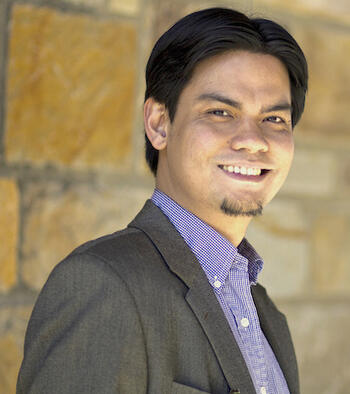
Paul Schuler will be an assistant professor in government and public policy at the University of Arizona starting this fall. His publications have appeared in the American Political Science Review, the Legislative Studies Quarterly, and the Journal of East Asian Studies among other places. His researches focuses on institutions, elite politics, and public opinion in authoritarian regimes, particularly Vietnam.  His 2014 PhD in political science is from the University of California, San Diego.


Philippines Conference Room

Encina Hall 3rd Floor Central

616 Serra Street,

Stanford, CA 94305

Paul Schuler 2014-2015 Shorenstein Postdoctoral Fellow in Contemporary Asia
Seminars
Authors
News Type
Commentary
Date
Paragraphs

The Walter H. Shorenstein Asia-Pacific Research Center honored Wall Street Journal reporter Jacob Schlesinger with the Shorenstein Journalism Award last Monday. Schlesinger received the award, which includes a $10,000 cash prize, for his work on Japan that spans nearly three decades.

Since 2002, the annual award has sought to recognize journalists who are outstanding in their field of reporting on the Asia-Pacific, and whose work has helped enhance Western understanding of the region. A jury selects the finalist, which alternates each year between an American and Asian journalist.

At an evening ceremony, Stanford professor Gi-Wook Shin presented Schlesinger with the award surrounded by supporters and friends including Michael Armacost and John Roos '77, (J.D. ‘80), two former U.S. ambassadors to Japan, who both came to know Schlesinger personally during their diplomatic posts.

Earlier in the day, Schlesinger delivered a keynote speech on Japan’s economy and the media. Stanford economist Takeo Hoshi and Shorenstein APARC associate director Daniel Sneider joined him on the panel, along with New York Times deputy executive editor Susan Chira.

Schlesinger was a visiting fellow at Shorenstein APARC at Stanford's Freeman Spogli Institute for International Studies. Under the advisory of then-Shorenstein APARC director Daniel Okimoto, he worked on a book manuscript at Stanford which became Shadow Shoguns: The Rise and Fall of Japan’s Postwar Political Machine.

“No foreign journalist has covered Japan longer, or understood its political economy more deeply, than Jacob M. Schlesinger…” Okimoto said in the award announcement.

Schlesinger is based at the Journal’s Tokyo bureau as Senior Asia Economics Correspondent and Central Banks Editors, Asia, and tweets with the handle @JMSchles.

He answered a few questions for Shorenstein APARC about Japan’s political and economic climate, as well as the changing face of media there.

Image

Schlesinger spoke on a panel with Stanford's Daniel Sneider and Takeo Hoshi, and The New York Times's Susan Chira, followed by a private evening reception.

You’ve covered Japan for the Wall Street Journal for nearly a decade on the ground, in the late 1980s and early 90s and again since 2009. What has changed, or remained the same?

When I first covered Japan in the late ‘80s and early ‘90s, there was huge interest in -- and also a fair amount of mistrust and hostility toward -- Japan. Americans feared that Japan’s economy was going to somehow “defeat” ours (though I don’t think that notion ever really made sense), and constantly accused Japan of unfairly taking advantage of the global free trade system, exporting heavily to us while keeping its market closed to our goods.

After the bubble burst, and, more recently, Japan’s trade surplus disappeared, the anger toward Japan dissipated. But so, in some ways, did the interest. There are far fewer foreign correspondents today in Japan than there were when I was first there 25 years ago.

I think that the rise of Prime Minister of Japan Shinzo Abe, and Abenomics, has revived interest in Japan a bit, but in different ways. People want to know if Japan will rebound, in part as a counterweight to China, which has really surged in economic and political influence in the time since I was last in Japan. That perhaps may be one of the biggest changes -- the fact that so much is now seen through the prism of China. For a time China simply overshadowed Japan but now it has actually, in some ways, revived interest in it. 

What are the greatest challenges you’ve found in explaining the state of the Japanese economy and U.S.-Japan relations?

As I say, one challenge has been in getting people interested, and in explaining to them why it matters. China in particular has become such a big story that Americans sometimes lose sight of Japan's significance as well.

Another challenge is that Japan is a country where change, even big change, often happens in slow, subtle, steady steps. Japanese rhetoric tends to downplay the dramatic and to cast things in indirect terms, which can make it harder to describe statements and developments in ways that are accurate, and will seem interesting to readers.

Can you describe Abenomics and its current status?

Abenomics is Prime Minister Abe's program to try and end Japan's long slump, sometimes branded the “lost decades.” The most concrete and effective action to date has been a much more aggressive policy of monetary stimulus, following Abe's shake-up at the Bank of Japan (the nation’s central bank), where he imposed new leadership. That might be able to lift short-term growth. But Abe’s ambition to raise Japanese growth over the long-run – to a pace near that enjoyed by the United States and other advanced economies – requires extensive structural reforms. Abe has talked a lot about implementing such reforms, but has so far been rather timid in what he has proposed and pursued.

Abenomics also hit a deep pothole in 2014, when Abe decided to proceed with a plan to raise the sales tax, a policy aimed at reducing Japan’s very large outstanding government debt. The depressing impact of the tax basically offset the gains from the Bank of Japan’s stimulus, and Japan last year fell into recession.

It now appears that Japan is slowly pulling out of the recession, and, to ensure that his stimulus polices now work at full force, Abe has delayed plans for a second tax hike that had been scheduled for this year. That may set back long-held goals to reduce government debt, but it should help the chief Abenomics goal of exiting the long deflationary slump.

I'd say overall that Abenomics has a decent chance of lifting Japanese growth a bit higher than it would otherwise have been, but that a dramatic change in Japan’s fortunes would probably require a more dramatic change in policies, something Abe has promised but hasn’t really shown signs of seriously pursuing.

Recently, the United States invited Prime Minister Abe for a state visit (in addition to leaders of other Asian nations). What issues would likely top the agenda?

Both countries are hoping, overall, that the visit will deepen ties between the two governments at a time of great change and challenge in Asia. Whatever one might think of Prime Minister Abe and his agenda, this visit does offer a special opportunity to expand relations, simply because he has now been in office long enough to make multiple trips to Washington as prime minister -- a rare feat over the past quarter century of Japan's notorious carousel politics. The Japanese government is eager for Abe to be able to address a session of the U.S. Congress, which could carry great symbolic significance. He would be the first Japanese leader to do so in more than half a century, since Prime Minister Hayato Ikeda in the early 1960s. That's a pretty long gap, when you consider that Japan has, over that period, long been hailed as one of America's most important allies.

In terms of specific issues, the chief economic agenda item is the Trans-Pacific Partnership free trade pact. It's an ambitious project attempting to set the economic rules for the Pacific economies for the 21st century. And while 12 countries are included, the United States and Japan are by far the biggest, and both sides are hoping that a bilateral agreement by the time Abe meets President Obama could give the broader deal sufficient momentum to be concluded this year.

On the military front, the United States and Japan are updating the terms of their mutual defense pact and hope to do so in ways that will give Japan's military more latitude to participate in joint operations.

While not part of the official agenda, Americans will be eager to hear what Abe has to say about history issues as the world marks the 70th anniversary of the end of World War II.

Abe and his aides have repeatedly challenged some of the established views of Japan and its behavior during the war, including recently directly asking the American publisher McGraw-Hill to change its account of so-called “comfort women,” women forced into prostitution under Japan's war-time military. Such statements and actions have irritated many Americans and stoked anger in China and South Korea. American officials in particular are concerned about deteriorating relations between Japan and South Korea -- the two principle U.S. military allies in Asia -- and are eager for Abe to try and do more to bridge the gap, particularly on history issues. 

Newspapers have played a large role in Japanese society; the nation boasts one of the highest readerships in the world. Where do you see the future of news media in Japan?

Japan, as you say, has one of the most -- perhaps the most -- literate and well-informed populations in the world. News readership and news viewership is extremely high. People are extremely knowledgeable about current events.

Oddly, for a country that is also very tech literate, digital media has been relatively slow to catch on in Japan. Most people still get their main news from print papers, or magazines, and there has not been -- at least not yet -- a real surge in new, credible online-only, or online-originated media sources to challenge the mainstream media, the way platforms like Politico, the Huffington Post, or BuzzFeed have popped up in the United States.

The Japanese media has also suffered from some serious setbacks to its credibility in recent years. There was tremendous soul-searching after the 2011 Fukushima nuclear disaster about whether the Japanese press had done enough, either before the accident, or in the immediate aftermath, to cover aggressively the flaws and mistakes in the country's nuclear energy policies.

More recently, over the past year there have been damaging battles, in varying degrees, over the accuracy, and independence, of three of the country's largest, and most-respected news organizations, the Asahi Shimbun newspaper, the Yomiuri Shimbun newspaper, and the NHK national broadcaster. I worry that the result, fair or not, could prompt further erosion in the credibility of the Japanese media. That's potentially a big problem at a time of great change, great political and policy debate -- and when the political opposition is so weak that the media arguably has a heightened role at this moment as a check on power.

You were a visiting scholar at Shorenstein APARC. How did your time at the Center impact your work?

The Center was a tremendous opportunity for me in so many ways. It is rare for a journalist to be able to break out of the steady deadline pressures of a newsroom, and soak up an academic atmosphere. Being at Shorenstein APARC was a fantastic way to do that. It offered the best elements of an ivory tower, without feeling isolated. It gave me chances to interact with policymakers there as visiting fellows, as well as some of the top experts in the field who were based there.

I have to give particular thanks to Dan Okimoto, who ran Shorenstein APARC at the time and Jim Raphael, who was director of research. When I was at Shorenstein APARC, I was researching and writing a book on Japanese politics. The feedback from Dan, Jim and others made it a much better work. But beyond the book, the depth and perspective that I gained from my immersion at Shorenstein APARC has helped shape my writing since then.

Hero Image
award shot
Stanford professor Gi-Wook Shin (Right) presented the 2014 Shorenstein Journalism Award to Wall Street Journal reporter Jacob Schlesinger (Left). | Rod Searcey
All News button
1
Date Label
Paragraphs

"North Korean Human Rights: A Long Journey with Little Progress" examines human rights in the Democratic People's Republic of Korea (DPRK, or North Korea) and the approaches that the European Union has taken to address the situation. In this paper, Mike Cowin provides perspective on EU-DPRK engagement; the two sides officially established diplomatic relations in May 2001. The EU and its members have continued to raise the human rights issue during bilateral meetings. But, North Korea says it will continue to refuse dialogue if the EU continues to sponsor resolutions against North Korea at the UN Human Rights Commission/Council. The EU has rejected this as a precondition. "The EU has had no incentive or justifiable reason to take the initiative to break out of this chicken-and-egg dilemma...The DPRK has also maintained its position. The gap between the two sides has therefore widened," he writes. Cowin suggests the EU could take additional steps to restart EU-DPRK engagement.

Mike Cowin is the 2014-15 Pantech Fellow in the Korea Program at the Walter H. Shorenstein Asia-Pacific Research Center. Before coming to Stanford, he served as the deputy head of mission at the British Embassy in Pyongyang, North Korea. He has also served in the British embassies in Seoul from 2003 to 2007, and in Tokyo from 1992 to 1997.

All Publications button
1
Publication Type
Policy Briefs
Publication Date
Journal Publisher
Shorenstein Asia-Pacific Research Center
Authors
Mike Cowin
News Type
Q&As
Date
Paragraphs

The attack on Mark Lippert, the American ambassador to South Korea, made headlines worldwide on Thursday. Since his arrival in Seoul last October, Lippert received high marks from the Korean people and the media for his accessibility to the public there. Lippert, a Stanford graduate, is a very close friend of President Obama, who has called him “brother,” and attended his ambassadorial swearing-in ceremony.

The Shorenstein Asia-Pacific Research Center asked David Straub to discuss the incident and its significance. The associate director of the Korea Program at Stanford, Straub served as a career diplomat at the U.S. embassy in Seoul from 1999 to 2002 and is the author of the forthcoming book about that period called Anti-Americanism in Democratizating South Korea.

What actually happened?

A South Korean extreme left-wing activist, Kim Ki-jong, slashed Ambassador Lippert with a kitchen knife Thursday morning at a public event in Seoul. Koreans at the event immediately wrestled the assailant to the floor, but not before he had inflicted several wounds on the ambassador: a long, deep gash on his cheek and cuts to his wrist and fingers. The ambassador was taken straightway to hospital, where surgeons repaired the damage in a three-hour operation. The prognosis is that he will regain the full use of his fingers in about six months, and that the scar on his face will be barely noticeable in one or two years. His doctors plan to remove the eighty stitches on his cheek on Monday, and, if all is well, release him from the hospital then. But it was a close call. Had the face wound extended only one inch farther down, it would have severed his carotid artery.

How is Ambassador Lippert doing?

He told his doctors on Friday that the facial wound was not bothering him particularly, but he did have some pain in his wrist and fingers. Doctors say he has some nerve damage there but the pain should ease soon. Ambassador Lippert’s response has been laudable. Consistent with the outstanding way he has comported himself in Korea since his arrival, he promptly tweeted on Thursday that he was “Doing well & in great spirits!” I am also aware that he was even responding to email wishes from some Stanford friends on Thursday.

Was Kim acting alone? How was it possible for him to perpetrate this attack?

Kim was the only person who attacked Ambassador Lippert, and he has stated that he acted alone.  Kim was a member of the organization that hosted Ambassador Lippert, but had not been invited to the function. The incident is still being investigated but Korean press reports say that the U.S. embassy declined South Korean police protection some time ago. Korea is considered a relatively safe country for American diplomats. This will all be sorted out in coming days and weeks, and U.S. and South Korean authorities will determine if other security arrangements are needed for Ambassador Lippert. In any event, it does not appear that this was an egregious security or intelligence failure on anyone’s part. Ambassadors are public figures and it’s not possible to provide them with perfect protection.

What was the assailant’s motivation?

Kim said that he wanted to emphasize that the United States is responsible for preventing improved inter-Korean relations because it does such things as participate in the ongoing combined military exercises with South Korean forces. North Korea cites the annual exercises as a pretext for not talking with the South, claiming each year that they are a prelude to an invasion. But Kim is a sad sack figure even within South Korea’s anti-American far left, which is a very small but vocal minority. Kim has been arrested many times in the past for outrageous and violent behavior, such as throwing pieces of concrete at the Japanese ambassador in 2010. He heads his own little NGO, but the Korean left has mostly avoided him because of his bizarre behavior. He even set himself on fire in 2007 near the Blue House to protest an alleged attack on an associate. Although I have never met him, it is my impression that Kim is clearly mentally and emotionally unstable.

How have the Korean government and people responded?

From the people who wrestled the assailant to the ground, to the surgeons and the thousands of people who are wishing Ambassador Lippert well, South Koreans have responded with an outpouring of support. Ambassador Lippert has already conveyed his deep gratitude for that on Twitter. President Park, who is currently on an official visit to the Middle East, telephoned Ambassador Lippert on Thursday; so did Foreign Minister Yun Byung-se. President Obama also called the ambassador to wish him a speedy recovery. Unfortunately, North Korea’s reaction has been very different: its official media applauded the attack as “deserved punishment” for “a warmongering United States.”

There are press reports that South Koreans are worried that this attack could hurt U.S.-Korean relations.

There is indeed considerable concern being expressed in South Korea at the moment that the incident could hurt bilateral relations, but there is no reason at all to believe that will be the case. Top U.S. officials have already stated that the incident will only strengthen U.S.-Korean relations. I recall the reaction in Seoul to the mass shooting by Seung-hui Cho at Virginia Tech in 2007. Cho had grown up in the United States but remained a Korean citizen. Many South Koreans were very fearful that the U.S. government would punish South Koreans, such as by not issuing visas, and that Americans would attack South Koreans on the streets in the United States. Of course, nothing like that happened. Americans understood the tragedy for what it was: not a “Korean” but a fellow human being with severe mental illness and access to guns.

You say that Kim appears to have a mental disability. But there are press reports that he lectured for the South Korean unification ministry’s education institute as well as at a major university in Seoul. How could such a person get those positions?

I am curious and concerned about those reports. For me, the bigger question about that is not Kim’s particular policy views but how someone with such obvious behavioral and apparently mental issues could receive such positions. But he held those jobs several years ago, so perhaps his behavior has become worse in the meantime.

I understand that Kim has already been charged with attempted murder and that Korean authorities are considering whether to charge him under the National Security Law owing to frequent travel to North Korea and possible other links with the North Korean government.

Unless Korean authorities find evidence that Kim was working for North Korea, which I doubt was the case (but which should of course be investigated due to his numerous trips to the country), it would be unfortunate for U.S.-South Korean relations to charge him under the controversial National Security Law. The U.S. government has criticized that law for decades for the McCarthyite way South Korean governments have sometimes implemented it to suppress alleged “pro-North Korean” thinking. Some South Korean leaders are calling the incident “pro-North Korean terrorism” and the work of “pro-North Korean forces.” That seems to me to be unwisely elevating the violent behavior of one deranged person and ascribing to it a significance it does not deserve.

Ambassador Lippert’s Twitter handle is @mwlippert.

Hero Image
obama lippert
In 2009, President Barack Obama confers with Mark Lippert, the then-National Security Council chief of staff. Since Oct. 2014, Lippert has served as the U.S. ambassador to South Korea. | Flickr/White House - Pete Souza
All News button
1
News Type
News
Date
Paragraphs

The human rights situation in North Korea has gained considerable attention lately, due in part to an official report released by the United Nations last year. The landmark report condemned North Korea for systematic and widespread human rights violations.

Now for three weeks in March, the UN human rights council meets in Geneva for its regular session. North Korea’s human rights situation is a top agenda item, marked by a rare appearance by North Korean Foreign Minister Ri Su Young. In Dec. 2014, the UN General Assembly urged the Security Council to take up the situation of North Korea, including a possible referral of those responsible for prosecution in the International Criminal Court.

Looking beyond UN – U.S. – North Korea engagement, the European Union and its members have long-raised similar concerns. In a new policy brief “North Korean Human Rights: A Long Journey with Little Progress,” Mike Cowin details the human rights situation and institutions involved from a British perspective.

“The DPRK will need to make considerable efforts if it is to undermine more than a handful of the hundreds of testimonies of abuse that have been collected and brought to the world’s attention,” writes Cowin, a former deputy chief of mission at the British Embassy in Pyongyang.

Cowin is the Pantech Fellow in the Korea Program at the Walter H. Shorenstein Asia-Pacific Research Center. Before coming to Stanford, he also served in the embassies in Seoul from 2003 to 2007, and in Tokyo from 1992 to 1997.

The EU and North Korea have held seemingly incompatible positions for the past 11 years, and the March council meetings are unlikely to change that impasse. However, Cowin suggests that the EU should seek ways to have more impact.

“Perhaps the EU, which has often led the world on human rights, could find some way to talk with the DPRK, establishing a mutually acceptable way to restart engagement,” he writes.

Cowin says restarting engagement may take the form of quiet, long-term confidence building.

The Korea Program has published additional works focused on human rights in North Korea, including a paper that looks at living with disabilities in North Korea by Katharina Zellweger and an op-ed by Gi-Wook Shin calling for international consensus on the North Korea problem. Engaging North Korea is also a research focus of the Korea Program, which last year produced a policy paper on North-South Korean relations and the prospect for unification.

Hero Image
un hrc 28th session
Flickr/United Nations
All News button
1
-

This workshop will focus on the large and growing burden of chronic non-communicable disease (NCD) in China and the importance of strengthening primary healthcare in managing patients with chronic disease. With experts from China’s national and local Centers for Disease Control and Prevention as well as prominent academic researchers, we will discuss China’s NCD burden and the experiences of localities in implementing China’s national program on NCD control, as well as other related health economic research. Thanks to a generous gift from ACON Biotech, Stanford’s Asia Health Policy Program is hosting this workshop as part of a series of events in Beijing and at Stanford on innovations in primary care.

Agenda:

8am Continental breakfast, registration

8:30 Welcome, Karen Eggleston and Randall Stafford, Stanford University

8:35  “NCDs, Health Reform, and the Role of Primary Health Care”

         Professor Meng Qingyue, Peking University

China CDC views on the NCD burden and pilot sites for comprehensive control of chronic disease (国家慢性病综合防控示范区)

         8:50 A View from the National CDC

         Dong Jianqun, National Center for Chronic and Noncommunicable Disease Control and Prevention, Chinese Center for Disease Control and Prevention

         9:05 The Experience of Zhejiang Province

         Fang Le, Associate Chief Physician , Zhejiang Provincial Center for Disease Control and Prevention

         9:20 The Experience of Shandong Province: The Shandong-Ministry of Health Action for Salt and Hypertension (SMASH) Initiative

         Wang Yan, Shandong Provincial Center for Disease Control and Prevention

Research perspectives on NCDs, the elderly, and primary care

9:35 Evidence from the China Health and Retirement Longitudinal Study (CHARLS)

        Professor Lei Xiaoyan, Peking University

9:50 Additional research perspectives

10:05 – 11:00am Discussion

11:00 - 12:30pm  Buffet Lunch


The Stanford Center at Peking University

Map and direction:

http://scpku.fsi.stanford.edu/content/traveling-scpku-and-beijing


Shorenstein APARC
Stanford University
Encina Hall E301
Stanford, CA 94305-6055

(650) 723-9072 (650) 723-6530
0
Senior Fellow at the Freeman Spogli Institute for International Studies
Center Fellow at the Center for Health Policy and the Center for Primary Care and Outcomes Research
Faculty Research Fellow of the National Bureau of Economic Research
Faculty Affiliate at the Stanford Center on China's Economy and Institutions
karen-0320_cropprd.jpg PhD

Karen Eggleston is a Senior Fellow at the Freeman Spogli Institute for International Studies (FSI) at Stanford University and Director of the Stanford Asia Health Policy Program at the Shorenstein Asia-Pacific Research Center at FSI. She is also a Fellow with the Center for Innovation in Global Health at Stanford University School of Medicine, and a Faculty Research Fellow of the National Bureau of Economic Research (NBER). Her research focuses on government and market roles in the health sector and Asia health policy, especially in China, India, Japan, and Korea; healthcare productivity; and the economics of the demographic transition.

Eggleston earned her PhD in public policy from Harvard University and has MA degrees in economics and Asian studies from the University of Hawaii and a BA in Asian studies summa cum laude (valedictorian) from Dartmouth College. Eggleston studied in China for two years and was a Fulbright scholar in Korea. She served on the Strategic Technical Advisory Committee for the Asia Pacific Observatory on Health Systems and Policies and has been a consultant to the World Bank, the Asian Development Bank, and the WHO regarding health system reforms in the PRC.

Director of the Asia Health Policy Program, Shorenstein Asia-Pacific Research Center
Stanford Health Policy Associate
Faculty Fellow at the Stanford Center at Peking University, June and August of 2016
CV
Date Label
Karen Eggleston Stanford University
Randall Stafford Stanford University
Meng Qingyue Peking University
Dong Jianqun National Center for Chronic and Noncommunicable Disease Control and Prevention, Chinese Center for Disease Control and Prevention
Fang Le Associate Chief Physician Zhejiang Provincial Center for Disease Control and Prevention
Lei Xiaoyan Associate Professor Peking University
Wang Yan Shandong Department of Health
Workshops
Authors
News Type
Blogs
Date
Paragraphs

Lauren Wedekind is a Stanford undergraduate studying Human Biology and Democracy, Development, and the Rule of Law. Her research focuses on social medicine and the potential for telemedicine to mitigate health care coverage gaps. Lauren believes that human rights advocacy requires a two-way street of listening and communication within and across national and cultural borders—which she explores with Stanford CDDRL, UNA-USA, and WFUNA on projects involving the right to health. Wedekind received funding from CDDRL's Program on Human Rights to travel and participate in the WFUNA Human Rights Youth Training Conference in Geneva, Switzerland.


By age seventeen, Nam had been forced into marrying a stranger, bearing his child, and risking her life to be a refugee on a remote island.  In April 1975, the North Vietnamese Communist Party took over the Republic of South Vietnam, and violently threatened residents of Saigon, South Vietnam’s then-capital and Nam’s hometown.  Like thousands of other residents, Nam’s family desperately uprooted from their relatively comfortable living situation, only to cram like sardines into an over-capacity boat headed toward international waters, hoping to be rescued by the United Nations.  With their lives in very real danger, the to-be refugees who boarded that boat did so without any guarantee that they would safely cross the passage across the Pacific Ocean.  In fact, these “boat people” were held hostage, robbed, raped, and beaten on three separate occasions by pirates in the Sea of China.  After the attacks, they floated aimlessly on the ocean for days, and were finally rescued by a UNHCR vessel, which guided them to refugee camps in Indonesia.  One year later, Nam and her boat’s survivors—those who were not killed by violence or disease—reached the United States.  The survivors who finally reached peacekeeping nations accepting refugees had often endured poverty, abuse, and posttraumatic mental and physical health issues.

tumblr inline nge57nndyk1r1nrdn Wedekind with her cohort of training attendees in Geneva.
At first, upon hearing about the human rights violations that Nam and many other Southeast Asian refugees have endured, I channeled my disbelief only into outrage toward the perpetrators.  Why did one group violently drive thousands of families out of their own homes?  How could pirates attack the innocent “boat people”?  How many human rights violations could have occurred in transit?   These common reactions are completely justified; however, simply demanding the answers to these questions alone will protect neither human dignity of the refugees nor future victims of human rights violations.  Members of society at all levels of governance must agree that there is a need for change, and that they will support its enactment.  This is the core principle of human rights dialogue. 

This summer, I was honored to be nominated by UNA-USA to attend the WFUNA High Commissioner of Human Rights Training in Geneva, in which 30 young human rights advocates representing 25 countries learned about international human rights instruments and the UN Human Rights Council.  Through WFUNA’s training curriculum, and even more, through interactions with our peers, our cohort agreed on concepts of fundamental human rights—that people of all ages and backgrounds should be guaranteed: (1) Fundamental human rights and (2) The right to defend these rights.  Point (2) necessitates governments exercising structural competence to guarantee the protection of human rights for all members of society.  As part of Point (2), listening to many different viewpoints within society has been humbled me: As a human rights advocate, I am responsible for ensuring that I also understand the stories of the marginalized so that I can best voice collective advocacy points to others – advocacy is a two-way street. 

When watching the UN Human Rights Council Emergency Session on Gaza with the Human Rights Training in July, I was first awestruck that I was able to watch a history-making decision before my eyes.  As I held the wired translator earpiece to my ear for the last hour of the Session in which NGOs were stating their own perceptions of human rights violations on-the-ground, though, I realized that many stakeholders were actually leaving the assembly hall.  I wondered: “How can multilateral, international organizations realistically ensure that they respect the human dignity of all members of society without each ambassador engaging with community members who directly experience conflicts on-the-ground?”  I respect the major responsibilities of Ambassadors to the UN Human Rights council: (1) Developing realistic pictures of events he/she has often not directly perceived, (2) Communicating these pictures to members of his/her society, and (3) Voicing the collective opinions of his/her constituency on human rights issues in international engagements.  These three actions are not simple, but when put into practice, they enable action over apathy.

Since returning to the U.S., I have asked: “How can I be most useful to my society?”  After witnessing both multinational cooperation as well as largely unheard voices of NGOs in international human 

Wedekind at one of the training sessions at the UN.
rights dialogue, my belief that human rights advocates are responsible for communicating with all members of their societies, especially the marginalized, has only grown stronger.  Infuriated by Nam’s tales of human rights violations experienced by refugees, yet inspired by the potential for more productive international dialogue in venues such as the Human Rights Council, I have committed to teaching young people about human rights, specifically the right to health, on a grassroots level. 

In partnership with the Program on Human Rights at Stanford's Center for Democracy, Development, and the Rule of Law, Afia Khan (Economics ’16) and I are developing a student-initiated course on health and human rights advocacy, which we will launch in 2015, for intermediate school through university-level students.  We hope to provide young people with a knowledge base and advocacy toolkit for young people on health and human rights, and to let them know what I have learned from UN Human Rights Council and Nam: Every single person can advocate for human rights – we must start small by exercising compassion to understand others’ experiences, and then share with others what we have learned.

Nam’s name changed to respect confidentiality.


Also see Wededkind's blog posted on the WFUNA website and on FSI Global Student Fellows' 'In The World' Blog

Hero Image
tumblr inline nge5v6qn891r1nrdn
Lauren Wedekind (left) speaks at the World Federation of United Nations Associations' Youth Human Rights Training in Geneva, Switzerland. | World Federation of United Nations Associations
All News button
1
Subscribe to Asia-Pacific