-

This workshop will focus on the importance of community health services and primary health care reform in China and discuss what clinicians and policymakers are doing to improve health outcomes. With researchers and clinicians from China and the US, we will discuss the policy challenges to improving China’s health care system at the community and grassroots level. Key themes include China’s local experiences, showcasing innovations in Hangzhou, as well as the question of how the private sector might play a role in strengthening community health in China. The Asia Health Policy Program thanks ACON Biotechnology for sponsoring this event.

http://aparc.fsi.stanford.edu/research/innovations-primary-care


Stanford Center at Peking University

Beijing, China

Jean Oi Stanford University
Liang Wannian China Health and Family Planning Commission
Feng Lin Chairman, ACON Biotechnology

Shorenstein APARC
Stanford University
Encina Hall E301
Stanford, CA 94305-6055

(650) 723-9072 (650) 723-6530
0
Senior Fellow at the Freeman Spogli Institute for International Studies
Center Fellow at the Center for Health Policy and the Center for Primary Care and Outcomes Research
Faculty Research Fellow of the National Bureau of Economic Research
Faculty Affiliate at the Stanford Center on China's Economy and Institutions
karen-0320_cropprd.jpg PhD

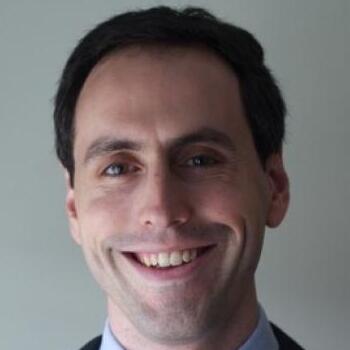
Karen Eggleston is a Senior Fellow at the Freeman Spogli Institute for International Studies (FSI) at Stanford University and Director of the Stanford Asia Health Policy Program at the Shorenstein Asia-Pacific Research Center at FSI. She is also a Fellow with the Center for Innovation in Global Health at Stanford University School of Medicine, and a Faculty Research Fellow of the National Bureau of Economic Research (NBER). Her research focuses on government and market roles in the health sector and Asia health policy, especially in China, India, Japan, and Korea; healthcare productivity; and the economics of the demographic transition.

Eggleston earned her PhD in public policy from Harvard University and has MA degrees in economics and Asian studies from the University of Hawaii and a BA in Asian studies summa cum laude (valedictorian) from Dartmouth College. Eggleston studied in China for two years and was a Fulbright scholar in Korea. She served on the Strategic Technical Advisory Committee for the Asia Pacific Observatory on Health Systems and Policies and has been a consultant to the World Bank, the Asian Development Bank, and the WHO regarding health system reforms in the PRC.

Director of the Asia Health Policy Program, Shorenstein Asia-Pacific Research Center
Stanford Health Policy Associate
Faculty Fellow at the Stanford Center at Peking University, June and August of 2016
CV
Date Label
Stanford University
Jiangnan Cai Director of Health Management and Policy Research, CEIBS
Jiaji Wang Guangzhou School of Public Health
Hai Fang Peking University School of Public Health
Min Yu Deputy - Director, Zhejiang CDC
Zhiling Zhou Deputy - Director, Hangzhou Health and Family Planning Commission
Yan Ma Deputy - Director, Shangcheng District Government
Randall Stafford Program Director, Program on Prevention Outcomes and Practices, Stanford University
Hengjin Dong Zhejiang University
Shuling Chen Zhejiang University
Zhihong Hu Director, Xiao Ying Xiang Community Health Service Center
Fang Qian Director, Si Ji Qing Community Health Service Center
Workshops
News Type
News
Date
Paragraphs

Stanford University’s Walter H. Shorenstein Asia-Pacific Research Center (APARC) is launching a U.S.-Asia Security Initiative spearheaded by a former top American diplomat to deepen dialogue on contemporary Asia-Pacific security issues and to further bridge American and Asian academics, government officials and industry leaders.

A new and uncertain multipolar system is emerging in Asia. The United States is and will remain a global power, but it is evident the post-Cold War international order is increasingly under strain. There is a pressing need for research about how developments in the Asia-Pacific region impact U.S. interests, and what the optimal strategies are to respond. Led by Karl Eikenberry, who served as U.S. ambassador to Afghanistan from 2009 to 2011, the initiative will look beyond simplistic notions of nations engaging harmoniously or competing against each other and explore a range of policy options.

Combining expertise from across Stanford University, the initiative will gather faculty and researchers from the Freeman Spogli Institute for International Studies (FSI), and take place under the auspices of Shorenstein APARC, a center focused on interdisciplinary research on contemporary issues of international cooperation, governance and security in the Asia-Pacific region.

Eikenberry, an Oksenberg-Rohlen Distinguished Fellow at Shorenstein APARC, retired from the U.S. Army as a lieutenant general after 35 years of service before taking the role as ambassador. At Stanford, he has returned to an early and longstanding interest in Asia, contributing to an urgent discussion about how the United States should respond regionally and globally to an increasingly strong China. The initiative is founded on the premise that there is a role for an institution that not only fosters groundbreaking research, but also serves to convene academic and governmental expertise from across the Asia-Pacific region in a dialogue aiming to inform policy and strategy.

“As China rises and Japan seeks a greater defense role in Asia, a number of questions are raised over the United States’ role in the region. This creates a great impetus for stakeholders to gather and develop an understanding of today’s perplexing security issues,” Eikenberry said.

“It’s an honor to lead this Stanford initiative and make possible opportunities for students, scholars, peers and leaders across the world.”

Before arriving at Stanford, Eikenberry’s Asia-related postings included assistant army, and later, defense attaché at the U.S. Embassy Beijing, operational assignments in the Republic of Korea and Hawaii, Director for Strategic Plans and Policy at U.S. Pacific Command, Senior Country Director for China at the Office of the Secretary of Defense, and two senior command tours in Afghanistan. He is a graduate of the U.S. Military Academy, holds master’s degrees from Harvard University and Stanford University, and has an advanced degree in Chinese history from Nanjing University.

The three-year initiative will build synergies with existing activities at Stanford, drawing scholars, government officials and industry leaders to engage at conferences and public seminars on important U.S.-Asia security themes. Understanding that inquiry is enlivened through interdisciplinary dialogue, participants will share best practices across multiple fields including diplomacy, military strategy and environmental risk.

“I can’t think of a better person to drive this initiative – Karl has a profound understanding of the economic, diplomatic and military complexities in the region. I have every confidence that it will develop into a robust, established project under his leadership,” said Gi-Wook Shin, director of Shorenstein APARC.

Launching July 1, 2015, the initiative aims to bolster local, national and global networks through several foundational components, including a core working group of experts from Stanford and peer institutions to provide new perspectives on U.S. policies in Asia; educational opportunities for Stanford students; and public programs that will bring intellectual and strategic leaders to Stanford to enrich the conversation on Asia-Pacific security.

The initiative seeks to operate as a focal point for academic scholarship on the west coast of the United States and offer practical steps that stakeholders can take to strengthen the security architecture and U.S. alliance commitments in the region. Outcomes from the initiative’s activities will include publications and policy reports, many of which will be offered open access online.

“As the Asia-Pacific region continues to rise, we see new threats but also greater opportunity to work together,” said Michael McFaul, director of FSI. “Stanford and FSI excel in offering practical solutions to policy challenges and can play a role in identifying strategies aimed at maintaining peace and stability in the region.”


Initiative inquires: Charlotte Lee, Shorenstein APARC, cplee@stanford.edu, (650) 725-6445

Media inquires: Lisa Griswold, Communications and Outreach Coordinator, Shorenstein APARC, lisagris@stanford.edu, (650) 736-0656

Hero Image
usnavy flickr uspacificfleet
In Sasebo, Japan, members from the maritime forces of India, Japan and the United States observe a trilateral naval field exercise in July 2014.
Flickr/U.S. Pacific Fleet
All News button
1
News Type
News
Date
Paragraphs

Ban Ki-moon, the eighth secretary-general of the United Nations, will deliver a public speech at Stanford University on Friday, June 26.

Ban’s visit will highlight the 70th anniversary of the founding of the U.N., part of a larger trip to the Bay Area to commemorate the San Francisco Conference, where the charter establishing the U.N. was signed in 1945. After his speech, he will participate in a question and answer session with Ambassador Kathleen Stephens, the U.S. ambassador to the Republic of Korea (2008-11).

The Stanford event will take place at 3 p.m. RSVP is required by June 24; seating is first come, first served. Media must pre-register by 9 a.m. on June 25.

It is Ban’s second visit to Stanford in under three years. In Jan. 2013, he delivered a speech to mark the occasion of the Walter H. Shorenstein Asia-Pacific Research Center (APARC)’s thirtieth anniversary.

“I believe we face a unique opportunity,” Ban said in Dinkelspiel Auditorium. “Because the changes we face are so profound – the decisions we make will have a deeper and more lasting impact than perhaps any other set of decisions in recent decades.”

Calling on students to be ‘global citizens,’ he spoke about the ongoing crisis in Syria, the mandate to act on climate change, and the need for a sustainable peace worldwide.

“Growing up, the U.N. was a beacon of hope for me and my country,” he said. “I urge you to harness that same spirit and make a difference.”

Ban was born in the Republic of Korea in 1944. As a youth, more than fifty years ago, Ban visited California during his first trip to the United States with a Red Cross, saying “my trip here opened my eyes to the world.” He has since held a 37-year career in public service in the Ministry of Foreign Affairs, including the role of minister of foreign affairs and trade, foreign policy advisor and chief national security advisor to the president.

“It’s truly our pleasure to host Secretary-General Ban Ki-moon on the seventieth anniversary of the U.N.,” said Gi-Wook Shin, a Stanford professor and director of Shorenstein APARC. “The U.N. has had a profound impact on the shaping of global order in the postwar era. And Ban’s leadership has steered the organization toward the world’s most pressing aims.”

Ban is reaching the end of his term as secretary-general. He assumed office in Jan. 2007 and was reelected for a second term in June 2011. Over his tenure, Ban has led a major push toward peace and non-proliferation activities, youth, women’s rights and the environment. He has urged leaders of China, Japan and South Korea to work harder on reconciliation over the wartime past to ensure long-term stability in the region.

The June 26 event, which can be followed at #UNatStanford, is co-sponsored by Shorenstein APARC and the Freeman Spogli Institute for International Studies at Stanford University; with promotional co-sponsors Asia Society, Asia Foundation and the World Affairs Council of Northern California.

CONTACT: Event inquires may be directed to Debbie Warren, dawarren@stanford.edu or (650) 723-8387; Media inquires may be directed to Lisa Griswold, lisagris@stanford.edu or (650) 736-0656

Hero Image
ban shin conversation
U.N. Secretary-General Ban Ki-moon talks with professor Gi-Wook Shin following a public lecture at Stanford in Jan. 2013.
Rod Searcey
All News button
1
Authors
News Type
Q&As
Date
Paragraphs

This week the World Education Forum convenes in Incheon, South Korea. Drawing leaders from UNESCO member states and heads of international organizations and NGOs, the 4-day gathering will examine global education priorities and discuss a framework for action and implementation of shared goals and targets.

The Forum, which last met in Dakar in 2000, will explore five major themes: equity, inclusion, quality education and lifelong learning, and also set out an agenda on global citizenship education—how to cultivate in youth the attitudes, values and skills needed in today’s world.

As the Forum approaches, the Walter H. Shorenstein Asia-Pacific Research Center asked Stanford professor Gi-Wook Shin to offer his perspectives on global education and his vision for South Korea. He is Korean and an expert on South Korea’s higher-education system, politics and society. He also advises some universities in Asia such as the Center for Asia-Pacific Future Studies at Kyushu University in Japan.

Shin leads two multi-year research projects—one focused on diversity and tolerance in Asia, and another on global social capital, delving into the linkages between innovation, economic globalization and diaspora communities. He recently published key findings in Global Talent with coauthor Joon Nak Choi, a Stanford graduate now professor at Hong Kong University of Science and Technology.

Education has played an important role in the social and economic development of South Korea. Can you explain?

Over the past fifty years, South Korea has gone from being one of the least developed countries to one of the most developed—an “economic miracle,” as it is often referred. The country rose from periods of wartime, poverty and social unrest to become a stable high-income developed country, all in an incredibly short time span. Education has played a substantial role in South Korea’s emergence. Nearly 70 percent of Koreans between the ages of 25 and 34 years of age hold an equivalent of a bachelors degree. This is the highest ranking in all Organization for Economic Co-operation and Development (OECD) countries. Investment in its own people, as well as areas of technology and the sciences, catapulted South Korea toward such success. Its education system is lauded globally. President Obama has referred to its system on multiple occasions, saying the respect and level of support given to teachers there helps to empower student learning. Teaching is a very highly respected profession in South Korea.

In pursuit of the “creative economy,” South Korea has sought to capitalize on the knowledge value of its population. How does diversity fit into this context?

South Korea, like many advanced nations, is driving toward a “creative economy,” a policy objective that President Park Geun-hye set out in Feb. 2013. It’s a strategy to move South Korea away from its manufacturing past toward a future of a service-oriented economy. The latter requires greater creative thinking, and human and social capital are necessary ingredients in that process. Many people look to Silicon Valley as a model of success, a place that continues to harness ideas and investment in those ideas. As I say, there is one known “secret” that has contributed to Silicon Valley’s success, and that’s cultural diversity. In fact Japanese Prime Minister Shinzo Abe visited Stanford recently on his state visit to the United States in a bid to underscore his commitment to building a creative economy in Japan. He convened with leaders of major technology firms like Apple and Twitter, and one of the main messages shared with Abe was the scale to which immigrants contributed to the workforce here. So, South Korea, like many Asian nations, would benefit from recognizing the connection between diversity and the economy, and take it one step further and actively encourage a society who accepts foreigners—this, of course, comes with inherent hurdles in any ethnically homogeneous country like South Korea.

How can a society cultivate globally responsible citizens?

Shifting a society to truly respect and value diversity can be an especially difficult task for countries steeped in nationalism and traditional values. In the case of South Korea, policies supporting values of diversity are just starting to appear, but full social integration of minorities remains a distant future. If the government acts to support diversity over the long-term, though, hopefully change is in the closer future. The challenge is for South Korea to strike the right balance between embracing the nation’s historical legacy, while also recognizing what it means to be a “global citizen” in today’s world. I’ve been working with Rennie Moon, a professor at Yonsei University, on this research question. Teachers play a definitive role in the development of students. Providing curriculum that is balanced is an important factor. This means teaching materials—from textbooks to videos—must provide a neutral stance, or even better, show information in a comparative perspective. Teachers themselves must also commit to being facilitators. Encouraging pride in one’s own country, while also showing respect and value toward others’ is a key message that teachers can help reinforce.

Why do foreign students in Korea matter? And, what role can Korean students have when abroad?

Foreign students in Korea represent a positive-sum game. For one, foreign students diversify Korea, and also help fill the national labor shortfall. In my study with Choi, we found that three groups of students prove to be more beneficial to Korean society. “Focused instrumentalists,” students who are pursuing advanced degrees in technical subjects, “focused Koreaphiles,” students who view Korea as special but focus mainly on their studies, and “youthful Koreaphiles,” students who view Korea as special but focus mainly on exploring their social environments. Instrumentalists grow an affinity to Korea by likely working for a firm in Korea upon graduation. Someone who is a Koreaphile will show affinity for Korea because of an admiration for pop culture and other aspects of Korean society—K-pop, hallyu, Korean dramas and so forth.

Increasingly, Korean students are choosing to study abroad. Just over 123,000 Korean students pursued an undergraduate degree abroad in year 2011; 29% of whom studied in the United States. We see chogi yuhak, a trend of Koreans sending their children overseas to avoid the secondary education system, which is often cited for its rigor and stressful entrance exams. Yet, even if Korean students do not return home, they still have an opportunity to contribute back to South Korea. They form a global network and serve as “transnational bridges” between South Korea and their host countries. As a result, information, innovation and other opportunities bounce between and among people on both sides. This same lesson could be applied to any country really.

What policy implications will transnational bridges have in South Korea?

The affects on policy are largely two-fold. First, South Korean universities, companies and the government must seek to promote values of diversity. The Korean government has taken steps to recognize the strategic value of recruiting foreigners. But, the push isn’t big enough yet. For example, we hosted former Seoul National University President Yeon-Cheon Oh as a visiting fellow this year. He voiced that while Korean universities are orienting some of their policies toward ‘internationalization,’ they still aren’t totally committed to the idea. Better support systems should be developed for foreign students, and tenure should be more accessible to foreign faculty members. Second, for Koreans overseas, diaspora networks could be strengthened. About 10 percent of all ethnic Koreans live outside the Korean Peninsula. Creating codified social and cultural forums for diasporans will help instill a sense of the homeland, so that they want to stay engaged.

Are aspects of South Korea’s model translatable in neighboring countries in Asia and elsewhere?

The Korean model is relevant in other developed, nonimmigrant societies. Different from settler societies like the United States or Canada, for instance, who have heterogeneous populations. Germany and Japan provide the closest comparison study; both their national identities are based on shared ethnicity. Japan has in many ways successfully leveraged its diaspora. Ethnic Japanese who left have been recruited back, and foreign unskilled workers, particularly from Asia, infuse the labor market. A large number of foreign students study in Japan. Germany also sees an substantial amount of foreign students each year. Japan now allows students to stay up to one year to search for a job after graduation, and in Germany, the same for six months. But both countries have trouble retaining graduates. Applying the case of South Korea, seeking benefits from transnational bridges could also benefit both societies. Assimilation of diasporans—like ethnic Koreans in Japan and Turkish people in Germany—should be a long-term goal.

Gi-Wook Shin wrote in Nikkei Asian Review about aspects of Silicon Valley that Asian countries should consider adopting to emulate its success, and how foreign skilled workers can provide social capital. He also contributed a post to Stanford University Press blog about steps South Korea could take to counter the "brain drain" phenomenon. Later, Shin and Rennie Moon wrote a piece for The Conversation, expanding upon the challenges that foreign faculty and students face in South Korea and other Asian nations.

All News button
1
Authors
News Type
News
Date
Paragraphs

Stanford scholars are urging Japan to take advantage of an upcoming opportunity to show clear, heartfelt remorse for its actions surrounding World War II.

Making such amends will give Japan credibility as it seeks to assume a global leadership role well into the future, they say.

On Aug. 15, Prime Minister Shinzo Abe will publish a short statement to commemorate the 70th anniversary of the end of World War II, which follows similar practices of his predecessors.

Stanford's Walter H. Shorenstein Asia-Pacific Research Center (APARC), which has long advocated wartime reconciliation in Asia, recently issued a 15-page report in English and Japanese featuring eight hypothetical statements suggesting what the Japanese prime minister might say in his August address. The report, which is available in both English and Japanese, was recently made available to academics, media and the general public and has already received interest from the Japanese media.

The wording of Abe's statement will be scrutinized by governments and experts in Asia and around the world, the Stanford scholars say. During WWII, China and Korea, as well as other Asian nations, endured brutal Japanese military occupations.

"Many have been speculating what the (Abe) statement will be like," wrote Takeo Hoshi, director of the Japan Program at the Shorenstein Center, and APARC associate director for research Daniel Sneider in the report.

For example, Hoshi and Sneider asked, will Abe follow the direction set by prior Japanese prime ministers by expressing remorse for the suffering of Japan's Asian neighbors while apologizing for past aggression and colonization? Future collaboration in world affairs is also important, they added.

"We asked our colleagues what they would say in the 70th anniversary statement if they were the prime minister of Japan, and to write their own version of the statement," Hoshi and Sneider wrote.

"Our goal is to understand the diversity of reasonable views on the issue of Japan's responsibility for the cruel and violent war and Japan's role in building a peaceful and prosperous world," Hoshi and Sneider said.

The Stanford experts who wrote the statements included Hoshi and Sneider as well as Alberto Diaz-Cayeros, a senior fellow at the Freeman Spogli Institute for International Studies; Peter Duus, a professor emeritus of Japanese history; Thomas Fingar, a distinguished fellow at the Freeman Spogli Institute; David Holloway, a professor of international history and of political science; Yong Suk Lee, the SK Center Fellow at the Freeman Spogli Institute; and Harry Rowen, a professor emeritus of public policy and management.

For example, Fingar said in his version, "Let us also resolve to make the 80th anniversary of World War II the 10th anniversary of a more cooperative, more inclusive, and more secure region," and Hoshi wrote in his version, "To avoid any potential misunderstandings, Japan needs to recall past failures, remember the suffering of neighboring Asian peoples, and reaffirm the commitment to world peace more than ever."

On the subject of women, Lee's version noted, "The war and Japan's colonial rule created much suffering, but I would like to especially ask forgiveness to the women from many nations who suffered under colonial rule."

In August 2014, the Shorenstein Asia-Pacific Research Center issued a report on a Stanford-hosted dialogue on World War II memories in northeast Asia. Heightened tensions the last few years among the governments of China, Japan and South Korea have revolved around territorial disputes and the way WWII is portrayed in speeches and educational materials.

"Each nation in northeast Asia and even the U.S. has selective or divided memories of the past, and does not really understand the views of the other side," said Stanford's Gi-Wook Shin, director of the Shorenstein center, in a 2014 Stanford news release.

Clifton Parker is a writer for the Stanford News Service.

Responses to the project

Toyo Keizai, a leading Japanese business weekly, published all eight verisons in English and Japanese stating, "we hope this will provide an opportunity to bring about a wide range of discussion."

University of Tokyo professor Tetsuji Okazaki wrote about the project in the Asahi Shimbun (the article is in Japanese and also attached as a PDF below).

Hero Image
nauru flickr hadi zaher
A sunrise in Nauru, an island in the Central Pacific.
Flickr/Hadi Zaher
All News button
1
-

**LIVE WEBCAST WILL BE AVAILABLE HERE IMMEDIATELY PRIOR TO THE EVENT.**


[[{"fid":"219129","view_mode":"crop_870xauto","fields":{"format":"crop_870xauto","field_file_image_description[und][0][value]":"","field_file_image_alt_text[und][0][value]":"","field_file_image_title_text[und][0][value]":"","field_credit[und][0][value]":"","field_caption[und][0][value]":"","field_related_image_aspect[und][0][value]":"","thumbnails":"crop_870xauto","pp_lightbox":false,"pp_description":false},"type":"media","attributes":{"width":"870","class":"media-element file-crop-870xauto"}}]]

On June 2, 2015, the Taiwan Democracy Project at Stanford's Center on Democracy, Development and the Rule of Law (CDDRL) will host a special panel session featuring the President of the Republic of China (Taiwan), Ma Ying-jeou. President Ma will speak via live video feed to commemorate the 70th anniversary of the end of World War II and the long history of the U.S.-R.O.C. relationship. Following his prepared remarks, the president will engage in a question-and-answer session with the audience and a distinguished panel of leading Stanford faculty and fellows, chaired and moderated by the former Secretary of Defense of the United States, William J. Perry.


About the Speaker

Ma Ying-jeou has served as the President of the Republic of China (Taiwan) since May 2008. As president, Ma Ying-jeou has worked to address the repercussions of the global financial crisis, stepping up efforts to bring about a more diversified industrial structure and to jump-start new engines for economic growth in Taiwan. President Ma has also attached great importance to promoting energy conservation and carbon reduction, which has helped Taiwan’s energy efficiency to exceed two percent. In addition, his administration worked to craft a response to regional economic integration, successfully negotiating the landmark Economic Cooperation Framework Agreement (ECFA) with the People's Republic of China in 2010. President Ma's creative diplomacy has brought a significant improvement in cross-Strait relations while putting an end to a long and vituperative standoff between the two sides in the diplomatic sphere.


About the Panelists

William J. Perry is the Michael and Barbara Berberian Professor (emeritus) and a senior fellow at the Freeman Spogli Institute and the Hoover Institution, and serves as the director of the Preventive Defense Project at Stanford University. He was the Secretary of Defense for the United States from 1994-1997.


Lanhee J. Chen is the David and Diane Steffy Research Fellow at the Hoover Institution, as well as Lecturer in Public Policy and Law at Stanford University. He served as the chief policy adviser to 2012 U.S. presidential candidate Mitt Romney.


Karl Eikenberry is the William J. Perry Fellow in International Security at the Center for International Security and Cooperation at Stanford University.  He served as the U.S. Ambassador to Afghanistan and is a Lieutenant General, Retired, U.S. Army.


Thomas Fingar is the Oksenberg-Rohlen Distinguished Fellow in the Freeman Spogli Institute for International Studies at Stanford University. He served as the first deputy director of national intelligence for analysis and as chairman of the National Intelligence Council from 2005-2008.


Event Details

The live panel will take place in the Bechtel Conference Room of the Freeman Spogli Institute at Stanford University, at 616 Serra Street, from 5:45-7:00pm on June 2, 2015. An informal reception in the lobby of Encina Hall will follow.


This event is co-sponsored with the Taipei Economic and Cultural Office, San Francisco and the Office of the President of the Republic of China (Taiwan). It is free and open to the public. RSVP is required.


President Ma Ying-jeou
Lanhee J. Chen
Thomas Fingar
William J. Perry
Panel Discussions
Authors
Rylan Sekiguchi
News Type
News
Date
Paragraphs

In a ceremony held last night on Stanford campus, SPICE Director Gary Mukai received the 2015 Stanford Alumni Award in recognition of his leadership and service in the field of education.

“This year, we cannot be more honored to recognize Dr. Gary Mukai for his tireless and selfless work in advancing educational equity and increasing cultural competency in classroom curriculum and instruction,” remarked Van Anh Tran, Board Member of the Stanford Asian Pacific American Alumni Club (SAPAAC). “Gary pushes the boundaries of education and culturally competent K–14 curriculum.”

SAPAAC presents the Alumni Award annually to a distinguished Stanford alumnus who has made exceptional contributions to the Stanford community and broader community in service, leadership, or financial contribution. Past recipients of the award have included distinguished Stanford alumni from throughout the decades, comprising activists, philanthropists, artists, civil rights lawyers, businesspeople, a mayor, a California Supreme Court justice, and other luminaries.

“I feel so undeserving of this award,” reflected Mukai. “I am very humbled.”

That humility belies Mukai’s fierce commitment—and tremendous contributions—to the fields of international and cross-cultural education. Since joining SPICE in 1988, Mukai has workshopped with thousands of K–12 teachers, locally and internationally, on culturally sensitive pedagogical training and curriculum resources. He has provided immersive enrichment opportunities to hundreds of teachers through SPICE’s free multicultural professional development seminars. And he has established an intensive series of free online international relations courses for high school students—the first of its kind.

Despite these contributions, Mukai is perhaps best known for his work in curriculum development. Throughout his tenure at SPICE, Gary has overseen the development of well over 100 curriculum units on themes as diverse as Native American storytelling, the historical Silk Road, and North Korea. These cross-cultural materials have touched countless students over the past 27 years, both within the United States and abroad.

Mukai’s strong dedication to this work has inspired others to take up the banner of international and cross-cultural education as well. Victoria Yee was one. As a Stanford undergraduate, she worked under Mukai’s supervision to develop a teacher’s guide on Filipino-American identity. It was her first exposure to the field of education, and her first glimpse of what life as an educator might be like.

“I had little training in curriculum design or pedagogy. However, Gary was incredibly nurturing, patient, and supportive through every proposal, revision meeting, and draft,” says Yee. “Through his mentorship, my confidence in navigating the education realm…dramatically improved, [as well as] my conviction in institutionalizing diverse global curriculum at schools and my ability to make a difference in education.” Today she is a U.S. Fulbright English Teaching Assistant in rural Taiwan, and she credits her path largely to Mukai’s tutelage and encouragement.

“He is truly an invaluable asset to Stanford and beyond.”

For his part, Mukai prefers to downplay the praise with humor. After formally accepting the Alumni Award at last night’s ceremony, he stepped to the podium and thanked the award’s presenters and his family for their unwavering support. “I am very touched,” he continued, “that many SPICE staff (past and present)—as well as some of my friends—chose to come to see me instead of watch the top American Idol finalists this evening.” 

Hero Image
mukai sa3award
All News button
1
Paragraphs

This paper aims to understand Japan’s financial regulatory responses after the global financial crisis and recession. Japan’s post-crisis reactions show two seemingly opposing trends: collaboration with international organizations to strengthen the regulation to maintain financial stability, and regulatory forbearance for the banks with troubled small and medium enterprise [SME] borrowers. The paper evaluates the responses by the Japanese financial regulators in five areas (Basel III, stress tests, over-the-counter [OTC] derivatives regulation, recovery and resolution planning and banking policy for SME lending) and concludes that the effectiveness of the new regulations for financial stability critically depends on the willingness of the regulators to use the new tools.


"This article is (c) Emerald Group Publishing and permission has been granted for this version to appear here. Emerald does not grant permission for this article to be further copied/distributed or hosted elsewhere without the express permission from Emerald Group Publishing Limited."

All Publications button
1
Publication Type
Journal Articles
Publication Date
Journal Publisher
Journal of Financial Economic Policy
Authors
Takeo Hoshi
Satoshi Koibuchi
Subscribe to Asia-Pacific