News Type
News
Date
Paragraphs

South Korea must stand with the United States in the event of escalated tensions between China and the United States in the South China Sea, Stanford professor Gi-Wook Shin advised at a forum in Seoul on November 19th.

"Flexibility is necessary, but what's more important is…principle," said Shin, emphasizing the importance of South Korea’s alliance with the United States over its strategic partnership with China.

The full article (in English) may be viewed on the Yonhap News website.

Hero Image
14358811168 6d39e1f78a o
The U.S. and Philippine navies conduct a bilateral exercise in the South China Sea, June 2014.
Flickr/U.S. Navy
All News button
1
-

Kenji Kushida will provide an overview of canonical works of Silicon Valley, including work of Martin Kenney and his classic co-edited volume "Understanding Silicon Valley" and other more recent work drawn from the Stanford Silicon Valley - New Japan project’s "Top Ten Reading List of Silicon Valley." He will also share insights from a recent report co-authored with Richard Dasher, Nobuyuki Harada, Takeo Hoshi, and Tetsuji Okazaki entitled "Institutional Foundations for Growth" which partially draws from research on Silicon Valley.   

Kanetaka Maki will present his new research from a paper entitled "Milestones to University-Based Startup Success: What Is the Impact of Academic Inventor Involvement?” Based on the data analysis of 533 University of California startups, he will explain the impact of inventor involvement in the growth and success of university-based startups.

RSVP Required


Agenda
4:15pm: Doors open
4:30pm-5:30pm: Lecture, followed by discussion
5:30pm-6:00pm: Networking


For more information about the Silicon Valley-New Japan Project please visit: http://www.stanford-svnj.org/

Philippines Conference RoomEncina Hall, 3rd Floor616 Serra StStanford, CA 94305
Kenji Kushida, Research Associate, Shorenstein APARC Japan Program and Stanford Silicon Valley - New Japan Project leader
Kanetaka Maki, Research Associate, Shorenstein APARC Japan Program
Seminars
Authors
News Type
News
Date
Paragraphs

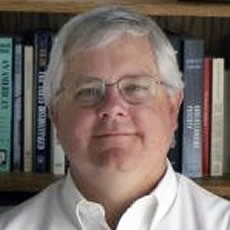
Henry S. Rowen, a Stanford economist and professor emeritus of public policy and management, died in Palo Alto on Nov. 12. He was 90.

Rowen, known affectionately as “Harry” to colleagues and friends, led a long, notable career in academia and public service. Having served in three U.S. administrations, he shaped the construction of American policy on a range of issues from entrepreneurship to intelligence.

“Harry was one of the great policy analysts, defense experts, public intellectuals and government servants of his generation,” said Michael H. Armacost, a colleague and Stanford distinguished fellow. “He is one of the reasons they are referred to as ‘the greatest generation.’”

Rowen was the Edward B. Rust Professor of Public Policy and Management, emeritus, at Stanford’s Graduate School of Business, a senior fellow at the Hoover Institution, and a senior fellow, emeritus, at the Freeman Spogli Institute for International Studies, and a director emeritus of the Walter H. Shorenstein Asia-Pacific Research Center (APARC).

Arriving at Stanford in 1972, Rowen studied economic development and high-tech industries in the United States and Asia, and contributed numerous publications on innovation, as well as international security and energy policy. He assumed emeritus status in 1995.

Public servant, scholar

Born in Boston, he earned a bachelor’s degree from the Massachusetts Institute of Technology, and a master’s degree from Oxford University, in 1949 and 1955, respectively.

Over the course of his career Rowen twice held positions at the RAND Corporation, first as an economist, and later as its president for five years from 1967 to 1972.

In Washington, he held several prominent positions in the Kennedy, Reagan and George H. W. Bush administrations. From 1981 to 1983, he was the chairman of the U.S. National Intelligence Council (NIC), and the assistant secretary of defense for international security affairs from 1989 to 1991.

Thomas Fingar, an FSI distinguished fellow, described Rowen as “an institution” and a “very productive scholar as well as an effective and imaginative leader and manager.”

“My own career intersected with Harry’s several times, both at Stanford and Washington. Every time that it did, he was generous with his time and genuinely interested in whatever topic I brought to him,” said Fingar, who was one of Rowen’s successors as chairman of the NIC.

Rowen also served on the policy advisory board for the Secretary of Defense from 2001-04, and in 2004, was appointed to the yearlong U.S. commission charged with assessing the intelligence community’s readiness to respond to a proliferation of weapons of mass destruction.

He returned to the Stanford campus in the 1980s, 1990s and 2000s. Rowen’s versatility supported and expanded the research aims of Shorenstein APARC and FSI, and the greater Stanford community.

“His name pops up in virtually every book written about U.S. national security policy during that period,” remarked Fingar, referring to Rowen’s influence in Washington in the early 1960s.

A collection of Rowen’s government papers was recently made available by the Hoover Institution Archives.

Rowen’s interdisciplinary experiences yielded a deep knowledge of the social and political factors in nations struggling with a sustainable peace, weighing nuclear proliferation issues, and considering new forms of governance.

In a 1996 issue of the National Interest, Rowen predicted that China would become a democracy by 2015. Although the forecast was seemingly incorrect, he suggested earlier this year that the transition was still a question of “when, not if.”

Rowen’s latest book Greater China’s Quest for Innovation was published in 2008. The co-edited book examines the talent, resources and research and development (R&D) environments in Mainland China, Taiwan and Hong Kong, and suggests institutions needed to create a successful innovation-based economy.

A comprehensive set of Rowen’s works can be found on his bio.

Leadership, innovation

Rowen became the director of Shorenstein APARC in 1997. He served in that role until 2001, and as co-director from 2000 to 2001, with Stanford professor Andrew Walder.

“Harry was a core member of our center’s past and present,” said Takeo Hoshi, a Stanford economist and acting director of Shorenstein APARC. “He pioneered research on entrepreneurship and innovations throughout Asia. The importance of such research has only continued to grow over time.”

Rowen also led the Stanford Program on Regions of Innovation and Entrepreneurship (SPRIE). Active for fifteen years, until 2013, its mission was to hold collaborative research and colloquia on the dynamics and sustainability of high-tech areas around the world.

William F. Miller, SPRIE faculty co-director and a Stanford professor emeritus of management and computer science, spoke of him as a man of great principle.

“Harry brought to bear his vast research experience, extensive government experience, and his international experiences on everything we did. He will be greatly missed by his many friends and colleagues,” Miller said.

SPRIE inspired other Stanford initiatives aiming to build bridges between Silicon Valley and Asia, such as China 2.0 and the still-present Centers and Initiatives for Research, Curriculum and Learning Experiences.

Rowen never retired. This year, he was advising a Fulbright visiting scholar and coordinating a conference on technology interaction between Singapore and Silicon Valley. He often attended seminars across campus and was known to pose insightful, straightforward questions.

Rowen is survived by his wife, Beverly, of Palo Alto, six children and nine grandchildren. Information about any memorial activities will be published when available.

Additional coverage:

Los Angeles TimesHenry 'Harry' Rowen, Rand leader at time of Pentagon Papers, dies at 90

San Jose Mercury News: Think tank leader at time of Pentagon Papers dies at 90

Stanford News Service: Henry S. Rowen, Stanford business professor and U.S. policymaker, dies at 90

Hero Image
2011 harry rowen
Henry S. Rowen at Stanford University in 2011.
All News button
1
-
 

Technological advances have brought us to a potential tipping point in the delivery of financial services that will affect the individual, firm, the industry and the country. How important will this development be for potential growth in developed and developing countries? Will the changes occur without official intervention, or will they need the state’s guiding hand to ensure that they provide their benefits with minimal risk? What measures are needed from policy makers and regulatory authorities to clear the path for faster growth?

This seminar, co-sponsored by the Stanford Center for International Development and the Shorenstein Asia-Pacific Research Center, will look at how a group of companies, an industry and a country have effectively capitalized on conducive regulatory environment the opportunities offered by the technological advances and related disruptions. The talk will focus on the strategy of M-Pesa/Alibaba, Chinese Financial Sector and Singapore. The combination of Silicon Valley Technology and Smart Nation/City initiative may overcome some challenges of low productivity and low growth in many parts of the world especially in Asia and ASEAN.

David LEE Kuo Chuen is a visiting scholar at the Walter H. Shorenstein Asia-Pacific Research Center (APARC) for the fall of 2015.  He is currently the Director of Sim Kee Boon Institute for Financial Economics.  He holds the appointment of Practice Professor of Quantitative Finance, Lee Kong Chian School of Business, in Singapore Management University.  He is also the founder of Ferrell Asset Management Group. His research interests encompass digital and Internet finance, digital banking, Asia finance, impact investing, financial inclusion and asset allocation. During his time as a Fulbright Scholar at Shorenstein APARC, his research will focus on harnessing Silicon Valley technology for connectivity and financial inclusion in ASEAN and Singapore. David is also an Independent Director of two SGX-listed companies and sits on the Investment Committee and Council of two charitable organizations. He is the Vice President of the Economic Society of Singapore.  He was the Founding Vice Chairman of the Alternative Investment Management Association (Singapore Chapter), a member of the SGX Security Committee, and MAS Financial Research Council.  He was also the Group Managing Director of OUE Limited and Auric Pacific Limited, as well as the Non-Executive Chairman of MAP Technology Limited. David speaks frequently in international conferences with occasional appearances in Bloomberg, Reuters and Channel NewsAsia.  He has published in Financial Analyst Journal, Journal of Investing, Journal of Wealth Management, Journal of Statistical Computation and Simulation, Applied Financial Economics, and several books and chapters on Household Economics and Hedge Funds.  His two books on Asia Finance focus on Banking, Sovereign Wealth Funds, REITs, Financial Trading & Markets, and Fund Performance. His latest book is on Digital Currency. He graduated from the London School of Economics and Political Science with a BSc (Econs), MSc (Mathematical Economics and Econometrics) and a PhD in Econometrics and Mathematical Economics.

Smart Nation, Silicon Valley Technology and Asia Growth Strategy
Download pdf
Philippines Conference Room3rd floor, Encina Hall616 Serra StreetStanford, CA 94305
David LEE Kuo Chuen, Director of Sim Kee Boon Institute for Financial Economics and APARC Visiting Scholar
Seminars
Date Label
News Type
News
Date
Paragraphs

Laurie Burkitt quotes REAP's director Scott Rozelle on the impact of China cancelling the one-child policy . To read the original article, click here.

Chinese leaders implemented the one-child policy in 1980 in an effort to rein in explosive population growth and help raise living standards. It was rooted in a Mao Zedong-era baby boom. China’s population rose by nearly half to about 807 million people in 1969 from when the Communist Party took over the country 20 years before. That led to fears among the leadership that China faced a population boom it couldn’t feed.

Demographers began to present a united front in 2000, arguing that China was dangerously close to falling below a replacement rate of 2.1 children for every woman. Activists stepped up opposition. Chen Guangcheng, the blind activist who famously escaped home confinement and made his way to the U.S. embassy in 2012, became well-known in China in the 2000s for opposing forced abortion.

China effectively hobbled the one-child policy in 2013, when it allowed couples to have two children if one parent came from a household without other siblings. It has also long allowed exceptions in some parts of the country.

Just like on Thursday, the 2013 move led to a frenzy of anticipation from baby-related businesses and a brief bump in shares of Chinese formula makers and other baby-related companies. It resulted in 1.45 million new birth applications as of the end of May, according to the most recent data from the China’s National Health and Family Planning Commission. But the figures have so far disappointed many demographers.

Even rural residents, many of whom have been exempt of the one-child policy, are reluctant to have bigger families, said Scott Rozelle, co-director of Stanford University’s Rural Education Action Program. “Fertility has collapsed in rural and poor areas,” said Mr. Rozelle. “Anyone there can have two or three babies, but no one wants that.”

Hero Image
1 child headliner
All News button
1
-

Join us Wednesday to celebrate International Education Week! We’ll be conducting our first open webinar at the 2015 Global Education Conference (#globaled15). Drop in to receive some free classroom resources and chat about historical memory, media literacy, perspective/bias, and the legacies of WWII in East Asia.

What: “Divided Memories: Comparing History Textbooks in China, Japan, South Korea, Taiwan, and the United States” webinar (Full description: http://tiny.cc/r1bv5x)
When: Wed, Nov 18 @ 4:00pm PST / 7:00pm EST
Where: Online at tiny.cc/SPICEatGEC15 (Choose your time zone to view full conference schedule.)

During and after the webinar, use hashtag #DividedMemories to live-tweet with us and our friends at Shorenstein APARC.

616 Jane Stanford Way
Encina Hall, C332
Stanford, CA 94305-6060

(650) 725-1486
0
rylan_sekiguchi.jpg
Rylan Sekiguchi is Manager of Curriculum and Instructional Design at the Stanford Program on International and Cross-Cultural Education (SPICE). Prior to joining SPICE in 2005, he worked as a teacher at Revolution Prep in San Francisco.

Rylan’s professional interests lie in curriculum design, global education, education technology, student motivation and learning, and mindset science. He received his Bachelor of Science degree in Symbolic Systems at Stanford University.

He has authored or co-authored more than a dozen curriculum units for SPICE, including Along the Silk Road, China in Transition, Divided Memories: Comparing History Textbooks, and U.S.–South Korean Relations. His writings have appeared in publications of the National Council for History Education and the Association for Asian Studies.

Rylan has also been actively engaged in media-related work for SPICE. In addition to serving as producer for two films—My Cambodia and My Cambodian America—he has developed several web-based lessons and materials, including What Does It Mean to Be an American?

In 2010, 2015, and 2021, Rylan received the Franklin Buchanan Prize, which is awarded annually by the Association for Asian Studies to honor an outstanding curriculum publication on Asia at any educational level, elementary through university.
 
Rylan has presented teacher seminars across the country at venues such as the World Affairs Council, the American Museum of Natural History, and the Art Institute of Chicago, and for organizations such as the National Council for the Social Studies, the International Baccalaureate Organization, the African Studies Association, and the National Consortium for Teaching about Asia. He has also conducted presentations internationally for the East Asia Regional Council of Overseas Schools in Thailand, Malaysia, and the Philippines; for the European Council of International Schools in Spain, France, and Portugal; and at Yonsei University in South Korea.
 
Manager of Curriculum and Instructional Design
Instructor, Stanford e-Hiroshima
Manager, Stanford SEAS Hawaii
Workshops
-

The Russian System of personalized power has been demonstrating an amazing capacity for survival even in the midst of decay. It has defied many predictions and ruined many analytical narratives. Today the Russian authoritarian rule is trying to prolong its life by turning to repressions at home and by containing the West. Russia, kicking over the global chess board with the war in Ukraine, returns to the international scene as a revisionist and revanchist power. The Russian Matrix demise will be painful, and it already has brought about  Russia’s confrontation with the West.  The challenge posed by Russia’s decaying petro –nuclear state is huge, and it is sure to be one of the dominant problems of the twenty-first century.

RSVP

Lilia Shevtsova is a Non-Resident Fellow at the Brookings Institution (Washington), and an Associate Fellow at the Russia-Eurasia Program, Chatham House - The Royal Institute of International Affairs (London). She is the member of the boards of the Institute for Humanities (Vienna), the Finnish Centre for Excellence in Russian Studies (Helsinki), the Liberal Mission Foundation, and the New Eurasia Foundation (Moscow); a member of the International Forum for Democratic Studies’ Research Council(Washington); a member of the Editorial Boards of the journals: “American Interest,”“Journal of Democracy,” and “New Eastern Europe.“ Shevtsova was Senior Associate at the Carnegie Endowment for International Peace (Washington) and the Moscow Carnegie Center, founding chair of the Davos World Economic Forum Council on Russia’s Future, and a member of the Council on Terrorism. “Foreign Policy” magazine included Shevtsova in the list of 100 Global Public Intellectuals. She was a participant at the Bilderberg Club meetings; served as Chair of the Program on Eurasia and Eastern Europe, SSRC (Washington) and member of the Social Council for Central and Eastern European Studies. She contributes to global leading media, including: Foreign Policy, FT, Washington Post, Le Monde, Monde Diplomatique, Die Zeit, Fokus, El Pais, American Interest, Survival, Journal of Democracy, Diplomaatia. 

Shevtsova is author of twenty books, including Yeltsin’s Russia: Myths and Reality; Putin’s Russia; Russia –Lost in Transition: The Yeltsin and Putin Legacies; Lonely Power (Why Russia Has Failed to Become the West and Why the West Is Weary of Russia), Russia: Change or Decay (in co-authorship with Andrew Wood), Crisis: Russia and the West in the Time of Trouble.

 
Lectures
Authors
Charlotte J. Haug
News Type
Commentary
Date
Paragraphs

In August 2015, the publisher Springer retracted 64 articles from 10 different subscription journals “after editorial checks spotted fake email addresses, and subsequent internal investigations uncovered fabricated peer review reports,” according to a statement on their website. The retractions came only months after BioMed Central, an open-access publisher also owned by Springer, retracted 43 articles for the same reason.

Charlotte J. Haug, MD, PhD, a visiting scholar at Stanford Health Policy, writes in this New England Journal of Medicine perspective that the pressure to publish is huge for scientists, what with rewards such as promotions and financial incentives. This is leading to a growing number of cases of plagiarism and errors.

"The pressure to publish is huge for scientists everywhere, and the competition for space in the best journals harder than ever," she tells Stanford Health Policy. "One reason for this is the rapidly increasing amount of research and number of researchers coming from emerging economies like Brazil, India, Turkey and China — to mention a few. When the rewards for publishing is also very high (promotion, money), one might be more willing to take some short-cuts to get published." Haug, who was the editor-in-chief of The Journal of the Norwegian Medical Association and is a international correspondent for the New England Journal, said that as long as authors are rewarded for publishing many articles, and editors are rewarded for publishing them rapidly, new ways of gaming the traditional publication models will be invented more quickly than new control measures can be put in place. "Science is a collaborative endeavor," she said. "Not only in the sense that most scientific papers have a number of authors, but also in the sense that all science builds on previous science. One — or more — bad apple can have tremendously negative effects by leading other researchers in the wrong direction, wasting their time or directly harming for example patients that get the wrong treatment." You can read her full commentary here
Hero Image
nejm logo
All News button
1
-

How has the May 2014 coup in Thailand affected the country’s foreign policy? Has the junta realigned Thailand toward China and away from the US?  Some Western governments reacted to the coup by criticizing the military government of prime minister cum army general General Prayuth Chan-o-cha and subjecting it to downgrades and penalties. Washington bluntly called on the junta to return power to the Thai people. In reply, hoping to lessen the effects of Western pressure, Prayuth tried to diversify Thailand’s links and options in foreign affairs, including strengthening relations with nearby China, and with Myanmar, Cambodia, and Japan.

A January 2015 visit to Bangkok by US assistant secretary for East Asian and Pacific affairs Daniel R. Russel did not improve US-Thai relations. When Russel called on the junta to lift marshal law, the junta told him to mind his own business. Yet president Obama has not revoked Thailand’s status as Washington’s “major non-NATO treaty ally” nor has Prayuth aligned his country fully with Beijing. Pavin will sketch the changing contours of these among other relationships and relate their tenor and prospects to the political crisis that continues to unfold in Thailand.

Image
pavin4x6
Pavin Chachavalpongpun is an associate professor at the Center for Southeast Asian Studies in Kyoto University. His many publications include Reinventing Thailand: Thaksin and His Foreign Policy (2010) and A Plastic Nation: The Curse of Thainess in Thai-Burmese Relations (2005). He is chief editor of the multilingual on-line Kyoto Review of Southeast Asia. His PhD is from the University of London School of Oriental and African Studies. Following his fierce criticism of the 2014 coup in his country, the junta twice summoned him to Bangkok. Rather than comply, he reaffirmed his opposition to the coup. A warrant was eventually issued for his arrest, his Thai passport was revoked, and he was obliged to apply for refugee status in Japan.

Pavin Chachavalpongpun 2015-16 Lee Kong Chian National University of Singapore-Stanford University Distinguished Fellow on Southeast Asia
Seminars
-

Co-sponsored by the Japan Program

Prof. Booth will assess the socioeconomic consequences of Japanese colonialism in Taiwan, Korea, and Manchuria from 1910 to 1945. She will compare Japan’s policies with those implemented by other colonial powers in South and Southeast Asia. In particular she will address the writings of what has been termed the “Stanford School”—an influential group of scholars who published widely on Japanese colonial policies over the last fifty years. Their work has been used to support the argument that Japanese rule was more developmental than that of other colonial powers, and that it laid the foundations for the stellar economic performance of Taiwan and the Republic of Korea in the decades after 1950. She will challenge these conclusions by comparing economic and social indicators for Korea, Taiwan, and Manchuria with those from other Asian colonies and also from Thailand. While Japan’s colonies, especially Taiwan, do score well on some indicators, they do less well on others. The notion that Japanese rule was exceptionally “developmental” does not merit support.

Image
anne booth
Anne Booth has been an Asia-focused professor of economics in the School of Oriental and African Studies, University of London, since 1991. She studies the modern economic history of Southeast Asia with emphasis on the 20th century. Her many writings in this field include Colonial Legacies: Economic and Social Development in East and Southeast Asia. Her latest book, Economic Change in Modern Indonesia, is due from Cambridge University Press in April. Before coming to SOAS, she held research and teaching positions in Singapore and Australia. Her degrees are from Victoria University of Wellington (BA) and the Australian National University (PhD). Before 1991 she held research and teaching positions in Singapore and Australia. She grew up in New Zealand.

Anne Booth 2015-16 NUS-Stanford Lee Kong Chian Distinguished Fellow on Southeast Asia, Stanford University 2015-16 NUS-Stanford Lee Kong Chian Distinguished Fellow on Southeast Asia, Stanford University
Seminars
Subscribe to Asia-Pacific