The Impact of Taiwan's National Health Insurance's 20-year Journey: How has the market responded and will respond?
The single-payer NHI program, operated by National Health Insurance Administration (NHIA), was established through integrating three existing social insurance schemes and extended the coverage to the then uninsured 43% of the population. Taiwan NHI offers comprehensive benefit coverage that includes ambulatory care as well as inpatient services. On the service side, Taiwan has a market-oriented health care delivery system, reflecting its free-enterprise economy, as evidenced by the pluralistic organization of health services. Hospital ownership is mixed where public hospitals only account for 35% of all beds. Sixty-three percent of allopathic physicians are salaried employees of hospitals; the remainder, fee-for-service private practitioners. Over the years, hospitals have developed large outpatient departments and affiliated clinics for primary care in order to maintain inpatient volume and compete with private practitioners who operate free-standing clinics with beds. There is no gate keeping mechanism and the insured essentially enjoy complete freedom of choice which is likely a source of overuse.
NHI revenue mainly relies on payroll-based premiums, supplemented by a levy on non-payroll income and government subsidies. In 2013, NHI spent roughly NTD 492 (USD 16.4) billion on medical claims, accounting for approximately 52% of national health expenditures, and in total, Taiwan devoted 6.6% of GDP to health. As a single payer, NHIA has effectively exploited its market power to experiment with various payment reforms in its 20-year history. NHIA gradually set up separate global budgets for dental services, Chinese medicines, primary care services, and hospital services since 1998. The annual growth rate of the total NHI budget is negotiated among stakeholders.
Our seminar will look to the future with presentations on innovative healthcare delivery models and coping strategies by private hospitals.
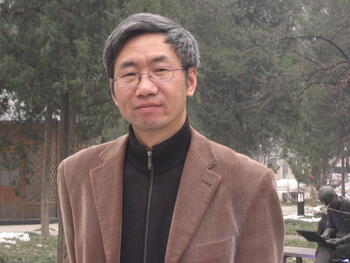
Karen Eggleston
Shorenstein APARC
Stanford University
Encina Hall E301
Stanford, CA 94305-6055
Karen Eggleston is a Senior Fellow at the Freeman Spogli Institute for International Studies (FSI) at Stanford University and Director of the Stanford Asia Health Policy Program at the Shorenstein Asia-Pacific Research Center at FSI. She is also a Fellow with the Center for Innovation in Global Health at Stanford University School of Medicine, and a Faculty Research Fellow of the National Bureau of Economic Research (NBER). Her research focuses on government and market roles in the health sector and Asia health policy, especially in China, India, Japan, and Korea; healthcare productivity; and the economics of the demographic transition.
Eggleston earned her PhD in public policy from Harvard University and has MA degrees in economics and Asian studies from the University of Hawaii and a BA in Asian studies summa cum laude (valedictorian) from Dartmouth College. Eggleston studied in China for two years and was a Fulbright scholar in Korea. She served on the Strategic Technical Advisory Committee for the Asia Pacific Observatory on Health Systems and Policies and has been a consultant to the World Bank, the Asian Development Bank, and the WHO regarding health system reforms in the PRC.
Economics of Health and Aging in Asia
View Research Cluster
CCTV-13: Service for Birth - How will a Million Family Planning Workers Make the Transition?
On January 9th, China news station CCTV-13 aired a story about REAP's program to train family planning officials who previously enforced the one-child policy, to become early childhood education experts. The original segment was broadcast during News Hour at 10 pm, which has an audience of 1.2 billion viewers.
To view the original broadcast, please click here.
Third Annual Stanford Summer Juku on Japanese Political Economy
The Japan Program held the third annual Stanford Summer Juku on Japanese Political Economy from August 10-13. Over 40 scholars from various parts of the US and Japan participated in the conference, which took place at the Bechtel Conference Center at Encina Hall. The first two days focused on political science and the second day on economics. Distinctive features of the Summer Juku are the long times allotted to each paper to allow for two in-depth discussants and discussion among participants, as well as ample time for informal discussions and interactions among participants allowing for collaborations and expansion of the network of researchers on Japan in political science and economics. Particularly notable this year was a large number of cross-disciplinary and cross-national collaborations between scholars ranging from political science, economics, management, infomatics, and medicine.
The first day included four papers in political science. Amy Catalinac from New York University presented her paper, "Positioning Under Alternative Electoral Systems: Evidence from 7,497 Japanese Candidate Election Manifestos", with discussants Gary Cox (Stanford) and Harukata Takenaka (National Graduate Institute for Policy Studies, Japan).
Daniel Smith (Harvard University) presented a paper co-authored by Yusaku Horiuchi (Dartmouth College) and Teppei Yamamoto (MIT) entitled "Identifying Multidimensional Policy Preferences of Voters in Representative Democracies: A Cojoint Field Experiment in Japan". The Discussants for the paper were Kay Shimizu (Columbia University) and Karen Jusko (Stanford).
Harukata Takenaka from the National Graduate Institute for Policy Studies presented his paper on “Changes in Power of Japanese Prime Minister: Still Away from a Westminster Model.” Tsuneo Akaha (Middlebury Institute of International Studies at Monterey) and Kenji Kushida (Stanford University) were the discussants.
The fourth paper was “Territorial Issues and Support for the Prime Minister: A survey Experiment on Rally-‘Round-the Flag Effect in Japan” by Tetsuro Kobayashi (National Institute of Informatics, Japan) and Azusa Katagiri (Stanford), discussed by Tsuneo Akaha (Middlebury Institute of International Studies at Monterey) and Daniel Smith (Harvard).
The second day focused on political economy and international relations. Gene Park (Loyola Marymount University, and former Shorenstein Fellow at APARC) presented his paper co-authored with Saori Katada (University of Southern California) and Giacomo Chiozza (Vanderbilt University) entitled “Policy ideas and monetary policy: The Bank of Japan's delayed break with the monetary orthodoxy". Discussants were Azusa Katagiri (Stanford) and Ayako Saiki (De Netherlandsche Bank).
The second paper of the day was "The Political Economy of the Trans-Pacific Partnership: Implications beyond Economics" by Hiroki Takeuchi (Southern Methodist University), discussed by Kay Shimizu (Columbia University) and Gene Park (Loyola Marymount University).
After lunch, Llewelyn Hughes (Australian National University) presented "Lead Markets, Vertical Specialization, and Standards Competition in Electric Vehicles" with discussants Kenji Kushida (Stanford University) and Phillip Lipscy (Stanford University). The final session was "Renegotiating the World Order: Institutional Change in International Relations” which were select chapters from a book manuscript by Phillip Lipscy (Stanford University). The discussants were Amy Catalinac (New York University) and Llewelyn Hughes (Australian National University). A group dinner followed the second day.
The third day was the kick-off for economics papers, where we also saw cross-disciplinary collaborations with colleagues from the US and Japan.
Karen Eggleston (Stanford University) presented “Medical spending and health care utilization in Japan, 2010-2014: Projections from Future Elderly Model microsimulation”, which was co-authored by Hawre Jajal (Stanford University), Brian K. Chen (University of Southern California), Hideki Hashimoto (University of Tokyo), Toshiaki Iizuka (University of Tokyo), Lena Shoemaker (Stanford University), and Jay Bhattacharya (Stanford University). Yong Suk Lee (Stanford University) was the discussant.
The second paper, "The adverse effects of value-based purchasing in health care: dynamic quantile regression with endogeneity" by Galina Besstremyannaya (Visiting Scholar, Stanford University), was discussed by Jay Battacharya (Stanford University) and Takeo Hoshi (Stanford University).
The third paper was ""How Do Agricultural Markets Respond to Radiation Risk? Evidence from the 2011 Disaster in Japan" by Kayo Tajima (Rikkyo University), Masashi Yamamoto (University of Toyama), and Daisuke Ichinose (Rikkyo University). Discussants for the paper presented by Tajima were Satoshi Koibuchi (Chuo University and Visiting Scholar, Stanford University) and Yong Suk Lee (Stanford University).
The final paper for the third day was "Shocks and Shock Absorbers in Japanese Bonds and Banks During the Global Financial Crisis" by Hyonok Kim (Tokyo Keizai University), Yukihiro Yasuda (Hitotsubashi University), and James A. Wilcox (University of California, Berkeley). Discussants were Sabrina Howell (New York University) and Suparna Chakraborty (University of San Francisco).
The final day included two papers. The first was "Impact of Financial Intermediary's Information Production on Market Value of Firm: Case Studies on the DBJ's Liquidity Providing During the Financial Crisis and the Environmental Rating of Firm" by Hiroaki Suzuoka (Development Bank of Japan), Atsushi Motohashi (Development Bank of Japan), Shinya Nakamura (Development Bank of Japan), Tomoya Maruoka (Development Bank of Japan), and Takamasa Uesugi (Development Bank of Japan), presented by Takamasa Uesugi. Discussants were Jess Diamond (Hitotsubashi University) and Masami Imai (Wesleyan University). The final paper was "Selective Disclosure: The Case of Nikkei Preview Articles" by William N. Goetzmann (Yale School of Management), Yasushi Hamao (University of Southern California), and Hidenori Takahashi (Kobe University), presented by Yasushi Hamao. Eiichiro Kazumori (University of Buffalo) was the discussant.
After the completion of four days of Summer Juku, participants who had enough time before their flights held an “uchiage” (completion celebration) gathering—a tradition at the conclusion of the Summer Juku—at “The Patio” in downtown Palo Alto for further informal exchange over drinks and appetizers.
Global Artform or Local Phenomenon? Demystifying K-Pop’s International Appeal
Joon Nak Choi is the 2015-2016 Koret Fellow in the Korea Program at Stanford's Shorenstein Asia-Pacific Research Center (APARC). A Stanford graduate and sociologist by training, Choi is an assistant professor at Hong Kong University of Science and Technology. His research and teaching areas include economic development, social networks, organizational theory, and global and transnational sociology, within the Korean context. He recently coauthored Global Talent: Skilled Labor as Social Capital in Korea which he developed the manuscript from 2010-11 while he was a William Perry postdoctoral fellow at APARC.
This event is made possible through the generous support of the Koret Foundation.
Joon Nak Choi
Shorenstein APARC
Encina Hall
Stanford University
Stanford, CA 94305-6055
Joon Nak Choi is the 2015-2016 Koret Fellow in the Korea Program at Stanford University's Walter H. Shorenstein Asia-Pacific Research Center (Shorenstein APARC). A sociologist by training, Choi is an assistant professor at Hong Kong University of Science and Technology. His research and teaching areas include economic development, social networks, organizational theory, and global and transnational sociology, within the Korean context.
Choi, a Stanford graduate, has worked jointly with professor Gi-Wook Shin to analyze the transnational bridges linking Asia and the United States. The research project explores how economic development links to foreign skilled workers and diaspora communities.
Most recently, Choi coauthored Global Talent: Skilled Labor as Social Capital in Korea with Shin, who is also the director of the Korea Program. From 2010-11, Choi developed the manuscript while he was a William Perry postdoctoral fellow at Shorenstein APARC.
U.S. Defense Strategy for the Asia-Pacific Region
Note: This event is open to Stanford community members only.
Stanford ID required for entry.
Remarks are off the record. Recording, reporting and citation of remarks is strictly prohibited.
P
Mr. Shear was a Rusk Fellow at Georgetown University’s institute for the Study of Diplomacy 1998-99. He is the recipient of the State Department’s Superior Honor Award and the Defense Department’s Civilian Meritorious Service Award for his work in U.S.-Japan defense relations.
Mr. Shear graduated from Earlham College and has a Master’s degree in International Affairs from the Johns Hopkins School of Advanced International Studies. He also attended Waseda University, Taiwan National University, and Nanjing University.
CDDRL Senior Honors Program Information Session
This event is open to Stanford undergraduate students only.
The Center on Democracy, Development, and the Rule of Law (CDDRL) is currently accepting applications from eligible juniors due February 12, 2016 who are interested in writing their senior thesis on a subject touching upon democracy, economic development, and rule of law (DDRL) from any university department. CDDRL faculty and current honors students will be present to discuss the program and answer any questions.
For more information on the CDDRL Senior Honors Program, please click here.
Stephen J. Stedman
CDDRL
Encina Hall, C152
616 Jane Stanford Way
Stanford, CA 94305-6055
Stephen Stedman is a Senior Fellow at the Freeman Spogli Institute for International Studies (FSI) and the Center on Democracy, Development and the Rule of Law (CDDRL), an affiliated faculty member at CISAC, and professor of political science (by courtesy) at Stanford University. He is director of CDDRL's Fisher Family Honors Program in Democracy, Development and Rule of Law, and will be faculty director of the Program on International Relations in the School of Humanities and Sciences effective Fall 2025.
In 2011-12 Professor Stedman served as the Director for the Global Commission on Elections, Democracy, and Security, a body of eminent persons tasked with developing recommendations on promoting and protecting the integrity of elections and international electoral assistance. The Commission is a joint project of the Kofi Annan Foundation and International IDEA, an intergovernmental organization that works on international democracy and electoral assistance.
In 2003-04 Professor Stedman was Research Director of the United Nations High-level Panel on Threats, Challenges and Change and was a principal drafter of the Panel’s report, A More Secure World: Our Shared Responsibility.
In 2005 he served as Assistant Secretary-General and Special Advisor to the Secretary- General of the United Nations, with responsibility for working with governments to adopt the Panel’s recommendations for strengthening collective security and for implementing changes within the United Nations Secretariat, including the creation of a Peacebuilding Support Office, a Counter Terrorism Task Force, and a Policy Committee to act as a cabinet to the Secretary-General.
His most recent book, with Bruce Jones and Carlos Pascual, is Power and Responsibility: Creating International Order in an Era of Transnational Threats (Washington DC: Brookings Institution, 2009).
Francis Fukuyama
Encina Hall, C148
616 Jane Stanford Way
Stanford, CA 94305
Francis Fukuyama is the Olivier Nomellini Senior Fellow at Stanford University's Freeman Spogli Institute for International Studies (FSI), and a faculty member of FSI's Center on Democracy, Development and the Rule of Law (CDDRL). He is also Director of Stanford's Ford Dorsey Master's in International Policy, and a professor (by courtesy) of Political Science.
Dr. Fukuyama has written widely on issues in development and international politics. His 1992 book, The End of History and the Last Man, has appeared in over twenty foreign editions. His book In the Realm of the Last Man: A Memoir will be published in fall 2026.
Francis Fukuyama received his B.A. from Cornell University in classics, and his Ph.D. from Harvard in Political Science. He was a member of the Political Science Department of the RAND Corporation, and of the Policy Planning Staff of the US Department of State. From 1996-2000 he was Omer L. and Nancy Hirst Professor of Public Policy at the School of Public Policy at George Mason University, and from 2001-2010 he was Bernard L. Schwartz Professor of International Political Economy at the Paul H. Nitze School of Advanced International Studies, Johns Hopkins University. He served as a member of the President’s Council on Bioethics from 2001-2004. He is editor-in-chief of American Purpose, an online journal.
Dr. Fukuyama holds honorary doctorates from Connecticut College, Doane College, Doshisha University (Japan), Kansai University (Japan), Aarhus University (Denmark), the Pardee Rand Graduate School, and Adam Mickiewicz University (Poland). He is a non-resident fellow at the Carnegie Endowment for International Peace. He is a member of the Board of Trustees of the Rand Corporation, the Board of Trustees of Freedom House, and the Board of the Volcker Alliance. He is a fellow of the National Academy for Public Administration, a member of the American Political Science Association, and of the Council on Foreign Relations. He is married to Laura Holmgren and has three children.
(October 2025)
Global Populisms
Brett Carter
Brett Carter is an Associate Professor in the Department of Political Science and International Relations at the University of Southern California, a Hoover Fellow at Stanford University's Hoover Institution, and a Faculty Affiliate at Stanford's Center on Democracy, Development and the Rule of Law. He received a Ph.D. from Harvard University, where he was a fellow at the Harvard Academy for International and Area Studies.
Carter studies politics in the world's autocracies. His first book, Propaganda in Autocracies: Institutions, Information, and the Politics of Belief (Cambridge University Press), draws on the largest archive of state propaganda ever assembled — encompassing over eight million newspaper articles in six languages from nearly 60 countries around the world — to show how political institutions shape the propaganda strategies of repressive governments. It received the William Riker Prize for the Best Book in Political Economy, the International Journal of Press/Politics Hazel Gaudet-Erskine Best Book Award, Honorable Mention for the Gregory Luebbert Award for the Best Book in Comparative Politics, and Honorable Mention for the APSA Democracy & Autocracy Section's Best Book Award.
His second book, in progress, shows how politics in Africa’s autocracies changed after the fall of the Berlin Wall and how a new era of geopolitical competition — marked by the rise of China and the resurgence of Russia — is changing them again.
Carter’s other work has appeared in the Journal of Politics, British Journal of Political Science, Perspectives on Politics, Journal of Conflict Resolution, Security Studies, China Quarterly, Journal of Democracy, and Foreign Affairs, among others. His work has been featured by The New York Times, The Economist, The National Interest, and NPR’s Radiolab.
Didi Kuo
Encina Hall, C150
616 Jane Stanford Way
Stanford, CA 94305
Didi Kuo is a Center Fellow at the Freeman Spogli Institute for International Studies (FSI) at Stanford University. She is a scholar of comparative politics with a focus on democratization, corruption and clientelism, political parties and institutions, and political reform. She is the author of The Great Retreat: How Political Parties Should Behave and Why They Don’t (Oxford University Press) and Clientelism, Capitalism, and Democracy: the rise of programmatic politics in the United States and Britain (Cambridge University Press, 2018).
She has been at Stanford since 2013 as the manager of the Program on American Democracy in Comparative Perspective and is co-director of the Fisher Family Honors Program at CDDRL. She was an Eric and Wendy Schmidt Fellow at New America and is a non-resident fellow with the Carnegie Endowment for International Peace. She received a PhD in political science from Harvard University, an MSc in Economic and Social History from Oxford University, where she studied as a Marshall Scholar, and a BA from Emory University.
McFaul on Europe, Russia, China, and the Middle East
Michael McFaul discusses Europe, Russia, China, the Middle East with the Stanford Political Journal.
Read full interview at the Stanford Political Journal.