-

Debate surrounding democratization in Muslim-majority countries has centered on the potential for the political process to strengthen or constrain radical Islamist forces. Virtually absent from this discourse is empirical evidence linking the passage of Islamist policies to subsequent electoral outcomes at the local level. Aiming to fill this gap, Dr. Buehler will present and analyze an original dataset of shari’a regulations passed by local governments across Indonesia. He will examine the content and timing of newly-passed shari’a regulations in relation to geopolitical history, the electoral cycle, and electoral outcomes. Such regulations are strongly concentrated in areas with a history of political Islam. They map on to the electoral cycle in ways that suggest that those passing them are motivated less by religious doctrine than by the quest for electoral advantage. However, those passing shari’a regulations do not excel in subsequent elections. In Indonesia, profane political agendas appear to trump Islamist agendas.

Image
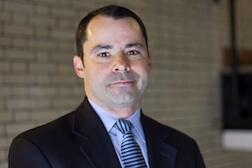
michael buehler
Michael Buehler’s specialty at SOAS is Southeast Asian politics with particular reference to state-society relations during democratization and decentralization. His many publications include articles in Comparative Politics, Party Politics, and Indonesia; chapters in Beyond Oligarchy, Deepening Democracy in Indonesia, and Problems of Democratisation in Indonesia; and on-line contributions to Aljazeera, The Diplomat, and New Mandala. His book “The Politics of Shari’a Law: Islamist Activists and the State in Democratizing Indonesia” will be published by Cambridge University Press in August 2016.

Michael’s scholarly career has included teaching positions and research fellowships at Columbia University, Northern Illinois University, Northwestern University, and the Royal Netherlands Institute of Southeast Asian and Caribbean Studies. His doctorate is from The London School of Economics and Political Science. 

Michael Buehler
Download pdf
Michael Buehler Lecturer in Comparative Politics, School of Oriental and African Studies, University of London
Seminars
News Type
Commentary
Date
Paragraphs

Stanford experts from the Shorenstein Asia-Pacific Research Center (APARC) spoke with media in Asia and the United States about the dynamics on the Korean Peninsula following recent provocations by North Korea; a roundup of those citations is below.

The United Nations imposed a new set of sanctions against North Korea on March 2 in response to the country’s fourth nuclear test in January and subsequent rocket launch in February of this year. Shorenstein APARC Director Gi-Wook Shin offered his view in an interview with Dong-a Ilbo:

“The new sanctions are unprecedentedly strong and comprehensive, but the dominant view is pessimistic,” he said, emphasizing that the sanctions’ effectiveness stands largely on the shoulders of China, which is North Korea’s largest trading partner.

“Only if China doesn't fizzle out after a few months – but continuously enforces the sanctions – will we see any meaningful effect,” he said.

Shin also called upon South Korea to play a leadership role in dealing with North Korea because the United States has only limited interest in solving the nuclear problem, and China, will not change its approach and continue to move according to its own interests.

Shin relayed a similar message in an interview with Maeil Shinmun last December. South Korea must break from its own perception that it is the “balancer” between China and the United States. South Korea, often described as a “shrimp among whales,” should instead strive to play a larger role as a “dolphin,” he said.

Furthermore, Shin told Maeil that the U.S.-Korea relationship and the U.S.-China relationship are very different from each other, and should be viewed as they are. He pointed out that the U.S.-Korea relationship is an alliance where the two countries act accordingly as one body, whereas the China-Korea relationship is a strategic partnership insofar as the two countries cooperate on selective issues of mutual interest.

In a separate interview with the Associated Press, David Straub, associate director of the Korea Program, was asked about the possibility of peace talks with North Korea as an alternative to or parallel with the U.N. sanctions. Straub said “it would not make sense” and that “there is no support for such an approach in Washington” because of the strategic partnership between China and North Korea. He also told Voice of America that the new sanctions will significantly increase the political, diplomatic, and psychological pressures on North Korea's leaders to rethink their pursuit of nuclear weapons.

Hero Image
665980
The U.N. Security Council unanimously adopts resolution 2270, imposing additional sanctions on North Korea in response to that country’s continued pursuit of a nuclear weapons and ballistic missile program, March 2, 2016.
United Nations
All News button
1
Authors
News Type
News
Date
Paragraphs

Stanford foreign policy experts discussed flashpoints around the world at an OpenXChange event this week.


Three of Stanford's most seasoned international affairs experts discussed foreign policy and diplomacy – and practiced a bit of it on stage, too – as they tackled the topics of refugees, Russia and other politically thorny issues at a campus forum March 1.

The event, "When the World Is Aflame," featured Condoleezza Rice, a Stanford political science professor and former U.S. secretary of state; Michael McFaul, director of Stanford's Freeman Spogli Institute for International Studies and former U.S. ambassador to Russia; and Jeremy Weinstein, a Stanford political science professor and former director for the National Security Council.

Janine Zacharia, a Stanford visiting lecturer in communication and former Jerusalem bureau chief and Middle East correspondent for the Washington Post, was the moderator.

The event was hosted by OpenXChange, a campus initiative to provide a forum for students and community members to focus on today's societal challenges.

"So you were resetting some of my policy?" Rice half-jokingly interjected, as McFaul discussed the objectives behind the U.S. trade talks with Russia a few years ago.

"It was not about making friends with the Russians – I want to make that clear," McFaul continued after the laughter in the audience died down. "And it wasn't that we needed to correct the wrongs from the previous period," he said, casting a quick glance over at Rice. "The Russians had an interest in giving the Iranians a nuclear weapon. Our answer was, no, and let's work with them to prevent that."

A series of trade sanctions with Russia were eventually accomplished, but as it turns out, McFaul noted, the political environment has since changed with Russia's aggression in Crimea, Ukraine and Syria.

Today's conflict in Syria was laid about four years ago, the panelists agreed, when the United States decided to aid the rebels and not overtly attack the current regime.

"There were reasons our president and others did not go down that path, but it was an invitation to others to play games in that environment," Weinstein said. "What their endgame is, we don't know."

Rice added that Russian President Vladimir Putin "does not mind countries that basically don't function." As such, "a stable, functioning Syria was never his definition of success."

Zacharia asked, "Are you saying we have yielded the endgame to the Russians in Syria? There is nothing we can do? And we're playing defense?"

"Yes," Rice answered.

"Wait, there is no endgame," McFaul said. "It's not that we yielded the endgame."

"Right," Rice replied.

Though the panelists' opinions differed at times, the trio of political science professors agreed on many points, including that international order is being tested, and that the refugee crisis is an overwhelming problem – one that the United States should help resolve.

"I'm a firm believer that America has a moral obligation to take [refugees]," Rice said. "But let's remember that we have to have a way to take them that is actually going to work within the system."

"We have a humanitarian architecture that simply isn't up to the task," Weinstein said. Securing congressional funding to reform the system will be a challenge.

What's more problematic, McFaul added, is that the current political rhetoric about how the United States should handle refugees is "based on fear."

"We're not having a rational debate about this in my opinion," McFaul said. "We have to fill the debate with empirical facts instead."

Public fears will continue as long as extreme Islamic State terrorist groups remain influential, "inspiring lone wolves like [those] in San Bernardino," Rice said, referring to the December 2015 terrorist attack there that killed 14 and injured 22 people.

"Somebody has got to defeat ISIS in its crib," Rice said. "They march in columns; they don't hide in caves like al-Qaeda. If CBS News can find them, then the American military can find them."

The tougher challenge, however, will be the task of influencing sectarian politics and creating a more stable state in the long term, Weinstein said.

Stanford – with its cache of expertise – should strive to shape the national dialogue with concrete facts and analyses, McFaul said. Inspiring students and giving them the foundational tools to become the new generation of policy leaders is also part of that, he said. Adding a course on Russian politics would also be an improvement, he said.

Weinstein is a senior fellow at the Freeman Spogli Institute. Rice, a former Stanford provost, is the Denning Professor in Global Business and the Economy at Stanford Graduate School of Business and the Thomas and Barbara Stephenson Senior Fellow at the Hoover Institution.

The panelists urged students to gain a deep knowledge of the areas and issues they care about.

"Know your facts," Rice emphasized.

"When you're making policy decisions at the table, the people who understand these places and understand the political dynamics – those are the people whose voices are second to none around the table," Weinstein said.

"And we need to get you prepared for that in a more robust way," McFaul said, inviting students to pass any ideas about this to him.

In terms of career choices, "there's nothing greater" than public service, he said. "Sometimes I would get goose pimples when I could stand in front of Russians with the American flag behind me, representing the United States of America."

Hero Image
16193 condi mike L.A. Cicero
All News button
1
Paragraphs

While power asymmetry typically defines security relationships between allies, there exist other forms of asymmetry that influence alliance politics. In order to illustrate how they can shape policy outcomes that cannot be explained solely through the lens of power capabilities, the authors examine the role of relative attention that each side pays to the alliance. It is their central argument that since the client state has a greater vested interest in the alliance and given that attention depends on interest/need, the client state can leverage attention to get its way. By analysing two specific cases, the 2002 South Korean schoolgirls tragedy and the 2008 beef protests—instances where the South Koreans succeeded in compelling U.S. concessions—the authors show that because the alliance was more central to the client state’s agendas, there existed an asymmetry of attention that offered leveraging opportunities for the weaker ally. In this study, the authors emphasise the role of media attention as a key variable, and seek to contribute to debates on weaker party leverage in asymmetrical alliances.

All Publications button
1
Publication Type
Journal Articles
Publication Date
Journal Publisher
Australian Journal of International Affairs
Authors
Gi-Wook Shin
-

Universal Health Coverage (UHC) is a well-embraced policy goal in the 21th century, which aims to ensure financial risk protection while assuring access to quality care.  However, up to this date, out-of-pocket (OOP) payment remains the principal means of financing health care throughout much of Asia, which leaves people financially unprotected in the face of illness.  High OOP payment at point of service is likely to either make people become medically impoverished after paying for health care, or force people to forgo treatment needed, which is detrimental to one’s health.   This presentation is based on empirical results derived from EQUITAP  (Equity in Asia-Pacific Health Systems) Project II on catastrophic payment that aims to estimate the magnitude and distribution of OOP payments for health care in 23 countries and territories in the Asia-Pacific Region in 2007.  We also draw comparisons to the results in 2000 as changes arise due to various reforms implemented since 2000.

Image
rachel lu
Jui-fen Rachel Lu, is the Fulbright Visiting Scholar at the Center for East Asian Studies, Stanford University, and Professor in the Graduate Institute of Business and Management and Department of Health Care Management, College of Management, at Chang Gung University in Taiwan, where she teaches comparative health systems, health economics, and health care financing and has served as department chair (2000-2004), Associate Dean (2009-2010) and Dean of the College of Management (2010-2013).  She earned her B.S. from National Taiwan University, and her M.S. and Sc.D. from Harvard University, and she was also a Takemi Fellow at Harvard (2004-2005) and is an Honorary Professor at Hong Kong University (2007-2017). She cofounded the Taiwan Society of Health Economics (TaiSHE) in 2008 and is currently the President of TaiSHE (2014-2017).  Professor Lu also serves as a board director for the International Health Economics Association (iHEA) (2016) and a member of the Arrow Award Committee for iHEA (2014-2016).

Her research interests are in assessing the impact of the NHI program on health care markets and household consumption patterns, and comparative health systems in the Asia-Pacific region with a focus on equity performance.  She is a long-time and active member of the Equitap (Equity in Asia-Pacific Health Systems) research network.  Professor Lu has also been appointed to serve on several advisory boards to the Taiwan Ministry of Health and Welfare and National Health Insurance Administration, Ministry of Science and Technology.

She received the Minister Wang Jin Naw Memorial Award for Best Paper in Health Care Management in 2002 and was the recipient of the IBM Faculty Award in 2009.

Jui-fen Rachel Lu, Sc.D. Fulbright Visiting Scholar, Center for East Asian Studies, Stanford University
Seminars
News Type
News
Date
Paragraphs

The Wall Street Journal quotes REAP's director Scott Rozelle, on the differences between President Hu and President Xi's approach to China's rural economy. To read the original article, click here.


After Mr. Hu retired in late 2012, and China deemphasized his push for a “harmonious society,” less happened with the foreign run rural banks. 

Citigroup Inc. says its network of Citi Credit outlets remains at four – including two in Hubei province – the same it reported in 2011. Spokesmen for both Standard Chartered Plc and Australia and New Zealand Banking Group Ltd. each say their push into village banking stopped at one outlet.

The “three nong” issues remain important to Xi Jinping’s administration, according to the conclusion of a seminar on the subject held last September and covered in state-run media. (Mr. Xi didn’t attend the event.)

Not everyone agrees. The former Chinese leaders, Mr. Hu and Premier Wen Jiabao, “for all their indecisiveness in other parts of the economy did a tremendous amount for rural policy,” said Scott Rozelle, an expert on the sector at Stanford University. Mr. Rozelle added that during Mr. Xi’s administration “there’s been almost no effort and even some backtracking on the rural economy.”

Hero Image
3 nong picture
China's top leadership has deemphasized rural economic policy, halting the spread of foreign banks.
The Wall Street Journal / James T. Areddy
All News button
1
Date Label
News Type
News
Date
Paragraphs

Seventeen faculty members and researchers from Stanford’s Freeman Spogli Institute for International Studies were hosted at U.S. Pacific Command (USPACOM) Headquarters in Hawaii for an intensive orientation on Feb. 4-5. The visit aimed to advance collaboration and to offer a deeper understanding of USPACOM’s operations to Stanford scholars who study international security and Asia.

Admiral Harry B. Harris, Jr., Commander of USPACOM, together with his commanders and staff, welcomed the delegation. Harris’s meeting with Stanford faculty is the second in recent months. The USPACOM visit and earlier speech at Stanford Center at Peking University are part of a series of activities driven by the U.S.-Asia Security Initiative. Led by Ambassador Karl Eikenberry, the Initiative seeks to provide constructive interaction between academic and governmental experts on the many and diverse security challenges facing the Asia-Pacific region.

“Engaging deeply in conversations with those who are on the frontlines is incredibly valuable,” said trip participant Coit Blacker, FSI senior fellow and professor of international studies. “This is especially true for academics who focus much of their attention thinking about the prospects for international peace and security but not necessarily considering their direct application on a military-level.”


[[{"fid":"222122","view_mode":"crop_870xauto","fields":{"format":"crop_870xauto","field_file_image_description[und][0][value]":"","field_file_image_alt_text[und][0][value]":"","field_file_image_title_text[und][0][value]":"","field_credit[und][0][value]":"","field_caption[und][0][value]":"","field_related_image_aspect[und][0][value]":"","thumbnails":"crop_870xauto"},"type":"media","attributes":{"width":"870","style":"line-height: 1.538em;","class":"media-element file-crop-870xauto"}}]]

Image
pacom 3

Top: (Left) The Stanford delegation watches a demonstration of a 2-minute drill. / (Right) Karen Eggleston boards a UH-60 Blackhawk helpcopter enroute to the Lightning Academy with her colleagues. Bottom: The delegation takes a group photo on-site.


On the first day, FSI scholars spoke with military officers about the command’s strategies and challenges it faces, such as population aging and sovereignty disputes over the South China Sea. Discussions were followed with a tour of USS Michael Murphy, a guided missile destroyer which routinely conducts operations in the Western Pacific including the South China Sea.

Karen Eggleston, FSI senior fellow and director of the Asia Health Policy Program, was one of the discussants on the USPACOM trip. Her research focuses on health policy in Asia, specifically the effects of demographic change and urbanization.

“As a health economist, the visit yielded for me a behind-the-scenes sense of how members of the military respond to pandemics and humanitarian situations, and of the ongoing dialogue with their counterparts in Asian nations,” Eggleston said. “I think that kind of military-to-military engagement provides an area rich with questions and best practices that could in some ways be shared as a model among other nations.”

Other activities on the first day included a briefing by the U.S. Pacific Fleet command, informal presentations and dialogue between the Stanford participants and the USPACOM staff, and working with senior leaders of the U.S. Pacific Air Forces command.

On the second day, the group visited the U.S. Army’s installation at Schofield Barracks. There, they observed a command post simulation and field exercise including units of the 25th Infantry Division. Graduates from the U.S. Army’s jungle survival training school also shared their impressions of applying lessons in the field. Researchers from the Asia-Pacific Center for Strategic Studies (APCSS) joined the Stanford delegation later in the day. Both sides discussed research outcomes and avenues for future exchanges. The day concluded with an extensive tour of USS Mississippi, a Virginia-class attack submarine. FSI has long engaged military officers through a senior military fellows program. Started in 2009 by the Center for International Security and Cooperation, the program remains active today with five fellows conducting research at Stanford.

Lt. Col. Jose Sumangil, a 2015-16 U.S. Air Force Senior Military Fellow, participated in the Stanford delegation at USPACOM.

“The trip was an excellent opportunity to showcase how the U.S. ‘rebalance to Asia’ strategy is implemented on a day-to-day basis – for example, providing a look into the decision-making process that could occur should a situation arise in the South China Sea,” Sumangil said. “It’s incredibly important to build this kind of understanding among experts studying Asia, and I think we helped do that here.”

USPACOM is one of the largest U.S. military commands with four major service components (U.S. Pacific Fleet, U.S. Pacific Air Forces, U.S. Army Pacific, U.S. Marine Forces); it is tasked with protecting U.S. people and interests, and enhancing stability in the Asia-Pacific Region.

Hero Image
pacom headline
A Stanford delegation of 17 faculty members and researchers visited U.S. Pacific Command (USPACOM) Headquarters in Hawaii, Feb. 4-5, 2016.
All News button
1
-

The recent US-ASEAN summit at Sunnylands in California is just the latest high-profile instance of Washington's efforts to strengthen its relations with Asia. Through a MacArthur Foundation-supported project he is leading, Bates Gill has explored a range of old and new security ties between the US and its partners in the Asia-Pacific region, including Indonesia, Myanmar, Vietnam, and Australia. Each of these governments seeks to strike the right balance between Washington and Beijing, but the domestic and foreign policies they employ for that purpose differ greatly. Basing his findings and analysis on extensive field research in these countries, Prof. Gill will offer recommendations for Washington and its regional partners as they look to engage with and hedge against a rising China.

Image
bates4x6
Bates Gill has a 30-year international career as a China watcher, having held teaching, research, and executive leadership positions in the United States, China, Europe, and Australia. He is currently a board director of China Matters, a not-for-profit advisory based in Sydney, Australia. In 2012-15 he was CEO of the United States Studies Centre at the University of Sydney. He directed the Stockholm International Peace Research Institute from 2007 to 2012 and previously held the Freeman Chair in China Studies at the Center for Strategic and International Studies and served as the inaugural director of the Center for Northeast Asian Policy Studies at the Brookings Institution. 

Prof. Gill has authored or edited seven books including Rising Star: China's New Security Diplomacy and Asia's New Multilateralism: Cooperation, Conflict and the Search for Community (co-edited with Michael Green). His professional affiliations include service on the editorial boards of China Quarterly and the Journal of Contemporary China, the international advisory board of the Shanghai Institutes of International Studies, and the board of governors of the Rajaratnam School of International Studies (Singapore). His PhD is from the Woodrow Wilson Department of Government and Foreign Affairs at the University of Virginia.

The US, China and the Balance of Influence in and around Southeast Asia
Download pdf
Bates Gill Professor of Asia Pacific Strategic Studies, Australia National University
Seminars
Authors
News Type
News
Date
Paragraphs

Globalization has lifted more than one billion people out of extreme poverty, but as inequality and barriers to trade remain worldwide, improved trade standards are needed and the Trans-Pacific Partnership promises to be a primary conduit of those standards, America’s top trade official told a Stanford audience on Tuesday.

Ambassador Michael Froman, the U.S. Trade Representative, spoke of the merits of the multilateral trade agreement, known as the ‘TPP,’ in a speech given at the Freeman Spogli Institute for International Studies (FSI).

The TPP seeks to liberalize trade and investment between 12 Pacific Rim countries. Signed earlier this month, the document now faces the path to ratification through its members.

“In today’s rapidly globalizing world, the alternative to the TPP is not the status quo,” Froman told nearly one hundred affiliates and guests at the Bechtel Conference Center.

Froman cited efforts by various countries to build up alternative frameworks that promote free trade, but said they miss some components of stability and longevity that the TPP offers. For example, China’s 'one belt, one road' initiative and the Regional Comprehensive Economic Partnership, a negotiation between 16 Asian countries.

The TPP would serve as an important benchmark for countries seeking to expand economic gains from trade and to level up on common “rules of the road.” He said increase in exports to the United States alone is estimated at $350 billion a year.

“Smart trade agreements like the TPP are how we shape globalization the right way,” Froman said with a call for continued U.S. leadership on the matter.

President Obama has been a strong advocate of the agreement, in line with the administration’s ‘rebalance to Asia’ strategy. The rebalance is a regional strategy that aims to recognize the growing importance of the Asia-Pacific region to U.S. national interests.

Successful passage of the TPP will reassure allies in the region of American staying power, he said.

Countries outside of the TPP have begun to express interest in becoming a party to the agreement. South Korea, Taiwan, the Philippines and Indonesia are among them. Application to join the TPP is now closed, but we can “expect over time” that its membership would grow, he said.

At a 2013 conference, FSI scholars examined the potential impact on Taiwan should it seek membership. Outcomes from the conference are published in this report.

Froman said the TPP supports “commerce without borders” among key sectors in the United States, in particular, those found in and around Silicon Valley.

“No state stands to benefit more from the TPP than California,” he said.

Froman announced the release of a report that details TPP provisions focused exclusively on technology and intellectual property.

The event was hosted by the U.S.-Asia Security Initiative in association with FSI, the Shorenstein Asia-Pacific Research Center and the Stanford Institute for Economic Policy Research. The Initiative aims to facilitate constructive interaction between academic and governmental experts on security challenges facing the Asia-Pacific region.

Video from the event including Froman’s speech and the Q&A is available here.

Hero Image
dsc 2025a
Ambassador Michael Froman, the U.S. Trade Representative, delivers remarks on the Trans-Pacific Partnership at Stanford on Feb. 16, 2016.
Rod Searcey
All News button
1
Subscribe to Asia-Pacific