Origin Story
Related Multimedia

Presentation

Fewer girls in low-and-middle-income countries finish secondary school, resulting in poorer health and economic outcomes for their own children — and perpetuating the vicious cycle of gender inequality worldwide.
According to The World Bank, in Sub-Saharan and South Asia, boys are 1.5 times more likely to complete secondary education than girls. Many are forced to stay at home and help their mothers with housework and childcare, particularly if a younger sibling is sick.
Yet the potential gains from increased participation of women in the global workforce over the next decade are estimated at $12 trillion. Studies show that women’s equal participation in the workforce could boost some countries’ GDP by up to 20 percent.
Stanford Health Policy’s Marcella Alsan, a physician and economist, argues in a new study in the journal Pediatrics, that identifying contributors to education disparities and making investments in early childhood health could significantly advance global health and development.
“There are so many advantages to girls staying in school,” Alsan, an assistant professor of medicine at Stanford Medicine, said in an interview. “For one thing, the longer they’re in school, the less likely they are to become young mothers or contract HIV. And the more educated the mother, their own children have better chances of survival.”
So what are some of the biggest barriers to girls completing secondary school in less developed countries?
Alsan and her co-authors found the gender gap is compounded by illness among young children in the household since adolescent girls are often tasked with childcare and domestic chores. The problem is exacerbated if the mother works outside the household.
Follow the Numbers
Along with SHP research data analyst Anlu Xing, Alsan and her team used Demographic and Health Surveys on 41,821 households in 38 low-and-middle-income countries. The surveys asked about illnesses in children under 5 in the last two weeks, and then asked the adolescent boys and girls if they had been in school in the same period.
As expected, more girls remained at home than boys. When no young children in the household are ill, adolescent girls are on average 6 percent less likely to attend school than adolescent boys within the same household.
But the gap increases to 7.8 percent if the household reports one illness episode among an under-5 child, and up to 8.5 percent if there are two or more episodes of illness.

In other words, the authors write, “The gender gap in adolescent school attendance increased by around 50 percent when young children in the household became ill.”
The education gap between adolescent boys and girls jumps to 10.06 percent if the younger child has two or more episodes of illness — and the mother is working outside the home or in the fields.
“Policies that strengthen family and community supports for challenges such as sick child care will prove essential,” the authors write, “particularly as women move increasingly into the workforce outside the home.”
Alsan’s co-authors are Eran Bendavid, assistant professor of medicine and core faculty member at Stanford Health Policy; Gary Darmstadt, a professor of pediatrics and associate dean for maternal and child health at Stanford Medicine; and Paul Wise, another core faculty member at SHP and professor of pediatrics.
Vaccines Also Key
Alsan and her team also examined data on the gender gap in adolescent education in association with national vaccine rates, using the same country-year surveys.
They found that in countries where about 70 percent of all the boys and girls had the same series of eight vaccines — including polio, diphtheria, tetanus and measles — the gender gap in education approaches zero.
“We hypothesize that countries with high rates of childhood vaccination will experience lower rates of young child illness, thereby decreasing the need for adolescent girls’ to devote time to caring for sick children,” the authors write.
Given the long-term benefits of secondary school for women’s health and economic outcomes, the authors believe their study underscores the societal benefits of keeping girls in school. A combination of vaccines and early childhood interventions to keep toddlers healthy and their older sisters in school are paramount.
“The international community agrees that educating girls through secondary school has plenty of societal benefits — we show that health interventions targeting young kids are an important way to do just that,” says Alsan. “Not only the targeted little kids benefit but also their older sisters — a double dividend.”

President Donald Trump ascended to office with an estimated $3.5 billion of personal wealth tied up in his global real estate empire. This has raised a variety of concerns about conflicts of interest, particularly the potential for cronyism and corruption. But the greatest danger is that U.S. foreign policy will be fundamentally distorted by the president’s business interests. We face what might be dubbed a “nepotist peace”: The United States will avoid any conflict that puts a Trump Tower, the embodiment of his familial business empire, at risk.
Congratulations to CISAC honors program Class of 2017! On June 16, students in the CISAC Interschool Honors Program in International Studies graduated in a conferral of honors ceremony on the front lawn of Encina Hall.
We are proud to add our 12 new graduates to our expanding list of graduates from the program since it began in 2001. In total, CISAC has 193 alumni in honors. For the students, their graduation reflects an intellectual adventure that included a two-week honors college program in Washington D.C., tours of government agencies, meetings with influential policy makers, and weekly seminars with CISAC faculty. Honors students are also required to research and complete an original thesis on an important national security issue.
The 2017 program was co-directed by Martha Crenshaw and Chip Blacker. Crenshaw said, "We stress hard work, independent thinking, intellectual honesty, and courtesy and civility. Our students are critical without being disrespectful, open to new ideas and ways of thinking, and self-made experts in the subjects they have chosen."
In his remarks, Blacker said several features of the CISAC program make it distinctive. "These include the diversity of the disciplines represented by the student's major fields of study, which range this year from political science, history and international relations, on the one hand, to computer science, energy systems engineering, and materials science and engineering, on the other. ..."
While each project is different, "they all share the unifying and overarching themes of advancing the international security agenda and having value and utility in policy terms," Blacker said. The program, he added, places a "premium on knowledge of the real world, and of the art and science of policymaking in particular, coupled with intensive training in research and writing."
During the conferral ceremony, CISAC honors teaching assistant Shiri Krebs read statements from the students' thesis advisors regarding their final papers. Read below for those comments:
 Ken-Ben Chao
A New Journey to the West: The Shanghai Cooperation Organization and Chinese Foreign Policy
Thesis Advisor: Coit. D. Blacker
"What is the Shanghai Cooperation Organization and, to be blunt, why should we care? In essence, this is the question that Ben Chao seeks to answer in this thoughtful, comprehensive and well-written senior thesis. Ben’s answer, like the question, comes in two parts. The Shanghai Cooperation Organization, he tells us, is neither an emerging alliance nor a diplomatic “talk shop.” Rather, it has been – and it continues to be – a subtle instrument of Chinese foreign policy that has waxed and waned in importance since its creation in 2001 depending on Beijing’s assessment of the international security environment. In Ben’s judgment, this is reason enough for us to care and for us to pay attention. Ben’s thesis is a superior piece of scholarship that tells us a great deal about something most of us know little about and does so in an informed and wonderfully entertaining way."

When Things Are Not What They Seem: Explaining the Success of Countering Violent Extremism in Los Angeles
Thesis Advisor: Martha Crenshaw
"A policy of countering violent extremism and radicalization, known as “CVE,” was a hallmark of the Obama Administration as it struggled to respond to the threat of “homegrown” jihadist terrorism. But what is CVE? And is it effective? These questions motivated Marina Elmore’s fascinating inquiry into the apparent success of the Los Angeles program, highly praised as a model on the national level. Marina probed deeply into the case to discover that special circumstances predetermined the outcome and that the model was not easily transferable to other cities. For one thing, Los Angeles did not actually face a challenge of violent extremism because it lacked a population susceptible to the appeal of jihadist propaganda. For another, the city had already implemented most of the newly prescribed CVE “best practices,” such as community policing, in efforts to solve earlier social and political problems. Marina’s conclusions are astute, balanced, and fair, and she persuasively demonstrates both how important it is to test commonly held assumptions and how difficult it is to establish standards for policy effectiveness in the counterterrorism field."
 Gabbi Fischer
Towards DIUx 2.1 or 3.0? Examining DIUx’s Progress Towards Procurement Innovation
Thesis Advisors: Herb Lin, Dan Boneh
"In 2015, Secretary of Defense Ashton Carter announced the creation of Defense Innovation Unit Experimental (DIUx). Through some great case-based work, Gabbi cuts through the complexity of the traditional acquisition system to observe that DIUX fills two important niches in the defense innovation ecosystem: it facilitates connections between DoD users and the tech community and it exercises non-traditional acquisition authority (called Other Transaction Authorities (OTAs)) to expedite contracting. But she also cautions that the use of OTA may not be compatible in the long run with the traditional acquisition system, and suggests that future DIUX efforts may have to take advantage of other existing acquisition authorities (which do exist but which are rarely used) to make further progress in improving the coupling between the tech sector and the DoD. She makes also substantive recommendations that DIUX should take seriously if it wants to survive in the long term."
 Wyatt Horan
Evaluating the U.S. Foreign Policy Institutions in Permitting a Coercive Russian Energy Policy
Thesis Advisor: Coit D. Blacker
"Following the twin “oil shocks” of the 1970s, the U.S. Government moved effectively to reduce the potential economic and political impact of any future such events by reorienting and reshaping key foreign policy institutions. When, thirty years later, the Russian government under Vladimir Putin began to manipulate Russian deliveries of natural gas to its customers in Europe, the U.S. failed to respond in a focused, deliberate and coordinated way. In this provocative senior thesis, Wyatt asks whether the clumsy American response to Russia’s manipulation of this vital energy resource contributed to Moscow’s alarming behavior. He answers in the affirmative and by so doing forces us to think hard about how seemingly obscure organizational issues impact the effectiveness of U.S. foreign policy. Wyatt’s thesis is bold and a little unsettling. It also reads like a detective novel, which is a tribute to the author’s willingness to run risks in search of a good story."
 Tori Keller
The Rise and Fall of Secular Politics in Iraq
Thesis Advisor: Lisa Blaydes
"As you know from interacting with Tori over the past year(s), she is a passionate – almost obsessively curious – student of contemporary Iraqi politics. Her drive to understand the case has led her to write a normatively-motivated, policy-relevant thesis on the failure of democratic consolidation in Iraq. Her research suggests that a non-sectarian political future for Iraq was possible; the historical antecedents for such a vision existed. But as a result of a combination of US missteps, Iranian interference and, most importantly, the way these factors manifested into an insecure security environment, secular parties never really had a real chance to succeed even if a plurality of voters supported such an outlook. To write this thesis, Tori invested in her own human capital development in impressive ways. She studied Arabic, learned ArcGIS mapping software, collected original data, and undertook statistical analysis – deploying the skills she had acquired in her four years at Stanford with the goal of answering this research question. In the end, I believe she has the right answer as well. If there was any doubt left in her mind about whether she got it “right,” I feel confident that she would still be puzzling through the research today."
 Alexander Lubkin
Plutonium Management and Disposition in the United States: History and Analysis of the Program
Thesis Advisor: Rod Ewing
"Alex’s thesis examines the issues related to the failure of the U.S. program for the disposition of excess plutonium from dismantled nuclear weapons. Based on his survey of the literature and interviews with key actors in this program, Alex analyzed the U.S. program and has made a number of important observations and conclusions concerning the causes for the failure of the U.S. program. His most significant conclusion is that one of the major causes of failure was that the U.S. program to use irradiated MOX fuel for the disposition of the plutonium was not consistent with U.S. nuclear policy. The U.S. is pursuing an open nuclear fuel cycle, and thus has limited experience with large scale processing of radioactive materials and the fabrication of MOX fuel. Alex was able to identify a number of other issues, such as over reliance on cost and schedule estimates of the different strategies and a failure to utilize advances in materials science for the development of actinide waste forms. I am very impressed with Alex’s dedication to this research project, and his persistence in the review of an often confusing and obscure literature. We have met regularly over the past year. I outline broad areas that he might investigate, but then he took these ideas and developed them according to his on evaluation of a variety of different sources. He also did an exceptional job of synthesizing the information from the interviews into an interesting and informative chapter in his thesis. Alex’s research will be the basis for a publication, but most importantly, he has opened the door to a whole series of policy issues that require more detailed analysis. He has certainly educated me on a number of these issues."
 Jian Yang Lum
To Bomb or Stab? The Impact of Ideology and Territorial Control on Rebel Tactics
Thesis Advisors: Joseph Felter, Jeremy Weinstein
“Lumpy” as we know him- explores how rebel groups’ ideology and degree of territorial control affect the type of violence they choose to employ in pursuit of their aims. Using fine grained conflict data and case studies from thirty-six years of insurgency and counterinsurgency in the Philippines, Lumpy finds both quantitative and qualitative evidence in support of the predictive model he develops in his thesis. In sum, rebel groups with weaker ideological commitment and more limited control of the territory they operate in are more likely to initiate indiscriminate attacks such as bombings and employment of improvised explosive devices. More ideologically committed rebels, and those exercising greater territorial control, initiate violence that is comparatively more discriminate such as targeted raids and assassinations. The human toll and economic costs incurred by civil war and insurgency around the world are staggering and continuing to mount. There is an urgent need for policy relevant scholarship that increases our understanding of the local level violence associated with these deadly conflicts and how states can better anticipate and respond to these threats. Lumpy’s thesis makes a significant contribution to these important ends."
 Elizabeth Margolin
Should I Retweet or Should I Go? Pro-ISIS Twitter Communities and American Decapitation Strategy
Thesis Advisors: Martha Crenshaw, Justin Grimmer
"There are many studies of the U.S. Government’s use of military force in “decapitation” strikes against terrorist leaders, particularly the effects of these strikes on levels of violence and degree of organizational cohesion. Researchers have also analyzed the relationship between social media and terrorism generally. But the specific question of the social media reactions of jihadist sympathizers to decapitation strikes directed against Islamic State leaders was neglected until the idea occurred to Eli Margolin, who took it up as the subject of her honors thesis. This difficult, demanding, and often frustrating research project required Eli to master new cutting-edge analytical methodologies and struggle to acquire elusive data from the archived Twitter accounts of now banned users, obstacles that she overcame with impressive ability, determination, and sophistication. After extensive and thoughtful consideration of three carefully selected cases, she found that Twitter followers of jihadist causes react quite differently to the deaths of different types of terrorist leaders. Her intellectual ambition and tenacity produced a thesis that is excellent in terms of conceptualization, analytical rigor, and empirical foundation."
 Lauren Newby
From Zero to Sixty: Explaining the Proliferation of Shi’a Militias in Iraq after 2003
Thesis Advisor: Martha Crenshaw
"Why has there been a sharp increase in the number of Shia militias in Iraq, a troubling development that may jeopardize Iraqi progress toward stability and democracy? Lauren Newby could not find a good answer in her review of the theoretical literature, so she proposed an original one of her own. Most scholars attribute the proliferation of violent non-state actors to the fragmentation of existing groups through splintering and splitting, whereas Lauren shows that in Iraq the increase is due to the emergence of new groups. Researchers typically focus on groups directly opposing the state, whereas the Iraqi militias side with the incumbent government. Most studies are limited to groups operating in a single bounded conflict zone, whereas the politics of Iraq and Syria are linked. Lauren concludes that the Syrian civil war has been a major impetus for the formation of Shia militias in Iraq and that most are established by Iraqi political parties. Her thesis is exemplary in making a clear and convincing claim, contrasting it to alternative explanations, and providing new supporting evidence from primary sources."
 nhViet Nguyen
Territorial Disputes in Court: Power, Compliance, and Defiance
Thesis Advisor: Kenneth Schultz
"In the wake of the arbitration ruling over the China-Philippines dispute in the South China Sea, AnhViet wanted to understand what the prospects were for this ruling to help resolve the conflict. To do so, he placed this case in the context of other territorial disputes that have involved great powers or states who were significantly more powerful than their adversaries. This led to the central research questions: why and under what conditions do great powers comply with adverse court rulings over territorial issues? The thesis draws nicely on the existing literature to articulate several hypotheses and then tests these hypotheses using a variety of methods. Case studies of the US-Mexico dispute over the Chamizal tract and the Nigeria-Cameroon dispute over the Bakassi Penninsula show that great powers who initially reject adverse court decisions might later find these rulings to be a convenient basis for settlement. He also makes a very important and sophisticated point that great power compliance with court rulings may reflect their ability to keep high salience issues off the agenda. The conclusion is mildly optimistic about the prospects for (eventual) compliance while remaining appropriately clear-eyed about the limits of international law in this context. Overall, AnhViet does an admirable job blending theoretical material, historical case studies, and large n data to develop his argument. Moreover, his application of these lessons to the contemporary case of the South China Sea dispute is nuanced and compelling. In short, AnhViet’s thesis represents an excellent example of how academic research can be made relevant to current policy issues."
 Thu-An Pham
On Treaties and Taboos: U.S. Responses to International Norms in the NPT and Genocide Convention (1945-1999)
Thesis Advisor: David Holloway
"Thu-An Pham has written an outstanding thesis on the role of norms in international relations. The United States has not tried strenuously to enforce the Genocide Convention of 1948, which calls for the prevention and punishment of genocide. It has, however, actively sought to enforce the nonproliferation norm expressed in the Nuclear Nonproliferation Treaty of 1968. What explains the difference? On the basis of a subtle theoretical analysis and detailed empirical research, Thu-An offers three answers. First, the Nonproliferation Treaty is better supported than the Genocide Convention by institutions that monitor and enforce compliance. Second, the United States has regarded the norm of nuclear nonproliferation as more important for its national security than the ban on genocide. And third, the nonproliferation norm supports the current international order, which is based on the primacy of states in international relations. The Genocide Convention, by contrast, threatens to weaken the foundations of that order by challenging the primacy of states. Thu-An’s thesis suggests that there are limits on the role that international norms can play in a system of states. This is a wonderful thesis on a crucial issue in international security."
 Jack Weller
Counting the Czars: Extra-Bureaucratic Appointees in American Foreign Policy
Thesis Advisor: Amy Zegart
"White House czars are frequently discussed in the press, but most people don’t really know what they are and very few scholars have studied them. Yet the use of czars has serious implications for the presidency—signaling when the regular bureaucracy cannot get the job done. Jack Weller’s thesis provides a novel and important contribution to the study of the American presidency. He compiles an original dataset of every foreign policy czar created during the past 100 years and examines alternative explanations for why some presidents used czars more than others. He finds something surprising: czar creation is NOT driven by the individual management style of the president. Instead, it is driven by the external threat environment. Presidents facing simultaneous wars – as FDR did in World War II and George W. Bush did after 9/11 – are more likely to create czars than others. Jack’s thesis is beautifully written and masterfully argued, earning him the honor of being Stanford’s czar of czars."

Andrew J. Grotto, a former top National Security Council cybersecurity official in the White House, will join Stanford’s Center for International Security and Cooperation this summer.
Grotto will hold the William J. Perry International Security Fellowship and serve as a research fellow at the Hoover Institution. His appointment is for two years, and he will also be a fellow in the Stanford Cyber Initiative.
Cybersecurity focus
Grotto has been involved in virtually every major U.S. cyber policy initiative of the past nine years, from his time on Capitol Hill through his tenure in the Obama Administration as Commerce Secretary Penny Pritzker's senior advisor on technology policy, and to his recent service for two presidents as senior director for cyber policy at the National Security Council.
Amy Zegart, CISAC's co-director for the social sciences and a senior fellow at the Hoover Institution, said, "Grotto is one of the world's leading cyber policymakers. He brings deep knowledge, penetrating insights, and experience at the highest levels on issues ranging from trade to espionage to cyber warfare. We are delighted to have him join the cyber community at CISAC and Hoover."
In an interview, Grotto said that cyber policy remains underdeveloped as a distinct policy domain. And that has drawn him to CISAC, he noted, “for its commitment to becoming a leading institution supporting the development of this domain.”
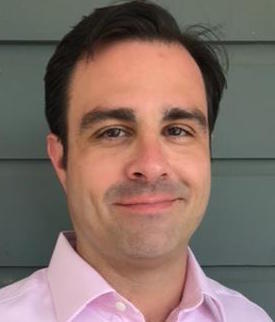
Grotto first became familiar with CISAC's work during an earlier phase of his career when he focused on U.S. policy towards nuclear weapons - how to prevent their spread, and their role in U.S. national security strategy. CISAC core faculty member Scott Sagan was an early mentor of Grotto’s and first exposed him to CISAC and its scholarly work. Grotto describes the center as a “first-rate research institution at a world class university, with great people. I'm thrilled to be a part of it.”
Topics to explore
Cybersecurity policy is a vast field, Grotto said, because virtually every national security challenge facing the country has a cyber dimension to it.
“I'd be hard pressed to identify a single directorate within the National Security Council that my team and I did not at some point work with on a ‘cyber and…’ problem: cyber and the financial services sector, cyber and the electric grid, cyber and global economic competitiveness, cyber and China, to name a few. So, there's no shortage of cyber-related topics to write on,” he said.
Several policy problems stand out as foundational for Grotto, and these will be the focus of his research and writing while at CISAC:
• Development of analytic frameworks for defining the dimensions and boundaries of private sector responsibility, especially infrastructure, for defending against cyber threats, versus the government’s responsibility, and using these frameworks to evaluate cybersecurity regulation and identify opportunities and challenges for more effective cybersecurity partnerships between the government and the private sector.
• Cyber-enabled information operations as both a threat to, and a tool of statecraft for, liberal democracies.
• Opportunities and constraints facing offensive cyber operations as a tool of statecraft, especially those relating to norms of sovereignty in a digitally connected world.
For example, Grotto explained, an adversary physically located in Country X may have cyber infrastructure in Country Y and Country Z, such that an operation against that adversary generates effects in one or more third countries. “How we approach this ‘third country’ issue will have dramatic ramifications for the practical role of offensive cyber operations in U.S. national security strategy,” he noted.
• Governance of global trade in information technologies, especially cybersecurity-related regulation, norms of behavior in cyberspace for governments and private actors, and the appropriateness of applying traditional arms control tools such as export controls to limit the proliferation and use of malicious cyber capabilities.
National Security Council highlights
Grotto said working at the National Security Council was “a privilege of a lifetime. It was the most challenging and intense job I have ever had, and easily the most rewarding.”
His portfolio spanned a range of cyber policy issues, including defense of critical infrastructure—financial services, energy, communications, transportation, health care, electoral infrastructure, and other vital sectors—cybersecurity risk management policies for federal networks, consumer cybersecurity, and cyber incident response policy and incident management. He also covered technology policy topics with a nexus to cyber policy including encryption, surveillance, privacy, Internet of Things, and the national security dimensions of artificial intelligence and machine learning.
Grotto said his first job out of graduate school was at a prominent Washington, D.C. think tank. “I viewed it as a waypoint on the path to becoming a law professor, and an academic career focused on international trade law and policy,” he said.
There he was surrounded by people who had served in government, and their “passion for public service was infectious,” he recalled.
He left the think tank to join the Professional Staff of the Senate Select Committee on Intelligence, where he served as then-Chairman Dianne Feinstein’s (D-CA) lead staff overseeing cyber-related activities of the intelligence community and all aspects of NSA’s mission. He also served as committee designee first for Senator Sheldon Whitehouse (D-RI) and later for Senator Kent Conrad (D-ND), advising the senators on oversight of the intelligence community, including of covert action programs, and was a contributing author of the “Committee Study of the Central Intelligence Agency’s Detention and Interrogation Program.”
In 2013, he left the committee to become Commerce Secretary Penny Pritzker’s senior advisor on technology policy, advising Pritzker on all aspects of technology policy, including Internet of Things, net neutrality, privacy, national security reviews of foreign investment in the U.S. technology sector, and international developments affecting the competitiveness of the U.S. technology sector.
While serving on the NSC, Grotto played a key role in shaping President Obama’s Cybersecurity National Action Plan and driving its implementation. He was also the principal architect of the Trump Administration's cybersecurity executive order, “Strengthening the Cybersecurity of Federal Networks and Critical Infrastructure.”
During his time on Capitol Hill, he led the negotiation and drafting of the information sharing title of the Cybersecurity Act of 2012, which later served as the foundation for the Cybersecurity Information Sharing Act that President Obama signed in 2015.
Grotto received a master’s degree in public administration from Harvard University, a law degree from UC Berkeley, and a bachelor’s degree in philosophy from the University of Kentucky.
MEDIA CONTACT:
Andy Grotto, Center for International Security and Cooperation: grotto@stanford.edu
Clifton B. Parker, Center for International Security and Cooperation: 650-725-6488, cbparker@stanford.edu

The 2017 Forum will feature a luncheon keynote address on “Primary Care in the Netherlands: Lessons for China” by Jeroen N. Struijs, Senior Researcher in the Department of Quality of Care and Health Economics, National Institute of Public Health and the Environment, The Netherlands. Additional prominent speakers include Dr. Huncheol Bryant Kim, Cornell University, US, speaking on health policy in South Korea; Dr. Bei Lu, University of New South Wales, Australia, speaking on China’s efforts to integrate long-term care with primary care--Experiences of Qingdao’s Long-term Care Insurance program; Dr. Xiaoyun Liu, Peking University, on China’s primary care workforce; Dr. Jiayan Huang, Fudan University, on a model of integrated care from southern China; and Dr. Qiulin Chen, China Academy of Social Sciences, speaking on “Strengthening China’s primary care: A view from Inner Mongolia.” In addition, select policymakers and providers will introduce China's overall healthcare system reforms as well as discuss challenges to strengthening primary care in China.
Stanford Center at Peking University
Stanford Center at Peking University
Darika Saingam joins the Walter H. Shorenstein Asia-Pacific Research Center as the Developing Asia Health Policy Postdoctoral Fellow for the 2015-16 year. Saingam’s research interests are public health, substance abuse, drug policy and Southeast Asia. While at Shorenstein APARC, she will research the evolution of substance-abuse control measures and related policy in Thailand. Saingam seeks to identify potentially effective policy directions suitable for Thailand, and other developing countries in Southeast and East Asia.
Saingam completed her doctorate in epidemiology at the Prince of Songkla University in 2012, and has served as a researcher at the University’s epidemiology unit since, as well as a researcher at the Thailand Substance Abuse Academic Network since 2014.
Shorenstein APARC
Encina Hall E332
616 Serra Street
Stanford, CA 94305-6055
Gendengarjaa Baigalimaa joins the Walter H. Shorenstein Asia-Pacific Research Center (Shorenstein APARC) during the 2013-2014 acedemic year as the Asia Health Policy Program Fellow. She joins APARC from the Mongolian National Cancer Center, where she serves as a Gynecological Oncologist.
During her appointment as Health Policy Fellow, she will conduct a comparative study of how knowledge of cervical cancer risk factors has influenced behavior changes in Mongolia before and after the introduction of the National Cervical Cancer Program.
Baigalimaa is the Executive Director of Mongolian Society of Gynecological Oncologists and is also a member of the International Gynecological Cancer Society (IGCS) in Mongolia, Russia, and France.
Baigalimaa holds a MD from Minsk Belarussia Medical University. She also received a Masters in Health Science from Mongolian Medical University. She is fluent in both Russian and English.
Shorenstein APARC
Encina Hall C331
616 Serra Street
Stanford, CA 94305-6055
Margaret (Maggie) Triyana’s main research interests are inequality and human capital investments in developing countries. In particular, she is interested in the effects social policy changes on children’s health outcomes. As a Postdoctoral Fellow, she will analyze the effects of rural-urban migration in Indonesia and China, as well as the impact of health insurance expansion in Indonesia and Vietnam.
Triyana received a PhD in Public Policy from the University of Chicago in 2013.
Working Papers
“Do Health Care Providers Respond to Demand-Side Incentives? Evidence from Indonesia“
“The Effects of Community and Household Interventions on Birth Outcomes: Evidence from Indonesia”
“The Longer Term Effects of the ‘Midwife in the Village’ Program in Indonesia”
“The Sources of Wage Growth in a Developing Country” (with Ioana Marinescu)
Walter H. Shorenstein
Asia-Pacific Research Center
616 Serra St C335
Stanford University
Stanford, CA 94305-6055
Ang Sun joins the Walter H. Shorenstein Asia-Pacific Research Center (Shorenstein APARC) from Brown University’s department of economics where she recently received her PhD.
Sun’s research interests encompass development economics, labor and demographic economics, and health economics. She focuses on intra-household allocations, gender differences, and household formation. In particular, she studies how a combination of different forces in China—including traditional values, rapid growth, and the population structure—is affecting Chinese families. During her time at Shorenstein APARC, Sun will participate in an interdisciplinary study of the impact of the aging process in Asia on economic growth.
Sun holds a PhD and an MA in economics from Brown University, and an MA from the China Center of Economic Research. She also received a BA in economics and a BS in information and computer science from Beijing University.
Shorenstein APARC
Stanford University
Encina Hall, Room C335
Stanford, CA 94305-6055
Qiulin Chen is a postdoctoral fellow of Shorenstein APARC and a member of the center's Asia Health Policy Program. His main interest of research is health economics and public finance, focusing on policy and outcome comparison of health care systems and Chinese health reform. His dissertation focused on performance comparison between public (or governmental) and private health care financing, between local and central government responsibility on health care, between contracted and integrated health care system. In particular, his dissertation examined under Chinese-style decentralization, known as fiscal decentralization with political centralization, how economic competition affect local government's behaviour on health investment, and why public contracted system obstructs health performance and provides one channel of such effects in terms of preventive care and public health. He is currently involved in a comparative research project on demographic change in East Asia based on the National Transfer Accounts data and analysis.
Chen's recent publication is "The changing pattern of China's public services" (with Ling Li and Yu Jiang) in Population Aging and the Generational Economy: A Global Perspective (Ronald Lee and Andrew Mason, editors), forthcoming 2011. Before studying in Stanford, he has published more than 10 papers in academic journals in Chinese, such as Jing Ji Yan Jiu (Economic Research) and Zhong Guo Wei Sheng Jing Ji (Chinese Health Economics), and 5 book chapters. He has participated in about 20 research projects, such as A Design of Framework for Healthcare Reform in China which is commissioned by the State Council Working Party on Health Reform, Strategy Planning Study of "Healthy China 2020" which is commissioned by the Minister of Health, and Health Challenge in the Aging Society and It's Policy Implication funded by Chinese National Natural Science Foundation.
Chen earned his Ph.D. in Economics from Peking University in 2010, and earned a B.A. in Business Administration from Nanjing University in 2001. From 2004 through 2008, he was Executive Assistant of the Director of the China Centre for Economic Research at Peking University (CCER). He is also a postdoctoral fellow of National School of Development at Peking University (Its predecessor is CCER).
CISAC's co-director Amy Zegart wrote this essay, "James Comey's 'Shock and Awe' Testimony," for The Atlantic in its June 8 edition and was also quoted in this Stanford News Service article:
Imagine that two years ago, you sequestered a jury of 12 Americans, kept them in a news-free zone, and brought them today to hear former FBI Director James Comey testify before the Senate Intelligence Committee. Chances are that all of them—no matter what their political beliefs—would be stunned and outraged.
From the perspective of one of these Americans, Comey dropped bombshell after bombshell: The Russians are mucking around in American democratic elections, trying to change how we think, how we act, how we vote—and they will be back. The attorney general cannot be trusted to ensure impartial enforcement of the law. The president fired the FBI director and then lied about why he did it. Yet by the time Comey said these things in an open hearing, all of it was old news. It should have been more shocking than it was, but on some level, Americans were used to it.
Some historical context here is important. Only one FBI Director has ever been fired since J. Edgar Hoover took the job back in 1924: William Sessions, who was sacked by President Bill Clinton in 1993 after the Justice Department's own Office of Professional Responsibility found so many severe ethical lapses, they filled a 161-page report. It included schemes to avoid paying taxes, using government funds to build an expensive home fence that actually reduced the security of the property, using FBI resources for personal purposes, and involving his wife, Alice, in bureau management in “entirely inappropriate” ways. Comey, by contrast, was fired by President Trump for doing his job. Big difference. One was miscarrying justice and abusing power; the other was carrying out justice and speaking truth to power.
Similarly, the only episode in recent history approximating the cloud hanging over the attorney general’s office occurred during the Watergate scandal. That attorney general chose to resign rather than fire White House special prosecutor Archibald Cox and impede an investigation reaching into the White House. This attorney general, by contrast, appears to be implicated in an investigation that reaches into the White House.
Finally, never in American history has a foreign power so deliberately, powerfully, and maliciously tried to distort the cornerstone of American democracy. Comey sent this point home in the hearing, declaring, “There should be no fuzz on this whatsoever. The Russians interfered in our election during the 2016 cycle. They did it with purpose. They did it with sophistication. They did it with overwhelming technical efforts. … It is a high confidence judgment of the entire intelligence community. ... It's not a close call.”
Comey’s testimony delivered a “shock and awe” campaign, FBI-style: calm, cautious, and candid, at once stoic and relatable. It was as though Comey were trying to reach through our television sets and shake the body politic into our collective senses.
And yet, his shock and awe testimony may not shock and awe for long. The biggest story of the day is how unlikely this is to remain the biggest story. In all likelihood, after the Twittersphere dies down, partisans will retreat to their respective corners and business as usual will return to Washington.
Why?
Because of something called the “normalization of deviance:” the more frequently exceptional things happen, the less we think of them as exceptional. Over time, we become desensitized to events that fall far outside the normal range—often with disastrous consequences. The space shuttle Challenger exploded in 1986 despite previous shuttle launches that revealed O-ring seals in the shuttle’s rocket boosters were cracking in cold weather. They shouldn’t have been cracking at all. But NASA “normalized” the poor performance of O-rings as acceptable and okayed the launch, even with record low temperatures forecast for liftoff. Seven astronauts, including Christa McAuliffe, the first teacher in space, were killed.
We experience the normalization of deviance in daily life, too. Ever hear a funny noise in your car? The first time, it seems alarming. After living with it for a few days, however, you think it must not be so serious after all. You tell yourself the car seems to be running just fine. You grow accustomed to the noise. After a while you don’t notice it anymore. And maybe the car really is fine. Or maybe the funny noise is an indication that the car is about to experience a catastrophic breakdown (which is what happened to me one night, when I assumed a strange noise in my car was really nothing, until the car broke down on the freeway, at night, in Los Angeles, “without warning.”)
The Trump era has brought the normalization of deviance to politics. In four short months, this administration’s national-security advisor has had to resign in disgrace for lying about his contacts with Russians and now faces possible criminal charges. The attorney general is so tainted by his own Russian-related activities that he has had to recuse himself from the bureau’s investigation of Russian-related activities. And the FBI director, who by law serves a 10-year term precisely to ensure independence from the president, was fired by the president because he was independent. This is bizarro world. Any one of these events would in normal times be enough to bring down a president. And yet senators today were talking about whether President Trump’s exact words to Jim Comey constituted a hope, a wish, an order, a directive, a threat, or as one senator characterized it, simply a “light touch” approach.
Comey was right about one thing: The Russians “are coming after America.” They may not have to. In this era of normalized deviance, we are defeating ourselves.
Read Amy Zegart's comments and those from other Stanford faculty in this Stanford News Service article.

Encina Hall, Room C129
Stanford, CA 94305-6055
Faith Angel joins FSI from the Walter H. Shorenstein Asia-Pacific Research Center, where she began her Stanford career in April 2017 as the finance manager. Prior to joining Stanford, she spent 13 years in the accounting and finance department of a private higher education institution. She holds a master's degree in organizational leadership and a bachelor's degree in business administration.
North Korea’s economy continues to move ahead despite years of isolation and international trade restrictions. The economy is performing at a moderate rate with a mean GDP growth rate of 0.7 percent from 2004 to 2015, and appears to be a focus of the regime’s policy decision-making, researchers have found.
“The government has embraced markets as an acceptable and effective way to improve performance and enhance legitimacy but maintains the ability to regulate marketized activities,” SK Center Fellow Yong Suk Lee and Shorenstein APARC Fellow Thomas Fingar wrote in a joint report released today.
The report, available in English and Korean (forthcoming), is an outcome of research collaboration between the Shorenstein Asia-Pacific Research Center (APARC) and the Institute for National Security Strategy (INSS), a research body focused on national security policy that is part of the South Korean government.
Conducted over the course of six months, the collaboration included two roundtable meetings at Stanford and in Seoul with the report’s co-authors from the INSS, Kwang-Jin Kim and Hyung-Seog Lee, and Korea-focused scholars at Shorenstein APARC, including Gi-Wook Shin, director of the center; Kathleen Stephens, the William J. Perry Fellow; and Daniel Sneider, associate director for research.
“We set out with the research question ‘how is the current North Korean regime performing,’ and through our engagements with the INSS, were able to combine our expertise and look at the question from new and different angles,” said Shin, also a professor of sociology and director of the Korea Program, who initiated the collaboration.
The researchers participated in discussions and parsed through data and qualitative accounts, including surveys from the INSS and reporting by journalists. From their collaboration, they determined two approaches to understanding the country’s economic and institutional expansion since Kim Jong-un assumed power six years ago, both of which are outlined in the report.
Their first approach suggests that organizational and personnel changes in Kim Jong-un’s cabinet, key ministries and committees were undertaken, at least in part, to enact operational effectiveness and a more productive economy.
“There’s evidence that indicates new appointments by Kim Jong-un were intended to maintain or enhance the ability of the government to meet continuing and new policy objectives,” said Fingar, a political scientist with an emphasis on Northeast Asia.
Kim Jong-un has attempted to consolidate control by removing at least two-dozen officials in the government’s main governing body – the Korean Workers’ Party, and in some cases, promoting them to different positions.
In the report, the researchers mapped the systems of North Korea’s three rulers since its founding in 1948 and the significant leadership changes under Kim Jong-un, noting that recent vice-premier promotions have included new economic responsibilities.
Personnel changes in the military have also involved positions responsible for oversight of foreign relations, commerce, oil and statistics, which suggest that officials are judged not only on their loyalty to the regime, but also on their performance at the job, Fingar said.
Their second approach suggests that North Korea’s improved economic performance is linked to its expansion of markets, and since 2009, its increased trade and investment with China.
“While the government maintains the ability to regulate market activities, North Korea’s growing dependence on the ‘private sector’ is a sign of the priority assigned to it and of its movement away from a socialist-style economy,” said Lee, an economist and deputy director of the Korea Program.
Officially licensed markets in North Korea have been estimated to number in the hundreds and the government collects taxes from them. There also exists a similar estimate for unofficial markets operating in the country, according to data cited in the report.
The researchers said it is improbable that North Korea will abandon market-oriented activities and capital inflows from outside its borders, particularly from China, in a time of tightening sanctions from the U.N. Security Council and other countries in response to North Korea’s repeated nuclear and missile tests.
“Taken together or apart, the two approaches we’ve put forth provide a comprehensive puzzle for future study,” said Lee. “We hope this report brings additional lenses that researchers can apply to analyze the performance of the North Korean regime and that policymakers can use to assess the efficacy of international sanctions.”


