The coordinated suicide bombings that killed more than 30 people and wounded 250 more at an international airport and downtown subway station in Brussels on Tuesday were “shocking but not surprising” and shared many of the hallmarks of previous European terror attacks, according to Stanford terrorism experts.
“My research shows that in general, terrorist plots in Europe involve larger numbers of conspirators than do plots in the United States,” said Martha Crenshaw, a senior fellow at Stanford’s Center for International Security and Cooperation (CISAC).
Belgian authorities said that as many as five people may have been directly involved in the bombings, including two Belgian-born brothers with violent criminal records, and that several suspects were linked to the same terrorist network that carried out the deadly Paris attacks last November.
“It is common for terrorist conspiracies anywhere to be formed from prior social groupings – friends and relatives,” said Crenshaw.
“The bonds that link individuals are not entirely ideological by any means. Criminal backgrounds are also not surprising. Indeed prison radicalization is a well-known phenomenon.”
A Notorious Neighborhood
Many of the suspects in the Brussels bombings had ties to the inner-city neighborhood of Molenbeek, a majority Muslim enclave of mostly Moroccan descent with a long history as a logistical base for jihadists.
[[{"fid":"222520","view_mode":"crop_870xauto","fields":{"format":"crop_870xauto","field_file_image_description[und][0][value]":"Belgian police stand guard in the Molenbeek district in Brussels during an operation to arrest Paris attacks suspect Salah Abdeslam on March 18, 2016.","field_file_image_alt_text[und][0][value]":"Belgian police stand guard in the Molenbeek district in Brussels during an operation to arrest Paris attacks suspect Salah Abdeslam on March 18, 2016.","field_file_image_title_text[und][0][value]":"Belgian police stand guard in the Molenbeek district in Brussels during an operation to arrest Paris attacks suspect Salah Abdeslam on March 18, 2016.","field_credit[und][0][value]":"John Thys/AFP/Getty Images","field_caption[und][0][value]":"Belgian police stand guard in the Molenbeek district in Brussels during an operation to arrest Paris attacks suspect Salah Abdeslam on March 18, 2016.","field_related_image_aspect[und][0][value]":"","thumbnails":"crop_870xauto"},"type":"media","attributes":{"alt":"Belgian police stand guard in the Molenbeek district in Brussels during an operation to arrest Paris attacks suspect Salah Abdeslam on March 18, 2016.","title":"Belgian police stand guard in the Molenbeek district in Brussels during an operation to arrest Paris attacks suspect Salah Abdeslam on March 18, 2016.","width":"870","style":"width: 550px; float: right; height: 366px; margin-left: 15px;","class":"media-element file-crop-870xauto"}}]]French and Belgian police arrested Salah Abdesalam, who had been identified as the last surviving member of the ten-man team responsible for the Paris attacks and an apparent associate of the Brussels bombers, near his family home in Molenbeek just four days before the Brussels attacks.
“Brussels and particularly Molenbeek is one of those places that comes up a lot when you’re talking about counter terrorism,” said Terrence Peterson, a postdoctoral fellow at CISAC.
“You do have terrorism networks that use these areas, in the same way that organized crime does, to thrive…It seems to be the place where all the networks are locating in part because Belgian security hasn’t been very effective in fighting terrorism.”
Foreign Fighters Bring the War Home
Belgium is a small nation, with a population of around 11 million people, but it has the highest per capita percentage of any Western country of foreign fighters who have joined the battle in Iraq and Syria, according to a recent report, which estimated the total number at 440.
“People were even saying it was not a matter of if, but when Belgium was attacked,” said Joe Felter, a CISAC senior research scholar and former Colonel in the U.S. Army Special Forces.
“You’ve got a high concentration of radicalized individuals in that neighborhood of Brussels, so logistically it was easier for them to recruit, plan and coordinate the execution of these attacks. Local residents loading up explosive packed suitcases in a cab and driving across town to the airport exposes them to much less risk of compromise than would a plot requiring cross border preparation and movement by foreign citizens.”
Felter said he was concerned that the Brussels bombings, for which the Islamic State group has claimed responsibility, would inspire copycat attacks in other countries.
“The real risk now is these home-grown, self-directed terrorist attacks,” he said.
“A successful attack like this, with all its media attention and publicity, is only going to inspire and motivate more attempts going forward.”
Former U.S. Secretary of State and presidential candidate Hillary Clinton delivers a foreign policy address at Stanford's Freeman Spogli Institute for International Studies on March 23, 2016.
Former U.S. Secretary of State and presidential candidate Hillary Clinton said European nations needed to do a better job of sharing intelligence to track foreign fighters as they returned home, during a foreign policy speech at Stanford’s Freeman Spogli Institute for International Studies on Wednesday.
“The most urgent task is stopping the flow of foreign fighters to and from the Middle East,” Clinton said.
“Thousands of young recruits have flocked to Syria from France, Germany, Belgium and the United Kingdom. Their European passports make it easier for them to cross borders and eventually return home, radicalized and battle-hardened. We need to know the identities of every fighter who makes that trip and start revoking their passports and visas.”
Turkey’s president announced at a press conference on Wednesday that his country had deported one of the suspected Brussels bombers back to the Netherlands last year with a clear warning that he was a jihadi.
Identifying Hot Spots
Clinton said authorities also needed to work to improve social conditions in problem areas such as Molenbeek.
“There…has to be a special emphasis on identifying and investing in the hot spots, the specific neighborhoods, prisons and schools where recruitment happens in clusters as we’ve seen in Brussels,” Clinton said.
Other European countries such as Denmark, which has also been struggling to deal with a high percentage of foreign fighters, are trying to proactively to discourage citizens from travelling to Syria to fight, said Anja Dalgaard-Nielsen, former executive director of the Danish Security and Intelligence Service and a CISAC affiliate.
“Politicians are likely to talk about tougher legislation, but there are also measured voices, calling for a strong, long term preventive effort against radicalization to prevent problems from growing out of hand,” said Dalgaard-Nielsen.
Cover of the book "Why Muslim Integration Fails in Christian-Heritage Societies" co-authored by Stanford Political Science professor David Laitin.
“Police need to prioritize community outreach and long term trust building to try to ensure the collaboration of minority groups and socioeconomically disadvantaged communities in the effort against terrorism.”
Stanford political science professor David Laitin, who recently published the book “Why Muslim Integration Fails in Christian-Heritage Societies,” in collaboration with Claire Adida and Marie-Anne Valfort, said his research found that Muslims faced higher discrimination in the economy, in society and in the political process compared to Christians from similar immigrant backgrounds.
“But there is no evidence that higher degrees of discrimination lead Muslims into the unspeakable acts that members of an inhuman cult are performing in the name of Islam,” said Laitin, who is the James T. Watkins IV and Elise V. Watkins professor in the School of Humanities and Sciences.
“From what we have tragically seen, the attractiveness of the present murderous cult does not derive from everyday discrimination," he said. "Research has shown that it is not the poor and downtrodden who are radicalized in this way; but rather reasonably educated second-generation immigrants from largely secular backgrounds.”
Europe Divided
Laitin said he expected to see many European countries tighten their border controls in response to the Brussels attacks, as well as greater support in the United Kingdom for the movement to leave the European Union in the upcoming referendum.
“The biggest short-term effect, in my judgment, will be the erosion of one of the great achievements of European integration, namely Schengen, which promised open borders throughout the continent,” Laitin said.
“I foresee greater security walls that will come to divide European countries.”
Fighting a Hostile Ideology
Felter said that while it was undoubtedly important to improve intelligence sharing and invest in greater security measures as part of concerted efforts to target ISIS and interdict future terrorist plots, the key to undermining support for and defeating ISIS was combating its perverted version of Islam.
And, he said, that effort would have to come largely from within the Islamic community itself.
“The symptoms may be suicide bombers in airports, but the root cause is this hostile ideology that’s being pushed on these at-risk individuals through aggressive radicalization and recruitment efforts carried out largely via the internet that then inspires them to carry out these self-directed, ISIS-inspired attacks,” Felter said.
“There’s got to be a longer-term effort to address the root causes of this, to discredit and delegitimize the appeal of this ideology that they’re promulgating online and through social media that’s inspiring these young men and women to go off and commit these horrible acts in the misguided belief that it is their religious obligation to do so.”
Hero Image
A woman arrives with flowers at a cordoned-off area near Maelbeek subway station in Brussels on March 23, 2016, a day after bomb attacks in the Belgian capital killed about 35 people and left more than 200 people wounded. | Kenzo Tribouillard/AFP/Getty Images
Hillary Clinton, former Secretary of State and current presidential candidate, delivered a policy address on March 23 at the Freeman Spogli Institute for International Studies.
"It's a great treat not only for me to be at the university, but at this particular institute as well," said Clinton in her opening remarks. "You have made Stanford a center for national security scholarship, and that is the principal reason why I am here today."
Responding to the recent attacks in Brussels, which she called a "brutal reminder" of the ongoing global struggle with radical terrorism, Secretary Clinton laid out a set of counter-terrorism policy proposals that emphasized adaptability, diplomacy, and cooperation with other countries, intelligence services and Muslim communities.
"We face an adversary that is constantly adapting and operating across multiple theaters,” she said. “Our response must be just as nimble and far reaching. We need to reinforce the alliances that have been pillars of American power for decades.”
FSI Director Michael McFaul, former US ambassador to Russia, introduced Secretary Clinton, reminding the audience of her personal connection to Stanford (daughter Chelsea and son-in-law Marc Mezvinsky both attended the University). Former Secretary of State George Shultz and former Defense Secretary William Perry were in attendance. A sample of media coverage is listed below:
Abstract: What drives jihadi violence in Europe? Terrorists of today are seen as pursuing social rather than political revolt, motivated by failed integration, identity crisis and nihilism. Europe's segregated suburbs are regarded as incubators for violent radicalization, and some suggest online propaganda produces 'lone wolves' who act in unpredictable, volatile fashions. An examination of jihadi terrorist plots in Europe between 1994 and 2015 contradicts such assumptions. Terrorist cells emerge through intricate interplay between jihadi groups in war zones and European extremists. Most cells are traced to the same transnational network, which has evolved and expanded since the early 1990s. The plots are linked in time and space through people involved, and there are striking similarities between cases. This talk will reveal that lone wolves are largely a myth in Europe, as most perpetrators have network ties and interact with militants during radicalization. Terrorist cell formation is not confined to gritty suburbs and disenfranchised immigrants are not necessarily key actors. On the contrary, cells emerge in diverse settings where resourceful, well-connected and ideological entrepreneurs (cell builders) are present. Entrepreneurs recruit misfits and drifters as manpower, and embody the foremost driving force for the occurrence of plots and attacks.
About the Speaker: Petter Nesser (Cand. Polit, Dr. Philos) is a senior research fellow with the Norwegian Defence Research Establishment (FFI). Trained in social science, Middle East studies and Arabic at the University of Oslo and The American University in Cairo, Dr Nesser has conducted extensive research on jihadism in Europe for more than twelve years. His work focuses mainly on radicalization processes and terrorists’ modus operandi. Nesser communicates findings through conferences, speeches, and the media. He teaches at academic institutions and acts as advisor for Norwegian authorities on issues related to extremism. His most recent publication, Islamist Terrorism in Europe, A History (Hurst and Oxford University Press, 2015), provides a comprehensive account of the emergence and evolution of transnational militant Islamism in Western Europe.
Petter Nesser
Senior Research Fellow
Norwegian Defense Research Establishment
When assistant professor of medicine Eran Bendavid began a study on livestock in African households to determine impact on childhood health, he'd already anticipated common field problems like poorly captured or intentionally misreported data, difficulty getting to work sites, or problems with training local volunteers.
But he'd never gotten that particular question from a fieldworker before. It didn't occur to him that participating families, in reporting their livestock holdings, would completely omit the chickens running around at their feet, thereby skewing the data.
"They didn't consider chickens to be livestock," recalled Bendavid. Along with Scott Rozelle, the Helen F. Farnsworth Senior Fellow at FSI, and associate professor of political science and FSI senior fellow Beatriz Magaloni, Bendavid spoke to a full house last week on lessons learned from fieldwork gone awry. The return engagement of FSI's popular seminar, "Everything that can go wrong in a field experiment” was introduced by Jesper Sørensen, executive director of Stanford Seed, and moderated by Katherine Casey, assistant professor of political economy at the GSB. The seminar is a product of FSI and Seed’s joint Global Development and Poverty (GDP) Initiative, which to date has awarded nearly $7 million in faculty research funding to promote research on poverty alleviation and economic development worldwide.
Rozelle, co-director of the Rural Education Action Program, spoke of the obstacles to accurate data gathering, especially in rural areas where record-keeping is inaccurate and participants' trust is low. Arriving in a Chinese village to carry out child nutrition studies, said Rozelle, "we found Grandma running out the back door with the baby." The researchers had worked with the local family planning council to find the names of children to study, but the families thought the authorities were coming to penalize them for violation of the one-child policy.
Cultural differences make for entertaining and illuminating (if frustrating) lessons, but Beatriz Magaloni, director of FSI's Program on Poverty and Governance at the Center on Democracy, Development and the Rule of Law had a different story to tell. Over the course of three years, her GDP-funded work to investigate and reduce police violence in Brazil - a phenomenon resulting in more than 22,000 deaths since 2005 - has encountered obstacle after obstacle. Her work to pilot body-worn cameras on police in Rio has faced a change in police leadership, setting back cooperation; a yearlong struggle to decouple a study of TASER International’s body worn cameras from its electrical weapons in the same population; a work site initially lacking electricity to charge the cameras or Internet to view the feeds; and noncompliance among the officers. "It's discouraging at times," admitted Magaloni, who has finally gotten the cameras onto the officers' uniforms and must now experiment with ways to incentivize their use. "We are learning a lot about how institutional behavior becomes so entrenched and why it's so hard to change."
Experimentation is a powerful tool to understand cause and effect, said Casey, but a tool only works if it's implemented properly. Learning from failure makes for an interesting panel discussion. The speakers' hope is that it also makes for better research in the future.
The Global Development and Poverty Initiative is a University-wide initiative of the Stanford Institute for Innovation in Developing Economies (Seed) in partnership with the Freeman Spogli Institute (FSI). GDP was established in 2013 to stimulate transformative research ideas and new approaches to economic development and poverty alleviation worldwide. GDP supports groundbreaking research at the intersection of traditional academic disciplines and practical application. GDP uses a venture-funding model to pursue compelling interdisciplinary research on the causes and consequences of global poverty. Initial funding allows GDP awardees to conduct high-quality research in developing countries where there is a lack of data and infrastructure.
About the Topic: Despite massive research and public policy efforts aimed at diversification, gender segregation of science, technology, engineering and mathematics remains extreme in affluent democracies. More surprising is evidence that women’s representation in many “STEM” fields is weaker in advanced industrial societies than in poorer, reputably gender traditional ones. The most obvious explanation is that broad-based existential security frees more women to realize aspirations for (less lucrative) non-STEM pursuits. I will discuss another piece of the puzzle by focusing on the aspirations themselves and how these vary with societal affluence. Over-time data on eighth-grade boys and girls in 32 countries provide strong evidence that the gender gap in aspirations for mathematically-related jobs increases with societal affluence, controlling for traits of individual students (parental education, affinity for school, mathematics test scores). This affluence effect is not attributable to cross-national differences in the gender-labeling of science, Internet access, or women’s educational or economic integration. Results are consistent with arguments suggesting that gender beliefs more strongly influence career aspirations in affluent, “postmaterialist” societies.
About the Speaker: Maria Charles is Professor and Chair of Sociology, Area Director for Sex and Gender Research, and an Affiliate Professor of Feminist Studies at U.S. Santa Barbara. She specializes in the international comparative study of social inequalities, particularly cross-national differences in women's economic, educational, and family roles. She has published extensively on gender segregation, most recently on the ideological and organizational factors that contribute to woman's underrepresentation in science, technology, engineering, and mathematics ("STEM") fields around the world. She has a Ph.D. in Sociology from Stanford University, and Bachelor’s degrees from UCSB in Environmental Studies and Political Science.
Philippines Conference Room
Encina Hall Central, 3rd floor
616 Serra St.
Stanford, CA 94305
Maria Charles
Professor and Chair of Sociology, Area Director for Sex and Gender Research, Affiliate Professor of Feminist Studies
U.C. Santa Barbara
The recent rise in mass popular protests – many with regional spillover effects and some with far-reaching consequences for international peace and security – has raised the question of how the international community should respond to these events, and to what end. For the United Nations, the question becomes acute in protest situations in which there is a tangible risk of large-scale violence and human rights violations. Yet mounting a rapid and effective response is a particular challenge in these contexts. Drawing on case studies, practitioner interviews, and the author’s UN experience, this presentation will examine five variables that are critical to success: timing, access, leverage, the ability to propose solutions for non-violent change, and finding the right mix of principle and pragmatism. It will argue that these variables are not static, but dynamic and inter-independent. Getting them ‘right’ in an unfolding crisis is difficult, but it is possible to draw some preliminary lessons from the cases reviewed.
Speaker Bio:
Image
Alexandra Pichler Fong is visiting CDDRL on leave from the United Nations, where she headed the Policy Planning Unit of the Department of Political Affairs in New York. Her work focuses on cross-cutting peace and security issues, such as conflict prevention, preventive diplomacy and peacemaking, as well as policy matters pertaining to UN peace operations in a rapidly changing international security environment. She recently completed an assignment reporting to the Special Representative of the Secretary-General for West Africa, based in Dakar, Senegal, to advance the implementation of the UN’s regional strategy for the Sahel. She joined the UN in 2002 as political affairs officer and has served as adviser in the cabinet of three successive Under-Secretaries-General for Political Affairs, focusing on the regions of Europe, Latin America and Asia-Pacific as well as thematic issues such as UN reform. Before entering the UN, Alexandra worked at the International Crisis Group; a European network of development NGOs; and the European Commission. She holds a B.A. Hons. degree in Modern History and Literature from Oxford University and a Master’s degree in International Relations from the London School of Economics.
Stanford foreign policy experts discussed flashpoints around the world at an OpenXChange event this week.
Three of Stanford's most seasoned international affairs experts discussed foreign policy and diplomacy – and practiced a bit of it on stage, too – as they tackled the topics of refugees, Russia and other politically thorny issues at a campus forum March 1.
The event, "When the World Is Aflame," featured Condoleezza Rice, a Stanford political science professor and former U.S. secretary of state; Michael McFaul, director of Stanford's Freeman Spogli Institute for International Studies and former U.S. ambassador to Russia; and Jeremy Weinstein, a Stanford political science professor and former director for the National Security Council.
Janine Zacharia, a Stanford visiting lecturer in communication and former Jerusalem bureau chief and Middle East correspondent for the Washington Post, was the moderator.
The event was hosted by OpenXChange, a campus initiative to provide a forum for students and community members to focus on today's societal challenges.
"So you were resetting some of my policy?" Rice half-jokingly interjected, as McFaul discussed the objectives behind the U.S. trade talks with Russia a few years ago.
"It was not about making friends with the Russians – I want to make that clear," McFaul continued after the laughter in the audience died down. "And it wasn't that we needed to correct the wrongs from the previous period," he said, casting a quick glance over at Rice. "The Russians had an interest in giving the Iranians a nuclear weapon. Our answer was, no, and let's work with them to prevent that."
A series of trade sanctions with Russia were eventually accomplished, but as it turns out, McFaul noted, the political environment has since changed with Russia's aggression in Crimea, Ukraine and Syria.
Today's conflict in Syria was laid about four years ago, the panelists agreed, when the United States decided to aid the rebels and not overtly attack the current regime.
"There were reasons our president and others did not go down that path, but it was an invitation to others to play games in that environment," Weinstein said. "What their endgame is, we don't know."
Rice added that Russian President Vladimir Putin "does not mind countries that basically don't function." As such, "a stable, functioning Syria was never his definition of success."
Zacharia asked, "Are you saying we have yielded the endgame to the Russians in Syria? There is nothing we can do? And we're playing defense?"
"Yes," Rice answered.
"Wait, there is no endgame," McFaul said. "It's not that we yielded the endgame."
"Right," Rice replied.
Though the panelists' opinions differed at times, the trio of political science professors agreed on many points, including that international order is being tested, and that the refugee crisis is an overwhelming problem – one that the United States should help resolve.
"I'm a firm believer that America has a moral obligation to take [refugees]," Rice said. "But let's remember that we have to have a way to take them that is actually going to work within the system."
"We have a humanitarian architecture that simply isn't up to the task," Weinstein said. Securing congressional funding to reform the system will be a challenge.
What's more problematic, McFaul added, is that the current political rhetoric about how the United States should handle refugees is "based on fear."
"We're not having a rational debate about this in my opinion," McFaul said. "We have to fill the debate with empirical facts instead."
Public fears will continue as long as extreme Islamic State terrorist groups remain influential, "inspiring lone wolves like [those] in San Bernardino," Rice said, referring to the December 2015 terrorist attack there that killed 14 and injured 22 people.
"Somebody has got to defeat ISIS in its crib," Rice said. "They march in columns; they don't hide in caves like al-Qaeda. If CBS News can find them, then the American military can find them."
The tougher challenge, however, will be the task of influencing sectarian politics and creating a more stable state in the long term, Weinstein said.
Stanford – with its cache of expertise – should strive to shape the national dialogue with concrete facts and analyses, McFaul said. Inspiring students and giving them the foundational tools to become the new generation of policy leaders is also part of that, he said. Adding a course on Russian politics would also be an improvement, he said.
Weinstein is a senior fellow at the Freeman Spogli Institute. Rice, a former Stanford provost, is the Denning Professor in Global Business and the Economy at Stanford Graduate School of Business and the Thomas and Barbara Stephenson Senior Fellow at the Hoover Institution.
The panelists urged students to gain a deep knowledge of the areas and issues they care about.
"Know your facts," Rice emphasized.
"When you're making policy decisions at the table, the people who understand these places and understand the political dynamics – those are the people whose voices are second to none around the table," Weinstein said.
"And we need to get you prepared for that in a more robust way," McFaul said, inviting students to pass any ideas about this to him.
In terms of career choices, "there's nothing greater" than public service, he said. "Sometimes I would get goose pimples when I could stand in front of Russians with the American flag behind me, representing the United States of America."
Torsten Persson is Director of the IIES at Stockholm University, Centennial Professor at the London School of Economics, and has held visiting positions at leading universities as Harvard, Princeton and Berkeley. Persson is the 2008 President of the Econometric Society, and was President of the European Economic Association in 2003. His scientific prizes include the 1997 Yrjö Jahnsson Medal, given biannually to “the best young economist in Europe”. Persson’s work has spanned different areas, but he is most well-known for his articles and books on political economics. His current research focuses on development, civil war, and climate change.
This seminar is part of the Comparative Politics Workshop in the Department of Political Science and is co-sponsored by The Europe Center.
Torsten Persson
Director of the IIES at Stockholm University and Centennial Professor at the London School of Economics
Speaker
Participants: Malcolm Baker, John Brewer, Melissa Calaresu, Giorgio Caviglia, Jeffrey Collins, Paul Davis, Thea De Armond, Paula Findlen, Simon Macdonald, Rachel Midura, Grant Parker, Carole Paul, Sophus Reinhert, Catherine Sama, Rosemary Sweet, Elaine Treharne, and Caroline Winterer.
Organized by Giovanna Ceserani at Stanford University, with the generous sponsorship of the Classics Department, and co-sponsorship of the Stanford Humanities Center, the Department of History, The Europe Center, the Division of Cultures, Languages and Literatures, and the Departments of English and Art History.

 Former U.S. Secretary of State and presidential candidate Hillary Clinton delivers a foreign policy address at Stanford's Freeman Spogli Institute for International Studies on March 23, 2016.
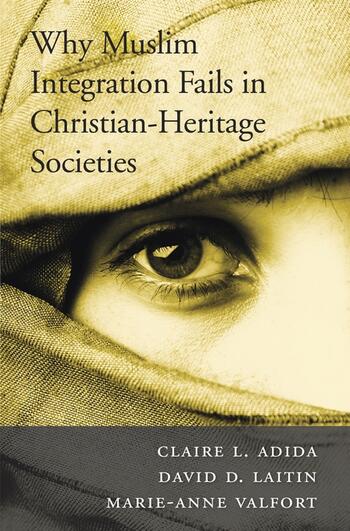 Cover of the book "Why Muslim Integration Fails in Christian-Heritage Societies" co-authored by Stanford Political Science professor David Laitin.