-


At 11am on November 11, 1918, the armistice that effectively ended the First World War was signed. What came to be known as “The Great War” had a profound and lasting impact on the cultural fabric of the nations involved: as Paul Fussell wrote, “its dynamics and iconography proved crucial to the political, rhetorical, and artistic life of the years that followed; while relying on inherited myth, war was generating new myth.” Over the course of the 20th century, the concept of war evolved beyond historically traceable moments and events to include the consideration of war as site and influence shaping every aspect of lived experience. This conference seeks to examine ways in which literature and the arts have taken up and taken apart war and the myths surrounding it -- grappling with it both as subject and context while also considering the ways in which the experience of war molded, mutilated, and morphed artistic forms. Though the word “centennial” often rings of monolithic celebration, it is equally an opportunity to highlight the attempts of writers and artists to contain, contend, or survive war and to question and problematize preconceptions and existing views of war by investigating their inherently bipolar nature.

November 9, 2018 (Day 1)
SCHEDULE:

  • 4 – 4.30pm – OPENING REMARKS
  • 4.30 - 7pm - 1st PANEL

Chair: Russell Berman (Stanford University, Professor)

  • Greg Chase (College of the Holy Cross, Lecturer)
  • ‘Death is not an event of life’: How Wittgenstein’s War Experience Re-Shaped His Philosophy
  • Victoria Zurita (Stanford University, PhD Student)
  • Ironic prospects: hope in Jean Giono’s To the Slaughterhouse
  • André Fischer (Auburn University, Assistant Professor)
  • Politics by other means: War photography in the work of Ernst Jünger
  • Nicholas Jenkins (Stanford University, Associate Professor)


For more info,  please email: massucco@stanford.edu

Sponsored by:  the Division of Literatures, Languages, and Cultures;  Stanford Department of Art and Art History; Theater and Performance Studies; Stanford Humanities Center; The Europe Center; Dept. of French and Italian; Dept. of History; Dept. of German Studies; and the Dean's Office of Humanities and Sciences.
 

Stanford Humanities Center
424 Santa Teresa Street
Stanford, CA 94305

Conferences
Authors
Beth Duff-Brown
News Type
News
Date
Paragraphs


Preeclampsia is a serious complication of pregnancy that affects 5 to 10 percent of all pregnancies — over 8 million a year worldwide — and claims the lives of 76,000 mothers and half a million babies each year.

The condition causes hypertension and abnormal protein in the urine, and has few effective preventive or therapeutic strategies. The clinical abnormalities usually resolve completely after delivery, but recent research shows that women who have had preeclampsia have higher rates of heart disease later in life, for reasons that are poorly understood.

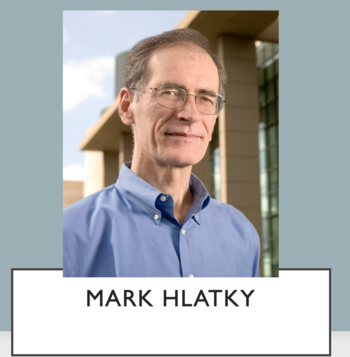
That’s where Mark HlatkyVirginia Winn, and their Stanford Medicine research team come in. They were recently awarded a 4-year, $6 million NIH grant from the National Heart, Lung and Blood Institute to study the links between preeclampsia and the subsequent risk of atherosclerotic cardiovascular disease (ASCVD) as women grow older.

“The goal of this study is to improve cardiovascular health in women, by learning how pregnancy affects heart disease later in life,” said Hlatky, a Stanford Health Policy fellow. “We hope that shedding new light on these links can lead to better prevention and treatment.”

The interdisciplinary study called EPOCH — Effect of Preeclampsia On Cardiovascular Health — could eventually help millions of women and their clinicians worldwide.

“Since about 85 percent of women become pregnant at some point during their lives, and heart disease is the leading cause of death in women, determining how pregnancy complications might increase the risk of heart disease later in life could be very important,” said Hlatky, a professor of health research and policy and of cardiovascular medicine. “If there is a specific biomarker ‘signature’ of heart disease risk in women who have had preeclampsia, it would open up new possibilities for risk assessment and better treatment to prevent heart attacks and strokes.”

Image
screen shot 2018 11 07 at 3 08 27 pm

Hlatky and his co-principal investigator, Stanford high-risk obstetrician Winn, note that a history of preeclampsia doubles the woman’s risk of future heart disease and stroke, and triples her risk of hypertension. And these adverse consequences occur at younger ages than in women who never developed the condition during pregnancy.

"The dramatic physiologic changes that happen during pregnancy are indeed remarkable," said Winn, the Arline and Pete Harman faculty scholar in the Department of Obstetrics and Gynecology. "This study highlights how complications that occur in pregnancy impact women's health beyond pregnancy." 

The pathogenic links between preeclampsia early in life and ASCVD late in life have been difficult to investigate because the process develops over decades, the authors said. And few clinicians are aware of the link between the condition and late ASCVD risk and there are no validated biomarkers for this process.

Preliminary data that contributed to the application of the project was a direct result of Winn’s endowed Arline and Pete Harman Faculty Scholar award and funding from the Stanford Maternal and Child Health Research Institute and the Stanford Cardiovascular Institute.

The 4-year grant will support a multi-disciplinary research team in taking a life-course approach. The EPOCH study will enroll three cohorts of women at distinct points in the natural history of the disorder: during pregnancy in their reproductive years; during the long, asymptomatic period in mid-life; and the ultimate development of ASCVD in later life.

“It’s very difficult to study the effects of early life events on the development of diseases late in life, since they are separated by 40 years or more,” Hlatky said. “We don’t have reliable health records in the United States from 40 or more years ago, so it’s a challenge for American researchers.” This is why, he said, the EPOCH study includes researchers from Denmark, which has a national health system, complete medical data of their citizens since the 1970’s, and a national biobank that will allow study of later life events.

The first cohort of women will include some of those who are already part of the Stanford March of Dimes Prematurity Research Center. The center, led by David Stevenson began recruiting women in 2011 to study pregnancy from the first trimester through delivery. The study has collected a wide array of “omics” measures at multiple time points: metabolomics, proteomics, cell-free RNA, the microbiome and immune cells for analysis, as well as collection of amniotic fluid, cord blood, and the placenta. The pregnancy cohort will enroll additional women who are cared for at Lucile Packard Children’s Hospital for treatment of preeclampsia, about 100 in all, plus a matched group with uncomplicated pregnancies.

This is where it gets pretty technical — but also pretty cool

The researchers will collect high-dimensional “omic” biomarker data to assess the pathophysiology of preeclampsia and its relationship to cardiovascular function and disease. They’ll assess cell signaling pathways using single-cell immune profiling (CyTOF) methods in the lab of Brice Gaudilliere, an assistant professor of anesthesia.

Image

They will then analyze the cell-free RNA profiles using methods developed by co-investigator Stephen Quake, a professor of bioengineering and applied physics, and co-president of the Chan Zuckerberg Biohub. They will assess metabolomics using novel methods also developed at Stanford by co-investigator Michael Snyder,  professor and chair of genetics.

Stanford data scientists, including co-investigators, Robert Tibshirani and Nima Aghaeepour, have been at the forefront of developing and applying novel statistical and bioinformatic approaches, which the team will use to analyze the torrents of data that can now be collected by modern “omics” technologies from individual clinical research subjects.

“The EPOCH study is truly interdisciplinary — we are bringing together faculty from eight different departments to study a major problem in women’s health.”

The second, mid-life cohort will be recruited from women who had a pregnancy complicated by preeclampsia. Marcia Stefanick, professor of medicine in the Stanford Prevention Research Center, will use the Stanford Medicine Research Data Repository (STARR), which contains electronic records from more than 1.6 million patients since 1995, to identify eligible women. Stefanick and the EPOCH team will recruit 200 pre-menopausal women who had either a pregnancy complicated by preeclampsia or an uncomplicated pregnancy.

The third, late-life cohort of women will be identified in the Danish National Biobank by Stanford visiting professor Mads Melbye. Samples will be retrieved from women who had preeclampsia early in life and ASCD later in life, as well as a set of matched control subjects, and analyzed in Stanford laboratories.

“We’re not quite sure whether the physiologic challenges of pregnancy that result in preeclampsia simply reveal underlying cardiovascular risk, or causes change that leads to the increased risk in later life,” Winn said. “The EPOCH study will identify unique aspects of preeclampsia that links it to later ASCVD, opening potential novel approaches to improve women’s health.”

The EPOCH study brings together investigators from eight departments. Additional faculty include Gary Shaw and Seda Tierney (Pediatrics), Martin Angst (Anesthesia), Nicholas Leeper (Surgery) and Heather Boyd (Danish Biobank).

Hero Image
gettyimages early pregnancy Getty Images
All News button
1
-

The paper that Mark Kayser will be presenting is co-authored by Matthias Orlowski (Humboldt University, Berlin) and Jochen Rehmert (Hertie School of Governance, Berlin).

Synopsis:  Policies are made with one eye cast to the future. As policy is most strongly influenced from within government, coalition inclusion prospects would seem predictive of the behavior of office- or policy-seeking parties. But, oddly, coalition models are poorly designed for empirical prediction. Most theoretical models rely predominantly on seat shares and ideological distance while empirical work tells us that other variables such as coalition history and anti-system parties matter as much; most empirical models predict coalition composition rather than individual parties’ coalition probabilities; neither calculate bargaining leverage between elections and neither test their predictions out of sample. We do. Combining empirical coalition formation models and a large set of political polls, we estimate coalition inclusion probabilities for parties in a sample of 20 parliamentary democracies at a monthly frequency over four decades. The probability of entering or remaining in an alternative government – i.e., bargaining leverage – serves as a strong predictor of party behavior, markedly superior to polls or expected seat shares. We demonstrate our measure’s utility with applications to no-confidence motions and financial policy reform.

Image
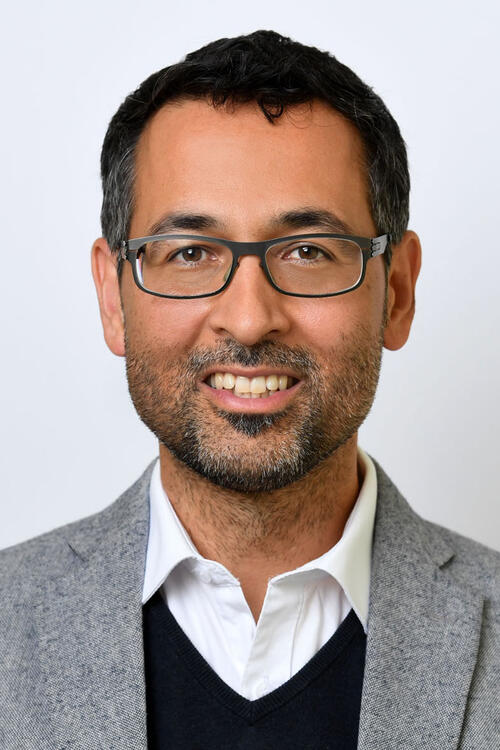
Photo of Mark Kayser, Hertie School of Governance, Berlin.

Mark Kayser teaches applied quantitative methods and comparative politics at the Hertie School of Governance in Berlin. His research generally centers on elections and political economy.  Current major projects focus on partisan responses to economic crisis, the electoral effects of media reporting of the economy, and the effect of electoral competitiveness on government responsiveness. Before coming to the Hertie School of Governance, he served as an Assistant Professor of Political Science at the University of Rochester.  He has also held a postdoctoral Prize Research Fellowship at Nuffield College, Oxford and will spend the 2018-19 academic year as a Fellow at the Center for Advanced Studies in the Behavioral Sciences (CASBS) at Stanford. He is the co-author of a book on the effect of electoral systems on regulation and price levels (Cambridge University Press, 2011) and the author or co-author of articles in the American Political Science Review, American Journal of Political Science, Political Analysis and other leading journals. He is a recipient of the 2013 GESIS/Klingemann research award, the 2007 best paper award from the APSA Section on European Politics and Society, the Senior Editor for Political Economy of the Oxford Research Encyclopdia and a member of several editorial boards.
Mark Kayser Professor of Applied Methods and Comparative Politics Speaker Hertie School of Governance, Berlin
Lectures
Authors
News Type
Commentary
Date
Paragraphs

When the subject of extending the 2010 New Strategic Arms Reduction Treaty (New START) arises, National Security Advisor John Bolton suggests the 2002 Treaty of Moscow model as a possible alternative. The Russians, however, would never agree to that now. Moreover, the Treaty of Moscow was not good arms control. Trying to replace New START with something like it would be foolish.

Read the rest at Defense One

Hero Image
steven pifer
All News button
1
0
Visiting Scholar at The Europe Center, 2018-2019
anna_peczeli_headshot.jpg

Dr. Anna Péczeli is a visiting scholar at The Europe Center (TEC) at Stanford University. She is also a research fellow at the Centre for Strategic and Defence Studies at the National University of Public Service in Budapest, Hungary. In 2016 - 2017 she was a Stanton Nuclear Security Fellow at the Center for International Security and Cooperation (CISAC) at Stanford University. Previously, she was an assistant lecturer at Corvin us University of Budapest, an adjunct fellow at the Hungarian Institute of International Affairs, a visiting research fellow at the Peace Research Institute Frankfurt, and a visiting Fulbright fellow at the Nuclear Information Project of the Federation of American Scientists in Washington, DC. Dr. Péczeli earned a Ph.D. degree in International Relations from Corvinus University of Budapest, her research focused on the Obama administration’s nuclear strategy – the review of nuclear guidance, and the extent t o which the legacies of the Cold War still define U.S. nuclear planning. Dr. Péczeli is a member of the G7 Berlin Group – International Coalition for CBRN Security Culture; the European Defence and Security Network (sponsored by the European Parliament); t he CSIS Project on Nuclear Issues (PONI); the EU Non - Proliferation and Disarmament Consortium; and chair of the Executive Board of the International Student/Young Pugwash (ISYP) group.

Authors
News Type
Commentary
Date
Paragraphs

Donald Trump did not have to withdraw from the INF Treaty. But now that he has set the wheels in motion, what does that mean for America's national security? Steven Pifer, William  J. Perry Fellow at CISAC, explores this question in this piece, which originally appeared in The National Interest.

President Donald Trump announced at a campaign rally on October 20 that the United States would withdraw from the Intermediate-range Nuclear Forces (INF) Treaty. During his October 22–23 visit to Moscow, National Security Advisor John Bolton confirmed that the president intended to withdraw from the treaty.

Keeping the treaty in place presumably would require that Trump change his mind, which at a minimum would require that the Kremlin agree to take corrective action to come back into compliance. That’s not going to happen.

The treaty was already on life support. Trump is pulling the plug, and the United States will exit the agreement six months after it gives formal notification. Russia bears primary responsibility for the treaty’s demise, but both Europe and the United States could have done more to try to save it.

The INF Treaty

Soviet deployment of SS-20 intermediate-range ballistic missiles in the mid-1970s gave rise to concern in Europe about a gap between U.S. and Soviet INF capabilities. In 1979, NATO adopted the “dual-track” decision: the Alliance agreed to deploy U.S. intermediate-range missiles in Europe while the United States sought to negotiate limits on such missiles with the Soviets.

Early rounds of the INF negotiations yielded little progress. The Soviets walked out in 1983 after the first U.S. missiles arrived in Britain and West Germany. The talks resumed in 1985. This time, they produced agreement. Ronald Reagan and Mikhail Gorbachev signed the INF Treaty in December 1987.

The INF Treaty banned all U.S. and Soviet land-based cruise and ballistic missiles with ranges between 500 and 5,500 kilometers. It entered into force in summer 1988. Three years later, the United States and Soviet Union had destroyed almost 2,700 missiles as well as their launchers, all under the most intrusive verification measures ever agreed, including on-site inspections. It was rightly called a landmark agreement.

Moscow’s Responsibility

Moscow appeared satisfied with the treaty’s performance up until the early 2000s. Senior Russian officials then began to express concern that, while the United States and Russia could not have intermediate-range missiles, third countries could. (The exceptions were Belarus, Kazakhstan and Ukraine, which, like Russia, remained party to the INF Treaty after the Soviet Union’s collapse.)

Third countries such as South Korea, North Korea, China, India, Pakistan, Iran, Saudi Arabia and Israel have developed and deployed intermediate-range missiles, with China producing hundreds. Each of these countries is geographically much closer to Russia than it is to the United States.

So one can understand the Russian concern . . . up to a point. Moscow today has a large and improving military in addition to fifteen times as many nuclear weapons as any country other than the United States. It does not need to match third countries in intermediate-range missiles.

Even if the Kremlin leadership found the situation intolerable, it had an honest way forward. It could have invoked Article XV of the INF Treaty, which allows a party to withdraw with six months notice.

Moscow, however, choose a different path. It developed and deployed a land-based cruise missile of intermediate-range, identified in 2017 as the 9M729 (NATO designator: SSC-8). That violated the treaty’s central provision. When the U.S. government charged that Russia had committed a violation, the Russians stubbornly denied those allegation and accused the United States of three treaty violations (one Russian charge, involving the Aegis Ashore missile defense site in Romania may have some merit, but the other two have no basis).

Moscow professed fidelity to the treaty, in effect laying a trap into which Trump has now clumsily stumbled. By announcing the U.S. intention to withdraw, he has set in motion a train that will leave Washington and be seen as responsible for killing the treaty. In addition, withdrawal from the treaty will allow the Russians to deploy land-based intermediate-range missiles without constraint, missiles for which the U.S. military currently has no land-based counterpart. It will be a win-win for Moscow.

Europe’s Silence

Russia thus bears the major blame for the treaty’s demise: it cheated. But U.S. allies in Europe and Washington itself could have taken more robust measures to steer Moscow back toward compliance and perhaps save the agreement.

U.S. officials first briefed their NATO counterparts about the Russian violation in 2014. From the public evidence, however, the leaders of NATO European members had little concern about that violation. None of them publicly complained about the treaty violation during or after their exchanges with Russian president Vladimir Putin.

Nothing suggests that European leaders raised the violation in private either. In spring 2017, after Russia had begun deploying the 9M729, I asked a senior official of a major European ally if his leader would raise the violation when meeting with Putin a week later. He said no with a shrug.

That silence sent a message—unintended, but a message nevertheless—to the Russians: Europeans didn’t worry much about the treaty violation or the 9M729.

Some analysts point to the concern expressed in NATO communiqués. That does not absolve European leaders from not speaking out individually about the Russian violation. Moreover, take take a look at the communiqué language.

In the September 2014 summit communiqué, two months after the U.S. government charged Russia with violating the treaty, NATO leaders said that “it is of paramount importance that disarmament and non-proliferation commitments under existing treaties are honored, including the Intermediate-range Nuclear Forces (INF) Treaty, which is a crucial element of Euro- Atlantic security. In that regard, Allies call on Russia to preserve the viability of the INF Treaty through ensuring full and verifiable compliance.”

The communiqué from the last NATO summit in July 2018 had tougher language: “Full compliance with the INF Treaty is essential. . . . Allies have identified a Russian missile system, the 9M729, which raises serious concerns. . . . A pattern of behavior and information over many years has led to widespread doubts about Russian compliance. Allies believe that,

in the absence of any credible answer from Russia on this new missile, the most plausible assessment would be that Russia is in violation of the treaty. NATO urges Russia to address these concerns in a substantial and transparent way, and actively engage in a technical dialogue with the United States.”

That language was better, but it hardly amounted to a robust denunciation, and it was buried in paragraph forty-six of a seventy-nine-paragraph communiqué.

Although the INF Treaty applied limits globally, it focused on Europe. European leaders should have pressed Putin hard on the violation, publicly condemned it, and raised political heat on the Kremlin. Their silence contrasts oddly with the public criticism of Trump’s decision voiced in Berlin, Rome and Paris and undermines the credibility of pleas for Washington to remain in the treaty. To put it bluntly, if they didn’t care enough to call out the Russian violation, then why care so much if the United States leaves the treaty?

An Ineffective U.S. Response

The U.S. response to the Russian violation could—and should—have been more forceful. The Obama administration sought to bring Moscow back into compliance, a worthy goal, but it applied little real pressure. Washington convened a meeting of the Special Verification Commission, the body established by the INF Treaty to address, among other things, compliance, only in November 2016—two years after charging a violation.

Pentagon officials described a range of military responses, including efforts to develop better defenses against cruise missiles, the European Reassurance Initiative to boost the U.S. military presence in Central Europe and the Baltics, and investments in new technologies to offset the Russian violation. These measures, however, were largely actions that the Pentagon would take in any case and which would continue even if Moscow corrected its violation. They did not create much incentive for a change in Russian policy.

The Trump administration stated on December 8, 2017—the thirtieth anniversary of the signing of the INF Treaty—that it also wanted to bring Russia back into compliance. It announced a three-pronged “integrated strategy” to do so: diplomatic steps, including

convening the Special Verification Commission, creating a military research and development program for a U.S. land-based intermediate-range missile, and enforcing economic sanctions on Russian entities that had been involved in development and production of the 9M729.

This strategy showed no success. The Special Verification Commission met, but by his own admission, Trump has never discussed the violation directly with Putin. The U.S. government either made no effort to stoke up approaches by Allied leaders to the Kremlin or, if it did, then that effort fizzled. Why didn’t U.S. officials use the threat of withdrawal with Allies to persuade them to engage Moscow more earnestly and at the highest level?

As for military steps, research and development on a U.S. intermediate-range missile likely caused little concern for the Russians. Fielding a missile would take years and cost a lot of money, money that the Pentagon does not have. The Russians, moreover, surely understand that it would be difficult, if not impossible, for NATO to reach a consensus on deploying new missiles in Europe. Recalling the huge anti-nuclear protests in Germany, the Netherlands and other countries in the early 1980s, some in the Kremlin might well welcome the intra-Alliance turmoil if NATO were to consider new deployments.

Pentagon officials suggested that the plan to build a new nuclear-armed sea-launched cruise missile (SLCM) could be suspended if Russia came back into compliance. That probably did not have much effect on Moscow’s calculations, especially if Russian officials read the 2018 Nuclear Posture Review, which laid down additional conditions: “If Russia returns to compliance with its arms control obligations, reduces its non-strategic nuclear arsenal, and corrects other [unspecified] destabilizing behaviors, the United States may reconsider the pursuit of a SLCM.”

Washington could have adopted a more robust military response. The U.S. military could have moved conventionally-armed Joint Air-to-Surface Strike Missiles (JASSMs) to Europe along with B-1 bombers to serve as delivery platforms. It could have increased the number of conventionally-armed SLCMs in European waters, for example, by sending the USS Florida, a converted ballistic missile submarine that can now carry up to 154 SLCMs, on a cruise in the North and Norwegian Seas, with port calls to let everyone know it was there. Such steps could

have been done quickly with existing capabilities, would have fully complied with U.S. treaty obligations, and would have caught the attention of the Russian military.

The U.S. government also could have treated with greater seriousness the Russian charge that the Aegis Ashore deployment in Romania of an Mk-41 launcher system for SM-3 missile interceptors was inconsistent with the treaty. An Mk-41 launcher on a U.S. warship can carry lots of other weapons, including cruise missiles; Russian officials contended that it was a prohibited launcher of land-based intermediate-range missiles. U.S. officials should have made clear to their counterparts that, if they would seriously address U.S. concern about the 9M729, then the U.S. side would deal with the Russian concern about the Mk-41.

Would these political and military steps have succeeded? We will not know, because Washington did not try. If Trump administration officials had a serious game plan for implementing the December “integrated strategy” to bring Russia back into compliance, then that plan was not apparent. That may be explained by John Bolton becoming National Security Advisor in April. A long-time critic of arms control in general, and of the INF Treaty in particular, Bolton probably was just as happy abandoning the treaty.

One other issue has arisen: Chinese intermediate-range ballistic missiles. The need to balance against those missiles has been cited as a reason for why the United States is leaving the treaty, but it is unclear if the Pentagon has even decided that it has a requirement for land-based intermediate-range missiles in Asia. In 2017, the vice chairman of the Joint Chiefs of Staff told a Senate panel that the United States could counter China with air- and sea-based weapons.

R.I.P. INF Treaty

To be sure, Russia committed an egregious violation. The United States could not be expected to remain in the treaty indefinitely under those circumstances. Those who support withdrawal are correct on that point.

However, Trump did not have to withdraw from the treaty at this time, especially when there were political and military measures to apply pressure on Moscow—measures that might have persuaded Russia to come back into compliance. Unfortunately, now we will not know if that tactic would have worked. Instead, the president has delivered a gift to the Russians, who will soon be able to deploy, without constraint, intermediate-range missiles for which the U.S. military has no land-based counterpart. As a bonus for Moscow, Washington will catch the international political flack for the treaty’s demise.

Steven Pifer, a William J. Perry fellow at Stanford and nonresident senior fellow with the Brookings Institution, worked extensively on intermediate-range nuclear forces issues in the 1980s in Washington, Geneva and Moscow.


Hero Image
steven pifer
All News button
1
-

INF Public Panel Discussion

President Trump announced on October 20 that the United States will withdraw from the 1987 Intermediate-range Nuclear Forces (INF) Treaty. That will end one of two agreements that constrain U.S. and Russian nuclear force levels, the other being the New START Treaty. What does the president’s decision mean for arms control, for European security and for an already troubled U.S.-Russia relationship?


SPEAKER

Steven Pifer
William J. Perry fellow, Freeman Spogli Institute for International Studies

Steven Pifer is a William J. Perry fellow at Stanford’s Freeman Spogli Institute for International Studies (FSI), where he is affiliated with FSI’s Center for International Security and Cooperation and Europe Center.  He is also a nonresident senior fellow with the Brookings Institution. Pifer’s research focuses on nuclear arms control, Ukraine, Russia and European security. A retired Foreign Service officer, his assignments included deputy assistant secretary of state, U.S. ambassador to Ukraine, and special assistant to the President and senior director for Russia, Ukraine and Eurasia on the National Security Council. He also served at the U.S. embassies in Warsaw, Moscow and London as well as with the U.S. delegation to the intermediate-range nuclear forces negotiations in Geneva.


COMMENTATORS

Kristin Ven Bruusgaard
MacArthur Postdoctoral Fellow, CISAC

Kristin Ven Bruusgaard is a MacArthur Nuclear Security Postdoctoral Fellow at CISAC. Her research focuses on Russian nuclear strategy and on deterrence dynamics. Dr. Bruusgaard has previously been a research fellow at the Norwegian Institute for Defence Studies (IFS), a senior security policy analyst in the Norwegian Armed Forces, a junior researcher at the Norwegian Defence Research Establishment (FFI), and an intern at the Congressional Research Service (CRS) in Washington, D.C., and at NATO HQ. She holds a Ph.D in Defence Studies from Kings College London, an M.A. in Security Studies from Georgetown University, and a B.A. (Hons) from Warwick University. Her work has been published in Security Dialogue, U.S. Army War College Quarterly Parameters, Survival, War on the Rocks, Texas National Security Review and Bulletin of the Atomic Scientists.

Michael McFaul
Director of the Freeman Spogli Institute for International Studies
Director of the Ford Dorsey Master's in International Policy

Michael McFaul is the Ken Olivier and Angela Nomellini Professor of International Studies in Political Science, Director and Senior Fellow at the Freeman Spogli Institute for International Studies, and the Peter and Helen Bing Senior Fellow at the Hoover Institution, all at Stanford University. He was also the Distinguished Mingde Faculty Fellow at the Stanford Center at Peking University from June to August of 2015. He joined the Stanford faculty in 1995. He is also an analyst for NBC News and a contributing columnist to The Washington Post. McFaul served for five years in the Obama administration, first as Special Assistant to the President and Senior Director for Russian and Eurasian Affairs at the National Security Council at the White House (2009-2012), and then as U.S. Ambassador to the Russian Federation (2012-2014).

Kathryn E. Stoner
Deputy Director of the Freeman Spogli Institute for International Studies
Deputy Director of the Ford Dorsey Master's in International Policy

Kathryn Stoner is the Deputy Director at the Freeman Spogli Institute for International Studies at Stanford University and a Senior Fellow at the Center on Democracy, Development, and the Rule of Law, as well as the Deputy Director of the Ford Dorsey Master's in International Policy at Stanford University. She teaches in the Department of Political Science at Stanford, and in the Program on International Relations, as well as in the Ford Dorsey Program. Prior to coming to Stanford in 2004, she was on the faculty at Princeton University for nine years, jointly appointed to the Department of Politics and the Woodrow Wilson School for International and Public Affairs. At Princeton she received the Ralph O. Glendinning Preceptorship awarded to outstanding junior faculty. She also served as a Visiting Associate Professor of Political Science at Columbia University, and an Assistant Professor of Political Science at McGill University. She has held fellowships at Harvard University as well as the Woodrow Wilson Center in Washington, DC.


Steven Pifer William J. Perry fellow, Freeman Spogli Institute for International Studies
Authors
News Type
Commentary
Date
Paragraphs

The aggression that Russia unleashed against Ukraine in 2014 is now well into its fifth year. Unfortunately, Moscow has shown no readiness to end the conflict it keeps simmering in the Donbas region in eastern Ukraine, let alone address the status of Crimea. Hopes of a year ago that a U.N. peacekeeping force might offer a path out of the Donbas morass have dimmed. It appears the Kremlin will wait another year, until after the presidential and parliamentary elections in Ukraine, to reconsider its policy.

In the meantime, attitudes among Ukrainians toward Russia continue to harden. The country is deepening its links to Europe while severing ties to its eastern neighbor. The longer that Moscow holds off on changing its policy, the more the already wide gulf between Ukraine and Russia will grow.

CONTINUING CONFLICT
Soldiers in Russian-style combat fatigues (but without identifying insignia) seized Crimea in late February 2014. Ukrainians called them “little green men.” Russian President Vladimir Putin denied they were the Russian military. Weeks later, he admitted that they were and awarded their commanders commendations for the seizure.

Little green men appeared again in Donbas, triggering a conflict that has now claimed well more than 10,000 lives. While Moscow has tried to minimize its visible footprint in the so-called Donetsk and Luhansk “People’s Republics,” those entities survive only due to Russian assistance, which comes in the form of funding, leadership, heavy weapons, ammunition and, at times, regular units of the Russian army.

The Minsk II agreement, brokered in 2015 by German Chancellor Angela Merkel and then-French President François Hollande, aimed to end the fighting and provide a path, if less than well-defined, to a settlement of the Donbas conflict. More than three years later, its first two provisions—ceasefire and withdrawal of heavy arms away from the line of contact—have yet to be implemented. Most attribute blame for this failure to Russia and Russian proxy forces.

September 2018 generated hope that a way to resolve the conflict could be found. Mr. Putin suggested that Russia might agree to a U.N. peacekeeping force, though Russian officials envisaged it operating only along the line of conflict and limited to providing protection for Organization for Security and Cooperation in Europe (OSCE) monitors.

That kind of mandate seemed overly narrow, and OSCE officials privately indicated that armed escorts would put their monitors at greater risk. Ukrainian officials, including Ukrainian President Petro Poroshenko, nevertheless indicated a readiness to consider a U.N. peacekeeping force—provided that its mandate was properly structured and that it could relatively quickly expand its area of operations to cover all of occupied Donbas, including the Ukraine-Russia border.

Serious countries have offered to provide troops. Those include Finland, Sweden, and Austria. A peacekeeping force, perhaps complemented by an interim international administration, offers a means to ensure a peaceful and orderly transition of Donbas back to Ukrainian sovereignty. It also offers the Kremlin a face-saving way to extract itself from a conflict that has no goal or end in sight.

ELECTIONS
Some analysts, including Russians, speculated that Mr. Putin might look for a way out after he won reelection in March. That election, however, is long past, and five months have gone by since the Russian president’s inauguration. It may be that the Kremlin has decided to wait until after next year’s elections in Ukraine to use the peacekeeping plan, or some other notion, to produce a settlement in Donbas.

Ukraine’s 2019 calendar has a presidential ballot on March 31 and Rada (parliamentary) elections no later than October. No clear favorite has emerged in either. The Kremlin undoubtedly will seek to influence both elections with money, supportive electronic media, active social media, and cyber operations. The few openly pro-Russian faces that remain in Ukraine, such as Victor Medvedchuk, also will likely help out.

Moscow’s influence campaign faces challenges, however. Ukrainians are on the alert for Russian interference. Moreover, no candidate or party wants a “pro-Moscow” label. And Russia’s occupation of Crimea and part of the Donbas means that a significant portion of the electorate that in the past has been pro-Russian will not be voting.

Russian interference thus may make the Ukrainian elections more chaotic. It will not, however, deliver a pro-Russian president or sizable pro-Russian bloc in the Rada.

IN THE MEANTIME
While the Kremlin continues the simmering conflict in Donbas and waits for change in Kyiv, Ukraine is steadily moving away from Russia.

Opinion polls reflect this. A June survey by the Kyiv International Institute of Sociology showed 47 percent of Ukrainians favoring integration with the European Union, as opposed to 12 percent who supported joining the Russian-led Eurasian Economic Union. In a country where the Russian language was once used as commonly as Ukrainian, many today have made the political choice to use Ukrainian.

Big changes are afoot in Ukraine’s religious scene. The Ukrainian Orthodox Church-Moscow Patriarchate, once the largest in numbers of adherents and parishes, has in recent years lost followers to the Ukrainian Orthodox Church-Kyiv Patriarchate. Sometime this fall, the Ukrainian church is expected to gain independent recognition from Ecumenical Patriarch Bartholomew I of Constantinople. That will sever links between the Ukrainian church and Russia. The Russian Orthodox Church bitterly opposes this but appears to have little leverage to stop it.

Ukraine is moving west in economic terms as well. The European Union has displaced Russia to become Kyiv’s largest trading partner. Ukraine-EU trade made up more than 40 percent of Ukraine’s total in 2017. The decline in energy trade has accounted for a big part of the overall drop in Ukraine-Russia trade. Ukraine today imports no natural gas directly from Russia, a striking fact given that in the 1990s some 75 percent of Ukraine’s natural gas came from Russia or from Central Asia via Russia. Any Russian-origin gas that Ukraine now uses comes from Central Europe.

Ukraine is becoming more connected in other ways with the West and less so with Russia. In September, low-cost carrier Ryanair announced connecting flights between Kyiv and 12 European cities. In contrast, there have been no regular direct passenger flights between Ukraine and Russia since late 2015 (a boon for the Minsk airport). Ukraine’s transportation minister, citing Russia’s continuing aggression, this summer suggested ending rail and bus links between the two countries as well.

RUSSIAN INTERESTS
The Kremlin could choose to adopt a course aimed at settling the conflict in Donbas. However, it seems unready to do so. As it continues its present approach, the gulf between Ukraine and Russia continues to widen. While the two will remain neighbors in a geographic sense (you cannot move one or the other), Moscow’s policy makes restoration of good, stable, neighborly relations a more difficult and difficult task.

One has to question whether a policy that drives Ukraine away and presses it closer to the West really is in Russia’s interest. The answer lies in the Kremlin—with Mr. Putin.

This article originally appeared on the Brookings website.


Hero Image
Steven Pifer
All News button
1
Paragraphs

The digital transition of the world economy is now entering a phase of broad and deep societal impact. While there is one overall transition, there are many different sectoral transformations, from health and legal services to tax reports and taxi rides, as well as a rising number of transversal trends and policy issues, from widespread precarious employment and privacy concerns to market monopoly and cybercrime. This Research Handbook offers a rich and interdisciplinary synthesis of some of the recent research on the digital transformations currently under way.

This comprehensive study contains chapters covering sectoral and transversal analyses, all of which are specially commissioned and include cutting-edge research. The contributions featured are global, spanning four continents and seven different countries, as well as interdisciplinary, including experts in economics, sociology, law, finance, urban planning and innovation management. The digital transformations discussed are fertile ground for researchers, as established laws and regulations, organizational structures, business models, value networks and workflow routines are contested and displaced by newer alternatives.

This book will be equally pertinent to three constituencies: academic researchers and graduate students, practitioners in various industrial and service sectors and policy makers.

Chapter 17 of this book, The Impact of Digital Technologies on Innovation Policy, was written by Shorenstein APARC Research Scholar Kenji Kushida.

All Publications button
1
Publication Type
Books
Publication Date
Authors
Kenji E. Kushida
Subscribe to Europe