-

Abstract: Materials used in key components of nuclear power reactors, such as the fuel cladding and the pressure vessel, provide shields for the release of highly radioactive isotopes generated in the nuclear fuel to the environment, thus their reliability is an important issue in the safety evaluation.  The accident that occurred at the Fukushima Daiichi in 2011 demonstrated that materials that are considered reliable during normal operating conditions will fail in an extreme accident condition. Subsequently, there has been an international effort on developing materials for Accident Tolerant Fuels (ATF). In addition, the development of new generation of nuclear reactors also calls for new materials that may withstand higher temperatures, higher radiation doses and with better performance under severe corrosive conditions.  This talk will outline the challenges and status for such developments using recent data from the authors’ own research group as examples.  Also, since China is building the most nuclear reactors now and “a nuclear accident anywhere of the world will be an accident of everywhere of the world”, the importance and challenges of collaborating with the Chinese in this area will be discussed. 

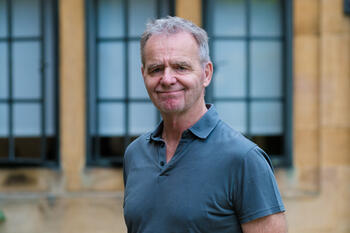
Bio: Dr. Lumin Wang is a professor of nuclear engineering, and materials science & engineering at the University of Michigan-Ann Arbor (UM). He came to the US from China in 1982, and received his MS and PhD degrees in Material Science from the University of Wisconsin-Madison in 1984 and 1988, respectively. He worked as a post-doctoral fellow at Argonne National Laboratory and a research scientist at the University of New Mexico before joining the faculty of UM in 1997.  His research has focused on the study of radiation effects of materials using ion beams and transmission electron microscopy. He served as the director of Electron Microbeam Analysis Laboratory, a campus-wide material characterization center at UM between 2005 and 2010. Dr. Wang has published more than 400 papers in research journals and delivered more than 100 invited talks internationally. He has been a member of the International Committee of the American Nuclear Society and an adjunct chair professor of Xiamen University of China since 2011. He has taken more than 100 UM students to China to observe the construction of nuclear reactors during the last 8 summers.


Professor
Lumin Wang Professor, College of Engineering University of Michigan
This event is open to Stanford undergraduate students only. 
 
The Center on Democracy, Development, and the Rule of Law (CDDRL) is currently accepting applications from eligible juniors due February 15, 2019 who are interested in writing their senior thesis on a subject touching upon democracy, economic development, and rule of law (DDRL) from any university department. CDDRL faculty and current honors students will be present to discuss the program and answer any questions.
 
For more information on the Fisher Family CDDRL Honors Program, please click here.
 
Image
honors info session 2019 1


Ground Floor Conference Rm E008 Encina Hall616 Serra MallStanford, CA 94305-6055


CDDRL
Encina Hall, C152
616 Jane Stanford Way
Stanford, CA 94305-6055

(650) 725-2705 (650) 724-2996
0
Senior Fellow at the Freeman Spogli Institute for International Studies
Professor, by courtesy, of Political Science
Stedman_Steve.jpg PhD

Stephen Stedman is a Senior Fellow at the Freeman Spogli Institute for International Studies (FSI) and the Center on Democracy, Development and the Rule of Law (CDDRL), an affiliated faculty member at CISAC, and professor of political science (by courtesy) at Stanford University. He is director of CDDRL's Fisher Family Honors Program in Democracy, Development and Rule of Law, and will be faculty director of the Program on International Relations in the School of Humanities and Sciences effective Fall 2025.

In 2011-12 Professor Stedman served as the Director for the Global Commission on Elections, Democracy, and Security, a body of eminent persons tasked with developing recommendations on promoting and protecting the integrity of elections and international electoral assistance. The Commission is a joint project of the Kofi Annan Foundation and International IDEA, an intergovernmental organization that works on international democracy and electoral assistance.

In 2003-04 Professor Stedman was Research Director of the United Nations High-level Panel on Threats, Challenges and Change and was a principal drafter of the Panel’s report, A More Secure World: Our Shared Responsibility.

In 2005 he served as Assistant Secretary-General and Special Advisor to the Secretary- General of the United Nations, with responsibility for working with governments to adopt the Panel’s recommendations for strengthening collective security and for implementing changes within the United Nations Secretariat, including the creation of a Peacebuilding Support Office, a Counter Terrorism Task Force, and a Policy Committee to act as a cabinet to the Secretary-General.

His most recent book, with Bruce Jones and Carlos Pascual, is Power and Responsibility: Creating International Order in an Era of Transnational Threats (Washington DC: Brookings Institution, 2009).

Director, Fisher Family Honors Program in Democracy, Development and Rule of Law
Director, Program in International Relations
Affiliated faculty at the Center for International Security and Cooperation

Date Label

Encina Hall, C150
616 Jane Stanford Way
Stanford, CA 94305

0
Center Fellow, Freeman Spogli Institute for International Studies
didi_kuo_2023.jpg

Didi Kuo is a Center Fellow at the Freeman Spogli Institute for International Studies (FSI) at Stanford University. She is a scholar of comparative politics with a focus on democratization, corruption and clientelism, political parties and institutions, and political reform. She is the author of The Great Retreat: How Political Parties Should Behave and Why They Don’t (Oxford University Press) and Clientelism, Capitalism, and Democracy: the rise of programmatic politics in the United States and Britain (Cambridge University Press, 2018).

She has been at Stanford since 2013 as the manager of the Program on American Democracy in Comparative Perspective and is co-director of the Fisher Family Honors Program at CDDRL. She was an Eric and Wendy Schmidt Fellow at New America and is a non-resident fellow with the Carnegie Endowment for International Peace. She received a PhD in political science from Harvard University, an MSc in Economic and Social History from Oxford University, where she studied as a Marshall Scholar, and a BA from Emory University.

Date Label
-

Recent experimental evidence finds that the decision maker in a collective decision making entity with proposal power attracts a disproportionate amount of the blame or reward by those materially affected by these decisions. In the case of coalition governments evidence suggests that voters have heuristics for assigning responsibility for economic outcomes to individual parties and that they tend to disproportionately direct the economic vote toward the Prime Minister party. This essay demonstrates that voters also identify the Finance Minister party as an agenda setter on economic issues depending on whether the coalition context exaggerates or mutes its perceived agenda power. We define cabinet context as the extent to which coalition parties take issue ownership for particular policy areas. We find that when decision making is compartmentalized, voters perceive the finance minister as having agenda power and hence it receives a relatively larger economic vote; in more “diffuse” cabinet contexts it is the PM Party that is attributed responsibility for the economy.

Image
Ray Duch

Raymond Duch is an Official Fellow at Nuffield College, University of Oxford, and the Director of the Nuffield Centre for Experimental Social Sciences (CESS), which currently has centres in Oxford (UK), Santiago (Chile), Tianjin (China) and Pune (India). Prior to assuming these positions, he was the Senator Don Henderson Scholar in Political Science at the University of Houston. He received his BA (Honours) from the University of Manitoba in Canada and his MA and PhD from the University of Rochester. In addition, he has held visiting appointments at the Universitat Pompeu Fabra, Barcelona; the Hoover Institute and the Graduate School of Management, Stanford University; the Institute for Social Research Oslo; the Université de Montréal; and the Wissenschaftszentrum Berlin für Sozialforschung. He is currently the Long Term Visiting Professor at the Institute for Advanced Studies at the Toulouse School of Economics.

He draws on theory, experiments and public opinion analysis to understand how citizens solve decision-making challenges. This includes looking at how citizens use information shortcuts to make decisions. For example in ‘Context and Economic Expectations: When Do Voters get it Right?’ (British Journal of Political Science, 2010), he demonstrates how information shortcuts result in quite accurate expectations regarding price fluctuations in 12 European countries. One of his current areas of interest is the micro-foundations of cheating and unethical behaviour. He has run real effort tax compliance experiments designed to understand who cheats at taxes, the results of which are summarized in ‘Why We Cheat?’ (currently under review). An extension of this project examines tax compliance in different tax regimes.

Ray has served as Associate Editor of the American Journal of Political Science and the Journal of Experimental Political Science. He is one of the founders of the European Political Science Association and the International Meeting on Behavioural Science (IMESBESS), and he is currently Vice President of the Midwest Political Science Association. In 2015, Ray was selected as a member of the UK Cabinet Office Cross-Whitehall Trial Advice Panel to offer Whitehall departments technical support in designing and implementing controlled experiments to assess policy effectiveness. He was recently nominated to the Evidence in Governance and Politics network.

This event is co-sponsored by the Hoover Institution.


Raymond Duch speaker Nuffield College, University of Oxford
Lectures
(650) 723-3251
0
Donald L. Lucas Endowed Professor in Economics
Professor of Economics
Senior Fellow at the Stanford Institute for Economic Policy Research
3606-kyle-bagwell01.jpg

Kyle Bagwell is the Donald L. Lucas Endowed Professor in Economics at Stanford University. He is also a Senior Fellow of the Stanford Institute for Economic Policy Research, a Research Associate of the National Bureau of Economic Research and a Faculty Affiliate of the Stanford Center on Global Poverty and Development.

Bagwell works in the fields of International Trade, Industrial Organization and Game Theory. His research examines a range of theoretical and empirical questions relating to the purpose and design of GATT/WTO. He also explores theories of competition and cooperation in settings where asymmetric information is present. His research has been published in numerous academic journals, and in a book, The Economics of the World Trading System, co-authored with Robert W. Staiger and published by The MIT Press (2002).

Bagwell holds undergraduate degrees in Economics and Mathematics from SMU (1983) and a Ph.D. in Economics from Stanford University (1986). Prior to joining Stanford at the start of 2009, he was a faculty member at Northwestern University (1986-96) and at Columbia University (1996-2008). He was the Kelvin J. Lancaster Professor of Economic Theory at Columbia (2000-08).

Bagwell has served on the editorial boards of numerous academic journals, and he was an Editor at The Rand Journal of Economics (1996-2002). He was a National Fellow of the Hoover Institution (1991-92) and a Fellow at CASBS at Stanford (2014-15). He was the Director of the Stanford Institute for Theoretical Economics (2010-13), and a Reporter for the American Law Institute in its study of Principles of Trade Law: The World Trade Organization (2002-12). He is also a Fellow of the Econometric Society (2005).


Affiliated faculty at The Europe Center
Affiliated faculty at the Stanford Center on Global Poverty and Development
CV
-

Abstract:

Ever since the Millennium Message, Putin's first presidential speech on January 1, 2000, the Kremlin's political architects have cultivated a narrative of Russia as a unique nation on a righteous path toward restored greatness. The process of myth-making is intertwined with the policies involved in remaking Russia as a global power, as the regime builds legitimacy through careful messaging on Russian nationhood, history, morality, and geopolitical strength, using law and policy to embed those concepts as institutions and persuade citizens that Russia needs autocracy to survive. This talk traces the Kremlin's cooptation of culture and history to tell a certain story about Russia and its citizens, and examines public opinion polls to assess the degree to which the strategy is working, as well as street protests and radical performance art that attempts to claim spaces of agency for citizens who don't fit into the mythic mold.


Speaker Bio:


Image
alice underwood
Alice E.M. Underwood is a Pre-Doctoral Fellow at the Center on Democracy, Development, and the Rule of Law and a Ph.D. Candidate in the Department of Comparative Literature at Stanford University. She is a Weiland Fellow at Stanford and a former Title VIII Fellow at the Kennan Institute at the Woodrow Wilson International Center for Scholars, and has published with Intersection, The Russia File, Russian Life, and Harvard International Review.

 
Pre-doctoral fellow at the Center on Democracy, Development, and the Rule of Law.
Seminars
-


Image
Matteo Renzi, former Prime Minister of Italy


Matteo Renzi was born in Florence in January 1975. In 2004 he was elected president of the province of Florence; five years later, in 2009, he was elected Mayor of Florence. In 2012 he ran in the primary elections for the centre-left, losing in the run-off. In 2013 he stood once again in the primaries, this time for leader of the Italian Democratic Party (Partito Democratico, PD), winning with 67.5% of the vote.

On February 22, 2014, following the resignation of Enrico Letta and after a vote by a large majority within the PD, he became President of the Council of Ministers (Prime Minister of Italy), the youngest in the history of Italy. After the negative result of the constitutional referendum on December 4, 2016, Matteo Renzi resigned as Prime Minister. 
 
In April 2017, almost two million voters took part in the primary elections for Secretary of the PD. Renzi was re-elected with 69% of the votes cast. Following the results of the Italian parliamentary election, in March 2018 he resigned as Leader of the PD.
 
Matteo Renzi is currently Senator for the Electoral College of Florence, Scandicci, Signa, Lastra a Signa and Impruneta. His activity as a politician has been accompanied by his writing, which includes the books Fuori! (2011), Stilnovo (2012), Oltre la rottamazione (2013), and Avanti! Perché l’Italia non si ferma (2017). He has also taught at Stanford's Florence campus in recent years. 
Matteo Renzi, former Prime Minister of Italy speaker
Lectures
Authors
News Type
News
Date
Paragraphs

Timothy Josling, a professor emeritus at the former Food Research Institute and an affiliate of The Europe Center known for his encyclopedic knowledge of international agricultural policy, died on Nov. 27.

Timothy Josling, a Stanford professor emeritus of agricultural economics, died at his home in Davis, California, on Nov. 27 after a two-year battle with cancer. He was 78.

Josling, professor emeritus at the former Food Research Institute, was a prolific scholar in agricultural economics. He was known for his humor, patience and devotion to his work and family, according to his relatives and colleagues.

“My dad was one of those people who had an answer to every question,” said his daughter, Catherine Josling. “I loved asking him questions because I knew whether he knew the answer or not, he would confidently answer the question. He also had a wonderful sense of humor – you could always count on him for a witty retort.”

Tim Josling portrait

A walking encyclopedia

Originally from London, England, Josling joined Stanford in 1978 to teach at the former Food Research Institute, which was founded in 1921 by Herbert Hoover to investigate the issues of food production, distribution and consumption.

Josling’s research interests centered on agricultural policies and international trade regulations – and he was admired by his colleagues for his wide breadth of knowledge on these topics.

“Tim Josling was a walking encyclopedia of international agricultural institutions, and he made lasting contributions in the fields of international trade and policy analysis,” said Walter P. Falcon, who directed the Food Research Institute from 1972 to 1991 and recruited Josling to join the faculty. “He was also uncommonly broad. We used to jokingly – but seriously – say that if one wanted 10 pages overnight of really good analysis on any economics topic, best to call Tim.”

Among his many contributions to the field of agricultural economics, Josling is most known for developing the “producer subsidy equivalent approach,” a measure that helps countries understand how much of a farmer’s earnings was created by agricultural policy. Josling initially developed the formula, also known as the “PSE,” for the Food and Agriculture Organization of the United Nations, and it has since been adopted by the Organization for Economic Cooperation and Development, the United States Department of Agriculture and the World Trade Organization (WTO).

“The Josling PSE is used to this day,” said his colleague Scott Pearson, who served on the Stanford faculty as a professor of agricultural economics from 1968 until his retirement in 2002 and as director of the Food Research Institute from 1991 to 1996. “The PSE helps governments understand the costs of agricultural protection and support.”

Dedicated scholar

From 1993 to 1996, Josling served as the director for the Center for European Studies at the Freeman Spogli Institute for International Studies (FSI). When the Food Research Institute closed in 1996, he went on to co-convene the European Forum, now The Europe Center, until he retired in 2003.

Throughout retirement, Josling remained active on campus as a senior fellow, by courtesy, at FSI. Until 2016, he taught a course on the economics of the WTO for the Program in International Relations and would regularly meet with his students at the Europe Center’s offices, said program administrator Karen Haley.

Josling’s recent publications include the three-volume Handbook on International Food and Agricultural Policies, which was published in 2018. In 2015, he co-authored Transatlantic Food and Agricultural Trade Policy: 50 Years of Conflict and Convergence with his long-time collaborator, Stefan Tangermann of the University of Göttingen in Germany.

“One could discuss the most crazy ideas with him and develop them jointly into workable hypotheses and proposals,” said Tangermann, who first met Josling in 1973. Over the next 40 years, the pair developed a close professional partnership and wrote more than 50 publications together, including two major books.

“From the 1980s on, Josling and Tangermann were considered the profession’s leaders in explaining European agricultural policy and in discussing its implications for policymakers,” said Pearson.

Josling was a member of the International Policy Council on Food and Agricultural Trade and former chair of the executive committee of the International Agricultural Trade Research Consortium. He also held a visiting professorship at the University of Kent, in the United Kingdom, and was a past president of the UK Agricultural Economics Association. In 2004, he was made a Fellow of the American Agricultural Economics Association.

Despite his accomplishments, Josling was “very self-effacing,” said his colleague and friend Christophe Crombez, a senior research scholar at the Europe Center. “Tim was not someone who sought the spotlight.”

Quintessential English professor; avid sports fan

Prior to joining Stanford, Josling taught at the London School of Economics and the University of Reading in England.

Josling received a BSc in agriculture from the University of London (Wye College), an MSc in agricultural economics from the University of Guelph, Canada, and a PhD in agricultural economics from Michigan State University.

His family described him as the “quintessential English professor,” and according to Falcon, “He never lost all of his English ways. If he were to walk in the door you would think he belonged in a Shakespeare play – he looked the part of an English actor.”

Josling also loved sports, including cricket and thanks to Pearson, baseball as well.

Pearson remembers taking Josling to his first game at Stanford’s Sunken Diamond in the late 1970s: “At his first game, Tim offered a suggestion. He noted that it would be much more difficult for the batter to hit the baseball if only the pitcher – no, Tim, he was not called the hurler – would bounce the ball in front of home plate. I had to tell him that, alas, this would not work in American baseball.”

For years, Josling and his wife, Anthea, also had season tickets for Stanford football as well as for women’s and men’s basketball.

Josling was devoted to his family and garden. In 2003, he and Anthea moved to the hills in Los Gatos. There, he grew a variety of vegetables and tended to goats and chickens, as well as caring for several cats and dogs. His also enjoyed sailing, photography and travel. In early 2018, the Joslings moved to Davis to be closer to his daughter and grandchildren.

“What I liked most about Tim was his good nature,” Falcon said. “Tim could find the bright side of things, when the rest of us had trouble.”

Josling is survived by his wife, Anthea; his children, Catherine, BS ’03, and John Mark, BS ’99, and their spouses, Amiel Sagpao and Jessica Smith, as well as two grandchildren, Claire Sagpao and Andrew Sagpao. Plans for a celebration of life in the new year are pending. In lieu of flowers, the family request donations in Josling’s name to the Cancer Research Institute.


All News button
1
-

Abstract:

Russia has evolved into an autocracy under Putin's 18-year long rule. The political landscape resembles a desert with just a few oases of relatively strong civil initiatives and political movements. Under these circumstances, people who are eager to continue their activities inside Russia - be it cultural or philanthropic projects - face hard moral choices to either collaborate with the regime or refuse to do so and sacrifice many opportunities along the way. In light of these circumstances, is there any ground for optimism? What are the necessary pre-conditions for strong movements in Russia? What are the visions for post-Putin Russia? Zhanna Nemtsova, the founder of the Boris Nemstov Foundation for Freedom and a news show/anchor for the Deutsche Welle broadcaster shares her insights into the current state of affairs in Russia during this special lunchtime event hosted by the Center on Democracy, Development, and the Rule of Law together with the Center for Russian, East European and Eurasian Studies.


Speaker Bio:

Image
zhanna nemstova1
Zhanna Nemtsova is a Russian journalist currently working at Deutsche Welle, a German international broadcaster. At Deutsche Welle, Nemtsova hosts the weekly Russian-language program "Nemtsova.Interview," which features discussions on current events. Nemtsova founded the Boris Nemtsov Foundation for Freedom to promote the ideas of freedom and education and to preserve her father's liberal political legacy after he was assassinated in 2015. The Foundation awards the Boris Nemtsov Prize to courageous Russians for their demonstrated dedication to fighting for democratic rights in Russia, hosts the annual Boris Nemtsov Forum in Berlin and supports Russian political prisoners and asylum seekers. On May 10 the Boris Nemtsov Foundation, in cooperation with Charles University in Prague, launched the Boris Nemtsov Center for Russian Studies. Nemtsova holds a bachelor’s of science degree in economics with a minor in foreign languages from the Moscow State Institute of International Relations.


Zhanna Nemtsova Founder of the Boris Nemstov Foundation for Freedom
Seminars
0
Eloise Duvillier

Eloise Duvillier is the Program Manager of the Program on Democracy and the Internet at the Cyber Policy Center. She previously was a HR Program Manager and acting HR Business Partner at Bytedance Inc, a rapidly-growing Chinese technology startup. At Bytedance, she supported the globalization of the company by driving US acquisition integrations in Los Angeles and building new R&D teams in Seattle and Silicon Valley. Prior to Bytedance, she led talent acquisition for Baidu USA LLC’s artificial intelligence division. She began her career in the nonprofit industry where she worked in foster care, HIV education and emergency response during humanitarian crises, as well as helping war-torn communities rebuild. She graduated from University of California, Berkeley with a bachelor’s degree in Development Studies, focusing on political economics in unindustrialized societies.

Program Manager, Program on Democracy and the Internet
-

At 11am on November 11, 1918, the armistice that effectively ended the First World War was signed. What came to be known as “The Great War” had a profound and lasting impact on the cultural fabric of the nations involved: as Paul Fussell wrote, “its dynamics and iconography proved crucial to the political, rhetorical, and artistic life of the years that followed; while relying on inherited myth, war was generating new myth.” Over the course of the 20th century, the concept of war evolved beyond historically traceable moments and events to include the consideration of war as site and influence shaping every aspect of lived experience. This conference seeks to examine ways in which literature and the arts have taken up and taken apart war and the myths surrounding it -- grappling with it both as subject and context while also considering the ways in which the experience of war molded, mutilated, and morphed artistic forms. Though the word “centennial” often rings of monolithic celebration, it is equally an opportunity to highlight the attempts of writers and artists to contain, contend, or survive war and to question and problematize preconceptions and existing views of war by investigating their inherently bipolar nature.

November 10, 2018 (Day 2)
SCHEDULE:

  • 9 – 11am - 2nd PANEL
    Chair: Jennifer Scappettone (University of Chicago, Associate Professor)
     
  • Aubrey Knox (CUNY, PhD Student)
    "The Regulated Body: The Grand Palais as Military Hospital in World War I"
  • Joanna Fiduccia (Reed College, Assistant Professor)
    "A Destructive Character: Alberto Giacometti’s Crisis of the Monument"
  • Hadrien Laroche (INHA, France, Philosopher and Researcher)
    "Duchamp's waste: Trauma, Violence and Aesthetics"
     
  • 11 - 11.30am – COFFEE BREAK
     
  • 11.30am - 12.45pm – KEYNOTE ADDRESS

Jay Winter (Yale University, Emeritus Professor)
"All the Things We Cannot Hear: Silences of the Great War"

  • 12.45am – 2pm – LUNCH BREAK
     
  • 2 - 4.30pm - 3rd PANEL
    Chair: Peter Stansky (Stanford University, Emeritus Professor)
     
  • Martin Löschnigg (University of Graz, Austria, Professor)
    "‘The extreme fury of war self-multiplies’: First World War Literature and the Aesthetics of Loss"
  • Ron Ben-Tovim (Ben Gurion University, Israel, Post-Doc), Boris Shoshitaishvili (Stanford University, PhD Student)
    "Re-Enchanting the World after War: J. R. R. Tolkien, David Jones, and the Revision of Epic"
  • Anna Abramson (MIT, Post-Doc)
    "Atmospheric Myths of The Great War"
  • Isaac Blacksin (UC Santa Cruz, PhD Student)
    Senseless Encounter, Immutable Sense: The Contradictions of Reporting War


  • 4.30 – 4.45pm – COFFEE BREAK
     
  • 4.45 – 6pm – KEYNOTE ADDRESS

Alexander Nemerov (Stanford University, Professor)
"A Soldier Killed in the First World War"

For more info,  please email: massucco@stanford.edu

Sponsored by:  the Division of Literatures, Languages, and Cultures;  Stanford Department of Art and Art History; Theater and Performance Studies; Stanford Humanities Center; The Europe Center; Dept. of French and Italian; Dept. of History; Dept. of German Studies; and the Dean's Office of Humanities and Sciences.


Stanford Humanities Center
424 Santa Teresa Street
Stanford, CA 94305

Conferences
Subscribe to Europe