Authors
News Type
News
Date
Paragraphs

Nearly 30 years after the fall of the Berlin Wall on November 9, 1989, historian Timothy Garton Ash spoke at the Freeman Spogli Institute for International Studies about the long-term consequences of the revolutions and transitions that followed the end of Communist rule in countries such as Poland, Hungary and the Czech Republic.

Garton Ash, a senior fellow at the Hoover Institution and professor at Oxford University, spoke first about the “mixture of reform and revolution” in Hungary, which culminated on June 16, 1989, with the ceremonial reburial of Hungarian politician Imre Nagy.

A young student named Viktor Orbán gave a now-famous speech at that event, which thrust him into the political spotlight after he demanded the withdrawal of Soviet troops from the country, Garton Ash said. Today, Orbán is Hungary’s prime minister.

“The most electrifying moment was the speech of Viktor Orbán, who was totally unknown at the time,” Garton Ash said. “The scene was a bright hope of liberalism and democracy. He gave an electrifying speech, I’ll never forget it.”
 

Many of the problems facing East Central European countries today stem from the difficulties that surrounded those countries’ transitions from communist states to democratic institutions, Garton Ash said. It’s not surprising that democratic institutions in those countries are more fragile than they are in Britain or in the U.S., he added, because they’ve only had 30 years to establish themselves.

“The joke at the beginning of the transition in early 1990 was, ‘We know you can turn an aquarium into fish soup — but the question is, can you turn fish soup back into an aquarium?’” Garton Ash said. “The revolutionary transformation of communism had liquidized the aquarium. It had destroyed the rule of law, and it had destroyed democratic institutions, independent courts, and independent civil society.”
 

One of the biggest problems in East Central Europe today is not immigration — it’s emigration, Garton Ash said. Since the fall of the Berlin Wall, nearly 2 million people out of a population of 17 million have left the former territory of East Germany, he said, and countries such as Latvia and Bulgaria have also seen staggering numbers of their citizens move elsewhere.

“Because of the freedom of movement granted by the European Union, there has been massive emigration of the most dynamic energetic younger people from these countries,” Garton Ash said. “But at the same time, populists win [East Central European] countries’ support by talking about the dangers of immigration as if these countries did not need immigration. There’s a kind of demographic panic in which the knowledge that the native population is being thinned out out under a very low birth rate is complemented by a paranoia.”
 

Hero Image
tga cropped
Timothy Garton Ash, a senior fellow at the Hoover Institution and professor at Oxford University, spoke at the Freeman Spogli Institute for International Studies about post-Communist East Central Europe on October 8, 2019. Photo: The Freeman Spogli Institute
All News button
1
Authors
News Type
Blogs
Date
Paragraphs

Representing 14 different countries, the Ford Dorsey Master’s in International Policy (MIP) first-year class is a diverse group. Of the 8 men and 21 women, some have worked in government, some have served in the military, and others just completed their undergraduate degrees. Their academic interests range from migration; to clean energy; to women’s, children’s and LGBTQIA rights; and they spend their free time woodworking, practicing Kung Fu, and listening to true-crime podcasts.

The Freeman Spogli Institute for International Studies spoke to five of the incoming first-year students about their backgrounds, passions, and dreams for the future. These are their stories.

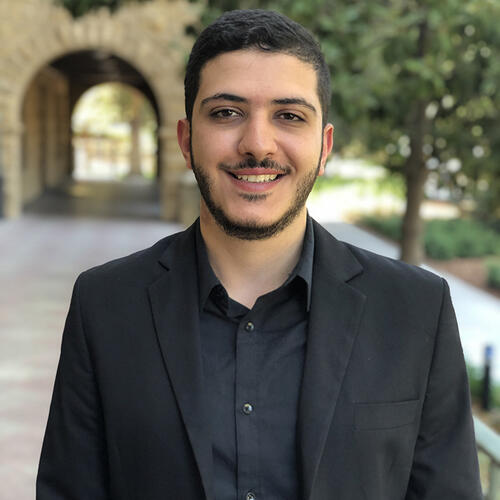
Serage Amatory, 22. (Chouf, Lebanon) 

Image
serage1

“I’ve been living in Egypt for the last four years and attending American University in Cairo, where I double-majored in political science and multimedia journalism. My background is in human rights, and I plan to keep working in human rights after school. I worked as a journalist at one of the few nonpartisan TV stations in Lebanon, and I also worked at the Ministry of Foreign Affairs in Lebanon.

I’ve also made two documentary films — one is about the transgender community in Cairo, and the second film tells the stories of five male victims of rape and sexual assault in Cairo. I enjoy talking about issues that other people don’t want to talk about. I get a lot of disapproval from people all the time, but that's what motivates me — I want to be speaking about people who don’t have someone speaking about them. Someone has to bring attention to things that aren't in the mainstream, and that's what I like to do.

The Master’s in International Policy program here is amazing, and I love that you have the option to specialize in a topic — I’d like to study something concrete and know exactly what I'm going to be doing with it after I graduate. I studied really general topics in undergrad, and now I feel like it's time to augment my general education with something that's more specific. I came in with the expectation that I'm going to be specializing in governance and development, and while I still want to do that, I also really think I might want to take some cyber classes now. So we’ll see — I’m just really happy to be here.”

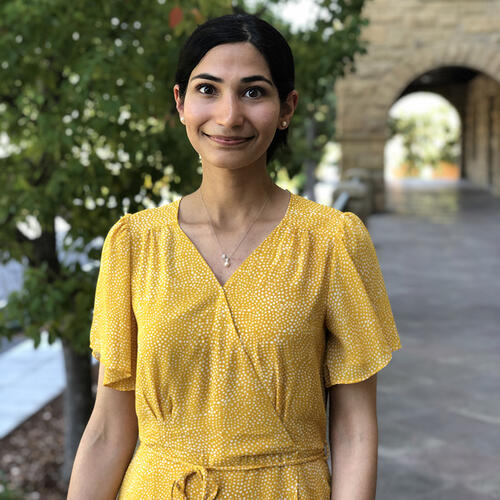
Maha Al Fahim, 21. (Vancouver, Canada and Abu Dhabi, United Arab Emirates) 

Image
maha1

“My interest in public policy started when I was 14. I wrote a nonfiction book about child abuse and gender discrimination, and it was based on my mother's story — she grew up in an abusive family. And in publishing that book, I really saw the power of writing to expose policy issues. When I went to Princeton for my undergraduate education, I wanted to hone my communication skills, because I saw communication as a really powerful tool. I wrote for the Daily Princetonian newspaper and Business Today magazine, and I was also chair of Princeton Writes, a program to promote writing among the community and celebrate the power of words.

Now I'm working on a novel. It's called "Shaolina", and it's set in China. The novel explores gender dynamics and financial and physical power. I traveled to China last summer to do research for the book, and I got to train with a Shaolin monk for 8 hours a day — we would wake up at 5 a.m. and run through the mountains, it was crazy. It was so cool to immerse myself in the experience like that. For me, Kung Fu is not just a sport, it’s a way of life. I've learned so many life lessons from Kung Fu: patience, perseverance, and balance, to name a few.

I love how Stanford is focusing on the future of policy, because as issues get more complex, you need not just qualitative skills, but also quantitative skills. And you need to be able to think creatively and innovatively. Our cohort is small — around 30 students — and I really like it. There are people here from very diverse backgrounds, and it has been really cool to hear so many different international perspectives.” 

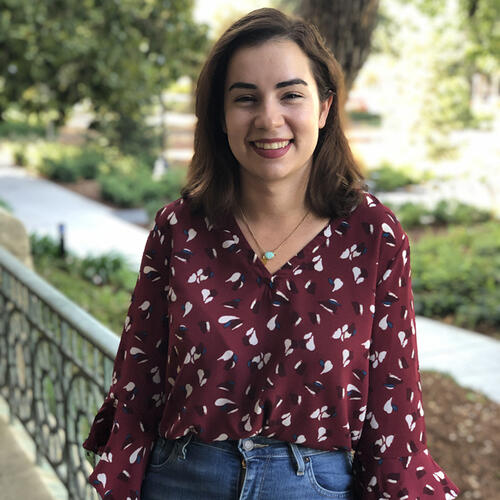
Angela Ortega Pastor, 25. (Madrid, Spain) 

Image
angela1

“I studied economics at NYU Abu Dhabi, and then I worked for three years in Paris for the Organization for Economic Co-operation and Development (OECD) as an energy data manager in oil and gas topics. I worked a lot with the different countries within the OECD as well as with other organizations to help collect data, and we put all of that data into comprehensive reports so that other people and companies can use it for analysis. I really liked working there. I liked the international dynamic - everybody came from very different backgrounds and different places, so it was very congenial to learn from other people.

I'm an economist by training, and that impacts the way I like to look at the problems within the energy field. Such as, 'How can we get consumers and companies to want to transition to clean energy? Does it mean that we need to put policies in place, or regulate the market? Or are pure economic incentives going to do the trick?' There are a lot of professors at Stanford who have done research in that sphere, so that was also a big push for me to come here.

I really like Stanford so far. I've found that people here are very welcoming and happy to help. I was a bit worried about that - when you move somewhere new, you sometimes worry about cliques and how focused people will be on their own lives. But everyone that I've encountered has been really nice and helpful. It's made feel like, 'OK - I can figure out how this place works and eventually feel at home.'”

Craig Nelson, 37. (Minneapolis, Minnesota) 

Image
craig1

“I'm an infantry officer in the U.S. Army. I graduated from West Point in 2006, and I'm in my 14th year of service. I've done eight deployments across both Iraq and Afghanistan, and I've also spent a good amount of time stationed in Europe. My wife, Michelle, and I just moved to Palo Alto from Vicenza, Italy, with our 2-year-old son, Max. Michelle and I love to travel, we love being stationed abroad, and we think that the best way to complete a 20-year career in the Army is to be abroad as much as possible and see parts of the world that we would not otherwise be exposed to.

Overall what I hope to learn here is a better way for the American Army to help to implement the policy that I was a part of as the U.S. Army's forward-deployed unit in Europe. I was able to see where policy derived by our elected officials is actually implemented at a tactical level. I’d like to go back to the Army and implement that policy with a refined understanding of where it comes from and how it's generated.

Before social media became as ubiquitous as it is now, I think people were in groups based largely on where they're from - a certain area code, or a neighborhood, or a school. Now it's possible to identify with a group completely without respect to geographic location, and I think that's because of social media. I'm interested in how that drives security policy - how does that change cyber security policy, and how does that change the way that my country interfaces with its allies and its partners?

When I go back to the Army, I hope to be in a position of greater responsibility and leadership. And I think that this experience will broaden me in a way that I would not have achieved if I had stayed in the operational Army and done a more traditional job following what I just did in Italy.”

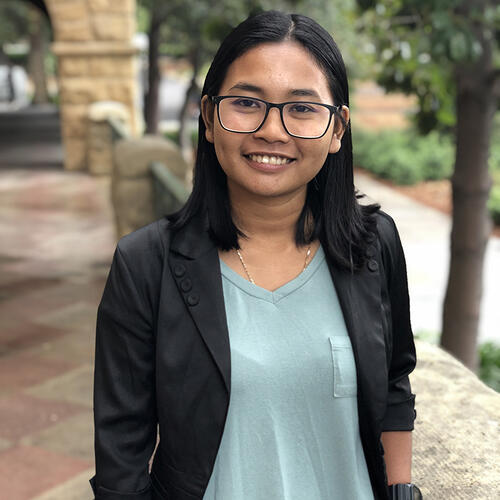
Sievlan Len, 23. (Toul Roveang Village, Cambodia) 

Image
sievlan1

“I earned my bachelor’s degree in global affairs from the American University of Phnom Penh in Cambodia. I did two internships before coming to Stanford: one was with a consulting firm, where I was working mainly on migration research and youth participation initiatives at the sub-national level. I also worked for a foundation that works on strengthening political parties in Cambodia. It was a really interesting experience, and it gave me the idea of doing my bachelor's thesis on migration.

My interests right now are in migration, development, and education. And I’m interested to learn about how the three interact, and how we can make the most out of migration. I'm so excited to explore the interdisciplinary aspects of the Master’s in International Policy program, because I've always felt that you can't separate these issues one from another — migration itself is very interdisciplinary, there is both a political and an economic side to it.

I come from a village in Cambodia, and I'm one of the luckiest in that I had the opportunity to pursue higher education. One of my dreams and goals is that everyone in Cambodia — including girls — have equal access to education, and at least to finish high school, and have the opportunity to pursue their dreams in universities if they’d like to. Where I grew up, I saw a lot of potential not being fulfilled because of people’s circumstances — poverty, or elders not valuing education. I really want to see that change. I want everyone to be able to reach their full potential.”

Hero Image
mipphotocropped
Vienna Exchange student Mourad Chouaki and Ford Dorsey Master’s in International Policy (MIP) first-year students Corie Wieland, Rehana Mohammed and Maria Fernanda Porras Jacobo on the grass of the Stanford Oval in September 2019. Photo: Maria Fernanda Porras Jacobo.
All News button
1
-


This event is now full and we are unable to take any further reservations. However, if you would like to be added to the waitlist, please email us at sj1874@stanford.edu.

Human capital is fleeing Russia. Since President Vladimir Putin’s ascent to the presidency, between 1.6 and 2 million Russians – out of a total population of 145 million – have left for Western democracies. This emigration sped up with Putin’s return as president in 2012, followed by a weakening economy and growing repressions. It soon began to look like a politically driven brain drain, causing increasing concern among Russian and international observers. In this pioneering study, the Council’s Eurasia Center offers a comprehensive analysis of the Putin Exodus and its implications for Russia and the West. Based on the findings from focus groups and surveys in four key locations in the United States and Europe, it also examines the cultural and political values and attitudes of the new Russian émigrés.


Sergei Erofeev
Sergei Erofeev
is currently a lecturer at Rutgers University and the Principal Investigator of the project Tectonic Value Shifts in Post-Soviet Societies (Narxoz University, Almaty). He has been involved in the internationalization of universities in Russia since the early 1990s. Previously, Dr. Erofeev served as a vice president for international affairs at the Higher School of Economics in Moscow, the dean of international programs at the European University at Saint Petersburg, and the director of the Center for Sociology of Culture at Kazan Federal University in Russia. He has also been a Hubert H. Humphrey fellow at the University of Washington. Prior to his career in academia, Dr. Erofeev was a concert pianist, and has worked in the area of the sociology of the arts.


Co-sponsored by the Freeman Spogli Institute for International Studies, the Center for Russian, East European, and Eurasian Studies and the:

Image
Atlantic Council logo

Sergei Erofeev Rutgers University
Lectures
-

Abstract: Russia’s challenge to the West includes information operations (e.g., disinformation, political propaganda, and other forms of online manipulation) aimed at destabilizing the common ground that democratic societies in Europe and the United States need in order to govern themselves.  Kate Starbird will describe two case studies of online information operations connected to Russia’s media/intelligence apparatus:  interference in the 2016 U.S. election and the campaign against the “White Helmets” in Syria.  She argues that defending against Russian online information operations will require a more nuanced understanding of the problem, in particular, moving beyond focusing on “bots” and “trolls” to looking at the collaborative nature of disinformation campaigns that target, infiltrate, shape, and leverage online communities—communities which may not recognize their role in these campaigns. 


Seminar Recording: https://youtu.be/lF4M11FkEKY


Speaker's Biography:

Image
thumbnail new headshot tom reese small
Kate Starbird is an Associate Professor at the Department of Human Centered Design & Engineering (HCDE) at the University of Washington (UW). Starbird’s research is situated within human-computer interaction (HCI) and the emerging field of crisis informatics—the study of the how information-communication technologies (ICTs) are used during crisis events. One aspect of her research focuses on how online rumors spread during natural disasters and man-made crisis events. More recently, she has begun to focus on disinformation and other forms of strategic information operations online. Starbird earned her PhD from the University of Colorado at Boulder in Technology, Media and Society and holds a BS in Computer Science from Stanford University.

Kate Starbird University of Washington
Seminars
0
marietje.schaake

Marietje Schaake is a non-resident Fellow at Stanford’s Cyber Policy Center and at the Institute for Human-Centered AI. She is a columnist for the Financial Times and serves on a number of not-for-profit Boards as well as the UN's High Level Advisory Body on AI. Between 2009-2019 she served as a Member of European Parliament where she worked on trade-, foreign- and tech policy. She is the author of The Tech Coup.


Non-Resident Fellow, Cyber Policy Center
Fellow, Institute for Human-Centered Artificial Intelligence
Date Label
-

WE HAVE REACHED VENUE CAPACITY

REGISTRATIONS ARE NO LONGER BEING ACCEPTED

PLEASE CHECK BACK FOR VIDEO/LIVE STREAM OF THIS EVENT

Image

30 years ago, communist rule ended across central Europe in a dramatic series of events ranging from Solidarity's election triumph in Poland on 4 June 1989, through the ceremonial reburial of Imre Nagy in Budapest (with a fiery young student leader called Viktor Orbán demanding the withdrawal of all Soviet troops), to the fall of the Berlin Wall and the Velvet Revolution in Czechoslovakia. Timothy Garton Ash witnessed these events and described them memorably in his book The Magic Lantern: The Revolution of '89 Witnessed in Warsaw, Budapest, Prague and Berlin.

Now he has revisited all these countries, to explore the long term consequences of the revolutions and subsequent transitions. What went right? More pressingly: What went wrong? For today, Orbán is presiding over the systematic dismantling of democracy in Hungary, the Law and Justice party in Poland is trying to follow his example, the prime minister of the Czech Republic is an oligarch and former secret police informer, while a xenophobic populist party, the AfD, is flourishing in the former East Germany. In this lecture, Garton Ash will explore the peculiar character of populism in post-communist Europe, and the considerable forces of resistance to it.


Image
tga1
Timothy Garton Ash is Professor of European Studies, Oxford University, and Senior Fellow, Hoover Institution, Stanford. He is the author of ten books of contemporary history, including The File: A Personal History, History of the Present, In Europe's Name: Germany and the Divided Continent, and, most recently, Free Speech: Ten Principles for a Connected World. His commentaries appear regularly in the Guardian, and are widely syndicated.


Co-Sponsors: Freeman Spogli Institute for International Studies, Center on Democracy, Development and the Rule of Law, The Europe Center, Center for Russian, East European & Eurasian Studies and the Hoover Institution.

Light refreshments will be served after the lecture, and copies of The Magic Lantern: The Revolution of '89 Witnessed in Warsaw, Budapest, Prague and Berlin, will be on sale

This event is free and open to the public.


Timothy Garton Ash <i>Professor of European Studies, Oxford University and Senior Fellow, Hoover Institute, Stanford University</i>
Lectures
-

The world is experiencing an unprecedented period of geopolitical change and technological disruption. How should we rethink U.S. national security and defense in an era of intensifying great power competition? What principles should guide US policy and presidents in the future?


Drell Lecture Recording: https://youtu.be/y8a307Sttjc


Drell Lecture Transcript: Click here to view


Speaker's Biography: Michèle Flournoy is Co-Founder and Managing Partner of WestExec Advisors, and former Co- Founder and Chief Executive Officer of the Center for a New American Security (CNAS), where she currently serves on the board.

Michèle served as the Under Secretary of Defense for Policy from February 2009 to February 2012. She was the principal advisor to the Secretary of Defense in the formulation of national security and defense policy, oversight of military plans and operations, and in National Security Council deliberations.

Michèle is a former member of the President’s Intelligence Advisory Board, the CIA Director’s External Advisory Board, and the Defense Policy Board. She’s currently a member of the Council on Foreign Relations and the Aspen Strategy Group, is a Senior Fellow at Harvard’s Belfer Center for Science and International Affairs, and sits on the Honorary Advisory Committee of The Leadership Council for Women in National Security. Michèle serves on the boards of Booz Allen Hamilton, Amida Technology Solutions, The Mission Continues, Spirit of America, CARE, the U.S. Naval Academy Foundation.


Hauck Auditorium, David and Joan Traitel Building of Hoover Institution435 Lasuen Mall, Stanford, CA, 94305
Michèle Flournoy Co-Founder and Managing Partner WestExec Advisors
Authors
News Type
News
Date
Paragraphs

Every summer, the Draper Hills Summer Fellows Program brings together international leaders who are pioneering new approaches to advance social and political change in some of the most challenging global contexts. The fellows spend three weeks living and taking classes on the Stanford campus, visiting Silicon Valley tech companies and building a network.

Representing business, government and the nonprofit sector, fellows are working on the frontlines of democratic change to combat the global rise of authoritarianism and populism. The Freeman Spogli Institute for International Studies spoke to five of the fellows about the impact of the Draper Hills program on their work and activism. These are their stories.

Shaili Chopra, India

shaili3 Shaili Chopra, founder of SheThePeopleTv. Photo: Alice Wenner
“I run a platform called SheThePeopleTv. It's a platform for women, and it aims to share news, opinions, data and statistics through a gendered lens. Women are a critical part of democracy — from where I come, in India, we have 600 million women. That's half of the country's population. I think they must also have half of the country’s voice, which they don't.

“I think a big plus of a program like Draper Hills is that when we are all working in the general construct of democracy, we have shared problems, and we also look for shared solutions. It's very empowering to be around people who understand these situations, or have found solutions or overcame them in their countries, or are going through similar problems. You can discuss them and get a sense of solidarity and a sense of empathy.”

Wiem Zarrouk, Tunisia

wiem1 Wiem Zarrouk, senior advisor to the Minister of Development, Investment and International Cooperation in Tunisia. Photo: Alice Wenner

“I’ve been working for the Tunisian government for three years as an advisor to the Minister of Development, Investment and International Cooperation. I am leading the government reforms to improve Tunisia's ranking in the World Bank Competitiveness Report - Doing Business.

“In Tunisia, we’ve set up most of our democratic institutions, and now we want to improve the business environment to attract more investment in local businesses. Eight years ago, the people went into the streets demanding more jobs. The challenge in Tunisia right now is economic, that’s why economic reforms are important to our government.

“I think the impact of the Draper Hills program will be immediate. I’ve learned a lot here about the link between development and democracies, so it really covers the scope of my work. And it's been great to learn about the theoretical side — the professors are really speaking about things that impact our daily work.” 


Ujwal Thapa, Nepal

ujwal1 Ujwal Thapa, president of the BibekSheel Nepali youth movement. Photo: Alice Wenner

“Bibeksheel Nepali is basically a political startup. It’s a youth-led movement, and we’re focused on changing the norms and mindsets of the culture in Nepal. We work a lot with citizens to instill the values of transparency, empathy and humility because we think democracy needs to be more emotional instead of just logical. I think liberal democracy needs to be understood more in the context of humanity. So it’s an experiment that we're doing in Nepal.

“When we started with the experiment, we decided not to focus only on the state, but thought about a few more components: one is our citizens, another is the society and the third is the government. Nepal recently came out of a violent civil war, and we just built a new constitution that is much more tolerant. Transparency is another value that we want to instill, because of the long isolationist and autocratic dictatorship that has existed in the past.

“Draper Hills is bringing all of these practitioners together who are experimental and innovative. And the world needs better collaboration from people who really believe in the ideals of the 21st century, which are liberal, democratic and more humanistic. That’s one of the strongest aspects of the Draper Hills program.”


N.S. Nappinai, India

nappinai1 N.S. Nappinai, senior practitioner in the Supreme Court of India and Bombay High Court. Photo: Alice Wenner

“I'm a lawyer — I specialize in cyber laws. My work throughout my career has been focused on ensuring responsible technology and the use of technology to fight crime. Two years ago I was appointed by the Supreme Court of India as Amicus Curiae on a matter related to protecting against the uploading of videos and images of gang rape and child pornography online.

“Some of the social media platforms had very good reporting mechanisms, whereas it was more hidden on other platforms. So we ensured that this issue was brought to the forefront so that people know that these are things that can be reported and some action can be taken. The whole idea was that as long as you identify such content at the earliest possible time, then you help the victim that much more.

“For me, balancing victims' rights with free speech is very important. This was a big dilemma that I faced, in terms of ‘How much of what I am doing is likely to stifle free speech?’ A lot of discussions at Draper Hills have helped formulate and structure my thoughts, and it's very nice to get the perspective from people from 26 other countries.”


Hinda Bouddane, Morocco

hinda1 Hinda Bouddane, the first vice president of the elected provincial council of the city of Fez. Photo: Alice Wenner

“I'm involved in women's empowerment and education for girls in Morocco. And especially for women in rural areas — they are less privileged, and many of them don't know their rights. So my fight through JA Worldwide and my activism is to empower these women and to raise awareness about their rights and the importance of education for girls.

“Education for girls is really important in fighting discrimination against women. Education empowers women to become financially independent, say no to violence, and to get engaged in the public sphere. Through that, women can be a part of the democratic process not only by voting, but also by taking part from within and running for office.

At Draper Hills, we're deepening our knowledge about topics like the rule of law, democracy and human rights, and hearing many different perspectives. And importantly, we are building a great network to connect many intelligent people from around the world, and we will work together to foster democratic values.”


Hero Image
draper hills for web
The 2019 Draper Hills Class of 2019 at the Freeman Spogli Institute for International Studies. Photo: Stanford Center on Democracy, Development and the Rule of Law
All News button
1
Subscribe to Europe