-

Abstract: A Supply and Demand Framework for YouTube Politics (with Joseph Phillips)

Youtube is the most used social network in the United States. However, for a combination of sociological and technical reasons, there exist little quantitative social science research on the political content on Youtube, in spite of widespread concern about the growth of extremist YouTube content. An emerging journalistic consensus theorizes the central role played by the video "recommendation engine," but we believe that this is premature. Instead, we propose the "Supply and Demand" framework for analyzing politics on YouTube. We discuss a number of novel technological affordances of YouTube as a platform and as a collection of videos, and how each might drive supply of or demand for extreme content. We then provide large-scale longitudinal descriptive information about the supply of and demand for alternative political content on YouTube. We demonstrate that viewership of far-right videos peaked in 2017.

Image
Kevin Munger
Kevin Munger is Assistant Professor of Political Science and Social Data Analytics, Penn State University. Ph.D., New York University, 2018. His research looks at social media and other contemporary internet technology has changed political communication. He has published research on the subject using a variety of methodologies, including textual analysis, field experiments, longitudinal surveys and qualitative theory. His research has appeared in leading journals like the American Journal of Political Science, Political Behavior, Political Communication, and Political Science Research & Methods. His present interests include cohort conflict in American politics and developing new methods for social science in a rapidly changing world.

-

TEC will be canceling all public events and seminars until at least April 15th due to ongoing developments associated with COVID-19.


How do we explain that the European Union gained so much authority, especially in economic areas? Most explanations of the EU usually start off by misdescribing how much authority it exerts over its member-states. Classic IR theorists in realist or liberal traditions describe the EU as a strong international regime, allowing them to explain it simply as a response to especially-strong regional versions of the exogenously-given conditions that ostensibly favor international cooperation elsewhere. Even more endogenously-inclined theorists who explain the EU as an ideational or institutionally path-dependent project tend to describe it as a quasi-federation that still falls well short of a “United States of Europe.” But if the EU certainly lacks some important powers of federal states, in some core areas it has surpassed them. Employing a comparison of the EU to three Anglo-Saxon federations (United States, Canada, Australia), we show that today’s EU actively exercises authority over states’ market openness and fiscal discipline that these federations have never claimed. This re-description of the EU outcome displays just how far Europe has departed from the expectations of classic IR theories, and highlights the kind of strongly endogenous ideational and institutional explanation it requires. Co-author: Craig Parsons, University of Oregon.


Image
Matthias Matthijs

Matthias Matthijs is associate professor of international political economy. His research focuses on the politics of economic crises, the role of economic ideas in economic policymaking, the politics of inequality, and the democratic limits of regional integration. He was one of the inaugural recipients in 2015 of a Johns Hopkins Catalyst Award, in recognition of his work as a promising early-career investigator. He teaches courses in international relations, comparative politics, and international economics, and was twice awarded the Max M. Fisher Prize for Excellence in Teaching, in 2011 and 2015.

Since the summer of 2019, he is also a Senior Fellow for Europe at the Council on Foreign Relations (CFR). He also currently serves as the Chair of the Executive Committee of the European Union Studies Association (EUSA).

Matthijs is the editor (with Mark Blyth) of the book The Future of the Euro published by Oxford University Press in 2015, and author of Ideas and Economic Crises in Britain from Attlee to Blair (1945-2005), published by Routledge in 2011. The latter is based on his doctoral dissertation, which received the Samuel H. Beer Prize for Best Dissertation in British Politics by a North American scholar, awarded by the British Politics Group of the American Political Science Association (APSA) in 2010.

In 2018, he won the Best Paper Award from APSA’s European Politics and Society section for “When Is It Rational to Learn the Wrong Lessons?” (co-authored with Mark Blyth). Among various other research and writing projects, he is currently working on a book-length manuscript that delves into the collapse of national elite consensus around European integration.

Dr. Matthijs received his BSc in applied economics with magna cum laude from the University of Antwerp in Belgium, and his MA and PhD in international relations from Johns Hopkins University.

Matthias Matthijs Speaker School of Advanced International Studies, Johns Hopkins University
Lectures

Encina Hall
616 Jane Stanford Way
Stanford, CA  94305

0
Visiting Postdoctoral Scholar at The Europe Center, 2019-2020
franz_creditddutkowski.jpg

Yvonne Franz studied geography at the University in Cologne and the University of Vienna where she also received her doctorate in urban geography in 2013. As a university assistant (prae-doc) at University of Vienna she coordinated the Erasmus Mundus Masters in Urban Studies 4CITIES and conducted extensive fieldwork on gentrification and urban rejuvenation policies in New York City, Vienna and Berlin. After the completion of her doctorate, the successful approval of research proposals within the Joint Programming Initiative Urban Europe allowed her to join the Institute of Urban and Regional Research (ISR) at the Austrian Academy of Sciences as a post-doc researcher. Currently, she is affiliated to the University of Vienna, Department of Geography and Regional Research as a postdoc university assistant. Her research projects include the INTERREG Central Europe (funded by the European Regional Development Fund) on “Integrating Refugees in Society and the Labour Market Through Social Innovation - SIforREF” as well as research projects on arrival spaces and housing transition in Vienna. She teaches courses within the fields of urban geography and urban studies both at the University of Vienna and other universities. In addition, she is the local coordinator of the Erasmus Mundus Joint Master in Urban Studies (4CITIES). Her research interests lie in the fields of urban geography with a special focus on neighbourhood development, urban revitalisation and gentrification as well as urban planning and governance. Comparative analyses with Berlin, Bologna and Ljubljana are part of her ongoing research collaborations.

During her visit as Visiting Postdoctoral Scholar at The Europe Center, Yvonne will continue analysis and writing on spaces of encounter and social innovation in neighbourhood development.

Authors
Lisa Lee
News Type
News
Date
Paragraphs

Jointly with partners throughout Asia, the Asia Health Policy Program (AHPP) at Shorenstein APARC has developed comparative research on health care use, medical spending, and clinical outcomes for patients with diabetes in the region and other parts of the world as a lens for understanding the economics of chronic disease management. Karen Eggleston, AHPP director and APARC deputy director, recently traveled to South Korea, where she led three project-related events.

On November 29, a workshop on Net Value Diabetes Management was held at Seoul National University (SNU) School of Medicine. This was the third such workshop convened through the project, following two previous ones held in Beijing at the Stanford Center at Peking University. Another workshop, on diabetes modeling, hosted by the Mt. Hood Diabetes Challenge Network, was held at Chung Ang University on December 1. Finally, on December 5, Eggleston held an information session, titled Comparative Economics Research on Diabetes, during the 2019 International Diabetes Federation (IDF) at BEXCO in Busan. These events were also made available through video conferencing to enable remote participation by collaborators who were unable to travel to Korea.

[Learn more about AHPP’s Net Value in Diabetes Management research project]

Diabetes Net Value Workshop

The workshop brought together team members from multiple health systems — including South Korea, Japan, Taiwan, Hong Kong, Thailand, India, the Netherlands, and the United States — to discuss comparative research on the economics of diabetes control. Eggleston shared the results of a study outlined in a working paper on the net value of diabetes management in Japan, the Netherlands, Taiwan, and Hong Kong. This research is part of a broader series of studies aimed to help address the policy challenge of finding the best strategies to improve health through cost effective prevention and healthcare productivity in chronic disease management.

The key to this research was to measure changes in quality or health outcomes over time by predicting mortality risk using blood pressure, blood sugar, and other factors amenable to patient and provider control and improvement (controlling for age and duration of diabetes diagnosis). The research seeks to understand how we can control cost and eliminate waste without cutting out the things that are valuable and improving people’s quality of life. Further studies probe determinants of relative net value of a pay-for-performance program in Taiwan, adherence to medications and vertical integration in Japan, and net value based on a randomized controlled trial in India.

Image
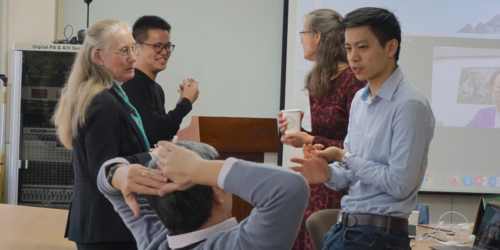
Two women and three men talking with each other in a conference room

Karen Eggleston (left) with workshop participants.

Young Kyung Do of SNU reported that according to his evaluation project for diabetes care, the quality of care and treatment in South Korea has improved and is similar to Hong Kong and Singapore. The goal of the program is to provide more comprehensive care to diabetes patients.

Talitha Feestra of the Netherlands net value team presented her proposal for joint research to develop new prediction models for specific populations as a core component of health economics decision models in Diabetes. Feestra will take the lead to develop the plan and time frame for the continuation of this research in 2020.

Several additional comparative studies were proposed and discussed. Participants who attended the workshop and contributed to discussion included Junfeng Wang from the Netherlands net value team; Jianchao Quan and Carmen Ng from Hong Kong University; Daejung Kim from the Korea Institute for Health and Social Affairs (KIHASA); Taehoon Lee, Eun Sil Yoon, and Hongsoo Kim from SNU; Piya Hanvoravongchai from Chulalongkorn University; and Gregory Ang from National University of Singapore. Remote participants included Vismanathan Baskar from Madras Diabetes Research Foundation; Wasin Laohavinij from Chulalongkorn University (visiting Stanford University autumn quarter); and Rachel Lu from Chang Gung University.

Mt. Hood Diabetes Challenge Workshop on Diabetes Modeling

Philip Clarke from the Health Economics Research Center, University of Oxford, presented the history of insulin as a cure for diabetes and discussed in detail methods for economic modeling of diabetes, including quality of life and diabetes cost, drawing from his rich experience developing the UK Prospective Diabetes Study outcomes model. The second presenter was Andrew Palmer of University of Tasmania, Australia. His presentation included many additional economic modeling pointers, especially regarding drawing in the literature for building models.

Image
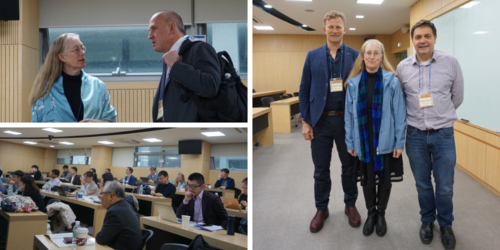
Collage of three photos showing people posing to the camera and seated in a lecture hall

Karen Eggleston with participants at the Mt. Hood Diabetes Challenge Workshop; (right hand side) from left to right: Andrew Palmer, Karen Eggleston, Philip Clarke.

We are grateful to Professors Clarke and Palmer for graciously allowing the AHPP network researchers to join the workshop both in person and remotely, adding to their chronic disease modeling skills, and for inviting Karen Eggleston to present a keynote at the Mt Hood conference that took place before the modeling workshop.

Information Session: Comparative Economics Research on Diabetes

The third and final component of the diabetes research events was held on December 5 as part of the International Diabetes Federation congress in Busan, Korea, and presented the network to clinicians and public health researchers. Participants from China, India, and Australia attended. They shared updates on their individual projects and discussed methods and ideas for future collaboration.

Hero Image
A group of people posing to the camera
All News button
1
Authors
News Type
Q&As
Date
Paragraphs

The science of cyber risk looks at a broad spectrum of risks across a variety of digital platforms. Often though, the work done within the field is limited by a failure to explore the knowledge of other fields, such as behavioral science, economics, law, management science, and political science. In a new Science Magazine article, “Cyber Risk Research Impeded by Disciplinary Barriers,” cyber risk experts and researchers at Stanford University make a compelling case for the importance of a cross-disciplinary approach. Gregory Falco, security researcher at the Program on Geopolitics, Technology, and Governance, and lead author of the paper, talked recently with the Cyber Policy Center about the need for a holistic approach, both within the study of cyber risk, and at a company level when an attack occurs.

CPC: Your recent perspective paper in Science Magazine highlights the issue of terminology when it comes to how organizations and institutions define a cyber attack. Why is it so important to have consistent naming when we are talking about cyber risk?

Falco: With any scientific discipline or field, there is a language for engaging with other experts. If there’s no consistent language or at least dialect for communication around cyber risk, it’s difficult to engage with scholars from different disciplines. For example: The phrase “cyber event” is contested and the threshold for what an organization considers to be a cyber event varies substantially. Some organizations consider someone pinging their network as a cyber event, others only consider something a cyber event once an intrusion has been publicly disclosed. So there’s a disparity when comparing metrics of cyber events from organization to organization because of the different thresholds of what’s considered an event.

CPC: We’ve all been sent one of those emails letting us know our data may have been compromised and your paper points out it’s nearly impossible to put foolproof protections into place; attacks are inevitable. Given that, how should companies weigh the various ways they can protect themselves?

Falco: The first exercise each organization should go through when they decide to be serious about cyber risk is to prioritize their assets. What is business critical? What is safety critical? Then, like all other risks, a cost-benefit analysis must be done for each asset based on its priority. If the asset is safety-critical, then resources should be allocated to help protect that asset or at least ensure its resilience. Trade-offs are inevitable, no company has unlimited resources. But starting with an understanding of where the priorities are, is critical.

CPC: In companies, cyber security often falls entirely to the Chief Information Security Officer (CISO). Your paper argues that’s shortsighted. What is gained when a company takes a more holistic approach?

Falco: Distributing responsibility across the organization catalyzes a security culture. A security culture is one where there is a constant vigilance or at least broad awareness of cybersecurity concerns throughout the organization. Fostering a security culture is often suggested as a mechanism to help reduce cyber risk in organizations. The problem with not distributing responsibility is that when something happens, it’s too easy to resort to finger-pointing at the CISO, and that’s counterproductive. Efforts after an attack should be on responding and being resilient, not finding the scapegoat.

CPC: Cyber risk largely focuses on prevention, but your paper argues that it’s what happens after an attack in that needs greater attention. Why is that?

Falco: Every organization will be attacked. However organizations can differentiate themselves from a cyber risk standpoint by appropriately managing the situation after an attack. Some of the most significant damages to organizations can be reputational if communication after an attack is unclear or botched. Poor communication after an attack can result in major regulatory fines or valuation adjustments as seen in cases like Yahoo and that can have major business implications. Communications aren’t the only important element of post-attack response. A thorough post-mortem of the organization’s response to the attack can be an important learning experience and a way to plan for future attacks.

CPC: Protecting against cyber attacks and the losses that go with them can obviously be costly for companies. You make a case for collaboration among different fields, say among data scientists and economists. How can that be encouraged?

Falco: We argue that cross-disciplinary collaboration rarely happens organically. Therefore, we call on funding agencies like the NSF or DARPA to specify a preference for cross disciplinary research when funding cyber risk projects. Typically, this isn’t currently a feature of calls for proposals, but for cyber risk programs it should be. We encourage researchers to explore cyber risk questions at the margins of their discipline. Those questions may lend themselves to potential overlap with other disciplines and foster a starting point for cross-disciplinary collaboration.

For more on these topics, see a full list of recent publications from the Cyber Policy Center and the Program on Geopolitics, Technology, and Governance.

Hero Image
Gregory Falco Rod Searcey
All News button
1
News Type
Commentary
Date
Paragraphs

"Ideologically, today’s autocrats are a more motley and pragmatic crew. They generally claim to be market friendly, but mainly they are crony capitalists, who, like Putin in Russia, Orban in Hungary, and Erdogan in Turkey, are first concerned with enriching themselves, their families, and their parties and support networks. Increasingly, they raise a common flag of cultural conservatism, denouncing the moral license and weakness of the “the liberal West” while advancing a virulent antiliberal agenda based on nationalism and religion," writes Larry Diamond. Read here

Hero Image
gettyimages 1180678440
All News button
1
Authors
News Type
News
Date
Paragraphs

Immigrants, once settled in a particular state, will not move to another state in search of public health benefits, Stanford researchers find.

Hero Image
Jens Hainmueller publication image Research shows no magnet effect when states lower the costs of health care for low-income immigrants. | iStock/FatCamera
All News button
1
Authors
News Type
News
Date
Paragraphs

Whether it’s designing equipment or developing drugs, scientists often fail to consider how gendered preferences, biases and assumptions can lead to unintended consequences.


According to Stanford historian Londa Schiebinger, it’s time for science to catch up.

Hero Image
Londa Schiebinger
All News button
1
Authors
Norman M. Naimark
News Type
News
Date
Paragraphs

The Financial Times named Norman Naimark's latest book, Stalin and the Fate of Europe: The Postwar Struggle for Sovereignty, one of the best history books in 2019. The Financial Times writes "Naimark has few peers as a scholar of Stalinism, the Soviet Union and mid-20th-century Europe. Here he selects seven case studies, from Denmark and Finland to Austria and Albania, to illustrate the complexity of Stalin’s objectives after the second world war as European leaders on both sides of the emerging Iron Curtain strove to reclaim national sovereignty."


Read the rest at Financial Times

Hero Image
512hbpwjkgl  sx329 bo1204203200
All News button
1
News Type
Commentary
Date
Paragraphs

The Democrats are facing a dilemma: If they defend democratic norms by acting to remove President Trump from office, they risk getting dragged into a polarizing style of politics that works to his political advantage. Read here.

Hero Image
trump 2546104 1920
All News button
1
Subscribe to Europe