Authors
News Type
Commentary
Date
Paragraphs
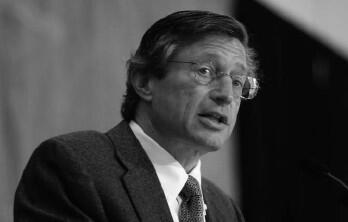
The failure of Irish voters to ratify the Lisbon Treaty points to a problem for Europe that goes far beyond that specific referendum, writes Stanford lecturer and FSI advisory board member Richard Morningstar.

The failure of Irish voters to ratify the Lisbon Treaty points to a problem for Europe that goes far beyond that specific referendum. The vote in Ireland, coupled with the rejection by voters in France and the Netherlands in 2005 of the now failed European Constitution, provides indisputable proof that many European citizens are strongly suspicious of the European Union and that European leaders must take strong action to remedy the misperceptions of those citizens. There are a variety of reasons why voters rejected the Constitution and now the Lisbon Treaty that have been commented on extensively. But as an outsider, I would submit that the most significant underlying reasons for rejection were a lack of understanding of the EU as an institution, the perception of its "unaccountability" and a resulting lack of loyalty to the EU as an entity. Speaking as a friend of Europe and as a strong proponent of transatlantic relations, I believe that these are the major issues that European leaders must address. The EU must have a "face" to which Europeans can relate. The chickens have finally come home to roost. If the EU is to move forward and deal with the challenges of the future, it can afford no longer to be viewed by much of the public, albeit unfairly, as a "mindless" bureaucracy running people's lives from Brussels.

European leaders must think about and be able to provide understandable answers to the most basic questions. What is the EU? How many Europeans can answer that question? Is the EU the equivalent of a nation-state with full sovereignty? Clearly not. Is it some kind of supra-national organisation where members have agreed to share sovereignty in agreed upon areas? That is a start but can it be articulated in a simple understandable way? Do Europeans have any idea as to how decisions are made within the EU? How many Europeans understand the "qualified majority" voting system? It would take a mathematics major to understand how votes are calculated, let alone the multiple layers of decision-making. Is there a simple way to explain how the EU is accountable to European citizenry? How does the EU serve the common good? If the EU remains a mystery to many Europeans, there should be little mystery as to why voters are uncomfortable expanding its powers. It is no wonder that when voters think that they are facing a choice between "national sovereignty" and surrendering sovereignty to a little-understood institution that may impinge on their perceived security, they will vote for "national sovereignty".

If the EU is so little understood in Europe, one can only imagine the lack of understanding among Americans. When I was nominated in 1999 by President Clinton to be the United States Ambassador to the European Union, the most common questions that were asked by my friends were: What is the EU? Isn't that the economic organisation in Europe? Or are you our first ambassador to the EU?

One can also understand why American policymakers, whichever party is in power, have often been reluctant to deal with the EU as an entity and retreat to working through member states. Over recent years US administrations have better recognised the need to work with the EU, and the US and EU have accomplished much working together. But still too often policymakers have become befuddled and frustrated in dealing with the EU. So, for example, even with the ups and downs of the US-French relationship, some US policymakers are more comfortable dealing with France than with the EU because there is a history to the relationship. We have been working with France for over 200 years. There is a texture to the relationship that does not exist with the EU. Until that texture begins to develop, policymakers will often tend to look first to the member states.

Ironically, the Lisbon Treaty would begin to put a face on the EU. The EU would have a president with a set term and a single person responsible for the implementation of EU foreign policy. The treaties upon which the EU is based would be incorporated into a single document. More efficient procedures to deal with an enlarged EU would be put in place. From an American standpoint the treaty should enhance US-European co-operation in areas of vital common interest.

But for the Lisbon Treaty to be ultimately ratified in Ireland and to be accepted by citizens in the other member states even though a referendum is not required in those states, Europe needs to get back to the basics and leaders must be able to explain what the EU is, how the EU is accountable to Europe's citizens and why the Treaty is in the interests of all Europeans.

Ambassador Richard L. Morningstar served as Ambassador to the European Union from 1999-2001. He is a Senior Director at Stonebridge International, a global strategy firm, a Lecturer at Stanford Law School, and an Adjunct Lecturer at the Kennedy School at Harvard University.

All News button
1
Authors
News Type
News
Date
Paragraphs

A foreign policy firmly grounded in democratic values makes it possible for small states to stand up for their rights in the face of the shifting interests of large states, Estonia’s President Arnold Rüütel said Jan. 20.

“It is precisely action based on values that can provide answers in complicated situations,” Rüütel said. “This also makes it possible to distinguish long-term important issues from short-term changing interests.”

During a lunchtime speech at the Freeman Spogli Institute for International Studies, Rüütel thanked the United States for maintaining its policy of nonrecognition of the Soviet occupation of Estonia, Latvia, and Lithuania from World War II until 1991, when Baltic independence was restored in a bloodless revolution. “For us, this represents a powerful confirmation of a values-based foreign policy that remains crucial also today,” he said.

Rüütel, a onetime Communist who helped orchestrate Estonia’s transition to independence, spoke to about 100 students, faculty, and donors at an event hosted by management science and engineering Professor William J. Perry, who also is the Michael and Barbara Berberian Professor, a former U.S. Secretary of Defense, and co-director of the Stanford-Harvard Preventive Defense Project. Accompanied by an Estonian delegation, Rüütel also met with Institute Director Coit D. Blacker and visited the Hoover Institution, where archival specialist David Jacobs had prepared an exhibit of Baltic-related material.

The display included a series of informal photographs from the personal album of Nazi Foreign Minister Joachim von Ribbentrop taken during his visit to Moscow to sign the 1939 Molotov-Ribbentrop Pact, which was concluded just a few days before the beginning of World War II. The pact, which included a secret protocol dividing Eastern Europe into Soviet and Nazi spheres of influence, sealed the fate of the Baltic states for a halfcentury. Soviet officials denied the protocol’s existence until 1989. The unpublished photographs, obtained by U.S. forces after World War II, include a rare image of an enthusiastically grinning Stalin taken just after the pact was signed. “That’s a smile from the heart,” Rüütel remarked in Estonian.

Rüütel’s speech, which was translated into English, discussed Estonia’s two-year-old membership in the European Union and NATO. While the union gives opportunities for economic and social development in a globalizing world, Rüütel said, membership also offers Estonia a chance to contribute to international stability. And while NATO offers unprecedented protection, he continued, Estonia also is obliged to contribute to international security.

“NATO is not only a toolbox from which different tools can be taken,” Rüütel said. “It is an important mechanism for political and military cooperation among 26 states. We need it.” Public support for the organization remains at a steady 65 to 70 percent, he explained. “The NATO airspace control operation in the Baltic states certainly plays a role in this context,” he said. “Last year, U.S. planes contributed to it. We are grateful to the U.S. government.”

As a member of NATO, Estonia plans to increase its defense expenditure to 2 percent of gross domestic product by 2010, Rüütel said. The country also has participated in the “coalition of the willing.” Estonian soldiers fighting in Iraq alongside U.S. forces “have proved to be worthy combatants,” Rüütel said. “Responsible tasks lie ahead of us in Afghanistan. The Estonian parliament has decided to send up to 150 soldiers at a time there this year. Allow me to recall that there are 1.4 million inhabitants in Estonia.”

The president said that military operations can help to restore stability in conflict areas by providing security but that long-term success can be achieved only through the establishment of a free society based on democratic principles and the rule of law.

“The more successful the reconstruction and the strengthening of good governance are, the faster our peace forces can be [brought] home.” Arnold Rüütel, President of EstoniaWe need considerably higher capabilities for the strengthening of the civilian component in crisis management and [ensuing] reconstruction than we have today, both at the level of states and international organizations,” he said. “The more successful the reconstruction and the strengthening of good governance are, the faster our peace forces can be [brought] home.”

Rüütel also discussed his country’s role in combating international terrorism. “Estonia is determined to be a credible partner,” he said. “Among other things, this means making sure that our territory [is] not used by terrorists to prepare operations, to move money or for any other purpose.”

After the speech, Blacker asked about Estonia's relationship with neighboring Russia. A border agreement between the two countries remains unsigned. In response, Rüütel offered a history lesson about the consequences of the Molotov-Ribbentrop Pact after the Soviet Union forcibly annexed Estonia. Many of the country’s leaders were arrested, murdered or sent to death camps in Siberia, he said. Following the Nazi occupation of Estonia during the war, Soviet repression continued after 1945. In a country of 1.2 million inhabitants, about 70,000 people were deported to Siberia and more than 100,000 escaped to the West. As a result of World War II and its aftermath, he said, Estonia lost one out of every five citizens. “Practically, every Estonian family was somehow touched by these events,” he said. “This is something really difficult to forget.” Russia has failed to deal with its history in an honest way, he said.

Although Estonia cannot forget the past, Rüütel said his country is ready to cooperate with Russia and he expressed hope that a border treaty would soon be completed. “I would like to hope that Russia, one day, will understand that we are good neighbors living side by side with each other,” he said.

All News button
1
Authors
News Type
News
Date
Paragraphs

“Should the United States promote democracy around the world?” Stanford alumna Kathleen Brown, a former FSI advisory board member, former Treasurer of the State of California, and current head of public finance (Western region) Goldman Sachs

How are democracy, development, and the rule of law in transitioning societies related? How can they be promoted in the world’s most troubled regions? These were among the provocative issues addressed by faculty from the Freeman Spogli Institute’s Center on Democracy, Development, and the Rule of Law, as part of Stanford Day in Los Angeles on January 21, 2006. Panelists included Michael A. McFaul, CDDRL director, associate professor of political science, and senior fellow, the Hoover Institution; Kathryn Stoner, associate director for research and senior research associate at CDDRL; and Larry Diamond, coordinator of CDDRL’s Democracy Program, a Hoover Institution senior fellow, and founding co-editor of the Journal of Democracy.

The capstone of a day devoted to “Addressing Global Issues and Sharing Ideas,” the CDDRL panel was attended by more than 850 alumni, Stanford trustees, and supporters as part of the nationwide “Stanford Matters” series. Moderated by Stanford alumna Kathleen Brown, a former FSI Advisory Board member, former treasurer of the State of California, and current head of public finance (western region) Goldman Sachs, the panel looked at some of the toughest trouble spots in the world, including Iraq, Russia, and other parts of the former Soviet Union.

“Should the United States promote democracy around the world?” Brown began by asking Center Director Michael McFaul. “The President of the United States has said that the United States should put the promotion of liberty and freedom around the world as a fundamental policy proposition,” McFaul responded, noting “it is the central policy question in Washington, D.C., today.” It is not a debate between Democrats and Republicans, he continued, but rather between traditional realists, who look at the balance of power, and Wilsonian liberals, who argue that a country’s conduct of global affairs is profoundly affected by whether or not it is a democracy. The American people, McFaul noted, are divided on the issue. In opinion polls, 55 percent of Republicans say we should promote democracy, while 33 percent say no. Among Democrats, only 13 percent answer unequivocally that the United States should promote democracy.

“The President of the United States has said that the United States should put the promotion of liberty and freedom around the world as a fundamental policy proposition, and it is the central policy question in Washington, D.C., today.” CDDRL Director Michael McFaulAsserting that the United States should promote democracy, McFaul offered three major arguments. First is the moral issue—democracies are demonstrably better at constraining the power of the state and providing better lives for their people. Democracies do not commit genocide, nor do they starve their people. Moreover, most people want democracy, opinion polls show. Second are the economic considerations—we benefit from open societies and an open, liberal world trade system, which allows the free flow of goods and capital. Third is the security dimension. Every country that has attacked the United States has been an autocracy; conversely, no democracy has ever attacked us. The transformation of autocracies, including Japan, Germany, Italy, and the Soviet Union, has made us safer.

It is plausible to believe that the benefits of transformation in the Middle East will make us more secure, McFaul argued. “It would decrease the threats these states pose for each other, their need for weapons, and the need for U.S. intervention in the region,” he stated. Democratic transformation would also address a root cause of terrorism, as the vast majority of terrorists come from autocratic societies. There are, however, short-term problems, McFaul pointed out. Free elections could lead to radical regimes less friendly to the United States, as they have in Egypt, Iran, Iraq, and now in Palestine. U.S. efforts to promote democracy, he noted, can actually produce resistance.

Having advanced a positive case, McFaul asked FSI colleague Stoner-Weiss, “So, how do we promote democracy?” Stoner-Weiss, also an expert on Russia, said it is instructive to see how Russia has fallen off the path to democracy. In 1991, when the Soviet Union collapsed, it seemed to be an exciting time, rife with opportunity. “Here was an enemy, a major nuclear superpower, turning to democracy,” she stated. Despite initial U.S. enthusiasm, the outcome has not been a consolidated democracy. Russia, under Vladimir Putin, is becoming a more authoritarian state, a cause for concern because it is a nuclear state and a broken state—with rising rates of HIV and unable to secure its borders or control the flow of illegal drugs.

“So can we promote democracy?” Stoner-Weiss asked. The answer is a qualified yes, from Serbia to Georgia, and the Ukraine to Kyrgyzstan. But Russia has 89 divisions, 130 ethnicities, 11 time zones, and is the largest landmass in the world, she noted. Moving from a totalitarian state to a democracy and an open economy is enormously complicated. As Boris Yeltsin said in retiring as president on December 31, 1999, “What we thought would be easy turned out to be very difficult.”

Where is Russia today? It ranks below Cuba on the human development index; it is moving backward on corruption; and its economic development is poor, with 30 percent of the public living on subsistence income. Under Putin’s regime, private media have come under pressure, television is totally stated controlled, elections for regional leaders have been canceled, troops have remained in Chechnya, and Putin has supported controversial new legislation to curb civil liberties and NGO’s operating in Russia.

“How did Russia come to this?” she asked. In retrospect, the power of the president has been too strong. Initial “irrational exuberance” in the United States and Europe about what we could do has given way to apathy. Under Yeltsin, rule was oligarchical and democracy disorganized. Putin came to office promising a “dictatorship of law” to rid the country of corruption. Yet Russia under Putin, who rose through the KGB and never held elective office, has become far less democratic. He has severely curtailed civil liberties. The economy, dependent on oil and natural gas, is not on a path of sustainable growth.

“What can the United States do?” Stoner-Weiss asked. We have emphasized security over democracy, she pointed out, and invested in personal relations with Russia’s leaders, as opposed to investing in political process and institutions. We do have important opportunities, she noted. Russia chairs the G-8 group of major industrial nations this year, providing major opportunities for consultation, and wants to join the World Trade Organization. The United States should advance an institutional framework to help put Russia back on a path to democracy, a rule of law, and more sustainable growth, she argued.

Diamond, an expert on democratic development and regime change, examined U.S. involvement in the Middle East, noting that it is difficult to be optimistic at present. “Democracy is absolutely vital in the battle against terrorism,” he stated. The United States has to drain the swamp of rotten governments, lack of opportunity for participation and the pervasive indignity of human life. “The dilemma we face,” he pointed out, “is getting from here to there in the intractable Middle East.” There is not a single democracy in the Arab Middle East. This is not because of Islam, but rather the authoritarian nature of regimes in the region and the problem of oil.

“Can we promote democracy under these conditions?” Diamond asked. We need to get smart about it, he urged, noting that success depends on the particular context of each country. “If we want to promote democracy, the first rule is to know the country, its language, culture, history, and divisions,” he stated. We need to know, he continued, “who stands to benefit from a democratic transformation and, conversely, who stands to lose?” Rulers of these countries need to allow the space for freedom, for civic and intellectual pluralism, for open societies and meaningful participation. The danger is that there could be one person, one vote, one time. A second rule is that “academic knowledge and political practice must not be compartmentalized.” “To succeed,” Diamond stated, “we need to marry academic theories with concrete knowledge of these countries’ traditions, cultures, practices, and proclivities.”

In the lively question-and-answer session, panelists were asked, “Under what conditions is it appropriate to use force to promote democracy?” McFaul answered that we cannot invade in the name of democracy—we rebuilt Japan in that name but we did not invade that nation. We invaded Iraq in the name of national security. We know how to invade militarily, but still must learn how to build democracy. Effectiveness in the promotion of democracy, Diamond pointed out, requires the exercise of “soft” power—engagement with other societies, linkages with their schools and associations, and offering aid to democratic organizations around the world. Stoner-Weiss concurred, noting that we have used soft power effectively in some parts of the former Soviet Union, notably the Ukraine. People-to-people exchanges definitely help, she added.

To combat Osama bin Laden and the threat of future attacks in the United States, Diamond stated, we must halt the proliferation of nuclear weapons. North Korea and Iran are two of the most important issues on the global agenda. And we have got to improve governance in the Middle East in order to reduce the chances that the states of the region will breed and harbor stateless terrorists. A democratic Iran is in our interest, McFaul emphasized. Saudi Arabia must change as well—the only issue is whether change occurs with evolution or revolution. Democracy, economic development, and the rule of law, McFaul concluded, are inextricably intertwined.

Asked by alumnus and former Stanford trustee Brad Freeman what needs to happen to re-democratize Russia, McFaul pointed out that inequality has been a major issue in Russia—a small portion of the population controls its wealth and resources and, therefore, the political agenda and the use of law. Russia has been ruled by men and needs the rule of institutions, said Stoner-Weiss. We should insist that Putin allow free and fair elections, freedom of the press, and freedom of political expression, and re-focus efforts on developing the institutions of civil society, she stated.

Reform is a generational issue, McFaul emphasized. We need to educate and motivate the young so they can change their country from within. The Stanford Summer Fellows Program, which brought emerging leaders from 28 transitioning countries to Stanford in the program’s inaugural year of 2005, provides an important venue for upcoming generations to meet experienced U.S. leaders and others fighting to build democracies in their own countries. Such exchanges help secure recognition that building support for democracy, sustainable development, and the rule of law is a transnational issue.

All News button
1
News Type
News
Date
Paragraphs

As the world’s most dynamic and rapidly advancing region, the Asia-Pacific has commanded global attention. Business and policy leaders alike have been focused on the rise of China, tensions on the Korean peninsula, Japan’s economic recovery and political assertiveness, globalization and the outsourcing of jobs to South Asia, Indonesia’s multiple transitions, competing forces of nationalism vs. regionalism, and the future of U.S.-Asia relations.

What is the near-term outlook for change in the region? How might developments in the economic, political, or security sphere affect Asia’s expected trajectory? And how will a changing Asia impact the United States? These were among the complex and challenging issues addressed by a faculty panel from the Shorenstein Asia-Pacific Research Center (Shorenstein APARC) and the Eurasia Group at the Asia Society in New York on January 23, 2006.

Image
1607 small 4 1
Moderated by director of the Freeman Spogli Institute for International Studies Coit D. Blacker, the Olivier Nomellini Family University Fellow in Undergraduate Education, the panel included Michael H. Armacost, the Shorenstein Distinguished Fellow, former Under Secretary of State for Political Affairs, and former Ambassador to Japan and the Philippines; Donald K. Emmerson, the director of the Southeast Asia Forum at Shorenstein APARC and noted expert on Indonesia; Harry Harding, the director of research and analysis at the Eurasia Group in New York and University Professor of International Affairs at George Washington University; and Gi-Wook Shin, the director of Shorenstein APARC, founding director of the Korean Studies Program, and associate professor of sociology at Stanford.

Q. COIT BLACKER: WHAT IS THE MOST DIFFICULT, CHALLENGING ISSUE YOU SEE?

Image
1607 small 4 2

A. HARRY HARDING:

In China, we are seeing a darker side of the Chinese success story. Millions of people have been lifted out of poverty, China's role in international affairs is on the rise, and China is an increasingly responsible stakeholder in an open, liberal global economy. Yet, the world is now seeing the problems China's reform program has failed to resolve. China's new five-year plan seeks to address a number of these issues, providing a plan for sustainable economic development that is environmentally
responsible and addresses chronic pollution problems, for a harmonious society that
addresses inequalities and inadequacies in the provision of medical care, insurance
and pension systems, and for continuing technological innovation, as part of China's
quest to become an exporter of capital and technology.

Image
1607 small 4 3
A. GI-WOOK SHIN:

The world should be deeply concerned about developments on the Korean peninsula. Two pressing issues are U.S. relations with South Korea and the nuclear crisis with the North. It is not clear when or whether we will see a solution. Time may be against the United States on the issue. China and South Korea are not necessarily willing to follow the U.S. approach; without their cooperation, it is difficult to secure a successful solution. The younger generation emerging in South Korea does not see North Korea as a threat. Our own relations with South Korea are strained and we are viewed as preoccupied with Iraq and Iran, as North Korea continues to develop nuclear weapons.

Image
1607 small 4 4
A. DONALD EMMERSON:

In Southeast Asia, a key problem is uneven development, both in and between the political and economic spheres. Potentially volatile contrasts are seen throughout the region. Vietnam is growing at 8 percent per year, but will it become a democracy? It has not yet. Indonesia has shifted to democracy, but absent faster economic growth, that political gain could erode. Indonesia's media are among the freest in the region;
multiple peaceful elections have been held--a remarkable achievement--and nearly all Islamists shun terrorism. Older Indonesians remember, however, that the economy
performed well without democracy under President Suharto. Nowadays, corruption
scandals break out almost daily, nationalist and Islamist feelings are strong, and the
climate is not especially favorable to foreign investment. While Burma's economy
lags, its repressive polity embarrasses the Association of Southeast Asian Nations
(ASEAN). How long can the generals in Rangoon hold on? Disparities are also
international: dire poverty marks Laos and Cambodia, for example, while the
Malaysian and Thai economies have done well.

Image
1607 small 4 5
A. MICHAEL ARMACOST:

Japan is a "good news/bad news" story. The good news is that Japan has found a new security niche since the end of the Cold War. Previously, when a security problem loomed "over the horizon," they expected us to take care of it while, if prodded, they increased their financial support for U.S. troops stationed in Japan. During the first post-Cold War conflict in the Persian Gulf, Japan had neither the political consensus nor the legal framework to permit a sharing of the risks, as well as the costs, and this cost them politically. Since then, they have passed legislation that permits them to participate in U.N. peacekeeping activities, contribute noncombat, logistic, and other services to "coalition of the willing" operations, and even dispatch troops to join reconstruction activities in Iraq. Clearly, their more ambitious role is helping to make the U.S.-Japan alliance more balanced and more global.The bad news is a reemergence of stronger nationalist sentiment in Japan and more generally in Northeast Asia. In part this is attributable to the collapse of the Left in Japanese politics since the mid-1990s. This has left the Conservatives more dominant, and they are less apologetic about Japanese conduct in the 1930s and 1940s, more inclined to regard North Korea and China as potential threats, more assertive with respect to territorial issues, less sensitive to their neighbors’ reactions to Prime Ministerial visits to Yasukuni Shrine, and more eager to be regarded as a “normal” nation. Many Asians see the United States as pushing Japan to take on a more active security role and, in the context of rising Japanese nationalism, are less inclined to view the U.S.-Japan alliance as a source of reassurance.

Q. COIT BLACKER: WHAT ARE THE COMPETING AND CONFLICTING TENSIONS BETWEEN REGIONALISM AND NATIONALISM?

A. HARRY HARDING:

In China, there has been a resurgence of nationalism over the past 10 to 15 years. Since the end of the Maoist era and the beginning of the reform movement, the leadership has embraced nationalism as a source of legitimacy, but this is a double-edged sword. It places demands on the government to stand up for China’s face, rights, and prestige in international affairs, especially vis-à-vis Japan, the United States, and Taiwan, at times pushing Beijing in directions it does not wish to go.

A. DONALD EMMERSON:

In Indonesia, it is important to distinguish between inward and outward nationalism. Outward nationalism was manifest in Sukarno’s policy of confrontation with Malaysia. ASEAN is predicated on inward nationalism and outward cooperation. Nationalist feelings can be used inwardly to motivate reform and spur development. But there are potential drawbacks. Take the aftermath of the conflict in Aceh. The former rebels want their own political party. Hard-line nationalists in the Indonesian parliament, however, are loath to go along, and that could jeopardize stability in a province already exhausted by civil war and damaged by the 2004 tsunami.

A. GI-WOOK SHIN:

Korea is a nation of some 70 million people, large by European standards, but small in comparison to the giants of Asia, especially China, India, and Russia, making Korea very concerned about what other countries are doing and saying. Korea is currently undergoing an identity crisis. Until the 1980s, the United States was seen as a “savior” from Communism and avid supporter of modernization. Since then, many Koreans have come to challenge this view, arguing that the United States supported Korean dictatorship. Koreans are also rethinking their attitudes toward North Korea, seeing Koreans as belonging to one nation. This shift has contributed to negative attitudes toward both the United States and Japan

Q. COIT BLACKER: GENERATIONAL CHANGE IS ALSO A MAJOR ISSUE IN CHINA, THE DPRK, AND JAPAN. WHAT DOES IT BODE FOR POLITICAL CHANGE?

A. MICHAEL ARMACOST:

Japan has had a “one and a half party system” for more than half a century. Yet the Liberal Democratic Party has proven to be remarkably adaptive, cleverly co-opting many issues that might have been exploited by the opposition parties. It is clearly a democratic country, but its politics have not been as competitive as many other democracies. As for the United States, we have promoted lively democracies throughout the region. But we should not suppose that more democratic regimes will necessarily define their national interests in ways that are invariably compatible with ours. In both Taiwan and South Korea, to the contrary, democratic leaderships have emerged which pursue security policies that display less sensitivity to Washington’s concerns, and certainly exhibit little deference to U.S. leadership.

A. GI-WOOK SHIN:

In both North and South Korea, a marked evolution is under way. In the South, many new members of the parliament have little knowledge of the United States. Promoting mutual understanding is urgently needed on both sides. In the North, the big question is who will succeed Kim Jong Il—an issue with enormous implications for the United States.

A. DONALD EMMERSON:

Indonesians have a noisy, brawling democracy. What they don’t have is the rule of law. Judges can be bought, and laws are inconsistently applied. The Philippines enjoyed democracy for most of the 20th century, but poverty and underdevelopment remain rife, leading many Filipinos to ask just where democracy has taken their nation.

A. HARRY HARDING:

China has seen a significant increase in rural protests. There has been an increase in both the number of incidents and the level of violence. People are being killed, not just in rural areas, but also in major cities like Chengdu. We are seeing a new wave of political participation by professional groups, such as lawyers and journalists, galvanizing public support on such issues as environmental protection, failure to pay pensions, confiscation of land, and corruption. A new generation has been exposed to the Internet, the outside world, and greater choice, but it is not yet clear at what point they will demand greater choice in their own political life.


WHAT WOULD YOU ADVISE THE PRESIDENT ON U.S. POLICY TOWARDS ASIA?

In the lively question-and-answer session, panelists were asked, "Given the chance to talk to the U.S. President about change and improvement in U.S.-Asia policy, what would you say?"

MICHAEL ARMACOST: I am struck by a mismatch between our interests and our strategy in Asia. In some respects our Asia policy has become something of an adjunct of our policy toward the Middle East-where we confront perhaps more urgent, if not more consequential, concerns. Asia is still the most dynamic economic zone in the world; it is the region in which the most significant new powers are emerging; and it is where the interests of the Great Powers intersect most directly. Also, it is an area where profound change is taking place swiftly. We are adapting our policies in Asia to accommodate current preoccupations in the Muslim world, rather than with an eye to preserving our power and relevance in Asia.

HARRY HARDING: It is striking how much Asian nations still want us around- as an offshore balancer and a source of economic growth. Yet they want us to understand the priorities on their agenda as well as our own. We are seen as obsessed with terrorism and China. We should exhibit more support for Asian institution building, as we have with the European Union. We also need to get our own economic act together-promoting education, stimulating scientific research and technological innovation, and reducing our budget deficits-and quit resting on past laurels. Requiring Japan to accept U.S. beef exports and then sending them meat that did not meet the agreed-upon standards has been a setback for our relations, since the Japanese public regards the safety of its food supply as critically important.

DONALD EMMERSON: Most opinion-makers in Southeast Asia are tired of Washington's preoccupation with terrorism. To be effective in the region, we must deal-and appear to be dealing-with a wider array of economic, social, and political issues, and not just bilaterally. The United States is absent at the creation of East Asian regionalism. For various reasons, we were not invited to participate in the recent East Asia Summit. Meanwhile, China's "smile diplomacy" has yielded 27 different frameworks of cooperation between that country and ASEAN. We need to be more, and more broadly, engaged.

MICHAEL ARMACOST:
The establishment of today's European community began with the historic reconciliation between France and Germany. I doubt that a viable Asian community can be created without a comparable accommodation between China and Japan. Some observers believe that current tensions between Tokyo and Beijing are advantageous insofar as they facilitate closer defense cooperation between the United States and Japan. I do not share that view. A drift toward Sino-Japanese strategic rivalry would complicate our choices as well as theirs, and I hope we can find ways of attenuating current tensions.

All News button
1
Authors
Roland Hsu
News Type
News
Date
Paragraphs

The Forum on Contemporary Europe (FCE) continues a multiyear study of the challenges facing European Union integration and global crisis intervention. The increasingly complex demands straining Europe and its trans-Atlantic relations—labor migration, spending on welfare economies, globalized cultures, and threats of terrorism, coupled with Europe’s struggle to ratify a single constitution—underline the need to measure prospects for unification and the EU’s ability to function as a coordinated international actor. This year, FCE is broadening its work to assess the role an integrated EU can play in addressing the world’s most troubling crises.

EU INTEGRATION: THE CASE OF TURKEY

The forum has explored the question of Turkey’s EU membership with Stanford scholars, European leaders, and the public. In spring 2006, former German foreign minister Joschka Fischer and author Christopher Hitchens offered candid analyses of EU expansion. Hitchens challenged commonplace descriptions of “Christian Old Europe” antagonized by “Islamicized” secular Turkey. Europe and Islam are not newly in contention, he said, but are playing out a centuries-old relationship grounded in the European and Ottoman empires in the Eastern Mediterranean. For Hitchens, the portrait of clashing civilizations obscures the crises facing minority Kurdish and neighboring societies whose survival is at stake in EU expansion.

Delivering the Payne lecture, Fischer noted the dilemma of seeking to achieve popular ratification of a European constitution at a time when public attention is galvanized by the Turkish candidacy. Fischer rejected common comparisons between European state rulings on Islamic traditions and models of U.S. multiculturalism. Fischer found admirable aspects of the U.S. inspiration but questioned its relevance for mediating myriad EU interests. For Fischer, the EU as a supra-state actor holds the promise to democratize conflict resolution in the deliberative model of the European Parliament and legitimate its role as a peacekeeping actor.

EU INTERVENTION: CRISIS MANAGMENT AND COMBATING INTERNATIONAL TERRORISM

The forum’s new focus on EU crisis intervention began with addresses by Sir Richard Dearlove, former head of Britain’s Security Services (MI-6), and Alain Bauer, former vice president of the University of Paris–Sorbonne and director of France’s National Institute for Higher Studies in Security, who discussed EU counterintelligence and international early-warning protocols. Greek Ambassador Alexandros Mallias spoke on the Eastern Mediterranean context that frames the Turkish candidacy, the economics of EU integration, and prospects for responding to the tensions in Cyprus. Austrian Ambassador Eva Novotny spoke on Austria’s immediate past EU presidency, evaluating the impact of the EU Council’s intervention in the Israel-Lebanon crisis. Professor Josef Joffe spoke on his new book, Uberpower: The Imperial Temptation of America, and the prospects for U.S.–EU interaction in global affairs.

The forum’s fall series brought public acclaim when Daniel Cohn-Bendit, co-president of the European Parliament Greens/New Alliance Parties, delivered FCE’s 2006–2007 “Europe Now” address, cosponsored by Stanford’s Abbasi Program in Islamic Studies and the Woods Institute for the Environment. Speaking to an overflow crowd, and meeting separately with faculty and researchers, Cohn-Bendit focused his public remarks on European Integration: Society, Politics, and Islam. A European Parliament leader, Cohn-Bendit spoke on his party’s proposal to deploy Joschka Fischer as the EU representative to Middle East peace negotiations. Expanding and integrating the EU, Cohn-Bendit argued, is the most reasonable strategy for strengthening Europe’s role in international relations and crisis intervention.

The Forum on Contemporary Europe continues to deepen scholarly and public understanding of the EU promise to achieve democratic governance, economic growth, security, and social integration among its member states and in its foreign engagements.

All News button
1
Authors
Scott D. Sagan
News Type
Commentary
Date
Paragraphs
Excerpted from Foreign Affairs, September/October 2006

Preventing the unthinkable ongoing crisis with Tehran is not the first time Washington has faced a hostile government attempting to develop nuclear weapons. Nor is it likely to be the last. Yet the reasoning of U.S. officials now struggling to deal with Iran’s nuclear ambitions is clouded by a kind of historical amnesia, which leads to both creeping fatalism about the United States’ ability to keep Iran from getting the bomb and excessive optimism about the United States’ ability to contain Iran if it does become a nuclear power.

A U.S. official in the executive branch anonymously told the New York Times in March 2006, “The reality is that most of us think the Iranians are probably going to get a weapon, or the technology to make one, sooner or later.” Military planners and intelligence officers have reportedly been tasked with developing strategies to deter Tehran if negotiations fail.

Both proliferation fatalism and deterrence optimism are wrong-headed, and they reinforce each other in a disturbing way. As nuclear proliferation comes to be seen as inevitable, wishful thinking can make its consequences seem less severe, and if faith in deterrence grows, incentives to combat proliferation diminish.

Deterrence optimism is based on mistaken nostalgia and a faulty analogy. Although deterrence did work with the Soviet Union and China, there were many close calls; maintaining nuclear peace during the Cold War was far more difficult and uncertain than U.S. officials and the American public seem to remember today. Furthermore, a nuclear Iran would look a lot less like the totalitarian Soviet Union and the People’s Republic of China and a lot more like Pakistan, Iran’s unstable neighbor—a far more frightening prospect.

Fatalism about nuclear proliferation is equally unwarranted. Although the United States did fail to prevent its major Cold War rivals from developing nuclear arsenals, many other countries—including Japan, West Germany, South Korea, and more recently Libya—curbed their own nuclear ambitions.

THE REASONS WHY

The way for Washington to move forward on Iran is to give Tehran good reason to relinquish its pursuit of nuclear weapons. That, in turn, requires understanding why Tehran wants them in the first place.

Iran’s nuclear energy program began in the 1960s under the shah, but even he wanted to create a breakout option to get the bomb quickly if necessary. One of his senior energy advisers recalled, “The shah told me that he does not want the bomb yet, but if anyone in the neighborhood has it, we must be ready to have it.” At first, Ayatollah Ruhollah Khomeini objected to nuclear weapons on religious grounds, but the mullahs abandoned such restraint after Saddam Hussein ordered chemical attacks on Iranian forces during the Iran-Iraq War.

The end of Saddam’s rule in 2003 significantly reduced the security threat to Tehran. But by then the United States had taken Iraq’s place. In his January 2002 State of the Union address, President Bush had denounced the governments of Iran, Iraq, and North Korea as members of an “axis of evil” with ties to international terrorism. After the fall of Baghdad, an unidentified senior U.S. official told a Los Angeles Times reporter that Tehran should “take a number,” hinting that it was next in line for regime change.

Increasingly, Bush administration spokespeople advocated “preemption” to counter proliferation. When asked, in April 2006, whether the Pentagon was considering a potential preventive nuclear strike against Iranian nuclear facilities, President Bush pointedly replied, “All options are on the table.”

AGREED FRAMEWORK IN FARSI

A source of inspiration for handling Iran is the 1994 Agreed Framework that the United States struck with North Korea. The Bush administration has severely criticized the deal, but it contained several elements that could prove useful in the Iranian nuclear crisis.

After the North Koreans were caught violating their NPT commitments in early 1993, they threatened to withdraw from the treaty. Declaring that “North Korea cannot be allowed to develop a nuclear bomb,” President Clinton threatened an air strike on the Yongbyon reactor site if the North Koreans took further steps to reprocess plutonium. In June 1994, as the Pentagon was reinforcing military units on the Korean Peninsula, Pyongyang froze its plutonium production, agreed to let IAEA inspectors monitor the reactor site, and entered into bilateral negotiations.

The talks produced the October 1994 Agreed Framework, under which North Korea agreed to eventually dismantle its reactors, remain in the NPT, and implement full IAEA safeguards. In exchange, the United States promised to provide it with limited oil supplies, construct two peaceful light-water reactors for energy production, “move toward full normalization of political and economic relations,” and extend “formal assurances to [North Korea] against the threat or use of nuclear weapons by the U.S.”

“The way for Washington to move forward on Iran is to give Tehran good reason to relinquish its pursuit of nuclear weapons.”By 2002, the Agreed Framework had broken down, not only because Pyongyang was suspected of cheating but also because it believed that the United States, by delaying construction of the light-water reactors and failing to start normalizing relations, had not honored its side of the bargain. When confronted with evidence of its secret uranium program, in November 2002, Pyongyang took advantage of the fact that the U.S. military was tied down in preparations for the invasion of Iraq and withdrew from the NPT, kicked out the inspectors, and started reprocessing plutonium.

President Bush famously promised, in his 2002 State of the Union address, that the United States “will not permit the world’s most dangerous regimes to threaten us with the world’s most destructive weapons.” Yet when North Korea kicked out the IAEA inspectors, Secretary of State Colin Powell proclaimed that the situation was “not a crisis.” Bush repeatedly declared that the United States had “no intention of invading North Korea.” The point was not lost on Tehran.

If Washington is to offer security assurances to Tehran, it should do so soon (making the assurances contingent on Tehran’s not developing nuclear weapons), rather than offering them too late, as it did with North Korea (and thus making them contingent on Tehran’s getting rid of any existing nuclear weapons). As with North Korea, any deal with Iran must be structured in a series of steps, each offering a package of economic benefits (light-water reactors, aircraft parts, or status at the World Trade Organization) in exchange for constraints placed on Iran’s future nuclear development.

Most important, however, would be a reduction in the security threat that the United States poses to Iran. Given the need for Washington to have a credible deterrent against, say, terrorist attacks sponsored by Iran, a blanket security guarantee would be ill advised. But more limited guarantees, such as a commitment not to use nuclear weapons, could be effective. They would reassure Tehran and pave the way toward the eventual normalization of U.S.–Iranian relations while signaling to other states that nuclear weapons are not the be all and end all of security.

Peaceful coexistence does not require friendly relations, but it does mean exercising mutual restraint. Relinquishing the threat of regime change by force is a necessary and acceptable price for the United States to pay to stop Tehran from getting the bomb.

All News button
1
Authors
George Krompacky
News Type
News
Date
Paragraphs

A new era is under way for global high-technology innovation and entrepreneurship, marked by the rise of Greater China. During the past several decades, Taiwan, Singapore, and others have developed as centers in key information communications technology (ICT) industries. More recently, from Beijing to the Pearl River Delta, markets for new products are expanding, competencies in new technologies are growing, and a new generation of high-technology regions is emerging. All these signs point toward China as a rising powerhouse, accelerating the shift of locus for the global high-technology arena across the Pacific.

The contours of the nature and pace of this change are already evident in some ICT industries but have yet to be fully analyzed. The Stanford Program on Regions of Innovation and Entrepreneurship (SPRIE) (SPRIE) is leading a research program to advance the understanding of the dynamic systems of innovation and entrepreneurship that drive China’s ascendance in high technology and its implications for the global knowledge economy.

CHINA'S QUEST FOR INDEPENDENT INNOVATION

No longer satisfied with China’s role as the world’s factory, Chinese government leaders have declared that zizhu chuangxin (“homegrown” innovation) is the watchword for the future. They are sounding an urgent call to reduce dependence on foreign technology and build China into an “innovation-driven economy.” As President Hu Jintao said, “homegrown innovation” is the “core of national competitiveness”— the path to sustainable economic prosperity and global leadership.

Last May, SPRIE co-sponsored Greater China's Innovative Capacities: Progress and Challenges, a two-day, invitation-only workshop at Tsinghua University in Beijing that attracted scholars from Europe, the U.S., and Asia, as well as Chinese industry leaders and government policymakers. More than 70 participants tackled topics such as indicators of innovative capacity (patent data and journal citations, for example), reforms of Chinese research institutions to spur commercially useful innovation, and the changing roles for innovation of the state, multinational corporations (MNCs), and domestic firms.

A few numbers illustrate China’s progress over the past decade. Total R&D spending nearly tripled, reaching 1.3 percent of GDP in 2005, even while GDP doubled. China is now ranked third worldwide in overall R&D spending (after the U.S. and Japan), with targets to increase spending to 2 percent of GDP by 2010. Science and engineering PhDs more than doubled between 1996 and 2005. And China’s growth rate of U.S. patents granted has eclipsed Japan, Taiwan, or Korea, with an even steeper trajectory in Chinese-authored science and technical publications in international journals.

Yet, according to SPRIE Co-Director Henry S. Rowen, “the highest value-added work in China still is done largely in foreign-invested companies and increasingly in firms led by returnees who have been educated and worked abroad. Currently most R&D is focused on incremental improvements of existing products and services. Nevertheless, the key building blocks are in place for increasing technology contributions.” At MNC R&D centers like Nokia and Microsoft, top Chinese teams are beginning to contribute to worldwide product design and research. Through interviews at more than 75 firms in Beijing and Shanghai, SPRIE researchers have identified emerging competencies at some of the best domestic research labs and companies, ranging from multimedia chip design to communication equipment.

Huawei, the telecommunications networking giant with 2005 revenues of $5.9 billion, reports consistently spending more than 10 percent of sales on R&D. Boasting more than 10,000 researchers in China plus R&D centers in Bangalore, Silicon Valley, Dallas, Stockholm, and Moscow and 3,600 patent applications in 2005, the company epitomizes China’s growing pursuit of low-cost innovation, not just low-cost manufacturing and services.

However, obstacles to China’s drive for innovation are not trivial. Many Chinese institutions, though improving, still fail to provide an environment conducive for innovation, including a competitive and open system for R&D funding or effective intellectual property protection. As SPRIE associate director Marguerite Gong Hancock observes, “The current gold rush mentality for quick profits runs counter to breakthrough technology innovation that is typically the result of patient investments in research with long-term and uncertain payoffs. To date, some of the most innovative bright spots are not in disruptive technologies but in processes, services, and business models.”

One notable obstacle confronting Chinese high-tech firms is a leadership talent shortage, a problem that is the focus of another SPRIE research initiative.

HIGH-TECHNOLOGY LEADERSHIP IN GREATER CHINA

Since 1999, founders have led 24 Chinese firms to IPOs on NASDAQ. From this unprecedented number of startups to a rising class of billion-dollar giants going global, high-tech companies in China have a dramatically intensifying need for leadership.

To examine how China’s high-tech executives are facing this challenge, SPRIE partnered with Heidrick & Struggles, a leading executive search firm, to conduct more than 100 interviews with executives at both domestic and multinational high-tech firms operating in China.

Leaders face what Nick Yang (MS ’99), founder of wireless service provider KongZhong, described as “uncharted waters.” They must create a cadre of top leaders and managers in the face of an acute shortage of seasoned managers and globally capable executives. As John Deng, founder and CEO of Vimicro (a fabless semiconductor company with $396 million market cap), said, “I don’t lack other things, such as funding, infrastructure, or government relations. What I lack now is people.”

SPRIE Co-Director William F. Miller commented, “Interestingly, not one interviewee expressed an intention to adopt a management model that diverges significantly from the dominant global model,” a model defined by competencies well documented as key among U.S. and European executives. Based on the SPRIE-Heidrick study, some of these competencies currently are both more critical and more difficult to find in China: the ability to drive results, achieve customer orientation, provide visionary leadership, create organizational buy-in, model key values, and delegate and empower. The best leaders not only are seeking these competencies in senior executives but also cascading these attributes throughout their organizations.

The impact ripples throughout the talent pipeline, from recruiting to retaining to developing key people. High-tech leaders in China are deploying a wide range of new tactics. Miller noted, “To address pressing leadership shortages, executives are devoting an unusually large amount of their time and attention to talent and human resource issues.” As Mary Ma, CFO of computer giant Lenovo, stated, “I have become an HR manager. I spend 30 percent of my time on people and succession issues.” And the best companies are systematically using their best leaders to mentor and mold the next generation of professionals—the mid-level managers and team leaders, who are mobile, scarce, and frequently lack the full set of skills needed to drive results.

Emerging trends in leadership among China’s hightech executives may be a good harbinger, pointing to how and where this influential generation of China’s high-tech leaders are steering their firms—firms that have been charged with the task of leading China’s future economic growth.

All News button
1
Authors
News Type
News
Date
Paragraphs

Image
1595 small 4 1
In a 1999 article profiling six of “China’s bright young stars,” the New York Times described Junning Liu as “one of China’s most influential liberal political thinkers.” Today, sitting in a delegate-style conference room, Liu wants to add a point to Thomas C. Heller’s discussion of risk assessment and the role of law in doing business. If assets are not protected by legal institutions, Heller argues, foreign direct investment becomes a riskier prospect and economic growth suffers as a result. Except, he points out, in China. The legal system doesn’t manage risk but China is growing extremely fast.

“There are more businesspeople in Chinese prisons than dissidents,” Liu says evenly, with a suggestion of a smile. “So you see … Chinese people mind the situation more than you [the foreign investors] do.”

Liu is one of 26 change-makers from developing democracies who were selected from more than 800 applicants to take part in this year’s Stanford Summer Fellows on Democracy and Development Program, which is offered by FSI’s Center on Democracy, Development, and the Rule of Law (CDDRL). His colleagues in the program are presidential advisors and attorneys general, journalists and civic activists, academics and members of the international development community. They traveled to Stanford from 21 countries in transition, including Iraq, Afghanistan, Iran, Pakistan, China, Russia, Egypt, and Nigeria. And like their academic curriculum during the three-week program, which examines linkages among democracy, economic development, and the rule of law, their professional experiences and fields of study center on these three areas, assuring that each fellow brings a seasoned perspective to the program’s discussions.

“For most of the fellows … democracy is seen not as a luxury or an option, but rather as a necessity for achieving broad-based development and a genuine rule of law.”The curriculum for the first week focused on democracy, with leading comparative democracy scholars Michael A. McFaul, Larry Diamond, and Kathryn Stoner team-teaching the morning seminars. Using selected articles and book chapters as starting points for discussion, McFaul, Diamond, and Stoner-Weiss began the weeklong democracy module with an examination of what democracy is and what definition or definitions might apply to distinguish electoral democracy, liberal democracy, and competitive authoritarianism. Another question discussed was whether there was such a thing as Islamic democracy, Asian democracy, Russian democracy, or American democracy.

As the week progressed, fellows and faculty discussed institutions of democracy, electoral systems, horizontal accountability, development of civil society, democratic transitions, and global trends in democracy promotion. Fellows led sessions themselves in the afternoons, comparing experiences and sharing insights into how well political parties and parliaments constrained executive power and how civil society organizations contributed to democratic consolidation and/or democratic transitions.

Image
1595 small 4 2
In addition to discussing their personal experiences with democracy promotion, fellows met with a broad range of practitioners, including USAID deputy director Maria Rendon, IREX president Mark Pomar, MoveOn.org founder Joan Blades, Freedom House chairman and International Center on Nonviolent Conflict founding chair Peter Ackerman, International Center on Nonviolent Conflict president Jack DuVall, Otpor cofounder Ivan Marovic, A Force More Powerful documentary filmmaker Steve York, and Advocacy Institute cofounder David Cohen. Guest speakers talked about their fieldwork, offered practical advice, and answered fellows’ questions. This component grounded the classroom discussions in a practical context. “It was important for our visiting fellows to interact with American practitioners, both to learn about innovative techniques for improving democracy practices but also to hear about frustrations and failures that Americans also face in working to make democracy and democracy promotion work more effectively,” explains McFaul. “We Americans do not have all the answers and have much to learn from interaction with those in the trenches working to improve governance in their countries.”

The following two weeks would focus in turn on development and the rule of law, but democracy continued to serve as the intellectual lynchpin of the program, with economies and legal institutions analyzed vis-à-vis their relationship to the development of democratic systems.

Image
1595 small 4 3
“For most of the fellows, who come from national circumstances which once suffered (or still do suffer) prolonged authoritarian rule, democracy is seen not as a luxury or an option, but rather as a necessity for achieving broad-based development and a genuine rule of law,” says Diamond. “Unless people have the ability to turn bad rulers out of office, and to hold rulers accountable in between elections through a free press and civil society, countries stand a poor prospect of controlling corruption, protecting human rights, correcting policy mistakes, and ensuring that government is responsive to the needs and aspirations of the people.”

Among the fellows, this idea of democracy as a “necessity,” a fundamental platform from which to pursue economic and legal reforms, was widely recognized. “It appears that like-minded people were selected to participate,” notes Sani Aliyu, a broadcast journalist and interfaith mediator from Nigeria. “Each of us is interested in the development of humanity, and it appears that we have accepted that democracy seems to be the vehicle through which human development can be accessed reasonably. We share this."

Image
1595 small 4 4
As the program’s curriculum shifted to development issues for week two, the all-volunteer assemblage of Stanford faculty expanded to include professors and professional research staff from Stanford Law School, the Graduate School of Business, and the Department of Economics. Avner Greif established the context for the development module with an overview of institutional foundations of politics and markets, followed by discussions of growth restructuring in transitional economies with GSB professor Peter B. Henry and Stanford Center for International Development deputy director Nicholas Hope. Terry L. Karl analyzed corruption in developing economies and the “resource curse,” and Carl Gershman, president of the National Endowment for Democracy, joined Diamond, McFaul, and Karl in discussing how the spectrum of democratic to autocratic systems of government affected a country’s development.

Another salient component of the development module centered on the role of media in promoting democracy and development. The field trip to San Francisco, which included a session with KQED Forum host Michael Krasny, a briefing on international reporting at the San Francisco Chronicle, and a discussion of media strategies at the Family Violence Prevention Fund, provided particularly rich practical content, as did the fellows’ roundtable on maintaining media independence in semi-autocracies.

Image
1595 small 4 5
At KQED Radio, Cuban-born Raul Ramirez, the executive producer of Forum, talked with fellows about the concept of “civic journalism” and KQED’s goal of creating space for civic discussion. Forum host Michael Krasny and Ramirez, who runs workshops on civic journalism at the European Journalism Centre in Maastricht, then fielded a barrage of questions from fellows: How does KQED maintain independence from government and commercial funding? If Rush Limbaugh attacked you, would you respond in your program? Is it possible to have neutral, nonpartisan public radio? How do you manage to deal with political issues, particularly when you start to affect the power structures with your programming? Are there any words, like “terrorist,” that you are banned from using on the air?

“Discussion of this kind is of great importance to both media professionals and the audience,” notes Anna Sevortian, a journalist and research coordinator at the Center for Development of Democracy and Human Rights in Moscow. “It helps you to clarify how a particular newspaper, TV, or radio station is dealing with matters of public policy or of political controversy.”

Image
1595 small 4 6
The third week’s curriculum layered rule-of-law issues onto the conceptual modules of democracy promotion and economic development, drawing on the teaching caliber of constitutional scholar and Stanford president emeritus Gerhard Casper, Erik Jensen, Helen Stacy, Allen S. Weiner, Tom Heller, and Richard Burt. After establishing a theoretical framework through discussions of the role of law, constitutionalism, human rights, transitional justice, the role of law in business and economic development, and strategies for promoting the rule of law, fellows compared experiences defending human rights, met with American immigration and civil liberties lawyers, and had a session with Circuit Court Judge Pamela Rymer on judging in federal courts. Field trips to Silicon Valley-based Google and eBay again put into practical context the free market, rule-of-law components discussed theoretically in the classroom.

Despite the intellectual rigor of the coursework and discussion, and the exploration of practical applicability with guest speakers and field trips, the Stanford Summer Fellows on Democracy and Development Program was designed as much to stimulate connections among field practitioners and to provide a forum in which to exchange ideas. Weekend dinners, stretching late into the evening at the homes of Diamond and Stoner-Weiss, helped to gel the collegiality developing in the classroom. Led by Violet Gonda, a Zimbabwean journalist living in exile in London, and Talan Aouny, director of a major Iraqi civil society development program, the fellows organized a multicultural party, a potluck-style affair in which guests made a dish from their home country to share with their colleagues and friends of the program.

Image
1595 small 4 7
Program directors McFaul and Stoner-Weiss hope this social network will endure well into the weeks and months after the program. “We envision the creation of an international network of emerging political and civic leaders in countries in transition who can share experiences and solutions to the very similar problems they and their countries face,” says Stoner-Weiss. To ensure they fulfill their goal of building a small but robust global network of civic activist and policymakers in developing countries, CDDRL recently launched its Summer Fellows Program Alumni Newsletter. The newsletter is based on an interactive website that will allow the center to strengthen its network of leaders and civic activists and facilitate more groundbreaking policy analysis across academic fields and geographic regions, the results of which will be promptly fed back to its activist alumni in a virtual loop of scholarship and policymaking.

Image
1595 small 4 8
Earlier this year, CDDRL also moved to professionalize the Stanford Summer Fellows on Democracy and Development Program by hiring a program manager, Laura Cosovanu, an attorney with experience in foundations and other nonprofit organizations, to oversee its advancement. The logistical acrobatics Cosovanu performed throughout the three weeks quickly became the object of good-natured teasing for some of the fellows, all of whom seemed to realize and appreciate the work required to get fellows and faculty into the same room.

As Kenza Aqertit, a National Democratic Institute for International Affairs field representative from Morocco, told program faculty at the graduation dinner, “You’ve done a great job and you should be proud of all your efforts. Plus you’ve won so many friends in so many autocracies and semi-autocracies.

Hero Image
1595 small 4logo
All News button
1
Authors
News Type
News
Date
Paragraphs

On November 16, 2006, FSI convened its annual international conference, A World at Risk, devoted to systemic and human risk confronting the global community. Remarks by Stanford Provost John Etchemendy, FSI Director Coit D. Blacker, former Secretary of State Warren Christopher, former Secretary of Defense William J. Perry, and former Secretary of State George Shultz set the stage for stimulating discussions. Interactive panel sessions encouraged in-depth exploration of major issues with Stanford faculty, outside experts, and policymakers.

Image
1592 small 1man
“When I was a child, the world was a simpler place,” stated Stanford Provost John Etchemendy. “What has changed is not the risk, but the number and complexity of problems that face the world today.” The complex challenges of the 21st century require that universities change, as well. The International Initiative, led by FSI, was launched “to identify key challenges of global importance and to contribute to their solutions by leveraging the university’s academic strength and international reach.”

Invoking Jane and Leland Stanford’s desire to educate students to become useful, contributing citizens, Etchemendy said, “We can best serve that mission today by producing graduates well-versed in the complex problems of a world at risk and willing to make the difficult choices that might lead to their solution.”

“It has been acutely apparent to us at FSI that we must actively engage a world at risk,” stated FSI director Coit D. “Chip” Blacker, “risk posed by the growing number of nuclear issues on the international agenda; the insurgency in Iraq; global poverty, hunger, and environmental degradation; the tensions of nationalism versus regionalism in Asia; infectious diseases; terrorism; and the geopolitical, financial, and ecological risks of the West’s current energy policies, especially its voracious appetite for oil.”

Introducing three Stanford luminaries, Blacker said, “One of the remarkable things about Stanford is the privilege of working with some of the outstanding intellects and statesmen of our time. Warren Christopher, William Perry, and George Shultz tower among them.”

“As Stanford University’s primary forum for the consideration of the major international issues of our time, we at FSI are dedicated to interdisciplinary research and teaching on some of the most pressing and complex problems facing the global community today.” – Coit D. “Chip” Blacker, Director, Freeman Spogli Institute“The Middle East has descended into hate, violence, and chaos,” said Warren Christopher, the nation’s 63rd secretary of state. “It really is a dangerous mess.” Discussing the Israeli incursion into Lebanon, the war in Iraq, and Iran’s regional and nuclear ambitions, he said the U.S. has aggravated these threats by “action and inaction.” Nonetheless, the U.S. remains the most influential foreign power in the region. “We must not give up on the Middle East,” he said. “We have to return to old-fashioned diplomacy with all its frustrations and delays.”

“We live in dangerous times,” stated William J. Perry, the nation’s 19th secretary of defense and an FSI senior fellow. “Last month about 1,000 of our service personnel in Iraq were killed, maimed, or wounded; the Taliban is resurging in Afghanistan; North Korea just tested a nuclear bomb; and Iran is not far behind. China’s power is rising and Russia’s democracy is falling.” As Elie Wiesel wrote, he said, “Peace is not God’s gift to its children. Peace is our gift to each other.” Comparing major security issues of 1994 to today, Perry assessed the nuclear arms race, North Korea, Iran, and Iraq. He noted that the Clinton administration had eliminated more than 10,000 nuclear weapons and urged that the work continue, because “the danger of terrorists getting a nuclear bomb is very real.”

Citing North Korea’s 2006 missile and nuclear tests, Perry said he was concerned that a robust North Korean nuclear program will stimulate a “dangerous arms race in the Pacific” and increase “the danger of a terrorist group getting a nuclear bomb.” “Iran is moving inexorably toward becoming a nuclear power,” Perry said. “We are facing new dangers,” he concluded, “and we must adjust our thinking accordingly.”

“The world has never been at a more promising moment than it is today,” said George Shultz, the nation’s 60th secretary of state. “All across the world, economic expansion is taking place. The U.S. is giving fantastic leadership to the global economy.” For Shultz, the imperative is to prevent the security challenges “from aborting all these fantastic opportunities.”

“The Middle East has descended into hate, violence, and chaos. The U.S. remains the most influential foreign power in the region. We have to return to old-fashioned diplomacy with all its frustrations and delays.” – Former Secretary of State Warren ChristopherU.S. leadership should inspire the world, Shultz said, advocating four initiatives. We should aspire to have a world with no nuclear weapons. We should take a different approach to global warning, based on the Montreal Protocols. “This is a gigantic problem we need to do something about and can do something about,” he said. We should build greater understanding of the world of Islam. We must combat rising protectionism. The postwar system reduced tariffs and quotas, promoting trade and growth. “The best defense is a good offense,” Shultz stated. “We need a lot of leadership in that arena.”

Plenary I, chaired by Chip Blacker, examined systemic risk. Elisabeth Paté-Cornell, Burton and Deedee McMurtry Professor and Chair of Management Science and Engineering, discussed how scientists measure risk, asking what can happen, what are the chances it will, and what are the consequences? “The good news is that the worst is not always the most certain,” she noted. Citing challenges of intelligence analysis, she said, “Certainty is rare; signals are imperfect; there is a tendency to focus on one possibility (groupthink) and underestimate others; and it is difficult to assess and communicate uncertainties.” “Success is not guessing in the face of uncertainties,” she said. “It is describing accurately what is known, what is unknown, and what has changed.”

Scott D. Sagan, professor of political science and director of CISAC, examined “Iran and the Collapse of the Global Non-proliferation Regime?” The crux of the issue, Sagan noted, is the emergence of two dangerous beliefs, “deterrence optimism” and “proliferation fatalism.” In Sagan’s view, too little attention has been given to why Iran seeks a nuclear weapon. Arguing that U.N. sanctions are unlikely to work and military options are problematic, Sagan said a negotiated settlement is still possible if the U.S. offers security guarantees to Iran, contingent on Tehran’s agreement to constraints on future nuclear development. As Sagan concluded, “Instead of accepting what appears inevitable, we should work to prevent the unacceptable.”

Siegfried S. Hecker, CISAC co-director, tackled the challenge of “Keeping Fissile Materials out of Terrorist Hands.” Although nuclear terrorism is an old problem, today there is easier access to nuclear materials, greater technological sophistication, and a greater proclivity toward violence. The greatest risk, he said, “is an improvised nuclear device built from stolen or diverted fissile materials.” “Given a few tens of kilograms of fissile material, essentially a grapefruit-sized chunk of plutonium,” he stated, “terrorists will be able to build and detonate an inefficient, but devastating Hiroshima- or Nagasaki-like bomb.” The most likely threat is a so-called “dirty bomb,” he said, which would be a “weapon of mass disruption, not destruction,” but still able to cause panic, contamination, and economic disruption, making risk analysis imperative to mitigate its consequences.

“We are facing new dangers and we must adjust our thinking accordingly. As President Lincoln said, ‘The occasion is piled high with difficulty, and we must rise with the occasion. As our case is new, so we must think anew, and act anew.’” – Former Secretary of Defense William J. PerryTurning to human risk, Michael Osterholm, director of the University of Minnesota’s Center for Infectious Disease Research and Policy, addressed “Pandemic Influenza: Harbinger of Things to Come?” “The risk is one that a pandemic is going to happen,” he told a riveted audience. Comparing the great influenza of 1918 with the pandemics of 1957 and 1968, he noted that pandemics have differed in season of onset, mortality rates, and number of cases. Avian influenza has a 65 percent mortality rate and could affect 30–60 percent of the world’s 6.5 billion people, producing 1.6 billion deaths worldwide and 1.9 million deaths in the U.S. Inevitably, mutation will reduce its lethality.

“It is not a matter of if, just when and where” the pandemic will strike, said Osterholm. Noting that vaccines will not be available in numbers needed, he argued for measures to safeguard families, communities, and essential infrastructure, such as police, firefighters, and health-care workers. Just-in-time inventory practices, he said, have increased vulnerability to disruptions in food supply, transportation, equipment, and communications, making it vital to plan in earnest, now.

Plenary II, chaired by FSI deputy director Michael A. McFaul, assessed risks to humans from “Natural, National, and International Disasters.” Stephen E. Flynn, Jeane J. Kirkpatrick Senior Fellow at the Council on Foreign Relations and a trade and transportation security expert, decried the “artificial firewalls between homeland and national security.” The Hart-Rudman Commission of 1998 warned of a catastrophic attack on U.S. soil, yet we did not rethink national security even after 9/11. We must approach security as a transnational issue, with no clear “domestic” and “international” lines, he urged. More than 65 percent of critical infrastructure is privately owned and has been given inadequate attention by federal authorities. Hurricane Katrina exposed the vulnerabilities. “We face more threats from acts of God than acts of man,” Flynn stated. We need to move from a concept of “security” to one of “resiliency,” he said, greatly improving our ability to withstand a man-made or natural disaster.

David G. Victor, FSI senior fellow and professor of law, addressed three faces of energy security: oil, natural gas, and climate change. Oil prices are volatile, future fields are in places difficult to do business, and the global supply infrastructure is vulnerable, posing the risk of a one- to six-month supply disruption. For Victor, who directs FSI’s Program on Energy and Sustainable Development, the big threat is less supply than a potential demand-side shock, driven by the U.S. and China. Europe relies on an unreliable Russia for 25–30 percent of its natural gas needs, making it imperative to switch to cheaper, more reliable LNG from North Africa and the Middle East. Oil and gas price volatility has driven further dependence on coal-fired plants, with dire consequences for carbon emissions. New coal plant lifetime emissions, Victor said, are equal to all historic coal emissions, making it critical to invest in advanced technology to protect the environment.

“The world has never been at a more promising moment than it is today. All across the world economic expansion is taking place. Poverty is being reduced dramatically as China and India expand, along with Brazil.” – Former Secretary of State George ShultzPeter Bergen, CNN terrorism analyst and producer of Osama bin Laden’s first television interview, offered the dinner keynote, “Successes and Failures of the War on Terrorism Since 9/11.” Assessing negatives, Bergen noted that al Qaeda continues to carry on attacks from its base in Pakistan; Afghanistan is beset by instability; more than 20 million Muslims in Europe remain dangerously un-integrated; bin Laden has not been apprehended and continues to inspire followers through terrorist attacks; Iraq is an unstable breeding ground for jihad; and anti-Americanism is on the rise. Enumerating positives, there has been no follow-on attack on the U.S.; the government has made the country safer; many Muslims have rejected jihad; plots have been foiled and suspects apprehended across the globe. Weighing whether fighting the terrorists abroad has made the U.S. safer here, Bergen was equivocal: The U.S. can identify and eliminate only so many people and cannot stay in Bagdad forever. A network of educated, dedicated terrorists remains, he warned, capable of bringing down commercial aircraft or deploying a radiological bomb.

All News button
1
Authors
News Type
News
Date
Paragraphs

On May 1, 2003, President Bush publicly declared an end to combat in Iraq. Four years later, the conflict had only intensified, fueled by a violent insurgency, sectarian strife, and a resurgent al-Qaeda in Iraq. More than 3,000 American servicemen and servicewomen had been killed and 790,000 Iraqi civilians were dead. What had gone so disastrously wrong? Charles Ferguson, an MIT-trained political scientist, determined to find out.

Drawing on shockingly frank interviews with U.S. government officials, military personnel, diplomats, journalists and Iraqi leaders and citizens, his first film, No End in Sight: The American Occupation of Iraq, examines comprehensively how the Bush administration constructed the Iraq war and subsequent occupation. The film won the Special Jury Prize, documentary competition, at the 2007 Sundance Film Festival, as a “timely work that clearly illuminates the misguided policy decisions that have led to the catastrophic quagmire of the U.S. invasion and occupation of Iraq.”

“Overnight rendered unemployed and infuriated are 500,000 armed men,” one of many ill-advised moves that ignited resentment, desperation, and a still-raging insurgency.On May 23, the Freeman Spogli Institute hosted a special screening of the film, followed by a distinguished panel of experts. Among the film’s central themes was the failure to commit sufficient troops to maintain order, secure the borders, or protect government ministries, historic sites, or ammunition depots. The destruction of national treasures, depicted vividly, was heartbreaking.

Soon after one watershed—the toppling of Saddam Hussein and the defeat of the military—there was another watershed, characterized by widespread looting, lawlessness, and a growing feeling among Iraqis that Americans could not protect them. The film chronicles three especially fateful decisions: to halt the formation of an Iraqi interim government (as Iraqi opposition leaders felt they had been promised) and impose an American occupation instead; a wide-ranging campaign of de-Baathification—the purging of higher-level Baath Party officials who ran the civil service and even staffed many schools and hospitals; and the hasty decision to disband the Iraqi military and intelligence services.

Said Col. Paul Hughes (Ret.), “We could have used Iraqi units to clean up, build roads, and rebuild their country.” Instead, the military were told they were going to be out of work, leaving millions of Iraqis suddenly without support. The film recounts, “Overnight rendered unemployed and infuriated are 500,000 armed men,” one of many ill-advised moves that ignited resentment, desperation, and a still-raging insurgency. Ambassador Barbara Bodine recalled, “When we were first starting the reconstruction, we used to joke that there were 500 ways to do it wrong and two to three ways to do it right. What we didn’t understand is that we were going to go through all 500.”

The riveting documentary was followed by a lively panel discussion among Stanford political scientists, historians, and experts on the war in Iraq. Moderating the panel was Larry Diamond, Hoover Institution senior fellow and coordinator of the Democracy Program at FSI’s Center on Democracy, Development, and the Rule of Law, who called the war “one of the greatest policy tragedies in American history.” Diamond served as an advisor to the Coalition Provisional Authority and wrote a book about the experience, titled %publication1%.

Writer and director Charles Ferguson noted that the shooting to inclusion ratio was 100:1 and said he will release more than 100 hours of film and 3,000 pages of transcripts as a public archive for the historical record. Col. Christopher Gibson, a 2006–07 National Security Affairs fellow at the Hoover Institution, who served in both the Gulf and Iraq wars, observed in his opening remarks, “For this to work in a republic, soldiers have to be there to take the tough questions.” Drawing on his experience during two tours of duty supervising national elections, he underscored the Iraqi people’s desire for freedom and “their deep and sincere desire for democracy.”

David Kennedy, Stanford’s Donald J. McLachlan Professor of History and a 2000 Pulitzer-Prize winner, commended the film for making an important contribution to the historical record. Future historians will have to consider a number of major questions, Kennedy said, including these two: “What was the deep strategic rationale for this war and how was that rationale related to the declared reasons for going to war,” namely the now discredited claims that the regime possessed weapons of mass destruction and had verifiable links to al-Qaeda.

In a lively discussion among panelists, it was agreed that the calculus was complex and many factors converged—an Iraq believed both to be a menace and weakened by many years of sanctions under a brutal leader; a son wishing to redress the policy of the father and avenge a near assassination attempt. But the ideological factor was significant—the belief that we had the ability to effect political change in a country that would transform the character of an entire region.

The debate addressed other critical issues—could the outcome have been better had policy been better informed and more skillfully implemented? Could anything change the outcome now? Said Diamond, the only thing that could materially change the outcome now “would be to combine a military surge with a diplomatic surge,” involving the United Nations, the European Union, the United States, and a cooperative Iraqi leadership. The United States should let Iraq know we’ll leave, he stated, if Iraqi leaders fail to undertake the requisite political reconciliation and compromise. As the lively debate and discussion with more than 300 audience members ended, there was little doubt that all these questions would be debated for some time to come.

All News button
1
Subscribe to Europe