-

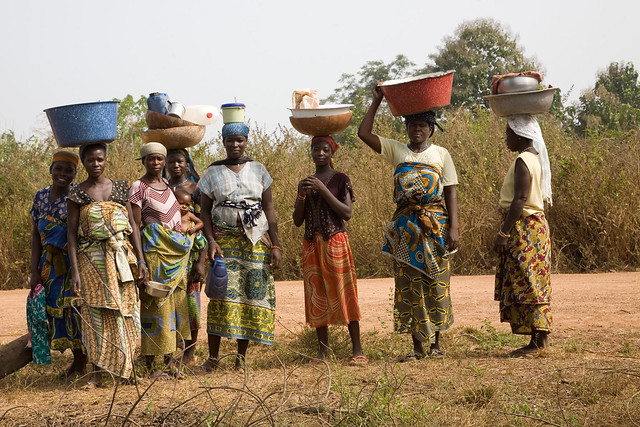
Recent research suggests that enhancing voter information holds promise for increasing government accountability in new democracies. This project undertakes a field experiment in Mali, a model of an underperforming new democracy, to test the theory that information that sufficiently raises citizen voter expectations of government performance can have an important effect on governance. it will examine the impact of an intervention that provides citizens with a civics course on voter and government behavior.

Walter P. Falcon Lounge

CISAC
Stanford University
Encina Hall
Stanford, CA 94305-6165

(650) 725-1314
0
Senior Fellow at the Freeman Spogli Institute for International Studies
Theodore and Frances Geballe Professor in the School of Humanities and Sciences
Professor of Political Science
james_fearon_2024.jpg PhD

James Fearon is the Theodore and Frances Geballe Professor in the School of Humanities and Sciences and a professor of political science. He is a Senior Fellow at FSI, affiliated with CISAC and CDDRL. His research interests include civil and interstate war, ethnic conflict, the international spread of democracy and the evaluation of foreign aid projects promoting improved governance. Fearon was elected to the National Academy of Sciences in 2012 and the American Academy of Arts and Sciences in 2002. Some of his current research projects include work on the costs of collective and interpersonal violence, democratization and conflict in Myanmar, nuclear weapons and U.S. foreign policy, and the long-run persistence of armed conflict.

Affiliated faculty at the Center for International Security and Cooperation
Affiliated faculty at the Center on Democracy, Development, and the Rule of Law
CV
Date Label
James D. Fearon Theodore and Frances Geballe Professor in the School of Humanities and Sciences; professor of political science, Stanford University Speaker
Jessica Gottlieb PhD student, political science, Stanford University Speaker
Seminars
Authors
Francis Fukuyama
News Type
Commentary
Date
Paragraphs
In the May-June edition of The American Interest, Francis Fukuyama traces the contemporary history of U.S. development policy and its failure to incorporate Huntingtonian-style theory, which emphasizes the interconnectedness of economy, politics, and society. Using Egypt as an example, Fukuyama calls for policymakers to break down their silos to more holistically examine and support democratic transitions.

While academic political science has not had much to tell policymakers of late, there is one book that stands out as being singularly relevant to the events currently unfolding in Tunisia, Egypt and other Middle Eastern countries: Samuel Huntington’s Political Order in Changing Societies, first published over forty years ago.1 Huntington was one of the last social scientists to try to understand the linkages between political, economic and social change in a comprehensive way, and the weakness of subsequent efforts to maintain this kind of large perspective is one reason we have such difficulties, intellectually and in policy terms, in keeping up with our contemporary world.

Huntington, observing the high levels of political instability plaguing countries in the developing world during the 1950s and 1960s, noted that increasing levels of economic and social development often led to coups, revolutions and military takeovers rather than a smooth transition to modern liberal democracy. The reason, he pointed out, was the gap that appeared between the hopes and expectations of newly mobilized, educated and economically empowered people on the one hand, and the existing political system, which did not offer them an institutionalized mechanism for political participation, on the other. He might have added that such poorly institutionalized regimes are also often subject to crony capitalism, which fails to provide jobs and incomes to the newly educated middle class. Attacks against the existing political order, he noted, are seldom driven by the poorest of the poor; they instead tend to be led by rising middle classes who are frustrated by the lack of political and economic opportunity—a phenomenon noted by Alexis de Tocqueville in his masterful analysis of the origins of the French Revolution and raised again in the early 1960s by James Davies’s well known “J-curve” theory of revolution.2

Something like this Huntingtonian process has unfolded in recent months in both Tunisia and Egypt. In both cases, anti-government protests were led not by the urban poor or by an Islamist underground, but by relatively well-educated middle-class young people used to communicating with each other via Facebook and Twitter. It is no accident that Wael Ghonim, Google’s regional head of marketing, emerged as a symbol and leader of the new Egypt. The protesters’ grievances centered around the fact that the authoritarian regimes of Ben Ali and Mubarak offered them no meaningful pathway to political participation, as well as failing to provide jobs befitting their social status. The protests were then joined by other groups in both societies—trade unionists, Islamists, peasants and virtually everyone else unhappy with the old regimes—but the driving force remained the more modern segments of Tunisian and Egyptian society.

Societies lacking institutions that could accommodate new social actors produced a condition Huntington labeled praetorianism, in which political participation took the form of strikes, demonstrations, protests and violence. The military often seized power in such circumstances because it was the only organized actor in society capable of running a government. The Egyptian Republic’s first autocrat, Gamal Abdel Nasser, came to power in precisely this manner back in July 1952, when his Free Officers movement represented the rising Egyptian middle class. The tragedy of modern Egypt is that there has been scarcely any meaningful political development in the more than half-century since then—meaning, in Huntington’s terms, the rise of modern institutions that could peacefully channel citizen participation.

Socioeconomic development, meanwhile, has proceeded apace: Between 1990–2010 Tunisia’s Human Development Index (a composite measure of health, education and income compiled by the UN) rose 30 percent, while Egypt’s rose 28 percent. Both countries produced tens of thousands of college graduates with no discernable future and a lopsided income distribution in which a disproportionate share of the gains from growth went to a small group of politically connected insiders. Huntington’s analysis of Egypt in the 1950s and 1960s thus remains eerily relevant today.

In Political Order Huntington was also making a broader point about the process of development itself. The significance of his book needs to be seen against the backdrop of post-World War II modernization theory, which in turn drew on classic 19th-century European social theory articulated by academics like Edward Shils, Talcott Parsons and Walt W. Rostow. American modernization theory argued that development was a single, seamless process. Economic development, changing social relationships like the breakdown of extended kinship groups and the growth of individualism, higher and more inclusive levels of education, normative shifts toward values like “achievement” and rationality, secularization and the growth of democratic political institutions, were all seen as an interdependent whole.

By pointing out that the good things of modernity did not necessarily go together, Huntington played a key role in killing off modernization theory. Political development was a separate process from socioeconomic development, he argued, and needed to be understood in its own terms. The conclusion that flowed from this point of view seemed at the time counterintuitive to the point of stunning: Without political development, the other aspects of modernization could lead to bad results—to tyranny, civil war and mass violence.

There were other reasons why Western modernization theory fell into disrepute by the 1970s: It came to be regarded as too Eurocentric—indeed, as too Americentric insofar as it seemed to posit American society as the pinnacle of modernization. It failed to recognize the possibility that countries like Japan and China might take roads to modernity that would look very different from the ones pioneered by Britain and the United States. But even if one agreed that the end point of development should be some form of industrialized liberal democracy, Huntington made it clear that arriving at the desired destination was far more elusive and complicated than modernization theorists believed.

The central piece of policy advice that emerged out of Huntington’s work was the concept of the “authoritarian transition.” If political systems opened up to democratic contestation too early, before the development of political parties, labor unions, professional associations and other organizations that could structure participation, the result could be chaotic. Authoritarian regimes that could maintain order and promote economic growth, Huntington argued, might oversee a more gradual institutionalization of society, and make a transition to democracy only when broad participation could be peacefully accommodated. This form of sequencing, in which economic development was promoted before a democratic opening, was the path followed by Asian countries like South Korea and Taiwan, which made democratic transitions in the late 1980s only after they had succeeded in turning themselves into industrialized powerhouses. It was also the development strategy recommended by Huntington’s former student Fareed Zakaria, as well as by the leaders of many authoritarian governments, who liked the idea of economic growth better than the idea of democratic participation.3 We will return to the question of how well that strategy worked in the Middle East later.

Development in Silos 

As interesting and important as Huntington’s work was, it lay outside of mainstream thinking about development, which from the start was a highly Balkanized academic field that was dominated by economists. Few scholars have sought to understand development as an inter-connected process with political, economic and social parts. Few scholars have sought to understand development as an inter-connected process with political, economic and social parts.Development economists looked primarily at economic factors like capital, labor and technology as sources of economic growth, and thought neither about the consequences of growth for politics nor the relationship of political institutions to growth. The Harrod-Domar growth model that was dominant in the 1950s suggested that less-developed countries were poor primarily because they lacked capital, which then led development agencies like the World Bank to try to kick start growth with generous infusions of capital for physical infrastructure. It was only when steel plants and shoe factories in sub-Saharan Africa went idle due to corruption or lack of organizational capacity that they were forced to go back to the drawing board.

The political scientists, for their part, scaled back their ambitions from large Huntingtonian-style theory and focused primarily on political phenomena. Beginning in the 1980s, there was increasing interest in the problem of transitions into and out of democracy; with democratic transitions in Spain, Portugal and nearly all of Latin America, this became a particularly pressing issue. There was some revival of interest in the democracy-development linkage, but it never led to a clear consensus on the causal links connecting the two phenomena.

The academic interest in transitions corresponded to the burgeoning of democracy promotion as a distinct field of international practice, both on the part of the United States and of other democracies around the world. The idea was planted during the 1970s, when the institutes linked with the German political parties played a key role in beating back an attempted Communist takeover in Portugal and facilitating that country’s transition to democracy. The 1980s saw the establishment of the National Endowment for Democracy (NED), a taxpayer-funded but quasi-independent organization devoted to support of pro-democracy groups around the world. One of the NED’s early successes was its funding of the Solidarity trade union in Poland before the collapse of communism. The 1990s saw the growth of a host of international organizations capable of monitoring elections and the funding of the Democracy and Governance branch of the U.S. Agency for International Development to the tune of almost $1.5 billion annually.

By the late 1990s, there was some degree of convergence in the agendas of economists and political scientists. By that point Douglass North and the school of “New Institutional Economics” he founded made economists aware of the importance of political institutions—particularly property rights—for economic growth. Economists increasingly sought to fold political variables like legal systems and checks on executive power into their models. Political science had itself been colonized at this point by economic methodology, and it was natural for such rational-choice political scientists to start looking at the economic impact of political institutions.

The return to a more interdisciplinary approach to development was marked as well by the tenure of James Wolfenson as President of the World Bank from 1995 to 2005.4 Wolfenson early on gave a speech on the “cancer of corruption” and signaled to the institution that, henceforth, political issues like corruption and good governance would be taken seriously. The publication of the 1997 World Development Report, The State in a Changing World, marked an intellectual break with the Washington Consensus focus on economic policy and state downsizing, and the Bank created a new branch devoted to reform of developing country public sectors. These changes constituted an open admission that politics was a critical component of development, and that the state was not simply an obstacle to growth but often a necessary underpinning for it. Increasingly, donor agencies have seen the promotion of democratic accountability as one tool in the fight against corruption.

This modest degree of convergence should not, however, obscure the continuing degree of compartmentalization that exists in the field of development. While paying lip service to the importance of institutions, most economists and field practitioners still see politics as at best an obstacle to the real work of development, which is improvement in incomes, health, education and the like, and not as an independent objective of development strategy. (Amartya Sen is an important exception to this generalization.) The democracy promotion agencies, for their part, spend relatively little time worrying about economic growth, social policy or public health, which in their view are goods often used by authoritarian regimes to buy off populations and prevent democratization.

The intellectual confusion surrounding development has led to severely Balkanized policies both in the United States and in the international community that often work at cross purposes from one another.The intellectual confusion surrounding development has led to severely Balkanized policies both in the United States and in the international community that often work at cross purposes from one another. For example, the authoritarian or semi-authoritarian regimes of Meles Zenawi in Ethiopia, Paul Kagame in Rwanda and Yoweri Museveni in Uganda have been aid darlings over the past decade because of their track records in promoting economic, health and social goals. At the same time, democracy promotion groups have been highly critical of them and have supported opposition groups and civil society organizations seeking accountability and limits on executive power. To be sure, aid agencies don’t object to greater government accountability on the part of these regimes, while the democracy promotion community wouldn’t stand in the way of progress on HIV/AIDS or malaria. Yet no one takes a larger view and asks, for example, whether existing aid programs are helping to keep the regime in power or, conversely, are destabilizing it.

Egypt itself presents a good case of this particular form of policy incoherence. Despite the fact that Egypt ranks as one of the top American aid recipients, it is hard to say that Washington was pursuing development goals of any sort there. The United States was primarily interested in stability. Despite brave speeches on democracy by both Condeleezza Rice and Barack Obama in Cairo, the United States actually pulled its punches in pushing serious democratic reform on Egypt, particularly after the Hamas electoral victory in Gaza in 2006. Nonetheless, U.S. economic aid programs were still pushing education and economic policy reform programs in the country. Had American aid administrators taken the Huntingtonian view that their assistance was covertly designed to promote an expectations gap and delegitimate Hosni Mubarak, this might have been a clever strategy. But no such cleverness existed. Instead, it was simply an example of compartmentalized aid programs doing their thing in ignorance of the interdependent effects of politics and economics.

What Is to Be Done?

Ideas precede action. Before we can hope to generate a coherent set of policies for Egypt, or anywhere else for that matter, we need a better understanding of development—that is, how changes in economy, politics and society over time constitute a set of discrete yet interlinked processes. Whatever the shortcomings of classic modernization theory, it at least began from the insight that the phenomenon under study required development of a master social science that transcended existing disciplinary boundaries. This objective is as far away as ever in academia, where the traditional disciplines keep a chokehold on how younger academics think and do research. Today, the single most popular form of development dissertation in both economics and political science is a randomized micro-experiment in which the graduate student goes out into the field and studies, at a local level, the impact of some intervention like the introduction of co-payments for malaria mosquito netting or changes in electoral rules on ethnic voting. These studies can be technically well designed, and they certainly have their place in evaluating projects at a micro level. But they do not aggregate upwards into anything that can tell us when a regime crosses the line into illegitimacy, or how economic growth is changing the class structure of a society. We are not, in other words, producing new Samuel Huntingtons, with the latter’s simultaneous breadth and depth of knowledge.

On a policy level, we need far more mutual understanding between those who promote socioeconomic development and those who work on democracy promotion and governance.On a policy level, we need far more mutual understanding between those who promote socioeconomic development and those who work on democracy promotion and governance. Traditional development agencies like USAID already think politically to the extent that their aid projects are designed to support U.S. foreign policy. But they, like their counterparts in multilateral organizations like the World Bank, are not trained to do political economy analysis; they do not seek an understanding of the political context within which aid is used and abused, and what is not sought is very rarely found. We call for the liberalization of ports in Haiti, for example, without trying to understand which particular politicians are benefiting from existing arrangements that keep them closed. For their part, democracy promoters focus on democratic transitions, providing help to opposition parties and civil society organizations in authoritarian countries. But once a transition occurs, as it did after the Orange and Rose revolutions in Ukraine and Georgia, they have relatively little to offer new democratic governments in terms of policy agendas, anti-corruption strategies or help in improving the delivery of services that citizens want.

Beyond these relatively minor adjustments, a more robust theory of social change might tell us that, in certain circumstances, the best way to destabilize an authoritarian society would be not the funding of civil society groups seeking short-term regime change, but rather the promotion of rapid economic growth and the expansion of educational access.5 Conversely, there are many societies we know will simply waste development assistance dollars because they are ruled by unaccountable authoritarian regimes. In such circumstances, it might be a more efficient use of aid resources to cut development aid entirely and to work only for political change. This is, in effect, what has happened to Zimbabwe under Robert Mugabe, but the country had to sink very far before anyone considered pulling the aid plug.

Huntington got a number of things wrong. The authoritarian transition was not a universally applicable formula for development. It worked reasonably well in East Asia, where there were a number of figures like Lee Kwan Yew, Park Chung-hee or the Chinese Communist Party leadership, who used their autocratic powers to promote rapid development and social change. Arab authoritarians were cut from a different cloth, content to preside over economically stagnant societies. The result was not a coherent development strategy but a wasted generation.

The aspiration of social science to replicate the predictability and formality of certain natural sciences is, in the end, a hopeless endeavor. Human societies, as Friedrich Hayek, Karl Popper and others understood, are far too complex to model at an aggregate level. Contemporary macroeconomics, despite dealing with social phenomena that are inherently quantified, is today in crisis due to its utter failure to anticipate the recent financial crisis.

The part of social change that is the hardest to understand in a positivistic way is the moral dimension—that is, the ideas that people carry around in their heads regarding legitimacy, justice, dignity and community. The current Arab uprising was triggered by the self-immolation of an overeducated 26-year-old Tunisian vegetable seller whose cart was repeatedly confiscated by the authorities. After Mohamed Bouazizi was slapped by a policewoman when he tried to complain, he reached the end of his tether. Bouazizi’s public suicide turned into a social movement because contemporary communications technologies facilitated the growth of a new social space where middle-class people could recognize and organize around their common interests. We will probably never understand, even in retrospect, why the dry tinder of outraged dignity suddenly ignited in this fashion in December 2010 as opposed to 2009, or ten years before that, and why the conflagration spread to some Arab countries but not to others. But we can certainly do a better job in putting together the few pieces we do understand, in a way that would be useful to policymakers coping with the reality of social change.

1Huntington, Political Order in Changing Societies: With a New Forward by Francis Fukuyama (Yale University Press, 2006).

2Davies, “Towards a Theory of Revolution”, American Sociological Review, Vol. 27 (1962).

3Zakaria, The Future of Freedom: Illiberal Democracy at Home and Abroad (W. W. Norton, 2003); see also Zakaria, “A Conversation with Lee Kuan Yew”, Foreign Affairs (March/April 1994).

4For a description of the Wolfenson presidency, see Sebastian Mallaby, The World’s Banker: A Story of Failed States, Financial Crises, and the Wealth and Poverty of Nations (Penguin Press, 2004).

5See Harold James’s retroview, entitled “Growing Pains”, of a classic December 1963 essay by Mancur Olson (“Rapid Growth as a Destabilizing Force”) in The American Interest (September/October 2006).

Hero Image
fukuyama headshot
All News button
1
Paragraphs

First page of the article:

Reports of sexual violence during the ongoing unrest in Libya have captured headlines across the world. Libyan leader Muammar al-Qaddafi's forces, some have alleged, were given Viagra to facilitate their rape of hundreds, if not thousands, of victims. Recently, Luis Moreno-Ocampo, the chief prosecutor at the International Criminal Court, and U.S. Secretary of State Hillary Clinton both expressed outrage at what was apparently a purposeful campaign. Yet recent reports by the U.N. and by advocacy groups shed doubt on these claims. Amnesty International, for example, has been unable to locate a single rape victim, or even anyone who knows a victim.

As the veracity of stories about sexual violence in Libya came into question, the American Journal of Public Health published a study estimating that the prevalence of rape in the Democratic Republic of the Congo was far worse than previously documented. The article estimated that between 2006 and 2007 more than 400,000 women between the ages of 15 and 49 were raped during the war there -- 26 times the U.N.'s official count.

So what are we to make of these two cases -- a possible exaggeration of rape in Libya and a gross underestimation of it in the DRC? Wartime sexual violence has rightly been called a hidden epidemic; in truth, we know very little about its actual magnitude and impact. Reports of rape are increasingly common in countries wracked by conflict, such as Colombia, the DRC, East Timor, Côte d'Ivoire, Libya, and Sudan, but no one knows what the relationship is between increased reports and increased rape. Even in peacetime, sexual violence is severely and unevenly underreported. Beyond prevalence, patterns of where, when, and by whom rape is committed -- not to mention why it is committed -- are even less clear. War exponentially worsens these problems. As a result, estimates of rape in prominent conflicts are often unreliable.


All Publications button
1
Publication Type
Journal Articles
Publication Date
Journal Publisher
Foreign Affairs
Authors
-

Mark Tessler is Samuel J. Eldersveld Collegiate Professor of Political Science. He is also Vice Provost for International Affairs.   Professor Tessler specializes in Comparative Politics and Middle East Studies. He has studied and/or conducted field research in Tunisia, Israel, Morocco, Egypt, and Palestine (West Bank and Gaza).  He is one of the very few American scholars to have attended university and lived for extended periods in both the Arab world and Israel.  He has also spent several years teaching and consulting in Sub-Saharan Africa.

Professor Tessler also co-directs the Arab Barometer Survey project.  The first wave of Arab Barometer surveys, carried out in eight Arab countries and completed in 2009, was named the best new data set in comparative politics by the American Political Science Association in 2010.  The second wave of Arab Barometer surveys is currently under way.

Professor Tessler has also conducted research and written extensively on the Israeli-Palestinian conflict. He is the author of A History of the Israeli-Palestinian Conflict, which won national honors and was named a “Notable Book of 1994” by The New York Times. An updated and expanded edition of this book was published in 2009.

Professor Tessler is General Editor of the Indiana University Press series in Middle East Studies. He is also on the editorial board of Public Opinion Quarterly and a number of other scholarly journals. He served from 1995 to 2004 as president of the American Institute for Maghrib Studies, which maintains research facilities in Tunisia, Algeria and Morocco; is a past president of the Association for Israel Studies; and was a founding member of the Palestinian-American Research Center.

CISAC Conference Room

Mark Tessler Vice Provost for International Affairs Speaker University of Michigan
Seminars
-

Pinstrup-Andersen, H.E. Babcock Professor of Food, Nutrition and Public Policy and J. Thomas Clark Professor of Entrepreneurship at Cornell University will talk about new evidence on the linkages among agriculture, nutrition, and health, with a special emphasis on sub-Saharan Africa. Currently lost in debate—growing more food does not necessarily lead to better nutrition or health unless other things are put in place. Pinstrup-Aandersen is a world-renowned specialist on undernutrition, health, poverty, and food, and in 2001 was named World Food Prize Laureate.

Eran Bendavid, Assistant Professor of Medicine (infectious diseases) and CHP/PCOR Associate, will provide additional commentary. Bendavid was trained at Harvard Medical School, and is currently a FSE collaborator on a rural health and development project that examines the links between food production, health, water and nutrition in sub-Saharan Africa.

Bechtel Conference Center

Per Pinstrup-Andersen H.E. Babcock Professor of Food, Nutrition and Public Policy, J. Thomas Clark Professor of Entrepreneurship Speaker Cornell University

Encina Commons, Room 102,
615 Crothers Way,
Stanford, CA 94305-6019

(650) 723-0984 (650) 723-1919
0
Professor, Medicine
Professor, Health Policy
Senior Fellow, by courtesy, Freeman Spogli Institute for International Studies
Senior Fellow, Woods Institute for the Environment
eran_bendavid MD, MS

My academic focus is on global health, health policy, infectious diseases, environmental changes, and population health. Our research primarily addresses how health policies and environmental changes affect health outcomes worldwide, with a special emphasis on population living in impoverished conditions.

Our recent publications in journals like Nature, Lancet, and JAMA Pediatrics include studies on the impact of tropical cyclones on population health and the dynamics of SARS-CoV-2 infectivity in children. These works are part of my broader effort to understand the health consequences of environmental and policy changes.

Collaborating with trainees and leading academics in global health, our group's research interests also involve analyzing the relationship between health aid policies and their effects on child health and family planning in sub-Saharan Africa. My research typically aims to inform policy decisions and deepen the understanding of complex health dynamics.

Current projects focus on the health and social effects of pollution and natural hazards, as well as the extended implications of war on health, particularly among children and women.

Specific projects we have ongoing include:

  • What do global warming and demographic shifts imply for the population exposure to extreme heat and extreme cold events?

  • What are the implications of tropical cyclones (hurricanes) on delivery of basic health services such as vaccinations in low-income contexts?

  • What effect do malaria control programs have on child mortality?

  • What is the evidence that foreign aid for health is good diplomacy?

  • How can we compare health inequalities across countries? Is health in the U.S. uniquely unequal? 


CV
Eran Bendavid Commentator
Symposiums
Paragraphs

Abstract

In January 2011, the people of the southern provinces of Sudan voted nearly unanimously to declare the independence of South Sudan from the North. The referendum is the culmination of an armistice in the longest-running civil conflict in Africa, between the Sudanese government seated in Khartoum and the Sudan People’s Liberation Movement (SPLM) of the South. This article argues that the impending emergence of two new nation-states has been greatly influenced by two developments: the failure of democratization in the country, and structural flaws associated with the nature and implementation of the peace agreement brokered by the international community in 2005.

The question Medani addresses is: having failed to build unity out of diversity, will Sudan plunge into conflict or even a new round of civil war? Drawing on the literature on secession and conflict resolution, this article addresses this question, focusing on the probability of renewed conflict following the secession of South Sudan. Medani outlines a framework for identifying the potential for future conflict, and offers an analysis of potential scenarios following the referendum vote of 2011. 

All Publications button
1
Publication Type
Journal Articles
Publication Date
Journal Publisher
Journal of Democracy
Authors
Authors
News Type
Commentary
Date
Paragraphs
In reaction to the arrest of Dominique Strauss-Khan for allegations of rape in May, Kavita Ramdas and Christine Ahn argue in a piece for Foreign Policy in Focus that gender bias is embedded in the global policies and practices at the IMF, which unfairly target women. Kavita Ramdas is the former president and CEO of the Global Fund for Women and a visiting scholar at the Center on Democracy, Development, and the Rule of Law.

In reaction to the arrest of Dominique Strauss-Khan for allegations of rape in May, Kavita Ramdas and Christine Ahn argue in a piece for Foreign Policy in Focus that gender bias is embedded in the global policies and practices at the IMF, which unfairly target women. Kavita Ramdas is the president and CEO of the Global Fund for Women and a visiting scholar at the Center on Democracy, Development, and the Rule of Law.

As Dominique Strauss-Kahn, head of the world’s most powerful financial institution, the International Monetary Fund (IMF), spends a few nights in Rikers Island prison awaiting a hearing, the world is learning a lot about his history of treating women as expendable sex objects. Strauss-Kahn has been charged with rape and forced imprisonment of a 32-year-old Guinean hotel worker at a $3,000-a-night luxury hotel in New York.

While the media dissects the attempted rape of a young African woman and begins to dig out more information about Strauss-Kahn’s past indiscretions, we couldn’t help but see this situation through the feminist lens of the “personal is political.” 

For many in the developing world, the IMF and its draconian policies of structural adjustment have systematically “raped” the earth and the poor and violated the human rights of women. It appears that the personal disregard and disrespect for women demonstrated by the man at the highest levels of leadership within the IMF is quite consistent with the gender bias inherent in the IMF’s institutional policies and practice.

Systematic Violation of Women’s Human Rights

The IMF and the World Bank were established in the aftermath of World War II to promote international trade and monetary cooperation by giving governments loans in times of severe budget crises. Although 184 countries make up the IMF’s membership, only five countries—France, Germany, Japan, Britain, and the United States—control 50 percent of the votes, which are allocated according to each country’s contribution.

The IMF has earned its villainous reputation in the Global South because in exchange for loans, governments must accept a range of austerity measures known as structural adjustment programs (SAPs). A typical IMF package encourages export promotion over local production for local consumption. It also pushes for lower tariffs and cuts in government programs such as welfare and education. Instead of reducing poverty, the trillion dollars of loans issued by the IMF have deepened poverty, especially for women who make up 70 percent of the world’s poor.

IMF-mandated government cutbacks in social welfare spending have often been achieved by cutting public sector jobs, which disproportionately impact women. Women hold most of the lower-skilled public sector jobs, and they are often the first to be cut. Also, as social programs like caregiving are slashed, women are expected to take on additional domestic responsibilities that further limit their access to education or other jobs.

In exchange for borrowing $5.8 billion from the IMF and World Bank, Tanzania agreed to impose fees for health services, which led to fewer women seeking hospital deliveries or post-natal care and naturally, higher rates of maternal death.  In Zambia, the imposition of SAPs led to a significant drop in girls’ enrollment in schools and a spike in “survival or subsistence sex” as a way for young women to continue their educations.

But IMF’s austerity measures don’t just apply to poor African countries. In 1997, South Korea received $57 billion in loans in exchange for IMF conditionalities that forced the government to introduce “labor market flexibility,” which outlined steps for the government to compress wages, fire “surplus workers,” and cut government spending on programs and infrastructure. When the financial crisis hit, seven Korean women were laid off for every one Korean man. In a sick twist, the Korean government launched a "get your husband energized" campaign encouraging women to support depressed male partners while they cooked, cleaned, and cared for everyone.

Nearly 15 years later, the scenario is grim for South Korean workers, especially women. Of all OECD countries, Koreans work the longest hours: 90% of men and 77% of women work over 40 hours a week.  According to economist Martin Hart-Landsberg, in 2000, 40 percent of Korean workers were irregular workers; by 2008, 60 percent worked in the informal economy. The Korean Women Working Academy reports that today 70 percent of Korean women workers are temporary laborers.

Selling Mother Earth

IMF policies have also raped the earth by dictating that governments privatize the natural resources most people depend on for their survival: water, land, forests, and fisheries. SAPs have also forced developing countries to stop growing staple foods for domestic consumption and instead focus on growing cash crops, like cut flowers and coffee for export to volatile global markets. These policies have destroyed the livelihoods of small-scale subsistence farmers, the majority of whom are women.

“IMF adjustment programs forced poor countries to abandon policies that protected their farmers and their agricultural production and markets,” says Henk Hobbelink of GRAIN, an international organization that promotes sustainable agriculture and biodiversity. "As a result, many countries became dependent on food imports, as local farmers could not compete with the subsidized products from the North. This is one of the main factors in the current food crisis, for which the IMF is directly to blame."

In the Democratic Republic of Congo (DRC), IMF loans have paved the way for the privatization of the country’s mines by transnational corporations and local elites, which has forcibly displaced thousands of Congolese people in a context where women and girls experience obscenely high levels of sexual slavery and rape in the eastern provinces. According to Gender Action, the World Bank and IMF have made loans to the DRC to restructure the mining sector, which translates into laying off tens of thousands of workers, including women and girls who depend on the mining operations for their livelihoods. Furthermore, as the land becomes mined and privatized, women and girls responsible for gathering water and firewood must walk even further, making them more susceptible to violent crimes.

We Are Over It

Women’s rights activists around the globe are consistently dumbfounded by how such violations of women’s bodies are routinely dismissed as minor transgressions. Strauss-Kahn, one of the world’s most powerful politicians whose decisions affected millions across the globe, was known for being a “womanizer” who often forced himself on younger, junior women in subordinate positions where they were vulnerable to his far greater power, influence, and clout. Yet none of his colleagues or fellow Socialist Party members took these reports seriously, colluding in a consensus shared even by his wife that the violation of women’s bodily integrity is not in any sense a genuine violation of human rights.

Why else would the world tolerate the unearthly news that 48 Congolese women are raped every hour with deadening inaction? Eve Ensler speaks for us all when she writes, “I am over a world that could allow, has allowed, continues to allow 400,000 women, 2,300 women, or one woman to be raped anywhere, anytime of any day in the Congo. The women of Congo are over it too.”

We live in a world where millions of women don’t speak their truth, don’t tell their dark stories, don’t reveal their horror lived every day just because they were born women.  They don’t do it for the same reasons that the women in the Congo articulate – they are tired of not being heard. They are tired of men like Strauss-Kahn, powerful and in suits, believing that they can rape a black woman in a hotel room, just because they feel like it. They are tired of the police not believing them or arresting them for being sex workers. They are tired of hospitals not having rape kits. They are tired of reporting rape and being charged for adultery in Iran, Pakistan, and Saudi Arabia.

Fighting Back

For each one of them, and for those of us who have spent many years investing in the tenacity of women’s movements across the globe, the courage and gumption of the young Guinean immigrant shines like the torch held by Lady Liberty herself. This young woman makes you believe we can change this reality. She refused to be intimidated.  She stood up for herself. She fought to free herself—twice—from the violent grip of the man attacking her. She didn’t care who he was—she knew she was violated and she reported it straight to the hotel staff, who went straight to the New York police, who went straight to JFK to pluck Strauss-Kahn from his first-class Air France seat.

In a world where it often feels as though wealth and power can buy anything, the courage of a young woman and the people who stood by her took our breath away. These stubborn, ethical acts of working class people in New York City reminded us that women have the right to say “no.”  It reminded us that “no” does not mean “yes” as the Yale fraternities would have us believe, and, most importantly that no one, regardless of their position or their gender, should be above the law.  A wise woman judge further drove home the point about how critically important it is to value women’s bodies when she denied Strauss-Kahn bail citing his long history of abusing women.

Strauss-Kahn sits in his Rikers Island cell. It would be a great thing if his trial succeeds in ending the world’s tolerance for those who discriminate and abuse women. We cannot tolerate it one second longer.  We cannot tolerate it at the personal level, we must refuse to condone it at the professional level, and we must challenge it every time it we see it in the policies of global institutions like the International Monetary Fund.

All News button
1
Authors
News Type
News
Date
Paragraphs
Twenty-seven rising leaders from emerging democracies around the world have been named to the 2011 class of Draper Hills Summer Fellows on Democracy and Development at CDDRL.

Twenty-seven rising leaders from emerging democracies around the world have been named to the 2011 class of Draper Hills Summer Fellows on Democracy and Development at CDDRL.

This group represents the seventh class of Draper Hills Summer Fellows and is composed of democracy activists, development practitioners, academics, policymakers, journalists, and entrepreneurs, among others. The finalists were selected from a competitive pool of over 200 applicants and represent a dynamic cohort of mid-career professionals who are committed to improving or establishing democratic governance, economic growth, and rule of law in their home countries.

The program is funded by generous support from Bill and Phyllis Draper and Ingrid von Mangoldt Hills.

Some interesting statistics to illustrate the diverse nature of this class are as follows: 50% are women, the average age is 37 years, almost half hold graduate degrees, and Africa and the Middle East represent the largest geographical proportion of the incoming class.

Collectively, the Draper Hills Summer Fellows are helping to accelerate social and political change by developing multiparty democracy in Ghana, fighting for minority rights in Nepal, promoting good governance in Zimbabwe, training political parties in Iraq, and advocating for constitutional reform in Venezuela.

This group will convene at Stanford University July 25-August 12 for a three-week intensive executive education program led by an interdisciplinary team of leading faculty affiliated with CDDRL. During this time, the Draper Hills Summer Fellows will hear from distinguished speakers, engage in peer learning, and meet with executives of leading Silicon Valley companies and non-profit organizations to share best practices and expand their professional networks.

This high-impact program helps to create a broader community of global activists and practitioners intent on sharing experiences to bring positive change where democracy is at risk.   

Click the link below to review the profiles of the 2011 Class of Draper Hills Summer Fellows:

Class of 2011

All News button
1
News Type
News
Date
Paragraphs

The Center on Democracy, Development, and the Rule of Law (CDDRL) is pleased to announce that undergraduate senior honors student Yihana von Ritter was awarded The Firestone Medal for Excellence in Undergraduate Research for her outstanding thesis examining HIV/AIDS policy in Papua New Guinea. Von Ritter was presented with the award at a ceremony held on June 11 during commencement weekend at Stanford University.

Larry Diamond with Yihana von Ritter (Firestone awardee)
Von Ritter, a political science major, spent the summer of 2010 on the Papua New Guinea island of Karkar, where she performed extensive field research. She interviewed over 40 government officials, medical personnel, religious and civic leaders, youth, and HIV positive individuals. Her thesis entitled "Between Hope and Despair: An Assessment of HIV/AIDS Policy in Papua New Guinea," underscored the fact that while only 1% of Papua New Guinea's adult population is AIDS-infected, a public health crisis is looming if preventative policies are not swiftly adopted.

According to her thesis co-advisor Professor Emeritus David Abernethy, Von Ritter's thesis received the Firestone Medal­--awarded to the top ten percent of honors theses in social science, science, and engineering--for its remarkable combination of social science analysis and informed policy advocacy.

"Von Ritter provides policy-relevant recommendations in her thesis to enhance interagency communication and encourage active government leadership (in Papua New Guinea)," said Abernethy. Von Ritter also worked closely with Francis Fukuyama, FSI senior fellow and CDDRL faculty member, who provided guidance and support during the thesis writing process.

Purun Cheong and Kamil Dada were both recipients of the CDDRL Undergraduate Honors Program "Best Thesis Award" for their outstanding research and policy-relevant scholarship. Cheong, an international relations major, critically evaluated the failed United Nations state-building efforts in East Timor in his thesis, "When the Blind lead: The United Nations in East Timor-Lessons in State Building."

After spending a summer conducting research in Pakistan, Dada, a political science major, wrote "Understanding International Democracy Assistance: A Case Study of Pakistan," a sobering account of democracy assistance to Pakistan. Cheong and Dada were both advised by CDDRL director Larry Diamond.

CDDRL congratulates the 2011 graduating class of CDDRL Undergraduate Honors

Students:

Purun Cheong

International Relations

"When the Blind Lead: The United Nations in East Timor- Lessons in State Building"

Kamil Dada

Political Science

"Understanding International Democracy Assistance: A Case study of Pakistan"

Sarah Guerrero

International Relations

"Automation Nation: Electronic Elections, Electoral Governance and Democratic Consolidation in the Philippines"

Ayesha Lalji

International Relations

"Unleashing the Cheetah Generation: How Mobile Banking Enables Access to Capital for the Poor in Developing Countries"

Lauren Swartz

International Relations

"Agribusiness as a Means of Economic Development: Case Studies of Chile and Mexico"

Ann Thompson

History

"The Other Side of the Coin: The US Military and Afghan Women in Contemporary Counterinsurgurgency Operations"

Yihana von Ritter

Political Science

"Between Hope and Despair: An Assessment of HIV/AIDS Policy in Papua New Guinea"

Ari Weiss

International Relations

"Israel: Managing Diversity with Democracy"

 Check out more photos of this event on our Facebook Page: http://www.facebook.com/StanfordCDDRL

All News button
1
News Type
News
Date
Paragraphs

NEWS RELEASE

April 27, 2011

Contact:

Marie-Pierre Ulloa

Executive Officer for International Programs, Stanford Humanities Center,

(650) 724 8106, mpulloa@stanford.edu

International Scholars in Residence at the Humanities Center 2011-2012

Distinguished scholars from Australia, Hong Kong - Ghana, Spain, the United Kingdom and France chosen as joint Stanford Humanities Center/FSI international visitors.

The Stanford Humanities Center and the Freeman Spogli Institute for International Studies (FSI) are pleased to announce that four international scholars have been chosen to come to Stanford in 2011-12 as part of a jointly sponsored international program entering its third year. Nominated by Stanford departments and research centers, the international scholars will be on campus for four-week residencies. They will have offices at the Humanities Center and will be affiliated with their nominating unit, the Humanities Center, and FSI.

A major purpose of the residencies is to bring high-profile international scholars into the intellectual life of the university, targeting scholars whose research and writing engage with the missions of both the Humanities Center and FSI.

The following six scholars have chosen to be in residence during the 2011-2012 academic year:

  • Adams Bodomo (October-November 2011) is the Chair of the Department of Linguistics in the School of Humanities at the University of Hong Kong and the Director of the University’s African Studies Program. A linguist hailing from Ghana, his primary expertise resides in the structure of West-African languages (Akan, Dagaare). He has recently undertaken research on the African diaspora in Asia, as well as conducted fieldwork on Zhuang, a minority language in China. He was nominated by the Department of Linguistics.
  • Mario Carretero (January 2012) is a Professor of Psychology at Autonoma University of Madrid, and one of the most prominent leaders studying how young people develop historical consciousness and how they understand history. His work has been at the forefront of the “history wars” since the 1990s over what and who should determine the curriculum on the Spanish-speaking world. Carretero’s research, unlike scholars who explore such issues by dissecting textbooks, is unique in its commitment to fieldwork - conducting interviews with adolescents and observing them in real life situations to understand the dynamics of cultural transmission and resistance. He was nominated by the School of Education.
  • Catherine Gousseff (February 2012) is a world-renowned leading figure in East-Central European history, politics and society of the twentieth Century, as well as of the former Soviet Union. A researcher at the French CNRS (Centre National de la Recherche Scientifique) she is currently affiliated with the Marc Bloch Center in Berlin. While at Stanford, she will share insights into her new research project on collective memories of displacements, diaspora politics in wartime and post-war eras, notably the Polish-Ukrainian population exchange (1944-1950). She was nominated by the Europe Center.
  • James Laidlaw (April 2012) is an anthropologist at Cambridge University. Professor Laidlaw is deeply engaged in fieldwork in Asia, researching the Buddhist ethics of self-cultivation, looking at how the traditional means by which Buddhists practice self-cultivation –asceticism, meditation- are undergoing a massive restructuring. Practices once reserved for male monks are now being adopted by women and laity. James Laidlaw has edited seven books, the two latest ones on the cognitive approaches to religion, exploring them from an ethnographic perspective. He is also an expert on Jainism, a tradition of monastic renunciation like Buddhism that is also the religion of choice of a larger lay population. He was nominated by the Department of Anthropology.
  •    Monica Quijada (October-November 2011) is a public intellectual and historian of Spain and Latin America at the Consejo Superior de Investigaciones Cientificas (CSIC) in Madrid. Her engagement with the UN in Argentina (working with refugees) and her directorship of the investigation carried out in the late 1990s regarding Nazi activities during the Second World War and in post-war Argentina shows her commitment to the public space. She has written extensively on dictatorship, populism, and war and their effect on the public sphere in Argentina and Spain as well as on the relationship between nineteenth-century Latin American states and their indigenous populations. She was nominated by the History Department and the Center for Latin American Studies.
  •    Patrick Wolfe (May-June 2012) is a historian at La Trobe University in Melbourne, Australia. He is a premier historian of settler colonialism, currently working on a comparative transnational history of settler-colonial discourses of race in Australia, Brazil, the United States, and Israel/Palestine. While at Stanford, he will give lectures based on his core work on Australia and also on his forthcoming book Settler Colonialism and the American West, 1865-1904 (Princeton University Press). He was nominated by the Bill Lane Center for the American West.

While at Stanford, the scholars will offer informal seminars and public lectures and will also be available for consultations with interested faculty and students. For additional information, please contact Marie-Pierre Ulloa, mpulloa@stanford.edu.

Relevant URLs:

Stanford Humanities Center

http://shc.stanford.edu/

Freeman Spogli Institute for International Studies

http://fsi.stanford.edu/

All News button
1
Subscribe to Sub-Saharan Africa