Inequality
Paragraphs

This brief is part of the Democracy Action Lab's "The Case for Democracy" series, which curates academic scholarship on democracy’s impacts across various domains of governance and development. Drawing from an exhaustive review of the literature, this analysis presents selected works that encompass significant findings and illustrate how the academic conversation has unfolded.

Democracy can reduce political inequality and expand public goods provision, but it does not inherently lead to wealth equality or sustained redistribution. Outcomes depend on political will, institutional design, elite influence, and societal cleavages, with short-term democratization sometimes increasing inequality and longer-term gains requiring stable, modernized systems. Rising inequality may erode public support for democracy, making it crucial for policymakers to understand that economic transformation goes beyond the mere existence of democratic institutions.

All Publications button
1
Publication Type
Policy Briefs
Publication Date
Authors
Authors
Noa Ronkin
News Type
News
Date
Paragraphs

Southeast Asia’s megacities, long viewed as symbols of progress, are facing crises ranging from floods and ecological damage to displacement and widening inequality. Scholars of contemporary urban politics often attribute these predicaments to rapid globalization that originated in the mid-1980s. Yet APARC Visiting Scholar Gavin Shatkin argues they must be understood in the context of the Cold War era, when urban development agendas were molded by authoritarian regimes exerting political and economic control in the name of anti-communism.

Shatkin, an urban planner specializing in the political economy of urbanization and urban policy and planning in Southeast Asia, is a professor of public policy and architecture at Northeastern University. He recently completed his residency at APARC as a Lee Kong Chian National University of Singapore-Stanford fellow on Southeast Asia. Before heading to Singapore for the second part of his fellowship, he presented research from his new book project, which examines how U.S.-supported authoritarian regimes in Indonesia, the Philippines, and Thailand shaped urban politics in three megalopolises —Jakarta, Bangkok, and Metro Manila — during the 1960s and 1970s, with consequences that reverberate today.

Political Violence as Foundation


Shatkin refers to the period from the mid-1960s to the mid-1970s as Southeast Asia's "hot Cold War." During that time, in tandem with the armed conflict in Vietnam, Laos, and Cambodia, political violence spread through Indonesia, the Philippines, and Thailand, as the three countries witnessed the emergence of authoritarian regimes that cemented their rule by manipulating laws and institutions and deploying targeted, often extreme violence justified as necessary to combat communism.

In Indonesia, a U.S.-backed 1965 military coup, directed particularly at the Communist Party of Indonesia, led to the massacre of 500,000 to one million people, heralding General Suharto's 32-year authoritarian rule.

In the Philippines, amid leftist demonstrations and a communist insurgency, President Ferdinand Marcos declared martial law in 1972, marking the beginning of a decade defined by his administration’s widespread human rights violations, throughout which the United States continued to provide foreign aid to the country, considering Marcos a steadfast anti-communist ally.

And in Thailand, the imposition of the 1958 military dictatorship to counter communist threats and the 1976 crackdown by Thai police and right-wing paramilitaries against leftist protesters were pivotal points in establishing a royalist-nationalist model that defined "Thainess" (khwam pen thai) through loyalty to the monarchy, aligned with military power as well as American military aid and counter-insurgency policy guidance.

According to Shatkin, these were not isolated incidents but defining episodes of political violence that cemented authoritative oligarchic control over urban development. The explosive urbanization in Southeast Asian cities that followed in the mid-1980s must be read through the lens of this earlier period, when authoritarian regimes sought to exploit urban transformation to entrench political and economic power.

Urban development takes the form of the linking up of an archipelago of exclusive spaces that reinforces the spatial dichotomy and segregation characterizing these three cities.
Gavin Shatkin

Oligarchic Politics


The Suharto regime's approach to Jakarta as a source of profit exemplifies this dynamic. Shatkin explains how, between 1985 and 1998, Indonesia's National Land Agency distributed land permits for extensive urban development across the Jakarta metropolitan region to a small network of oligarchic conglomerates, such as the Salim Group. These crony corporations, allied with Suharto through family ties and political patronage, came to dominate Indonesia’s economy. Many of these same corporate interests continue to influence development agendas in Jakarta today, owning exclusive rights to purchase and develop permitted land.

The same pattern of successive waves of government expansion of metropolitan regions through infrastructure development and the distribution of land to selected major conglomerates has repeated itself in Manila and Bangkok, creating in-country profit centers for economic interests and what Shatkin calls “an archipelago of exclusive gated elite spaces” that reinforces spatial dichotomy and segregation as each of these megacities also experiences a housing crisis.

For example, Shatkin’s research in Metro Manila during the late 1990s and early 2000s revealed that approximately 40% of the population lived in dense informal settlements. A significant portion of these residents were employed in the nearby container port, yet their wages were insufficient to afford legal housing near their workplace. This discrepancy highlights a structural dilemma where low-wage workers are effectively compelled to occupy land illegally.

Environmental crises in the three urban giants are also entrenched in political and social structures rooted in oligarchic and authoritarian legacies of the Cold War era, argues Shatkin. Thus, increasingly devastating floods in Jakarta, Metro Manila, and Bangkok have less to do with sea level rise and far more with the rapid spread of impervious surfaces and the extraction of groundwater resulting from uncontrolled urban sprawl on converted watershed lands within a relatively weak regulatory environment. Moreover, flooding mitigation solutions, like Indonesia’s Great Garuda seawall project, have perpetuated the same pattern of land giveaways to major developers.

Movements on the ground evoke Cold War legacies in the way that they contest contemporary urban issues.
Gavin Shatkin

Lessons from Urban Social Movements


Crucially, Shatkin's research shows that Southeast Asian urban activists themselves frame their struggles through the lens of Cold War legacies. For example, when Jakarta residents along the Ciliwung River faced eviction for flood mitigation in 2015, they challenged the Jakarta administration and the Ciliwung-Cisadane Flood Control Office in court, arguing the eviction was based on a Cold War-era law drafted during counterinsurgency operations that had no place in democratic Indonesia. They partially won the case.

In a similar vein, Thailand's Red Shirt movement, representing working-class people from the northeast, deliberately protested on land owned by the Crown Property Bureau, using iconography that critiqued the military-monarchy-elite alliance forged during the Cold War.

An example from Manila is the 2001 mass protests by urban, low-income groups in defense of President Joseph Estrada, who was impeached for corruption. Their support can be interpreted as a reaction against “anti-poor” discourse that originated in the Ferdinand Marcos era. For the urban poor, Estrada represented a powerful counterweight to this legacy of elite disdain.

"We need to listen to these protest movements on the ground,” says Shatkin. They do not primarily critique globalization but rather contest entrenched oligarchy and state paternalism forged by Cold War political violence. Thus, an alternative framework for understanding debates in urban politics of Jakarta, Manila, and Bangkok is to view them not merely as capitals shaped by globalization but as Cold War frontline sites.

Beyond Southeast Asia


The implications of Shatkin’s theoretical framework extend beyond Jakarta, Metro Manila, and Bangkok, and even beyond Southeast Asia. It illuminates how periods of political upheaval create enduring social, economic, and environmental inequalities.

Moreover, these three urban giants, which produce outsized shares of their nations' GDP, rank among the world's largest cities. Their futures will not only affect Southeast Asia but also global urban development patterns. Shatkin's work suggests that this future cannot be charted without reckoning with the past.

Read More

Participants gather for a group photo at the 2025 Trans-Pacific Sustainability Dialogue.
News

Envisioning Cities as Sites and Actors for Sustainable Development: Lessons from the 2025 Trans-Pacific Sustainability Dialogue

Held in Manila, Philippines, the fourth annual Trans-Pacific Sustainability Dialogue generated cross-sectoral insights on complex issues faced by cities and human settlements across the region, from housing and mobility to disaster resilience.
Envisioning Cities as Sites and Actors for Sustainable Development: Lessons from the 2025 Trans-Pacific Sustainability Dialogue
Theara Thun
News

Rebuilding Education After Catastrophe: Theara Thun Examines Cambodia’s Post-Conflict Intellectual Landscape

Theara Thun, APARC’s Lee Kong Chian NUS-Stanford Fellow on Southeast Asia, investigates how educational systems emerged in post-Khmer Rouge Cambodia within the broader context of national recovery and development.
Rebuilding Education After Catastrophe: Theara Thun Examines Cambodia’s Post-Conflict Intellectual Landscape
Thai Ambassador Dr. Suriya Chindawongse
News

Crisis at the Border, Competition in the Region: Thai Ambassador to the US Outlines ASEAN’s Four “T's:” Truce, Tariffs, Technology, and Transnational Crime

Speaking just one day after deadly clashes between Thailand and Cambodia reignited along their shared border, Thai Ambassador Dr. Suriya Chindawongse joined APARC’s Southeast Asia Program to explain how a fragile truce, shifting U.S. tariffs, emerging semiconductor opportunities, and a surge in online scam syndicates are shaping ASEAN’s future.
Crisis at the Border, Competition in the Region: Thai Ambassador to the US Outlines ASEAN’s Four “T's:” Truce, Tariffs, Technology, and Transnational Crime
Hero Image
People walk through the flooded streets at Kampung Pulo on January 18, 2014 in Jakarta, Indonesia.
People walk through the flooded streets of Kampung Pulo in January 2014, in Jakarta, Indonesia. Severe flooding caused by heavy rains displaced over 40,000 people in northern Indonesia that year.
Oscar Siagian via Getty Images
All News button
1
Subtitle

Gavin Shatkin, a Lee Kong Chian NUS-Stanford fellow on Southeast Asia at APARC, argues that prevailing urban development challenges in Jakarta, Metro Manila, and Bangkok stem from Cold War-era political and institutional structures imposed by U.S.-backed authoritarian, anti-communist regimes.

Date Label
Authors
Noa Ronkin
News Type
News
Date
Paragraphs

Stanford medical student researcher Richard Liang likes recalling how one summer project became a turning point in his academic career. What began as a study on disparities in South Korean patients’ access to diabetes care sparked a passion for collaboration in medical and public health research across East Asia and beyond.

Liang’s work with Stanford health economist Karen Eggleston, the director of the Asia Health Policy Program (AHPP) at the Shorenstein Asia-Pacific Research Center (APARC) and his co-advisor for the Medical Scholars Research Program at the School of Medicine, helped deepen his global outlook. To bridge medicine, health policy, and his interest in East Asia, he embarked on one of the most ambitious paths at Stanford.

Selected into the rigorous and intensive Medical Scientist Training Program, he has been working toward his MD degree, with a scholarly concentration in health services and policy research in global health, while pursuing a doctorate in epidemiology and clinical research. This past June, he obtained his PhD from the Department of Epidemiology and Population Health. He is also completing a master’s degree in East Asian studies at Stanford’s Center for East Asian Studies, focusing on health and society in East Asia as well as the role of technology and academic partnerships in expanding access to care across the region.

“I aspire to become a leading physician-scientist who bridges that gap across borders and brings together researchers, practitioners, and policymakers to promote health and well-being in East Asia and around the world,” he says.


Sign up for APARC newsletters to receive our experts' updates >

Regional collaborations in medical and public health research have been scarce, and rarer still between the biomedical and social sciences.

Addressing Inequalities in Health Care


Liang’s summer medical school project examined the prevalence of receiving annual eye screenings among South Korean adult patients with type 2 diabetes and how access to that care differed across demographic and socioeconomic groups over time. The goal was to investigate why screening rates for diabetic retinopathy, a complication of type 2 diabetes, remain low in South Korea, despite the country having universal health insurance coverage and guidelines that recommend annual eye screenings to prevent this leading cause of blindness.

He worked on this project with co-advisors Eggleston and Young Kyung Do, a professor in Seoul National University’s Department of Health Policy and Management and AHPP’s inaugural postdoctoral fellow. They found that lower-income patients with diabetes experienced barriers to quality diabetes care and had lower access to annual diabetes-related eye screenings.

For Liang, these results underscored a deeper lesson: even strong health systems with universal health insurance coverage have structural socioeconomic inequities that leave vulnerable groups behind. The findings helped solidify his conviction that improving health care requires more than clinical training alone. 

The project culminated in Liang’s presentation of the findings at the 2021 AcademyHealth Annual Research Meeting and spurred a new sense of purpose. ”It grew into a life-changing journey at Stanford,” Liang says.

That journey has led him to collaborate with researchers from around the world, particularly in Japan, Korea, and China, utilizing large-scale data to advance population health and applying population health methods to research topics ranging from maternal and child health to mental health, aging, and inflammatory skin diseases.

Image
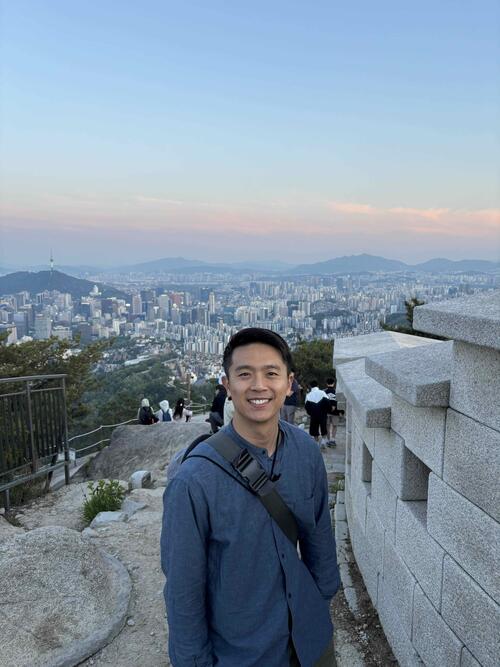
Richard Liang outdoors in South Korea.

Liang in South Korea. Photo courtesy of Richard Liang.

From Research to Health Policy Impact


Over the years, Liang evolved from a mentee of Eggleston into a collaborator on projects in Korea and elsewhere. As COVID-19 disrupted health services worldwide, he joined Eggleston and a team of researchers in studying the impact of the pandemic on chronic disease care in India, China, Hong Kong, Korea, and Vietnam. Their findings showed that marginalized and rural communities in those countries were hit especially hard, with negative consequences for population health that reached far beyond those directly infected with the virus.

He and Eggleston also co-authored a study on preferences for telemedicine services among patients with diabetes and hypertension in South Korea during the early COVID-19 pandemic. The research drew the attention of the Prime Minister’s Office in Korea, which used it to guide national policy on telemedicine, a field still lacking a formal legal framework in the country.

For Liang, it was proof of the available opportunities to make tangible improvements in population health by combining rigorous research with policy engagement and drawing on insights across medicine, public health, and the social sciences.

“As a medical student researcher with experiences across different East Asian countries, I witnessed firsthand many pressing challenges in health and society, from rapidly aging populations to rising rates of chronic diseases,” he says. “To tackle these issues holistically, there is a growing need to bring together diverse perspectives, but regional collaborations in medical and public health research have been scarce, and rarer still between the biomedical and social sciences.”

The various classes and seminars I’ve attended through APARC, and subsequently as an East Asian Studies master’s student, have helped me think more critically about how the science and practice of medicine impact policy and society, and vice versa.
Image
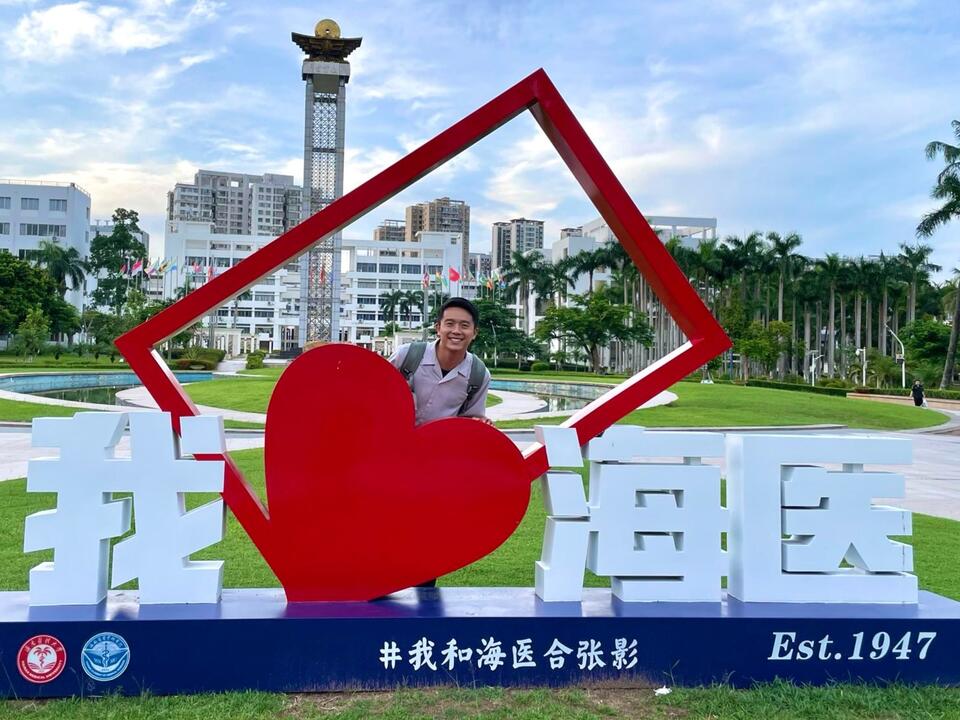
Richard Liang on a field visit in China.

Liang in China on a field visit during a 2025 summer seminar co-taught by Professors Eggleston and Williams. Photo courtesy of Richard Liang.

A Second Academic Home


Eggleston describes Liang as a model of interdisciplinary scholarship. In addition to medical school and doctoral research, he has carved out space to pursue his passion for East Asian studies. He has taken classes with APARC and affiliated faculty on topics ranging from health and politics in modern China to historical and cultural perspectives on North Korea, science and literature in East Asia, and tech policy, innovation, and startup ecosystems in Silicon Valley and Japan.

“The various classes and seminars I’ve attended through APARC, and subsequently as an East Asian Studies master’s student, have helped me think more critically about how the science and practice of medicine impact policy and society, and vice versa,” Liang says. Thanks to these experiences, he also found “a second academic home away from the medical school — a community that shares the recognition of the need to strengthen dialogue and cooperation across the Pacific and that actively encourages the interdisciplinary environment necessary to make my aspirations a reality.”

Most recently, he participated in a summer seminar on AI-enabled global public health and population health management, co-taught by Eggleston and Michelle Williams, a professor of epidemiology and population health at Stanford’s School of Medicine. Offered via the Stanford Center at Peking University, this three-week seminar focused on advancing global health through cross-cultural collaboration and the application of cutting-edge technology in population health and health policy decision-making. 

“During this program, I not only got to share my experiences from conducting population health research across East Asia, but also learn from and alongside fellow students across different disciplines, spanning from international relations to computer science,” Liang notes. He especially enjoyed meeting local Chinese graduate students and providing feedback and near-peer mentorship as an upper-year graduate student.

The seminar also led to exploring additional opportunities for research collaborations to study the implications of long-term annual health screenings across China. Liang, Eggleston, and Williams plan to expand this collaborative work.

The cross-cultural experiences and fruitful academic exchanges I’ve learned through as a Stanford graduate student not only inform my research in different countries but also help prepare me to become a better care provider for my future patients.

Preparing to Become a Better Care Provider


Liang’s work across borders and disciplines not only advances research but also deepens the perspective of cultural humility he brings to his future role as a physician.

“The cross-cultural experiences and fruitful academic exchanges I’ve learned through as a Stanford graduate student not only inform my research in different countries, but also help prepare me to become a better care provider for my future patients,” he says.

For his achievements, Liang has earned multiple honors, including a Young Investigator Collegiality Award from the International and Japanese Societies for Investigative Dermatology, the Critical Language Scholarship in Korean from the U.S. Department of State, and the Stanford Center for Asian Health Research and Education Seed Grant.

He is looking forward to finishing medical school, attending a residency program, and continuing an interdisciplinary career that advances human health and well-being.

Reflecting on the fleeting nature of student life, his advice to fellow students is to remember that “Your time as a Stanford student can really fly by, so make sure to explore the opportunities that speak to you and offerings across the university, by organizations like APARC and the Freeman Spogli Institute for International Studies. The Bechtel International Center’s Office of Global Scholarships and the Hume Center for Writing and Speaking are also wonderful resources to get started.”

It is advice he has embodied himself, building a career at the intersection of medicine, public health, and East Asian studies, one project at a time.

Read More

Colonade at Stanford Main Quad with text: call for applications for APARC's 2026-28 fellowships.
News

Applications Open for 2026-2028 Fellowships at Stanford's Asia-Pacific Research Center

The center offers multiple fellowships in Asian studies to begin in fall quarter 2026. These include a postdoctoral fellowship on political, economic, or social change in the Asia-Pacific region, postdoctoral fellowships focused on Asia health policy and contemporary Japan, postdoctoral fellowships and visiting fellow positions with the Stanford Next Asia Policy Lab, and a visiting fellow position on contemporary Taiwan.
Applications Open for 2026-2028 Fellowships at Stanford's Asia-Pacific Research Center
Close-up on coloured medication capsules and a stethoscope on the background of Korean won bills.
News

Spending More, Gaining Less: Lowest-Income Koreans Derive the Least Value from Health Care Investment, New Research Reveals

Despite rising health care spending, adults in South Korea’s lowest-income quintile experience the smallest relative improvement in life expectancy and well-being, according to a new study. The co-authors, including Stanford health economist Karen Eggleston, call for the country’s health policy to prioritize both equity and value, and highlight lessons for other health systems.
Spending More, Gaining Less: Lowest-Income Koreans Derive the Least Value from Health Care Investment, New Research Reveals
Stanford Next Asia Policy Lab team members and invited discussants during a roundtable discussion in a conference room.
News

Stanford Next Asia Policy Lab Probes Political Messaging and Public Attitudes in U.S.-China Rivalry

At a recent conference, lab members presented data-driven, policy-relevant insights into rival-making in U.S.-China relations.
Stanford Next Asia Policy Lab Probes Political Messaging and Public Attitudes in U.S.-China Rivalry
Hero Image
Richard Liang standing next to a poster presenting his research at a conference.
Liang collaborated with Dr. Karen Eggleston on research into the prevalence and treatment rates of atopic dermatitis (eczema) in South Korea. He presented this research at the 2025 Seoul International Congress of the Korean Academy of Asthma, Allergy and Clinical Immunology.
Photo courtesy of Richard Liang
All News button
1
Subtitle

Spanning medicine, public health, and East Asian studies, Richard Liang’s rare academic path at Stanford has fueled collaborations that bridge research and policy across borders and disciplines.

Date Label
Authors
Noa Ronkin
News Type
News
Date
Paragraphs

As countries confront rising health care spending, policymakers everywhere face a key question: Who benefits from these spending increases?

Consider South Korea, a nation that has sharply increased its per capita health care spending over the past decade, delivering reasonable value in improving health outcomes as measured by rising life expectancy and a reduced overall disease burden. Yet, not all South Koreans reap equal rewards from the country’s health investments, according to a new study. Rather, adults in the lowest-income quintile receive the least health gains for every dollar spent on their care.

Published in the journal Health Affairs Scholar, the study reveals stark income-based disparities in the value of health care — defined as health gains relative to spending — among South Korean adults. The research systematically quantifies how efficiently health spending translates into longer, healthier lives across income groups in South Korea, providing insights into the distribution of health gains relative to health care spending.

“While earlier research often examined disparities in access, utilization, or outcomes separately, our analysis provides a more integrated assessment by jointly examining health care costs and health gains,” explains the research team, including Stanford health economist Karen Eggleston, the director of the Asia Health Policy Program (AHPP) at APARC. Eggleston’s co-authors are Sungchul Park, an associate professor in Korea University’s Department of Health Policy and Management and an incoming visiting scholar with AHPP; Young Kyung Do, a professor in Seoul National University’s Department of Health Policy and Management and AHPP’s inaugural postdoctoral fellow; and David Cutler, the Otto Eckstein Professor of Applied Economics at Harvard University. 

Their findings are sobering: between 2010 and 2018, South Korean adults in the lowest income quintile derived the least value from increased health spending compared to those in the middle- and higher income quintiles, suggesting a system that underserves the poorest population.


Sign up for APARC newsletters to receive updates on our scholars’ research >

These findings highlight structural inequities in the South Korean health system and emphasize the need for targeted policies to promote equitable health care value.
Eggleston et al.

Poorer Health, Smaller Gains


Between 2010 and 2019, per capita health care spending in Korea increased from $1,211 to $1,903, growing nearly 6 percent annually. During that decade, life expectancy climbed from 80.5 to 83.7 years, while disability-adjusted life years – expressed as the number of years lost due to ill-health – declined significantly. These measures seemingly suggest health spending has yielded solid returns in terms of improved health outcomes.

Yet stark income inequality persists in Korea. The country has both the highest old-age poverty rate and the largest share of out-of-pocket medical expenses among OECD countries. Does rising health spending benefit all segments of society equally?

To answer this question, the researchers analyzed trends in health spending and outcomes across income quintiles (excluding the bottom 10 percent of the household income distribution) from 2010 to 2018.

They measured health care spending as total medical expenditures, including costs for inpatient and outpatient services, emergency services, and prescription medications. All spending measures were adjusted for inflation and are reported in 2021 US dollars. To asses health outcomes, they used three indicators: (1) health-related quality of life, which relies on standard questionnaires to measure individuals’ perceived physical and mental health over time; (2) life expectancy, calculated using life table methods based on enrollment data from the national health insurance system; and (3) quality-adjusted life expectancy (QALE) at age 25, a measure that reflects both longevity and the quality of life during those years – an essential consideration when evaluating the effectiveness and equity of health care systems. To quantify the value of health care across income groups, the researchers applied statistical methods.

They found that adults in the lowest-income quintile experienced the smallest relative improvement in QALE over time: an increase of 0.7 years, compared with 1.4 years in the second and third quintiles, 1.3 years in the fourth, and 1.2 years in the highest quintile. Translated into a value estimate, adults in the lowest income quintile incurred $78,209 per QALE; in contrast, adults in the second through highest income quintiles achieved greater value estimates of $47,831, $46,905, $31,757, and $53,889, respectively. Thus, the most efficient gains in both longevity and quality of life were in the middle-income groups.

“We found that per capita spending was similar across income groups, but the lowest-income quintile experienced much smaller gains in QALE,” Eggleston and her collaborators write. 

Reflecting the principle of diminishing returns, “these findings highlight structural inequities in the South Korean health system and emphasize the need for targeted policies to promote equitable health care value.” 

Adults in the lowest-income quintile derived the least value, largely due to poorer baseline health and limited access to care.
Eggleston et al.

Why Spending Does Not Equal Value


While the study did not identify causal pathways, secondary data suggest two plausible explanations for the results: poorer baseline health and greater unmet needs.

The data indicate that adults in the lowest-income quintile had significantly higher rates of chronic disease, disability, behavioral risk factors such as smoking and obesity rates, and mental health issues. These factors make it more difficult to achieve health gains.

Moreover, adults in the lowest-income quintile were less likely to receive preventive services, with markedly lower rates of medical checkups and cancer screenings. “Despite greater health needs, these adults faced persistent barriers to accessing care, particularly financial constraints,” the researchers say.

Notably, the highest value of health spending was not observed among adults in the highest-income group. One explanation is that this group may consume more low-value or marginally beneficial health services.

Policy Implications: Efficiency with Equity


Eggleston and her co-authors emphasize “the need for health policy in South Korea to prioritize both equity and value.” They highlight the following targeted strategies to improve efficiency and fairness:

  • Invest in high-value services that link spending to meaningful health outcomes:
    • Improve access to high-value preventive and primary care services by expanding financial protections, particularly for lower-income groups.
    • Improve overall system efficiency by reducing the overuse of low-value health care services.
  • Pair health care reform with broader social policies: Coordinate efforts to address upstream factors tied to health disparities, such as income inequality.
  • Aim for improvements across the entire population: Implement evidence-based clinical appropriateness guidelines to ensure health care spending yields meaningful and equitable results.

While focused on South Korea, the study’s findings illuminate how income inequality interacts with health system designs and carry lessons for other countries.

“In countries with greater income inequality and fragmented health systems, such as the United States, disparities in health care value may be even more pronounced,” the co-authors write.

As South Korea and other countries continue to invest heavily in health care, the study highlights the urgency of improving the distribution and impact of that increased spending. Without focused reforms, it risks entrenching existing inequities rather than alleviating them.

Read More

Close-up on an elderly womna's hands holding colorful puzzle pieces.
News

Confronting the Challenge of Dementia Care: Lessons from South Korea

A comprehensive review of rapidly aging South Korea’s efforts to mitigate the social and economic costs of Alzheimer’s disease and related dementias, co-authored by Stanford health economist Karen Eggleston, provides insights for nations facing policy pressures of the demographic transition.
Confronting the Challenge of Dementia Care: Lessons from South Korea
An older Korean man fills out a job application at a elderly persons' job fair in Seoul.
News

In Rapidly Aging South Korea, the Economy Is Slow in Creating “Age-Friendly” Jobs

Despite the nation’s rapidly aging demographics, South Korea's economy has not adapted as well as the United States, a new study finds. The researchers, including Stanford health economist and director of the Asia Health Policy Program at APARC Karen Eggleston, show that age-friendly jobs attract a broad range of workers and that structural barriers in the labor market influence which groups can access these roles.
In Rapidly Aging South Korea, the Economy Is Slow in Creating “Age-Friendly” Jobs
Chinese agriculture working couple standing side by side on the top of a rice terraces at Ping An Village looking to the camera.
News

China’s Unified Health Insurance System Improved Mental Well-Being Among Rural Residents, Study Finds

New research by a team including Stanford health economist Karen Eggleston provides evidence about the positive impact of China’s urban-rural health insurance integration on mental well-being among rural seniors, offering insights for policymakers worldwide.
China’s Unified Health Insurance System Improved Mental Well-Being Among Rural Residents, Study Finds
Hero Image
Close-up on coloured medication capsules and a stethoscope on the background of Korean won bills.
All News button
1
Subtitle

Despite rising health care spending, adults in South Korea’s lowest-income quintile experience the smallest relative improvement in life expectancy and well-being, according to a new study. The co-authors, including Stanford health economist Karen Eggleston, call for the country’s health policy to prioritize both equity and value, and highlight lessons for other health systems.

Date Label
1
APARC Predoctoral Fellow, 2024-2025
Screenshot 2024-10-21 at 8.54.50 AM.png

Alisha Elizabeth Cherian joined the Walter H. Shorenstein Asia-Pacific Research Center (APARC) as APARC Predoctoral Fellow for the 2024-2025 academic year. She is a PhD candidate in Social and Cultural Anthropology at Stanford University. She received her BA from Vassar College in Anthropology and Drama with a correlate in Asian Studies, and her MA in the Social Sciences from the University of Chicago.

Her dissertation, entitled "Beyond Integration: Indian Singaporean Public Urban Life", investigates how enforced racial integration shapes racial formations and race relations in Singapore. Her project explores everyday encounters and interactions that are structured, but not overdetermined, by the state's multiracial policies as well as colonial histories and regional legacies of Indian indentured and convict labour. With her research, she seeks to contribute to a more ethnographic understanding of how plural societies are approached both scholarly and practically.

Date Label
Authors
Nora Sulots
News Type
News
Date
Paragraphs

In an era marked by profound societal transformations, identity, democracy, and justice have become central to the discourse on shaping fair and inclusive societies. Recognizing the imperative to delve into these complex issues, political scientist Hakeem Jefferson is launching a new research initiative at Stanford University’s Center on Democracy, Development and the Rule of Law. The Program on Identity, Democracy, and Justice (IDJ) serves as a nexus for researchers committed to unraveling the multifaceted dimensions of identity and informing tangible steps toward a more equitable future.

Against the backdrop of diverse topics such as racial and ethnic identity, gender and sexuality, religion, class, and citizenship, the IDJ program emerges as a hub for interdisciplinary collaboration. Its reach extends beyond academic circles, bringing together researchers and organizations who are thinking about how to build fairer, more inclusive societies.

“Hakeem's work on race and politics in America is an important part of the Center's expanding work on the quality of American democracy,” shared Kathryn Stoner, Mosbacher Director of CDDRL. “We are thrilled to launch this new program on such a crucial issue at CDDRL.”

"This program is the embodiment of years of hard work by Hakeem Jefferson in building an innovative research agenda and a vibrant scholarly community attentive to pressing questions on struggles for recognition, inclusion, and social justice,” added Hesham Sallam, the Center’s Associate Director for Research. “I look forward to seeing the program flourish and grow while contributing to intellectual life at CDDRL and Stanford at large."

This program is the embodiment of years of hard work by Hakeem Jefferson in building an innovative research agenda and a vibrant scholarly community attentive to pressing questions on struggles for recognition, inclusion, and social justice.
Hesham Sallam
Associate Director for Research, CDDRL

On January 11, 2024, IDJ will host its inaugural event, titled Multiracial Democracy and its Future in the United States, with Harvard University professors Steven Levitsky and Daniel Ziblatt. Levitsky and Ziblatt are the New York Times best-selling authors of How Democracies Die and will discuss their newest book, Tyranny of the Minority: Why American Democracy Reached the Breaking Point (Crown, 2023). In a moderated conversation with Professors Hakeem Jefferson and Jake Grumbach (UC Berkeley) and an audience Q&A, Levitsky and Ziblatt will offer a framework for understanding the current crisis in America's democracy. You can learn more about the event and register to attend here.

In the following Q&A, Hakeem Jefferson, an assistant professor of political science in the School of Humanities and Sciences, shares more about the motivations and objectives of the new IDJ program and the transformative potential of identity-focused research.


What motivated the establishment of the Program on Identity, Democracy, and Justice (IDJ) at CDDRL, and what specific gaps or challenges in existing research does it aim to address?


As a scholar of race and politics, it has always been clear to me that we cannot understand threats to democracy or the promise of democracy without engaging issues of race and identity more broadly. I am excited to launch this program at CDDRL because I think we have a real opportunity to bring together scholars, practitioners, and community members concerned with creating a society of political and social equals. At IDJ, we hope to expand people’s understanding of what it means to care about democracy and what the study of democracy looks like. For us, these questions necessitate a focus on difference, a focus on inequality, and a concern with democracy beyond the ballot box. To be sure, we will engage questions related to elections and the health of electoral democracy, but we also want to make the strong case in the research we platform and in the conversations and workshops we convene that being concerned with democracy means thinking quite carefully about how societies are stratified, how power is distributed, and how justice is achieved.

We want to make the strong case in the research we platform and in the conversations and workshops we convene that being concerned with democracy means thinking quite carefully about how societies are stratified, how power is distributed, and how justice is achieved.
Hakeem Jefferson
Assistant Professor of Political Science, Faculty Director of IDJ

What are some of the program's key goals and objectives?


I want to invite folks who study the program themes to be in community with one another. The hope is that these interactions will lead to more thoughtful scholarship and initiatives. We want people to share early-stage ideas, make connections with like-minded collaborators, sharpen later-stage research, and broaden their aims and interests through consuming the work hosted by the program. We want to keep researchers aware of practitioners, especially at the local level, who are working to promote democratic principles and, in parallel, keep those organizations abreast of findings relevant to our shared interest in a healthier democracy.

How does the IDJ program approach the study of identity-related issues, and what makes it distinctive compared to existing research programs?


IDJ is ideas first. Different backgrounds, training, and scholarly dispositions mean that we think about identity-related questions in different ways. IDJ seeks to bring our attention to how we are engaging the same objective — equitable democracies — whether we are concerned with different identities, different contexts, or different sorts of evidence. By pursuing common insights, IDJ aims to produce work that is interesting to a broad audience.

As the IDJ program unfolds, how do you envision its role in shaping public discourse and influencing policies related to identity, democracy, and justice, both locally and globally?


Throughout my career — and since I was a young boy in South Carolina — I have engaged in public conversations about issues of justice. In recent years, I have written extensively for public audiences about topics ranging from the January 6 insurrection and whiteness to the crisis facing multiracial democracy in the United States. As I launch the IDJ program, this commitment to public engagement remains at the heart of what we plan to do. From writing Op-Eds to engaging directly with those working on the ground to safeguard democracy, we hope to be a public-facing program whose stakeholders include those far beyond our Stanford community.

Read More

Hoover Tower at sunset.
News

New Initiative Examines Stanford’s Role in Advancing Democracy

Upon completing the inventory phase of its research, the effort released a list of the courses, research and engagement activities that it feels advance democracy. The next phase involves holding deliberations with the larger Stanford community.
New Initiative Examines Stanford’s Role in Advancing Democracy
Hakeem Jefferson
News

Welcoming Hakeem Jefferson to CDDRL

Jefferson, an assistant professor of political science at Stanford University, will join the center as a faculty affiliate.
Welcoming Hakeem Jefferson to CDDRL
Hero Image
View of the huge crowd from the Lincoln Memorial to the Washington Monument, during the March on Washington
View of the huge crowd from the Lincoln Memorial to the Washington Monument during the March on Washington.
Warren K. Leffler / U.S. Library of Congress
All News button
1
Subtitle

Led by Professor Hakeem Jefferson, the program housed at the Center on Democracy, Development and the Rule of Law will advance innovative research on the multifaceted dimensions of identity and their role in democratic development, struggles for recognition, social justice, and inclusion.

Authors
George Krompacky
News Type
Q&As
Date
Paragraphs

This news entry was last updated on December 14, 2023.

APARC Communications Manager Michael Breger recently spoke with Dr. Soksamphoas Im, our Lee Kong Chian NUS-Stanford Fellow on Southeast Asia in fall 2023.

In this conversation, Im shares insights from her research on social welfare in Cambodia and how such public assistance is used by the ruling regime to establish legitimacy. You can listen to the interview on SoundCloud or read the audio transcript.

On November 29, 2023, Dr. Im presented her research at a seminar hosted by the Southeast Asia Program. You can view the event recording on our YouTube channel.

Read More

Flanked by Sultan of Brunei Haji Hassanal Bolkiah (L) and President of Indonesia Joko Widodo (R), U.S. President Joe Biden points towards the camera.
Commentary

Jokowi’s Washington Visit Could Boost Bilateral Ties — or Highlight Problems

President Joko Widodo and his team arrive in Washington at an uncertain time in U.S.-Indonesia relations.
Jokowi’s Washington Visit Could Boost Bilateral Ties — or Highlight Problems
Panelists gather to discuss APEC
News

Trade Experts Gather to Discuss APEC’s Role and Relevance

Ahead of the 2023 Asia-Pacific Economic Cooperation (APEC) convening in San Francisco, APARC kicked off its fall seminar series, Exploring APEC’s Role in Facilitating Regional Cooperation, with a panel discussion that examined APEC’s role and continued relevance in a rapidly-evolving Asia-Pacific region.
Trade Experts Gather to Discuss APEC’s Role and Relevance
Hero Image
Portrait of Soksamphoas Im
All News button
1
Subtitle

In this conversation, Dr. Soksamphoas Im, APARC's Lee Kong Chan NUS-Stanford Fellow on Southeast Asia, discusses her research into how the ruling Cambodian People’s Party combines coercive capacity with policy reform to legitimize its regime.

-

In cooperation with Kino Lorber, the Israel Visiting Scholars program at the Freeman Spogli Institute for International Studies (FSI) is offering a public screening of the film Cinema Sabaya.

Inspired by writer-director Orit Fouks Rotem’s own experiences as a teacher, Cinema Sabaya presents a deft and heartfelt portrait of art’s capacity to unite disparate communities, moving effortlessly between the gravity of their conversations and the genuine joy of this unlikely group of friends.

A reception with food and drink will follow the screening.

Parking at Stanford is limited. Please plan your visit accordingly.

This event will not be livestreamed.


About the Film


A group of Palestinian and Israeli women attend a video workshop at a small town community center run by Rona (Dana Ivgy, Zero Motivation), a young filmmaker from Tel Aviv, who teaches them to document their lives. As each student shares footage from her home life with the others, their beliefs and preconceptions are challenged and barriers are broken down. The group comes together as mothers, daughters, wives, and women living in a world designed to keep them apart, forming an empowering and lasting bond as they learn more about each other... and themselves.
 

Film poster for Cinema Sabaya
Courtesy of Kino Lorber


Levinthal Hall
424 Santa Teresa Street
Stanford, CA 94305

Film Screenings
Date Label
Authors
News Type
News
Date
Paragraphs

View a Japanese version of this announcement.


The Japanese public supports women’s advancement in society, finds the Stanford Japan Barometer, a survey platform launched by the Japan Program at Stanford University’s Walter H. Shorenstein Asia-Pacific Research Center (APARC). This result is somewhat surprising, considering Japan’s poor showing in global gender equality rankings.

Led by Professor of Sociology Kiyoteru Tsutsui, the Henri H. and Tomoye Takahashi Professor and director of the Japan Program at APARC, and Charles Crabtree, an assistant professor in the Department of Government at Dartmouth College and a former visiting assistant professor with the Japan Program, the Stanford Japan Barometer (SJB) is a periodic public opinion survey on political, economic, and social issues concerning contemporary Japan with three main parts: (1) questions about respondents’ demographic background; (2) a stable set of questions about support for policy issues, political parties, public institutions, and international entities; and (3) a thematically focused set of questions and experimental studies on topics of great relevance at the time of the survey. The survey is conducted with a national, quota-based sample of 8,000 Japanese residents.

In the first installation of the survey, conducted in late November 2022, the SJB examined issues concerning gender and sexuality in Japan. It found, among other results, that most Japanese are in favor of recognizing same-sex unions and support a legal change to allow married couples to keep separate surnames. The SJB also examined questions related to women’s advancement in Japanese society, the focus of the following report.

One prominent gender equality issue that often recurs in Japanese public discourse is women’s under-representation in prominent positions, especially in politics and business. According to the latest Global Gender Gap Report released by the World Economic Forum, Japan ranks 116th out of 146 countries in terms of gender equality. Japan fares well in the categories of Education and Health, but in Politics and Economy, it ranks 139th and 121st respectively. In another ranking on women’s role and influence in the workforce, the Glass-Ceiling Index compiled by The Economist, Japan ranks second-worst among the 29 developed countries surveyed. Japan barely avoided the lowest ranking (a dubious distinction taken by South Korea), but indeed ranks lowest in terms of the proportion of women in national parliaments (single or Lower House) among OECD countries, with only 10% of Lower House members being female.

To better understand this striking gender disparity, Tsutsui and Crabtree had respondents complete conjoint experiments that examined what types of candidates the Japanese public is more likely to support for a Diet seat and an external corporate board member. The results show, perhaps surprisingly, that Japanese people prefer women for these positions (52% to 48% for the Diet and 51% to 49% for corporate board). Women support female candidates more than men, but men also prefer female candidates over male ones, averaging across all other candidate characteristics such as education and occupational background. These differences are fairly stable across different ages, educational and family backgrounds, and political party support. Contrary to what gender representation in politics and corporate leadership would indicate, the SJB results suggest that there is robust support for women’s representation in those powerful positions across different spectrums of the Japanese public.

Tsutsui and Crabtree also asked a series of questions about views on gender roles and women’s advancement in Japanese society. Respondents were particularly supportive of more men taking parental leave and helping with childcare, registering 6.3 on a scale of 0-10 (5 being neutral and a number larger than 5 indicating support for the statement). They were not supportive of the statements about traditional gender roles, such as “Men should work outside the home and women should stay home” (3.8), or “Boys should be raised to be manly and girls should be raised to be womanly” (4.3). Interestingly, for all these questions, there is a statistically significant difference between male and female respondents, with men showing greater support for traditional gender roles, although the general trend is a shift away from traditional gender roles even among men.

On questions concerning women’s advancement in Japanese society, the Japanese public demonstrated strong support for the argument that more efforts should be made to increase the number of female politicians (5.8), executives (5.9), and board members (5.8). There is no substantial difference between men and women for these questions, indicating that the support for women’s advancement in politics and business is broadly shared across genders.

When it comes to using a quota to ensure women’s seats in the national Diet, management positions, and board rooms, the opinions are divided across the gender line, with women being significantly more supportive (5.1, 5.2, 5.2) than men (4.8, 4.7, 4.7). This likely indicates that men are threatened by the idea of quota as it would reduce the likelihood of their advancement toward these powerful positions.

Men’s resistance to quotas notwithstanding, overall, the Japanese public supports women’s advancement in society, perhaps recognizing the need for Japan to change in light of the embarrassing showing in global rankings of women’s empowerment. These results suggest that the slow pace of change in women’s advancement in Japan might be attributable to the behavior of gatekeepers, who are mostly older men who come from different socioeconomic backgrounds than the SJB’s average survey respondent, rather than to a lack of public support.


For media inquiries about the survey, please reach out to:
Noa Ronkin
APARC Associate Director for Communications and External Relations
noa.ronkin@stanford.edu

Read More

Portrait of a Japanese woman standing next to a window reflecting daylight
News

The Japanese Public Broadly Supports Legalizing Dual-Surname Option for Married Couples

Reflecting complex gender politics at play in Japan, the Stanford Japan Barometer, a new periodic public opinion survey co-developed by Stanford sociologist Kiyoteru Tsutsui and Dartmouth College political scientist Charles Crabtree, finds that the Japanese public largely supports a legal change to allow married couples to keep separate surnames.
The Japanese Public Broadly Supports Legalizing Dual-Surname Option for Married Couples
 People gather during a rally calling for an anti-discrimination legislation in Japan.
News

Most Japanese Support Same-Sex Marriage, New Public Opinion Survey Finds

The initial set of results of the Stanford Japan Barometer, a new periodic public opinion survey co-developed by Stanford sociologist Kiyoteru Tsutsui and Dartmouth College political scientist Charles Crabtree, indicate that most Japanese are in favor of recognizing same-sex unions and reveal how framing can influence the public attitude toward LGBTQ communities.
Most Japanese Support Same-Sex Marriage, New Public Opinion Survey Finds
Stanford sociologist Kiyoteru Tsutsui discusses Japan on the "Endgame" podcast
Commentary

Video Interview: Kiyoteru Tsutsui Discusses Japan’s Economic Diplomacy in Southeast Asia

Kiyoteru Tsutsui, the Henri H. and Tomoye Takahashi Professor and Senior Fellow in Japanese Studies at Shorenstein APARC, joined Visiting Scholar Gita Wirjawan, host of “Endgame,” a video podcast, to discuss a range of topics, including his work on human rights, the demographic problem in Japan, global democratic decline, and Japan’s approach to Southeast Asia as a projector of soft power.
Video Interview: Kiyoteru Tsutsui Discusses Japan’s Economic Diplomacy in Southeast Asia
Hero Image
A young professional woman standing in a city street, holding a notebook and talking to unseen audience. electravk via Getty
All News button
1
Subtitle

Contrary to current levels of women’s under-representation in leadership positions in Japan, the Stanford Japan Barometer, a new periodic public opinion survey co-developed by Stanford sociologist Kiyoteru Tsutsui and Dartmouth College political scientist Charles Crabtree, finds that the Japanese public favors women for national legislature and corporate board member positions.

-
2023 World House Film Festival

A documentary film festival in celebration of the 2023 Martin Luther King, Jr., Holiday featuring films that explore "The Crisis of Democracy in the World House"


Join The World House Project for a free, four-day virtual film festival in celebration of the 2023 Martin Luther King, Jr. holiday, beginning Friday evening, January 13, through Monday, January 16, 2023.

The virtual event will feature over 40 documentaries, as well as interviews and panel discussions with World House Project director Dr. Clayborne Carson and special guests that explore the theme of "The Crisis of Democracy in the World House."

For registration, film listings, and festival schedule, visit our website.

Virtual

Film Screenings
Subscribe to Inequality