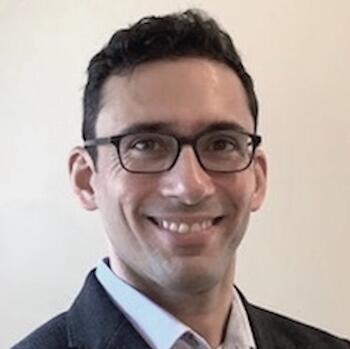
Will Hallisey
0
hallisey_23_headshot.jpeg
Master's in International Policy Class of 2023

Angela Chen is pursuing a Master’s of International Policy and exploring the intersection of policy, innovation, and technology. At Stanford, Angela is the Vice President of Cardinal Ventures, Stanford’s student-run startup accelerator, and a venture fellow at a Stanford Graduate School of Business (GSB) alumni-run impact venture capital fund. She is also the first non-STEM student selected to become a Stanford Technology Venture Program (STVP) Threshold Venture Fellow.
Prior to Stanford, Angela was the founder and CEO of an edtech startup that supported more than 11,000 students across the globe to thrive in their first corporate jobs. She was also a management consultant and advised senior government leaders on how to solve their trickiest challenges and become future-ready. In the past four years, Angela has worked across various sectors, including national security and defense, education, health care, sustainability, and artificial intelligence.
Angela is from Toronto, Canada and graduated magna cum laude from the Huntsman Dual Degree Program at the Wharton School and the University of Pennsylvania, with a BA in International Studies and BSc in Economics. In her free time, she loves relaxing under the sun with a good book, hosting dinner parties, and planning for her next big trip.
This event will offer simultaneous translation between Japanese and English.
当イベントは日本語と英語の同時通訳がついています。
This is a virtual event. Please click here to register and generate a link to the talk.
The link will be unique to you; please save it and do not share with others.
当イベントはZoomウェビナーで行われます。ウェビナーに参加するためには、こちらのリンクをクリックし、事前登録をして下さい。
March 1, 5-6:30 p.m. California time/ March 2, 10-11:30 a.m. Japan time
This event is part of the 2022 Japan Program Winter webinar series, The Future of Social Tech: U.S.-Japan Partnership in Advancing Technology and Innovation with Social Impact
The challenges of climate change require solutions on multiple fronts, one of which is technological innovation. Attempts for innovation for new energy sources have been ongoing in many parts of the world, and Japan has produced a number of new technologies. This session will focus on two of the most promising innovations coming out of Japan, biofuel and hydrogen energy, and assess their promises and challenges, highlighting technological, regulatory, and business aspects of developing new technologies. Where do these technologies fit in the energy portfolio that would address the issues of climate change and what can Japan and the United States do to collaboratively solve the key problems in advancing these technologies further? Three leading experts in the field will discuss these questions that would shape the future of climate change.
Panelists
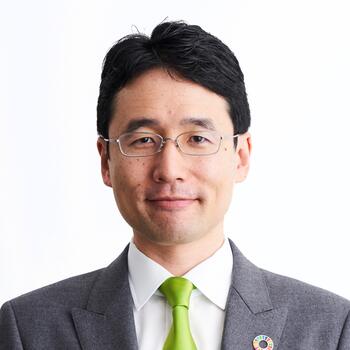
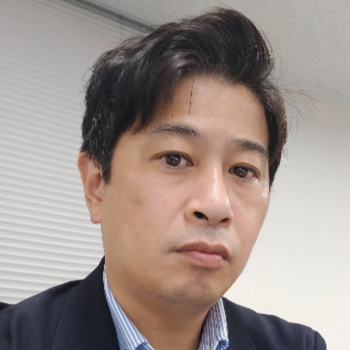
He has also coordinated fuel cell and hydrogen activities with international stakeholders, through International Energy Agency’s Technology Collaboration Program (IEA TCP: Advanced Fuel Cell & Hydrogen), and International Partnership for Hydrogen and Fuel Cells in the Economy (IPHE).
He joined the NEDO in 1992, just after graduation from the Tokyo University of Science. He served as a visiting scholar at the Massachusetts Institute of Technology in 1997-1998.
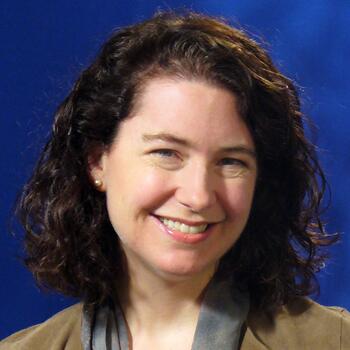
Moderator
This event will offer simultaneous translation between Japanese and English.
当イベントは日本語と英語の同時通訳がついています。
This is a virtual event. Please click here to register and generate a link to the talk.
The link will be unique to you; please save it and do not share with others.
当イベントはZoomウェビナーで行われます。ウェビナーに参加するためには、こちらのリンクをクリックし、事前登録をして下さい。
Febuary 14, 4-5:30 p.m. California time/ February 15, 9-10:30 a.m. Japan time
This event is part of the 2022 Japan Program Winter webinar series, The Future of Social Tech: U.S.-Japan Partnership in Advancing Technology and Innovation with Social Impact
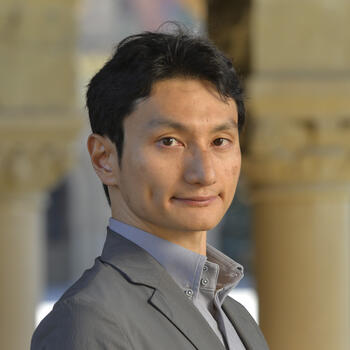
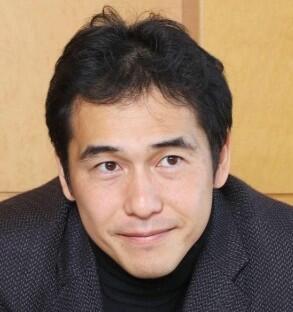
COVID-19 has changed the way we work. While remote work has become the norm, the pandemic has also highlighted the inequity in childcare, elderly care, and household work. Japanese workplaces feel a particularly acute need for adjustment, as lack of digitalization and persistent gender inequality continue to limit productivity gains and diversity in the workforce. Social entrepreneurs in Japan have started offering new technologies that address these problems and transform Japanese work environments, using matching algorithms, innovative apps, and other new technologies. How can these social technologies reshape the workplace? What principles do we need in using these technologies in practice, in order to unlock the keys to untapped human resource potentials and realize a more equitable and inclusive work environment in Japan, the United States, and elsewhere? Fuhito Kojima, a renowned economist specializing in matching theory, will talk about market design from the perspective of regulation design and economics, and Eiko Nakazawa, an influential entrepreneur, will speak about her experiences founding education and childcare startups in the United States and Japan, moderated by Yasumasa Yamamoto, a leading expert on technology and business in Japan and the United States.
Panelists

Moderator
This event is co-sponsored by Center for South Asia and is part of Shorenstein APARC's winter 2022 webinar series, New Frontiers: Technology, Politics, and Society in the Asia-Pacific
How does India’s democratic system foster or impede the country’s command of key technologies? Conversely, how can technology reinforce or undermine the health of Indian democracy? Technological expertise and democratic vitality are both widely viewed as central features of Indian national identity and sources of Indian national power. But technology and democracy interact in complex and sometimes surprising ways. This webinar will explore how the Indian state can harness technology, and how technology impacts its democratic credentials – especially with the emergence of revolutionary new technologies, and the continuing evolution of the Indian political landscape.
Speakers:
 Arun Mohan Sukumar is a PhD candidate at The Fletcher School, Tufts University, and a pre-doctoral research fellow at Fletcher’s Centre for International Law and Governance. He previously headed the Cyber Initiative at the Observer Research Foundation, one of India’s biggest think-tanks. His first book, Midnight’s Machines: A Political History of Technology in India, won the Ramnath Goenka Award for Non-Fiction (2019) and was shortlisted for several other awards. Arun was previously a member of World Economic Forum’s Global Future Council on the Digital Economy and Society, and appointed by India’s National Security Advisor to a 'Study Group on Cyber Norms' that advised the Indian government on a national strategy towards the development and negotiation of global cybersecurity norms.
 Julie Owono is the Executive Director of the Content Policy & Society Lab (CPSL) and a fellow of the Program on Democracy and the Internet (PDI) at Stanford University. She is also the Executive Director of digital rights organization Internet Sans Frontières, one of the inaugural members of the Facebook Oversight Board, and an affiliate at the Berkman Klein Center at Harvard University. She holds a Master’s degree in International Law from la Sorbonne University in Paris, and practiced as a lawyer at the Paris Bar. Julie is a member of the Global Partnership on AI (GPAI) created by France and Canada, as well as a member of the World Economic Forum’s Global Future Council on AI for Humanity, and of the WEF Council on the Connected World.
Arzan Tarapore, South Asia Research Scholar of APARC at Stanford University, will moderate the discussion.
Via Zoom. Register at https://bit.ly/3KQ6JZ8
This event will offer simultaneous translation between Japanese and English.
当イベントは日本語と英語の同時通訳がついています。
This is a virtual event. Please click here to register and generate a link to the talk.
The link will be unique to you; please save it and do not share with others.
当イベントはZoomウェビナーで行われます。ウェビナーに参加するためには、こちらのリンクをクリックし、事前登録をして下さい。
February 7, 5-6:30 p.m. California time/ February 8, 10-11:30 a.m. Japan time
This event is part of the 2022 Japan Program Winter webinar series, The Future of Social Tech: U.S.-Japan Partnership in Advancing Technology and Innovation with Social Impact
Japan’s startup scene has become more exciting in recent years, but in the medical field, the failure to develop COVID-19 vaccines highlighted the shortcomings of Japan’s medical industry. What should Japan do to foster more impactful biotechnology entrepreneurship that would leverage vibrant medical research carried out at Japanese universities? The panel features two speakers who founded and grew their medical ventures in Japan's rapidly maturing startup ecosystem, both with deep connections to university research.
Tadahisa Kagimoto founded his first company right after finishing his medical degree at Kyushu University, pioneering a pathway of commercializing biotechnology from Japanese university research. His second startup, Healios, founded in 2013 with the goal of becoming a pioneer in regenerative medicine utilizing iPS, was successfully listed on the Tokyo Stock Exchange in 2015 and has been growing since.
Shoko Takahashi was a PhD student in molecular bioscience at the University of Tokyo when she founded her company, Genequest, to offer home DNA testing. The firm was purchased by another biotech startup founded by a University of Tokyo graduate, Euglena, in 2017, and the company has partnered with a variety of pharmaceutical, food and beverage companies, and universities in its research. Their entrepreneurial journeys reveal Japan's changing startup ecosystem that has rapidly matured over the past decade and signal a need for further development in regulatory environments, human resource development, and university-industry collaboration in the biotechnology industry.
Panelists
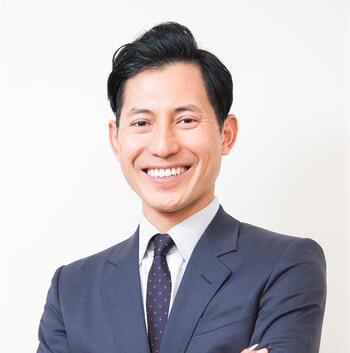
After founding Healios in 2011, Dr. Kagimoto led the company’s listing on the Tokyo Stock Exchange in 2015 and has built the company to its current scale of more than 140 people across its Japan and US offices. Healios leverages the favorable Japanese regulatory framework for regenerative medicine to efficiently deliver results for patients and its stakeholders. It is currently running two pivotal clinical trials for ischemic stroke and acute respiratory distress syndrome using bone marrow-derived allogeneic multipotent adult progenitor cells. At the same time, Healios is developing best-in-class, next generation pipeline assets in immuno-oncology, ophthalmology, and organ buds utilizing its innovative, proprietary universal donor iPS cell platform.

She received the 2018 Young Global Leaders award from the World Economic Forum and was selected for Newsweek's ‘100 respected Japanese in the world’ list.
Moderator

Kushida’s research and projects focused on the following streams : 1) how politics and regulations shape the development and diffusion of Information Technology such as AI; 2) institutional underpinnings of the Silicon Valley ecosystem, 2) Japan's transforming political economy, 3) Japan's startup ecosystem, 4) the role of foreign multinational firms in Japan, 4) Japan's Fukushima nuclear disaster. He spearheaded the Silicon Valley - New Japan project that brought together large Japanese firms and the Silicon Valley ecosystem.
He has published several books and numerous articles in each of these streams, including “The Politics of Commoditization in Global ICT Industries,” “Japan’s Startup Ecosystem,” "How Politics and Market Dynamics Trapped Innovations in Japan’s Domestic 'Galapagos' Telecommunications Sector," “Cloud Computing: From Scarcity to Abundance,” and others. His latest business book in Japanese is “The Algorithmic Revolution’s Disruption: a Silicon Valley Vantage on IoT, Fintech, Cloud, and AI” (Asahi Shimbun Shuppan 2016).
About the Seminar: Joseph Needham famously asked why China did not have its own Industrial Revolution. Using a newly constructed database, Yasheng Huang will show that China’s technological collapse happened much earlier than previously thought and the collapse coincided closely with the rise of autocracy and ideological homogeneity.
About the Speaker:

Online, via Zoom.
This is a virtual event. Please click here to register and generate a link to the talk.
The link will be unique to you; please save it and do not share with others.
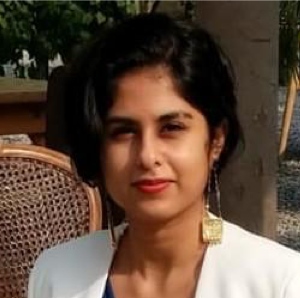
How well is India postured to become a world leader in high technology, especially information and communications technology? India – like the United States – is engaged in an increasingly intense strategic competition with China, and recognizes that mastery of key technologies is a key dimension of that competition. As it seeks to selectively decouple from and reduce its reliance on China, does it have the wherewithal to develop its own high-technology ecosystem, and emerge as a key technology partner to the U.S.? This webinar will examine the key factors that would posture the country for technology competition, including national policy settings, education and research infrastructure, and international partnerships.
Speakers:


Moderator:
This event is co-sponsored by Center for South Asia
via Zoom
Register at: https://bit.ly/3mZyfth
To watch the recording of the event, click here.
This event is co-hosted with the East Asia Institute (EAI) in Korea.
Event Time: November 18, 4:00 - 6:00 PM (PST) / November 19, 9:00 - 11:00 PM (Japan and Korea)
Please register for this event at EAI event page.
The ROK-U.S. and U.S.-Japan joint statements have increased expectations for a possible expansion of security and economic cooperation among South Korea, the U.S. and Japan. However, heightened U.S.-China strategic competition, as well as persistent challenges in the region such as historical tensions and the North Korea threat, have complicated the strategic calculus of U.S., South Korea and Japan. Under these circumstances, the South Korea, the U.S. and Japan must define their economic and security interests and seek ways to maintain friendly relations among the three countries. This seminar will discuss security and economic cooperation among Korea, the United States and Japan in the era of strategic competition between the U.S. and China.
Panel 1 on security:
Park Joon Woo, former Chairman of the Sejong Institute; former South Korean Ambassador to E.U. and to Singapore
Tomiko Ichikawa, Director General of the Japan Institute of International Affairs
Gen. Vincent Brooks, former USFK Commander
Moderated by Young Sun Ha, Chairman of East Asia Institute; Professor Emeritus, Seoul National University
Panel 2 on economic cooperation:
Young Ja Bae, Professor of Political Science and Diplomacy, Konkuk University, Korea
Andrew Grotto, Director of the Program on Geopolitics, Technology and Governance, FSI, Stanford University
Kimura Fukunari, Professor of Economics, Keio University, Japan
Moderated by Thomas Fingar, Shorenstein APARC Fellow, Stanford University
Via Zoom. Register at https://bit.ly/3w7Ak9g