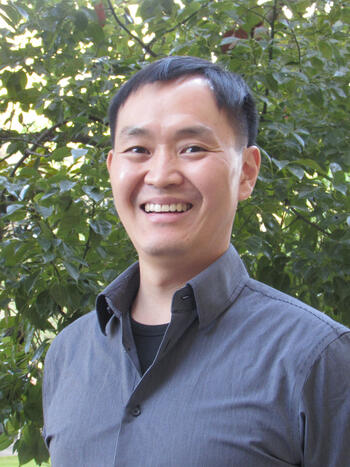
South Korea has relied on its export-oriented development model to become an economic powerhouse, but has now reached the limits of this model. Indeed, Korea’s phenomenal growth has incubated the seeds of its own destruction. Learning from the Korean developmental experience, China has adopted key elements of the Korean development model and has become a potent competitor in electronics and the heavy industries. Meanwhile, the organizational and institutional legacies of late industrialization have constrained Korean efforts to move into technology entrepreneurship and the service sector. These strategic challenges are compounded by a demographic bomb, as social development has led to collapsing birthrates in Korea, much like other developed countries in Europe and Asia. Within the next few years, the Korean workforce will start diminishing in size and aging rapidly, straining the country’s resources and curtailing its growth. In this seminar, Joon Nak Choi, 2015-16 Koret Fellow at Stanford's Shorenstein Asia-Pacific Reserach Center, will discuss innovations in business strategy, educational policy and social structure that are directly relevant to these problems, and that would alleviate or perhaps even reverse Korea’s economic malaise.
Image
A Stanford graduate and sociologist by training, Choi is an assistant professor of management at the School of Business and Management, Hong Kong University of Science and Technology. His research and teaching areas include economic development, social networks, organizational theory, and global and transnational sociology, within the Korean context. He coauthored Global Talent: Skilled Labor as Social Capital in Korea(Stanford University Press, 2015).
This public event is made possible through the generous support of the Koret Foundation.
Shorenstein APARC
Encina Hall
Stanford University
Stanford, CA 94305-6055
0
jnchoi@stanford.edu
joon_nak_choi_7_cropped.jpg
Joon Nak Choi is the 2015-2016 Koret Fellow in the Korea Program at Stanford University's Walter H. Shorenstein Asia-Pacific Research Center (Shorenstein APARC). A sociologist by training, Choi is an assistant professor at Hong Kong University of Science and Technology. His research and teaching areas include economic development, social networks, organizational theory, and global and transnational sociology, within the Korean context.
Choi, a Stanford graduate, has worked jointly with professor Gi-Wook Shin to analyze the transnational bridges linking Asia and the United States. The research project explores how economic development links to foreign skilled workers and diaspora communities.
Most recently, Choi coauthored Global Talent: Skilled Labor as Social Capital in Korea with Shin, who is also the director of the Korea Program. From 2010-11, Choi developed the manuscript while he was a William Perry postdoctoral fellow at Shorenstein APARC.
During his fellowship, Choi will study the challenges of diversity in South Korea and teach a class for Stanford students. Choi’s research will buttress efforts to understand the shifting social and economic patterns in Korea, a now democratic nation seeking to join the ranks of the world’s most advanced countries.
Supported by the Koret Foundation, the Koret Fellowship brings leading professionals to Stanford to conduct research on contemporary Korean affairs with the broad aim of strengthening ties between the United States and Korea. The fellowship has expanded its focus to include social, cultural and educational issues in Korea, and aims to identify young promising scholars working on these areas.
More than fifty experts met in Xi’an, China, for an international academic conference on demographic change and social development last week. Several scholars from the Freeman Spogli Institute for International Studies (FSI) spoke at the conference, including Karen Eggleston, Marcus Feldman, Jean Oi and Scott Rozelle.
The conference marked the 120th anniversary of Xi’an Jiaotong University’s founding and more than three decades of collaboration with Stanford scholars. Researchers at Xi’an Jiaotong University’s Institute for Population and Development Studies collaborate on policy-relevant research and educational activities with Stanford faculty at FSI as well as the Morrison Institute and Woods Institute.
For more information on FSI’s work in the areas of global health and medicine, please visit this page and the Asia Health Policy Program website.
As the keynote for Shorenstein APARC's 8th annual Koret Workshop, Se Young Ahn, one of South Korea's leading public intellectuals, will analyze the Korean experience of utilizing global talent and immigration in the context of an extremely rapidly aging society.
Image
Ahn is the chairman of the National Research Council for Economics, Humanities and Social Sciences in South Korea. He oversees 23 national think tanks including Korea Institute for Industrial Economics and Trade, Korea Development Institute, Science and Technology Policy Institute, Korea Institute for International Economic Policy, Korea Labor Institute, and Korea Institute for Health and Social Affairs. He also chairs the National Advisory Committee for Trade Negotiation, and is a professor at the Graduate School of International Studies at Sogang University. Ahn's research areas include trade policy and economic integration in the Asia-Pacific region as well as the China-Korea Free Trade Agreement and Japan-Korea Free Trade Agreement. A graduate of Seoul National University, Chairman Ahn received a doctoral degree from the Pantheon-Sorbonne (Paris I) University in France.
A recent review published in International Migration Review (IMR) lauded “Global Talent: Skilled Labor as Social Capital in Korea,” by Stanford professor Gi-Wook Shin and Joon Nak Choi. IMR reviewer Keumjae Park said the book makes an important contribution to the literature on foreign skilled workers and the problems that countries like South Korea face with demographic and economic change.
Park said the book “offers provocative policy questions” about how South Korea can encourage the development of social and cultural ties in its highly skilled labor markets, which in turn, support local and transnational markets through spread of information, innovation and trust.
Park also highlights the book’s approachability, saying it “offers theoretical lessons for general research” while it “invites attention of policy makers and business strategists.”
“Global Talent” is a part of Korea’s Global Talent, an ongoing research project at the Shorenstein Asia-Pacific Research Center. The project analyzes the potential benefits of transnational bridges between South Korea and the United States, and aims to provide insights that could be applied to other Asian countries.
Read the full review below and on the IMR website.
South Korea has become an economic powerhouse, but faces multiple challenges. The conference will focus on four areas that South Korea needs to turn its attention to: 1) the higher education and development; 2) entrepreneurship and innovation; 3) global competitiveness; and 4) demographic changes and immigration policy.
During the conference, a keynote speech is open to the public. Please click here for more information about the public keynote.
As part of the Program on Arab Reform and Democracy speaker series, Director of The Markaz: Resource Center Mona Damluji examined the impact of the US-led occupation of Iraq on sectarian-based urban segregation in Baghdad. In a talk held on February 3, 2016, she argued that the sectarian-based segregation that has shaped urbanism in Baghdad is a direct outcome of the 2003 U.S.-led invasion and occupation of Iraq. The "post"-occupied city is characterized by the normalization of concrete “security” blast-walls that choke urban circulation and sever communities. The notorious blast walls -- or "Bremer Walls" -- perpetuate and intensify conditions of urban segregation. As the summer's surge of anti-government protests in Baghdad demonstrate, the short-sighted nature of this militarized solution to sectarian-based violence has proven to be a superficial and unsustainable fix to the deep dilemma of sectarian segregation codified in Iraq’s political system. The presentation also examined the context for recent public dissent on the streets of Baghdad through the story of the capital city's fragmentation between 2006 and 2007.
Why has Korean pop music (K-Pop) become so popular overseas? A wide variety of explanations have been proposed by academics, journalists and the fans themselves, ranging from superior training and product quality to the strategic usage of social media. Although some of these explanations have become widely-cited especially in the Korean media, whether or not they are actually correct remains largely unknown. To demystify why K-Pop has gained a following overseas, this study examines data on K-Pop concert booking overseas, from 2011 through 2014. The findings highlight the importance of cultural proximity, while casting doubt upon several other widely-cited explanations.
Joon Nak Choi is the 2015-2016 Koret Fellow in the Korea Program at Stanford's Shorenstein Asia-Pacific Research Center (APARC). A Stanford graduate and sociologist by training, Choi is an assistant professor at Hong Kong University of Science and Technology. His research and teaching areas include economic development, social networks, organizational theory, and global and transnational sociology, within the Korean context. He recently coauthored Global Talent: Skilled Labor as Social Capital in Korea which he developed the manuscript from 2010-11 while he was a William Perry postdoctoral fellow at APARC.
This event is made possible through the generous support of the Koret Foundation.
Shorenstein APARC
Encina Hall
Stanford University
Stanford, CA 94305-6055
0
jnchoi@stanford.edu
joon_nak_choi_7_cropped.jpg
Joon Nak Choi is the 2015-2016 Koret Fellow in the Korea Program at Stanford University's Walter H. Shorenstein Asia-Pacific Research Center (Shorenstein APARC). A sociologist by training, Choi is an assistant professor at Hong Kong University of Science and Technology. His research and teaching areas include economic development, social networks, organizational theory, and global and transnational sociology, within the Korean context.
Choi, a Stanford graduate, has worked jointly with professor Gi-Wook Shin to analyze the transnational bridges linking Asia and the United States. The research project explores how economic development links to foreign skilled workers and diaspora communities.
Most recently, Choi coauthored Global Talent: Skilled Labor as Social Capital in Korea with Shin, who is also the director of the Korea Program. From 2010-11, Choi developed the manuscript while he was a William Perry postdoctoral fellow at Shorenstein APARC.
During his fellowship, Choi will study the challenges of diversity in South Korea and teach a class for Stanford students. Choi’s research will buttress efforts to understand the shifting social and economic patterns in Korea, a now democratic nation seeking to join the ranks of the world’s most advanced countries.
Supported by the Koret Foundation, the Koret Fellowship brings leading professionals to Stanford to conduct research on contemporary Korean affairs with the broad aim of strengthening ties between the United States and Korea. The fellowship has expanded its focus to include social, cultural and educational issues in Korea, and aims to identify young promising scholars working on these areas.
2015-2016 Koret Fellow
Visiting Scholar
2015 Koret Fellow
2015 Koret Fellow, Korea Program, APARC, Stanford
The sectarian-based segregation that has shaped urbanism in Baghdad is a direct outcome of the 2003 U.S.-led invasion and occupation of Iraq. The "post"-occupied city is characterized by the normalization of concrete “security” blast-walls that choke urban circulation and sever communities. The notorious blast walls -- or "Bremer Walls" -- perpetuate and intensify conditions of urban segregation. As the summer's surge of anti-government protests in Baghdad demonstrate, the short-sighted nature of this militarized solution to sectarian-based violence has proven to be a superficial and unsustainable fix to the deep dilemma of sectarian segregation codified in Iraq’s political system. This presentation will examine the context for recent public dissent on the streets of Baghdad through the story of the capital city's fragmentation between 2006 and 2007.
Speaker Bio
Image
Mona Damluji is Associate Dean and Director of The Markaz: Resource Center at Stanford University. She is a liberal arts educator, cultural activist and scholar with expertise in the Arab Middle East and broader Muslim World. Mona received her PhD from the University of California, Berkeley and was the Mellon Postdoctoral Fellow in Asian & Islamic Visual Culture at Wheaton College in Massachusetts. Mona regularly curates and organizes exhibits and programs featuring the work of artists and activists linked to Muslim and Arab communities and countries. Major recent projects have included "Open Shutters Iraq" at UC Berkeley and "Arab Comics: 90 Years of Popular Visual Culture" at Brown University. Mona has worked as the educational outreach director for the Arab Film Festival, organizing an annual festival screening for students and teachers in San Francisco, Oakland and Berkeley. Her exhibition and book reviews appear in Jadaliyya, AMCA and the International Journal of Islamic Architecture. Mona's publications also appear in the Journal of Urban History, Comparative Studies of South Asia, Africa and the Middle East, and Subterranean Estates: the Life Worlds of Oil and Gas.
With the nearing of the fifth anniversary of the January 25 Revolution, this panel examines the nature of politics under the rule of the current military sponsored regime in Egypt. What implications will the recent legislative elections have for political stability and the cohesion of the ruling coalition? How is the regime responding to the various economic challenges it currently confronts? In what ways has the persistence of state repression affected and shaped the space for political contestation and resistance?
Panelists
Joel Beinin Donald J. McLachlan Professor of History,
Stanford University
Lisa Blaydes Associate Professor of Political Science,
Stanford University
Amr Hamzawy ARD Visiting Scholar,
CDDRL, Stanford University
Nancy Okail Executive Director,
The Tahrir Institute for Middle East Policy
(via Skype)
Hesham Sallam Associate Director, ARD
CDDRL, Stanford University
Moderator:
Larry Diamond Senior Fellow, FSI;
Senior Fellow Hoover Institute,
Stanford University
Image
Joel Beinin is the Donald J. McLachlan Professor of History and Professor of Middle East History. He received his A.B. from Princeton University in 1970, his M.A. from Harvard University in 1974, and his A.M.L.S. and Ph.D. from the University of Michigan in 1978 and 1982. He also studied at the American University of Cairo and and the Hebrew University of Jerusalem. He lived in Egypt in 1969, 1980-81, 1985, 1986, 1994, 2004-05, and 2006-08 and in Israel in 1965-66, 1970-73, 1987, 1988, 1993, and 1993. He has taught Middle East history at Stanford University since 1983. From 2006 to 2008 he served as Director of Middle East Studies and Professor of History at the American University in Cairo. His research and writing focuses on workers, peasants, and minorities in the modern Middle East and on Israel, Palestine, and the Arab-Israeli conflict. Beinin has written or edited nine books, most recently Social Movements, Mobilization, and Contestation in the Middle East and North Africa; co-edited with Frédéric Vairel (Stanford University Press, 2011) and The Struggle for Worker Rights in Egypt (Solidarity Center, 2010). His articles have been published in leading scholarly journals as well as The Nation, Middle East Report, The Los Angeles Times, The San Francisco Chronicle, Le Monde Diplomatique, and others. He has appeared on Al-Jazeera TV, BBC radio, National Public Radio, and many other TV and radio programs throughout North America, and in France, Egypt, Singapore, and Australia, and has given frequent interviews to the global media. In 2002 he served as President of the Middle East Studies Association of North America.
Image
Lisa Blaydes is an Associate Professor of Political Science at Stanford University. She is the author of Elections and Distributive Politics in Mubarak’s Egypt (Cambridge University Press, 2011). Professor Blaydes received the 2009 Gabriel Almond Award for best dissertation in the field of comparative politics from the American Political Science Association for this project. Her articles have appeared in the American Political Science Review, International Studies Quarterly, International Organization, Journal of Theoretical Politics, Middle East Journal, and World Politics. During the 2008-2009 and 2009-2010 academic years, Professor Blaydes was an Academy Scholar at the Harvard Academy for International and Area Studies. She holds degrees in Political Science (PhD) from the University of California, Los Angeles and International Relations (BA, MA) from Johns Hopkins University.
Image
Larry Diamond is a senior fellow at the Hoover Institution and at the Freeman Spogli Institute for International Studies. He also serves as the Peter E. Haas Faculty Director of the Haas Center for Public Service at Stanford. For more than six years, he directed FSI’s Center on Democracy, Development, and the Rule of Law, and he continues to lead its programs on Liberation Technology, Arab Reform and Democracy, and Democracy in Taiwan. He is the founding co-editor of the Journal of Democracy and also serves as Senior Consultant at the International Forum for Democratic Studies of the National Endowment for Democracy. His sixth and most recent book, In Search of Democracy (Routledge, 2016), explores the challenges confronting democracy and democracy promotion, gathering together three decades of his work on democratic development, particularly in Africa and Asia. He has also edited or co-edited more than 40 books on democratic development around the world.
Image
Amr Hamzawy is a visiting scholar at the Program on Arab Reform and Democracy. He studied political science and developmental studies in Cairo, The Hague, and Berlin. After finishing his doctoral studies and after five years of teaching in Cairo and Berlin, Hamzawy joined the Carnegie Endowment for International Peace (Washington, DC) between 2005 and 2009 as a senior associate for Middle East Politics. Between 2009 and 2010, he served as the research director of the Middle East Center of the Carnegie Endowment in Beirut, Lebanon. In 2011, he joined the Department of Public Policy and Administration at the American University in Cairo, where he continues to serve today. Hamzawy also serves as an associate professor of political science at the Department of Political Science, Cairo University. His research and teaching interests as well as his academic publications focus on democratization processes in Egypt, tensions between freedom and repression in the Egyptian public space, political movements and civil society in Egypt, contemporary debates in Arab political thought, and human rights and governance in the Arab world. Dr. Hamzawy is a former member of the People’s Assembly after being elected in the first Parliamentary elections in Egypt after the 25th of Jan 2011 revolution. He is also a former member of the Egyptian National Council for Human Rights. Hamzawy contributes a daily column and a weekly op-ed to the Egyptian independent newspaper Shorouk.
Image
Nancy Okail is the Executive Director of TIMEP. She brings more than 15 years of experience promoting democracy and development in the Middle East and North Africa region to this role. Prior to joining TIMEP, Dr. Okail was the director of Freedom House’s Egypt program. She has also worked with the Egyptian government as a senior evaluation officer of foreign aid and has managed programs for Egyptian pro-democracy organizations that challenged the Mubarak regime. She was also one of the defendants convicted and sentenced to prison in the widely publicized case of 43 non-governmental organization workers charged with using foreign funds to foment unrest in Egypt. She holds a Ph.D. from the University of Sussex in the U.K. where her dissertation examined the power relations of foreign aid.
Image
Hesham Sallam is a Research Associate at CDDRL and serves as the Associate-Director of the Program on Arab Reform and Democracy. He is also a co-editor of Jadaliyya ezine and a former program specialist at the U.S. Institute of Peace. His research focuses on Islamist movements and the politics of economic reform in the Arab World. Sallam’s research has previously received the support of the Social Science Research Council and the U.S. Institute of Peace. Past institutional affiliations include Middle East Institute, Asharq Al-Awsat, and the World Security Institute. He is editor of Egypt's Parliamentary Elections 2011-2012: A Critical Guide to a Changing Political Arena (Tadween Publishing, 2013). Sallam received a Ph.D. in Government (2015) and an M.A. in Arab Studies (2006) from Georgetown University, and a B.A. in Political Science from the University of Pittsburgh (2003).