Policy Roundup: June 2026
All Publications button
1
Publication Type
Policy Briefs
Publication Date

Stanford Graduate School of Business
655 Knight Way
Stanford, CA 94305
Michele Gelfand is a Professor of Organizational Behavior at the Stanford Graduate School of Business and Professor of Psychology by Courtesy at Stanford University. Gelfand uses field, experimental, computational, and neuroscience methods to understand the evolution of culture — as well as its multilevel consequences for human groups. Her work has been cited over 20,000 times and has been featured in the Washington Post, the New York Times, the Boston Globe, National Public Radio, Voice of America, Fox News, NBC News, ABC News, The Economist, De Standard, among other outlets.
Gelfand has published her work in many scientific outlets such as Science, the Proceedings of the National Academy of Sciences, Proceedings of the Royal Society B, Psychological Science, Nature Scientific Reports, PLOS 1, the Journal of Personality and Social Psychology, Organizational Behavior and Human Decision Processes, Academy of Management Review, Academy of Management Journal, Research in Organizational Behavior, Journal of Applied Psychology, Annual Review of Psychology, American Psychologist, Journal of Cross-Cultural Psychology, Current Opinion in Psychology, among others. She has received over 13 million dollars in research funding from the National Science Foundation, Department of Defense, and the FBI.
She is the author of Rule Makers, Rule Breakers: How Tight and Loose Cultures Wire the World (Scribner, 2018) and co-editor of the following books: Values, Political Action, and Change in the Middle East and the Arab Spring (Oxford University Press, 2017); The Handbook of Conflict and Conflict Management (Taylor & Francis, 2013); and The Handbook of Negotiation and Culture (2004, Stanford University Press). Additionally, she is the founding co-editor of the Advances in Culture and Psychology Annual Series and the Frontiers of Culture and Psychology series (Oxford University Press). She is the past President of the International Association for Conflict Management, past Division Chair of the Conflict Division of the Academy of Management, and past Treasurer of the International Association for Cross-Cultural Psychology. She has received several awards and honors, such as being elected to the National Academy of Sciences (2021) and the American Academy of Arts and Sciences (2019), the 2017 Outstanding International Psychologist Award from the American Psychological Association, the 2016 Diener Award from the Society for Personality and Social Psychology, and the Annaliese Research Award from the Alexander von Humboldt Foundation.
This is a virtual event. Please click here to register and generate a link to the talk.
The link will be unique to you; please save it and do not share with others.
U.S. relations with China evolved into outright rivalry during the Trump administration. In this talk, Thomas Wright will look at whether this rivalry will continue and evolve during a Biden administration. To answer this question, he will look at the roots of strategic competition between the two countries and various strands of thinking within the Biden team. The most likely outcome is that the competition will evolve into a clash of governance systems and the emergence of two interdependent blocs where ideological differences become a significant driver of geopolitics. Cooperation is possible but it will be significantly shaped by conditions of rivalry.

Wright has a doctorate from Georgetown University, a Master of Philosophy from Cambridge University, and a bachelor's and master's from University College Dublin. He has also held a pre-doctoral fellowship at Harvard University's Belfer Center for Science and International Affairs and a post-doctoral fellowship at Princeton University. He was previously executive director of studies at the Chicago Council on Global Affairs and a lecturer at the University of Chicago's Harris School for Public Policy.
Via Zoom Webinar. Register at: https://bit.ly/3r1glp7
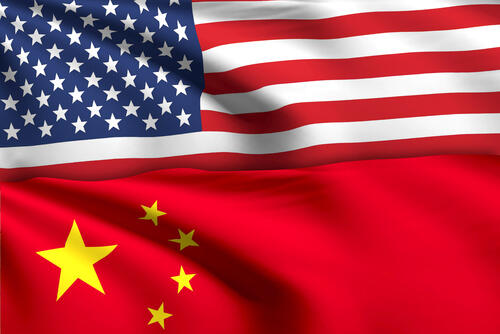
The U.S.-China relationship is in a dangerous downward spiral. The crisis in the relationship has spread virtually to every arena, from the intensifying trade war between the two largest economies to their escalating technology rivalry that is rippling into a U.S. government crackdown on foreign influence on research, and from security concerns over China’s growing military power in the Asia-Pacific region to mounting tensions over the antigovernment protests in Hong Kong and over longstanding frictions with respect to Taiwan.
Renowned Chinese politics expert David M. Lampton has been busy discussing these developing issues with academics and policymakers in China, Hong Kong, and Washington, D.C., and researching his book project about Chinese power and rail connectivity in Southeast Asia. In a conversation with APARC’s Associate Director of Communications and External Relations Noa Ronkin, the Oksenberg-Rohlen Fellow at the Freeman Spogli Institute and Shorenstein APARC analyzes the escalating U.S.-China conflict, one that will affect not only bilateral ties, but the regional and world systems beyond.
Q: What risks in the conflict are you most concerned about?
There are a number of problems on the agenda. Certainly trade is top of mind for people in Beijing and Washington. But I think the situation in Hong Kong has great potential to do tremendous harm to the U.S.-China relationship. The predicate is being laid for the possible use of force in Hong Kong. I don't think a decision has been made to do so, and I believe Beijing would prefer not to do so. However, remembering 1989 in Tiananmen, we shouldn't underestimate the willingness of China’s central government to use force to protect its power. You see the increasing spread of demonstrations within Hong Kong, which are very worrisome to the PRC government, and indicators are accumulating that to me signal a significant possibility that the Special Administrative Region and/or Beijing will use tough means to bring demonstrators under control. Such an outcome will, of course, feed into the policy and security anxieties in Washington, not to mention be a tragedy for Hong Kong itself. So, I think Hong Kong is a top concern.
Q: Can you expand on the politics and the context of the U.S.-China trade war?
We're in a situation in which each side thinks it can and will benefit by outwaiting the other. I think Beijing sees at least a significant possibility that Mr. Trump would not be reelected and fervently hopes that's the case. They're in no hurry, thinking that the U.S.-China trade dispute undermines Trump with his natural constituencies and makes his economic story harder to tell to the American people. Beijing believes that, by virtue of the United States’ being a democracy, China has a higher threshold for pain than we do, and so simply inflicting pain on key American constituencies and industries will turn up the political heat on the administration so that compromise would look increasingly attractive to Washington.
The Trump administration, on the other hand, looks at the high percentage of China's GDP that's involved in exports, particularly exports to the United States, which is over three percent. If you subtract the value added of all the components China imports in order to assemble these exports, then still approximately two percent of China's GDP is directly involved in trade with the United States, and the Trump administration believes that China has a lot to lose. The United States is not nearly as dependent on China's exports—that's one of our complaints, that we don't export enough. Therefore Mr. Trump sees Mr. Xi as facing many domestic problems and thinks he can outwait Mr. Xi.
We have then two leaders who are locked into the view that the other is going to blink first. I believe both sides benefit from an economic relationship, but both have the capacity to do without the other if they're forced to. And so I think the trade war can go on for a protracted period.
Q: The trade war, big as it is, is part of a more encompassing rivalry between China and the United States. How do you see this competition between the world’s two superpowers and its consequences?
What has fundamentally happened here—even more important than the economic and cultural dimensions of the U.S.-China dispute—is a deterioration of the security dimension in the relationship. For the first three decades of engagement since the Nixon era, our security relationship with China was generally positive, based first on an anti-Soviet rationale, then counter-terrorism, and finally jointly tackling global issues such as climate change. Up through the Obama administration we had a security rationale for positive relations. Most countries and people prioritize their security, and hence as long as Americans and Chinese could feel the relationship had value for their security, they downplayed thorny issues such as human rights or economic frictions, even though they were unhappy with each other in those other domains.
But as China's military and economic capabilities have increased, so has its assertiveness abroad and its efforts to resolve longstanding disputes in its favor: in the South China Sea, in cross-Strait relations with Taiwan, against Japan, even against South Korea. From its more capable position today, China is pushing the perimeter of U.S. influence back away from the Chinese coast as far as possible, while the United States resists. And so we have a severe security competition that, in turn, has infected the economic relationship, because what makes a competitive military today is largely technological capability, which China is forging ahead with and using to develop new weapons systems. The United States thinks much of this capability is coming through the illicit acquisition of intellectual property and proprietary technology, and through university collaborations and exchanges. So the security competition is ramifying through the economic relationship and the cultural/educational relationship.
Q: If the competition between the two superpowers is here to stay, what steps, at home and abroad, are essential to achieve stable coexistence with China?
We have assumed that a huge, complex authoritarian society such as China has many disadvantages, which it does, but we're in danger of not realizing what it can achieve nonetheless. I'm worried about the competition with China because I don't think we are taking the right steps to put ourselves in the best possible competitive position, and I don’t mean just militarily.
If you consider the space race against the Soviet Union, there was a galvanizing vision of a serious competitor, yet there nonetheless was an abiding belief that we could prevail if we properly organized ourselves with discipline, commitment, and allocation of resources. We need the same sort of galvanizing spirit, not grounded in seeing China as an enemy, but in the realization that we Americans make up but four percent of the world's people and that if we're going to keep a strong position economically, intellectually, and socially, then we have to perform better than others, because we're just too small a percentage of the world's people. And I don't think anybody believes we're performing at our peak today.
Competition in general is a good thing. We surely recognize this in our own domestic lives, and free trade theories in international economics recognize that competition is an engine for positive forward motion. So I don't think we should be afraid of competing with China. Our society has been designed for competition from the ground up. And China has tremendous problems: demographic problems, educational quality problems, and debt problems. But what we must avoid is a destructive competition in which we're hurting our own ability to innovate by attempting to keep China from advancing. For instance, targeting foreign students in American research institutions and labs is a major problem.
Q: You have been studying China’s Belt and Road Initiative (BRI) and its implications across the Asia-Pacific. What are some of the takeaways from your research so far?
The Chinese learned a lesson from U.S. policy in the post-WWII era, namely, that you build your own greatness by integrating other countries into your economy and by building their strength. The Chinese are now looking at their underdeveloped periphery and think, "How can we build the new connectivity in the 21st century that will make China central to all countries along its enormous periphery and beyond?" BRI is therefore a big umbrella concept, based on the notion that you create economic growth through building infrastructure, and particularly transportation and communications, in an attempt to increase China's comprehensive national power and centrality in the emerging global system. It could be described as an “all roads lead to Rome concept.”
Some argue that BRI is a strategy, a master plan. And here's where I think we get it wrong. It isn't really a plan. China has created this umbrella policy concept, has said it will devote resources to it, but local provinces, state enterprises, private enterprises, foreign governments all are in effect lobbying Beijing to approve their pet projects that are shoved under this umbrella. So, you see a big vision painted by Beijing, but an extremely entrepreneurial system below Beijing is trying to grab as much of this money and opportunity, and build their locality into this vision. It's a combination of spontaneous combustion at the middle and lower levels and a grand general idea at the top.
Right now what we're seeing is the implementation of numerous projects—some are unmitigated fiascos, some are successful to a limited degree, and some are likely to become quite successful. There will be a sorting out process. In fact, Beijing, for its own welfare, is already starting to constrain the system and apply more economic analysis to differentiate between good and bad projects. But because BRI is so entrepreneurial and so many people at the bottom are trying to grab a piece of this policy, it's very difficult for Beijing to get its arms around all that's going on.
I think that one of the policy implications of BRI is that we—the United States, the West, American allies—must realize that BRI isn't necessarily a bad idea. This is how development occurs: big infrastructure projects create urbanization, pathways for production chains, and so forth. And if we were to sit back and say, "This is destined to fail," or "The Chinese are biting off more than they can chew," or essentially decide that we have a "no” policy, then we will essentially abandon what I believe is largely a sound concept. The U.S. government is, I think, beginning to understand that it has to respond with something, not nothing. The United States needs to use its creativity, capital, and capacity to get others to cooperate and be more active in showing our private sector where it can get involved.
We're in a transition stage. I think that one of the big problems right now is that it's hard to induce our allies to cooperate when we’re badgering them about defense expenditures and so forth. We need a remake of our foreign policy process before we'll be able to consistently pursue a vision for development. On some projects we might even choose to cooperate with the Chinese. In fact, we're already cooperating through the World Bank, the Asian Development Bank, and even indirectly through the Asian Infrastructure Investment Bank, which has gotten almost all U.S. allies involved with it. So we shouldn't absolutely oppose China on all fronts, but evaluate the alternatives and tradeoffs in each particular case.
Q: Your current book project focuses on China’s development of high-speed rail between southern China and Singapore. What have you found in researching this project?
My core interest has always been Chinese politics, and particularly what I call the "implementation problem." That is, the realization that what Beijing says isn't necessarily implemented faithfully down the hierarchy in localities, despite the assumption that, because China is authoritarian, there ought to be a high correlation between what the top says and what the bottom actually does. The idea to build connectivity between China and the seven continental Southeast Asian nations south of it makes for a fascinating implementation case study. The underlying question for my book is: “Does China have the capacity to pull off such a gigantic initiative?”
In the case of this particular railway connectivity vision linking China and seven Southeast Asian neighbors, the idea was not Chinese, but rather, a vision of Southeast Asians themselves. In the past, China didn't have the technology, capital, or frankly the inclination to build somebody else's rail system. Around 2012, however, China decided to step out and build infrastructure beyond its borders, and essentially adopted the Southeast Asian idea of rail connectivity. What interests me is the implementation question: if it's difficult to get things done within China itself, how do you create an interconnected system that transits seven more countries, from Thailand, Malaysia, and Singapore, through Myanmar, Laos, Vietnam, and Cambodia? It's a fantastically complicated project, with financing, environmental, and displaced population problems, among many others.
The results so far are mixed, but you would be surprised at the progress that China has made. I believe that within a few years, certainly before 2030, there will be a high-speed and conventional-speed rail system that connects south China to at least Bangkok and another link that connects Singapore to Kuala Lumpur, with the major uncertainty being the stretch from Kuala Lumpur to Bangkok. It’s less clear whether it will also eventually go through Myanmar and Vietnam. But the Chinese are well on the way to finishing the Laos railroad and began construction on some railroad in Thailand, so I think that probably by 2025 you'll see a railroad to Bangkok, which would be a major change in the economic geography of the region. What bothers me is seeing the United States mired in our own preoccupation with ourselves and not reacting in a way that is most productive for our future given what China is doing and how other countries are moving forward.

Allen was far less confident, however, about the prospects of addressing structural issues with China, that is, areas where the Chinese economy is an outlier to the global economy, violates WTO rules, and greatly differs from OECD norms. This is because these core dimensions touch on the role of the Chinese Communist Party (CCP) in the government and in the economy.
He counted among these structural issues the enormous role of state-owned enterprises (SOEs); the scale of subsidies going to the technology sector and their lack of transparency; prohibitions on foreign investment in sensitive industries like telecommunications and media; the unequal treatment of foreign companies; discriminatory implementation of regulations and the lack of an appeals process; uneven implementation of IP rights; the outsized role of the CCP in the economy; the dominant role of industrial policy; Xi Jinping government’s aggressive techno-nationalism, which is manifested in its calls for indigenous innovation and for self-reliance; and its excessive control over the information space.
“China is willing to make cosmetic changes to these problems,” said Allen, “even muscular changes, but no changes to the skeleton, the core, the system under which the CCP has complete control.”
A trade deal might remove the immediate threat of tariffs as a source of friction between the United States and China, noted Allen, but the essence of the conflict is not about trade: rather, it has to do with technology. “The trade war will morph into a technology war,” he predicted, and 2019 will mark a change in that direction, making life much more complicated for both American—especially Silicon Valley—and Chinese companies.
Both the United States and China are now locked in a “security dilemma,” noted Allen. “One side takes defensive measures which the other side perceives as aggressive measures,” and “we are ratcheting up on national security.” The U.S. Department of Commerce, for instance, is looking to change the ways of dealing with Chinese companies and to expand export controls, extending their scope to a whole new category of “emerging technologies,” regarding whose definition there is intensive debate in Washington. Depending on its scope, a broad definition could jeopardize hundreds of thousands of projects and disrupt investment and global supply chains.
On the Chinese side, Allen noted, there is a parallel process going on. In 2019, we should expect China to similarly impose tightened export controls, he cautioned, cybersecurity law, personal identification information law, data localization requirements, and a strengthened national security law that, among other requirements, will ratchet up audit requirements of American companies seeking market access and the type of companies allowed to have only Chinese-origin equipment.
Both countries have given in to exaggerated security concerns that threaten the global commons, argued Allen. “American and Chinese companies have worked together in the innovation space for years in a beautiful manner. It has been a remarkably productive exercise over the last four decades that brought tremendous benefit for everyone. You can't imagine a company like Apple without China, and you can't imagine China without a company like Apple. Now all this is being put into question.”
The heightened security measures on both sides are fraught with threats to research institutions, businesses, and the innovation ecosystem at large. Academic exchanges, students, and professors will be deemed exports of knowledge subject to technology licensing laws, cautioned Allen. He asked: “How many thousands of collaborative research ventures will be impacted?”
We are entering the technology war at the wrong time, said Allen, just as China is becoming a middle-income country with hundreds of millions of middle-class citizens who want to buy American-made goods and services that U.S. companies want to sell to them. Now is the time to take advantage of China’s transitioning to a consumption-led economy, he claimed, and “become a good friend of Chinese middle-class consumers.”
China is also forging ahead with its innovative economy, particularly in areas such as AI, 5G, and aspects of the life sciences. “This isn’t a one-way street,” emphasized Allen. “We need their brains as much as they need ours […] China will remain an innovative country, and we need to deal with that.”
“This is not a time to panic,” he pointed out, “but a time to reset and ask: ‘What are the rules of the road for technology cooperation and competition? What are the rules for enforcement and how do we enforce the new rules fairly?”
“If China follows its WTO obligations then we would get there,” Allen claimed. “But if President Xi is going to be single-minded about self-reliance and cutting foreign influence on the Chinese economy, then we’re up for rough sledding and 2019 will be a definitive year in determining the course forward.”
Trade deal or no deal, in the U.S.-China race for technology supremacy, he concluded, trust is a commodity in short supply.

Dmytro Romanovych works at the Reform Delivery Office for the Cabinet of Ministers of Ukraine. With a team of project managers, they work directly with the prime minister by facilitating reforms, monitoring progress and coordinating across ministries. The Reform Delivery Office focuses on issues of public administration reform, business climate improvement, industrial policy and innovations, healthcare reform and privatization. Romanovych is also an advisor to the Minister of Economy, and is responsible for deregulation and improving the business climate in Ukraine. In addition, he is an economic expert in the largest NGO coalition in Ukraine, the Reanimation Package of Reforms, which is the most influential non-governmental reform advocate in the country.
Romanovych's key responsibility is to ensure the Cabinet of Ministers and Verkhovna Rada (Ukraine’s Parliament) both adopt Ukraine's deregulation agenda. This includes developing the concept of the deregulation documents, involvement and coordination of the stakeholders, passing documents through approval process, public promotion, etc. Due largely in part to its deregulation reform, the Ministry of Economic Development and Trade was recognized as a leader in the reform process in comparison with other ministries Over the last year, Romanovych has organized several high-level meetings that have resulted in the adoption of 30 deregulation documents, the abolishment of 500 regulations and the passing of draft laws on state control system reform by the Verkhovna Rada. Prior to this he was among the creators of the Better Regulation Delivery Office institution, which is now is the key think-tank and task force for business climate improvement and restructuring of the government policy-making process. Romanovych graduated from Kharkiv State Economic University with a Master’s Degree in Economic Cybernetics.
President Trump hosted Chinese President Xi Jinping last week at Mar-a-Lago for their first meeting which set out to address economic, trade and security challenges shared between the two countries. Shorenstein Asia-Pacific Research Center (APARC) experts offered analysis of the summit to various media outlets.
In advance of the summit, Donald K. Emmerson, an FSI senior fellow emeritus and director of the Southeast Asia Program, wrote a commentary piece urging the two leaders to prioritize the territorial disputes in the South China Sea in their discussions. He also suggested they consider the idea of additional “cooperative missions” among China, the United States and other countries in that maritime area.
“A consensus to discuss the idea at that summit may be unreachable,” Emmerson recognized in The Diplomat Magazine. “But merely proposing it should trigger some reactions, pro or con. The airing of the idea would at least incentivize attention to the need for joint activities based on international law and discourage complacency in the face of unilateral coercion in violation of international law.”
Kathleen Stephens, the William J. Perry Fellow in Shorenstein APARC’s Korea Program, spoke to the Boston Herald about U.S. policy toward North Korea and a potential role for China in pressuring North Korea to hold talks about denuclearization. She addressed the purported reports that the National Security Council is considering as options placing nuclear weapons in South Korea and forcibly removing North Korean leader Kim Jong-un from power.
“The two options have been on the long list of possible options for a long time and they have generally been found to have far too many downsides,” Stephens said in the interview.
Writing for Tokyo Business Today, Daniel Sneider, the associate director for research at Shorenstein APARC, offered an assessment of the summit. He argued that two events - the U.S. airstrike on an airbase in Syria following the regime's chemical weapons attack and the leaked reports about tensions between White House staff - shifted the summit agenda and sidelined, at least for now, talk of a trade war between China and the United States.
“Instead of a bang, the Mar-a-Lago summit ended with a whimper,” Sneider wrote in the analysis piece (available in English and Japanese). “On the economy, the summit conversation was remarkably business-as-usual, with President Trump calling for China to ‘level the playing field’ and a vague commitment to speed up the pace of trade talks. When it came to North Korea…the two leaders reiterated long-standing goals of denuclearization but ‘there was no kind of a package arrangement discussed to resolve this.”

After nearly five years since the start of the uprising, Syria finds itself divided and embattled, with no end in sight. More significantly, more than half of the Syrian population is displaced and the death toll surpassed 300,000 by all counts. The Syrian tragedy persists and, more than any other case of mass uprising in the region, continues to be shrouded in political power-plays and contradictions at the local, regional, and international levels. Defined increasingly by an absence of a clear favorable outcome, considering existing parties to the conflict, the logic of the lesser evil reigns supreme. This lecture is an attempt to understand the roots and dynamics of the tragic Syrian uprising, with particular attention to its background and to the recent Russian intervention.

This event is co-sponsored by The Markaz: Resource Center at Stanford University.
[[{"fid":"221861","view_mode":"crop_870xauto","fields":{"format":"crop_870xauto","field_file_image_description[und][0][value]":"Bassam Haddad January 21","field_file_image_alt_text[und][0][value]":"","field_file_image_title_text[und][0][value]":"","field_credit[und][0][value]":"","field_caption[und][0][value]":"","field_related_image_aspect[und][0][value]":"","thumbnails":"crop_870xauto"},"type":"media","attributes":{"width":"870","class":"media-element file-crop-870xauto"}}]]
CISAC Central Conference Room
Encina Hall, 2nd Floor
616 Serra St
Stanford, CA 94305
Abstract: President Obama’s Prague Agenda – moving toward a world without nuclear weapons – has been stalled for several years, due to the downturn in U.S.-Russian relations, Congressional opposition to arms control, and stalemate and division within the multilateral disarmament community. Will the Iran nuclear agreement provide an impetus for reviving elements of the Prague Agenda, such as efforts to advance regional arms control in the Middle East and strengthen the non-proliferation regime, or – as some critics contend - will the Iran deal increase long term pressures for further nuclear proliferation in the Middle East? Dr. Samore will address these and other questions concerning the implications of the Iran nuclear agreement for broader nonproliferation and disarmament efforts.
About the Speaker: As of February 2013, Dr. Gary Samore is the Executive Director for Research at the Belfer Center for Science and International Affairs at the Kennedy School of Government at Harvard University. He is also a non-resident Senior Fellow at the Brookings Institution and member of the advisory board for United Against Nuclear Iran (UANI), a non-profit organization that seeks to prevent Iran from acquiring nuclear weapons. He served for four years as President Obama’s White House Coordinator for Arms Control and Weapons of Mass Destruction (WMD), including as U.S. Sherpa for the 2010 Nuclear Security Summit in Washington, D.C. and the 2012 Nuclear Security Summit in Seoul, Korea. As WMD Coordinator, he served as the principal advisor to the President on all matters relating to arms control and the prevention of weapons of mass destruction proliferation and WMD terrorism, and coordinated United States government activities, initiatives, and programs to prevent proliferation and WMD terrorism and promote international arms control efforts.
Dr. Samore was a National Science Foundation Fellow at Harvard University, where he received his MA and PhD in government in 1984. While at Harvard, he was a pre-doctoral fellow at what was then the Harvard Center for Science and International Affairs, later to become the Belfer Center for Science and International Affairs.
Sponsored by the Taiwan Democracy Project and the U.S. Asia Security Initiative at the Asia-Pacific Research Center (APARC)
During the recent meeting between PRC President Xi Jinping and Taiwan President Ma Ying-jeou, the “1992 One China Consensus” served as a mutually acceptable paradigm for maintaining “peaceful and stable” conditions across the Taiwan Strait. For Xi Jinping, the warmth of the visit thinly veiled a message to Taiwan’s leaders and electorate, as well as to onlookers in Washington. Chinese officials and media clearly link the talks and confirmation of the 1992 Consensus to “the great rejuvenation of the Chinese nation”—a concept that is increasingly unpalatable to many in Taiwan. Xi hopes to keep DPP presidential candidate Tsai Ing-wen (and perhaps even future KMT leaders) in the 1992 Consensus “box” and to co-opt the U.S. in this effort, but perhaps underestimates the political transformation underway on Taiwan.
The Xi administration has also hardened its position regarding “core interests” such as Taiwan, embodied in a “bottom line principle” policy directive that eschews compromise. Although many commentators and most officials across the region have shied away from stating that the PRC and Taiwan are at the crossroads of crisis, the collision of political transformation on Taiwan and the PRC’s “bottom line principle” will challenge the fragile foundations of peaceful cross-Strait co-existence. Changes in the regional balance of military power brought about by a more muscular People’s Liberation Army compounds the potential for increased friction, providing Beijing with more credible options for coercion and deterrence.
This talk will consider the politics and principles involved in cross-Taiwan Strait relations in light of the upcoming 2016 Taiwan elections and the policies of the Xi Jinping administration; and will discuss some of the possible implications for China’s national security policy, regional stability, and the future of cross-Strait relations.
