Media

Right after Albert Serra’s talk, come to celebrate the Day of the Book & Rose, a Catalan Cultural and Literary Festival, coinciding with the anniversary of Shakespeare’s and Cervantes’ death. There will be books, roses, and live recital of Catalan poetry!

Image

Catalan Cultural Festival. Sponsored by the Iberian Studies Program at The Europe Center, Division of Literatures, Cultures, and Languages, Department of Iberian and Latin American Cultures, Modern Thought & Literature, and The Stanford Catalan Association.

Oregon Courtyard (adjacent to Pigott Hall)

Building 260, 450 Serra Mall

Symposiums
-

Claiming that Contemporary Cinema is currently in its most interesting creative moment since the 60s, laureate Catalan filmmaker Albert Serra will discuss its evolution throughout the 21st Century in terms of form, methodology and perception, as well as its future possibilities.

Image

Catalan Cultural Festival. Sponsored by the Iberian Studies Program at The Europe Center, Division of Literatures, Cultures, and Languages, Department of Iberian and Latin American Cultures, Modern Thought & Literature, and The Stanford Catalan Association.

Pigott Hall - Room 252

Building 260, 450 Serra Mall

Lectures
-

This event is co-sponsored with The Abbasi Program in Islamic Studies.

Image
76813 1 1
Hisham Matar was born in New York City to Libyan parents, spent his childhood in Tripoli and Cairo, and has lived most of his adult life in London. His critically acclaimed 2016 memoir The Return: Fathers, Sons and the Land in Between won the Pulitzer Prize for Autobiography and received the PEN America Book of the Year Award, as well as the Rathbones Folio Prize. In The Return, he recounts his search for his father, who was kidnapped and imprisoned in Libya when Matar was 19 and studying in London. His debut novel, In the Country of Men, was shortlisted for the Man Booker Prize and the National Book Critics Circle Award, and won numerous international prizes, including the Royal Society of Literature Ondaatje Prize, a Commonwealth First Book Award, the Premio Flaiano and Premio Gregor von Rezzori. His second book, Anatomy of a Disappearance, published in 2011, was named one of the best books of the year by The Guardian and the Chicago Tribune. His work has been translated into twenty-nine languages. He lives in London and New York City. 

Conversation will be moderated by Amr Hamzawy, Senior Research Scholarat the Middle East Initiative, CDDRL, FSI.

Copies of The Return will be available for sale.

Philippines Conference Room 
Encina Hall, 3rd Floor 
616 Serra Street, Stanford, CA 94305

Hisham Matar
-
The Democratic People’s Republic of Korea is often labeled a hermit kingdom, supposedly one of the most isolated, mysterious, and inaccessible countries on earth. A world in black and white. Reaffirming this notion, many who travel there, journalists, academics, and tourists alike, carry a duty to expose hidden truths, to capture “real” life outside of state curated itineraries and staged performances. Photojournalist David Guttenfelder, for example, who spent several years in the Pyongyang bureau of the Associated Press, “felt it was his responsibility to show the outside world the reality away from stage-managed events.” Aside from the obvious problem of separating real life from staged life, the trouble seems to manifest in relentless attempts to reveal the secrets behind the totalitarian curtain. But what if the question is not where one looks, but rather, how?
 
Like the red safelight in a photographic darkroom, red is the only color that can operate within the logic of silver halide coated papers and chemistries that facilitate the emergence and fixing of an image. With a red light, latent images can come to life, whereas natural light or incandescent light would destroy them. It is the mode of a red safelight, then, that illuminates Laibach’s provocative Pyongyang concert in August 2015. Their controversial performance was not simply the first avant-garde rock concert in one of the most restrictive societies, as is frequently described, but in fact a larger collective performance that transcends the boundaries of north and south, darkness and light, totalitarianism and democracy, what Slavoj Zizek describes as bringing the authoritarian streak out. This talk explores the anxieties, desires, and ambiguities that proliferate at the edges of this event—going to the stage, a Red Stage, that enables the encounter between worlds imagined as radically different.
 
For more information about this event, please visit the event website:
 
Event Flyer
Download pdf
Department of AnthropologyBuilding 50, Room 51A


Lisa Sang Mi Min <i>University of California, Berkeley</i>
Lectures
-

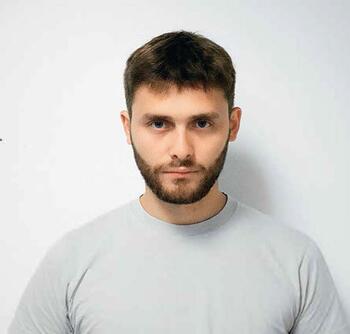
Vera Zakem has been leading work at CNA Center for Stability and Development on how Russia and other actors use propaganda and disinformation to influence and target populations in Europe. She will highlight how Russia and other actors exploit internal sources of vulnerabilities and instability to target vulnerable populations in Europe via disinformation and influence campaigns. Vera's work includes conducting in-country field work in many of the countries in the region.

Image
Image of Vera Zakem

Vera Zakem specializes in developing innovative solutions, analytics, and partnerships in assessing root causes of conflict and instability for vulnerable populations, information warfare, social media, and disinformation, and civil-military operations. She incorporates development, diplomacy, and civil-military operations in assessing today’s security environment. She currently leads CNA’s work in assessing internal vulnerabilities to vulnerable populations, Europe and Russia, disinformation and propaganda, technology, and influence.

Zakem has conducted in-country fieldwork in the Balkans, Baltics, Central Asia, and the Middle East. Earlier in her career, she has collaborated multinational and government organizations in analyzing and assessing human security. She taught adversary, futures analytics and red teaming at the Elliot School of International Affairs, George Washington University. Throughout her career, Zakem has worked with diverse sectors in promoting the role of women in security and development.

Zakem has an M.A. in Government from Johns Hopkins University, a B.A. in Politics and Economics from the University of San Francisco and has also spent a year at Tel Aviv University in Israel. She speaks Russian, Spanish, and Hebrew. She is a Term Member, Council on Foreign Relations.

William J. Perry Conference Room
Encina Hall, 2nd floor

Vera Zakem Director of Strategy and Partnerships and Project Director Guest speaker CNA Center for Stability and Development
Lectures
-

Who watches over the party-state? In this talk, Maria Repnikova examines the uneasy partnership between critical journalists and the state in China. More than a passive mouthpiece or a dissident voice, the media in China also plays a critical oversight role, one more frequently associated with liberal democracies than with authoritarian systems. Chinese central officials cautiously endorse media supervision as a feedback mechanism, as journalists carve out space for critical reporting by positioning themselves as aiding the agenda of the central state. By comparing media politics in the Soviet Union, contemporary Russia and China, her talk will highlight the distinctiveness of Chinese journalist-state relations, as well as renewed pressures facing journalists in the Xi era.


[[{"fid":"229579","view_mode":"crop_870xauto","fields":{"format":"crop_870xauto","field_file_image_description[und][0][value]":"","field_file_image_alt_text[und][0][value]":false,"field_file_image_title_text[und][0][value]":false,"field_credit[und][0][value]":"","field_caption[und][0][value]":"","thumbnails":"crop_870xauto","alt":"","title":""},"type":"media","field_deltas":{"7":{"format":"crop_870xauto","field_file_image_description[und][0][value]":"","field_file_image_alt_text[und][0][value]":false,"field_file_image_title_text[und][0][value]":false,"field_credit[und][0][value]":"","field_caption[und][0][value]":"","thumbnails":"crop_870xauto","alt":"","title":""}},"link_text":null,"attributes":{"style":"margin-left: 0px; margin-right: 15px; padding: 0px; float: left; height: 350px; width: 250px;","class":"media-element file-crop-870xauto","data-delta":"7"}}]]Maria Repnikova is a scholar of political communication in illiberal contexts, with a focus on Chinese media politics. She is currently an Assistant Professor of Global Communication and a Director of the Center for Global Information Studies at Georgia State University. Maria's work examines critical journalism, political propaganda, cyber nationalism, and global media branding in China, drawing on comparisons to Russia. Her work appeared in the China Quarterly, New Media & Society, Journal of Contemporary China, as well as in Foreign Affairs and Foreign Policy, amongst other venues. Her book, Media Politics in China: Improvising Power Under Authoritarianism, was just published by Cambridge University Press. Maria was a post-doctoral fellow at the Annenberg School for Communication. Maria holds a PhD in Politics from Oxford University, where she was a Rhodes Scholar.


Image
China Toolkit
This event is part of the 2018 Winter Colloquia; An Expanding Toolkit: The Evolution of Governance in China

China has undergone historic economic, social and cultural transformations since its Opening and Reform. Leading scholars explore expanding repertoires of control that this authoritarian regime – both central and local – are using to manage social fissures, dislocation and demands. What new strategies of governance has the Chinese state devised to manage its increasingly fractious and dynamic society? What novel mechanisms has the state innovated to pre-empt, control and de-escalate contention? China Program’s 2018 Winter Colloquia Series highlights cutting-edge research on contemporary means that various levels of the Chinese state are deploying to manage both current and potential discontent from below.

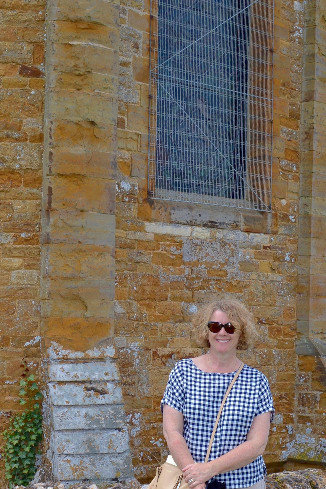
Maria Repnikova <i>Assistant Professor in Global Communication, Director, Center for Global Information Studies, Georgia State University</i>
Lectures
-

This talk focuses on the fundamental tensions inherent in governing China. Using examples from bureaucratic personnel management and social media controls, Prof. Zhou Xueguang will explore institutional responses and practices in state policymaking and implementation as governing entities in China have encountered changes and challenges of recent years. The talk will draw from Prof. Zhou’s recent book of the same title (published in Chinese, 中国国家治理的制度逻辑).


Image
XueguangZhou Headshot Logo
Xueguang Zhou is the Kwoh-Ting Li Professor in Economic Development, a professor of Sociology and a Senior Fellow at FSI, all at Stanford University. His main area of research is institutional changes in contemporary Chinese society, focusing on Chinese organizations and management, social inequality, and state-society relationships.

One of Zhou Xueguang's current research projects is a study of the rise of the bureaucratic state in China. He studies patterns of career mobility and personnel flow among different government offices to understand intra-organizational relationships in the Chinese bureaucracy.

His recent publications examine the role of bureaucracy in public goods provision in rural China (Modern China, 2011), interactions among peasants, markets and capital (China Quarterly, 2011), multiple logics in village elections (Chinese Social Science 2010, with Ai Yun), and collusion among local governments in policy implementation (Research in the Sociology of Organizations 2011, with Ai Yun and Lian Hong; Modern China, 2010).


Image
China Toolkit
This event is part of the 2018 Winter Colloquia; An Expanding Toolkit: The Evolution of Governance in China

China has undergone historic economic, social and cultural transformations since its Opening and Reform. Leading scholars explore expanding repertoires of control that this authoritarian regime – both central and local – are using to manage social fissures, dislocation and demands. What new strategies of governance has the Chinese state devised to manage its increasingly fractious and dynamic society? What novel mechanisms has the state innovated to pre-empt, control and de-escalate contention? China Program’s 2018 Winter Colloquia Series highlights cutting-edge research on contemporary means that various levels of the Chinese state are deploying to manage both current and potential discontent from below.

Shorenstein APARC
Stanford University
Encina Hall, E301
Stanford, CA 94305-6055

(650) 725-6392 (650) 723-6530
0
Senior Fellow at the Freeman Spogli Institute for International Studies
Kwoh-Ting Li Professor in Economic Development
Professor of Sociology
Graduate Seminar Professor at the Stanford Center at Peking University, June and July of 2014
Faculty Affiliate at the Stanford Center on China's Economy and Institutions
Xueguang Zhou_0.jpg PhD

Xueguang Zhou is the Kwoh-Ting Li Professor in Economic Development, a professor of sociology, and a Freeman Spogli Institute for International Studies senior fellow. His main area of research is on institutional changes in contemporary Chinese society, focusing on Chinese organizations and management, social inequality, and state-society relationships.

One of Zhou's current research projects is a study of the rise of the bureaucratic state in China. He works with students and colleagues to conduct participatory observations of government behaviors in the areas of environmental regulation enforcement, in policy implementation, in bureaucratic bargaining, and in incentive designs. He also studies patterns of career mobility and personnel flow among different government offices to understand intra-organizational relationships in the Chinese bureaucracy.

Another ongoing project is an ethnographic study of rural governance in China. Zhou adopts a microscopic approach to understand how peasants, village cadres, and local governments encounter and search for solutions to emerging problems and challenges in their everyday lives, and how institutions are created, reinforced, altered, and recombined in response to these problems. Research topics are related to the making of markets, village elections, and local government behaviors.

His recent publications examine the role of bureaucracy in public goods provision in rural China (Modern China, 2011); interactions among peasants, markets, and capital (China Quarterly, 2011); access to financial resources in Chinese enterprises (Chinese Sociological Review, 2011, with Lulu Li); multiple logics in village elections (Social Sciences in China, 2010, with Ai Yun); and collusion among local governments in policy implementation (Research in the Sociology of Organizations, 2011, with Ai Yun and Lian Hong; and Modern China, 2010).

Before joining Stanford in 2006, Zhou taught at Cornell University, Duke University, and Hong Kong University of Science and Technology. He is a guest professor at Peking University, Tsinghua University, and the People's University of China. Zhou received his Ph.D. in sociology from Stanford University in 1991.

CV
Date Label
<i>Kwoh-Ting Li Professor in Economic Development, Professor of Sociology, FSI Senior Fellow, Stanford University</i>
Seminars
Stanford Law School Neukom Building, Room N230 Stanford, CA 94305
650-725-9875
0
James B. McClatchy Professor of Law at Stanford Law School
Senior Fellow, Freeman Spogli Institute
Professor, by courtesy, Political Science
Professor, by courtesy, Communication
headshot_3.jpg

Nathaniel Persily is the James B. McClatchy Professor of Law at Stanford Law School, with appointments in the departments of Political Science, Communication, and FSI.  Prior to joining Stanford, Professor Persily taught at Columbia and the University of Pennsylvania Law School, and as a visiting professor at Harvard, NYU, Princeton, the University of Amsterdam, and the University of Melbourne. Professor Persily’s scholarship and legal practice focus on American election law or what is sometimes called the “law of democracy,” which addresses issues such as voting rights, political parties, campaign finance, redistricting, and election administration. He has served as a special master or court-appointed expert to craft congressional or legislative districting plans for Georgia, Maryland, Connecticut, New York, North Carolina, and Pennsylvania.  He also served as the Senior Research Director for the Presidential Commission on Election Administration. In addition to dozens of articles (many of which have been cited by the Supreme Court) on the legal regulation of political parties, issues surrounding the census and redistricting process, voting rights, and campaign finance reform, Professor Persily is coauthor of the leading election law casebook, The Law of Democracy (Foundation Press, 5th ed., 2016), with Samuel Issacharoff, Pamela Karlan, and Richard Pildes. His current work, for which he has been honored as a Guggenheim Fellow, Andrew Carnegie Fellow, and a Fellow at the Center for Advanced Study in the Behavioral Sciences, examines the impact of changing technology on political communication, campaigns, and election administration.  He is codirector of the Stanford Program on Democracy and the Internet, and Social Science One, a project to make available to the world’s research community privacy-protected Facebook data to study the impact of social media on democracy.  He is also a member of the American Academy of Arts and Sciences, and a commissioner on the Kofi Annan Commission on Elections and Democracy in the Digital Age.  Along with Professor Charles Stewart III, he recently founded HealthyElections.Org (the Stanford-MIT Healthy Elections Project) which aims to support local election officials in taking the necessary steps during the COVID-19 pandemic to provide safe voting options for the 2020 election. He received a B.A. and M.A. in political science from Yale (1992); a J.D. from Stanford (1998) where he was President of the Stanford Law Review, and a Ph.D. in political science from U.C. Berkeley in 2002.   

CV
Date Label
0
Visiting Scholar at The Europe Center, 2017-2018
kvits_photo.jpg

Serhiy Kvit is a prominent expert on educational issues, professor of Kyiv-Mohyla School of Journalism. He has been rector (president) of the National University of Kyiv-Mohyla Academy since 2007 until 2014. Serhiy Kvit occupied the position of the minister on education and science of Ukraine in 2014-2016 when progressive Law on Higher Education was adopted. In 2002-07 he was dean of the university’s social studies faculty. He founded the Kyiv-Mohyla School of Journalism in 2001 and became president of the Media Reform Centre, set up to initiate open debate and promote more transparent media and government. In 2005-2011 he served as chairman of the Consortium of University Autonomy. Dr Kvit’s research focuses on educational and media reforms, mass communications, and philosophical hermeneutics; he has published several books and numerous articles. He has a PhD from the Ukrainian Free University in Munich and also holds a doctorate in philology. He subsequently held a Fulbright scholarship at Ohio University, US, a Kennan Institute scholarship at the Woodrow Wilson International Centre in Washington DC and a DAAD (German Academic Exchange Service) scholarship at the University of Cologne. Currently Serhiy Kvit is a Fulbright scholar at Stanford University.

News Type
News
Date
Paragraphs

Image
Elaine Treharne
Elaine Treharne earned her PhD from the University of Manchester, with a year as a Procter Graduate Fellow at Princeton University. She came to Stanford in 2012, after five years at Florida State, and fifteen years at the University of Leicester, where she had been Chair of the English Department, and interim Dean of the Faculty of Arts. She is a Fellow of the Society of Antiquaries, of the Royal Historical Society, and of the English Association; and has won grants from the Arts and Humanities Research Council, the British Academy, the NEH, the American Philosophical Society, and the Cyber Initiative. At Stanford, she is the Director of the Center for Spatial and Textual Analysis (CESTA) and Director of Stanford Text Technologies. She is a Fellow of the STS Interdisciplinary Program, and a Stanford Fellow 2017-2019.

Elaine’s research is focused on medieval British manuscripts from c.600CE to 1450CE. Numerous publications—including The Old English Life of St Nicholas and Wiley-Blackwell’s Old and Middle English: An Anthology (which is about to be published in its fourth edition)—present edited and translated texts, ranging from sermons and religious poetry to extracts from Beowulf and Chaucer’s Canterbury Tales. Other books and articles concern the prestige of the vernacular and the transmission of works in English from the late Anglo-Saxon period into the thirteenth century. This research has overturned previous scholarly opinion that held there to be little or nothing of value written in English between the Norman Conquest and the thirteenth century. In Living Through Conquest: The Politics of Early English, Elaine discussed the significant corpus of manuscripts that survive from this period, and highlighted the contemporaneity and political functionalism of many of the works copied by English scribes.

Image
Elaine Treharne book image
Her very recent work is focused on a History of Text Technologies (with Claude Willan for Stanford University Press), which traces trends in the production and consumption of all forms of human communication from 30000BCE to the present day. And in The Phenomenal Book, Elaine is focused on the interpretation of the handwritten book as an embodied whole (even where the only evidence is fragments and parts of books), which represents the traces and experiences of users and readers through time. It includes a chapter on ‘invisible things’, highlighting the sensual and emotional qualities of book production and use. She has also just completed the CyberText Technologies Project in CESTA—using historical patterns of textual facture and consumption to predict future text technologies; and she is just beginning a new digital project, Stanford Ordinary People’s Extraordinary Stories (SOPES), which recuperates the lives of otherwise unknown people whose ephemera (like letter collections, scrapbooks, notebooks, autograph albums, postcards, receipts, and photo albums) can be acquired from Ebay and bric-a-brac shops. Preliminary research shows that the amazing stories of people’s lives emerge from their written remnants.

Elaine’s teaching focuses on Text Technologies, Medieval English Literature, and the study of the Handwritten Book.

Hero Image
Elaine Treharne
All News button
1
Subscribe to Media