Education
Authors
News Type
Blogs
Date
Paragraphs

The following is a guest article written by Akiko Mizuno, who traveled to the San Francisco Bay Area with other graduate students from the University of Tokyo—under the leadership of Professor Hideto Fukudome—in January 2025. SPICE/Stanford collaborates closely with the Graduate School of Education at the University of Tokyo and met with the students during their visit to the Bay Area.     

As a student at the University of Tokyo’s Graduate School of Education, I had an opportunity to travel to Stanford University to participate in a SPICE-supported intensive seminar at the end of January this year. What I learned during the week-long program far exceeded my expectations. I would like to share some of the highlights of my experience during my stay at Stanford University, but first I would very much like to express my appreciation to Dr. Hideto Fukudome of the University of Tokyo who led our group, and to Dr. Gary Mukai, Director of SPICE, who guided us throughout the special lecture series. My heartfelt thanks also go to all the lecturers who gave us such a heartwarming welcome and truly inspiring and eye-opening lectures.

There were many great things that impressed me through my participation in the SPICE-supported intensive seminar. One of the experiences that gave me a lasting impression was a morning walk through San Jose Japantown guided by Dr. Mukai. As we walked, he told us about his childhood growing up as a sansei (third-generation Japanese American) in the 1960s. As I kept listening to his stories, I was able to imagine the hardships he and his family must have gone through even though he told his stories without drama or hyperbole.

Image
granite monument


At one street corner in Japantown, there was a long, horizontal granite monument. There, I saw big romaji characters carved in capital letters that read “GAMAN. KODOMO NO TAME NI,” which means, “Endure. For the sake of our children.” It suddenly dawned on me that years upon years of struggles that issei (first-generation Japanese immigrants) and nisei (second-generation Japanese Americans) endured so that their children could have a brighter future were expressed in just those 19 letters etched on the stone bench. To this day, I can still vividly recall those letters because they are now etched on my heart.

Another experience that left me with a strong impression was a lecture on design thinking by SPICE educational researcher Dr. Mariko Yang-Yoshihara. Before we left Japan, she had given us an assignment to watch a video about Dr. Ge Wang, professor in the Center for Computer Research in Music and Acoustics (CCRMA) at Stanford University, and write about our reactions. The video included Dr. Wang’s talk and a demonstration of how he produces novel musical sounds using a computer and a bow-shaped metal. At first, they were so unfamiliar to me that I felt somewhat uncomfortable. “Is this considered music?,” was my initial reaction. However, when he played Bach on the Ocarina iPhone app he had invented, I could even say that it was soothing. Towards the end of the video, Dr. Wang also introduced us to a piece of music performed by the Stanford Laptop Orchestra, which he had founded. As I listened to their unconventional orchestra sound, I became even more relaxed and fascinated by the beautiful harmony they produced. I then realized that the whole point of this assignment was to gain a perspective on how we should not be close-minded and embrace new experiences. In her research, Dr. Yang-Yoshihara has introduced a trilogical mindset—think out of the box, give it a try, and fail forward—highlighting these as common attitudes shared by individuals thriving in STEAM fields (Science, Technology, Engineering, the Arts, and Mathematics) across diverse sectors today. By being introduced to Dr. Ge Wang’s endeavor and experiencing my own shift in how I appreciate music, I now see myself beginning to “think out of the box” and finding new experiences more enjoyable.

Dr. Mukai, a noted educator and compassionate person, was the very personification of his parents’ profound love and perseverance, and I learned from Dr. Yang-Yoshihara the importance of having an open mind to be innovative. Having had these valuable lessons, how could I stay the same as before? I am truly thankful that I can still grow even though I am no longer in my youth.

In March 2025, both Dr. Mukai and Dr. Yang-Yoshihara came to Japan and took some time to visit us at the University of Tokyo’s Graduate School of Education. It was a big bonus for me to be able to see them again. I know I am fortunate to have had this extra opportunity to further exchange ideas and learn from them. I am looking forward to implementing the lessons learned through SPICE in my daily life. It was indeed a wonderful way to start a New Year.

To stay informed of SPICE news, join our email list and follow us on Facebook,  X, and Instagram.  

Read More

group photo of students and professors in a conference room
Blogs

Reflections on Dr. Mariko Yang-Yoshihara’s Lecture on STEAM Education

Ryoya Shinozaki, a doctoral researcher at the University of Tokyo’s Graduate School of Education, reflects on his experience in the SPICE-linked intensive seminar in the San Francisco Bay Area.
Reflections on Dr. Mariko Yang-Yoshihara’s Lecture on STEAM Education
people gathered in a restaurant, holding red paper bags
Blogs

Experiencing Global Education Firsthand: The Profound Value of In-Person Education Reassessed in an Era of Digitalization

Makoto Nagasawa, a doctoral researcher at the University of Tokyo’s Graduate School of Education, reflects on his experience in the SPICE-linked intensive seminar in the San Francisco Bay Area, led by Professor Hideto Fukudome.
Experiencing Global Education Firsthand: The Profound Value of In-Person Education Reassessed in an Era of Digitalization
Hero Image
person standing at the Angel Island
Akiko Mizuno on Angel Island | Photo courtesy Akiko Mizuno
All News button
1
Subtitle

Akiko Mizuno, a graduate student at the University of Tokyo’s Graduate School of Education, reflects on her experience in the SPICE-supported intensive seminar in the San Francisco Bay Area.

Date Label
Authors
News Type
Blogs
Date
Paragraphs

The following reflection is a guest post written by Millie Gan, a student in the Spring 2025 Stanford e-Entrepreneurship Japan Program. Millie recently launched Teenage Business Contest Japan, a platform for encouraging social entrepreneurship among teens.

I believe that ideas from young people can help solve some of the world’s toughest problems; the voices of students are more essential than ever.

My name is Millie Gan, and I am a high school senior in San Diego and a participant in the Stanford e-Entrepreneurship Japan (SeEJ) program. I am a British national, born and raised in Tokyo. I’m bilingual in English and Japanese, and studying Spanish. My mother is a third-generation Korean-Japanese, and my father is originally from Hong Kong. Though I have no ethnic roots in Japan, living there allowed me to appreciate and respect its people, traditions, and local diversity. 

When I moved to the U.S. three years ago, I was surprised by the number of questions asked by peers and teachers about Japan’s rural challenges, such as its aging population, shrinking towns, and what people were doing to help. I realized how giving younger people a voice can raise awareness of these urgent issues. That is why I created Teenage Business Contest Japan (TBCJ), a national contest that invites high school students across Japan to identify issues in rural areas and propose business solutions, all in English. The top 10 finalists will pitch their ideas live to judges from large corporations and academia. I had the drive to make TBCJ work, but SeEJ helped me execute that drive into action, giving me the mindset and community to take the project further than I could have alone.

Image
flyer


SeEJ gave me a deeper understanding of what it means to lead with purpose and empathy. For example, Dr. Rie Kijima’s session on design thinking taught me how to think from the perspective of those directly impacted. Dr. Damon Horowitz’s lessons on ethical entrepreneurship helped me reflect on why I started this journey. Ms. Megan Carroll’s insights into the nonprofit sector inspired me to treat TBCJ as a mission-driven platform, not just a contest. In one of our first VC sessions, I was partnered with another student for an exercise on creative problem-solving. My partner chose Japan’s aging society and spoke passionately about the need to amplify student voices. At that moment, I remember thinking, “That is exactly what TBCJ is about.” That moment reminded me that while our concerns are local, our hopes are widely shared.

These lessons transformed how I approached leadership as I began to see every obstacle as a lesson. As I worked to grow TBCJ, I started to think more like an entrepreneur: solving problems while learning from them, adjusting my strategies, and staying true to my original mission.

One of the first things I had to figure out was securing sponsorship. I reached out to dozens of companies focused on education and regional revitalization. After many emails and meetings, I was fortunate to secure seven sponsors and raise over ¥3 million. This funding allowed us to provide prizes for the contest and recognize the efforts of students working to help the community.

Reaching students was another major challenge. Japan has nearly 4,800 high schools, but only 150 have strong English or international programs. I directly contacted the 100 schools that had available email addresses. At first, there was silence, and I remember refreshing my inbox, getting more and more frustrated each day, hoping for a reply. But slowly, after a few weeks, a few schools and their students began responding and signing up. That small breakthrough reminded me how wide the access gap truly is. Only around 17% of Japanese citizens hold a valid passport, compared to around 50% in the U.S., which shows how few Japanese students get global exposure. It made me even more determined to connect local youth with global perspectives and to use English as a bridge to opportunity.

The most difficult challenge was gaining official recognition. I applied to multiple Japanese Government offices for endorsement, but most declined due to government policies and TBCJ’s short history. Thankfully, the Cabinet Office met with me and offered support through their regional revitalization team. Soon after, the University of Tokyo’s Innovation Platform Co., Ltd. (IPC) offered its endorsement and created a new “UTokyo IPC Special Innovation Prize” for the contest.

Through this experience, and with the support of SeEJ, I have learned that we don’t have to wait to make a difference. Entrepreneurship isn’t necessarily about launching companies, but about identifying problems and solving them with purpose. I hope to continue expanding TBC Japan and encouraging more students to take initiative, because I truly believe that ideas from young people are what can solve these challenges. It’s our future, and it is up to us to protect and improve it.

If you’re passionate about solving real-world problems, I highly recommend the Stanford e-Entrepreneurship Japan Program.

Sign up now to participate in TBCJ.

Stanford e-Entrepreneurship Japan will start accepting applications for fall 2025 in August.

Stanford e-Entrepreneurship Japan is one of several online courses offered by SPICE.

To stay updated on SPICE news, join our email list and follow us on FacebookX, and Instagram.

Read More

Stanford e-Entrepreneurship Japan student Naho Abe in Mexico City
Blogs

Stanford e-Entrepreneurship Japan: Fostering Innovative Ways to Address Social Issues

The following reflection is a guest post written by Naho Abe, an alumna of Stanford e-Entrepreneurship Japan.
Stanford e-Entrepreneurship Japan: Fostering Innovative Ways to Address Social Issues
Hero Image
a person standing in the snow
All News button
1
Subtitle

Millie Gan, a current student of Stanford e-Entrepreneurship Japan, launches Teenage Business Contest Japan (TBCJ), a new social entrepreneurship platform for teens.

Date Label
Authors
News Type
News
Date
Paragraphs

Applications are now open for the Fall 2025 session of the Stanford University Scholars Program for Japanese High School Students (also known as “Stanford e-Japan”). The course will run from the end of September 2025 through March 2026, with an application deadline of August 17, 2025.

Stanford e-Japan
Fall 2025 session (September 2025 to March 2026)
Application period: July 1 to August 17, 2025

All applications must be submitted at https://spicestanford.smapply.io/prog/stanford_e-japan/ via the SurveyMonkey Apply platform. Applicants and recommenders will need to create a SurveyMonkey Apply account to proceed. Students who are interested in applying to the online course are encouraged to begin their applications early.

Accepted applicants will engage in an intensive study of U.S. society and culture and U.S.–Japan relations. Government officials, leading scholars, and experts from Stanford University and across the United States provide web-based lectures and engage students in live discussion sessions.

Stanford e-Japan is offered by the Stanford Program on International and Cross-Cultural Education (SPICE), Stanford University. Stanford e-Japan is generously supported by the Yanai Tadashi Foundation, Tokyo, Japan.

For more information about Stanford e-Japan, please visit stanfordejapan.org.


Stanford e-Japan is one of several online courses for high school students offered by SPICE, including the Reischauer Scholars Program, the China Scholars Program, the Sejong Korea Scholars ProgramStanford e-ChinaStanford e-Entrepreneurship Japan, as well as numerous local student programs in Japan.

To stay informed of news about Stanford e-Japan and SPICE’s other student programsjoin our email list or follow us on FacebookInstagram, and X.

Read More

people sitting around a table
Blogs

The Yanai Tadashi Foundation and SPICE/Stanford University

Four Stanford freshmen Yanai Scholars reflect on their experiences.
The Yanai Tadashi Foundation and SPICE/Stanford University
cherry blossoms blooming in Japan
News

Announcing the Spring and Fall 2024 Stanford e-Japan Award Recipients

Congratulations to the students who have been named our top honorees and honorable mention recipients for 2024.
Announcing the Spring and Fall 2024 Stanford e-Japan Award Recipients
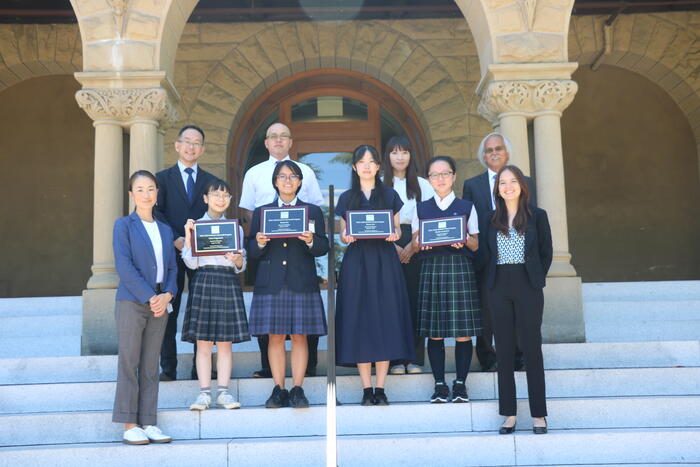
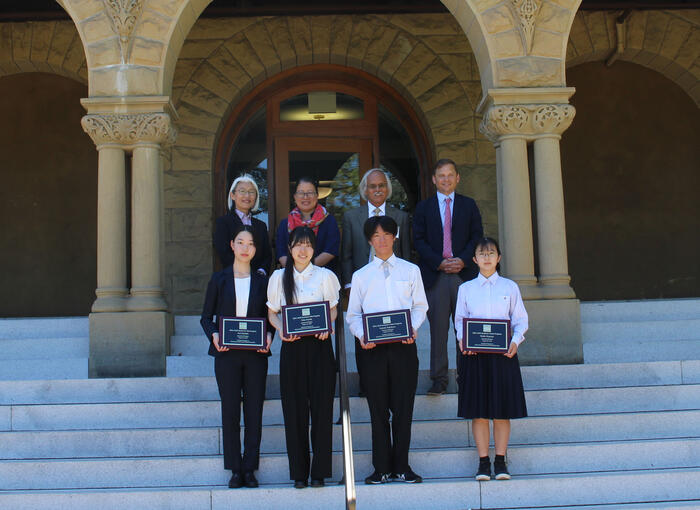
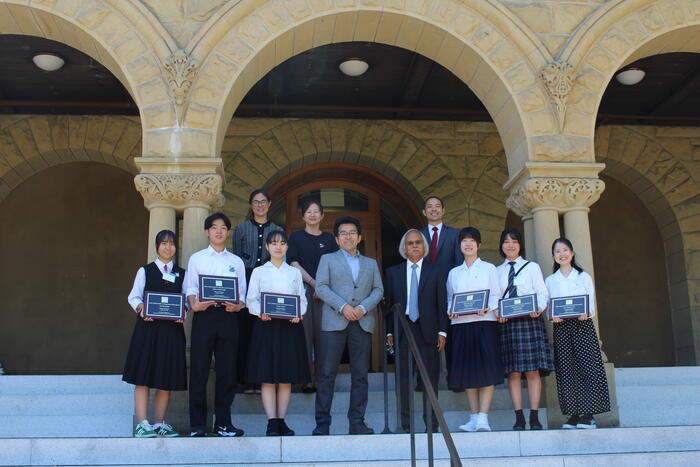
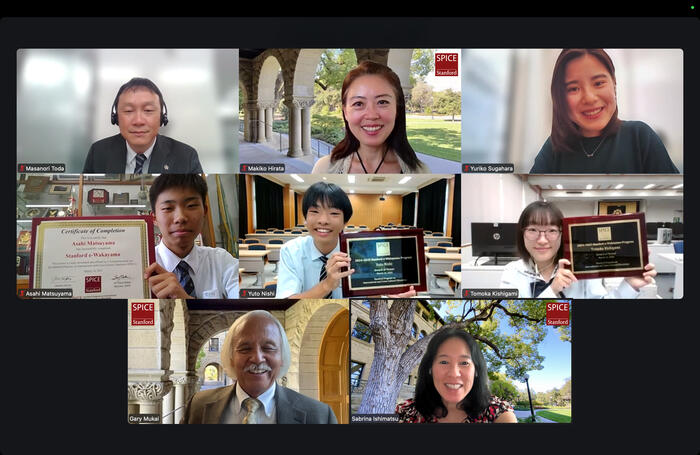
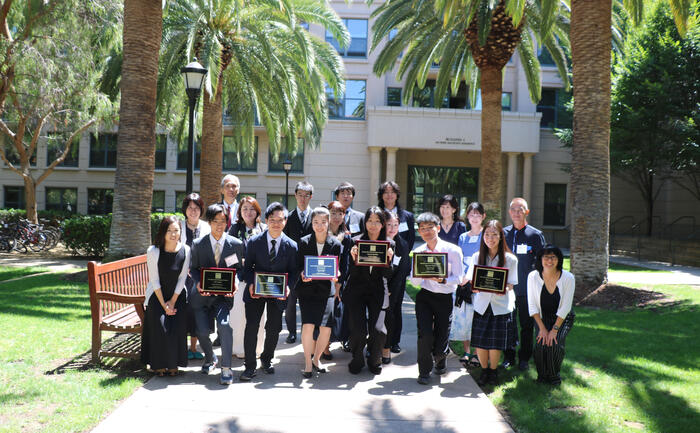
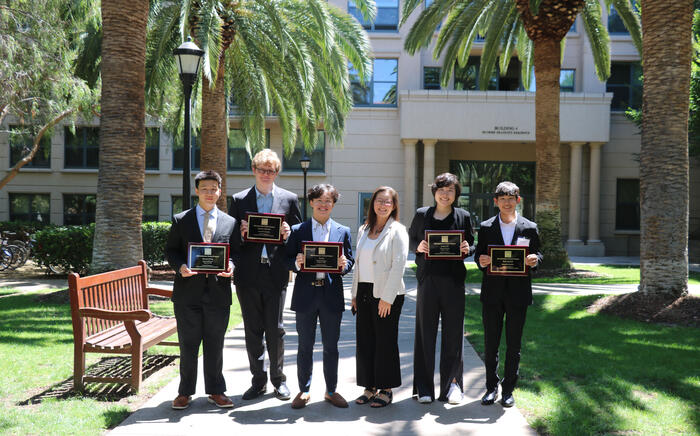
Students holding plaques standing on staircase on Stanford campus.
Blogs

Highest Performing Students of Stanford e-Japan and the Reischauer Scholars Program Are Recognized at Stanford University

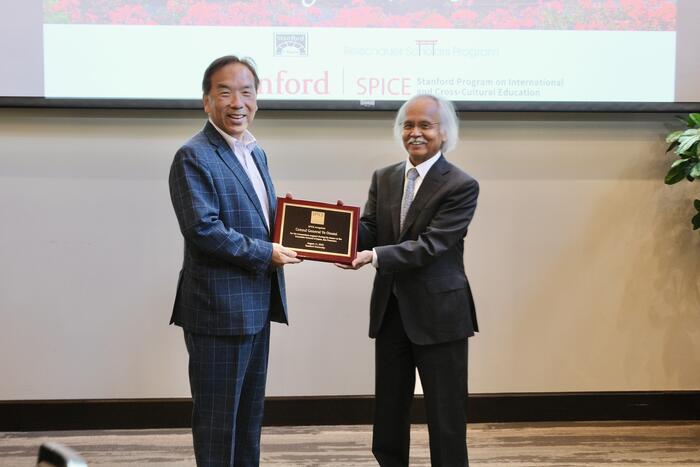
The Honorable Yo Osumi, Consul General of Japan in San Francisco, makes opening comments.
Highest Performing Students of Stanford e-Japan and the Reischauer Scholars Program Are Recognized at Stanford University
Hero Image
stanford campus scenery
Main Quad | Photo Credit: Andrew Broadhead
All News button
1
Subtitle

Interested students must apply by August 17, 2025.

Date Label
0
Korea Program Postdoctoral Fellow, 2025-2027
minyoung_an.jpg PhD

Minyoung An joins the Walter H. Shorenstein Asia-Pacific Research Center (APARC) as Korea Program Postdoctoral Fellow beginning July 2025 through 2027. She recently obtained her doctorate in Sociology from the University of Arizona. Her research lies at the intersection of gender, transnational migration, and knowledge production, combining statistical modeling, computational methods, and in-depth interviews.

Her dissertation analyzes gendered migration patterns in South Korea and among international PhD students in the U.S., revealing how gender inequality in countries of origin produces distinct selection effects and return migration dynamics. She also studies academic career trajectories and prestige hierarchies, exploring how gender and national origin affect integration into global academia.

At APARC, she will be involved with the Korea Program and the Stanford Next Asia Policy Lab (SNAPL) as she pursues two projects that extend this research agenda: one using computational analysis of social media data to examine gendered migration intent, and another investigating the academic trajectories and institutional reception of international scholars from East Asia. Through these projects, she aims to advance understanding of how transnational inequalities shape global mobility, opportunity, and inclusion.

Date Label
Authors
Noa Ronkin
News Type
News
Date
Paragraphs

When Stanford sociologist Gi-Wook Shin left his home country of South Korea in 1983 to pursue graduate studies at the University of Washington, he was certain he would return to Korea upon graduation. More than 40 years later, Shin, the William J. Perry Professor of Contemporary Korea and a senior fellow at the Freeman Spogli Institute for International Studies, is still in the United States. 

Yet he does not consider himself a case of brain drain for Korea. Shin, who is also the founding director of the Korea Program at the Shorenstein Asia-Pacific Research Center (APARC) and APARC director, has continuously contributed to Korea by leading transnational collaborations, researching and publishing on pressing issues in Korean affairs, and otherwise engaging in diverse intellectual exchanges with the country.

Shin’s experiences sparked his interest in the sociological patterns of mobile talent and a central question: How do countries attract, develop, and retain talent in a globalized world? His new book, The Four Talent Giants (Stanford University Press, 2025), explores that question regarding transnational talent flows from a comparative lens by examining how four strikingly different Asia-Pacific nations – Japan, Australia, China, and India – have become economic powerhouses.

We interviewed Shin about his book – watch:

Sign up for APARC newsletters to receive our scholars’ research updates >


The book’s main idea, Shin explains, is that how countries manage talent is key to their strength and future success. He calls the four Asia-Pacific nations the book examines “talent giants” because each has used a distinct talent strategy that has proven critical to national development. Three of these nations – China, Japan, and India – are among the top five economies in the world in terms of GDP, and Australia, despite its relatively small population size, is third in terms of wealth per adult.

In The Four Talent Giants, Shin investigates how these four nations have become global powers and sustained momentum by responding to risks and challenges, such as demographic crises, brain drain, and geopolitical tensions, and what lessons their developmental paths hold for other countries.

There is no ‘one-size-fits-all’ path to development [...] Rather, the ‘talent giants’ have developed distinctive talent portfolios with different emphases on human versus social capital, domestic versus foreign talents, and homegrown versus foreign-educated talents.
Gi-Wook Shin

A New Framework for Studying Human Resource Development 


Asia’s robust economic growth over the past forty years is nothing short of a remarkable feat. The Asia-Pacific today continues to be the world's fastest-growing region, despite global economic uncertainty. How did this phenomenal ascendance come about?

The existing literature has emphasized common “recipes” of success among Asia-Pacific powers. Endeavoring to find one-size-fits-all formulas that could be replicated in other countries seeking rapid development, it has overlooked the distinct developmental journeys of Asian nations. “We need a new lens, or framework, to explain their successes, while also accounting for cross-national variation in development and sustainability,” writes Shin. 

In his book, Shin examines talent – the skilled occupations essential to a nation’s economy – as a key driver of economic development. While all countries rely on human resources for development, their talent strategies vary based on historical, cultural, and institutional factors. Shin introduces a new framework, talent portfolio theory (TPT), inspired by financial portfolio theory, to analyze and compare these national approaches.

“TPT views a nation’s talent development, like financial investment, as constructing a ‘talent portfolio’ that mixes multiple forms of talent – domestic, foreign, and diasporic – adjusting its portfolio over time to meet new risks and challenges,” he explains. Just as an investor may select different financial products in a mix of assets, countries can create talent portfolios by picking from various strategies.

Shin identifies four main strategies by which a country can harness talent – what he calls the four B's: 

  • Brain train” signifies efforts to develop and expand a country’s domestic talent or human capital.
  • Brain gain” refers to attracting foreign talent to strengthen the domestic workforce.
  • Brain circulation” involves bringing back nationals who have gone abroad for work or study.
  • Brain linkage” means leveraging the global networks and expertise of citizens living overseas through transnational collaboration.


Shin uses TPT as an analytical framework to examine how each of the four talent giants has constructed its distinct national talent portfolio and how this portfolio has evolved. As in an investment portfolio rebalancing, a nation can maintain diversification across the four B's and within each B. TPT therefore offers a holistic framework for understanding the overall picture of a country’s talent strategy, and how and why it may “rebalance” its talent portfolio.

Throughout the book, Shin shows that, while Japan has relied on the brain train strategy, Australia, whose population was too small for such an approach, emphasized brain gain. China used brain circulation: it first sent students and professionals abroad to learn, then implemented policies to encourage them to return. India, by contrast, established linkages among its diaspora and used them to develop its economy.

Immigrants have not just filled jobs. They have created new industries and helped the United States and their home countries alike. If the US makes it harder for talent to come in and stay, it risks hurting its long-term success.
Gi-Wook Shin

New Geopolitics of Global Talent: Lessons and Policy Implications


The case studies of the four talent giants reveal that there is no single path to talent-driven development. Each of the four Asia-Pacific countries has built its unique talent portfolio, balancing human and social capital, homegrown and foreign-educated individuals, and domestic and diasporic talents. While the talent giants use all four B's to some extent, each emphasizes them differently, reflecting diverse strategies and development paths. The core findings of these studies offer valuable insights for countries aiming to design effective talent policies. 

The four B's were instrumental in the economic rise of the four Asian nations, and they will be equally critical in addressing new challenges facing all economies, from demographic crises to emergent geopolitical tensions. For the United States, one such challenge is its sprawling competition with China, where the battle for talent is heating up in the race for technological supremacy.

Shin warns that the advantage the United States has long held in technological innovation, driven by its ability to attract skilled foreign talent, is now at risk from the Trump administration’s anti-immigration policies, pressures on universities, and cuts to research funding. “Immigrants have not just filled jobs,” he emphasizes. “They have created new industries and helped the US and their home countries. If the US makes it harder for talent to come in and stay, it risks hurting its long-term success.”

The Four Talent Giants is an outcome of Shin’s longstanding project investigating Talent Flows and Development, now one of the research tracks he leads at the Stanford Next Asia Policy Lab (SNAPL), which he launched in 2022. Housed at APARC, the lab is an interdisciplinary research initiative addressing Asia’s social, cultural, economic, and political challenges through comparative, policy-relevant studies. SNAPL’s education mission is to cultivate the next generation of researchers and policy leaders by offering mentorships and fellowship opportunities for students and emerging scholars.

Shin notes that the SNAPL team illustrates all four B’s in his talent portfolio theory, as some members are U.S.-born and trained, some come from Asia and, after working at the lab, return to their home countries, whereas some stay here, promoting linkages with their home countries. “In many ways, this project shows what is possible when we invest in talent and encourage international collaboration.”


In the Media


Stanford Scholar Reveals How Talent Development Strategies Shape National Futures
The Korean Daily, July 13, 2025 (interview)
- English version
- Korean version

Read More

College students wait in line to attend an information session at the Mynavi Shushoku MEGA EXPO in Tokyo, Japan.
News

A New Approach to Talent Development: Lessons from Japan and Singapore

Stanford researchers Gi-Wook Shin and Haley Gordon propose a novel framework for cross-national understanding of human resource development and a roadmap for countries to improve their talent development strategies.
A New Approach to Talent Development: Lessons from Japan and Singapore
Gi-Wook Shin, Evan Medeiros, and Xinru Ma in conversation at the Center for Strategic and International Studies.
News

Stanford Next Asia Policy Lab Engages Washington Stakeholders with Policy-Relevant Research on US-China Relations and Regional Issues in Asia

Lab members recently shared data-driven insights into U.S.-China tensions, public attitudes toward China, and racial dynamics in Asia, urging policy and academic communities in Washington, D.C. to rethink the Cold War analogy applied to China and views of race and racism in Asian nations.
Stanford Next Asia Policy Lab Engages Washington Stakeholders with Policy-Relevant Research on US-China Relations and Regional Issues in Asia
Lee Jae-myung, the presidential candidate of the Democratic Party, and his wife Kim Hea-Kyung celebrate in front of the National Assembly on June 4, 2025 in Seoul, South Korea.
Commentary

Is South Korea’s New President Good for Democracy?

South Koreans have elected Lee Jae-myung president. Will he be a pragmatic democratic reformer? Or will he continue the polarizing political warfare of recent South Korean leaders?
Is South Korea’s New President Good for Democracy?
Hero Image
Gi-Wook Shin seated in his office, speaking to the camera during an interview.
All News button
1
Subtitle

In his new book, The Four Talent Giants, Shin offers a new framework for understanding the rise of economic powerhouses by examining the distinct human capital development strategies used by Japan, Australia, China, and India.

Date Label
Display Hero Image Wide (1320px)
No
Authors
Gary Mukai
News Type
Blogs
Date
Paragraphs

Introduction to Issues in International Security is a collaboration between the Center for International Security and Cooperation (CISAC) and the Stanford Program on International and Cross-Cultural Education (SPICE). Four CISAC scholars are featured in accessible video lectures that aim to introduce high school students to issues in international security and increase awareness of career opportunities available in the field. Free discussion guides, developed by Irene Bryant of SPICE, are available for each of the lectures in this series.

For the fourth year since 2022, Dr. Ignacio Ornelas Rodriguez introduced the lectures and lessons in the discussion guides to students from San Jose and Salinas Valley. The course culminated in a symposium on May 22, 2025 that was organized by Sabrina Ishimatsu. Each student had the opportunity to present their research project to CISAC scholars, the Honorable Rose GottemoellerProfessor Norman NaimarkDr. Harold Trinkunas, and Visiting Research Scholar Xunchao Zhang. The scholars provided extremely useful feedback on their research projects and also asked thought-provoking questions. Students from the 2022, 2023, and 2024 cohorts have commented on how the feedback and questions from the CISAC scholars helped them to prepare for college.

Image
Zoom screenshot of a speaker


Also during the symposium, students were honored to listen to reflections on the importance of international security from former Secretary of Defense Leon Panetta who underscored the importance of education and encouraged the students to consider international security, or more broadly international relations as an academic field of study and career. Panetta has also served as Director of the CIA and White House Chief of Staff. Students were also very fortunate to listen to words of encouragement from Alexandra Arguello, a 2023 alum of the course taught by Ornelas Rodriguez. Arguello is now a student at Harvard University.

Ornelas Rodriguez closed the symposium by extending his praise for the 2025 cohort which exceeded his expectations and commended them for adding his class to their already busy academic lives.

To stay informed of SPICE news, join our email list and follow us on Facebook, X, and Instagram.

Read More

CISAC Scholars Martha Crenshaw, Rose Gottemoeller, Norman Naimark, Megan Palmer; photos courtesy CISAC
News

Introduction to Issues in International Security

A new video curriculum series is released.
Introduction to Issues in International Security
Hero Image
screenshot of Zoom meeting
Top row, left to right: Secretary Leon Panetta, Dr. Ignacio Ornelas Rodriguez, Dr. Harold Trinkunas, the Honorable Rose Gottemoeller, Professor Norman Naimark; second row, far left: Visiting Research Scholar Xunchao Zhang; third row, fourth from the left: Alexandra Arguello.
All News button
1
Subtitle

Students from San Jose and Salinas Valley—taught by Dr. Ignacio Ornelas Rodriguez—met on May 22, 2025 for the fourth annual International Security Symposium.

Date Label
Authors
News Type
Blogs
Date
Paragraphs

The following is a guest article written by Akari Kikuchi, an undergraduate student studying at the School of Social Sciences at Waseda University in Japan. Akari enrolled in the 2025 SPICE/Stanford–Waseda Intensive Course: Exploring Peace in East Asia and Beyond Through the Lenses of Cultural Understanding, Education, and International Relations, which was organized by SPICE and Waseda’s Faculty of Social Sciences and taught by Meiko Kotani. The course brought together students from the Graduate School of Social Sciences, the School of Social Sciences, the Graduate School of Asia-Pacific Studies, the School of International Liberal Studies, and the School of Political Science and Economics. With participants from Japan and international students representing 10 different countries, the course created a truly dynamic and diverse learning environment.

Looking back on our five-day program, I feel a deep sense of gratitude—for the opportunity to take part in the program, and for the people I met along the way. I’m proud to have shared this experience with such thoughtful, motivated students and teachers.

Although the program took place during our spring break, the energy and engagement from the students involved were truly inspiring. I was impressed by their insightful questions and responses.

Our group presentation—which took place on the final day of the course, after a week full of thought-provoking lectures and discussions—was especially memorable for me. It reminded me how exciting it can be to overcome differences in language and perspective. My part of the presentation focused on how media shapes public perceptions—and sometimes even hostilities—toward other nations. That topic reflected something I found really interesting from one of the lectures earlier in the week: how essential media literacy is when it comes to understanding the world around us. We looked at how the same event can be framed differently depending on the source, and how these narratives create public emotions and opinions.

What I found most important—what I’d like to emphasize—is that this program didn’t just talk about “peace” as an abstract goal. Instead, it helped me understand how peace has been threatened. Through this practical approach, we could explore the often-elusive concept of “peace” in a real-world context.

The world today feels overwhelmingly unstable. The more you think about peace, the more cruelty you see around you. It can feel disheartening, but I found a sense of renewed hope through this project. We discussed weighty, complex issues with people from different countries and cultures. Although that seemed challenging to me at first, in the end I realized that it was based in the simple experience of learning to respect the person in front of me. I think the memory of discussing peace with people from diverse backgrounds during this project will serve as “a guide” toward peace.

The fear of opening up or facing language barriers might hold people back, but I believe the program is worth trying, and I hope many more people will take this great opportunity in the future!

To stay informed of SPICE news, join our email list and follow us on FacebookX, and Instagram.

Read More

a person standing in front of pink flowers
Blogs

Reimagining Peace, One Perspective at a Time

Joan Benedict, an undergraduate student at Waseda University, reflects on her experience participating in the SPICE/Stanford–Waseda intensive course.
Reimagining Peace, One Perspective at a Time
a person standing at a crossing
Blogs

From Presence to Dialogue: A Personal Reflection on Peace, Learning, and Difference

Graduate student Wenxin Fu reflects on the impact of the SPICE/Stanford–Waseda intensive course on her academic and personal growth.
From Presence to Dialogue: A Personal Reflection on Peace, Learning, and Difference
a student standing in front of a tower on university campus
Blogs

Pros, Impressions, and Takeaways from the SPICE/Stanford–Waseda Intensive Course on Peacebuilding in East Asia

Lindsay Baltzell, an undergraduate student at Waseda University, reflects on her experience participating in the SPICE/Stanford–Waseda intensive course.
Pros, Impressions, and Takeaways from the SPICE/Stanford–Waseda Intensive Course on Peacebuilding in East Asia
Hero Image
a person at a university campus
Akari Kikuchi at the Waseda University campus | Photo Credit: Akari Kikuchi
All News button
1
Subtitle

Undergraduate student Akari Kikuchi from the School of Social Sciences reflects on her experience participating in the SPICE/Stanford–Waseda intensive course.

Date Label
Authors
Melissa Morgan
News Type
News
Date
Paragraphs

On a beautiful Sunday afternoon, friends, family, and graduates gathered on the lawn of Encina Hall at Stanford University to celebrate the Class of 2025 of the Ford Dorsey Master's in International Policy.

“We need to take a moment to thank the State of California. There’s nowhere else in the world that could deliver weather like this for a graduation,” quipped Francis Fukuyama, the director of the Ford Dorsey Master's in International Policy.

The Class of 2025 includes 28 students representing six different states and eleven different countries, including Belgium, China, Indonesia, Japan, Lebanon, Peru, South Korea, Sri Lanka, Tanzania, the United Kingdom, and the United States.

The diploma ceremony marked the culmination of two years of intensive study and hands-on work by the graduating class. The MIP program is built around a problem solving framework developed by Dr. Fukuyama and Jeremy Weinstein, previously of FSI, which emphasizes not only the development of policy, but the practical implementation of it as well.

The importance of taking action and becoming leaders was echoed by H.R. McMaster, who delivered this year’s faculty keynote remarks.

McMaster — a retired lieutenant general in the United States Army who served as a commissioned officer for thirty-four years, including as the 26th assistant to the president for National Security Affairs — shared an anecdote with the graduates from his experience working and leading in the military:

“As a junior officer, you say to yourself, ‘Someone up there must have a plan.’ Then you are a mid-career officer, maybe a captain or a major, and you look around and the situation is disordered and units and leaders are unsure about what to do, and it dawns on you that nobody up there has a plan. Then maybe you continue to serve in the military long enough to reach senior command or the general officer ranks and you assess that your organization is unclear about its mission. Its goals and objectives are ambiguous, and people lack an understanding of the situation and how leaders expect them to work together to help achieve favorable outcomes. It is at that moment, when it should dawn on you that it is your job to make the plan.”

Continuing, McMaster turned the story back to the new alumni:

“As young leaders who hold the Ford Dorsey Master’s in International Policy degree, you are well prepared not only to make the plan, but also to implement the plan.”

Less than a week since receiving their degrees, many of the Class of 2025 graduates are already acting on McMaster’s call to step up and lead. Several members of the graduating class are either beginning or returning to careers as diplomats, embassy advisors, and public servants in Korea, Pakistan, Lebanon, and Japan. Two will be returning to military service as officers in the United States Army, while others plan to continue their academic studies in a variety of programs at Stanford and Harvard. Still others will be entering the private sector, where they will put their learning and leadership skills to use as intelligence analysts for Lockheed Martin, data scientists at the World Bank, policy associates for Linea Energy, and affiliates with Anduril Industries. Many will also continue to build or expand on AI-focused start-ups that were begun during their studies at Stanford.                                                                                                                                                                                                                                                                            

As the cohort spreads out across the globe, McMaster urged them to remember their time at Stanford and what they learned from each other in and out of the classroom:

“Do not underestimate how influential you can be and the difference you can make in our world. You will face challenges and disappointments, but your support for one another will help you keep your positive outlook on humanity and sustain your confidence.”

Read More

Sakeena Razick delivers the student remarks at the graduation ceremony for the Class of 2025 from the Ford Dorsey Master's in International Policy
Blogs

Three Mantras for the Graduates of the Ford Dorsey Master's in International Policy Class of 2025

In her graduation remarks, Sakeena Razick encouraged her classmates to reach for kindness, empathy, and community during times of uncertainty.
Three Mantras for the Graduates of the Ford Dorsey Master's in International Policy Class of 2025
[Left to right]: Anna Grzymała-Busse, Francis Fukuyama, Diego Zambrano, and Bruce Cain
News

MIP Community Gathers for Discussion on How U.S. Impacts Global Affairs

Alumni and students of the Ford Dorsey Master's in International Policy program came together for networking and a discussion on how current affairs in the United States affect the rest of the world.
MIP Community Gathers for Discussion on How U.S. Impacts Global Affairs
CDDRL 2025 Thesis Award Winners
News

CDDRL Fisher Family Honors Program Graduates Recognized for Outstanding Theses

Charles Sheiner ('25) is a recipient of the 2025 Firestone Medal, and Adrian Feinberg ('25) and Adelaide Madary ('25) have won CDDRL's Outstanding Thesis Awards.
CDDRL Fisher Family Honors Program Graduates Recognized for Outstanding Theses
Hero Image
The graduating class of 2025 of the Ford Dorsey Master's in International Policy on the steps of Encina Hall at Stanford University.
Melissa Morgan
All News button
1
Subtitle

In his remarks to the Class of 2025 of the Ford Dorsey Master’s in International Policy, Lieutenant General H.R. McMaster (Ret.) called for the new graduates to lead with confidence.

Date Label
Display Hero Image Wide (1320px)
No
Authors
Gary Mukai
News Type
Blogs
Date
Paragraphs

Sponsored by Stanford Global Studies (SGS) through the support of U.S. Department of Education Title VI funding, the Education Partnership for Internationalizing Curriculum (EPIC) Community College Faculty Fellowship convenes a cohort of community college faculty and academic staff from various disciplines to work collaboratively with Stanford staff for one academic year (August–May). Each EPIC Fellow designs a project that aims to internationalize curricula and develop global competencies among community college students. Jonas Edman worked with seven EPIC Fellows from the 2024–25 cohort throughout the academic year, providing guidance, support, and resources to advance their projects’ development. Their names, titles, institutions, and projects are as follows:

  • Joel Blank, Professor of Political Science, San Joaquin Delta College: “Beyond the Nation-State: Enhancing Local Governance Through Sister Cities Partnerships”
  • Deborah Brown, Professor of History and Ethnic Studies, Riverside City College: “Sankofa: Centering Africa in African American Studies”
  • Lisa Gilbert, Professor of Geology, Oceanography and Environmental Science, Cabrillo College: “Global Competency in Introductory Environmental Science”
  • Jessica Moronez, Professor of Sociology and Social Justice Studies, Chaffey College: “Global Perspectives and Gender Justice: Enhancing Prison Education at CIW Prison”
  • Francisco Nájera, Instructor of Ethnic Studies, Orange Coast College: “Centroamericanos en Diáspora: Transnational Worldviews in Central American Studies”
  • Jacob Vazquez, Agriculture Business Instructor, Butte College: “Developing Global Competencies in an Agricultural Economics Course”
  • Cirian Villavicencio: Professor of Political Science, San Joaquin Delta College: “Beyond the Nation-State: Enhancing Local Governance Through Sister Cities Partnerships”


EPIC Fellows participated in a series of professional learning activities over the course of the academic year, including a three-day intensive workshop on the Stanford campus, monthly virtual meetings featuring cutting-edge research from Stanford scholars and collaborative project workshopping, and personalized mentoring sessions with Edman. The Fellowship culminated with the tenth annual EPIC Symposium, “Integrating Global Topics into Community College Curricula,” which was held on May 17, 2025 and featured opening comments by Dr. Kate Kuhns, Executive Director of Stanford Global Studies; a keynote address by Professor Jisha Menon, Sakurako and William Fisher Family Director of the Stanford Global Studies Division; two panels of 2024–25 EPIC Fellows; and a panel of EPIC Community College Leadership Program Fellows. SGS Academic and Outreach Manager Dr. Kristyn Hara (in green in photo below; photo courtesy Rod Searcey) was the primary organizer and facilitator of the EPIC Fellowship, including the EPIC Symposium.

Image
group of people standing outside on campus


Each 2024–25 EPIC Fellow gave an overview of their project to an audience of Stanford faculty and staff, EPIC alumni, and other community college professionals from across California and beyond. Full descriptions of the 2024–25 EPIC Fellows’ projects can be found here.

The EPIC Fellows received certificates from SGS upon their successful completion of the program. With the formal close of the Fellowship, they were also invited to join the Global Educators Network (GEN), which, in partnership with SGS, seeks to inform, inspire, and empower community college educators—and their students—to more deeply engage with global themes and learning resources, as well as international dialogue, research, and pedagogical strategies.

Following the EPIC Symposium, the seven EPIC Fellows with whom Edman worked shared reflections on their experience of the program.

As a community college professor, being selected as a Stanford University EPIC Fellow was an extraordinary honor and experience. The world-class support provided by the Global Studies staff, faculty, and affiliated experts was invaluable in developing and implementing our international curriculum. The yearlong series of monthly symposiums covering a wide range of global topics introduced valuable ideas and resources into our project and fostered a strong sense of community among the fellows providing support and encouragement throughout the process. This program is not only worth continuing—it deserves to be expanded, especially as we work to cultivate a truly global student citizenry.—Joel Blank

I have had the honor of working on a project that centers Africa and focuses on the wisdom of African ancestors and elders. Baba Gary Mukai and Jonas Edman guided us on a journey where they shared their own stories that are deeply connected to Global Studies and built bridges for us fellows to develop our projects and collaborate with other colleagues. These personal stories are at the heart of the work we do in Global Studies. As an EPIC fellow, I am concluding my fellowship year with renewed focus on Global Studies and the importance of honoring indigenous lives, experiences, and histories while critically looking at my own power, privilege, and positionality. Asante sana, EPIC Program coordinators!—Deborah Brown

I’m deeply grateful to Gary Mukai, Jonas Edman, Kristyn Hara, Stanford faculty speakers, and the 24–25 cohort of brilliant EPIC fellows for your support and inspiration. You helped fill my year with creative thinking, meaningful conversations, and encouragement to seek out new collaborations. Together with interdisciplinary artist Carmina Eliason, I reimagined our Introductory Environmental Science course through a variety of lenses. As we developed case studies from Kenya to Brazil, I found unexpected inspiration in Dune’s Arrakis—exploring scarcity, adaptation, and ethics—which helped me return with new ideas for teaching resilience locally. I couldn’t have predicted this journey, and I’m so very thankful.—Lisa Gilbert

I had a fantastic experience as a Stanford EPIC fellow during the 2024–2025 academic year. My SPICE team (Gary and Jonas) and my brilliant colleagues inspired me to enhance my curriculum by helping me forge connections between the local and the global. This is particularly important for my incarcerated students at CIW prison, who have limited access to resources. I cannot wait to share the knowledge I gained from Stanford Global Studies with my students!—Jessica Moronez

It was incredibly rewarding to have the time, space, and resources to be able to reflect on globalizing curriculum with the EPIC program. Seeing everyone’s passion in bringing their vision to reality was a great inspiration. This is what curriculum development should look like. At a time when petty nationalism is on the rise, this work is vital, timely, and necessary. We need our students and our communities to care about the lived experiences of folks all around the world. —Francisco Nájera

I had a great experience with Stanford University’s EPIC Fellowship. I really appreciate how the fellowship allows community college faculty to connect Stanford’s world-renowned resources and insights to our students. I feel very grateful for the investment the fellowship made in me and am excited to see how it helps transform our students.—Jacob Vazquez

The Stanford EPIC Fellowship was an amazing opportunity to learn from like-minded individuals deeply committed to opening students’ learning to the world. During our year-long fellowship, we shared ideas, heard from Stanford professors about their globally centered research, and utilized the university’s first-class resources to expand and innovate our curriculum. We also received caring professional support from Stanford’s Global Studies staff as we developed our projects. Overall, the fellowship was a transformative and enriching intellectual experience that I recommend for community college faculty interested in global studies and internationalizing their curriculum.—Cirian Villavicencio

Image
a speaker speaking on a podium


Reflecting on the 2024–25 EPIC program, Edman (photo above courtesy Rod Searcey) noted, “One of the highlights of my years at SPICE has been the annual EPIC Symposium. It was such an honor to moderate the panel, and it was so rewarding to listen to the 2024–2025 EPIC Fellows’ engaging presentations. The Fellows represented such a wide range of disciplines and backgrounds, and this certainly contributed to engaging discussions throughout the year. Once again, I am most grateful to Kristyn Hara for expertly facilitating the EPIC Fellowship over the past year and for meticulously planning and implementing the 2025 EPIC Symposium.”

The EPIC Community College Faculty Fellowship is one of several ongoing community college outreach initiatives in global education between SPICE and Stanford’s four National Resources—the Center for East Asian Studies (CEAS), the Center for Latin American Studies (CLAS), the Center for Russian, East European and Eurasian Studies (CREEES), and SGS.

To stay informed of SPICE news, join our email list and follow us on FacebookX, and Instagram.

Read More

Stanford Global Studies hosts Education Partnership for Internationalizing Curriculum (EPIC) Symposium
Blogs

SPICE’s Jonas Edman Moderates Panel of Community College Instructors

Stanford Global Studies hosts Education Partnership for Internationalizing Curriculum (EPIC) Symposium.
SPICE’s Jonas Edman Moderates Panel of Community College Instructors
image of six fellows
News

Collegiality and the 2020–21 EPIC Fellows

On August 13 and 14, 2020, Stanford Global Studies welcomed 12 new Education Partnership for Internationalizing Curriculum (EPIC) Fellowship Program community college instructors as members of its 2020–21 cohort.
Collegiality and the 2020–21 EPIC Fellows
Hero Image
group of people standing in a room
Jonas Edman (center) with [left to right] Cirian Villavicencio, Joel Blank, Jessica Moronez, Francisco Nájera, Gary Mukai, Deborah Brown, Lisa Gilbert, and Jacob Vazquez at the 2025 EPIC Symposium | Photo Credit: Rod Searcey
All News button
1
Subtitle

SPICE’s Jonas Edman collaborated with seven EPIC Fellows in 2024–25.

Date Label
Authors
Nora Sulots
News Type
News
Date
Paragraphs

The Center on Democracy, Development and the Rule of Law proudly congratulates its 2025 graduating class of honors students on their outstanding original research conducted under CDDRL's Fisher Family Honors Program. Among those graduating is Charles Sheiner, an International Relations major, who has won a Firestone Medal for his research on the electoral impact of Biden-era spending programs. Additionally, two students were selected as recipients of the CDDRL Outstanding Thesis Award. Adrian Feinberg, an International Relations major who is also minoring in History, Film & Media Studies, was honored for his research revealing how postwar Yugoslavia utilized the justice system to build state power and suppress dissent. Adelaide Madary, a Political Science major, was honored for her research exploring how local leadership shapes the responses of rural Calabrian communities to immigration, fostering hospitality in some towns and resistance in others.

Firestone Medal winner Charles Sheiner, '25, presents his honors thesis.
Firestone Medal winner Charles Sheiner, '25, presents his honors thesis. | Nora Sulots

The Firestone Medal for Excellence in Undergraduate Research recognizes Stanford's top ten percent of honors theses in social science, science, and engineering among the graduating senior class. Charles's thesis is entitled The Limits of Payout Politics: How Biden-Harris Federal Spending Shaped (and Didn't Shape) the 2024 Presidential Vote. His thesis examines whether the Biden-Harris administration’s signature spending programs — the Bipartisan Infrastructure Law, Inflation Reduction Act, and CHIPS Act — yielded electoral rewards in the 2024 presidential election. Using an original dataset of over 40,000 geocoded federal projects representing $227 billion in county-level investments, Charles finds no statistically significant association between per-capita spending and shifts in Democratic vote margins, even when accounting for partisan context and project visibility. Through interviews with federal and local officials, he identifies three explanatory mechanisms: implementation lags prevented most projects from reaching completion before Election Day, administrative and policy bottlenecks systematically delayed development, and Republican messaging successfully reframed spending as inflationary. These findings suggest that retrospective voting operates primarily through immediate, visible benefits rather than campaign promises or announced investments, with significant implications for how policy initiatives must be designed to deliver outcomes within electoral cycles.

CDDRL Outstanding Thesis Award winner Adrian Feinberg ('25) presents his honors thesis.
CDDRL Outstanding Thesis Award winner Adrian Feinberg ('25) presents his honors thesis. | Nora Sulots

Adrian's thesis is entitled The Gavel and the Gun: Post-War Trials and State-Building Politics in Yugoslavia (1945-1949). His thesis explores how the Communist Party of Yugoslavia (KPJ) authorities used the post-World War II justice process to consolidate power from 1945 to 1949. Drawing on trial transcripts, newspapers, and other archival materials, the study argues that the Yugoslav state instrumentalized judicial structures in three distinct stages: first, using honor courts to assert basic state capacity; second, conducting public-facing war crimes trials to promote the state’s ideological legitimacy; and third, orchestrating espionage trials to suppress dissent and entrench single-party rule. While affirming that the KPJ often subordinated judicial integrity to its state-building project, the thesis complicates conventional narratives by attending to the moral ambiguities, partial truths, and undeniable moments of justice present in even the most politicized of trials. In doing so, it offers broader insights into the fraught intersection of law, memory, and power in postwar societies.

CDDRL Outstanding Thesis Award winner Adelaide Madary ('25) presents her honors thesis.
CDDRL Outstanding Thesis Award winner Adelaide Madary ('25) presents her honors thesis. | Nora Sulots

Adelaide's thesis is entitled Philoxenia: Local Responses to Immigration in Calabria, Italy. Over recent decades, many nations across Europe and the Americas have responded to mass migration movements across the globe with hostile policies, xenophobic sentiment, and poorly managed immigration systems. At the same time, several municipalities in Calabria, Italy that struggle with severe depopulation and economic hardship have experienced positive transformations upon opening refugee reception centers, including reversals to declining population trends, job creation and the continuation of important public goods, such as elementary schools — but not all towns that have a demand for immigration respond in the same way. Many Calabrian municipalities have not opened refugee resettlement centers, and others have become a breeding ground for labor exploitation among migrant workers. This thesis employs a mixed-methods approach to consider how structure, agency, and culture account for the variation in local responses to migrants and refugees throughout the relatively homogenous region of Calabria. A systematic analysis of quantitative municipal-level data paired with four granular case studies suggests that a municipality’s structural characteristics alone do not explain the variance in local responses to immigration. Rather, the presence of an entrepreneurial local actor, such as a mayor or non-profit leader with strong humanitarian commitments, is necessary to recognize and actualize the aligned interests between locals and newcomers and bring about cultures of hospitality. While much of the literature on local responses to immigration has focused on urban settings, this thesis aims to widen academic discussions to include more rural contexts and contributes to the underdeveloped literature on hospitality, rather than hostility, toward newcomers.

The Class of 2025


Charles, Adrian, and Adelaide are part of a cohort of 13 graduating CDDRL honors students who have spent the past year working in consultation with CDDRL-affiliated faculty members and attending honors research workshops to develop their thesis projects. The theses this year covered topics as wide ranging as authoritarian repression, conflict and state-building, regulation and governance, and democratic accountability. Students embarked on original research across multiple countries, conducting interviews, fielding surveys, plumbing archives, and building datasets.

“We are so proud of this year’s cohort of seniors in the Fisher Family Honors Program,” shared Didi Kuo, Center Fellow at FSI and co-director of CDDRL’s Fisher Family Honors Program. “Our multidisciplinary students brought a range of methods and analytical approaches to inform their understanding of democracy and development. They asked a range of trenchant research questions and brought a collaborative spirit to the research enterprise that improved everyone’s projects.”

Our students brought a range of methods and analytical approaches to inform their understanding of democracy and development. They asked a range of trenchant research questions and brought a collaborative spirit to the research enterprise that improved everyone's projects.
Didi Kuo
Center Fellow, FSI; Co-director, Fisher Family Honors Program

In addition to the Firestone Medal and CDDRL Outstanding Thesis Awards, members of the Class of 2025 have received several other honors heading into graduation:

  • Kate Tully is among four Stanford students named as 2025 Rhodes Scholars. The prestigious award provides support for talented scholars to pursue postgraduate degrees at Oxford University in England.
  • Alex Borthwick, Adrian Feinberg, Malaina Kapoor, and Avinash Thakkar, along with junior Emma Wang, are among the newest members elected to the Phi Beta Kappa academic honors society.
  • Adrian Feinberg was also named a Gaither Fellow. The national program offers recent graduates the opportunity to work as research assistants on projects related to democracy, global security, and foreign policy at the Carnegie Endowment for International Peace in Washington, D.C.
  • Alex Borthwick, Adrian Feinberg, Elizabeth Jerstad, and Gabriela Holzer have all received the Award of Excellence. Designed to recognize the top 10% of the class, this award honors graduating seniors who have demonstrated a sincere commitment to the university through involvement, leadership, and extraordinary Stanford spirit.


CDDRL's Fisher Family Honors Program trains students from any academic department at Stanford to prepare them to write a policy-relevant research thesis with global impact on a subject touching on democracy, development, and the rule of law. Honors students participate in research methods workshops, attend honors college in Washington, D.C., connect to the CDDRL research community, and write their thesis in close consultation with a faculty advisor to graduate with a certificate of honors in democracy, development, and the rule of law.
 

Explore the rest of the thesis topics of the Fisher Family Honors Program Class of 2025 below:

Read More

Phi Beta Kappa graduates
News

Record Number of CDDRL Honors Students Elected to Phi Beta Kappa

Seniors Alex Borthwick, Adrian Feinberg, Malaina Kapoor, and Avinash Thakkar (Fisher Family Honors Program class of 2025), and junior Emma Wang (Fisher Family Honors Program class of 2026) are among the newest members of this prestigious academic honors society.
Record Number of CDDRL Honors Students Elected to Phi Beta Kappa
Noah Tan and Adrian Feinberg
News

Noah Tan and Adrian Feinberg Named Gaither Fellows

The national program offers recent graduates the opportunity to work as research assistants on projects related to democracy, global security, and foreign policy at the Carnegie Endowment for International Peace in Washington, D.C.
Noah Tan and Adrian Feinberg Named Gaither Fellows
Stanford students Francesca Fernandes, Alvin Lee, Mikayla Tillery, and Kate Tully are 2025 Rhodes Scholars.
News

Kate Tully Among Four Stanford Students Named 2025 Rhodes Scholars

The prestigious award provides support for talented scholars to pursue postgraduate degrees at Oxford University in England.
Kate Tully Among Four Stanford Students Named 2025 Rhodes Scholars
Hero Image
CDDRL 2025 Thesis Award Winners
All News button
1
Subtitle

Charles Sheiner ('25) is a recipient of the 2025 Firestone Medal, and Adrian Feinberg ('25) and Adelaide Madary ('25) have won CDDRL's Outstanding Thesis Awards.

Date Label
Subscribe to Education