Education
Paragraphs

Explore our series of multimedia interviews and Q&As with the contributors to this volume: 


China's future will be determined by how its leaders manage its myriad interconnected challenges. In Fateful Decisions, leading experts from a wide range of disciplines eschew broad predictions of success or failure in favor of close analyses of today's most critical demographic, economic, social, political, and foreign policy challenges. They expertly outline the options and opportunity costs entailed, providing a cutting-edge analytic framework for understanding the decisions that will determine China's trajectory.

Xi Jinping has articulated ambitious goals, such as the Belt and Road Initiative and massive urbanization projects, but few priorities or policies to achieve them. These goals have thrown into relief the crises facing China as the economy slows and the population ages while the demand for and costs of education, healthcare, elder care, and other social benefits are increasing. Global ambitions and a more assertive military also compete for funding and policy priority. These challenges are compounded by the size of China's population, outdated institutions, and the reluctance of powerful elites to make reforms that might threaten their positions, prerogatives, and Communist Party legitimacy. In this volume, individual chapters provide in-depth analyses of key policies relating to these challenges. Contributors illuminate what is at stake, possible choices, and subsequent outcomes. This volume equips readers with everything they need to understand these complex developments in context.

Available May 2020.

This book is part of the Stanford University Press series, "Studies of the Walter H. Shorenstein Asia-Pacific Research Center"

All Publications button
1
Publication Type
Books
Publication Date
Journal Publisher
Stanford University Press
Authors
Jean C. Oi
Thomas Fingar
Authors
Gary Mukai
News Type
Blogs
Date
Paragraphs


[[{"fid":"240970","view_mode":"crop_870xauto","fields":{"format":"crop_870xauto","field_file_image_description[und][0][value]":"Kawasaki City logo","field_file_image_alt_text[und][0][value]":"Kawasaki City logo","field_file_image_title_text[und][0][value]":"Kawasaki City logo","field_credit[und][0][value]":"","field_caption[und][0][value]":"Kawasaki City logo","thumbnails":"crop_870xauto"},"link_text":null,"type":"media","field_deltas":{"1":{"format":"crop_870xauto","field_file_image_description[und][0][value]":"Kawasaki City logo","field_file_image_alt_text[und][0][value]":"Kawasaki City logo","field_file_image_title_text[und][0][value]":"Kawasaki City logo","field_credit[und][0][value]":"","field_caption[und][0][value]":"Kawasaki City logo","thumbnails":"crop_870xauto"}},"attributes":{"alt":"Kawasaki City logo","title":"Kawasaki City logo","style":"float: right; margin: 3px 5px; height: 118px; width: 200px;","class":"media-element file-crop-870xauto","data-delta":"1"}}]]

When I first visited Kawasaki City, I was immediately struck by the multicolored character for 川or “kawa” (river) in the Chinese characters for川崎 (Kawasaki) that appears on signs, buildings, posters, and even storm drain covers. I learned from Kawasaki Mayor Norihiko Fukuda that the multicolored 川 symbolizes the importance that Kawasaki City places upon diversity.


Kawasaki City is a large industrial city in the greater Tokyo area with a population of approximately 1.5 million, making it Japan’s sixth most populous city after Tokyo. It is one of Japan’s most ethnically diverse cities. Many Japanese multinational companies are based in Kawasaki. In 2014, the U.S. multinational company Johnson & Johnson opened the Tokyo Science Center in Kawasaki.

With the vision of Mayor Fukuda and support from Kawasaki City, SPICE has launched Stanford e-Kawasaki, an online course that is offered to high school students in Kawasaki. Stanford e-Kawasaki’s main course topics are diversity and entrepreneurship. Stanford e-Kawasaki Instructor Maiko Tamagawa Bacha recently noted, “The Kawasaki students have shown strong interest in these timely and relevant topics and are always actively engaged in discussions. One of the great things about Stanford e-Kawasaki is that it provides a place where students feel free and encouraged to express themselves. It also provides an important opportunity for students to reflect on their own society by learning about the United States. I look forward to our continued learning together for the rest of the course.” The course began in fall 2019 and a closing ceremony will be held in March 2020.

Maiko Tamagawa Bacha Maiko Tamagawa Bacha
Bacha is a graduate of the University of Tokyo and the Middlebury Institute of International Studies at Monterey. Prior to joining SPICE, she worked for the Ministry of Foreign Affairs of Japan for 14 years. In her most recent role as Advisor for Educational Affairs at the Consulate General of Japan in San Francisco, she had the opportunity to work closely with SPICE to support the Reischauer Scholars Program and Stanford e-Japan.

Like Bacha, Mayor Fukuda has also done formal studies in the United States. As a graduate of Furman University in South Carolina, Mayor Fukuda experienced life in the United States firsthand. Mayor Fukuda reflected, “I am grateful to SPICE at Stanford University… for starting this program for high school students in Kawasaki City. I am encouraged to learn that the students are actively learning and engaged in discussions on topics related to diversity and entrepreneurship. I strongly hope that they will grow to be men and women of high caliber, who are keen to experience their lives with broad perspectives.” With the presence of many multinational corporations in Kawasaki, Mayor Fukuda witnesses the interdependence of Japan and the world every day and fully appreciates the significance of topics like diversity and entrepreneurship to the U.S.–Japan relationship.


The SPICE staff would like to express its appreciation also to Hisashi Katsurayama from the Kawasaki Board of Education and Yoshitaka Tsuchihama and Miyuki Kitamura of Kawasaki City and for their unwavering support of Stanford e-Kawasaki.

To stay informed of news about Stanford e-Japan and SPICE’s other programs, join our email list and follow us on Facebook, Twitter, and Instagram.


Hero Image
SPICE Director Dr. Gary Mukai with Mayor Norihiko Fukuda
SPICE Director Dr. Gary Mukai with Mayor Norihiko Fukuda; photo courtesy of Kawasaki City
All News button
1
Authors
Naomi Funahashi
News Type
Blogs
Date
Paragraphs

On a recent Friday afternoon at Stanford, the weather reminded me of some crisp yet clear winter days in Japan. The sun brightly lit the Falcon Lounge on the 5th floor of Encina Hall as six alumni from the 2014 to 2018 Reischauer Scholars Program (RSP) and Sejong Korean Scholars Program (SKSP) cohorts gathered to celebrate the new year. This annual shinnenkai (literally, “new year gathering,” in Japanese) luncheon offers alumni of SPICE’s pre-collegiate online courses to meet or reconnect over lively conversation and delicious food. For the SPICE instructors, the shinnenkai is often the first time to meet alumni in person.

The RSP is an online course on Japan and U.S.–Japan relations that is offered to U.S. high school students each spring, and will welcome its seventeenth cohort in a few weeks. The SKSP is preparing for its eighth cohort, and offers an intensive online study of Korea and U.S.–Korea relations to U.S. high school students. SPICE also offers a third online course to U.S. high school students on China and U.S.–China relations, the China Scholars Program. The CSP is preparing for its sixth cohort.

One of the attendees, James Noh (RSP ‘16, Stanford University ‘22), reflected on his RSP experience following the shinnenkai: “My RSP experience not only nurtured my interest in East Asia, but also made me realize that I wanted to incorporate my interest in East Asia into both my academic and professional careers. Looking back, I think participating in RSP played an important role in influencing my decision to take a gap year to study Mandarin in China after high school and major in international relations with a focus on East Asia.” During the shinnenkai, it was interesting to hear other alumni share thoughts on how their experiences in the RSP and SKSP helped to prepare them for and also shape their college life. Comments ranged from “informing choices” like class or major selection to “honing skills” like writing research papers.

Through the many years in which SPICE has engaged U.S. high school students in these intensive online courses, we have been fortunate to work with many exceptional students such as James. As the instructor of the RSP, I especially treasure the face-to-face opportunities to meet with alumni of these courses. These opportunities are rare treats given that our courses take place entirely online. The annual shinnenkai is truly a highlight of my year.


To stay informed of SPICE-related news, join our email list and follow SPICE on Facebook, Twitter, and Instagram.


Related articles:


Hero Image
Alumni of the Reischauer Scholars Program and Sejong Korean Scholars Program gather with SPICE staff
SPICE staff and RSP/SKSP student alumni gather for the annual shinnenkai luncheon at Encina Hall, Stanford University on January 10, 2020.
All News button
1
News Type
News
Date
Paragraphs

Stanford e-Japan is an online course that teaches Japanese high school students about U.S. society and culture and U.S.–Japan relations. The course introduces students to both U.S. and Japanese perspectives on many historical and contemporary issues. It is offered biannually by the Stanford Program on International and Cross-Cultural Education (SPICE). Stanford e-Japan is currently supported by the Yanai Tadashi Foundation. The Spring 2019 cohort was the eighth group of students to complete Stanford e-Japan.


In Summer 2020, three of the top students of the Spring 2019 Stanford e-Japan online course will be honored at an event at Stanford University. The three Stanford e-Japan Day honorees—Rinko Kawamoto (UWC ISAK Japan, Nagano), Renee Ohnuki (Senior High School at Sakado, University of Tsukuba, Saitama), and Kota Watanabe (Waseda University Senior High School, Tokyo)—will be recognized for their coursework and exceptional research essays that focused respectively on “Hollywood and U.S. Society: A Study Through the Ages,” “U.S.–Japan Drone Technology Collaboration and Its Application to Photocatalytic Technology to Resolve Air and Water Pollution,” and “A More Sufficient Language Learning Environment for Foreign Students in Japan: A Comparison with the American ESL Education System.”

Isshin Yunoki (Kaisei Academy, Tokyo) received an Honorable Mention for his research paper on “The Characteristics and Social Influence of Traditional Music in Japan and America.”

In the Spring 2019 session of Stanford e-Japan, students from the following schools successfully completed the course: Canadian Academy (Hyogo); Clark Memorial International High School (Osaka); Fudooka High School (Saitama); Hiroo Gakuen High School (Tokyo); Hiroshima Jogakuin Senior High School (Hiroshima); Hiroshima University High School (Hiroshima); Hokkaido Sapporo Minami High School (Hokkaido); Ichikawa Gakuen Senior High School (Chiba); Inagakuen Comprehensive High School (Saitama); Kaisei Academy (Tokyo); Kaishi Kokusai High School (Niigata); Kaiyo Academy (Aichi); Katayama Gakuen Senior High School (Toyama); Katoh Gakuen Gyoshu Senior High School (Shizuoka); Keio Shonan Fujisawa High School (Kanagawa); Komaba Toho Senior High School (Tokyo); Kwansei Gakuin Senior High School (Hyogo); Kyuyou High School (Okinawa); Senior High School at Otsuka, University of Tsukuba (Tokyo); Senior High School at Sakado, University of Tsukuba (Saitama); Shiba Junior and Senior High School (Tokyo); Tokyo Metropolitan Mita High School (Tokyo); Tokyo Minamitama Secondary Education School (Tokyo); UWC ISAK Japan (Nagano); and Waseda University High School (Tokyo).

For more information about the Stanford e-Japan Program, please visit stanfordejapan.org.

To stay informed of news about Stanford e-Japan and SPICE’s other programs, join our email list and follow us on Facebook, Twitter, and Instagram.


SPICE offers separate courses for U.S. high school students. For more information, please see the Reischauer Scholars Program (online course about Japan), Sejong Scholars Program (online course about Korea), and China Scholars Program (online course about China).


Related articles:


Hero Image
Renee Ohnuki giving her final presentation for Stanford e-Japan
Renee Ohnuki giving her final presentation for Stanford e-Japan. Ohnuki is one of the three student honorees for Spring 2019.
All News button
1
Authors
Gary Mukai
News Type
News
Date
Paragraphs

The Elgin Heinz Outstanding Teacher Award recognizes exceptional teachers who further mutual understanding between Americans and Japanese. EngageAsia administers the Elgin Heinz Outstanding Teacher Award, which is funded by the United States-Japan Foundation. The 2019 Award focused on the humanities and the 2020 Award will focus on Japanese language. It is named in honor of Elgin Heinz for his commitment to educating students about Asia as well as for the inspiration he has provided to the field of pre-collegiate education.


On December 5, 2019, SPICE’s Stanford e-Japan Instructor and Manager Waka Takahashi Brown was presented with the 2019 Elgin Heinz Outstanding Teacher Award for her teaching excellence with Stanford e-Japan, an online course that introduces U.S. society and culture and U.S.–Japan relations to high school students in Japan. Stanford e-Japan is currently supported by the Yanai Tadashi Foundation. Initial funding for Stanford e-Japan was provided by the U.S.-Japan Foundation.

“Waka walks in the footsteps of Elgin Heinz as a key leader in educating the next generation about the U.S.–Japan relationship,” stated David Janes, Chair of the Board, EngageAsia. Heinz was born in China in 1913 and taught in the San Francisco Unified School District for 40 years. Challenging Americans’ lack of knowledge about Asia was central to Elgin’s life’s work. Janes has overseen the Elgin Heinz Outstanding Teacher Award since its inception in 2001. Daniel Tani, Director of Foundation Grants at the U.S.-Japan Foundation, and Janes formally presented the award to Brown.

In addition to teaching Stanford e-Japan for the last five years, Brown previously served as instructor for SPICE’s Reischauer Scholars Program (RSP). The RSP is an online course that introduces Japanese society and culture and U.S.–Japan relations to high school students in the United States. Current RSP Instructor and Manager Naomi Funahashi is a 2017 Elgin Heinz Outstanding Teacher Award recipient.

Waka Brown, Professor Daniel Okimoto, and Miles Brown (husband of Waka) Waka Brown, Professor Daniel Okimoto, and Miles Brown (husband of Waka)
Congratulatory comments were made by the Honorable Tomochika Uyama, Consul General of Japan in San Francisco, who underscored the importance of Brown’s efforts and the significance of Stanford e-Japan and the RSP to enhancing U.S.–Japan relations from the grassroots level. Consul General Uyama and Stanford Professor Emeritus Daniel Okimoto, who was also present at the ceremony, serve as advisors to Stanford e-Japan and the RSP. Okimoto is Brown’s former professor and longtime mentor.

Prior to joining SPICE, Brown taught Japanese language at Silver Creek High School in San Jose and served as a Coordinator for International Relations (CIR) on the Japan Exchange and Teaching (JET) Program. Brown obtained both her undergraduate and graduate degrees from Stanford University.

In her acceptance speech, Waka noted: “As a Japanese American growing up in Kansas in the 1970s and 80s, and then as a Japanese American woman working in Japan, I’ve felt the need and immediacy for fostering cross-cultural understanding for my entire life. I feel extremely fortunate that I am able to work toward this goal through my professional work. My students and their knowledge and passion humble me. I am constantly in awe of them and their accomplishments. It is a true honor to receive the Elgin Heinz Award, and I am grateful for the opportunity to use these funds to foster connections between the future leaders in U.S.–Japan relations.”

Through Stanford e-Japan, Brown has engaged Japanese high school students from throughout Japan in an intensive study of U.S. society and culture. Since its first session in 2015, over 200 Japanese students have successfully completed the course. Some of her students have matriculated to universities in the United States.

In a very meaningful moment of the ceremony, Ryoga Umezawa, one of Brown’s former Stanford e-Japan students and now a university student at the Minerva Schools at KGI in San Francisco, expressed his gratitude to Brown, noting that the online format of Stanford e-Japan eased his transition to the online format of his university studies and also noted that the knowledge he gained from Stanford e-Japan has been invaluable to his transition to life in the United States.

The ceremony ended with a duet by Norman Masuda, an inaugural recipient of the Elgin Heinz Outstanding Teacher Award in 2002 (Japanese language category), and Irene Nakasone, instructor of kutu (Okinawan koto). Nakasone played the kutu and Masuda, the sanshin (Okinawan shamisen). They performed “Akanma Bushi” (red horse folk song), which was symbolic to the occasion as it is a congratulatory classical piece from the Yaeyama Islands, Okinawa Prefecture.

Irene Nakasone and Norman Masuda play a duet at the 2019 Elgin Heinz Outstanding Teacher Award ceremony. Irene Nakasone and Norman Masuda play a duet at the 2019 Elgin Heinz Outstanding Teacher Award ceremony.


For more information on the Stanford e-Japan Program, visit stanfordejapan.org. The Spring 2020 application period is open now until January 8, 2020. To be notified when the next Stanford e-Japan application period opens, join our email list or follow us on Facebook, Twitter, and Instagram.


Related articles:


Hero Image
2019 Elgin Heinz Outstanding Teacher Award ceremony
David Janes, Consul General Tomochika Uyama, Waka Takahashi Brown, and Daniel Tani | Yuriko Romer
All News button
1
Authors
Gary Mukai
News Type
News
Date
Paragraphs

“Let’s bring all the planes down”—Secretary of Transportation Norman Mineta’s words to ground all U.S. planes on 9/11—elicited a moment of riveted silence in the audience of educators attending the National Council for the Social Studies (NCSS) annual conference in Austin, Texas, as they listened to Secretary Mineta’s keynote address on November 23, 2019. Upon hearing those words, many were transported back to a time when most people probably remember exactly where and what they were doing at the time that they heard of the events unfolding on September 11, 2001. However, most of their current students were not alive in 2001 and Mineta underscored the importance of teaching them about the lessons of 9/11 so that it is never forgotten.

During his address, Secretary Mineta highlighted the importance of conference themes such as informed action and decision making as he reflected upon lessons from his life, and the important role that teachers have in shaping critical attitudes of their students. In a touching moment, he shared his experience as a 10-year-old boy in 1942 who was forced from his home in San Jose, California, and incarcerated with his family in Heart Mountain, Wyoming, the location of one of the 10 major incarceration camps for people of Japanese descent during World War II. He vividly recalled his cherished baseball bat being confiscated by the Military Police as it was deemed a weapon. Mineta also shared how his experience during World War II informed one of President George W. Bush’s comments immediately following 9/11, that is, “We know what happened to Norm Mineta in the 1940s, and we’re not going to let that happen again.” A son of immigrants from Japan, Norman Mineta became the first Asian American mayor of a major city (San Jose, California). This led to a distinguished 20-year career in Congress and the first Asian American Cabinet member, having served two U.S. Presidents, a Democrat (Bill Clinton) and Republican (George W. Bush).

As Secretary Mineta spoke, one could sense that he never forgot his roots or the shame and humiliation that he and his family felt during World War II; as a congressman, he led the way for an apology from the U.S. government and redress for Japanese Americans who were interned. As U.S. Secretary of Transportation during and after 9/11, he made critical decisions that would ensure that what happened to Japanese Americans during World War II did not happen to any other group based on ethnicity or religion. His burning desire for all people to be treated equally is at the heart of a film, Norman Mineta and His Legacy: An American Story, that was co-produced by Dianne Fukami and Debra Nakatomi, who were also in the audience. The film premiered on PBS earlier this year.

Following Secretary Mineta’s keynote to an audience of hundreds who gave him a standing ovation, SPICE’s Rylan Sekiguchi and Jonas Edman led a more intimate discussion with Secretary Mineta and 70 educators that also included an overview of a SPICE-produced web-based curriculum unit that is titled, “What Does It Mean to Be American?” As its main author, Sekiguchi explained that the curriculum unit consists of six lessons with readings, videos, and assignments to examine key themes from Secretary Mineta’s life and career: immigration, civil liberties & equity, civic engagement, justice & reconciliation, leadership, and U.S.–Japan relations.

Sekiguchi also noted that the curriculum meets national standards for history, social studies, civics and government courses, and topics are brought to life and connected to students’ own lives through primary source documents, interactive classroom activities, and custom-created video vignettes (produced by Fukami) showcasing a diverse range of American voices—from high school youth to former U.S. Presidents George W. Bush and Bill Clinton. Each lesson provides a different lens through which students can examine the curriculum’s central question: What does it mean to be an American? The curriculum unit will be released in spring 2020.

Sekiguchi’s overview was followed by a discussion between Mineta and the 70 educators that was moderated by Edman. Questions from the audience ranged from Mineta’s legendary lifelong friendship with Republican Senator Alan Simpson of Wyoming to issues concerning immigrant families today. Many of the questions and Secretary Mineta’s responses touched upon the political divisiveness in U.S. society today and prompted educators to think of ways to use “What Does It Mean to Be An American?” and Norman Mineta and His Legacy: An American Story in their classrooms. Compliments from the audience like “this was the best session of the conference” and “this was the best workshop I’ve been to” could be heard following the session.

During their work with Secretary Mineta, Sekiguchi, Fukami, and Nakatomi were especially touched when they heard why Secretary Norman Mineta wears an American flag on his lapel. Mineta has noted, “When you’re in close quarters… people will sort of give you the once over. And so, I always wear this [flag pin]. It’s something you feel when you’re doing things. Am I really being fully accepted as an American citizen? I want to make sure everyone knows I am one.”

Question & Answer session with Secretary Norman Mineta with Jonas Edman moderating Question & Answer session with Secretary Norman Mineta with Jonas Edman moderating


Related articles:


Hero Image
SPICE and the Mineta Legacy Project at the 2019 NCSS Conference
Rylan Sekiguchi, Dianne Fukami, Secretary Norman Mineta, Debra Nakatomi, and Jonas Edman in Austin, Texas. | Megan Gately
All News button
1
Authors
Jonas Edman
News Type
Blogs
Date
Paragraphs

Stanford e-Tottori is a distance-learning course sponsored by the Tottori Prefectural Board of Education and the Stanford Program on International and Cross-Cultural Education (SPICE) at Stanford University. Tottori Governor Shinji Hirai and Superintendent Hitoshi Yamamoto of the Tottori Prefectural Board of Education were instrumental in its establishment. Offered for the first time in 2016, Stanford e-Tottori presents a creative and innovative approach to teaching Japanese high school students about U.S. society and culture. Stanford e-Tottori Instructor Jonas Edman recently wrote these reflections on his work with students in Tottori.


While visiting Tottori Prefecture during the summer, I came to realize that Tottori, which once seemed like a distant and isolated place in my mind, has become a central part of my life’s neighborhood. In early August, I attended the closing ceremony for the third-year course offering of Stanford e-Tottori. On the same day, I attended the opening ceremony for the fourth-year course offering of Stanford e-Tottori. During the ceremonies, student representatives from several high schools in Tottori—Seishokaichi High School, Tottori Nishi High School, and Yonago Higashi High School—offered very meaningful messages. While listening to them, I felt so fortunate to be living in a time when technology affords me the opportunity to work in real time with students on the other side of the Pacific.

We are now in the midst of the fourth-year course offering, and I am already noticing significant growth in the English abilities and critical thinking skills of my 30 students. We have discussed topics ranging from studying at universities in the United States to the popularity of Japanese manga (comics or graphic novels) in the United States. My colleagues Rylan Sekiguchi and Naomi Funahashi led a very engaging discussion on studying at universities in the United States, and my students shared thoughts on what they perceive to be similarities and differences in studying at universities in Japan. The discussion of manga led to feelings of pride among my students, having come to realize the prevalence of Japanese manga in the United States. Tottori is very famous for its manga artists.

Whenever I work with my students in online classes from Stanford on topics like manga, I feel like I have been transported back to Tottori as I see the 30 familiar faces of students whom I first met in Tottori. This inevitably prompts me to reflect upon several key observations that I have made during my several visits to Tottori. First, while traveling in Tottori, one can almost feel that Tottori is the least populated prefecture in Japan. Perhaps correlated with this fact is how I have always been struck by the attention the students receive from their teachers. This infectious dedication to educating the next generation of leaders has had a ripple effect across the Pacific to us at SPICE and my guest speakers for Stanford e-Tottori. For example, Silicon Valley entrepreneur Takeshi Homma, who hails from Tottori, puts his heart and soul into his talk on “Entrepreneurship and Silicon Valley” each year. Second, Tottori is known for its nature and agriculture, and the importance of preserving the environment seems foremost on people’s minds. This is a global mindset that I wish others in the United States and Japan would share. Our online class on the environment has always prompted spirited discussions. Third, since I spent 16 years of my youth in Tokyo, I cannot help but notice the slower pace of life in Tottori. Magically, the slower pace helps me to take notice of each valuable moment that I spend with my students not only in person but virtually as well. Topics like aging and population decline are ones that have drawn interest and critical attention not only in Tottori but across Japan.

In closing, I would like to especially thank Takuya Fukushima, Office Director of the English Education Advancement Office, and Tomoya Minohara, Teachers’ Consultant, Tottori Prefectural Board of Education, for their unwavering support of Stanford e-Tottori and for bringing Tottori into my life’s neighborhood.


To stay informed of SPICE-related news, join our email list and follow SPICE on Facebook, Twitter, and Instagram.


Related articles:


Hero Image
Opening ceremony for the fourth-year course offering of Stanford e-Tottori
Opening ceremony for 2019 Stanford e-Tottori, courtesy Takuya Fukushima, Officer Director of the English Education Advancement Office, Tottori Prefectural Board of Education
All News button
1
Authors
Gary Mukai
News Type
News
Date
Paragraphs

This fall, the Stanford Program on International and Cross-Cultural Education (SPICE) began its ninth offering of Stanford e-Japan, an online course that introduces U.S. society and culture and U.S.–Japan relations to high school students in Japan. Stanford e-Japan is made possible through the support of the Yanai Tadashi Foundation, Tokyo. The fall 2019 Stanford e-Japan online course has continued the tradition of enrolling students from various parts of Japan; engaging students with leading American and Japanese academics, entrepreneurs, and community leaders as guest speakers; and encouraging students to study in the United States.

The 28 students of the fall 2019 cohort were selected from among a competitive group of applicants from throughout Japan. The selected students represent the prefectures of Chiba, Ehime, Gunma, Hiroshima, Hyogo, Ibaraki, Kanagawa, Kyoto, Mie, Miyagi, Nara, Okayama, Saitama, and Tokyo. Stanford e-Japan Instructors Meiko Kotani and Waka Brown have noted that their students not only continue to learn important content and perspectives from the guest speakers but also important perspectives from their fellow students. Brown recalled, “…last year, I was particularly struck by the impact a student from Okinawa had on the other students in his cohort as he shared insights on the U.S. military presence in Okinawa from his personal experiences.”

The fall 2019 course recently featured guest speaker Suzanne Basalla, who has become a regular speaker for Stanford e-Japan. Basalla is Chief of Staff at the Toyota Research Institute in Silicon Valley and a former officer (Lieutenant Commander) of the U.S. Navy. Following her naval career, Basalla served as Director for Japan in the Office of the Secretary of Defense and as Senior Advisor to U.S. Ambassador to Japan John Roos, serving at the U.S. Embassy in Tokyo from 2010 to 2012. During her talk with the students, she touched upon her work with security-, economic-, political-, and cultural-related issues in the U.S.–Japan relationship and also offered keen insights into her current work as a leading entrepreneur in Silicon Valley.

Speakers like Basalla as well as Instructors Brown and Kotani have been encouraging Japanese students to consider studying in the United States. Many Stanford e-Japan alumni have enrolled in summer programs in the United States, spent a year studying abroad in the United States, and several have enrolled in four-year colleges in the United States. Among the latter are Jun Yamasaki (Fall 2017 Stanford e-Japan cohort) and Hanako “Hannah” Tauchi (Spring 2017 Stanford e-Japan cohort), who are recipients of Yanai Tadashi Foundation Scholarships. The following is noted on the scholarship’s website.

[The] Yanai Tadashi Foundation Scholarship aims to provide promising young people with leadership potential the opportunity to study at world-class universities in the United States. The scholarship enables recipients to mix with an internationally diverse student body to cultivate their entrepreneurial skills and enhance their global perspective, encouraging their development as future drivers of a better society.

Yamasaki, a freshman at Northwestern University, and Tauchi, a freshman at the University of California, San Diego, recently commented on how Stanford e-Japan helped them as high school students to prepare for undergraduate studies in the United States. Their comments follow.

Yamasaki: As an institution, Northwestern places a great emphasis on interdisciplinary studies and learning—a characteristic that is apparent in both its research and the academic interests and aspirations of its students. The structure of the Stanford e-Japan program itself encouraged me to examine the U.S.–Japan relationship through multiple perspectives, ranging from sports to entrepreneurship. In addition to furthering my understanding of the dynamics of the U.S.–Japan relationship, Stanford e-Japan helped me identify the intersection between my past interests and the potential future needs and topics pertaining to the U.S.–Japan relationship, and construct my future goals accordingly. This in turn has allowed me to better plan out how I can take full advantage of Northwestern’s unique characteristics and offerings, which I am extremely thankful for. 

Tauchi: The Stanford e-Japan Program was an amazing opportunity for me both to consider undergraduate studies in the U.S. as a realistic option and to improve my English skills overall. As a student who was schooled in Japanese for my entire life, the course—lectures, reading assignments, discussions, and essays—was at first quite challenging, but looking back the half a year I worked on the program, I would definitely say that the program is one of the most important experiences that I had during my high school life. Offered by one of the most renowned colleges in the world, I could feel and imagine how college life in the U.S. would be like. Of course, the contents of the course—things that students do not normally learn in Japanese high school—were all interesting and motivated me to learn more about the U.S.–Japan relationship and beyond. 

Kotani and Brown hope that Stanford e-Japan alumni like Yamasaki and Tauchi will continue to play roles in U.S.–Japan relations beyond their college years. Kotani recently shared that “the Stanford e-Japan guest speakers like Suzanne Basalla, with such fascinating careers, are such excellent role models for the students. My hope is that many alumni of Stanford e-Japan will consider working for businesses in places like Silicon Valley and other organizations in Japan and the United States that focus on the U.S.–Japan relationship.” Brown, who will be recognized with the Elgin Heinz Outstanding Teacher Award at a ceremony at Stanford University on December 5, 2019, has noted that, “I feel so honored to be recognized with the 2019 Elgin Heinz Outstanding Teacher Award for my work as the Instructor of Stanford e-Japan and am especially looking forward to seeing one of my former Stanford e-Japan students, Ryoga Umezawa, who is studying at the Minerva Schools at Keck Graduate Institute in San Francisco.”

Image
Meiko Kotani
Kotani recently assumed the role of Co-Instructor of Stanford e-Japan with Brown. She concurrently works as a Program Manager for NTT Physics & Informatics Laboratories and brings on-the-ground experiences in Silicon Valley to her students. Kotani is a graduate of the University of Oregon (international relations) and obtained a master’s degree from the Schiller International University in Paris (international relations and diplomacy). Kotani, who is multilingual (English, Japanese, and French), was born in Japan and lived in China, Oman, Pakistan, France, and Russia before coming to the United States.

To stay informed of SPICE-related news, join our email list and follow SPICE on Facebook, Twitter, and Instagram.


Related articles:


Hero Image
Stanford e-Japan alumni Jun Yamasaki and Hanako “Hannah” Tauchi
Stanford e-Japan alumni and Yanai Tadashi Scholarship recipients, Jun Yamasaki and Hanako Tauchi; photos courtesy of Jun Yamasaki and Hanako Tauchi
All News button
1

616 Jane Stanford Way
Encina Hall, E005
Stanford, CA 94305-6060

0
kasumi_yamashita.jpeg AM

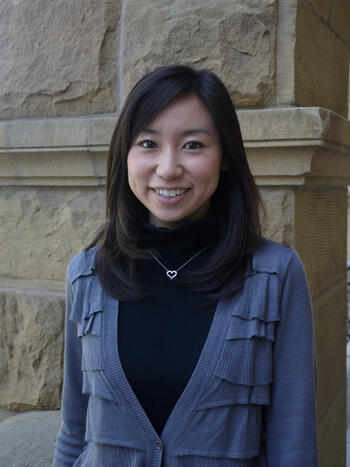
Kasumi Yamashita is an Instructor for the Stanford Program on International and Cross-Cultural Education (SPICE), currently teaching an online course for high school students in Oita Prefecture, Japan, called Stanford e-Oita. Kasumi’s academic interests are in cultural anthropology, international education, and language technologies, and her research focuses on the Japanese diaspora in the United States and Latin America. While conducting fieldwork for her PhD in Anthropology at Harvard University, she spent a year at the University of São Paulo, as a Fulbright Scholar. She explored narrations of memory and migration, and community involvement in the emergence of Japanese diaspora museums throughout Brazil, including the Museu Histórico da Imigração Japonesa no Brasil (Historical Museum of Japanese Immigration to Brazil). Kasumi researched Nikkei Latin American communities in Japan while at Hitotsubashi University on a Japanese government scholarship. She earned an AM in Regional Studies–East Asia from Harvard University. 

Kasumi received a BS in Studio Art from New York University. She was a University Scholar and spent her junior year in Spain at the Instituto Internacional in Madrid. After graduating from NYU, she taught English as an Assistant Language Teacher (ALT) and later worked as a Coordinator for International Relations (CIR) on the Japan Exchange and Teaching (JET) Program. As a CIR at Yukuhashi City Hall, Fukuoka Prefecture, she founded a Japan–U.S. student and teacher exchange program between middle schools in Yukuhashi City and the Grace Church School in New York. More than 500 students and teachers from the United States and Japan have participated in the program since she launched it in 1994. That year, she published a book of essays chronicling her experiences as a Japanese American woman in a small Japanese town, Kasumi no Yukuhashi Nikki (Kaichosha Press).

In New York, she served as a member of the local staff of the Permanent Mission of Japan to the United Nations under the leadership of Ambassador Hisashi Owada. She also served on the Executive Committee of the Convención Panamericana Nikkei (COPANI XI) in New York and has been involved in past conferences across the Americas, most recently COPANI XX in San Francisco (CA) in 2019.

Kasumi also teaches and develops web-based curricula for the Translation and Interpretation Program at Bellevue College (WA). Kasumi frequently interprets for Japanese delegations in various fields (including education, technology, international relations, film, art, and museums) and serves on the Board of the Japanese Cultural and Community Center of Washington (JCCCW).


Instructor, Stanford e-Oita
Instructor, Stanford e-Fukuoka
Subscribe to Education