Economic Affairs
-

The demographics of Japan’s aging society has galvanized a wide range of corporate efforts, supported both directly and indirectly by the government, to aggressively develop artificial intelligence-driven technologies and IT systems to perform work for which labor shortages are accelerating. We are beginning to see concrete corporate offerings to address shortages of specific types of skilled and unskilled labor, as well as numerous efforts underway to develop systems to cope with sparsely populated, elderly geographic regions and the logistics surrounding eldercare more generally.

In this talk, based on a forthcoming book chapter, Kushida examines specific corporate cases and government strategies suggesting how Japan’s population aging and shrinking has led to three primary interrelated drivers of significance to shaping technological trajectories: 1) Demographics as market opportunity of an entirely unprecedented scale to serve the needs of a rapidly aging society; 2) demographic change creating an acute labor shortage; and 3) favorable political and regulatory dynamics for pursuing the development and diffusion of new technological trajectories to solve social and economic challenges caused by demographic change. A critical implication is that if technologies developed or deployed within Japan to solve domestic demographic problems are applicable elsewhere, then Japan’s demographic challenge can be an opportunity to cultivate competitive products and services in global markets.

SPEAKER

Image
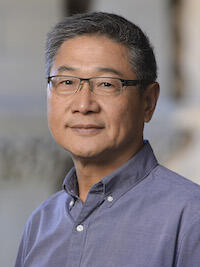
kushida profile 9 2015 cropped 2

Kenji E. Kushida is a Japan Program Research Scholar at the Walter H. Shorenstein Asia-Pacific Research Center and an affiliated researcher at the Berkeley Roundtable on the International Economy. Kushida’s research interests are in the fields of comparative politics, political economy, and information technology. He has four streams of academic research and publication: political economy issues surrounding information technology such as Cloud Computing; institutional and governance structures of Japan’s Fukushima nuclear disaster; political strategies of foreign multinational corporations in Japan; and Japan’s political economic transformation since the 1990s. Kushida has written two general audience books in Japanese, entitled Biculturalism and the Japanese: Beyond English Linguistic Capabilities (Chuko Shinsho, 2006) and International Schools, an Introduction (Fusosha, 2008). Kushida holds a PhD in political science from the University of California, Berkeley. He received his MA in East Asian studies and BAs in economics and East Asian studies, all from Stanford University.

PARKING

Please note there is significant construction taking place on campus, which is greatly affecting parking availability and traffic patterns at the university. Please plan accordingly. Nearest parking garage is Structure 7, below the Graduate School of Business Knight School of Management.

0
Former Research Scholar, Japan Program
kenji_kushida_2.jpg MA, PhD
Kenji E. Kushida was a research scholar with the Japan Program at the Walter H. Shorenstein Asia-Pacific Research Center from 2014 through January 2022. Prior to that at APARC, he was a Takahashi Research Associate in Japanese Studies (2011-14) and a Shorenstein Postdoctoral Fellow (2010-11).
 
Kushida’s research and projects are focused on the following streams: 1) how politics and regulations shape the development and diffusion of Information Technology such as AI; 2) institutional underpinnings of the Silicon Valley ecosystem, 2) Japan's transforming political economy, 3) Japan's startup ecosystem, 4) the role of foreign multinational firms in Japan, 4) Japan's Fukushima nuclear disaster. He spearheaded the Silicon Valley - New Japan project that brought together large Japanese firms and the Silicon Valley ecosystem.

He has published several books and numerous articles in each of these streams, including “The Politics of Commoditization in Global ICT Industries,” “Japan’s Startup Ecosystem,” "How Politics and Market Dynamics Trapped Innovations in Japan’s Domestic 'Galapagos' Telecommunications Sector," “Cloud Computing: From Scarcity to Abundance,” and others. His latest business book in Japanese is “The Algorithmic Revolution’s Disruption: a Silicon Valley Vantage on IoT, Fintech, Cloud, and AI” (Asahi Shimbun Shuppan 2016).

Kushida has appeared in media including The New York Times, Washington Post, Nihon Keizai Shimbun, Nikkei Business, Diamond Harvard Business Review, NHK, PBS NewsHour, and NPR. He is also a trustee of the Japan ICU Foundation, alumni of the Trilateral Commission David Rockefeller Fellows, and a member of the Mansfield Foundation Network for the Future. Kushida has written two general audience books in Japanese, entitled Biculturalism and the Japanese: Beyond English Linguistic Capabilities (Chuko Shinsho, 2006) and International Schools, an Introduction (Fusosha, 2008).

Kushida holds a PhD in political science from the University of California, Berkeley. He received his MA in East Asian Studies and BAs in economics and East Asian Studies with Honors, all from Stanford University.
Research Scholar, Shorenstein APARC Japan Program
Seminars
Shorenstein APARC Stanford University Encina Hall E301 Stanford, CA 94305-6055
0
2019-2020 Shorenstein Postdoctoral Fellow in Contemporary Asia
hannah_kim.jpg Ph.D.

Hannah June Kim joined the Walter H. Shorenstein Asia-Pacific Research Center (Shorenstein APARC) as Shorenstein Postdoctoral Fellow in Contemporary Asia for the 2019-20 academic year.  She researches public opinion, political behavior, theories of modernization, economic development, and democratic citizenship, focusing on East Asia.

Dr. Kim completed her doctorate in the Department of Political Science at the University of California, Irvine, in 2019.  Her dissertation examined how and why people view democracy in systematically different ways in six countries: China, Japan, Korea, Singapore, Taiwan, and Vietnam. Developing unique categories of democratic citizenship that measure the cognitive, affective, and behavioral patterns of individuals, she found that state-led economic development limited the growth of cultural democratization among middle class groups in all three dimensions. The results implied that the classic causality between modernization and democratization may not be universally applicable to different cultural contexts.

At Shorenstein APARC, Hannah worked on developing her dissertation into a book manuscript and making progress on her next project exploring democratization and gender empowerment in East Asia. Hannah received an MA in International Studies from Korea University and a BA from UCLA. Her work has been published, or is forthcoming, in The Journal of Politics, PS: Political Science & Politics, and the Japanese Journal of Political Science.

0
Global Affiliate Visiting Scholar, 2019-20
D&C Think Tank, China
chao_sun.jpeg MA

Chao Sun is a global affiliate visiting scholar at the Walter H. Shorenstein Asia-Pacific Research Center (Shorenstein APARC) for 2019-20.  Sun is a research fellow of International Monetary Institute, Renmin University (IMI); a member of dissertation defense committee of Finance Master Program, Hanqing Advanced Institute of Economics and Finance, Renmin University; the secretary general and research fellow of the Center for Global Studies, Tsinghua University; and a member of the Shanghai Economist Association (SEA).  Sun also works for D&C Think, a Beijing-based think tank aiming to provide policy advice and suggestions for the civil society.  Previously, he worked as co-head of the Fixed Income Department, Changjiang Securities; fund manager and assistant general manager of the Fixed Income Department, BOCOM Schroder Fund Management Co., Ltd; and portfolio manager of the Asset Management Department, China Securities Co., Ltd.  Sun won the "Taurus Award", remarked as China's best mutual fund manager in 2015 (fixed income area); and was the author of the "Best Research Paper of the Year" of Bond Magazine in both 2015 and 2018.  Sun received his M.A. degree from Columbia University and his B.A. degree from Renmin University of China. 

0
Global Affiliate Visiting Scholar, 2019-20
FountainVest Partners
terry_hu.jpeg

Yongmin (Terry) Hu is a global affiliate visiting scholar at the Walter H. Shorenstein Asia-Pacific Research Center (Shorenstein APARC) for 2019-20.  Hu is a co-founder and co-president of FountainVest Partners, a China focused private equity fund with asset under management of approximately US$5 billion.  Prior to co-founding FountainVest in 2007, he was a Managing Director at Temasek Holdings as well as a member of Temasek's global investment committee and head of its real estate investment.  Previously, Hu was a investment banker with Credit Suisse and Bear Stearns in Hong Kong and Shanghai for over 10 years.  Hu graduated from Fudan University in Shanghai with a Bachelor of Art Degree in English Language and Literature.

Paragraphs

Chapter 4 of this book "Services with Everything: The ICT-Enabled Digital Transformation of Services" was written by John Zysman, Stuart Feldman, Kenji E. Kushida, Jonathan Murray, and Niels Christian Nielsen. The book is edited by Dan Breznitz and John Zysman.


All Publications button
1
Publication Type
Books
Publication Date
Authors
Paragraphs

Kenji Kushida's new book chapter, "Blockchain, a Silicon Valley Vantage on its Potential and Challenges" was published in new book, "The Future of Blockchain: How it will impact finance, industry, and society edited by Yuri Okina, Noriyuki Yanagawa, and Naoyuki Iwashita.

The book is an investigation of the potential and challenges of adopting a disruptive technology such as blockchain. Experts on blockchain applications explain the concept of blockchain, how it is being utilized in a variety of areas, and its wide-range impact on economy, industry, business and society, based on cases in Japan and overseas.


All Publications button
1
Publication Type
Books
Publication Date
Authors
Kenji E. Kushida
-

This workshop is part of the Economic History Workshop series in the Department of Economics and is co-sponsored by The Europe Center.

351 Landau Economics Building
579 Serra Mall
Stanford, CA 94305-6072

Fabio Braggion Tilburg University
Seminars
Shorenstein APARCStanford UniversityEncina Hall E301Stanford, CA 94305-6055
0
haifeng_li.jpg Ph.D.

Dr. Haifeng Li Boyd joined the Walter H. Shorenstein Asia-Pacific Research Center (Shorenstein APARC) as visiting scholar from spring 2019 through spring 2020.  She is a Professor of International Economics at Yamaguchi University, where she teaches courses on East Asian and Chinese Economics and conducts research on consumption society and consumer behavior of China. Dr. Li has published extensively in areas of consumer behavior and economics, including books such as The Mass Consumer Society in China, Market Economics and the Consumer Behavior. She served as the President of Asian Consumer and Family Economics Association (ACFEA), among others, and has presented her research to diverse audiences in the U. S., Japan, China, Malaysia, South Korea, and England. 

Haifeng Li received her B.S. from the University of International Business and Economics in China, and M.S. and Ph.D. in Economics from Hokkaido University in Japan.   She was previously a visiting scholar at Stanford University from 2009-2011.

Visiting Scholar at APARC
Subscribe to Economic Affairs