Economic Affairs
-

Download Transcript

Image
Angrynomics book cover
Economics increasingly fails to explain why the pressures of life appear to be intensifying at the same time as income per capita is rising, or why we work more hours for less money in real terms. And why we see the rise of nationalism everywhere when globalization, on average, has made us all richer. The disconnect between our experience of the world and the economic model used to explain it has given rise to "angrynomics": an economy of heightened uncertainty and anger, where faith in the workings of markets and politics has been undermined and rapid and seemingly ever-accelerating economic change has become something to be feared. Eric Lonergan and Mark Blyth have written a book for anyone anxious, worried - or angry - about the mismatch between how they experience the world with the increasing day to day pressures they face and the model used by economic elites and politicians to explain and justify it. In a powerful and passionately argued analysis, they bring their critical insight and expertise to bear on the nature of angrynomics and offer a set of radical and innovative policies that cut across tired party political lines - and that if implemented might just help the world to be a less angry place.

Mark Blyth


Mark Blyth is the William R. Rhodes ’57 Professor of International Economics at the Watson Institute for International and Public Affairs at Brown University. Blyth graduated Strathclyde University in 1990 and then finished his PhD. in political science at Columbia University in 1999. He then joined the Johns Hopkins University before moving to Brown University in 2009.

Blyth’s research spans several areas. The first focuses on the power of economic ideas as seen in his recent award winning book, Austerity: The History of a Dangerous Idea (New York: Oxford University Press 2015), which has been translated into 16 languages. He has written extensively on the political economy of Europe, as seen in his recent book, The Future of the Euro (New York: Oxford University Press 2015). His most recent book is Angrynomics (Columbia University Press 2020 - with Eric Lonergan), which deals with the economics underlying the current populist moment. He is currently working on a new joint project on the New Politics of Growth and Stagnation.

Blyth is a regular contributor to the journal of the Council for Foreign Relations, Foreign Affairs and he contributes to several Podcasts, including the Financial Times Alphaville podcast.


Co-sponsored by the Global Populisms Project.

Online via Zoom: Register

Mark Blyth Brown University
-
This is a virtual event. Please click here to register and generate a link to the talk. 
The link will be unique to you; please save it and do not share with others
.
 
 APARC South Asia research Initiative presents: Fall 2020 Colloquium Series on
India-China Strategic Competition
 

Washington DC time:  7:00pm-8:30pm, 9-Nov. 2020
Sydney, Australia time: 11:00am-12:30pm, 10-Nov. 2020 

Expectations of India’s rise have been dented in 2020. Amid lackluster economic performance and creeping socio-political illiberalism, India also suffered a major strategic setback. Chinese forces that crossed the Line of Actual Control in Ladakh remain encamped at several tactically-valuable points, and although talks continue, India has few visible options to force a return to the status quo ante. India now sees China is more clearly adversarial terms – but does it have what it takes to compete effectively? This conversation will conclude the APARC South Asia’s fall 2020 colloquium series on the India-China strategic competition with a wider and deeper look at India’s political and military power. We will discuss India’s ability to deter and balance China, its strategies to build national power and align with new partners, and the prospects for the competition in 2021 and beyond.
 

Ashley Tellis29kb Ashley Tellis29Kb
Ashley J. Tellis holds the Tata Chair for Strategic Affairs and is a senior fellow at the Carnegie Endowment for International Peace. Previously he was commissioned into the Foreign Service and served as senior adviser to the ambassador at the U.S. Embassy in New Delhi. While serving as the senior adviser to the Undersecretary of State for Political Affairs, he was intimately involved in negotiating the civil nuclear agreement with India. He also served on the National Security Council staff as special assistant to President George W. Bush and senior director for strategic planning and Southwest Asia. Prior to his government service, Tellis was senior policy analyst at the RAND Corporation and professor of policy analysis at the RAND Graduate School. He is a counselor at the National Bureau of Asian Research and serves as an adviser to the Chief of Naval Operations. He is the author of India’s Emerging Nuclear Posture (2001), co-author of Interpreting China’s Grand Strategy: Past, Present, and Future (2000), and co-editor of the sixteen latest annual volumes of Strategic Asia. He earned his PhD in political science from the University of Chicago.


Image
Arzan Tarapore
Arzan Tarapore is the South Asia research scholar at the Shorenstein Asia-Pacific Research Center at Stanford University, where he leads the newly-restarted South Asia research initiative. He is also a senior nonresident fellow at the National Bureau of Asian Research. His research focuses on Indian military strategy and contemporary Indo-Pacific security issues. He previously held research positions at the RAND Corporation, the Observer Research Foundation, and the East-West Center in Washington. Prior to his scholarly career, he served as an analyst in the Australian Defence Department, which included operational deployments as well as a diplomatic posting to Washington, DC. Tarapore holds a PhD in war studies from King’s College London.


via ZOOM Webinar
Register:  https://bit.ly/2IPGZjS

Ashley J. Tellis <br><i>Tata Chair for Strategic Affairs and Senior Fellow, Carnegie Endowment for International Peace</i><br><br>
Arzan Tarapore <br><i>South Asia Research Scholar, Shorenstein Asia-Pacific Research Center, Stanford University</i><br><br>
Seminars
-

This event is held virtually via Zoom. Please register for the webinar via the below link.

Registration Link: https://bit.ly/2SS6DpY


This event is co-sponsored by the Shorenstein APARC Japan Program and China Program.

Japan's economic challenge to the United States in the 1980s aroused more concern in the United States than people now realize. Japan took some very effective steps to stop it. China's challenge plays out across the economic, military, technological, and global influence spheres. China has not yet taken steps to stop it and the tensions are increasingly serious and show no signs of diminishing. Japan has also found better ways to reduce tensions with China than has the United States. While the circumstances are different between the 1980s and today, Japan’s dealings with the United States in the 1980s might offer some lessons for China today. Dr. Ezra Vogel, Professor Emeritus at Harvard University, will discuss these topics and more during this webinar. The event will conclude with an audience Q&A moderated by Japan Program Director Kiyoteru Tsutsui and China Program Director Jean Oi.

SPEAKER

Image
Portrait of Dr. Ezra Vogel, Professor Emeritus at Harvard University

Professor Ezra F. Vogel is Professor Emeritus at Harvard University. Vogel received his PhD at Harvard in 1958 in Sociology in the Department of Social Relations and was a professor at Harvard from 1967-2000. In 1973, he succeeded John Fairbank to become the second Director of Harvard's East Asian Research Center. At Harvard, he served as director of the US-Japan Program, director of the Fairbank Center, and as the founding director of the Asia Center. From fall 1993 to fall 1995, Vogel was the National Intelligence Officer for East Asia at the National Intelligence Council in Washington. His book Japan As Number One (1979), in Japanese translation, became a best seller in Japan, and his book Deng Xiaoping and the Transformation of China (2011), in Chinese translation, became a best seller in China. He lectures frequently in Asia, in both Chinese and Japanese. He has received numerous honors, including eleven honorary degrees.

Via Zoom Webinar.

Registration Link: https://bit.ly/2SS6DpY

Ezra Vogel, Professor Emeritus <br>Harvard University</br>
Seminars

In recent years, we have witnessed a worldwide trend of "democratic depression" in both young and established democracies, where the backsliding from democracy is facilitated by various forces such as populism, nationalism, partisan polarization, and post-truth. Korea is no exception. While the signs of democratic decline are subtle and disguised under the rule of law, they are producing piecemeal erosions of liberal democracy and pluralism in many corners of the Korean society. As a timely warning against the gradual decline of democratic norms and values, this 3-part conference seeks to examine the forces that endanger the Korean democracy and aims to offer some concrete policy prescriptions to remedy the existing and growing signs of democratic decline.

Topics Discussed:

Day 1: November 12, 2020 (4PM-7PM)

  • Political culture and polarization: Pitfall of political over-participation or “street-democracy"
  • Underdevelopment of party politics: Factionalism, weak institutionalization, and poor appreciation
  • Erosion in balance of power: Courts losing legitimacy and respect with politicization
  • Uses and misuses of nationalism in politics

Day 2: November 13, 2020 (4PM-6PM)

  • Two divergences in South Korea’s Economy: Regional and generational disparities
  • Challenges of post-truth: Politicization and polarization of the press, social media, disinformation
  • Education and its impact on civic value and generational gap

Day 3: November 19, 2020 (4PM-6:15PM)

  • Politicization of civil society: Losing function as watchdog of power, former democratic activists becoming new authoritarian leaders
  • How the rise of populist regime affects foreign policy
  • Korean democracy in comparative perspectives

The conference papers will be published as an edited volume.

Via Zoom

Conferences
-

This is a virtual event. Please click here to register and generate a link to the talk. 
The link will be unique to you; please save it and do not share with others.

Most people attribute the Belt and Road Initiative (BRI) to Beijing’s imperialist ambitions. In her talk, Professor Min Ye will go beyond top-level rhetoric, however, and investigate BRI’s origins, its implementation, and its on-the-ground effects inside China. She will unpack different local governments' approaches to the BRI by discussing how subnational entities have leveraged Beijing’s grand strategy and how the implementation of projects and programs related to the BRI facilitate local economic agendas. China’s local developmentalism, which has undergirded not only the BRI but also other national-level strategies (like the Western Development Program and China Goes Global policy), has propelled the Chinese economy from a middle power in 1998 to a superpower in 2018. The talk will conclude with a discussion of COVID-19’s impact on China’s BRI as well as preliminary findings from Professor Ye’s current research into other state-mobilized development initiatives in China.
 

Image
Portrait of Professor Min Ye
Min Ye is an Associate Professor at the Pardee School of Global Studies, Boston University. Her research lies in the nexus between domestic and global politics and economics and security, focusing on China, India, and regional relations. Her publications include The Belt, Road, and Beyond: State-Mobilized Globalization in China 1998 -- 2018 (Cambridge University Press, 2020), Diasporas and Foreign Direct Investment in China and India (Cambridge University Press, 2014), and The Making of Northeast Asia (with Kent Calder, Stanford University Press, 2010). She has received a Smith Richardson Foundation grant (2016-2018), the East Asia Peace, Prosperity, and Governance Fellowship (2013), Princeton-Harvard China and the World Program post-doctoral fellowship (2009-2010), and Millennium Education Scholarship in Japan (2006). In 2014-2016, Min Ye was an NCUSCR Public Intellectual Program fellow. Ye is currently the 2020 Rosenberg Scholar of East Asian Studies at Suffolk University.

Via Zoom Webinar. Register at: https://bit.ly/3kJlhM9

Min Ye Associate Professor, Pardee School of Global Studies, Boston University
Seminars
-

This event will take place on Zoom. Registration is required: http://bit.ly/Invisible_China

Image
Book cover for "Invisible China: How the Urban-Rural Divide Threatens China's Rise" and a quote from Scott Rozelle, "The entire population of 800 million people has become almost fully invisible over the past decades..."

As the glittering skyline in Shanghai seemingly attests, China has quickly transformed itself from a place of stark poverty into a modern, urban, technologically savvy economic powerhouse. But as FSI Senior Fellow Scott Rozelle and Natalie Hell show in their new book Invisible China, the truth is much more complicated and might be a serious cause for concern.

Drawing on extensive surveys on the ground in China, Rozelle and Hell reveal that while China may be the second-largest economy in the world, its labor force has one of the lowest levels of education of any comparable country. The low levels of basic education of such a large share of workers may leave many unable to find work in the formal workplace as China’s economy changes and manufacturing jobs move elsewhere.

In this book talk event, Rozelle, who is also the director of FSI’s Rural Education Action Program, will be joined by Hongbin Li, a senior fellow at the Stanford Institute for Economic Policy Research and director of the China Program at the Stanford King Center on Global Development, who will moderate a discussion about the major themes of the book. A question and answer session with the audience will follow the discussion.


Image
scott rozelle new headshot

Scott Rozelle holds the Helen Farnsworth Endowed Professorship at Stanford University and is Senior Fellow in the Food Security and Environment Program and the Shorenstein Asia-Pacific Research Center, Freeman Spogli Institute (FSI) for International Studies. For the past 30 years, he has worked on the economics of poverty reduction. Currently, his work on poverty has its full focus on human capital, including issues of rural health, nutrition and education. For the past 20 year, Rozelle has been the chair of the International Advisory Board of the Center for Chinese Agricultural Policy, Chinese Academy of Sciences (CAS). In recent years Rozelle spends most of his time co-directing the Rural Education Action Project (REAP). In recognition of this work, Dr. Rozelle has received numerous honors and awards. Among them, he became a Yangtse Scholar (Changjiang Xuezhe) in Renmin University of China in 2008. In 2008 he also was awarded the Friendship Award by Premiere Wen Jiabao, the highest honor that can be bestowed on a foreigner. 

Image
hongbin li headshot


Hongbin Li is the James Liang Director of the China Program at the Stanford King Center on Global Development, and a Senior Fellow of Stanford Institute for Economic Policy Research (SIEPR). Hongbin’s research has been focused on the transition and development of the Chinese economy, and the evidence-based research results have been both widely covered by media outlets and well read by policy makers around the world. He is currently the co-editor of the Journal of Comparative Economics.


Seminars
News Type
News
Date
Paragraphs

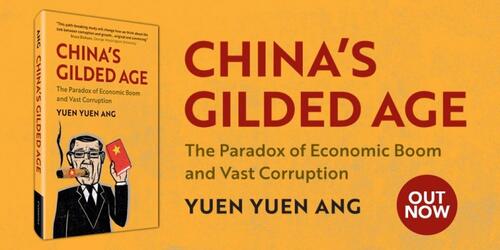
Yuen Yuen Ang, a former postdoctoral student of China Program Director Jean Oi, has been awarded the Theda Skocpol Prize by the American Political Science Association in recognition of her “impactful empirical, theoretical and/or methodological contributions to the study of comparative politics.” The prize recognizes emerging academics up to ten years post-PhD for scholarly excellence in political science. Ang is a Stanford Ph.D. alumna and current associate professor of political science at the University of Michigan.

Her research examines how governments and governing organizations react to radical uncertainty and novel problems. She posits that such disruptions are an endemic condition of the twenty-first century, and that examining the political economies of adapting, or failing to adapt, to rapidly changing realities is a key to understanding current geopolitics.

At the center of Ang’s work is the study of China’s rise as a global superpower, which she characterizes as one of the greatest disruptions of the contemporary world. In her highly acclaimed and award-winning book, How China Escaped the Poverty Trap (2016), Ang challenges the conventional linear models of the political economy of development by applying the principles of complexity and system thinking to offer a new explanation of how China transformed itself from an impoverished planned economy into the world’s second-largest GDP.

Ang’s current work into debunking the myths surrounding the U.S.-China tech race, the misunderstanding of nuances of the Belt and Road Initiative, and the debates swirling around China’s handling of the COVID-19 pandemic continues to build on her record of excellent and innovative scholarship.

A big congratulations to Yuen Yuen for her latest recognition and ongoing contributions to the field of contemporary Asis studies!

Read More

(Left) Congratulations Adam Yao Liu, Winner of the 2020 BRICS Economic Research Award; (Right) Portrait of Dr. Adam Liu
News

Stanford Ph.D. Alumnus Wins BRICS Economic Research Award

Dr. Adam Yao Liu, a former doctoral student of APARC China Program Director Jean Oi, has been awarded the 2020 BRICS Economic Research Award for his research on how banking systems in China are developing.
Stanford Ph.D. Alumnus Wins BRICS Economic Research Award
Shiran Shen (left) and Lizhi Liu (right)
News

Former Doctoral Students Win Prestigious Dissertation Awards

Interdisciplinary environmental scholar Shiran Victoria Shen is the recipient of the Harold D. Lasswell Award and political economist Lizhi Liu is the recipient of the Ronald H. Coase Award in recognition of their outstanding doctoral dissertations.
Former Doctoral Students Win Prestigious Dissertation Awards
Hero Image
(Left) Yuen Yuen Ang; (Right) Congratulations Yuen Yuen Ang, Winner of the Theda Skocpol Prize from the American Political Science Association
All News button
1
Subtitle

Former China Program postdoc and Stanford Ph.D alumna Yuen Yuen Ang has received the Theda Skocpol Prize for Emerging Scholars from the American Political Science Association for her scholarship on China’s transformation into a global superpower.

-

Please register at www.eai-aparc-seminar.or.kr on the day of the event.

A panel of experts in international relations and commerce will discuss challenges facing South Korea and the country's strategy in light of the current tensions between the U.S. and China. This event is co-sponsored by East Asia Institute in Korea.

Panelists:

David Kang, Maria Crutcher Professor in International Relations; Professor of Business, and East Asia Languages and Cultures; Director of Korean Studies Institute, USC

Seungjoo Lee, Professor of Political Science and International Relations, Chung-Ang University, Korea

Charles Freeman, Senior Vice President for Asia, U.S. Chamber of Commerce

Taeho Bark, President, Lee&Ko Global Commerce Institute; former Minister of Trade, Korea

Discussants:

Yong Suk Lee, Deputy Director of the Korea Program, Shorestein APARC; SK Center Fellow, FSI,  Stanford University

Seong-Ho Sheen, Professor of International Security, Graduate School of International Studies, Seoul National University, Korea

Moderators:

Gi-Wook Shin, Director of APARC; Senior Fellow, FSI; William J. Perry Professor of Contemporary Korea; Professor of Sociology, Stanford University

Yul Sohn, President, East Asia Institute; Professor, Graduate School of International Studies, Yonsei University, Korea

Watch the recorded event at https://youtu.be/Hoz0cXtQfR4.

Live stream: Register at www.eai-aparc-seminar.or.kr on the day of the event.

Panel Discussions
News Type
News
Date
Paragraphs
Hero Image
Arvind Krishnamurthy
All News button
1
Subtitle

PhD students awarded Arvind Krishnamurthy, the John S. Osterweis Professor of Finance, the PhD Faculty Distinguished Service Award during a virtual ceremony.

Subscribe to Economic Affairs