Forty-eight national security and foreign policy leaders urged U.S. government and businesses to take action to fight climate change in a statement released by the Partnership for a Secure America. Thomas Fingar, a distinguished fellow in the Freeman Spogli Institute for International Studies, is a signatory. The statement can be accessed by clicking here.
Hero Image
A sergeant operates a sling on a UH-60 Blackhawk above a swollen Missouri River near North Sioux City, South Dakota. Flight crews are helping deliver sand bags to areas affected by flooding. | Flickr/U.S. Department of Defense
FSE director Roz Naylor will give the opening plenary lecture at the 2nd International Conference on Global Food Security on October 12, 2015 at Cornell University. Naylor is William Wrigley Professor in Earth System Science, and senior fellow at the Stanford Woods Institute for the Environment and the Freeman Spogli Institute for International Studies at Stanford.
In addition to Naylor's lecture on "Food security in a commodity-driven world," several FSE researchers will give talks and poster sessions during the five-day conference, including professors Marshall Burke and Eric Lambin, visiting scholar Jennifer Burney, postdoctoral scholar Meha Jain, and doctoral candidate Elsa Ordway.
Abstract: How rainfall arrives, in terms of its frequency, intensity and the timing and duration of rainy season, may have a large influence on rainfed agriculture. However, a thorough assessment of these effects is largely missing. This study combines a new synthetic rainfall model and two independently-validated crop models (APSIM and SARRA-H) to assess sorghum yield response to possible shifts in seasonal rainfall characteristics in West Africa. We find that shifts in total rainfall amount primarily drive the rainfall-related crop yield change, with less relevance to intra-seasonal rainfall features. However, dry regions (total annual rainfall below 500 mm/year) have a high sensitivity to rainfall frequency and intensity, and more intense rainfall events have greater benefits for crop yield than more frequent rainfall. Delayed monsoon onset may negatively impact yields. Our study implies that future changes in seasonal rainfall characteristics should be considered in designing specific crop adaptations in West Africa.
It is the end of summer and time for another Iowa report. My wife and I own a medium-sized farm in East Central Iowa that produces corn and soybeans, and beef from a cow/calf herd. My day job is as Professor of International Agricultural Policy at Stanford University, typically working on hunger problems in Asia. The summer keeps me in direct contact with rural life in the Midwest.
My previous Iowa postings have been dominated by weather—severe drought in 2012, massive flooding in 2013, and tornados in 2014. In a different way, weather features again this year. We had 10 inches of rain and a hailstorm during the first 10 days following my June return from California. But after that episode, the weather has been nearly perfect for our locale. Things could still go wrong—a typical farmer comment—but at the moment, we are looking at near-record yields on our farm. My guess is 210 bushels per acre for corn, and 65 bushels per acre for soybeans, both about 10% higher than for recent years.
Crops throughout the region look generally good, and the following couplet is a standard feature of local conversations:
“Don’t the crops look great?” “Yeah, but they aren’t worth nothing.”
A sharp run-up in corn prices the last two weeks of June—from $3.50 to $4.40 per bushel—left farmers hopeful with what would turn out to be faulty expectations. As many waited for further price increases before selling, the good weather and the economic slow down in China caused corn prices to tumble. By Sept 1, prices were back at $3.50. These low prices left many farmers with dashed expectations, substantial amounts of 2014 corn in farm storage, and the prospects of a large upcoming October harvest. Nor will crop insurance help very much. The combination of yields and prices this year will leave most farmers just outside the range that would qualify them for 75%-revenue-protection payments.
Few outside the farming community realize that marketing decisions are often more important than production in defining a successful farm year. Few also appreciate the differential impact on Iowa’s general prosperity from the $7 corn that prevailed in 2012-13, versus the current $3.50.
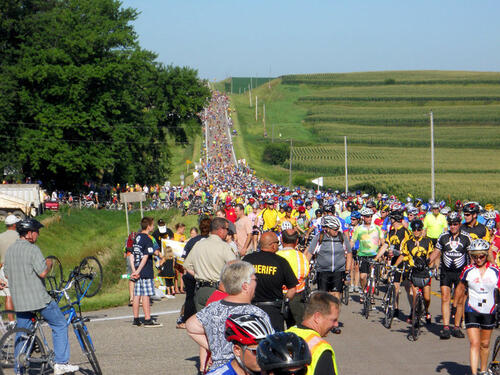
Gloom is not the only thing that has been rolling across the landscape. Two parades really had to be seen to be appreciated. Each year since 1973, the state has hosted a bike ride across Iowa called Ragbrai. It is a weeklong activity that starts at the Missouri River to the west, and ends 500 miles to the east at the Mississippi River. It has grown into a massive affair that attracts some 15,000 riders.
Image
Photo Credit: C. Benz
This year’s ride was special, at least for us. This mass of rolling humanity came within two miles of our farm, and it included a sizeable number of Stanford faculty and students (including my boss, pictured below) who, among others, made mini-detours to visit us. What were most interesting to my wife and me were the impressions expressed both by the bikers and the local hosts.
The riders marveled at the rolling topography of Iowa; the vast expanses of corn and soybeans; the welcoming hospitality of Iowans; the infinite ways pork could be served on a stick; and the best sweet corn in the world! The locals were bemused that so many sane people of all shapes and sizes would voluntarily ride 500 miles in the heat and rain; amazed by the short-term chaos that 15,000 cyclists could cause in small rural communities that were attempting to move machinery and feed cattle; and pleased by the magnitude of the expenditures. The latter was deftly described by a neighbor as “our own economic stimulus package,” and more pointedly summarized by a local headline, “Circus, Economic Windfall, or Occupying Army?”
Image
Photo Credit: R. Naylor
Politicians formed the second parade (charade?) that has been rolling across the state. Iowa—with the dubious honor of having the first primary/caucus—is a genuinely purple state. It voted for President Barack Obama in 2012 and for Senator Joni Ernst in 2014. Iowans pride themselves on being able to pick winners and on being stubbornly independent. The prevailing general mood at the moment, however, is some combination of confusion and disgust. Donald Trump draws the most comments. And while he leads the polls, I have yet to hear anyone (literally) this summer say that he or she favored him. Time will tell what Iowans really believe.
Nowhere was the comedy and chaos more vivid than at the recently completed Iowa State Fair. Some 15 presidential candidates showed up. Most of them spoke at the fair’s “Soapbox Corner” before conspicuously casting their kernel-of-corn vote at the straw (corn?) ballot table. They also had the obligatory pictures taken with the life-sized cow sculpted in butter, the fair’s largest bull (there must be some symbolism here), and the fair’s heaviest pig. The latter was a 500-pound specimen named Mac. (I was disappointed that an earlier winner, my namesake “Wally”, was not in the competition.) And to no one’s surprise, all candidates thought that corn-based ethanol was a really good idea. Most of them even expressed favor with the fair’s latest cuisine contribution—the Bomb—brisket, wrapped in bacon, served on a stick!
Image
Photo Credit: R. Naylor
Readers of previous reports will be pleased to know that the 1868 Waubeek general store and restaurant still serves as the morning gathering place. It has changed hands, but continues its long tradition of watery coffee and stale pastry. (By request, I have included pictures; I am California hatless, plus a shot of the outside.) Besides prices, bikers, and politicians, three new topics of conversation have cropped up: water, cover crops, and weeds. All three are environmental issues that are distinctly operational. They also remind me of just how much information is exchanged around tables such as this one, though on any given morning that conclusion is not always obvious!
Image
Photo Credit: R. Naylor
By far the most controversial topic of the summer has been water. (And to be clear, the issue is about water quality and the nutrients carried in the water, not about water supplies or allocations.) Many farmers realize that nutrient runoff from livestock operations and from fertilizer applied to fields is a very serious problem; most of them are also loathsome about EPA efforts to redefine and regulate what constitutes water flows in the U. S.
During the last week in August, the EPA announced new clean-water rules that would give the agency new jurisdiction over bodies of water (and land), including many in agriculture, which were previously unregulated. But it remains to be seen which bodies of waters would be covered, and which specific agricultural situations that would be exempted from the rules. Six states have sued the EPA, and the question of when or if the rules will be implemented is now caught up in the courts. The Farm Bureau has declared an all-out offensive against the rules, and farm publications have added further fuel to the fire. To complicate matters even more, the Des Moines Water Works has brought suit against three counties upstream of its water plant that would require farmers to change practices and/or make investments to reduce nutrient flows (particularly nitrates) into the Raccoon River.
Most scientists and many farmers believe that nutrient runoff constitutes the largest remaining environmental problem facing agriculture. Thus the fight, in many ways, is less about the problem, and more about philosophy. Most farmers prefer voluntary solutions arranged with the state or the USDA. They typically dislike mandatory rules of any sort, and they are particularly concerned that regulations might be of the one-size-fits-all character. The discourse is inflamed by uncertainty: the EPA has yet to write all of the regulations, and farmers simply do not know what to expect. In the absence of information, they fear the worst. Everyone I talked with had a relevant question. Will we need to get a permit to spread manure? How will drainage tiles that empty into or near creeks be handled? Will we need to file a nitrogen plan for every farm that specifies amounts and timing of fertilizer applications? On our farm, for example, we have a flowing creek that traverses a large permanent pasture. The creek provides water for the cowherd, which has direct access to it. What, if anything, will need to be changed in that arrangement? All of us wonder about the flexibility in timing and scope that will be accorded farmers who may be faced with large corrective investments. Many also fear that the regulators will know little about agricultural practices. In short, what waters are to be regulated, for what purposes, and with what instruments are issues still to be resolved? At the moment, there is considerable heat, but very little light about the answers.
Virtually all Iowa farmers have transitioned to minimum tillage systems; plowing has become a field operation of the past. This change in tillage also creates new cropping opportunities.
Image
Photo Credit: USDA
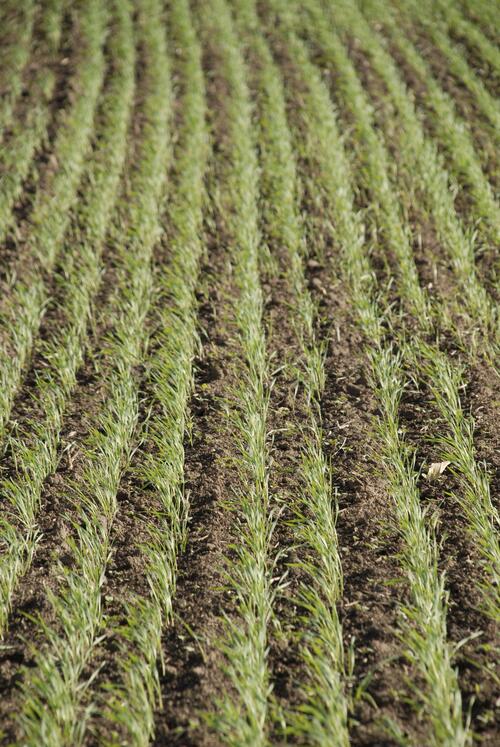
Five years ago, there was virtually no talk about or use of “cover crops.” These crops are sown in residues immediately after corn or soybean harvest. Certain of them survive the winter, but others do not. Radishes (shades of the English agricultural revolution, circa 1700!) produce long roots that punch holes in clay layers of the soil, thereby assisting drainage. They can also be grazed. Small grains are also being seeded, which add to add organic matter and can sometimes be chopped as forage for dairy or beef operations.
Image
Photo Credit: Mühlhausen/landpixel
Cover crops are clearly still a work in progress, but they provide an interesting example of active on-farm experimentation. Best solutions seem to vary from farm to farm—from no cover, to radishes, to triticale—and seem importantly dependent on particular crop-livestock combinations. Discussions about the use of triticale—a cross between rye and either bread wheat or durum—were of particular interest to me. I worked with Norman Borlaug at the International Wheat and Maize Improvement Center in Mexico during the 1980s to develop modern varieties of this crop, but it has been slow to find appropriate niches in cropping systems around the world. In the 1980s, I never even contemplated that Iowa might be such a place.
Several forces drive the new concern about weeds. Falling crop prices have squeezed profit margins severely, causing farmers to look seriously at each cost component. For the first time, I have heard farmers question new seed varieties (virtually all GMOs), both because of their cost and their effectiveness. They increasingly wonder if the $200 seed-cost-per-acre for corn is justified. The current year, with its excellent growing season, meant there was less need for certain stacked traits such as drought resistance. Moreover, the year was equally good for weeds, whose resistance to major herbicides like Roundup seemed to be spreading.
Water hemp, in particular, gave soybean farmers grief, and is causing them to rethink seed-weed strategies. They worry about the consequences from applying new combination-herbicides (some still under various reviews) that attack both grasses and broad-leafed weeds. They are particularly concerned that spraying some of the new products will also destroy the grasses in waterways left specifically to prevent water erosion.
My conjecture is that most farmers will still use the specialized seeds next year. I predict, however, that they will also be searching more carefully for lower-cost ways—both via seeds and herbicides—to manage weeds. The growing weed resistance problem has begun to scare them—a recent Greenwire Poll indicates that 90% are worried—and has belatedly driven home the difficulties that arise from overuse of only one or two herbicides.
Image
No Iowa report is complete without some cattle commentary.
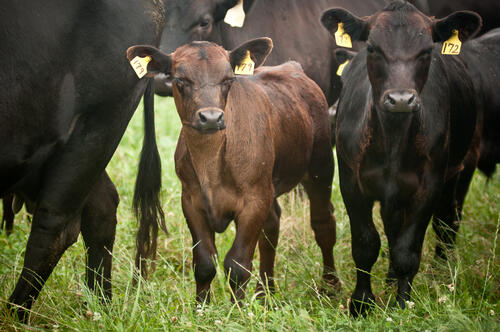
My father was a cattle feeder, and some of those “cattle genes” carried forward a generation. I grew up knowing a lot about purebreds, about corn and soybean-meal feed rations, and about 2-pound-per-day rates of gain that produced 1100-pound animals for sale. Fast forward to 2015. When I look around, virtually all cattle have been crossbred for size and vigor (though in the market they may still be advertised as Angus!). Soybean meal has dropped completely out of the rations being fed in our county, having been replaced by the high-protein distillers grain, the by-product of making corn sweeteners and ethanol. Rates of gain are now 3.25 pounds per day, and finished animals are sold at 1500 pounds. What has not changed, however, is the riskiness of the enterprise. Even with cheap corn, buying 700 pound feeders for $2.25 per pound, and selling 1500 pound steers at $1.45 per pound has not been a great way to get rich in 2015!
My final impression of the summer is a memorable one: rolling down the Mississippi River on a paddle boat, celebrating my wife’s and my birthdays with good friends, viewing a glorious sunset, and eating world-class prime rib. Now that’s the way to get ready for a new year of Stanford classes.
Professor Frank Wolak was recently interviewed by Julian Spector of CityLab regarding the use of nuclear energy in a zero-carbon grid. According to Professor Wolak, "It makes very little economic sense to phase [nuclear energy] out, particularly given how successful the U.S. nuclear industry has been over the past 30 years". Professor Wolak also points out that American nuclear generators are safer than ever while still boasting an impressive capacity factor.
Short durations of very high spring soil moisture can influence crop yields in many ways, including delaying planting and damaging young crops. The central United States has seen a significant upward trend in the frequency and intensity of extreme precipitation in the 20th century, potentially leading to more frequent occurrences of saturated or nearly saturated fields during the planting season, yet the impacts of these changes on crop yields are not known. Here we investigate the yield response to excess spring moisture for both maize and soybean in the U.S. states of Illinois, Iowa, and Indiana, and the impacts of historical trends for 1950–2011. We find that simple measures of extreme spring soil moisture, derived from finescale daily moisture data from the Variable Infiltration Capacity (VIC) hydrologic model, lead to significant improvements in statistical models of yields for both crops. Individual counties experience up to 10 % loss in years with extremely wet springs. However, losses due to historical trends in excess spring moisture measures have generally been small, with 1–3 % yield loss over the 62 year study period.
Governments must do more to diversify the types of crops grown throughout the world. If they don’t, climate change may jeopardize the global food supply, a leading agriculture researcher told a Stanford audience.
Cary Fowler, a senior advisor and former executive director of the Global Crop Diversity Trust, was a driving force behind the creation of the Svalbard Global Seed Vault in Norway. Commonly known as the “doomsday vault,” the repository of ancient and modern seeds from around the world ensures that future generations will have access to a wide enough range of crop traits to adapt global agriculture to a changing climate.
Dr. Cary Fowler in Svalbard, Norway, the home of the Svalbard Global Seed Vault.
During a May 6 talk sponsored by FSE as part of the center’s Food and Nutrition Policy Symposium, Fowler warned that increasingly high temperatures and water shortages interfere with the natural growing cycles of many crops and can even reduce the nutritional quality of some plants. Higher temperatures also give way to new pests, diseases, and soil microorganisms that threaten yields.
“The biggest impacts from climate change will be in sub-Saharan Africa,” Fowler said, a region where many people already suffer serious poverty and hunger, and where crop yields lag behind the rest of the world. Fowler said that as climate pressure on agriculture intensifies, the world can expect to see an uptick in civil conflict, restrictive trade policies, and suffering among the world’s poorest people.
“Crops are going to be facing new combinations of conditions for which there is no historical experience,” said Fowler. “They will require new combinations of traits” that can only be developed by preserving genetic diversity and proactively breeding new varieties.
“There are 1.3 billion people living on subsistence farms today,” said Dr. Cary Fowler to a Stanford audience on May 6. “How will they adapt to climate change without access to diversity?”
Fowler called for the U.S. and foreign governments to embrace their “inherited evolutionary responsibility” for preserving the huge diversity of crops grown by farmers throughout human history.
The United States is the ideal candidate to lead the world in using crop genetic diversity to adapt agriculture to climate challenges, he said. “The U.S. is well-positioned to research diversity, model future climate and assemble seed packages,” enlisting farmers in the U.S. and abroad in “another mass adaptation experiment” like the one American agriculture undertook in the 18th and 19th centuries.
“I know that sounds like a wild and crazy idea,” Fowler said. “But I haven’t heard any alternatives to it. If we’re assuming we’re going to have development without diversity, that would really be a historically unprecedented experiment.”
“If agriculture doesn’t adapt,” he added, “neither will we.”
A diverse history
In the late 1700s the United States food system lacked diversity and infrastructure. “Very few of the crops we grow now in the U.S. are native,” said Fowler. Early on, “it wasn’t always evident what crops from abroad would grow well in the U.S.”
The government soon set out to expand and diversify American agriculture. U.S. Navy ships collected seeds on overseas voyages, and U.S. diplomats brought back new crops from postings abroad. Government-sponsored expeditions sought out foreign plants with specific disease-resistant traits. The U.S. signed two dozen seed-exchange agreements with other countries, and lowered taxes on imported seeds to boost global crop exchange.
Image
“The United States amassed a much more diverse array of seeds and crops as a result,” said Fowler. One program introduced 600 new apple varieties, 700 new types of pears, and 353 new varieties of mangoes to American farmers.
But the United States did not simply collect new crops. It also invested in research to develop new varieties, including through plant breeding.
Genetic erosion
Research into plant breeding quickly yielded many of the modern varieties of crops we grow today in the United States.
“With plant breeding came the rise of modern varieties that had useful traits like disease resistance,” said Fowler. A small handful of new varieties quickly gained popularity with American farmers, who now had a choice about whether or not to save seeds and grow many varieties of a crop at once. Most farmers chose not to, instead relying on the same few mainstream varieties their neighbors were growing.
This shift has led to what Fowler described as the “genetic erosion” of agriculture, a trend that can only be reversed by reviving the tradition of seed saving and plant breeding on a global scale.
Seed banks
“I have probably been to more seed banks than any other person,” said Fowler. Seeds from most crops can survive hundreds or even thousands of years in storage, but most storage facilities lack the physical security to provide lasting safe haven. Many seed banks are poorly built, too warm or humid for long-term storage, and vulnerable to natural disasters. Other facilities suffer damaged during civil wars and uprisings.
Even if banks are physically secure, said Fowler, most simply do not operate on a large enough scale to protect global crop diversity. “Most crops in the world have between one and 10 total seed samples in storage, and most have no plant breeders working on them at all,” said Fowler.
The doomsday vault
In 2005 Fowler was chosen to lead an international coalition to build the Svalbard Global Seed Vault. The Norwegian government owns the facility, and it is also managed by the Global Crop Diversity Trust and the Nordic Genetic Resource Center.
The vault is built into the side of a mountain in the far north of Norway, said Fowler, because the ideal temperature for storing seeds is minus 18 degrees Celsius.
Inside the frozen walls of the vault are shelves full of boxes holding duplicate seeds from smaller seed banks around the world. Foreign governments that contribute samples pay nothing for storage, and the seed packages are never opened by vault staff, said Fowler.
“The vault now houses seeds from over 864,000 varieties of plants,” said Fowler, adding that not a single sample has ever been lost.
Seed storage boxes at the Svalbard Global Seed Vault.
The facility’s nickname, “the doomsday vault,” comes not only from its rugged physical location but from its capacity to withstand disasters – something its planners took great care to design. “We calculated how high the water would go if all ice in the world melted and we had the world’s largest ever tsunami,” said Fowler. “The vault is five stories above that.”
“Not a solution”
Fowler emphasized that no doomsday vault, no matter how secure its walls or how ample its seed collection, can solve the problem of crop genetic erosion. Building a vault “doesn’t mean that we as a society are getting serious about adapting agriculture to climate change,” Fowler said. Plant breeding and crop research programs focused on developing new climate-resilient varieties are just as crucial as saving seeds.
Although a few major staple crops like rice, wheat and corn are continually bred and improved in research labs around the world, most crops are largely ignored by researchers. For example, there are only six breeders of yams worldwide.
“Why conserve it if you’re not going to use it?” Fowler asked. “We are acting like crops are going to adapt by themselves, and we are assuming all but a handful of crops are unimportant.”
Quoting Charles Darwin, Fowler added that “it is not the strongest of the species that survives, nor the most intelligent, but the one most responsive to change.”
Full video and audio recordings of Dr. Fowler's May 6 lecture, and his interview with FSE director Roz Naylor, are available here.
Lobell's research focuses on identifying opportunities to raise crop yields in major agricultural regions, with a particular emphasis on adaptation to climate change. His current projects span Africa, South Asia, Mexico, and the United States, and involve a range of tools including remote sensing, GIS, and crop and climate models.
"David Lobell's research on climate change and food security is truly global in scope, but his work also crosses academic borders," said FSI director Mike McFaul. "David's appointment as William Wrigley Senior Fellow recognizes his ability to connect the most pressing challenges in international development with critical questions of environmental sustainability, in a way that generates real solutions on both fronts."
The William Wrigley Senior Fellowship is supported by Mrs. Julie Ann Wrigley, AB '71 (Anthropology) and Ms. Alison Wrigley Rusack, AB '80 (Communication).
"The Wrigley fellowship recognizes the important contributions of our faculty to ensuring a sustainable world and is one family’s remarkable legacy to reshape the future of the environment on which we all depend," said Perry L. McCarty Director Barton "Buzz" Thompson, who co-leads the Stanford Woods Institute with Perry L. McCarty Director Jeffrey Koseff. "Both David and the first holder of the fellowship, Roz Naylor, are leaders in the effort to provide food security to the planet's growing population, perhaps the most critical challenge the world faces."
"David's work already transcends disciplines and departments through his work with the Center on Food Security and the Environment, a synergistic partnership between Woods and the Freeman Spogli Institute," Koseff added. "The Wrigley fellowship provides important support for this type of collaborative, cross-cutting research at Stanford."
Lobell was a Senior Research Scholar at the Center on Food Security and the Environment from 2008-2009 and a Lawrence Post-doctoral Fellow at Lawrence Livermore National Laboratory from 2005-2007. He received a PhD in Geological and Environmental Sciences from Stanford University in 2005, and a Sc.B. in Applied Mathematics, Magna Cum Laude from Brown University in 2000.










 Dr. Cary Fowler in Svalbard, Norway, the home of the Svalbard Global Seed Vault.
 Seed storage boxes at the Svalbard Global Seed Vault.

