With the continued successful operation of its greenhouse gas emissions market, California can become a global leader in the design and implementation of regional carbon polices. Moreover, if more regions use the California market as their starting point, then linking these programs together will be more straightforward and the ultimate goal of an effective global climate policy the more likely end result.
In this report we identify the key drivers of observed market outcomes in the Colombian electricity supply industry during the fourth quarter of 2015 and first quarter of 2016, the time period covered by the most recent El Niño Event. We analyze how effective the market rules and market structure of Colombian electricity supply industry are in managing El Niño Events. The performance of the Reliability Payment Mechanism (RPM) is a major focus of this report because of its designation as the primary mechanism for ensuring an adequate supply of energy at a reasonable price during El Niño Events. We find that the RPM creates a number of perverse economic incentives for supplier behavior, particularly if suppliers have a significant ability to exercise unilateral market power, that works against the RPM mechanism ensuring an adequate supply of electricity at a reasonable price during El Niño Events. We identify several features of the RPM that make it extremely challenging even for a modified version of this mechanism to achieve its goal. We propose an alternative mechanism for ensuring an adequate supply of energy at a reasonable price during El Niño Events that should be straightforward to implement under the current market design in Colombia.
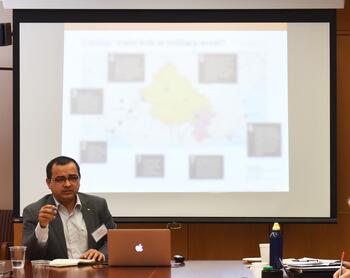
The Stanford Center at Peking University (SCPKU), the Center on Democracy, Development and the Rule of Law (CDDRL), and the APARC China Program jointly hosted a workshop on China’s Belt and Road Initiative (BRI) in early March. The workshop, held on March 2 and 3, welcomed researchers from around the world with expertise in the Initiative. Unfortunately, because of the rapidly developing health emergency related to the coronavirus, participants from not only China, but also Japan, were prevented from attending. As described by Professor Jean Oi, founding director of SCPKU and the China Program, and Professor Francis Fukuyama, director of CDDRL and the Ford Dorsey Master's in International Policy, who co-chaired the workshop, the meeting aimed to provide a global perspective on the BRI, consolidate knowledge on this opaque topic, and determine the best method and resources for future research.
The workshop began with presentations from several of the invited guests. Dr. Atif Ansar from the University of Oxford’s Saïd Business School kicked off the first day by describing not only the tremendous opportunity that the BRI presents to developing economies, but also the serious pitfalls that often accompany colossal infrastructure projects. Pointing out the poor returns on investment of mega infrastructure projects, Ansar examined the frequest cost and schedule overruns, random disasters, and environmental degradation that outweigh the minimal benefits that they generally yield. China’s own track record from domestic infrastructure projects does little to mitigate fear of these risks, Ansar claimed. In response, he urged professional management of BRI investments, institutional reforms, and intensified deployment of technology in BRI projects. Dr. Ansar was followed by Dr. Xue Gong of the S. Rajaratnam School of International Studies, Nanyang Technological University, Singapore. Dr. Gong’s analysis centered on the extent to which China’s geopolitical motivations influenced its outward foreign direct investments (OFDI). Although her research was still in the early stages, her empirical analysis of China’s OFDI inflows into fifty BRI recipient countries from 2007-2018 nevertheless revealed that geopolitical factors often outweigh economic factors when it comes to China’s OFDI destinations.
Image
Participants then heard presentations from Amit Bhandari of Gateway House: Indian Council on Global Relations and Professor Cheng-Chwee Kuik of the National University of Malaysia. Mr. Bhandari’s talk focused on Chinese investments in India’s six neighboring countries, which tend to center more on energy rather than connectivity projects. He first found that the investments are generally not economical for the host countries because they come with high costs and high interest rates. Secondly, he argued that these projects often lacked a clear economic rationale, appearing instead to embed a geopolitical logic not always friendly to India. Professor Kuik, by contrast, provided a counterexample in his analysis of BRI projects in Southeast Asia. He described how, in Southeast Asia, host countries’ reception of the BRI has varied substantially; and how various stakeholders, including states, sub-states and other entities, have used their leverage to shape outcomes more or less favorable to themselves. Kuik’s analysis injected complexity into the often black-and-white characterizations of the BRI. He highlighted the multidimensional dynamics that play out among local and state-level players in pursuit of their goals, and in the process of BRI implementation.
Professor Curtis J. Milhaupt and Scholar-in-Residence Jeffrey Ball, both at Stanford Law School, followed with individual presentations on the role of State-Owned Enterprises (SOEs) in the BRI and the emissions impact of the BRI on climate change, respectively. Professor Milhaupt characterized Chinese SOEs as both geopolitical and commercial actors, simultaneously charged with implementing Party policies and attaining corporate profits. Chinese SOEs are major undertakers of significant overseas BRI projects, acting not only as builders but also as investors, partners, and operators. This situation, Milhaupt asserted, carries significant risks for SOEs because these megaprojects often provide dismal returns, have high default rates, and can trigger political backlash in their localities. Milhaupt highlighted the importance of gathering firm-level data on businesses actually engaged in BRI projects to better infer geostrategic, financial, or other motivations. Jeffrey Ball turned the discussion to carbon emissions from BRI projects and presented preliminary findings from his four-country case studies. He concluded that, on aggregate, the emissions impact of the BRI is still “more brown than green.” Twenty-eight percent of global carbon emissions may be accounted for by BRI projects, Ball asserted, underscoring the importance of the BRI to the future of global climate change.
The day concluded with presentations by Michael Bennon, Managing Director at the Stanford Global Projects Center, and Professor David M. Lampton, Oksenberg-Rohlen Fellow at the Freeman Spogli Institute for International Studies. Bennon first presented findings from two empirical case studies of BRI projects and then went on to describe how the BRI is now practically the “only game in town” for infrastructure funding for developing countries. Lengthy environmental review processes at Western multilateral banks have turned the World Bank, for example, from a lending bank into a “knowledge bank,” he argued. He also highlighted that, in general, economic returns on BRI projects for China are very poor, even though recipient countries may accrue macroeconomic benefits from these projects. Finally, Professor Lampton turned the discussion back to Southeast Asia, where China is currently undertaking massive cross-border high-speed rail projects through eight ASEAN countries. He described how each host country had varying capacity to negotiate against its giant neighbor, and how the sequential implementation of these cross-border rail projects also had varying impacts on the negotiating positions of these host countries. BRI played out differently in each country, in other words, eliciting different reactions, push-backs and negotiated terms.
The second day of the workshop was dedicated to working toward a collaborative approach to future BRI research. The group discussed the key gaps in the existing research, including how to know what China’s true intentions are, how to measure those intentions, who the main players and their interests in both China and the host countries are, and even what the BRI is, exactly. Some cautioned that high-profile projects may not be representative of the whole. Participants brainstormed about existing and future sources of data, and stressed the importance of diversifying studies and seeking empirical evidence.
Stanford’s Center for Ocean Solutions and Center on Food Security and the Environment, together with Springer-Nature, are hosting a workshop focused on building a research agenda that, for the first time, analyzes the role of oceans within the context of global food systems.
Massive changes in the global food sector over the next few decades – driven by climate change and other environmental stresses, growing population and income, advances in technology, and shifts in policies and trade patterns – will have profound implications for the oceans and vice versa. While there is a large community of researchers addressing challenges in food policy and agriculture and a similar community in oceans and fisheries, there is very little interaction between them. This workshop addresses a pressing need to foster more interaction among these communities, to build a research agenda that illuminates the many interconnections among food and the oceans, and to inform action to meet these challenges.
“Stanford is in a perfect position to take the lead in developing this new area of research and outreach, with its strong expertise in terrestrial food systems, global food security, and the oceans,” claims Roz Naylor, Professor of Earth System Science, founding Director of the Center on Food Security and the Environment, and co-organizer of the workshop.
This event brings together diverse leaders across academia, business, policy, and government. Together participants will analyze the role of the oceans within a global food systems context, highlighting issues related to food security, equity, poverty alleviation, marine ecosystems, and environmental change. The aim is to define and develop this emerging field, as researchers and stakeholders explore cutting edge ideas and identify emerging trends and challenges that can inform ongoing policy discussions.
“This is a unique opportunity to build a new and vibrant community, bringing together leading researchers in oceans, fisheries, food, and agriculture from around the world," explained COS co-director Jim Leape. "We're coming together to ask the key questions needed to identify emerging themes and solutions, in lockstep with those who will put these findings into practice," added COS co-director Fiorenza Micheli. "As the world's demand for food continues to grow, we will increasingly need to understand and act on the critical role of the oceans to meet these challenges."
Jim Leape is also the William and Eva Price Fellow at the Stanford Woods Institute for the Environment. Fiorenza Micheli is also the David and Lucile Packard Professor in Marine Sciences at Stanford's Hopkins Marine Station and senior fellow at the Woods Institute. Read more about the Stanford Center for Ocean Solutions.
Dr. Noah Diffenbaugh is the Kara J Foundation Professor and Kimmelman Family Senior Fellow at Stanford University. He studies the climate system, including the processes by which climate change could impact agriculture, water resources, and human health. Dr. Diffenbaugh is currently Editor-in-Chief of the peer-review journal Geophysical Research Letters. He has served as a Lead Author for Working Group II of the Intergovernmental Panel on Climate Change (IPCC), and has provided testimony and scientific expertise to the White House, the Governor of California, and U.S. Congressional offices. Dr. Diffenbaugh is a recipient of the James R. Holton Award from the American Geophysical Union, a CAREER award from the National Science Foundation, and a Terman Fellowship from Stanford University. He has also been recognized as a Kavli Fellow by the U.S. National Academy of Sciences, and as a Google Science Communication Fellow.
Marshall Burke, assitant professor of Earth system science and deptuy director at the Center on Food Security and the Enviroment shares his insights on how climate change is already impacting human behavior and what interventions are cost effective when it comes to combating the global change in climate.
The rising level of carbon dioxide in the atmosphere means that crops are becoming less nutritious, and that change could lead to higher rates of malnutrition that predispose people to various diseases.
That conclusion comes from an analysis published Tuesday in the journal PLOS Medicine, which also examined how the risk could be alleviated. In the end, cutting emissions, and not public health initiatives, may be the best response, according to the paper's authors.
Research has already shown that crops like wheat and rice produce lower levels of essential nutrients when exposed to higher levels of carbon dioxide, thanks to experiments that artificially increased CO2 concentrations in agricultural fields. While plants grew bigger, they also had lower concentrations of minerals like iron and zinc.
International climate change agreements typically specify global warming thresholds as policy targets, but the relative economic benefits of achieving these temperature targets remain poorly understood. Uncertainties include the spatial pattern of temperature change, how global and regional economic output will respond to these changes in temperature, and the willingness of societies to trade present for future consumption. Here we combine historical evidence with national-level climate and socioeconomic projections to quantify the economic damages associated with the United Nations (UN) targets of 1.5 °C and 2 °C global warming, and those associated with current UN national-level mitigation commitments (which together approach 3 °C warming). We find that by the end of this century, there is a more than 75% chance that limiting warming to 1.5 °C would reduce economic damages relative to 2 °C, and a more than 60% chance that the accumulated global benefits will exceed US$20 trillion under a 3% discount rate (2010 US dollars). We also estimate that 71% of countries—representing 90% of the global population—have a more than 75% chance of experiencing reduced economic damages at 1.5 °C, with poorer countries benefiting most. Our results could understate the benefits of limiting warming to 1.5 °C if unprecedented extreme outcomes, such as large-scale sea level rise, occur for warming of 2 °C but not for warming of 1.5 °C. Inclusion of other unquantified sources of uncertainty, such as uncertainty in secular growth rates beyond that contained in existing socioeconomic scenarios, could also result in less precise impact estimates. We find considerably greater reductions in global economic output beyond 2 °C. Relative to a world that did not warm beyond 2000–2010 levels, we project 15%–25% reductions in per capita output by 2100 for the 2.5–3 °C of global warming implied by current national commitments, and reductions of more than 30% for 4 °C warming. Our results therefore suggest that achieving the 1.5 °C target is likely to reduce aggregate damages and lessen global inequality, and that failing to meet the 2 °C target is likely to increase economic damages substantially.
Stanford scientists found that the global economy is likely to benefit from ambitious global warming limits agreed to in the United Nations Paris Agreement.
Failing to meet climate mitigation goals laid out in the U.N. Paris Agreement could cost the global economy tens of trillions of dollars over the next century, according to new Stanford research. The study, published in Nature, is one of the first to quantify the economic benefits of limiting global warming to levels set in the accord.
The agreement commits 195 countries to the goal of holding this century’s average temperature to 2 degrees Celsius above levels in the pre-industrial era. It also includes an aspirational goal of pursuing an even more stringent target of limiting temperature rise to 1.5 degrees. To date, the economic benefits of achieving these temperature targets have not been well understood.
“Over the past century we have already experienced a 1-degree increase in global temperature, so achieving the ambitious targets laid out in the Paris Agreement will not be easy or cheap. We need a clear understanding of how much economic benefit we’re going to get from meeting these different targets,” said Marshall Burke, assistant professor of Earth system science in the School of Earth, Energy & Environmental Sciencesand lead author of the study.
To develop this understanding, a team of Stanford researchers studied how economic performance over the past half-century correlated with changes in temperature around the world. Then, using climate model projections of how temperatures could change in the future, they calculated how overall economic output is likely to change as temperatures warm to different levels.
The researchers found a large majority of countries – containing close to 90 percent of the world’s population – benefit economically from limiting global warming to 1.5 degrees instead of 2 degrees. This includes the United States, China and Japan – the three largest economies in the world. It is also true in some of the world’s poorest regions, where even small reductions in future warming generate a notable increase in per capita gross domestic product.
“The countries likely to benefit the most are already relatively hot today,” said Burke. “The historical record tells us that additional warming will be very harmful to these countries’ economies, and so even small reductions in future warming could have large benefits for most countries.”
The projected costs from higher temperatures come from factors such as increases in spending to deal with extreme events, lower agricultural productivity and worse health, the scientists said.
Previous research has shown that the actual climate commitments each country has made as part of the Paris Agreement add up to close to 3 degrees of global warming, instead of the 1.5–2 degrees warming goals.
Given this discrepancy, the researchers also calculated the economic consequences of countries meeting their individual Paris commitments, but failing to meet the overall global warming goals of 1.5–2 degrees. They found that failing to achieve the 1.5–2 degrees goals is likely to substantially reduce global economic growth.
Percentage gain in GDP per capita in 2100 from achieving 1.5 degrees Celsius global warming instead of 2 degrees.
Percentage gain in GDP per capita in 2100 from achieving 1.5 degrees Celsius global warming instead of 2 degrees. (Image credit: Marshall Burke)
“It is clear from our analysis that achieving the more ambitious Paris goals is highly likely to benefit most countries – and the global economy overall – by avoiding more severe economic damages,” said Noah Diffenbaugh, professor of Earth system science and paper co-author.
The authors note the study may underestimate the total costs of higher levels of global warming. That’s especially true if catastrophic changes such as rapid melting of the ice on Greenland or Antarctica come to pass, or if extreme weather events such as heatwaves and floods intensify well beyond the range seen in historical observations. A recent studyby Diffenbaugh and his colleagues showed that even with reduced levels of global warming, unprecedented extreme events are likely to become more prevalent.
The new research helps shed light on the overall economic value of the Paris Agreement, as well as on the Trump administration’s decision to withdraw the U.S. from the accord because of concerns that it is too costly to the U.S. economy. The researchers calculated that the overall global benefits of keeping future temperature increases to 1.5 degrees are likely in the tens of trillions of dollars, with substantial likely benefits in the U.S. as well. They note that these benefits are more than 30 times greater than the most recent estimates of what it will cost to achieve the more ambitious 1.5 degrees goal.
“For most countries in the world, including the U.S., we find strong evidence that the benefits of achieving the ambitious Paris targets are likely to vastly outweigh the costs,” said Burke.
Burke is also a fellow at the Center on Food Security and the Environment, the Stanford Woods Institute for the Environmentand the Freeman Spogli Institute for International Studies. Diffenbaugh is also the Kara J Foundation Professor, the Kimmelman Family Senior Fellow in the Stanford Woods Institute for the Environment and an affiliate of the Precourt Institute for Energy. Additional co-authors include W. Matt Davis, a former researcher at the Center on Food Security and the Environment. The research was supported by the Erol Foundation.
Media Contacts
Marshall Burke, School of Earth, Energy & Environmental Sciences: mburke@stanford.edu, (650) 721-2203 Noah Diffenbaugh, School of Earth, Energy & Environmental Sciences: diffenbaugh@stanford.edu, (650) 223-9425 Michelle Horton, Center on Food Security and the Environment: mjhorton@stanford.edu, (650) 498-4129
Hero Image
The three largest economies in the world and almost 90 percent of the global population benefit economically from limiting global warming to 1.5 degrees instead of 2 degrees.
This report was produced for the Abe Fellows Global Forum 2017 symposiums on climate change, held in partnership with Stanford University's Walter H. Shorenstein Asia Pacific Research Center (Abe Global | Stanford, October 20, 2017) and the Asia Society Texas Center (Abe Global | Houston, October 18, 2017), respectively.
Energy-intensive production has been both a leading contributor to climate change as well as one of the keys to modern economic growth over the last several centuries. In the post-WWII era, the “economic miracles” of Asian growth—starting with Japan, and followed by South Korea, Taiwan, China, and now increasingly India—have lifted hundreds of millions of people out of poverty. At the same time, these “economic miracles” have created huge pollution problems which have adversely affected the health of millions of people while speeding up the effects of climate change.
Some early developers from this group—including Japan—have made efforts to clean up their air and water, created more energy efficient economies, lowered their carbon footprints and contributed to initiatives to slow global warming. The Fukushima nuclear power plant disaster forced Japan to take even more aggressive action to reduce energy consumption and lessen its impact on the global environment. In contrast, the United States, as a sizeable nation-state both in its geographic area and economy, is one of the world’s largest polluters and recently made recent headlines when it withdrew from the Paris Agreement negotiated at the 2015 United Nations Climate Change Conference (COP21).
Putting into place effective measures to curtail climate change while creating sustainable societies requires international cooperation. The series of extreme weather events in the US in 2017 are only some the most recent disasters to remind us of climate change’s threat to our economy, our society, and our individual daily lives.
All Publications button
1
Publication Date
Journal Publisher
Abe Fellowship Program and Social Science Research Council