Climate
-
A Conversation with Colombian President Gustavo Petro

Environmental and Social Justice:
A Look from Latin America


The Center on Democracy, Development and the Rule of Law is honored to host the President of Colombia, Gustavo Petro Urrego.

The world today is facing unprecedented economic, social, and environmental dynamics. As the global community continues to navigate these changes and challenges, political leaders seek to articulate fresh visions on how countries may steer a clear course. President Petro will provide a perspective from Latin America on the critical issues of environmental and social justice.

Following the president’s remarks, he will join Professor Alberto Díaz-Cayeros, Senior Fellow at FSI and director of the Stanford Center for Latin American Studies, for a discussion on the challenges of climate change, economic growth, and social inclusion that have historically bedeviled development in Latin America.

IMPORTANT: Large bags are not permitted into the building. All bags are subject to be searched. Seating is not guaranteed and is available on a first-come first-served basis. Please plan accordingly.

The event will also be available to livestream below.

This event is co-sponsored by the Center on Democracy, Development and the Rule of Law, the Center for Latin American Studies, Stanford in Government, and the Stanford Society for Latin American Politics.


Image
CDDRL, CLAS, SIG, and SSLAP logos


MEDIA CONTACT:
Nora Sulots, CDDRL Communications Manager

CEMEX Auditorium
Stanford Graduate School of Business
655 Knight Way, Stanford, CA 94305

SOLD OUT. Please tune into the livestream if you do not have a ticket. Only those registered may attend in person.

Panel Discussions
Date Label
Authors
Luis Sanchez
News Type
Blogs
Date
Paragraphs

For over ten years, I have changed broken systems to make them work for the common good. And that's what makes me feel alive. I was born during a civil war and grew up in a country with a damaged economy. Learning about and harnessing policy opened my eyes to new ways to deliver change and fight for what I believe are the most pressing issues in our generation.

In 2017 I began working with Stanford alum Tom Steyer on building an effective climate justice policy plan that was community participatory. In 2018, I traveled through 48 US states and met with hundreds of investors, innovators, civic leaders, and climate activists. What I saw was scary. Rising sea levels depleted drinking water in southern Florida, displacing thousands. Fires scorched the West. Floods across the Midwest drowned crops, making farming harder and food scarcer. Increased maritime access to previously frozen Alaskan waters heightened foreign tensions and undermined our national security. This experience shifted my focus to climate justice. Along with other climate leaders, we built an investment platform that has been providing the expertise and capital necessary to scale vital and urgent climate solutions.

British Ambassador to El Salvador, David Lelliottl, Staff Member, Vice President Félix Ulloa and myself. Flying back to San Salvador after a long day of field work in Santa Ana.
British Ambassador to El Salvador, David Lelliottl, Staff Member, Vice President Félix Ulloa, and Luis Sanchez, flying back to San Salvador after a long day of field work in Santa Ana.

Climate change is more than a national, unilateral issue. It requires a collaborative international approach. In 2018, I started working with El Salvador's Vice President Felix Ulloa on a 35-year plan to tackle forced migration caused by climate change. That same year, along with the Minister of Labor, Rolando Castro, we began a pilot project to train Salvadorans in green and sustainable infrastructure. We drafted a plan to invest billions of dollars in renewable energy and create thousands of high-paying jobs. Even with the pandemic hitting our economy, El Salvador remains committed to our goal. It is set to become the second country in Central America, after Costa Rica, to achieve decarbonization and reach net-zero emissions by 2055. For so many years, El Salvador has been stigmatized in the region for the increasing number of gang-related violence. Still, I'm more than confident that we are set to become regional leaders in renewable energy and the transition to net zero.

Over the summer, I worked in the Executive Office of the President Nayib Bukele and Vice President Felix Ulloa of El Salvador. I advised principals on issues related to Central American integration, political communications, clean tech, and climate change, among others. I worked with the legislative branch to successfully pass a law allowing the introduction of electric vehicles and charging stations free of taxes. This law is one early step in the process of preparing the infrastructure for the next generation of transportation. The passage of this law proved to me that the government is ready and committed to joining the green revolution. My time in El Salvador helped demonstrate the impact that one Stanford graduate student can effect through policy.

This experience was possible with the support of the MIP team, funding through the MIP Summer Internship Stipend program, the Stanford family, and the Executive Office of the President and Vice President of El Salvador. I'm confident that this is just the beginning of a fundamental transformation that is urgent. The task of combatting global warming is monumental and complex. I am committed to climate justice and have joined the fight.

Read More

The 2022 graduating class of the Ford Dorsey Master's in International Policy.
News

A Return to In-person Graduation for the 2022 Master’s in International Policy Class

After two years of online ceremonies due to the pandemic, the Ford Dorsey Master’s in International Policy program celebrated with a fully in-person graduation ceremony for the 2022 graduating class.
A Return to In-person Graduation for the 2022 Master’s in International Policy Class
The Ford Dorsey Master's in International Policy class of 2023
Blogs

Meet the Ford Dorsey Master’s in International Policy Class of 2023

The 2023 class of the Ford Dorsey Master’s in International Policy are finally here on campus and ready to dive into two years of learning, research and policy projects at the Freeman Spogli Institute for International Studies.
Meet the Ford Dorsey Master’s in International Policy Class of 2023
The Ford Dorsey Master's in International Policy Class of 2024 at the Freeman Spogli Institute for International Studies.
Blogs

Meet the Ford Dorsey Master's in International Policy Class of 2024

The 2024 class of the Ford Dorsey Master’s in International Policy has arrived at Stanford eager to learn from our scholars and tackle policy challenges ranging from food security to cryptocurrency privacy.
Meet the Ford Dorsey Master's in International Policy Class of 2024
Hero Image
Luis Sanchez at the Summit for the Future of Central America
Luis Sanchez at the Summit for the Future of Central America (2nd), organized by the Executive Office, Vice President of El Salvador.
All News button
1
Subtitle

Over the summer of 2022, Luis Sanchez worked in the Executive Office of the President Nayib Bukele and Vice President Felix Ulloa of El Salvador.

-

Image
Fu Jun May11 CP Banner


With a population of 1.4 billion people in the midst of industrialization and urbanization, the role of China in tackling climate change will be critical to the success of human species in facing up to the world's greatest existential challenge. Based on the newly published book -- Climate Mitigation and Adaptation in China: Policy, Technology and Market, FU Jun will discuss the parameters, policies and prospects of China's role in meeting the global crisis. In particular, in light of the country's regional heterogeneity and aided by simulation modeling, he will discern the philosophical nuances between particular justice and general justice in Chinese strategic thinking toward equitable, inclusive and sustainable growth, and focus on how different sets of technologies -- low carbon, zero carbon, negative carbon, as well as institutional technology -- will likely configure in an adaptive and dynamic fashion in China's pathways toward carbon peak prior to 2030 and carbon neutrality by 2060, and with implications for green financing and international cooperation.

FU Jun is Professor of Political Economy and Public Policy at Peking University. He has authored, co-authored, and edited five books, including Institutions and Investments (Studies in International Economics, The University of Michigan Press), Pathways to Prosperity: A China Narrative in Metaheuristic Growth Theory (in Chinese, Peking University Press), and Climate Mitigation and Adaptation in China: Policy, Technology, and Market (Springer Nature). Graduated with Ph.D. from Harvard University, he is the first Chinese national to have been elected as Foreign Academician in 2020, together with Anthony Giddens and Jurgen Harbermas, by the Bologna Academy of Sciences in its time-honored history.  Inter alia, he has been an invited reviewer for PNAS, served on the 11-Member Visiting Committee for Area Studies and International Programs across Harvard University, and on the Advisory Board of Economia Politica. Outside academia, he has served as Member of the Listing Committee of Shenzhen Stock Exchange, Executive Board Member of SOS Village (China), Vice Chair with A. Michael Spence as Chair of the World Economic Forum’s Global Agenda Council on New Growth Models, Board Member of Peking University Educational Foundation, and Advisor to the Chairman of the Executive Council of UNESCO.

This event is co-sponsored by Stanford Center at Peking University

Jean C. Oi
Fu Jun
Seminars
Date Label
-

Air pollution is a silent and invisible killer more lethal than violence, diseases, and smoking.  More than 95 percent of the global population lives in areas with unhealthy air by WHO standards.  Moreover, long-term exposure to polluted air can increase the probability of succumbing to COVID-19.  

Scientific solutions to contain air pollution are available, but limited progress has been made in implementing them.  Temporally, there has been an uneven success in reducing pollution even in the same locality over time, as exemplified by the exercise of political power to change the color of the sky leading up to the 2008 Beijing Olympics (aka Olympic Blue).  

In this talk, Professor Shen will discuss her new book, The Political Regulation Wave: A Case of How Local Incentives Systematically Shape Air Quality in China (Cambridge University Press, 2022).  Departing from extant works, which focus on air data manipulation or the effect of campaigns, the book asks, what explains the systematic temporal variation in actual and reported air quality after controlling for top-down implementation campaigns?  Making use of new data, approaches, and techniques from across social and environmental sciences, the book shows that local leaders ordered different levels of regulation over time based on what their political superiors desired, leading to the titular “waves” of regulation and pollution.  However, the effectiveness of their regulatory efforts depends on the level of ambiguity in controlling a particular pollutant.  When ambiguity dilutes regulatory effectiveness, having the right incentives and enhanced monitoring is insufficient for successful policy implementation.

You can read and download her book in pdf format here.

Image
Portrait of Shiran Victoria Shen
Shiran Victoria Shen forged her own path at Stanford University by simultaneously completing a Ph.D. in political science and an MS in civil and environmental engineering in five years after graduating Phi Beta Kappa, Sigma Xi, and with high honors from Swarthmore College. Her research explores the intersections of political science, public policy, environmental sciences, and engineering, with a particular understanding of how local politics influence environmental governance. Her first book, The Political Regulation Wave: A Case of How Local Incentives Systematically Shape Air Quality in China, was published by Cambridge University Press in March 2022.  In dissertation form, it was the recipient of two major association awards, the American Political Science Association’s Harold D. Lasswell Award and the Association for Public Policy Analysis and Management’s Ph.D. Dissertation Award. Earlier versions of its parts received the American Political Science Association’s Paul A. Sabatier Award for the best paper in science, technology & environmental politics and the Southern Political Science Association’s Malcolm Jewell Award for the best overall graduate student paper.

You can learn more about her work at http://svshen.com and follow her on Twitter @SVictoriaShen.

Via Zoom

Shiran Victoria Shen National Fellow, Hoover Institution, Stanford University; Assistant Professor of Environmental Politics, University of Virginia
Seminars
Authors
Melissa Morgan
News Type
News
Date
Paragraphs

2021 was not the year many people hoped for. In addition to the ongoing COVID-10 pandemic and emerging coronavirus variants, last year ushered in a laundry list of unprecedented weather events.

Canada and the Pacific Northwest of the United States were scorched by a record-breaking heat wave. An extended fire season in the American West sent blankets of smoke pollution rolling across the rest of the continent. In India, China and Germany, unseasonal rain storms brought on devastating floods. According to the National Centers for Environmental Information (NOAA), July 2021 was the hottest July on Earth since global record-keeping began in 1880.

Data clearly shows that these kinds of extreme weather patterns are driven by climate change. But is that fact driving policymakers to make meaningful inroads to address the climate crisis? Marshall Burke, the deputy director of the Center on Food Security and the Environment, joins Michael McFaul on World Class podcast to review the latest data on what’s happening with the climate in the field and in the halls of Congress.

Listen here and browse highlights of their conversation below.

Click the link for a transcript of “Taking the Temperature on Climate Change."

Climate Policy in the United States


Changes in climate are going to affect most, if not all, of us in the U.S. And public opinion has certainly changed on this in the last 10 years. Many more Americans are on board that the climate is changing and that we should do something about it. There's much more support for climate legislation across the board from Democrats and increasingly from Republicans.

Anyone who works on climate was really excited to see the platform Biden ran on, because it was really the first mainstream presidential campaign where climate had played a fundamental role. There's been a lot of discussion aboutthe importance of climate, the damages from climate that are already happening, and what we need to do is take aggressive action in the future to deal with the problem.

But there are specific industries who are going to be harmed by this legislation, and they are quite organized in fighting this legislation, and in funding politicians who fight it, and in funding organizations, either transparently or not, that are fighting climate legislation.

We are closer than we’ve ever been to really meaningful legislation on climate change. The optimistic view is that we’re on the right trajectory and that we’re going to get some part of this done eventually. But we’re not there yet.
 

Progress is being made. Emissions are falling. But it’s also important for us to realize what we don’t know.
Marshall Burke
Deputy Director of the Center on Food Security and the Environment


COP26: Climate Change on the Global Stage


A “COP” is a “Conference of the Parties,” which is an annual meeting of the signatories of the 1992 United Nations Framework Convention on Climate Change. The main focus of Glasgow was to get countries to be very transparent about how they are going to achieve the ambitions for combating climate change that they articulated at the last major COP summit in Paris.

Was it a success? A lot of countries did come to the table in Glasgow and made commitments in ways that they hadn't done before. There were also new, important agreements on certain greenhouse gasses that we've learned recently are pretty damaging, like methane.

Where we failed to make progress was on something that's called “loss and damage.” Many developing countries argue that they are suffering the damages from climate change even though it is a problem that they have not caused, and they are seeking compensation from developed countries who have been the drivers of climate change. That issue was on the table in Glasgow, but it got put off until next year in Egypt.

The Forecast for the Future


Progress is being made. Emissions are falling in the U.S. They're falling in California. They're falling in the EU. They're pretty flat around the world. And these are not just the per capita emissions, but overall emissions are now going down in many parts of the world, which is a huge success.

Where has that progress come from? In part from government policies that have been successful in mitigation. But the driving factor has really been longer decadal investments by both the public sector and the private sector in technologies that allow us to produce energy in a clean way. It’s a combination of long-term public support through taxes and subsidies for the development of these technologies alongside private sector deployment of these technologies at huge scale.
 

We are closer than we’ve ever been to really meaningful legislation on climate change. But we’re not there yet.
Marshall Burke
Deputy Director of the Center on Food Security and the Environment


It’s important for people to know about these successes. But it’s also important for us to realize what we don’t know. Emissions in different parts of the world are falling, and that’s fantastic. But it’s also true that people are already getting sick, being harmed, and dying because of the changes we’re already experiencing.  We’re poorly adapted to the climate we live in now, much less the climate of a two-degree warmer or three-degree warmer future, and the science on that needs to be much more widely understood.

I think a huge role for us as academics is not only to do the research to understand those questions, but to get that information out into the world. The great thing about the Freeman Spolgi Institute and institutions like FSI is that it's part of our mandate to translate this research out into the broader world. The translation of what we already know is important, as is the imperitive to drill down on and study the things that we don't.

Read More

David Lobell holds up maize in a farm to show outcomes from different growing practices
News

David Lobell honored with 2022 NAS Prize in Food and Agriculture Sciences

Lobell’s groundbreaking work has advanced the world’s understanding of the effects of climate variability and change on global crop productivity.
David Lobell honored with 2022 NAS Prize in Food and Agriculture Sciences
Climate change activists march down a street carrying banners and signs.
Q&As

Together For Our Planet: Americans are More Aligned on Taking Action on Climate Change than Expected

New data from the Center for Deliberative Democracy suggests that when given the opportunity to discuss climate change in a substantive way, the majority of Americans are open to taking proactive measures to address the global climate crisis.
Together For Our Planet: Americans are More Aligned on Taking Action on Climate Change than Expected
Forest fires burn
News

Ban Ki-moon Urges Global Cooperation to Address Twin Crises of Climate Change, COVID-19

“We need an all hands on deck approach underpinned by partnership and cooperation to succeed...we must unite all global citizens and nations...indeed we are truly all in this together.”
Ban Ki-moon Urges Global Cooperation to Address Twin Crises of Climate Change, COVID-19
Hero Image
People gather at the UN Climate Change Conference in Glasgow, 2021.
Data on the severity of the climate crisis is abundant, but effective policy to adapt to and mitigate the changing climate still lags in most countries, says Marshall Burke.
Getty
All News button
1
Subtitle

Climate expert Marshall Burke joins the World Class podcast to talk through what’s going right, what’s going wrong, and what more needs to be done to translate data on the climate crisis into meaningful policy.

-

This event will offer simultaneous translation between Japanese and English. 
当イベントは日本語と英語の同時通訳がついています。

This is a virtual event. Please click here to register and generate a link to the talk. 
The link will be unique to you; please save it and do not share with others.
当イベントはZoomウェビナーで行われます。ウェビナーに参加するためには、こちらのリンクをクリックし、事前登録をして下さい。

March 1, 5-6:30 p.m. California time/ March 2, 10-11:30 a.m. Japan time

This event is part of the 2022 Japan Program Winter webinar series, The Future of Social Tech: U.S.-Japan Partnership in Advancing Technology and Innovation with Social Impact


The challenges of climate change require solutions on multiple fronts, one of which is technological innovation. Attempts for innovation for new energy sources have been ongoing in many parts of the world, and Japan has produced a number of new technologies. This session will focus on two of the most promising innovations coming out of Japan, biofuel and hydrogen energy, and assess their promises and challenges, highlighting technological, regulatory, and business aspects of developing new technologies. Where do these technologies fit in the energy portfolio that would address the issues of climate change and what can Japan and the United States do to collaboratively solve the key problems in advancing these technologies further? Three leading experts in the field will discuss these questions that would shape the future of climate change. 


Panelists

Image
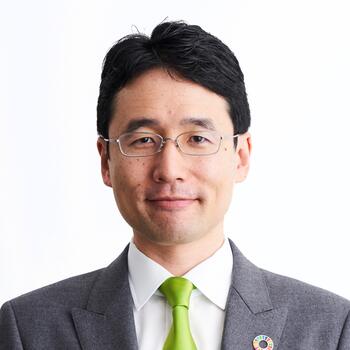
Headshot photo of Mitsuru Izumo
Mitsuru Izumo is a graduate of the University of Tokyo, having specialised in agricultural structural
management. In 2005, he established Euglena Co., Ltd. to harness the properties of microalgae
Euglena. Euglena Co., Ltd. became the world’s first biotechnology company that succeeded in the
outdoor mass cultivation of Euglena. Currently, Euglena Co., Ltd upholds “Sustainability First” as
their philosophy and has developed the manufacture and sale of foods and cosmetics as the
healthcare domain, the biofuel business, the bioinformatics business, and the social business in
Bangladesh by leveraging Euglena and other advanced technologies.


Image
Headshot photo of Eiji Ohira
Eiji Ohira is the Director General of the New Energy and Industrial Technology Development Organization (NEDO)’s Fuel Cell and Hydrogen Technology Office In this capacity, he is responsible for the overall strategy, execution and coordination of NEDO’s research, development and demonstration project on fuel cell and hydrogen.

He has also coordinated fuel cell and hydrogen activities with international stakeholders, through International Energy Agency’s Technology Collaboration Program (IEA TCP: Advanced Fuel Cell & Hydrogen), and International Partnership for Hydrogen and Fuel Cells in the Economy (IPHE). 

He joined the NEDO in 1992, just after graduation from the Tokyo University of Science. He served as a visiting scholar at the Massachusetts Institute of Technology in 1997-1998.


Moderator

Image
Headshot photo of Kate Hardin
Kate Hardin, Deloitte Executive Director for Energy and Industrials Research, has worked in the energy industry for 25 years.  She currently leads Deloitte research on the impact of the energy transition on the energy and industrial manufacturing sectors. Before that, Kate led integrated coverage of transportation decarbonization and the implications for the oil, gas, and power sectors.  Kate has also developed global energy research for institutional investors and has led analysis of Russian and European energy developments.  Kate recently served as an expert in residence at Yale’s Center for Business and Environment, and she is also a member of the Council on Foreign Relations.  


Image
Shorenstein APARC Winter 2022 Speaker Series Icon with text "New Frontiers: Technology, Politics, and Society in the Asia-Pacific"
This event is part of the 2022 Winter webinar series, New Frontiers: Technology, Politics, and Society in the Asia-Pacific, sponsored by the Walter H. Shorenstein Asia-Pacific Research Center.

Via Zoom Webinar
Register:  https://bit.ly/3LuNa94


Mitsuru Izumo <br>Founder and President, Euglena Co Ltd.<br><br>
Eiji Ohira <br>Director General of Fuel Cell and Hydrogen Technology Office, Japan New Energy and Industrial Technology Development Organization (NEDO) <br><br>
Kate Hardin <br>Executive Director, Deloitte Research Center for Energy & Industrials
Panel Discussions
-

America in One Room: Climate and Energy, a Helena project, is the largest controlled experiment with "in-depth deliberation" ever held in the U.S.  It addressed this question: What would the American public really think about our climate and energy challenges if it had the chance to deliberate about them in-depth, with good and balanced information?
 
If the American people—or in this case, a representative sample of them—could consider the pros and cons of our different energy options, which would they support? Which would they cut back on? What possible paths to Net Zero would seem plausible to them? Which proposals would they resist? Can the public arrive at solutions to our climate and energy dilemmas that transcend our great divisions, especially our deep partisan differences? Can they also find common ground across differences in age, race, and region?
 
These and other questions will be discussed on Wednesday, December 1, 2021, 12:30-2:00 pm PST
 

Register Now

Panelists will include:

  • Nicole Ardoin, Director, Emmett Interdisciplinary Program in Environment and Resources (E-IPER), Associate Professor of Education and Senior Fellow at the Woods Institute for the Environment, Stanford University
  • Rep. John Curtis, United States House of Representative, (R-UT)
  • Larry Diamond, Senior Fellow at the Hoover Institution and the Freeman Spogli Institute for International Studies, Stanford University
  • Noah Diffenbaugh, Kara J Foundation Professor and Kimmelman Family Senior Fellow at the Woods Institute for the Environment, Stanford University
  • Chris Field, Perry L. McCarty Director of the Stanford Woods Institute for the Environment and the Melvin and Joan Lane Professor for Interdisciplinary Environmental Studies, Stanford University
  • James Fishkin, the Janet M. Peck Professor of International Communication and Director, Center for Deliberative Democracy, Stanford University
  • Rep. Ro Khanna, United States House of Representatives (D-CA)
  • Alice Siu, Associate Director, Center for Deliberative Democracy, Stanford University
  • Peter Weber, Co-Chair Emeritus, California Forward


This webinar is hosted by:
Stanford Woods Institute for the Environment
Center on Democracy, Development and the Rule of Law
Stanford Center for Deliberative Democracy
Stanford Crowdsourced Democracy Team
California Forward
Other sponsors of America in One Room: Climate and Energy are listed here

Online via Zoom

Panel Discussions
Authors
Soomin Jun
News Type
Blogs
Date
Paragraphs

The Asia-Pacific Economic Cooperation (APEC) is a regional economic forum with 21 member economies, including the US, China, and Russia, headquartered in Singapore. As a summer graduate intern at APEC, I worked closely with APEC’s policy unit that oversees and conducts policy research and analysis for publications and reports, which are used as key discussion agendas in ministerial level discussions and conferences. The Policy Support Unit (PSU)’s core areas of work are 1) trade and investment liberalization and facilitation, 2) structural reform, 3) connectivity including supply chain connectivity and global supply chains, 4) economic and financial analysis, and 5) sustainable economic development. During my summer internship, I was able to gain direct experience with almost all of these core areas through conducting quantitative and qualitative research.
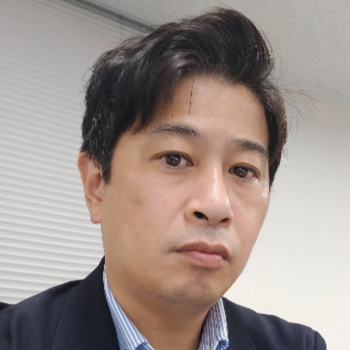
As a graduate intern at APEC, I worked closely with APEC’s policy unit that oversees and conducts policy research for publications and reports used in ministerial meetings.
Image
Figure 1: PSU’s publication on cross-border mobility

The PSU has been working on a publication that analyzed the impacts of travel restrictions during the pandemic. The report provided evidence and policy recommendations for APEC economies to resume cross-border travel in a safe and equitable way. I was tasked to draft two sections of the report, including a literature review of various multilateral organizations’ initiatives on safe re-opening, and an analysis of the disproportionate impacts of travel restrictions on vulnerable population, especially women. Women were not only experiencing economic impacts from border closures, such as loss of jobs and business closures, but women seeking abortion procedures in countries with restrictive regulations faced significant challenges when cross-border travel was limited to “essential workers.” Such challenges were even more pronounced for lower-income women or women with disabilities who may not be able to access services through other means domestically. 

I also worked on drafting APEC’s flagship publication, APEC in Charts 2021, which resides within APEC’s fourth core area of work, economic and financial analysis. APEC in Charts is an annual publication that provides a visual overview of the region’s economic, trade and investment performance. Using data from international organizations like the World Bank, International Monetary Fund, and the United Nations, I calculated aggregate statistics for the APEC region on the following indicators: trend in trade, tariff liberalization indicators such as free trade agreements, trend in FDI inflows and outflows, COVID-19 vaccination status, and various sustainability indicators such as household food waste and greenhouse gas emissions trends.

Since APEC includes Taiwan and Hong Kong, both of which did not have disaggregated data, the most challenging part of this task was to locate and calculate the information using limited data. While data disaggregation was challenging, I was thankful for all those nights that I stayed up in the first quarter to complete data aggregation for economic analysis assignments for the Global Economy course, INTLPOL 302, which built a foundation for key skills required at APEC.

Figure 2: APEC in Charts 2021 publication
APEC in Charts 2021 publication

I also immersed myself in the topic of climate change over the summer. Policy actions on climate change became one of the center of APEC’s agendas to build economic resilience post-COVID. I drafted a section on climate change in APEC’s Regional Trends Analysis (ARTA) report by conducting quantitative and qualitative research on green indicators. Calculating carbon emissions was one challenge, but comparing how much each economy had pledged to reduce emissions and what it would actually take to keep global warming below 2°C was another challenge. 

Climate change was not a topic I was very familiar with from a research standpoint, but I took the opportunity to self-educate through reading various literature, including the most recent publication from the Intergovernmental Panel on Climate Change (IPCC). It was striking that more than 60% of global greenhouse gases were generated by APEC economies. Unless APEC as a region curbs cumulative emissions, the expected repercussions are disastrous. Again, the most vulnerable – including women and girls, migrants, those in poverty, mountain communities and people in urban slums – will experience more severe consequences, and the repercussions are even more pronounced for those in developing nations.

This 11-week internship experience at APEC over the summer was a rewarding one that helped me understand the way multilateral organizations work. I was motivated by working with an organization responsible for shaping economic policies through cooperation to build resilience in the post-COVID world. Plus, I was able to tone up key techniques learned from MIP’s core courses such as STATA and advanced excel skills. Although it was a remote internship, I benefited from learning from my fellow interns and co-researchers on their broad range of expertise and experience. I strongly recommend future MIP students work with APEC over the summer as policy interns!

Soomin Jun, Master's in International Policy ('22)

Soomin Jun

Ford Dorsey Master’s in International Policy Class of ’22
See Full Profile
Hero Image
Soomin Jun, Master's in International Policy ('22)
All News button
1
Subtitle

Working with the Asia-Pacific Economic Cooperation, Soomin Jun (Master’s in International Policy '22) found new connections between her interests in supporting the economic development of marginalized groups with policies like climate change.

Authors
News Type
News
Date
Paragraphs

As a leading climate scientist, Paola Arias doesn’t need to look far to see the world changing. Shifting rain patterns threaten water supplies in her home city of Medellín, Colombia, while rising sea levels endanger the country’s coastline. She isn’t confident that international leaders will slow global warming or that her own government can handle the expected fallout, such as mass migrations and civil unrest over rising inequality. With such an uncertain future, she thought hard several years ago about whether to have children.

Read the rest at Nature

Hero Image
wildfire Eric Thayer/Bloomberg/Getty
All News button
1
Subtitle

A Nature survey reveals that many authors of the latest IPCC climate-science report--including Paul N. Edwards--are anxious about the future and expect to see catastrophic changes in their lifetimes.

Authors
News Type
Q&As
Date
Paragraphs

Unless you’ve been living under a rock, you’re probably familiar with the Sixth Assessment Report released by the International Panel for Climate Change (IPCC) in August 2021. According to the IPCC itself, the report addresses “the most up-to-date physical understanding of the climate system and climate change, bringing together the latest advances in climate science, and combining multiple lines of evidence from paleoclimate, observations, process understanding, and global and regional climate simulations.”

Read the rest at Strelka Magazine

Hero Image
Paul N. Edwards Photo Credit: Rod Searcey
All News button
1
Subtitle

A Lead Author of the IPCC Sixth Assessment Report, Paul N. Edwards, talks about knowledge infrastructures and geoengineering, as well as policy and visual aspects of the landmark report on climate change.

Subscribe to Climate