Globalization
Authors
Matthew Boswell
News Type
News
Date
Paragraphs

Governments, markets, and analysts in the United States and around the world frequently find themselves surprised by China’s capabilities in industries central to economic and national security—from artificial intelligence and robotics to pharmaceuticals, advanced manufacturing, and strategic supply chains. Episodes widely described as “DeepSeek moments” reflect more than isolated breakthroughs; they reveal a systematic failure to understand how China builds technological capacity and scales it with speed. At the Stanford Center on China's Economy and Institutions' third annual China Conference, leading academics and policy experts examined both the phenomenon and the repercussions of those assumptions. A common thread emerged: the world’s prevailing frameworks for assessing China’s innovative capacity often underestimate it, and the consequences of that blind spot are growing.

A Sweeping Tech Ambition with Self-Sufficiency at the Core
Barry Naughton, a leading economist of China at UC San Diego, framed the stakes: China’s innovation apparatus, he argued, is not simply a set of R&D programs—it is part of an “across-the-board commitment” to recreate within China’s borders all of the sophisticated inputs required to run a modern economy. The goal, embedded in successive five-year plans, is what China’s policymakers call a “modernized industrial system”: an economy in which technological spillovers are captured domestically rather than leaking out to foreign suppliers and partners.

This ambition carries enormous costs. Fiscal revenues as a share of GDP have fallen by roughly seven percentage points since 2015, Naughton noted, as resources have been channeled into industrial priorities. Local governments—many of them carrying deep deficits—continue to fund showy high-tech parks and innovation consortia in response to signals from Beijing. The result, as Naughton and others put it, is a system producing “impressive achievements alongside an enormous amount of waste.”

The goal is what China’s policymakers call a “modernized industrial system”: an economy in which technological spillovers are captured domestically rather than leaking out to foreign suppliers and partners.

Semiconductors: The Limits of Containment?
The conference returned repeatedly to America’s use of export controls—and whether they are working. The verdict was nuanced. Philip Wong, the Willard R. and Inez Kerr Bell Professor of Electrical Engineering at Stanford, argued that in the semiconductor space the strategy has plainly backfired. By cutting China’s firms off from American chip-making equipment and advanced logic chips, the controls created a large captive domestic market for China’s equipment suppliers who previously had no customers. “It basically enabled the indigenous supply chains to have a wonderful set of customers within China,” Wong said, “and so they were able to climb up the learning curve really quickly, much more quickly than before.” Other speakers suggested that may be a tolerable cost as long as export controls allow the US to reach certain frontier capabilities first—as has been the case with Anthropic’s Mythos model.

Wong pushed back on both alarmism and dismissiveness about China's broader technological rise. China, he argued, has genuine world-class talent and infrastructure across multiple sectors—a peer competitor, not a pretender. "If you are among the best athletes, sometimes you win, sometimes other people win. That happens all the time." To treat any given Chinese breakthrough as proof of American collapse, or to wave it away as a fluke, both miss the point: China is, in his words, "a bona fide good athlete."

Wong’s recommended alternative to export controls was direct: rather than trying to slow a competitor, the United States should focus on “how do we make ourselves run faster.” That sentiment echoed throughout the day, particularly after he noted that the National Science Board had recently been dismissed and that American R&D funding continues to be primarily focused on defense-oriented research. 

Biotech: From Follower to Leading Force
Physician-scientist Chenjian Li, a research fellow at the Hoover Institution, offered striking data on China’s advancement in biotech. In the active pharmaceutical ingredients that form the basis of medicines taken by hundreds of millions of Americans daily, China has achieved near-total global dominance—some categories are 100% Chinese-sourced. “Medicine, be it advanced experimental drugs, high-end prescriptions or just daily over-the-counter pills, are actually much more impactful than weapons of mass destruction,” Li said, “because they affect 80% of the United States and global population.”

At the cutting edge of drug discovery, the picture is more nuanced but equally notable. Chinese biotech startups are increasingly producing competitive "me-too, me-better" drugs that improve on existing treatments, and pushing into "first-in-class" drugs—the crown jewels of pharmaceutical innovation. Major multinational corporations (MNCs) are paying billions to acquire them. The fact that Pfizer, Merck, and Eli Lilly are spending at this scale, Li argued, says something important: “The MNCs buy those new therapeutic assets because they are solid and unique, and because the MNCs don’t think that they can be as fast and as good in those lines.”

Economist Ruixue Jia of UC San Diego connected this pharmaceutical surge to China’s education system, which has spent decades steering enormous numbers of students toward engineering and STEM fields, including biology and life sciences. The founder of one of last year’s biggest biotech deals—a $5.6 billion transaction—fit a pattern Jia’s research keeps finding: educated in China, PhD in Canada, postdoc in the United States, returned to China in 2008. “It’s not just a success story of Chinese education,” she noted. “It’s also a success story of North American education.”

Fragmentation and the AI Race
A central tension runs through the broader debate: what do the world’s two largest economies actually gain or lose from their escalating technological confrontation?

Tsinghua economist Hong Ma argued that, measured by its own goals, the American trade war has largely failed. US import dependence on Chinese value-added has remained roughly constant despite years of tariffs, as goods simply reroute through third countries. Beyond tariffs, he warned of a longer-term cost: fragmentation into two separate innovation ecosystems, neither large enough to fully benefit from the other. The US would lose access to the Chinese market, Chinese engineering feedback, and the scale that sustains rapid innovation. “On both sides,” he said, “this is not the optimal equilibrium.”

Panelists pointed to China’s open-weight AI models as evidence of a different kind of competition playing out below the frontier. China’s models from Alibaba, Moonshot AI, and others are being used across the globe—often simply because they are cheaper and good enough for most applications. In this way, big US labs may be ahead on raw benchmarks, but that advantage does not automatically translate into leading global adoption.

The lesson is not that China cannot innovate, but that state-directed industrial policy produces highly variable results.

Impressive Achievements, Costly Failures
Another useful synthesis came from Scott Kennedy of the Center for Strategic and International Studies. Kennedy’s “bumpy success” framework holds that China’s innovation trajectory is clearly positive—it now ranks tenth globally on the Innovation Index, ahead of Japan in the Asia-Pacific—but deeply uneven across sectors. He described China as a “slow tech dragon”: vast misallocation of resources produces genuine breakthroughs alongside enormous waste, and that waste is a real drag on the broader economy. Commercial aviation was one such example—despite being a signature priority for China’s leadership and the single largest recipient of state investment, the result is, in Kennedy’s words, “an American plane with Chinese paint.” The lesson is not that China cannot innovate, but that state-directed industrial policy produces highly variable results.

That framework—impressive achievements, structural waste, uneven outcomes—runs as a quiet undercurrent through the broader debate. Structural challenges remain: a domestic market that cannot yet absorb the premium prices of cutting-edge drugs; an education system optimized for solving known problems rather than identifying unknown ones; and an economy in which the benefits of technological investment are not yet reaching ordinary households.

The picture that emerges resists easy predictions, but carries a clear message: the old frameworks—China as technological follower, export controls as sufficient means to maintain America’s remaining technological edge, global supply chains as something susceptible to political redirection—often no longer fit the evidence. The task now is building better ones.


Discover more from the 2026 SCCEI China Conference. 


Read More

Rush Doshi speaks behind a podium at the SCCEI China Conference
News

To Counter China's Scale, the U.S. Must Build Allied Scale, Reasons Rush Doshi

Rush Doshi, keynote speaker at the 2026 SCCEI China Conference, laid out an eight-point blueprint for transforming U.S. alliances into an engine of shared economic and industrial capacity.
To Counter China's Scale, the U.S. Must Build Allied Scale, Reasons Rush Doshi
Sean Stein addresses the audience during a keynote speech.
News

The High Cost of Miscalculation: Sean Stein on U.S.-China Trade Fallout

In a keynote address during the 2025 SCCEI China Conference, U.S.-China Business Council President Sean Stein cautioned that strategic miscalculations and trade tensions have left the U.S. economy with lasting setbacks—and few clear gains.
The High Cost of Miscalculation: Sean Stein on U.S.-China Trade Fallout
Elizabeth Economy speaks during a Fireside Chat.
News

Strategic Shifts: Understanding China’s Global Ambitions and U.S.-China Dynamics with Elizabeth Economy

At the 2025 SCCEI China Conference, Elizabeth Economy, Hargrove Senior Fellow at the Hoover Institution, outlined China’s ambitious bid to reshape the global order—and urged the U.S. to respond with vision, not just rivalry, during a Fireside Chat with Professor Hongbin Li, Senior Fellow and SCCEI Faculty Co-Director.
Strategic Shifts: Understanding China’s Global Ambitions and U.S.-China Dynamics with Elizabeth Economy
Hero Image
A panel of men sit at a long table on a stage.
Rod Searcey
All News button
1
Subtitle

SCCEI brought together leading China scholars this spring for its third annual China Conference under the theme “Understanding ‘DeepSeek Moments’ and China’s Innovation Ecosystem.” Conversation centered around the idea that the world’s prevailing frameworks for assessing China’s innovative capacity often underestimate it, and the consequences of that blind spot are growing.

Image
Lantern exhibition in a city park in Dalian, China.
Title
China's Innovative Capacity Is Underestimated — and the Stakes Are Growing
Aria Label
Read China's Innovative Capacity Is Underestimated — and the Stakes Are Growing
Date Label
Display Hero Image Wide (1320px)
No
Authors
Noa Ronkin
News Type
Q&As
Date
Paragraphs

How do nations build and sustain economic power? While the rise of Asia-Pacific economies has drawn significant scholarly attention, these nations' divergent paths to success remain less understood. Stanford University's Gi-Wook Shin, the William J. Perry Professor of Contemporary Korea in the Department of Sociology, argues we need a new lens to account for cross-national variation in how countries mobilize talent to develop their workforces and achieve growth.

In his recent book, The Four Talent Giants, Shin introduces Talent Portfolio Theory, a framework that explains how four strikingly different Asia-Pacific nations – Japan, Australia, China, and India – became economic powerhouses through distinct human resource development strategies. Each nation tailored its approach to education, migration, and global networks in ways shaped by unique historical, cultural, and geopolitical contexts.

Shin – a senior fellow at the Freeman Spogli Institute for International Studies and the director of the Korea Program and the Stanford Next Asia Policy Lab (SNAPL) at the Shorenstein Asia-Pacific Research Center (APARC) – joined host Sydney Seiler on the Center for Strategic and International Studies' video podcast, The Impossible State, to discuss that framework, how the four Asia-Pacific "talent giants" developed, attracted, and retained talent, and what other countries, including the United States, can learn as they face new risks and opportunities in a globalized, AI-driven economy.

The Four Talent Giants, published by Stanford University Press, is part of the SUP-APARC joint monograph series, Studies of the Walter H. Shorenstein Asia-Pacific Research Center. The book draws on research conducted as part of SNAPL's Talent Flows and Development research track.

Read More

Illustration conveying the concept of social network connections, with connected avatars of anonymous people.
News

Four Insights on How Countries Compete for Talent in a Globalized World

From the practices of higher education institutions to diaspora networks, talent return programs, and immigration policies of central governments, a comparative analysis by Stanford sociologist Gi-Wook Shin shows how different national human resource strategies shape economic success.
Four Insights on How Countries Compete for Talent in a Globalized World
Illustration of the four component of 'Talent Portfolio Theory' and technology concept.
Commentary

Without Securing Talent, Korea Has No Future

To survive in the global competition for talent while facing the AI era, low fertility, and the crisis of a new brain drain, South Korea must comprehensively review and continuously adjust its talent strategy through a portfolio approach.
Without Securing Talent, Korea Has No Future
Gi-Wook Shin seated in his office, speaking to the camera during an interview.
News

Sociologist Gi-Wook Shin Illuminates How Strategic Human Resource Development Helped Build Asia-Pacific Economic Giants

In his new book, The Four Talent Giants, Shin offers a new framework for understanding the rise of economic powerhouses by examining the distinct human capital development strategies used by Japan, Australia, China, and India.
Sociologist Gi-Wook Shin Illuminates How Strategic Human Resource Development Helped Build Asia-Pacific Economic Giants
Hero Image
All News button
1
Subtitle

Watch Stanford sociologist Gi-Wook Shin discuss his book, The Four Talent Giants, on the Center for Strategic and International Studies' video podcast, The Impossible State. Shin introduces a framework that explains how Japan, Australia, China, and India became economic powerhouses and what lessons these Asia-Pacific "talent giants" offer to other nations as they face increasingly fierce global competition for talent in the AI era.

Date Label
Display Hero Image Wide (1320px)
Yes
Authors
Matthew Boswell
News Type
News
Date
Paragraphs

The second annual SCCEI China Conference, held at Stanford University on May 14, brought together leading scholars and policy experts to engage in a lively discussion on the evolving contours of China’s strategic posture in an ever-changing global economy. Amid a shifting geopolitical and economic landscape, panelists examined how structural shocks—ranging from trade fragmentation to military realignments—are forcing a reassessment of long-standing assumptions. The conference offered a candid, multifaceted view of China's global economic position, exploring its technological prowess, industrial diplomacy, and the increasingly complex global responses to its expanding influence.

Groping Towards a New Great Power Equilibrium
The era of a unipolar security order led by the U.S. and a laissez-faire economic regime anchored in globalization is over. Its demise was hastened by three structural shocks: U.S. backlash to trade liberalization, China’s sweeping industrial policies, and its growing military assertiveness. In the U.S., political support for trade collapsed while China’s Made in China 2025 industrial policies brought about “a large shift in the global production map.” China’s security alignment with Russia, and militarization of regional waters, recast its rise as a national security threat. As one panelist put it, “the dominant role China plays in supply chains now has a national security valence.”

Compounding the matter for one panelist is the weakening of U.S. allies. The U.S comprises just 5% of the global population but accounts for 25% of global GDP and 50% of global military spending. Meanwhile Europe’s share of GDP has dropped from 30% to 17%, even as it shoulders nearly 50% of global social spending—much of it underwritten by U.S. security guarantees. U.S. domestic spending has risen unsustainably from $3.7 trillion under George W. Bush to over $7 trillion, requiring a necessary rebalancing, even if it is messy and unpopular.

U.S. expectations that economic integration would liberalize China have proven wrong and misguided assumptions continue to mar relations. One panelist noted that in Beijing “political concerns are more important than economic interests.” In the latest trade war with the Trump administration, China resisted concessions, prioritizing regime legitimacy and national pride. Conceding on trade isn’t just an economic loss—it would be an unacceptable “political surrender to Western capitalism.”

As the U.S. and China grope for a new equilibrium, one panelist concluded, “if we can get to cold war, we’re good. Cold wars are not hot, and they allow for cooperation.” 

In Beijing, political concerns are more important than economic interests.

Slowing Growth, Thriving Tech
Despite slowing economic growth, China’s industrial and tech strength remains formidable. Its economy is ~75% the size of the U.S. in dollar terms, but China accounts for 33% of global manufacturing value-added, projected to rise to 49% by 2050. “China is very strong in all sorts of advanced manufacturing... in many cases it is almost entirely a Chinese concern.”

The gap is vast, according to another panelist: in 2023, China had 1,500 commercial ships under construction; the U.S. had three. Non-state firms drive export growth, crowding out for shrinking shares of foreign-led exports (60% to 30%). “There is plenty of profitable activity going on, especially in the non-state sector.”

Meanwhile, Made in China 2025 has paid dividends. “At a first approximation, it looks like a pretty good success,” said one panelist, citing EVs, clean tech, and automation, but admitted that weaknesses persist in sectors like semiconductors and aerospace. Nevertheless, China’s highly competent manufacturers, tech companies, and deep reservoir of human capital ensure that despite costly and inefficient industrial policies, China still has “a good amount of fuel left in the tank.”

Rather than stagnating like Japan in the 1990s, panelists agreed China would more closely resemble a “Leninist Germany”—an authoritarian state with a globally competitive, export-driven, tech-intensive economy.

China is very strong in all sorts of advanced manufacturing. In many cases it is almost entirely a Chinese concern.

An Enduring Value Proposition for the World, but Pushback is Growing 
Around the world China is embedding itself in local production ecosystems. Several panelists described how Chinese firms have established smartphone assembly plants in Ethiopia, Uganda, Kenya, and Indonesia. EV assembly and battery processing plants have followed, particularly in Zimbabwe and the DRC. In practice, countries receiving China’s investment often express more concern about being left behind by the West than overwhelmed by China.

China’s outbound investment is not just commercial; it is also strategic. As one panelist put it, this “industrial diplomacy” steers capital toward geopolitically friendly or economically useful countries—especially those with preferential trade access to the U.S. or E.U., like Mexico and Morocco—and away from places perceived as hostile, such as India.

This strategy has helped China rebuild global supply chains with itself at the center, creating new production ecosystems around batteries, robotics, AI, and advanced manufacturing. As one expert noted, firms like BYD, Xiaomi, and Huawei are at the core of “interlocking industrial ecosystems” that tie together multiple cutting-edge sectors across borders.

Yet pushback is growing. In 2023, 117 of 198 World Trade Organization complaints against China came from low- and middle-income countries. These nations aren’t rejecting Chinese investment, panelists pointed out—they’re renegotiating harder, hedging more, and believing less.

The conference underscored a world in flux—one where China’s industrial and technological dynamism continues to reshape global supply chains even as its assertive statecraft provokes growing resistance. While some panelists warned of the breakdown of integrationist hopes, others saw opportunity in a more defined and stable strategic rivalry, even if it takes the form of a new cold war. A key takeaway was the paradox of China’s global role: it remains an important source of growth and innovation, yet inspires distrust that is prompting nations to pursue more reciprocal, conditional partnerships. In navigating this uncertain era, both China and the West appear to be groping toward a new equilibrium—messy, complex, and decidedly post-unipolar.


Discover more from the 2025 SCCEI China Conference. 


Read More

Sean Stein addresses the audience during a keynote speech.
News

The High Cost of Miscalculation: Sean Stein on U.S.-China Trade Fallout

In a keynote address during the 2025 SCCEI China Conference, U.S.-China Business Council President Sean Stein cautioned that strategic miscalculations and trade tensions have left the U.S. economy with lasting setbacks—and few clear gains.
The High Cost of Miscalculation: Sean Stein on U.S.-China Trade Fallout
Elizabeth Economy speaks during a Fireside Chat.
News

Strategic Shifts: Understanding China’s Global Ambitions and U.S.-China Dynamics with Elizabeth Economy

At the 2025 SCCEI China Conference, Elizabeth Economy, Hargrove Senior Fellow at the Hoover Institution, outlined China’s ambitious bid to reshape the global order—and urged the U.S. to respond with vision, not just rivalry, during a Fireside Chat with Professor Hongbin Li, Senior Fellow and SCCEI Faculty Co-Director.
Strategic Shifts: Understanding China’s Global Ambitions and U.S.-China Dynamics with Elizabeth Economy
Hero Image
Panelists speak during a session at the 2025 SCCEI China Conference.
Rod Searcey
All News button
1
Subtitle

The second annual SCCEI China Conference, held at Stanford University on May 14, brought together leading scholars and policy experts. Panelists offered a candid, multifaceted view of China's global economic position, exploring its technological prowess, industrial diplomacy, and the increasingly complex global responses to its expanding influence.

Date Label
Authors
Carolyn Gou
News Type
News
Date
Paragraphs

Beijing, May 30, 2024 — Earlier this month, the Stanford Center at Peking University (SCPKU) hosted former Italian Prime Minister Romano Prodi and his former Chief of Staff who delivered his remarks on "The Role of European Variables in U.S.-China-Europe Relations," and engaged in a roundtable discussion with faculty and students from Stanford and Peking University. The event underscored SCPKU's capacity as a catalyst for cross-cultural collaboration and intellectual exchange in advancing global dialogue, bringing together global thought leaders, policymakers, and academic luminaries.

A Confluence of Expertise and Vision

The roundtable centered on ​Romano Prodi, who served as a distinguished professor both before and after his time as Prime Minister, and who to this day prefers the title “professor.”  Prof. Prodi has been hailed as an architect of EU integration and a global advocate for multilateralism. Joining him were ​Dr. Daniele De Giovanni, the Italian Chief of Staff during Prodi's term, and ​Dr. Qinghong Wang, Executive Director of Peking University’s China-Europe Philanthropy Innovation Research Center (CEPIRC). The discussion included contributions from Stanford scholars Professors Andrew Walder, Matthew Kohrman, Xueguang Zhou, and Jean Oi. Professor Oi chaired the session.

PM Prodi Roundtable
Photo Credit: Sanjiu Zhang

SCPKU as a Platform for Global Discourse

18 Stanford undergraduates from the Bing Overseas Study Program China Studies in Beijing program and 20 Peking University students joined the roundtable dialogue, which explored Europe’s strategic influence in bridging transatlantic frameworks. Topics spanned economic interdependence, climate collaboration, and the EU’s evolving role in mitigating great-power competition.


In his opening remarks, ​Prof. Prodi emphasized the urgency of multipolar dialogue. His perspective resonated with SCPKU’s mission to cultivate transnational academic partnerships. The center’s role in hosting such high-level exchanges—spanning academia, governance, and civil society—was lauded as a model for fostering meaningful dialogue in an era of complex geopolitics.

PM Prodi Discussion
Photo Credit: Sanjiu Zhang

Bridging Scholarship and Policy

The discussion highlighted SCPKU’s commitment to bridging academic scholarship with real-world policy implications. ​Dr. Wang underscored CEPIRC’s work in advancing Sino-European philanthropic innovation, stating, “Our collaboration with Prodi and Stanford underscores the power of interdisciplinary networks to reimagine global solidarity.” Meanwhile, Stanford scholars shared comparative analyses of EU-China-U.S. trade ecosystems and technological interoperability.

About the Stanford Center at Peking University
Located on the Peking University campus in Beijing's vibrant Haidian District, the Stanford Center at Peking University (SCPKU) is a focal point for building academic and educational networks throughout East Asia. The tri-level center offers collaborative spaces, offices, event support services, and funding for innovative research and education. SCPKU brings together established researchers and a new generation of young scholars to create a dynamic hub of intellectual exchange and collaboration.  

Hero Image
PM Prodi Panel
All News button
1
Subtitle

PM Prodi's visit with faculty and students centered on Europe's Role in U.S.-China-Europe Relations

Date Label
Paragraphs

Shorenstein APARC's annual report for the academic year 2023-24 is now available.

Learn about the research, publications, and events produced by the Center and its programs over the last academic year. Read the feature sections, which look at the historic meeting at Stanford between the leaders of Korea and Japan and the launch of the Center's new Taiwan Program; learn about the research our faculty and postdoctoral fellows engaged in, including a study on China's integration of urban-rural health insurance and the policy work done by the Stanford Next Asia Policy Lab (SNAPL); and catch up on the Center's policy work, education initiatives, publications, and policy outreach. Download your copy or read it online below.

All Publications button
1
Publication Type
Annual Reports
Publication Date
Authors
0
Visiting Scholar at APARC, 2024-2026
matthew_dolbow1_2024_headshot.jpg

Matthew Dolbow joins the Walter H. Shorenstein Asia-Pacific Research Center (APARC) as visiting scholar from 2024 to 2026 from the U.S. Department of State.  Before coming to APARC, Mr. Dolbow strengthened U.S. military deterrence capabilities in Asia as the U.S. Consul General in Okinawa, Japan.  As Chief of Staff in the U.S. National Security Council’s international economics office during the first Trump administration, Mr. Dolbow helped compile the 2017 U.S. National Security Strategy, which declared for the first time that "economic security is national security," and thus helped to establish a new bipartisan U.S. consensus on innovative trade, investment screening, and energy policies that increased U.S. competitiveness and secured the U.S. defense industrial base. As head of economic strategy at the U.S. Embassy in Beijing from 2013 to 2016, Mr. Dolbow created a Department of State-wide training program that taught colleagues to track and assess China's Belt and Road Initiative projects.  While at APARC, he will be conducting research on competition with China related to technology, innovation, human capital, and national security.

Date Label
Paragraphs

Shorenstein APARC's annual report for the academic year 2022-23 is now available.

Learn about the research, publications, and events produced by the Center and its programs over the last academic year. Read the feature sections, which look at Shorenstein APARC's 40th-anniversary celebration and its conference series examining the shape of Asia in 2030; learn about the research our postdoctoral fellows engaged in; and catch up on the Center's policy work, education initiatives, publications, and policy outreach. Download your copy or read below:

All Publications button
1
Publication Type
Annual Reports
Publication Date
Authors
-
Image
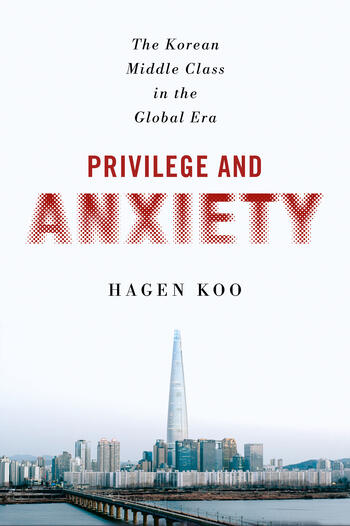
Book cover of Privilege and Anxiety by Hagen Koo

The middle classes in most advanced economies today are frequently described as being “squeezed” and “shrinking.”  Hagen Koo’s recent book, Privilege and Anxiety, examines what has happened to the Korean middle class in the era of rapid globalization and demonstrates that the middle class experiences far more complex changes than usually assumed. Koo argues that globalization inserts an axis of polarization into the middle class, separating a small minority that benefits from the globalized economy and a large majority that suffers from it. This internal differentiation generates new class dynamics, as the newly affluent seek to distinguish themselves from the rest of the middle class and establish a new, privileged class position. The rest of the middle class tries to follow the affluent’s class practices, suffering great anxieties and frustrations. The middle class thus turns into an arena of intense class distinction struggles, bringing great anxieties to both the affluent and the lower segments of the middle.


Image
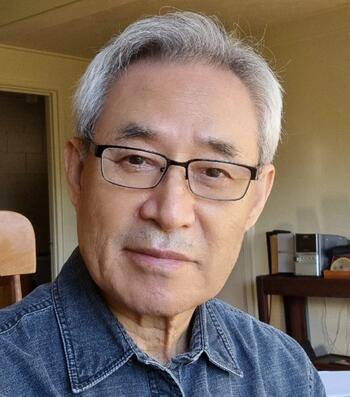
Portrait of Hagen Koo

Hagen Koo is Professor Emeritus of Sociology at the University of Hawaii at Manoa. Born in Korea, Koo received his BA in Korea and briefly worked as a journalist before coming to America where he received a PhD at Northwestern University. He has published extensively on economic development and social change in South Korea. His major work includes Korean Workers: The Culture and Politics of Class Formation (Cornell University Press, 2001). After his retirement in 2017, he spends more time in Korea studying the changing social fabric of Korean society in the global era. Privilege and Anxiety (Cornell University Press, 2022) represents his most recent work.

Discussants:

Alek Sigley is a PhD student at Stanford University's Modern Thought and Literature program, where he is writing a dissertation on North Korea. From 2018-2019 he studied for a master's degree in contemporary North Korean fiction at Kim Il Sung University's College of Literature. He speaks Mandarin, Korean and Japanese. Follow him on Twitter @AlekSigley.

Elisa Kim is a PhD candidate in the department of sociology at Stanford University. Her dissertation theorizes on racialization by systematically investigating the portrayal of minority groups in South Korean newspapers across time using computational methods. Prior to the PhD, she majored in Asian American Studies at Pomona College and has an MA in East Asian Studies from Stanford, researching the relational landscape of North Korean human rights organizations.

This event is made possible by generous support from the Korea Foundation and other friends of the Korea Program.

Gi-Wook Shin

Via Zoom. Register at https://bit.ly/3z8fJog

Hagen Koo Professor Emeritus of Sociology Author The University of Hawaii at Manoa
Seminars
-
Event flyer with portraits of speakers Jude Blanchette, Emily Feng, Qingguo Jia, Alice L. Miller, and moderator Jean Oi.

The 20th National Congress of the Chinese Communist Party is scheduled to begin on October 16, 2022. Its outcomes will determine the country’s trajectory for years to come. Join APARC’s China Program for an expert panel covering the Congresses’ context, coverage, and policy implications for the future. This panel discussion will provide expert analyses of what was expected, what was unexpected, how the policies announced may play out over the coming years, and some lesser-covered policy changes that may herald implications for China and the world.

Speakers 


Jude Blanchette holds the Freeman Chair in China Studies at the Center for Strategic and International Studies (CSIS). Previously, he was engagement director at The Conference Board’s China Center for Economics and Business in Beijing, where he researched China’s political environment with a focus on the workings of the Communist Party of China and its impact on foreign companies and investors. Prior to working at The Conference Board, Blanchette was the assistant director of the 21st Century China Center at the University of California, San Diego. 


Emily Feng is NPR’s Beijing correspondent. Feng joined NPR in 2019. She roves around China, through its big cities and small villages, reporting on social trends as well as economic and political news coming out of Beijing. Feng contributes to NPR’s news magazines, newscasts, podcasts, and digital platforms. Emily is the recipient of the 2022 Shorenstein Journalism Award for excellence in coverage of the Asia-Pacific region. 


Qingguo Jia is professor of the School of International Studies of Peking University. Currently, he is a Payne Distinguished Fellow at the Freeman Spogli Institute for International Studies at Stanford University. He received his Ph.D. from Cornell University in 1988. He is a member of the Standing Committee of the National Committee of the Chinese People’s Political Consultative Conference. He is vice president of the China American Studies Association,vice president of the China Association for International Studies, and vice president of the China Japanese Studies Association. He has published extensively on US-China relations, relations between the Chinese mainland and Taiwan and Chinese foreign policy.


Alice L. Miller is a historian and a research fellow at the Hoover Institution. From 2001 to 2018, she was editor and contributor to Hoover’s China Leadership Monitor

Jean C. Oi

Virtual event via Zoom

Jude Blanchette
Emily Feng
Qingguo Jia
Alice L. Miller
Panel Discussions
0
Senior Research Scholar, Stanford Center on China's Economy and Institutions
guoguang_wu_0410a.jpg PhD

Guoguang Wu is a Senior Research Scholar at the Stanford Center on China’s Economy and Institutions, Stanford University. His research specializes in Chinese politics and comparative political economy, including, in China studies, elite politics, national political institutions and policy making mechanisms, transition from communism, the politics of development, and China’s search for its position in the world, and, in comparative political economy, transition of capitalism with globalization, the birth of capitalism in comparative perspectives, the worldwide rise of the economic state, and the emergence of human security on global agenda.

He is the author of four books, including China’s Party Congress: Power, Legitimacy, and Institutional Manipulation (Cambridge University Press, 2015) and Globalization against Democracy: A Political Economy of Capitalism After its Global Triumph (Cambridge University Press, 2017), editor or coeditor of six English-language volumes, and author or editor of more than a dozen of Chinese-language books. His academic articles have appeared in journals such as Asian Survey, China Information, China Perspectives, China Quarterly, Comparative Political Studies, Journal of Contemporary China, Pacific Review, Social Research, and Third World Quarterly. He also frequently contributes to The China Leadership Monitor. Some of his works have been translated and published in the languages of French, Japanese, and Korean.

Guoguang received a Ph.D. and a MA in politics from Princeton University (1995; 1993), a MA in journalism/political commentary from the Graduate School of the Chinese Academy of Social Sciences (1984), and a BA in journalism from Peking University (1981). During the late 1970s, he was among the sent-down youth in Mao's China, and a textile factory worker following the death of Mao. In the late 1980s, he worked in Beijing as an editorialist and a political commentator in Renmin ribao (The People's Daily) and, concurrently, a policy adviser on political reform and a speechwriter to the Zhao Ziyang leadership. His later appointments include: a Nieman Fellow at Harvard University (1989-1990), a Luce Fellow at the East Asian Institute of Columbia University (1990-91), and an An Wang Post-doctoral Fellow at the John King Fairbank Center of Harvard University (1995-96). Before joining Stanford in 2022, he taught at the University of Victoria in Canada and the Chinese University of Hong Kong. Currently he is also a Senior Fellow at the Center for China Analysis of the Asia Society Policy Institute.

Subscribe to Globalization