Society

FSI researchers work to understand continuity and change in societies as they confront their problems and opportunities. This includes the implications of migration and human trafficking. What happens to a society when young girls exit the sex trade? How do groups moving between locations impact societies, economies, self-identity and citizenship? What are the ethnic challenges faced by an increasingly diverse European Union? From a policy perspective, scholars also work to investigate the consequences of security-related measures for society and its values.

The Europe Center reflects much of FSI’s agenda of investigating societies, serving as a forum for experts to research the cultures, religions and people of Europe. The Center sponsors several seminars and lectures, as well as visiting scholars.

Societal research also addresses issues of demography and aging, such as the social and economic challenges of providing health care for an aging population. How do older adults make decisions, and what societal tools need to be in place to ensure the resulting decisions are well-informed? FSI regularly brings in international scholars to look at these issues. They discuss how adults care for their older parents in rural China as well as the economic aspects of aging populations in China and India.

-

Speaker(s) Bio:

Image
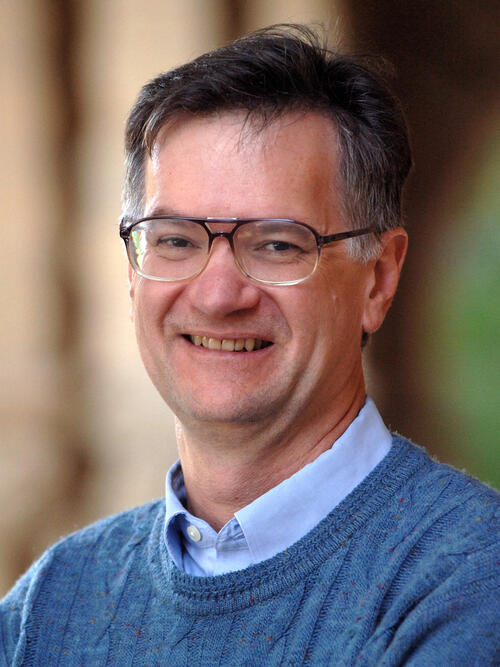
Dr. Stephen J. Stedman
Stephen Stedman is a Freeman Spogli senior fellow at the Center on Democracy, Development, and the Rule of Law and FSI, an affiliated faculty member at CISAC, and professor of political science (by courtesy) at Stanford University. In 2011-12 Professor Stedman served as the Director for the Global Commission on Elections, Democracy, and Security, a body of eminent persons tasked with developing recommendations on promoting and protecting the integrity of elections and international electoral assistance. The Commission is a joint project of the Kofi Annan Foundation and International IDEA, an intergovernmental organization that works on international democracy and electoral assistance.


Image
algee hewitt
Mark Algee-Hewitt is Assistant Professor of English and Director of the Literary Lab at Stanford, where he currently holds an Annenberg Faculty Fellowship. His research, which has been supported by grants from the National Endowment for the Humanities and the Social Sciences and Humanities Research Council of Canada, focuses on the eighteenth and early nineteenth centuries in England and Germany and seeks to combine literary criticism with digital and quantitative analyses of literary texts. Professor Algee-Hewitt directs the Literary Text Mining cluster of the Digital Humanities Minor.


Image
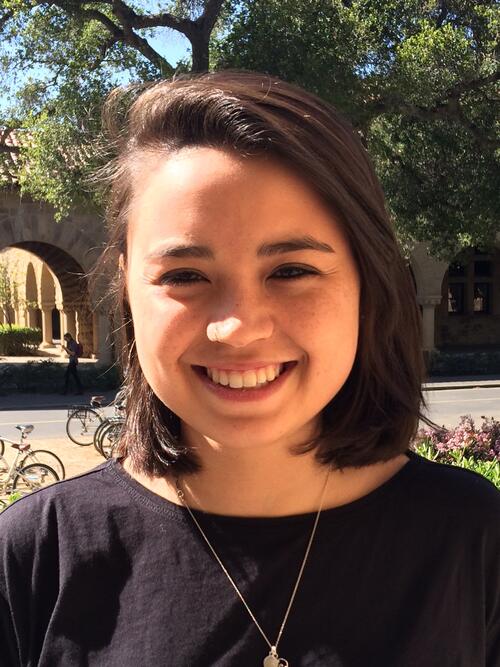
whitney
Whitney McIntosh is a Research Assistant for the Stanford Program on American Democracy in Comparative Perspective, within the Center on Democracy, Development and the Rule of Law. She is a recent graduate from Stanford University, where she studied both International Relations and English, and received interdisciplinary honors through CDDRL. Her honors thesis explored the evolution and internationalization of the concept of security during the interwar period in France, from 1919-1933. Her research interests currently include global populism, post-truth democracy, and the conceptual evolution of security.

CDDRL
Encina Hall, C152
616 Jane Stanford Way
Stanford, CA 94305-6055

(650) 725-2705 (650) 724-2996
0
Senior Fellow at the Freeman Spogli Institute for International Studies
Professor, by courtesy, of Political Science
Stedman_Steve.jpg PhD

Stephen Stedman is a Senior Fellow at the Freeman Spogli Institute for International Studies (FSI) and the Center on Democracy, Development and the Rule of Law (CDDRL), an affiliated faculty member at CISAC, and professor of political science (by courtesy) at Stanford University. He is director of CDDRL's Fisher Family Honors Program in Democracy, Development and Rule of Law, and will be faculty director of the Program on International Relations in the School of Humanities and Sciences effective Fall 2025.

In 2011-12 Professor Stedman served as the Director for the Global Commission on Elections, Democracy, and Security, a body of eminent persons tasked with developing recommendations on promoting and protecting the integrity of elections and international electoral assistance. The Commission is a joint project of the Kofi Annan Foundation and International IDEA, an intergovernmental organization that works on international democracy and electoral assistance.

In 2003-04 Professor Stedman was Research Director of the United Nations High-level Panel on Threats, Challenges and Change and was a principal drafter of the Panel’s report, A More Secure World: Our Shared Responsibility.

In 2005 he served as Assistant Secretary-General and Special Advisor to the Secretary- General of the United Nations, with responsibility for working with governments to adopt the Panel’s recommendations for strengthening collective security and for implementing changes within the United Nations Secretariat, including the creation of a Peacebuilding Support Office, a Counter Terrorism Task Force, and a Policy Committee to act as a cabinet to the Secretary-General.

His most recent book, with Bruce Jones and Carlos Pascual, is Power and Responsibility: Creating International Order in an Era of Transnational Threats (Washington DC: Brookings Institution, 2009).

Director, Fisher Family Honors Program in Democracy, Development and Rule of Law
Director, Program in International Relations
Affiliated faculty at the Center for International Security and Cooperation
Date Label
Deputy Director, Center on Democracy, Development and Rule of Law
Mark Algee-Hewitt Assistant Professor, Department of English
Research Assistant for the Stanford Program on American Democracy in Comparative Perspective
Seminars
-

The event is jointly sponsored by the Japan Program at the Shorenstein Asia-Pacific Research Center and the Japan Foundation Center for Global Partnership.


Japan is one of the world’s most prominent military space powers around. With the inescapable ambiguity of dual-use, Japan has acquired its impressive capabilities in full view of a pacifist public and under constitutional constraints. At this stage, as the country races to keep abreast of the latest space technology trends, its national security trajectories are openly and officially sanctioned in both law and policy. These realities are not well understood by Japan’s allies or rivals, which limits our appreciation about where Japan is headed in its own national interest in the region, the world, and beyond.  


Image
ds1 0550
Saadia M. Pekkanen works on outer space security, law, and policy. Her regional expertise is in the international relations of Japan/Asia. She earned Master’s degrees from Columbia University and Yale Law School, and a doctorate from Harvard University in political science. She holds the Job and Gertrud Tamaki Professorship at the University of Washington (UW). She has published a half-dozen books on space technology and geopolitics, and is working now on The Age of Newspace. She serves as Co-Chair of the U.S. Japan Space Forum, directs both the Space Security Initiative (SSI) and the project on Emerging Frontiers in Space at UW, and is the founding co-director of the Space Policy and Research Center (SPARC) at UW. She is passionate about contributing to the educational ecosystem for fostering the space sector through bridge-the-gap activities, and is a member of the Washington State Space Coalition (WSSC). She is also a contributor for Forbes on the space industry (https://www.forbes.com/sites/saadiampekkanen/#5897783f7d3f).

Saadia Pekkanen, Professor, University of Washington
Seminars
-
The event is jointly sponsored by the Japan Program at the Shorenstein Asia-Pacific Research Center and the Japan Foundation Center for Global Partnership.
 
 
Since Frey and Osborne showed that 47% of US job would be substituted by AI, the penetration of AI into labor markets has been discussed in every country. In Japan, Benjamin David estimates 55% of jobs will vanish by the introduction of AI. However, these estimates are based only on the technological upper bound. We have to condifer of the economic mechanism behind it, especially the specificity of Japanese labor markets. In this seminar, I will summrize the characteristics of Japanese labor markets from the view point of task distribution, which reflects the technological aspect of them. Then, comparing with US data, I will discuss the role of economic institutions/circumstances and the future direction.
 
Image
kambayashi 2
Ryo Kambayashi is a Professor at Institute of Economic Research, Hitotsubashi University in Japan.  His field of research include labor economics, Japanese economy, economic history, and law and economics.  Based on the methodology of standard labor economics, Kambayashi's research interest is centered on the empirical investigations on the economic mechanism of current Japanese labor markets. Through several papers on wage and employment, he has found that the current transition of Japanese labor markets since 1990s has two aspects; that is, the changing part where so called non-standard workers have rapidly increased and the unchanged part where so called Japanese Employment System remains firmly. This disparity in labor markets does not come from the legal assignment surrounding the labor markets but from a spontaneous evolution, just because the Japanese Labor Law has strongly respected the mutual agreement between workers and employer which can officially create exemptions from legal regulations. Then, I am expanding my research agenda into the associations of labor markets with other parts of Japanese economy, such as trade, productivity, self-employment, to understand the whole of Japanese society. I am also gradually expanding the research into historical developments of institutions to find the evidence of spontaneous evolution of labor market institutions, e.g. the network of public employment agency was constructed by absorbing those of private agencies.  Kambayashi holds a PhD, an MA, and a BA in economics, all from University of Tokyo. 
Ryo Kambayashi, Professor, Institute of Economic Research, Hitotsubashi University
Seminars
Authors
Gary Mukai
News Type
News
Date
Paragraphs

Since the mid-19th century, the United States has had strong—albeit sometimes tense—historic ties with Kanagawa Prefecture. In 1853, U.S. Commodore Matthew C. Perry entered Edo Bay (now Tokyo Bay) just south of Yokohama with the mission of pressuring Japan to open its ports to the United States. This resulted in the signing of the Convention of Kanagawa in 1854, which opened the ports of Shimoda and Hakodate to trade and established the first U.S. consulate office. During World War II, the Yokosuka Naval Arsenal in Kanagawa was attacked by the United States, and since the end of the war in 1945, its facilities have been used by the U.S. Navy. Today, United States Fleet Activities Yokosuka is home port for the U.S. Seventh Fleet.

Students in Kanagawa Prefecture are taught about these historic episodes between their prefecture and the United States. They also live alongside a significant number of American residents today. Following Tokyo and excluding U.S. military personnel in Japan, Kanagawa has the second largest number of American residents in Japan. Because of these historical and contemporary ties with the United States, some of Kanagawa’s teachers have reached out to the Stanford Program on International and Cross-Cultural Education (SPICE) with hopes to more fully introduce their students to U.S. society and culture and U.S.–Japan relations and also to encourage their students to study abroad in the United States. This encouragement was inspired in large part by the Japanese government.

On May 1, 2015, Japanese Prime Minister Shinzo Abe visited Stanford University—a first by a Japanese prime minister—and said that he wants “the best and brightest Japanese talent” to study at places like Stanford and to learn about Silicon Valley. Shortly after Prime Minister Abe’s visit to Stanford, SPICE launched an online course called Stanford e-Japan for high school students in Japan with funding from the United States-Japan Foundation, New York City. Stanford e-Japan, which is taught by Waka Takahashi Brown, introduces topics like Commodore Perry, World War II, and Silicon Valley to students with hopes that they will come to better understand the bilateral relationship and also consider someday studying in the United States.

[[{"fid":"230275","view_mode":"crop_870xauto","fields":{"format":"crop_870xauto","field_file_image_description[und][0][value]":"Rylan Sekiguchi and Naomi Funahashi at Yokosuka Senior High School, Kanagawa Prefecture","field_file_image_alt_text[und][0][value]":"Rylan Sekiguchi and Naomi Funahashi at Yokosuka Senior High School, Kanagawa Prefecture","field_file_image_title_text[und][0][value]":"Rylan Sekiguchi and Naomi Funahashi at Yokosuka Senior High School, Kanagawa Prefecture","field_credit[und][0][value]":"Gentaro Tatsumi","field_caption[und][0][value]":"Rylan Sekiguchi and Naomi Funahashi at Yokosuka Senior High School, Kanagawa Prefecture","thumbnails":"crop_870xauto","alt":"Rylan Sekiguchi and Naomi Funahashi at Yokosuka Senior High School, Kanagawa Prefecture","title":"Rylan Sekiguchi and Naomi Funahashi at Yokosuka Senior High School, Kanagawa Prefecture"},"type":"media","field_deltas":{"2":{"format":"crop_870xauto","field_file_image_description[und][0][value]":"Rylan Sekiguchi and Naomi Funahashi at Yokosuka Senior High School, Kanagawa Prefecture","field_file_image_alt_text[und][0][value]":"Rylan Sekiguchi and Naomi Funahashi at Yokosuka Senior High School, Kanagawa Prefecture","field_file_image_title_text[und][0][value]":"Rylan Sekiguchi and Naomi Funahashi at Yokosuka Senior High School, Kanagawa Prefecture","field_credit[und][0][value]":"Gentaro Tatsumi","field_caption[und][0][value]":"Rylan Sekiguchi and Naomi Funahashi at Yokosuka Senior High School, Kanagawa Prefecture","thumbnails":"crop_870xauto","alt":"Rylan Sekiguchi and Naomi Funahashi at Yokosuka Senior High School, Kanagawa Prefecture","title":"Rylan Sekiguchi and Naomi Funahashi at Yokosuka Senior High School, Kanagawa Prefecture"}},"link_text":null,"attributes":{"alt":"Rylan Sekiguchi and Naomi Funahashi at Yokosuka Senior High School, Kanagawa Prefecture","title":"Rylan Sekiguchi and Naomi Funahashi at Yokosuka Senior High School, Kanagawa Prefecture","style":"height: 244px; width: 349px; border-width: 0px; border-style: solid; margin: 5px; float: right;","class":"media-element file-crop-870xauto","data-delta":"2"}}]]

One of the high schools that has enthusiastically supported and enrolled students in Stanford e-Japan is Yokohama Science Frontier High School (YSFH). Thanks to the initiative of teachers Nobuyo Uchimura and Yukimasa Uekusa, Naomi Funahashi and Rylan Sekiguchi traveled to Kanagawa Prefecture to visit YSFH and a partner school, Yokosuka Senior High School. They met with faculty, chatted with students, and led several classes and after-school sessions to encourage students’ global thinking. Following their school visit, English teacher Gentaro Tatsumi, noted, “Sekiguchi-sensei and Funahashi-sensei gave very impressive lessons to my students. I believe many of them surely had moments to think deeply about war and peace with different perspectives or viewpoints. Also, I was so happy to see that there were several students who showed a big interest in studying abroad following their after-school presentation.”

Four of these students had the occasion to see Funahashi and Sekiguchi again but this time at Stanford University. Three students (Ayaka Nakaminami, Daiichi Soma, and Rin Suzuki) from YFSH and one student (Keisuke Hara) from Yokosuka Senior High School participated in a SPICE-led seminar on January 24, 2018. After engaging in a series of globally themed lessons led by Funahashi and Sekiguchi, the students toured Stanford campus and experienced lunch in a student dining hall. The afternoon portion of the seminar featured a presentation by Tatsumi-sensei on English education in Japan, remarks by Uchimura-sensei and Uekusa-sensei, and four science research-focused presentations that were given by the students to Stanford community members.

One of the audience members was Stanford law student, Yuta Mizuno, an attorney with Nagashima Ohno & Tsunematsu in Tokyo. “I was truly impressed by the students’ preparation and performance with the presentations,” he reflected. “I’m sure that they gained inspiration and confidence from the seminar here at Stanford, and there’s no doubt that they have a promising future on the global stage. I wish I could’ve had such a priceless experience when I was in high school.” In between the student presentations, Mizuno also had the chance to talk with Hara, who aspires to be an attorney.

After their return to Kanagawa Prefecture, Uchimura-sensei commented, “Our visit to Stanford was a precious opportunity. The seminar we had at SPICE was focused on ‘globalization’ and ‘interdependence,’ which are especially important themes today. The four selected students, who are potential global leaders, were lucky enough to have been given the chance to experience studying at a U.S. university early in life. We are convinced that this experience at SPICE has given them a guide into their future.”

SPICE expects that many students from Kanagawa Prefecture will apply to future offerings of Stanford e-Japan, due in large part to the enthusiasm of the teachers and the students who represented their prefecture so well. SPICE’s hope is that the four students will someday return to Stanford or other U.S. universities as students. It is remarkable how the once tense relationship between Kanagawa (and Japan broadly) and the United States has evolved into a close interdependent friendship. We entrust the future of this friendship to students like Nakaminami, Soma, Suzuki, and Hara.

 

Hero Image
Students and teachers from Kanagawa Prefecture at Stanford University, January 2018
Students and teachers from Kanagawa Prefecture at Stanford University, January 2018 | Rylan Sekiguchi
All News button
1
News Type
Commentary
Date
Paragraphs

"Mr. Trump is almost certainly giving authoritarianism a bad name. Support for authoritarian rule declined most among Democrats and young people, while significantly increasing among Republicans. So when it comes to American authoritarianism, perhaps the problem isn’t so much Mr. Trump as it is hyper-partisanship," writes Larry Diamond in The New York Times. Read the full article here.

Hero Image
trump 2546104 1280
All News button
1
-

The event is jointly sponsored by the Japan Program at the Shorenstein Asia-Pacific Research Center and the Japan Foundation Center for Global Partnership.


Image
dekle photo
Through previously unexamined data from Japan, Professor Robert Dekle presents results from a preliminary study shoing the impact of robotics on Japanese labor between 1980 and 2012.

Robert Dekle is a Professor at the Department of Economics, University of Southern California. His field of research include international finance, open-economy and development, macroeconomics and the economies of Japan and East Asia.    He obtained his Ph.D in economics at Yale University and B.A in economics at the University of California, Berkeley. 

Robert Dekle, Professor of Economics, University of Southern California
Seminars
-

Abstract:

In the face of information pollution, legislators in seven states have drafted bills to mandate courses in "media literacy" and “digital citizenship.” But what if the problem is not the lack of media literacy--but that the media literacy we do teach is the wrong kind? Drawing on a survey of 7804 middle, high school and college students, along with a focused study of Stanford undergraduates, academics from universities in California and Washington, and professional fact checkers at the nation’s most esteemed publications, I’ll argue that our approaches to information pollution may not only be ineffectual but may exacerbate the problem. Based on promising pilot data, I’ll suggest more comprehensive and effective solutions, and how we might address this issue here on our own Stanford campus.


Speaker Bio:

Image
sam wineburg
Sam Wineburg is the Margaret Jacks Professor of Education and, by courtesy, of History & American Studies. Educated at Brown and Berkeley, he holds a doctorate in Psychological Studies in Education from Stanford and an honorary doctorate from Sweden’s Umeå University. In 2004, Wineburg founded the Stanford History Education Group (sheg.stanford.edu), whose curriculum and assessments have been downloaded five million times. His latest work focuses on how people judge the credibility of digital content, research that has been reported in the Wall Street Journal, New York Times, Washington Post, NPR, BBC, Die Zeit and translated into dozens of languages.

Wineburg’s scholarship sits at the crossroads of three fields: the psychology of learning, history, and education, and his articles have appeared in such diverse outlets as Cognitive Science, Journal of American History, Smithsonian Magazine, Washington Post and the Los Angeles Times. In 2002 his book, Historical Thinking and Other Unnatural Acts: Charting the Future of Teaching the Past won the Frederic W. Ness Award from the Association of American Colleges and Universities for work that makes the most important contribution to the “improvement of Liberal Education and understanding the Liberal Arts.” In 2013, he was named the Obama-Nehru Distinguished Chair by the US-India Fulbright Commission and spent four months crisscrossing India giving lectures about his work. His new book, Why Learn History When It’s Already on Your Phone (Chicago), will be available in September.

Sam Wineburg The Margaret Jacks Professor of Education and, by courtesy, of History & American Studies
Seminars
-

The film screening of Atomic Homefront will be followed by a discussion with Human Rights Watch’s Marcos Orellana, Prof. Rod Ewing, and Lauren Davis (Director, Energy Program, 11th Hour Project). The conversation will be moderated by Michael Kieschnick (President, Green Advocacy Project). Atomic Homefront is a documentary about one community’s fight for environmental justice. 

Directed by Oscar-nominated filmmaker Rebecca Cammisa (Which Way Home, Sister Helen), Atomic Homefront is a documentary about one community’s activism and the need for government accountability in the wake of decades of radioactive waste contamination in the northern suburbs of St. Louis, Missouri.


Menlo-Atherton Center for the Performing Arts, 555 Middlefield Rd, Atherton, CA 94027

Marcos Orellana Director, Environment & Human Rights Human Rights Watch

CISAC
Stanford University
Encina Hall, E203
Stanford, CA 94305-6165

(650) 725-8641
0
1946-2024
Senior Fellow at the Freeman Spogli Institute for International Studies
Frank Stanton Professor in Nuclear Security
Professor of Geological Sciences
rodewingheadshot2014.jpg MS, PhD

      Rod Ewing was the Frank Stanton Professor in Nuclear Security and Co-Director of the Center for International Security and Cooperation in the Freeman Spogli Institute for International Studies and a Professor in the Department of Geological Sciences in the School of Earth, Energy and Environmental Sciences at Stanford University. He was also the Edward H. Kraus Distinguished University Professor Emeritus at the University of Michigan, where he had faculty appointments in the Departments of Earth & Environmental Sciences, Nuclear Engineering & Radiological Sciences and Materials Science & Engineering.  He was a Regents' Professor Emeritus at the University of New Mexico, where he was a member of the faculty from 1974 to 1997. Ewing received a B.S. degree in geology from Texas Christian University (1968, summa cum laude) and M.S. (l972) and Ph.D. (l974, with distinction) degrees from Stanford University where he held an NSF Fellowship.    His graduate studies focused on an esoteric group of minerals, metamict Nb-Ta-Ti oxides, which are unusual because they have become amorphous due to radiation damage caused by the presence of radioactive elements. Over the past thirty years, the early study of these unusual minerals has blossomed into a broadly-based research program on radiation effects in complex ceramic materials.  In 2001, the work on radiation-resistant ceramics was recognized by the DOE, Office of Science – Decades of Discovery as one of the top 101 innovations during the previous 25 years. This has led to the development of techniques to predict the long-term behavior of materials, such as those used in radioactive waste disposal.

      He was the author or co-author of over 750 research publications and the editor or co-editor of 18 monographs, proceedings volumes or special issues of journals. He had published widely in mineralogy, geochemistry, materials science, nuclear materials, physics and chemistry in over 100 different ISI journals. He was granted a patent for the development of a highly durable material for the immobilization of excess weapons plutonium.  He was a Founding Editor of the magazine, Elements, which is now supported by 17 earth science societies. He was a Principal Editor for Nano LIFE, an interdisciplinary journal focused on collaboration between physical and medical scientists. In 2014, he was named a Founding Executive Editor of Geochemical Perspective Letters and appointed to the Editorial Advisory Board of Applied Physics Reviews.

      Ewing had received the Hawley Medal of the Mineralogical Association of Canada in 1997 and 2002, a Guggenheim Fellowship in 2002, the Dana Medal of the Mineralogical Society of America in 2006, the Lomonosov Gold Medal of the Russian Academy of Sciences in 2006, a Honorary Doctorate from the Université Pierre et Marie Curie in 2007, the Roebling Medal of the Mineralogical Society of America in 2015, Ian Campbell Medal of the American Geoscience Institute, 2015, the Medal of Excellence in Mineralogical Sciences from the International Mineralogical Association in 2015, the Distinguished Public Service Medal of the Mineralogical Society of America in 2019, and was a foreign Fellow of the Royal Society of Canada. He was also a fellow of the Geological Society of America, Mineralogical Society of America, Mineralogical Society of Great Britain and Ireland, American Geophysical Union, Geochemical Society, American Ceramic Society, the American Association for the Advancement of Science and the Materials Research Society. He was elected a Fellow of the National Academy of Engineering in 2017.

      He was president of the Mineralogical Society of America (2002) and the International Union of Materials Research Societies (1997-1998). He was the President of the American Geoscience Institute (2018). Ewing had served on the Board of Directors of the Geochemical Society, the Board of Governors of the Gemological Institute of America and the Science and Security Board of the Bulletin of the Atomic Scientists.

      He was co-editor of and a contributing author of Radioactive Waste Forms for the Future (North-Holland Physics, Amsterdam, 1988) and Uncertainty Underground – Yucca Mountain and the Nation’s High-Level Nuclear Waste (MIT Press, 2006).  Professor Ewing had served on thirteen National Research Council committees and board for the National Academy of Sciences, Engineering and Medicine that have reviewed issues related to nuclear waste and nuclear weapons. In 2012, he was appointed by President Obama to serve as the Chair of the Nuclear Waste Technical Review Board, which is responsible for ongoing and integrated technical review of DOE activities related to transporting, packaging, storing and disposing of spent nuclear fuel and high-level radioactive waste; he stepped down from the Board in 2017.

https://profiles.stanford.edu/rodney-ewing

Co-director of the Center for International Security and Cooperation
CV
Stanford University
Lauren Davis Director, Energy Program 11th Hour Project
Michael Kieschnick President Moderator Green Advocacy Project
Film Screenings
Subscribe to Society