Society

FSI researchers work to understand continuity and change in societies as they confront their problems and opportunities. This includes the implications of migration and human trafficking. What happens to a society when young girls exit the sex trade? How do groups moving between locations impact societies, economies, self-identity and citizenship? What are the ethnic challenges faced by an increasingly diverse European Union? From a policy perspective, scholars also work to investigate the consequences of security-related measures for society and its values.

The Europe Center reflects much of FSI’s agenda of investigating societies, serving as a forum for experts to research the cultures, religions and people of Europe. The Center sponsors several seminars and lectures, as well as visiting scholars.

Societal research also addresses issues of demography and aging, such as the social and economic challenges of providing health care for an aging population. How do older adults make decisions, and what societal tools need to be in place to ensure the resulting decisions are well-informed? FSI regularly brings in international scholars to look at these issues. They discuss how adults care for their older parents in rural China as well as the economic aspects of aging populations in China and India.

-

Militaries around the world are racing to build robotic systems with increasing autonomy. What will happen when a Predator drone has as much autonomy as a Google car? Should machines be given the power to make life and death decisions in war? Paul Scharre, a former Army Ranger and Pentagon official, will talk on his new book, Army of None: Autonomous Weapons and the Future of War. Army of None was named one of Bill Gates’ Top 5 Books of 2018. Scharre will explore the technology behind autonomous weapons and the legal, moral, ethical, and strategic dimensions of this evolving technology. Paul Scharre is a Senior Fellow and Director of the Technology and National Security Program at the Center for a New American Security.   


Drell Lecture Recording: https://youtu.be/ldvDjU1C4Qs


Drell Lecture Transcript: NA


Paul's Biography: Paul Scharre is a Senior Fellow and Director of the Technology and National Security Program at the Center for a New American Security. He is author of Army of None: Autonomous Weapons and the Future of War. Mr. Scharre formerly worked in the Office of the Secretary of Defense (OSD) where he played a leading role in establishing policies on emerging weapons technologies. He led the working group that drafted DOD Directive 3000.09, establishing DOD’s policy on autonomy in weapon systems. He is a former infantryman in the Army’s 75th Ranger Regiment and completed multiple tours to Iraq and Afghanistan.


Radha's Biography: Radha Iyengar is the head of Product Policy Research at Facebook and an adjunct economist at the RAND Corporation. Previously, she served in senior staff positions at the White House National Security Council, Department of Defense, and Department of Energy. Over the course of her government service, she was instrumental in executive actions on sexual assault and suicide prevention, budget and policy related to nuclear and energy infrastructure security and resilience, and security assistance and counterterrorism efforts in the the Middle East and North Africa. Her research has covered empirical evaluations of policies aimed at reducing violence including criminal violence, sexual assault, terrorist behavior, and sexual and intimate partner violence. 


Jeremy's Biography: Jeremy is a Professor of Political Science and Senior Fellow at the Freeman Spogli Institute for International Studies. He is also a non-resident fellow at the Center for Global Development in Washington, D.C. His research focuses on civil wars and political violence; ethnic politics and the political economy of development; and democracy, accountability, and political change. He is the author of Inside Rebellion: The Politics of Insurgent Violence (Cambridge University Press), which received the William Riker Prize for the best book on political economy. He is also the co-author of Coethnicity: Diversity and the Dilemmas of Collective Action (Russell Sage Foundation), which received the Gregory Luebbert Award for the best book in comparative politics. He has published articles in the American Political Science Review, American Journal of Political Science, Annual Review of Political Science, Journal of Conflict Resolution, Foreign Affairs, Foreign Policy, Journal of Democracy, World Policy Journal, and the SAIS Review.


Stanford University CEMEX Auditorium (655 Knight Way, Stanford, CA 94305)

Paul Scharre Senior Fellow and Director, Technology and National Security Program Center for a New American Security
Lectures
Authors
Noa Ronkin
News Type
News
Date
Paragraphs

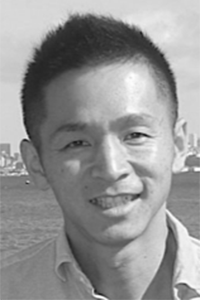
We are happy to share that FSI’s SK Center Fellow and APARC's Korea Program Deputy Director Yong Suk Lee is the recipient of the 2018 Urban Land Institute United Kingdom Academic Prize for his paper “Entrepreneurship, small business and economic growth in cities.”

The winner of the Urban Land Institute Prize is selected by The Journal of Economic Geography (JoEG) Editors, Oxford University Press, and the Urban Land Institute. The prize is awarded annually to the author(s) of the best JoEG paper published online in the previous calendar year. Papers are evaluated on the basis of their creativity, quality of scholarship, and contribution to advancing understanding of the geographic nature of economic systems and global economic change.

Lee’s paper investigates whether entrepreneurship causes local employment and wage growth, and if so, how large the impact is. Empirical analysis of this question is difficult due to the joint determination of entrepreneurship and economic growth. Lee’s article uses two different sets of variables—the homestead exemption levels in state bankruptcy laws from 1975 and the share of metropolitan statistical area (MSA) overlaying aquifers—to instrument for entrepreneurship and examine urban employment and wage growth between 1993 and 2002. Lee’s research shows that the creation of small businesses indeed causes substantial employment and payroll growth in cities.

Download Lee’s paper >>

Hero Image
Portrait of Yong Suk Lee
All News button
1
News Type
News
Date
Paragraphs

On the heels of the abrupt ending of the Hanoi summit between President Trump and North Korean leader Kim Jong Un, with the future of the diplomacy of denuclearization in question, the Korea Program at Shorenstein APARC convened the 11th Koret Workshop, appropriately titled this year “North Korea and the World in Flux.”

The workshop, an annual gathering made possible through generous funding from the Koret Foundation, brought together international experts in Korean affairs for a full day of panel discussions. Participants assessed the U.S.-DPRK summit diplomacy, examined the challenges and opportunities in media coverage related to the negotiations between the two countries, and considered the prospects and pitfalls for summitry with North Korea in the near term. A report on the workshop proceedings is forthcoming.

At a midday public keynote, General Vincent Brooks, U.S. Army (Ret.), spoke before a packed audience about the challenges and opportunities in Korea. Brooks, who recently retired from active duty as the four-star general in command of all U.S. Forces in Korea, provided his unique and very-timely assessment of the situation on the Korean peninsula, and offered his insights on where the diplomacy of denuclearization may go next.

Gen. Brooks’ public address was followed by a conversation with Karl Eikenberry, director of APARC’s U.S.-Asia Security Initative.

Watch the video recording of Gen. Brooks’ remarks:


Hero Image
U.S.-Asia Security Initiative Director Karl Eikenberry, left, questions General Vincent Brooks during 2019 Koret Workshop
U.S.-Asia Security Initiative Director Karl Eikenberry, left, questions General Vincent Brooks during 2019 Koret Workshop | Thom Holme, APARC
All News button
1
-

Abstract:


How do memory and forgetting shape politics in autocracies? We combine the logic of collective action with a theory of informational politics, in which autocrats have three instruments: propaganda, threats of violence embedded within propaganda, and censorship. For citizens, we argue that historical memory drives the calendar of protest. In turn, the likelihood of historical forgetting drives the informational strategy of repressive governments. We test our theory in the context of China. The most powerful focal points for protest, we find, are anniversaries of the regime's crimes against citizens. Those most likely to be forgotten -- those that occurred decades ago -- are subject to censorship, while those too fresh to be forgotten are subject to propaganda as well. Explicit threats of violence are reserved for China's ethnic minorities, and coincide with anniversaries of failed separatist movements. We conclude with evidence that propaganda-based threats of violence generate a short-term reduction in protest.


Speaker(s) Bio:


Image
erin baggott
Erin Baggott Carter is an Assistant Professor at the School of International Relations at the University of Southern California. She received a Ph.D. in Government from Harvard University and was previously a fellow at the Stanford Center for International Security and Cooperation. Her research focuses on Chinese foreign policy and propaganda. She recently completed a book manuscript on autocratic propaganda in global perspective and is currently working on another on how the United States and China attempt to shape each other’s domestic politics.


Image
carter brett
Brett Carter is Assistant Professor in the School of International Relations at the University of Southern California. He received a Ph.D. in Political Science from Harvard University, where he was a Graduate Fellow at the Harvard Academy for International and Area Studies. He was previously a fellow at Stanford University's Center on Democracy, Development, and the Rule of Law, as well as the Hoover Institution. He recently finished a book about propaganda in the world’s autocracies and is currently working on another book project about autocratic survival in Central Africa.

Reuben Hills Conference room, E207

Erin Baggott Carter Assistant Professor at the School of International Relations at the University of Southern California
Brett Carter Assistant Professor at the School of International Relations at the University of Southern California
Seminars
-

Abstract:

Democracies are in danger. Around the world, a rising wave of populist leaders threatens to erode the core structures of democratic self rule. In the United States, the election of Donald Trump marked a decisive turning point for many. What kind of president calls the news media the “enemy of the American people,” or sees a moral equivalence between violent neo-Nazi protesters in paramilitary formation and residents of a college town defending the racial and ethnic diversity of their homes? Yet, whatever our concerns about the current president, we can be assured that the Constitution offers safeguards to protect against lasting damage—or can we?  How to Save a Constitutional Democracy mounts an urgent argument that we can no longer afford to be complacent. Constitutional rules can either hinder or hasten the decline of democratic institutions. The checks and balances of the federal government, a robust civil society and media, and individual rights—such as those enshrined in the First Amendment—do not necessarily succeed as bulwarks against democratic decline. Rather, the sobering reality for the United States is that, to a much greater extent than is commonly realized, the Constitution’s design makes democratic erosion more, not less, likely. But we—and the rest of the world—can do better. The authors conclude by laying out practical steps for how laws and constitutional design can play a more positive role in managing the risk of democratic decline.

Speaker Bio:

Image
ginsburg tom

Tom Ginsburg is Leo Spitz Professor of Law, University of Chicago, and a professor of political science.  He is also director of the Comparative Constitutions Project   He focuses on comparative and international law from an interdisciplinary perspective. He holds BA, JD, and PhD degrees from the University of California at Berkeley. His books include Judicial Review in New Democracies (2003), which won the C. Herman Pritchett Award from the American Political Science Association; The Endurance of National Constitutions (2009), which also won a best book prize from APSA; Constitutions in Authoritarian Regimes (2014); and Law and Development in Middle-Income Countries (2014)..


Image
aziz huq 200x300
Aziz Huq is is the Frank and Bernice J. Greenberg Professor of Law at the University of Chicago. His scholarship focuses on how institutional design influences individual rights and liberties. He clerked for Judge Robert D. Sack of the U.S. Court of Appeals for the Second Circuit and then for Justice Ruth Bader Ginsburg of the Supreme Court of the United States. Before teaching, he led the Brennan Center’s project on Liberty and National Security and was a senior consultant analyst for the International Crisis Group.

Encina Hall, 4th floor East Wing

Goldman conference room (E409)

Tom Ginsburg Leo Spitz Professor of International Law, Ludwig and Hilde Wolf Research Scholar, Professor of Political Science
Aziz Huq Frank and Bernice J. Greenberg Professor of Law, Mark Claster Mamolen Teaching Scholar
Seminars
-

Abstract:

The recent surge in nationalism and tribalism brings renewed salience to questions of identity within and across borders. Notably, it exposes the tension between bounded social identities, on the one hand, and universalist yearnings and commitments, on the other. Liberal democracy—and the ostensible universalism on which it is based—is struggling to resolve this tension. I turn instead to the cosmopolitan tradition. I argue that cosmopolitanism—and a genuinely cosmopolitan (i.e., unbounded) social identity, in particular—represents not just an extension of scope from the national to the global, but a qualitative shift that permeates all identities, and serves to fundamentally protect and liberate particularist attachments from their otherwise inherent instabilities and contradictions. On this view, the promise of cosmopolitanism does not rest exclusively in what it can deliver beyond our borders, but also in its potential to fundamentally recast social identities within boundaries, resolving crises of identity at all levels of society.


Speaker Bio:

Image
sabet headshot
Shahrzad Sabet's research spans politics, economics, psychology, and philosophy. She is a Fellow at the University of Maryland’s Bahá’í Chair for World Peace Program. Previously, she was a Senior Research Fellow at Princeton University’s Niehaus Center for Globalization and Governance and a Postdoctoral Fellow at Harvard, where she recently received her PhD in Government. Her work has been featured in outlets such as The Washington Post and The New York Times.

Shahrzad Sabet Fellow at the University of Maryland’s Bahá’í Chair for World Peace Program
Seminars
-

Abstract:

Venezuela finds itself mired in an unprecedented economic and political crisis. The economy has contracted nearly 50% since President Maduro took office in 2013, oil production has declined to levels below those last seen in 1950, and inflation has reached an estimated annual rate of over 1.3 million percent. Millions have fled abroad in search of a better life, making Venezuela’s migration crisis the second worst in the world after Syria’s. In 2019, the ruling Maduro regime faces new challenges at home from an opposition that has declared it illegitimate, and from abroad due to diplomatic non-recognition by over 50 governments and the imposition of U.S. sanctions on the Venezuelan oil industry. This talk will examine the apparently intractable political and economic crisis facing Venezuela, the role of the military in keeping the present government in power, and the impact of the latest domestic and international pressures on the Maduro regime


Speaker Bio:

Image
trankunas
Harold Trinkunas is the Deputy Director of and a Senior Research Scholar at the Center for International Security and Cooperation at the Freeman Spogli Institute for International Studies at Stanford University. Prior to arriving at Stanford, Dr. Trinkunas served as the Charles W. Robinson Chair and senior fellow and director of the Latin America Initiative in the Foreign Policy program at the Brookings Institution. His research focuses on issues related to foreign policy, governance, and security, particularly in Latin America. Trinkunas has written on emerging powers and the international order, ungoverned spaces, terrorism financing, borders, democratic civil-military relations, drug policy and Internet governance. He received his doctorate in political science from Stanford University in 1999. He was born in Maracaibo, Venezuela.

Harold Trinkunas Deputy Director of and a Senior Research Scholar at the Center for International Security and Cooperation at the Freeman Spogli Institute for International Studies at Stanford University
Seminars
-

Abstract:

This talk develops a framework to analyze how strategic politicians make tradeoffs and prioritize among six objectives (winning and staying in office, “good policy”, institutional power, career advancement, personal gain, and historical legacy) in particular situations. It focuses on the nature of the political vehicles (notably parties) within which politicians operate and broader political opportunity structures as determinants of how objectives are prioritized and strategic choices are made. While drawing evidence from a variety of political systems, the empirical focus will be on social policy choices in advanced industrial countries.


Speaker Bio:

Image
weaver photo

R. Kent Weaver is Professor of Public Policy and Government at Georgetown University and a Visiting Professor at Stanford University in winter and spring 2019. His research focuses on the strategic behavior of politicians, political institutions, and comparative social policy.

Professor of Public Policy and Government at Georgetown University and a Visiting Professor at Stanford University
Seminars
-
Abstract:


The most violent places in the world today are not at war. Brazil has had more violent death than Syria for the last three years. More people have died in Mexico in the last decade than in Iraq and Afghanistan combined. The world's worst violence is rooted in highly unequal, highly polarized democracies that are buckling under a maelstrom of gangs, organized crime, political conflict, and state brutality. Such devastating violence can feel hopeless, yet some places--from Colombia to the Republic of Georgia--have been able to recover. 

A Savage Order uncovers what makes these locales so bloody - including the U.S., which includes four of the world's fifty most violent cities. It then charts how they can get better. Based on years of research and field work around the world, A Savage Order overturns much conventional wisdom about the causes of bloodshed, and how the most violent places in the world can recover.


Speaker Bio:

Image
kleinfeld
Dr. Rachel Kleinfeld advises governments, philanthropists, and activists on how democracies make major social change. As a senior fellow at the Carnegie Endowment for International Peace, she particularly focuses on countries facing violence, corruption, and other problems of poor governance.

In 2010, Time magazine named her one of the top 40 political leaders under 40 in America for her decade of work as the founding CEO of the Truman National Security Project, which assisted scores of national, state, and local political campaigns, advocated for legislation, and fostered a new generation of military veterans and national security leaders to advance policies that would enhance global security, democracy, and human dignity. In 2011, former secretary of state Hillary Clinton appointed Kleinfeld to the Foreign Affairs Policy Board, which advises the secretary of state quarterly, a role she served through 2014. In 2015, she was named a Young Global Leader of the World Economic Forum.

Kleinfeld is the author of three books, including A Savage Order: How the World’s Deadliest Countries Can Forge a Path to Security (Knopf, 2018). Her previous book, Advancing the Rule of Law Abroad: Next Generation Reform (Carnegie, 2012), was chosen by Foreign Affairs magazine as one of the best foreign policy books of 2012. She appears frequently in the media, from the Wall Street Journal and the New York Times, to the BBC, Fox & Friends, and radio and television in the U.S. and overseas.

Kleinfeld received her B.A. from Yale University and her M.Phil. and D.Phil. from Oxford University, where she was a Rhodes scholar. She lives with her husband and two daughters in New Mexico and works in Washington, D,C., but hearkens often to the log house on a dirt road where she was raised in her beloved Fairbanks, Alaska


Ground Floor Conference room (E008)


Rachel Kleinfeld Senior fellow at the Carnegie Endowment for International Peace
Seminars
Subscribe to Society