FSI researchers work to understand continuity and change in societies as they confront their problems and opportunities. This includes the implications of migration and human trafficking. What happens to a society when young girls exit the sex trade? How do groups moving between locations impact societies, economies, self-identity and citizenship? What are the ethnic challenges faced by an increasingly diverse European Union? From a policy perspective, scholars also work to investigate the consequences of security-related measures for society and its values.
The Europe Center reflects much of FSI’s agenda of investigating societies, serving as a forum for experts to research the cultures, religions and people of Europe. The Center sponsors several seminars and lectures, as well as visiting scholars.
Societal research also addresses issues of demography and aging, such as the social and economic challenges of providing health care for an aging population. How do older adults make decisions, and what societal tools need to be in place to ensure the resulting decisions are well-informed? FSI regularly brings in international scholars to look at these issues. They discuss how adults care for their older parents in rural China as well as the economic aspects of aging populations in China and India.
3. Inständigkeit,Existenz = GA 49: 54; GA 9: 374,内立性,existenziell,existenziall,Ex-sistenz
4. Ereignis, eignen,Eignung,eigen,Ereignung,Er-eignung, sich ereignen
Professors from the Chinese side:
1. Prof. Xing Jian , SHANG , 尚新建
Director of the Institute of Foreign Philosophy, Peking University.
2. Prof. Qingjie WANG, 王庆
Chinese University of Hong Kong.
3. Prof. Zhouxing SUN, 孙周兴
Director, Center of Phenomenology, Tongjie University, Shanghai.
4. Prof. Huangyusheng Huang,黄裕生
Qinghua {Tsinghua] University
5. Prof. Zengding Wu 吴增定,
Peking University
5. Prof. Qinghua Zhu, 朱清华,
Peking Normal University
6. Dr. Guang YANG,杨光
Assistant professor, Department of Philosophy, Tongjie University, Shanghai
7. Dr. He Nian,
Department of Philosophy, Sichuan University
8. DENG Ding, ABD
Qinghua [Tsinghua] University, translator of Making Sense of Heidegger: A Paradigm Shift
9. Prof. Liyan Du杜丽燕
Institute of Philosophy at Peking Academy for Social Science and Humanity
10. Xiping JIN, 靳希平
Peking University
Stanford Center at Peking University The Lee Jung Sen Building Langrun Yuan Peking University No.5 Yiheyuan Road Haidian District Beijing, P.R.China 100871
The world is “graying” at an unprecedented rate. According to the UN’s World Population Prospects 2019, the number of persons over the age of 65 is growing the fastest and expected to more than double by 2050, then triple in another 50 years’ time.
Some Asian countries in particular, plagued by population aging, declining fertility, and gender imbalance, are facing a grim outlook for a demographic crisis. In Japan, one in five people is now 70 or older, birthrate has dropped to a historic level, and the population declined by more than a quarter of a million last year. Meanwhile, South Korea is aging more quickly than any other developed country: with seniors on the verge of making up 14% of the population, the country is on the cusp of becoming an “aged society.” The potential impact of population aging on the labor market and the fiscal pressures on the public systems of healthcare, pensions, and social protection schemes for older adults are some of the many problems that these and other countries must tackle.
Against this background, Shorenstein APARC recently held the third annual gathering of the Stanford Asia-Pacific Innovation project, a Center-led initiative that produces academic and policy-relevant research to promote innovation and entrepreneurship in East Asia. Held in Chuncheon, South Korea and organized jointly with Hallym University’s Institute for Communication Arts and Technology, this year’s conference focused on the intersection of aging, technological development, and innovation in the region.
(Gi-Wook Shin)
APARC Director Gi-Wook Shin opened the two-day session, introducing the conference’s themes. “What policies can promote innovation and entrepreneurship in aging populations?” Shin asked. “What opportunities do new technologies offer for addressing challenges posed by East Asia’s demographic shifts, and what are the threats involved in the adoption of these new technologies?”
Joon-Shik Park, vice president of the Office of Vision and Cooperation at Hallym University, the conference host, noted that “East Asian countries are the most important testbeds on issues related to aging and innovation,” and that sharing meaningful research and implications from the region “will provide invaluable insights for all the societies around us.”
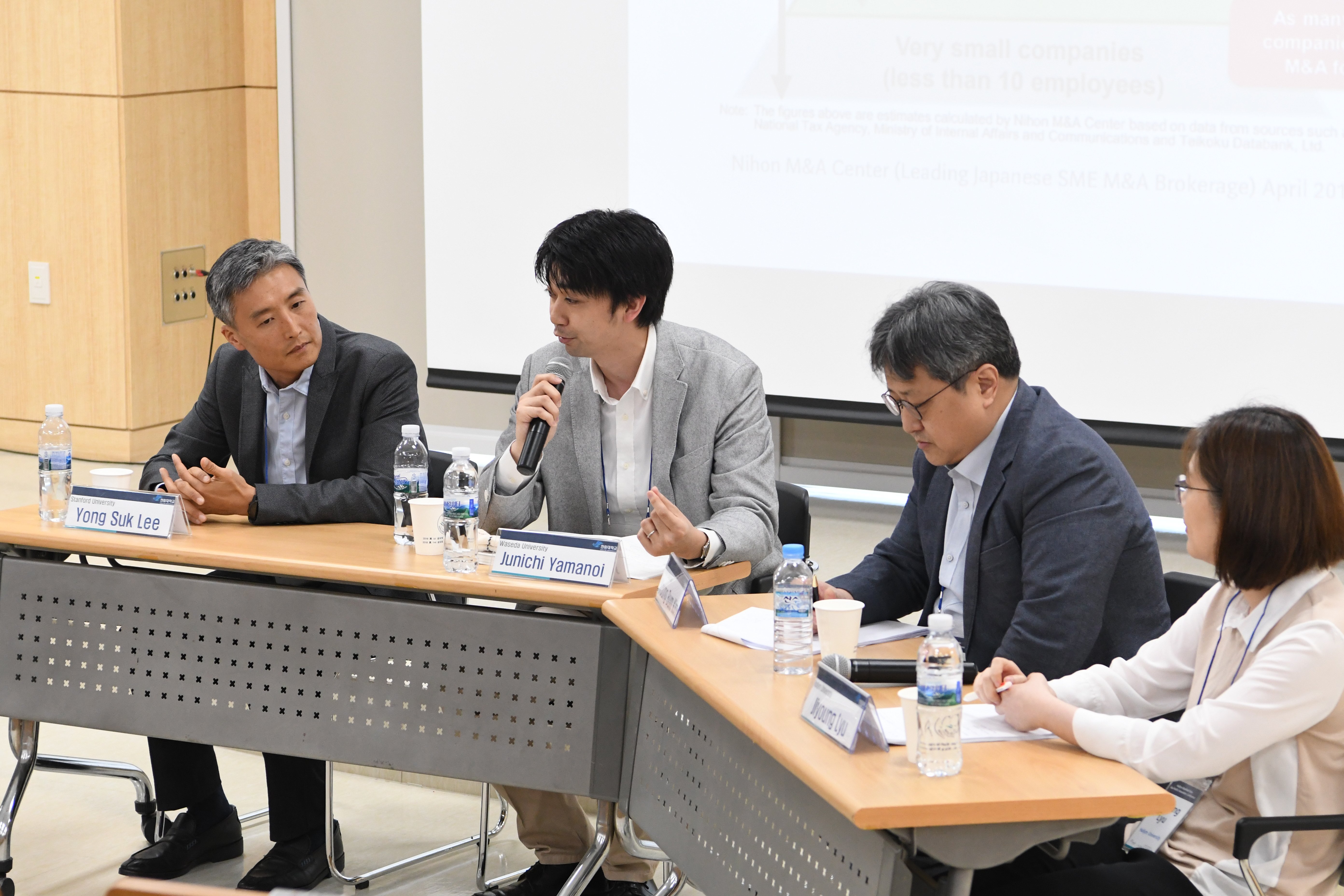
(From left to right, Yong Suk Lee , Junichi Yamanoi , Young-Bum Kim, and Jiyoung Liu)
Family Business Succession
Demographic forces and population aging at the macro level are altering family structures and assumptions at the micro level. For example, Junichi Yamanoi of Waseda University presented a study that examined how expectations around managerial succession at family firms had a significant impact on a firm’s long-term investments.
The study surveyed over 15,000 small and medium enterprises (SMEs) in the Tokyo metropolitan area. The participants were initially asked about their firm’s attributes, CEO demographics, and succession expectations. More than a year later (a time lag that eliminated reverse causality), a sampling of respondents was then asked about their current long-term investments (e.g., R&D, new product development, and internationalization activities).
Yamanoi and his coauthors found that, when a family business’ CEO was confident that a successor would follow, their firm was more likely to engage in long-term investment. Additionally, a CEO’s expectations that the successor would be someone other than their child resulted in an even greater likelihood of long-term investment.
As part of its policy propositions, the study recommends that government agencies and SME officers eager to increase investments by SMEs introduce external candidates to such firms. Moreover, family CEOs should be cautioned against investment decisions that are too short-term in orientation, as, due to inherent aversion to losses of socioemotional wealth for the family, they may unconsciously avoid long-term investments.
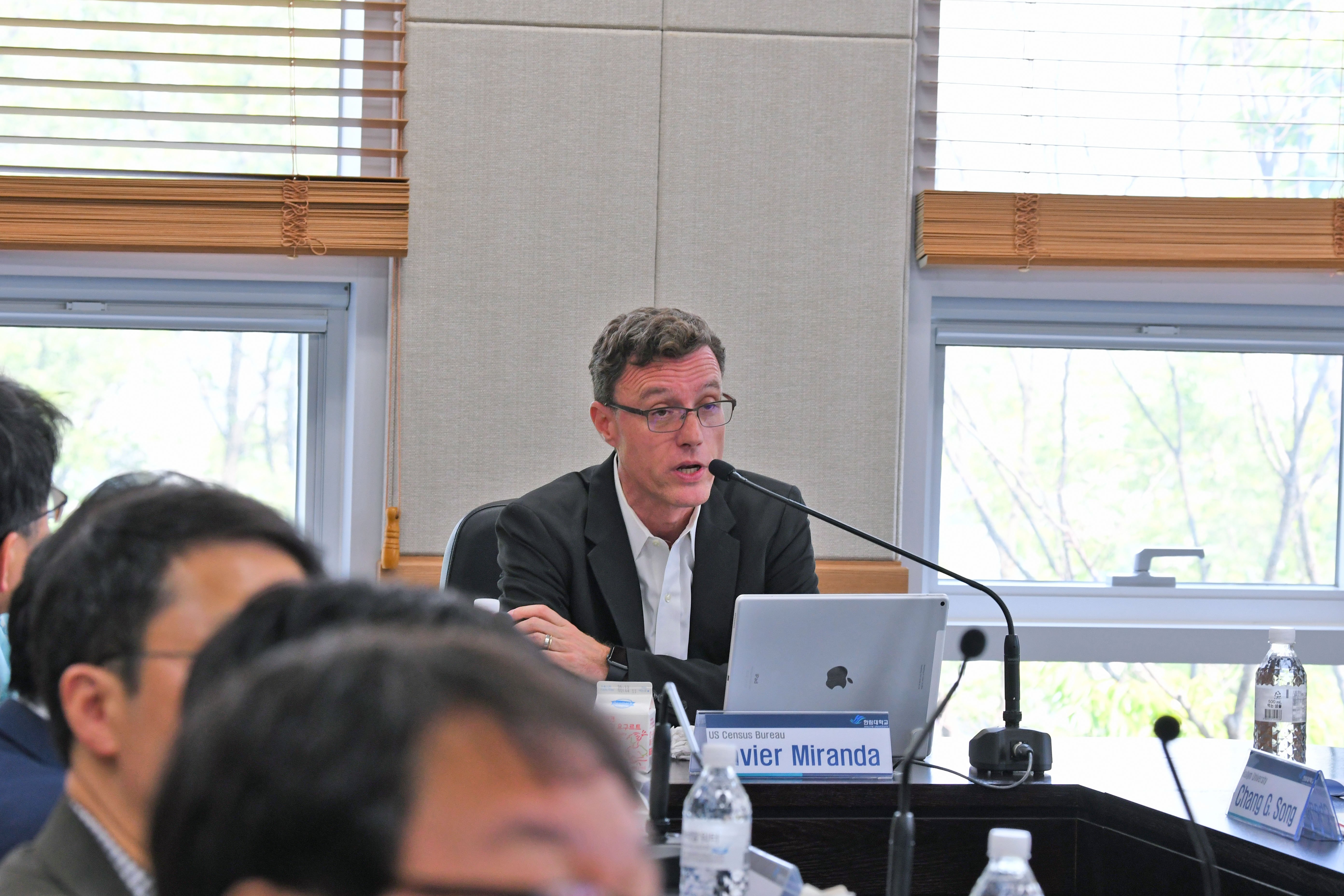
(Javier Miranda)
Rethinking Age and Entrepreneurship
At a luncheon keynote address, Javier Miranda, principal economist at the U.S. Census Bureau, shared insights into the correlations between age and high-growth entrepreneurship, considering when in life people start firms and when they start the most successful firms.
Miranda acknowledged that youth is often perceived as being crucial to entrepreneurial success, referring to Mark Zuckerberg’s dictum, “Young people are just smarter.” Venture capitalist (VC) activity seems to support this notion, said Miranda, citing a sample of 35 VC-backed “unicorns” that resulted in a mean founder age of 31. He explained that VCs' high regard of young entrepreneurs may be attributed to a belief in young people's greater deductive reasoning, transformative thinking, and higher energy, optimism, and confidence.
But does the statistical evidence support such a view? It would seem not. Miranda’s data showed that the mean age for founders of any type of firm is 41.9. Furthermore, the mean age for founders of the most successful firms (those ready for Initial Public Offering market) was 45, and a founder at age 50 was approximately twice as likely to experience successful exit or high growth compared to a founder 20 years their junior.
In fact, dependent on the starting of a firm, the probability of a founder’s success peaked in the age range of 45-59. Pointing directly to entrepreneurs like Jobs and Bezos, Miranda conceded that even extremely talented people, who may be talented enough to succeed when young, peaked in middle age.
The results of Miranda’s study seem at odds with VC attraction to younger entrepreneurs. Experience, Miranda concluded, appeared to overwhelm any potential age advantage, but more research was needed to unpack the underlying predictors of entrepreneurial success over one’s life cycle.
Role of Technology in an Aging Populace
Day two of the conference focused on the promising role technology may play as populations age. APARC Research Scholar Kenji Kushida detailed both the current and impending problems Japan faces as its population both ages and shrinks in size, and the solutions possible through technological advancement like robotics, AI, and wearable devices.
For example, Japan’s demographic shift has had a double knock-on effect on agriculture, with the percentage of farm workers age 65 or older steadily rising over the last five years and the total cultivated agricultural land decreasing each passing year. Kushida described how ICT-enabled bulldozers allow farm owners to more precisely flatten the ground in rice paddies, resulting in both greater yields and cost savings as much as 40%.
Healthcare is another significant area of concern in Japan, as healthcare costs for people over 65 are four times that of younger people and medical costs as a proportion of GDP have been increasing sharply, especially in rural areas. Shortage of physicians and diagnostic technicians is another challenge. Kushida gave an example of a technology healthcare resource that enables clinics and hospitals to upload patient medical images which are then diagnosed by medical doctors affiliated with the tool's startup developer. This low-cost solution allows smaller, rural hospitals to tap into a larger network of physicians and specialists online.
While Japan’s technological trajectory has been driven primarily by the private sector, Kushida pointed out the important role played by government actors. Specifically, within the “Abenomics” reforms of Prime Minister Shinzo Abe, several key performance indicators include support for digitizing medical records, adoption of robotics in nursing care, and extending “healthy” life expectancy.
Edited volumes collecting the papers from the annual Stanford Asia-Pacific Innovation conferences are forthcoming. These will serve as valuable references for scholars and policymakers. The first conference was held at Stanford in 2017, and examined the industrial organization of businesses and innovation clusters and how such environments affect entrepreneurship. The second conference, held in September of 2018 in Beijing, analyzed the impact of public education and financial policies pursued by East Asian countries to promote entrepreneurship.
2019 Shorenstein Journalism Award Recipient Maria Ressa to Headline Award Panel Discussion
Maria Ressa, winner of the 2019 Shorenstein Award, is an internationally-esteemed journalist and CEO and executive editor of Rappler, a Philippine independent news platform known for its critical investigative reporting on the Duterte administration’s policies and actions. President Duterte has made no secret of his dislike for Rappler, publicly accusing the platform for carrying “fake news.” Ressa has been arrested twice this year, accused of corporate tax evasion and of violating security laws, and slapped with charges of cyber libel for a report that was published before the libel law came into effect. The international community sees the allegations as politically motivated attempts by the government to silence Ressa and Rappler.
In her keynote address at this 2019 Shorenstein Journalism Award panel discussion, Ressa will talk about her crusade to combat fake news, the devastating effect disinformation has had on democracy and societal cohesion in the Philippines, and the battle for truth in the digital age.
Chaired by Shorenstein APARC Southeast Asia Program Director Donald K. Emmerson, the discussion will include remarks by Larry Diamond, senior fellow at the Hoover Institution and at the Freeman Spogli Institute for International Studies at Stanford University, and Raju Narisetti, Director, Knight-Bagehot Fellowship in Economics and Business Journalism, Professor of Professional Practice, Columbia Journalism School.
The event will conclude with a short Q&A session. Follow us on Twitter and use the hashtag #SJA19 to join the conversation.
Panelists:
Image
Maria Ressa is the CEO and executive editor of Rappler, one of the leading online news organizations in the Philippines. Ressa has been a journalist in Asia for more than 30 years and has been honored around the world for her courageous and bold work in fighting disinformation, “fake news” and attempts to silence the free press. In 2018, she was named Time magazine's "Person of the Year" and won the prestigious Golden Pen of Freedom Award from the World Association of Newspapers and News Publishers, the Knight International Journalism Award of the International Center for Journalists, the Gwen Ifill Press Freedom Award of the Committee to Protect Journalists, the Journalist of Courage and Impact Award of East-West Center, and the IX International Press Freedom Award of University of Málaga and UNESCO, among others.
She was CNN’s bureau chief in Manila then Jakarta, and became CNN’s lead investigative reporter focusing on terrorism in Southeast Asia. In 2005, she managed ABS-CBN News and Current affairs, the largest multi-platform news operation in the Philippines. Her work aimed to redefine journalism by combining traditional broadcast, new media and mobile phone technology for social change.
Ressa is the author of two books — From Bin Laden to Facebook (2012), which traces the spread of terrorism from the training camps of Afghanistan to Southeast Asia and the Philippines, and Seeds of Terror: An Eyewitness Account of Al-Qaeda’s Newest Center of Operations in Southeast Asia (2003).
Larry Diamond is a senior fellow at the Hoover Institution and at the Freeman Spogli Institute for International Studies (FSI) at Stanford University, professor, by courtesy, of political science and sociology, and principal investigator at the Global Digital Policy Incubator within FSI’s Cyber Policy Center. He also codirects the Program on Arab Reform and Democracy at FSI’s Center on Democracy, Development and the Rule of Law.
Diamond is the founding coeditor of the Journal of Democracy and serves as senior consultant at the International Forum for Democratic Studies of the National Endowment for Democracy. His research focuses on democratic trends and conditions around the world and on policies and reforms to defend and advance democracy. His most recent book, Ill Winds: Saving Democracy from Russian Rage, Chinese Ambition, and American Complacency, analyzes the challenges confronting liberal democracy in the US and around the world at this potential “hinge in history,” and offers an agenda for strengthening and defending democracy at home and abroad. His other books include In Search of Democracy (2016), The Spirit of Democracy (2008), and Developing Democracy: Toward Consolidation (1999). He has also edited or coedited more than forty books on democratic development around the world.
Raju Narisetti is Director of the Knight-Bagehot Fellowship in Economics and Business Journalism and Professor of Professional Practice at Columbia Journalism School.
Raju Narisetti most recently served as chief executive of Gizmodo Media Group, which publishes well-known digital journalism sites such as Gizmodo, Jezebel, Deadspin, Lifehacker and The Root. As the chief executive, he oversaw a significant expansion in the audience and journalistic ambitions of the group, to a monthly readership of about 116 million.
Prior to Gizmodo, Narisetti was News Corp.’s senior vice president of strategy, helping the media giant diversify and establish itself as the world’s largest digital real-estate listings company, in addition to its news and information portfolio that includes The Wall Street Journal, The Times of London and Harper-Collins. He was actively involved in the company’s mergers and acquisition strategy, spearheading new revenue opportunities, particularly in Asia.
As a business journalist and editor, Narisetti spent 14 years at The Wall Street Journal, after first starting as a summer intern there in 1991. Among the roles he held at WSJ were Editor, The Wall Street Journal Europe; Deputy Managing Editor in charge of Europe, Middle East and Africa for the global WSJ; and Managing Editor, Digital.
Narisetti also served as the managing editor for digital and new products at The Washington Post, and was primarily responsible for integrating the Post’s then separate print and online newsroom and businesses. His responsibilities at The Post also included managing web, mobile, engagement, social media, interactive, design, editing desk, video and photojournalists teams.
He is also the Founder, in 2007, of Mint, now India’s second-largest business newspaper and website, which is today known for its pioneering journalistic code of conduct and ethics in India. Narisetti began his business journalism career at The Economic Times in New Delhi, and his U.S. journalism career at The Dayton Daily News.
Narisetti is a Board Trustee of the Wikimedia Foundation, which operates Wikipedia, one of the Top 10 websites in the world, and is on the National Advisory Council of the Democracy Fund, a bipartisan foundation resource to strengthen the democratic process in the United States. He holds an M.A. from Indiana University and a B.A. (Economics) from Osmania University and an MBA from IRMA in India.
Donald K. Emmerson is senior fellow emeritus at Stanford University’s Freeman Spogli Institute for International Studies and director of the Southeast Asia Program at the Walter H. Shorenstein Asia-Pacific Research Center. An expert on Southeast Asian affairs, his research interests include issues such as sovereignty disputes in the South China Sea, China-Southeast Asia relations, U.S. Asia policy, and the future of the Association of Southeast Asian Nations (ASEAN). At Stanford, Emmerson is also affiliated with the Center for Democracy, Development and the Rule of Law and with Abbasi Program in Islamic Studies. He has taught courses on Southeast Asia in the International Relations and International Policy Studies Programs, in the Department of Political Science, and for the Bing Overseas Studies Program.
He has authored and edited numerous articles and books, and is also active as an analyst of current policy issues involving Southeast Asia. In his forthcoming edited volume, The Deer and the Dragon, leading experts explore key issues and aspects of Southeast Asia’s interactions with China, including regional security, maritime expansion, trade dependence, infrastructure diplomacy, and related foreign-policy options and actions. Emmerson has participated in many policy-related working groups focused on topics such as U.S. policy toward Southeast Asia, regionalism in East Asia, democratization in Asia, Indonesian political economy, and the future of Myanmar. In 2010 the National Bureau of Asian Research and the Woodrow Wilson International Center for Scholars awarded him a two-year research associateship given to “top scholars from across the United States” who “have successfully bridged the gap between the academy and policy.” He holds a PhD in political science from Yale and a BA in international affairs from Princeton.
About the Shorenstein Journalism Award:
The Shorenstein Journalism Award, which carries a cash prize of US $10,000, recognizes outstanding journalists who have spent their careers helping audiences around the world understand the complexities of the Asia-Pacific region, defined broadly to include Northeast, Southeast, South, and Central Asia and Australasia. Award recipients are veteran journalists with a distinguished body of work. News organizations are also eligible for the award.
The award is sponsored and presented by the Walter H. Shorenstein Asia-Pacific Research Center (Shorenstein APARC) at Stanford University. It honors the legacy of the Center’s benefactor, Mr. Walter H. Shorenstein, and his twin passions for promoting excellence in journalism and understanding of Asia. It also symbolizes the Center’s commitment to journalism that persistently and courageously seeks accuracy, deep reporting, and nuanced coverage in an age when attacks are regularly launched on the independent news media, on fact-based truth, and on those who tell it.
An annual tradition, the Shorenstein Journalism Award alternates between recipients whose work has mostly been conveyed through American news media and recipients whose work has mostly been conveyed through news media in one or more parts of the Asia-Pacific region. Included among the latter candidates are journalists who are from the region and work there, and who, in addition to their recognized excellence, may have helped defend and encourage free media in one or more countries in the region.
The award day is held at Stanford in the fall quarter. In addition to an acceptance speech at the award ceremony, the winner is expected to deliver a keynote address featured as part of a Shorenstein APARC-hosted public panel discussion on a topic relevant to his/her work. Learn more at https://aparc.fsi.stanford.edu/events/shorenstein-journalism-award.
Koret-Taube Conference Center at the John A. and Cynthia Fry Gunn SIEPR Building 366 Galvez St. Stanford, CA 94305
Maria Ressa
<br>CEO and Executive Editor, <i>Rappler</i><br><br>
Larry Diamond
<br>Senior Fellow, Hoover Institution and Freeman Spogli Institute for International Studies, Stanford<br><br>
Raju Narisetti
<br>Director, Knight-Bagehot Fellowship in Economics and Business Journalism, Professor of Professional Practice, Columbia Journalism School<br><br>
Donald K. Emmerson (Panel Chair)
<br>Shorenstein APARC Southeast Asia Program Director, Stanford<br><br>
On the spacious new lawn outside of Encina Hall, members of the Ford Dorsey Master’s in International Policy (MIP) Class of 2019 officially became Stanford graduates. Established at the Freeman Spogli Institute in 1982, the MIP program trains future leaders in cyber policy and security, global health, governance and development, international security and energy and the environment.
The 15 women and four men in this year’s cohort come from 10 different countries. Some will stay in the Bay Area, while others will move on to places including Paraguay, Mexico and Singapore to work in fields such as consulting, technology and government. Students and faculty elected Manuel Ramos Maqueda — a member of the graduating class — to speak at the graduation ceremony. A transcript of his speech is below:
Student speaker Manuel Ramos Maqueda addresses his classmates at the MIP graduation ceremony June 16, 2019. Photo: Freeman Spogli Institute
Manuel Ramos Maqueda: Graduates, parents and families from all over the world, esteemed faculty and administration: good afternoon, annyeonghaseyo, kon'nichiwa, privet, buenas tardes, merhaba, nǐ hǎo.
These would have been the only words my parents would have understood had they come to our graduation. My father always dreamt that his son could learn what he didn’t have the opportunity to learn, which is why he encouraged me to learn English. So, before anything else, I take this moment to thank them — our parents and families — for providing us with the tools and opportunities that would allow us — that would allow me— to spend the two most inspiring years of my life with this incredible group of people.
First Day in Encina Hall
Do you remember our first day in that building, Encina Hall? As I struggled with my English, I was quite intimidated to meet the deputy director of our program, Professor Kathryn Stoner, as well as the former intermediator between Obama and Putin as U.S. Ambassador to Russia, Ambassador McFaul. Professor McFaul said two things then that I still remember. One is that by just spending the next two years learning from each other, even if we did not take a single class, we would leave with a vast new breadth of knowledge. Then, he said that our program was going to become, if it wasn’t already, the best policy program not in the U.S., but in the world!
I was like, “Wow, those are two big statements.” In this program we have learned to believe in evidence-based policy making. Two years have passed, and at this point we have the evidence to analyze whether these statements were true. It is my goal to evaluate them in this speech. First, have I really learned that much from my peers? And second, is this truly becoming the best policy program in the world?
The Classmates
Let’s start with my classmates.
To me, the beginning of our program was the bootcamp. But not the one in September. Instead, the one in the Fall quarter — more specifically, Chonira’s class. That class was the preparation for two intense and highly rewarding years at Stanford.
For the first assignment, Juan and I stayed up with Kerem almost the entire night working on it. We had been in the library for hours, skipped dinner, no sunlight, ready to give up on this one killer assignment, then Juan looks to Kerem and says, “You know this is actually a weekly assignment, right?” Kerem almost had a heart attack.
You would think that after that amount of work, Kerem would never take another one of Chonira’s classes. Well, not only did he take all of her other classes, but he even ended up asking for a Directed Reading with Chonira this year.
This commitment to challenging ourselves, and loving the process of learning, is a characteristic that I am proud to say I learned from my classmates. And not just from Kerem, but also from Rose, and the hours she would put in on the data science track for something she believed in; Drew, Nikki and Sneha, who pretty much gave their lives to “Design for Extreme Affordability;” and through the many of us who floated for hours in the frigid Russian River in an exercise of survival training. I have learned from all of you that no matter how much effort and how many hours something might involve, if you believe in it, you should fight for it, and you will make it happen (as we made it to the camp site).
After our intense fall quarter of the first year, the winter cold brought our community closer together. First, on our trip to Tahoe, where we learned playing Pictionary that chickens have four legs. Then, on our trip to Korea, where, in one of those magic moments of life, we ran into Elizabeth Warren at the DMZ on the same day that Kim Jong Un visited China for the first time. We had the privilege of listening to the powerful stories of North Korean defectors; learned so much from our government allies, Soo Yeon and Amb Stephens; and even participated in a cultural immersion with dancing contests in a drag bar, with soju, of course.
However, what I truly remember from these trips is how much our community bonded. We created a system of support where, no matter the circumstances, we would all be there for each other. For example, MC made sure that each of us would feel included, becoming a second mother to many of us. In each of these trips, coming to the hotel at the end of the day started to feel like actually coming home. Our time together has shown that no matter where or when we see each other in the future, I know our friendships will remain as if no time ever passed.
Apart from our commitment to challenge ourselves and the system of support we generated, I really love that everyone in our program is fully free to be what they want and who they want to be. An example has been the “fireside chats” organized by Mackenzie. With full openness and no judgments, this was a place where everything one said would be safe. We learned about people’s fears and toughest times – cases of anxiety and depression, family struggles – but also about our cherished dreams and aspirations.
When there have been escalations in conflict between our countries, such as the recent case of India and Pakistan, our classmates from these countries decide to get together to prove how dialogue and respect can deescalate tensions. I have honestly felt that this program is based on real cooperation rather than forceful competition. I believe these are the policymakers we need for a future of peace and cooperation.
To conclude this point, I’ll briefly say to your families, whether they are here or not: as a classmate, I believe you should be proud of your sons and daughters. Not for the title they are receiving today, but for the wonderful people they are. They have been the main source of my learning in the past two years, and I say to all of you, thank you.
Professor McFaul, you were right – when I consider the aforementioned variables in my regression, the results are statistically significant at the 99% confidence level. This program would be worth it alone just for how much I have learned from them.
The Program
Let’s now evaluate the second big statement: is our policy program that incredible? The core of a program are generally its faculty and its values.
In terms of faculty, I believe there is a unique aspect of FSI — it strives to bridge the gap between policy and academia. As professors Francis Fukuyama and Jeremy Weinstein have taught us, we not only know how to design evidence-based policy solutions, but also how to actually make things happen in the real world. I could also mention the other wonderful professors at FSI with whom we had faculty dinners organized by our queen, Nicole, but then this speech would never end.
A second, unique aspect of our program comes from our access to the broader Stanford network, which has bridged the gap between the technical and the policy realms. Our world requires policymakers who know how to make use of data and algorithms for good, to understand the science behind climate change, to consider the health implications of humanitarian crises, or to understand the risks of twin-deficits in the macroeconomic situation of a country. By combining classes in the engineering, business, law and design schools, we have become policymakers who understand the deeper, technical issues of our societies. We are now prepared to use science and technology for the progress of humanity.
A third crucial aspect of our program is the people who keep it running. Ambassador McFaul and Professor Stoner have helped us find the right direction for the program. Thanks very much, Ambassador McFaul, for the excitement every time we would get a story “off the record.” And Professor Stoner, for leading us throughout our practicum projects and our time here. We might have given you some headaches, but probably not as many as we have given Jonathan, Kristin and Meghan. An example of this is how throughout the past week, we have all been bombarding Jonathan asking whether we would graduate. As usual, Jonathan’s response was, calm down, it will be fine. You have all kept the ship floating in the right direction, with a positive attitude and a warm smile, and I would like to thank you for it.
Student Values
Finally, I think what really makes a program absolutely unique is its values. I don’t think any other program had someone like Mackenzie, who interviewed all of the members of her cohort to fully understand their motivations and beliefs. In brief, we indicated that we empathize with humanity, we are open to the new and we remain mission-oriented.
We empathize with humanity because we try to understand and address the needs of those who we may have never met in circumstances we may have never faced.
As I like to put it, we would like to represent the voices of those who cannot be heard. Within each of our nations, but also across borders. We have seen this in our program as many classmates went to the border with Mexico to support people fleeing from conflict, or how others fight to save our planet from the threat of climate change.
We are open to the new because we seek out new experiences and approach new ideas with an open mind.
This program has been a great training for this. How much we’ve learned from each other’s cultures: we celebrated the Chinese New Year, and even learned from Jessica how, in China, parents would post their children’s resumes in squares to find them a future spouse. We have celebrated Ramadan, and we, the internationals, have even experienced how to have an American tailgate, and tried to learn the rules of an American football game – still not there yet.
We are, and will remain, mission-oriented, because we feel a sense of duty to execute on our unique personal missions. That means taking a long view and not letting the minor challenges take us down. Even though sometimes we might not have a clear sense of our next steps, and we even might feel lost, we will consider the bigger picture and what inspires us, and remain committed to that vision.
Those values are the unifying theme of our cohort and will remain the essentials of our toolbox as we leave Stanford.
Overall, I think it is safe to say that our program bridges the gap between policy and research, between the technical skills and the domain knowledge, between D.C. and Silicon Valley, and perhaps even between China, Russia and the U.S. I may not know other programs that well. However, with our values, faculty and staff, and of course the killer classmates we have, I feel safe to say that this is becoming the best policy program not only in the U.S., but in the world.
The Transformation
In the world of public speaking it is well known that there is no pleasure you can give an audience that compares to the pleasure they get when the speech is over. However, I have one last thought to share, so you can look forward to experiencing that pleasure in about three minutes from now.
I think the only aspect missing from my analysis is that we cannot think of ourselves and the program in a static way. We live in a dynamic world. This program has transformed us, and we will keep transforming the world as we move on.
I came to this program aware of how globalization exposes us to the vast inequalities that separate regions of the world. However, until now I perhaps didn’t fully understand the complexities and intricacies of the big challenges we aim to address. For example, after doing my research I now better understand what causes malaria and how to prevent it. Through my classmates’ research, I have been exposed to the big power competition in the era of AI, to ways of promoting financial inclusion in Tanzania, and expanding zero-emission policies in the U.S. that are vital for our planet. Perhaps more importantly, I have learned the tricks to be part of the citizenship and residency-by-investment program, and will be able to move to an idyllic island when I decide to retire [joking].
This program has really transformed me. I have spent way too many hours in front of RStudio, lost too much sleep, and even gained some weight. After meeting Nicole, I thought that I would also start waking up at 5 a.m. and running 10 miles every morning. But hey, my theory of the change didn’t go that far. But really, this program has given us the tool to make a real change in our futures. We are now fully aware of the crucial challenges of our planet, we have the evidence required to know how to deal with them and we will use the tools we learned to address them.
With these tools, we have the potential to change the world. MC, Julie and Nicole are already doing so from Kenya and DC. Some of us, such as Vivien, Mackenzie, Annie and Nancy loved the Bay too much to let it go, and they will be leveraging the power of tech from California. Nikki and Isabelle are soon moving to Mexico and Paraguay to contribute to the communities there. Drew decided to follow his dreams in Singapore. Many of you will contribute to a peaceful and prosperous world from your foreign ministries. And we might even have among us a future Hollywood producer, and perhaps the next president of Argentina.
Overall, I am extremely grateful to my classmates, the program and the transformation we have experienced throughout these past two years. In my case, this is all thanks to previous generations who fought to provide me with the opportunities they didn’t have. I am confident that, equipped with the tools learned and the values developed, each and all of us will work to provide future generations, all over the world, with a better chance to follow their dreams than the one the current generation has. As we have learned here at Stanford, the challenges we face are increasingly complex, increasingly global, increasingly daunting. But I have seen the potential of each of you — of all of us — and I know that we will not stop until we make it. I truly believe in you — in us — to realize our potential. I am excited to see what comes next.
Thank you very much, and happy graduation!
Hero Image
Ford Dorsey Master’s in International Policy students celebrate their graduation on the front steps of Encina Hall June 16, 2019. Photo: Meghan Moura
Center members are cordially invited to the Shorenstein APARC 2019 - 2020 Orientation Luncheon on Tuesday, October 1, 2019. Please come join us to meet new colleagues and learn about research and projects taking place this year, while enjoying lunch together.
Please also join us on the morning of October 1 for a professional photoshoot. Photos will be used for the Shorenstein APARC directory board and website
Encina Hall
616 Jane Stanford Way
Stanford, CA 94305
0
tinkatabea.schubert@urv.cat
Visiting Postdoctoral Scholar at The Europe Center, 2019-2020
tinka_schubert.jpg
Tinka Schubert is a Postdoctoral Research Fellow at the Social and Organizational Analysis Research Group (http://www.analisisocial.org/index.php/en/) at the University Rovira i Virgili and member of the Community of Researchers on Excellence for All (http://creaub.info/) at the University of Barcelona, Spain. She earned her PhD in Sociology at the University of Barcelona in 2015 with the first dissertation on gender violence prevention in Spanish universities, embedded in the broader research agenda on preventive socialization of gender violence developed by CREA. In the frame of her doctoral thesis she has been a visiting scholar at the Harvard School of Public Health to broaden her agenda with the public health perspective as well as at the Graduate Center at the City University New York to focus on the role of social movements in the prevention of violence against women. She has further served as a Lecturer at the Universidad Loyola Andalucía and was awarded a Juan de la Cierva Postdoctoral Research Fellowship at the University Rovira i Virgili. Tinka Schubert is Co-Editor of the International and Multidisciplinary Journal of Social Sciences.
At The Europe Center, Tinka is working with Professor Norman Naimark on the mass rapes by the Soviet Army on women in the Eastern territories at the end of World War II to research the implications of silencing this part of our history for the understanding of violence against women in present times.
Venezuela is in the midst of an economic, social and political crisis, said Harold Trinkunas, the deputy director of FSI’s Center for International Security and Cooperation and an expert on Latin American politics.
“Venezuela is a major oil-producing company, and it experienced a boom between 2000 and 2012,” Trinkunas told FSI Director Michael McFaul on the World Class podcast. “Up until then, Venezuela seemed to be doing pretty well.”
But things have changed since former President Hugo Chavez’s death in 2013. Once one of Latin America’s wealthiest nations, Venezuela’s economy has collapsed by more than 50 percent in recent years, Trinkunas said. Meanwhile, a large majority of its population is living in poverty, millions have fled the country, and the government — led by President Nicolás Maduro — has become increasingly authoritarian and unpopular among citizens.
Forces Behind the Downturn
During his first five years in office, Maduro’s government politicized the military and the oil industry, Trinkunas said, noting that oil production in Venezuela has declined from 3 million barrels per day 20 years ago to fewer than 1 million barrels per day in recent years. After Maduro was re-elected in 2018 amongst reports of coercion, fraud and electoral rigging, about 50 countries — including the United States and many members of the European Union — denounced his election.
“The fact that there are 50 countries [that oppose Maduro] is really quite unusual,” Trinkunas said. “And this is the United States and many of its allies — many western democracies are in this camp.”
The Failed Uprising
Less than a year after the election, opposition leader Juan Guaidó invoked the country’s constitution to declare himself interim president. About three months later, on April 30, 2019, Guaidó called for an uprising against Maduro, but the response wasn’t what Guaidó had hoped for, Trinkunas said.
“Apparently there had been a process of negotiation in the weeks leading up to April 30, in which the armed forces, the Supreme Court, and other significant regime figures agreed to a transition plan which would ease Maduro out and call for new elections,” Trinkunas said. “But it looks like Juan Guaidó pulled the trigger too quickly — he claims the plot was discovered.”
What’s Next? Three Possible Scenarios
Trinkunas sees three possible scenarios for Venezuela going forward: one in which Maduro is able to retain his power and the state of country remains relatively unchanged; another in which the government collapses and the country is able to transition into a democracy; or the Venezuelan government may collapse and things could take a turn for the worse, he said.
“Venezuela has experienced prolonged electricity blackouts in the last couple of months, and food distribution is very uncertain — things are breaking down,” he said. “There’s a real [possibility] that some of the organized crime organizations could break down the social order. It might look like a much more complicated situation.”
STANFORD, CA, May 21, 2019 — Stanford University’s Walter H. Shorenstein Asia-Pacific Research Center (APARC) announced today that the esteemed journalist Maria Ressa is the recipient of the 2019 Shorenstein Journalism Award. Ressa, the cofounder, CEO, and executive editor of the Philippine news platform Rappler, has been a highly-regarded journalist in Asia for more than thirty years and commended worldwide for her courageous work in fighting disinformation and attempts to silence the free press. Presented annually by APARC, the Shorenstein award is conferred upon a journalist who has contributed significantly to greater understanding of Asia through outstanding reporting on critical issues affecting the region. Ressa will receive the award at a ceremony at Stanford in fall quarter 2019.
Ressa spent nearly two decades at CNN, where she was lead investigative reporter focusing on terrorism in Southeast Asia and served as the network’s bureau chief in Manila, then Jakarta. She then became head of news and current affairs at ABS-CBN, the largest media network in the Philippines. Her work aimed to redefine journalism by combining traditional broadcast and new media for social change. In 2012, Ressa launched Rappler, turning it into one of the Philippines’ most influential news organizations and integrating data, content, and new technologies to promote public service journalism and civic engagement. With a commitment to editorial independence, Rappler has often produced critical coverage of Philippines President Rodrigo Duterte’s controversial policies and actions. In response to these reports, Duterte and his government have repeatedly targeted Rappler and Ressa with threats and lawsuits. Ressa has been arrested twice in recent months.
“Maria Ressa is a champion of digital journalism innovation, and a paragon of protecting democracy and speaking truth to power,” said Gi-Wook Shin, Shorenstein APARC director. “For decades, before she became internationally acclaimed for her brave fight to ‘hold the line,’ Maria’s work had provided deep insights into the complexities of Southeast Asia based on her nuanced knowledge, investigative skills, and the ability to draw upon them to connect with audiences around the world. We are honored to recognize her with the Shorenstein Journalism Award.”
Ressa has taught courses in politics and the press in Southeast Asia for her alma mater, Princeton University, and in broadcast journalism for the University of the Philippines. She is the author of two books: From Bin Laden to Facebook (2012), which traces the spread of terrorism from the training camps of Afghanistan to Southeast Asia and the Philippines, and Seeds of Terror: An Eyewitness Account of Al-Qaeda’s Newest Center of Operations in Southeast Asia (2003), which documented the changing tactics of Al-Qaeda and its next-generation roots in the Muslim strongholds in the Philippines and Indonesia.
The Shorenstein Journalism Award, which carries a $10,000 cash prize, honors the legacy of APARC’s benefactor, Mr. Walter H. Shorenstein, and his twin passions for promoting excellence in journalism and understanding of Asia. APARC recently introduced a new selection committee for the award that presides over the judging of nominees and honoree selection. “We are grateful to the Shorenstein family for its support of our Center and its mission, and to our selection committee members for their expertise and service,” noted Shin. “Our sincere thanks also to the members of the award’s previous jury for their contributions over the years.”
The independent selection committee for the Shorenstein Journalism Award, which unanimously chose Ressa as the 2019 honoree, includes Wendy Cutler, Vice President and Managing Director, Washington, D.C. Office, Asia Society Policy Institute; James Hamilton, Hearst Professor of Communication, Chair of the Department of Communication, and Director of the Stanford Journalism Program, Stanford University; Raju Narisetti, Director of the Knight-Bagehot Fellowship in Economics and Business Journalism and Professor of Professional Practice at Columbia Journalism School; Philip Pan, Asia Editor, The New York Times; and Prashanth Parameswaran, Senior Editor, The Diplomat.
“Maria Ressa is recognized around the world as a stellar leader in accountability journalism,” said committee member James Hamilton. “As an investigative reporter at CNN, she shed light on terrorism’s threats in Southeast Asia. In cofounding and leading the online news outlet Rappler, she’s brought attention to contentious politics and policies in the Philippines even as she endured politically motivated arrests for her coverage.”
Ressa has earned multiple honors and awards by professional peers and international press freedom organizations, including the Golden Pen of Freedom Award from the World Association of Newspapers and News Publishers, the Knight International Journalism Award of the International Center for Journalists, the Gwen Ifill Press Freedom Award of the Committee to Protect Journalists, the Free Media Pioneer Award from the International Press Institute, the National Democratic Institute’s Democracy Award, and the 2018 Time magazine Person of the Year.
Seventeen journalists have previously received the Shorenstein award, including most recently Anna Fifield, the Washington Post’s Beijing Bureau Chief and long-time North Korea watcher; Siddharth Varadarajan, founding editor of the Wire and former editor of the Hindu; Ian Johnson, a veteran journalist with a focus on Chinese society, religion, and history; and Yoichi Funabashi, former editor-in-chief of the Asahi Shimbun.
Information about the 2019 Shorenstein Journalism Award ceremonies featuring Ressa will be forthcoming in the fall quarter.
On the centennial of the March First Independence Movement of Korea, APARC Director Gi-Wook Shin and Rennie Moon, associate professor at Yonsei University’s Underwood International College and former Koret fellow in Korean studies at APARC, discuss the origins of the movement and its impact and legacy for anti-imperialist movements in Asia and beyond.
The year 2019 is the centennial of several anti-colonialist movements that emerged in Asia, including the March First Movement of Korea. On that day a century ago, protesters shouting “Mansei!” (“Long live Korean independence!”) gathered in Seoul and formed what would become the first nationwide political protest in Korea under Japanese colonial rule. Although the movement failed to achieve national sovereignty, it left important legacies for Korea and other parts of Asia under foreign dominance.
In a new essay for The Journal of Asian Studies, “1919 in Korea: National Resistance and Contending Legacies,” APARC Director Gi-Wook Shin and Rennie Moon, associate professor at Yonsei University’s Underwood International College and former Koret fellow in Korean studies at APARC, discuss the origins of the March First Movement, its impact on colonial Korea and other parts of Asia that fought against imperialist dominance, and its implications for postcolonial and contemporary Korea, North and South. Their essay is part of the journal’s special forum entitled “Anti-colonialism in Asia: The Centenary of 1919,” which explains why 1919 was not only a single year of important events in Asia, but also a center point for the larger movements of anti-colonialism that emerged globally in the early decades of the twentieth century.
Korea became Japan's protectorate in 1905 and was “annexed” to Imperial Japan five years later. Soon after, Koreans experienced a decade of severe suppression and minimal rights under a brutal military colonial regime. In the aftermath of World War I, however, Shin and Moon write, the international geopolitical climate began to shift. Inspired by the Russian revolution of 1917 and by Wilsonian ideals of national self-determination, Korean intellectuals and leaders began secretly collaborating both inside Korea and abroad, with support from religious leaders and their nationwide mobilizing networks.
On March 1, 1919, twenty-nine leaders gathered in downtown Seoul and read aloud a declaration for Korean independence, sparking a movement that spread quickly from Seoul and Pyongyang throughout the country, with more than one million people protesting. The Japanese, who were caught by surprise, responded with brutal crackdown on protestors.
The March First Movement eventually did not achieve national independence from Japanese rule, but it forced Japan to shift from the earlier military rule to a colonial policy known as bunka seiji (cultural rule), which selectively accommodated Korean demands in nonpolitical spheres and gave rise to many cultural, educational, and media organizations and activities.
It also left Korean leaders divided over what to do next, leading to a schism between moderates, who were willing to work with the new cultural policy in preparation for future national independence, and the socialist radicals, who rejected compromise and went on to establish the Korean Communist Party in 1925. This bifurcation, note Shin and Moon, is seen by many scholars “as the primary origin of the postcolonial national division that would incite a civil war in 1950.”
South Korea recognizes the March First Movement as the basis of the founding of the republic, though conservatives and progressives still disagree about its founding date. When the Democratic People's Republic of Korea was established in the North, however, it downgraded and rewrote the movement in various ways to fit it into its own version of history that traces the legitimacy of the regime to an anti-imperialist, democratic revolution spearheaded by Kim Il-Sung, who became the leader of the DPRK after 1945.
Beyond Korea, explain Shin and Moon, the March First Movement influenced the rise of the anti-imperialist May Fourth Movement in China two months later, inspired the 1919 anti-imperialist resistance that took place in the Philippines and Egypt, and was an impetus that can be seen in the Satyagraha, or nonviolent resistance in India. “By considering the March First and other political movements of 1919 in other Asian countries from a comparative, transnational perspective,” Shin and Moon say, “we can recognize interrelationships and diffusion processes traditionally ignored in historical writings prior to the ‘historiographic revolution’ in the 1990s.”
Children look around cells at Seodaemun Prison, the former prison used to lock Independent fighters from 1908, on August 15, 2016 in Seoul, South Korea. Korea was liberated from Japan's 35-year colonial rule on August 15, 1945 at the end of World War II. | Woohae Cho/Getty Images
斯坦福大学创新设计研究中心将于 2019 年 6 月 6 日至 8 日在北京大学斯坦福中心 (Stanford Center at Peking University)举办“监管科学与生物医学创新论坛”。 该论坛是一个 高端的国际讨论会议,今年的主题是 — 如何更好的使用真实世界证据对监管决策形成帮助,找 出医学创新产品的安全性和有效性评价中的挑战以及达成需要优先研究的一些共识,同时探索 政府监管部门、大学研究机构、工业界共同合作以应对这些挑战的机制。
Over the last decade, significant strides have been made in medical research, which leads to great improvement in human health. During this period, Chinese government has made important progress in promoting and managing medical innovations. Chinese FDA is now a formal agency member of the international council for harmonisation of technical requirements for pharmaceuticals for human use (ICH). With further integration of China into the global pharmaceutical research and development, how government regulatory agencies, the related law and regulations can promote industry innovation, while enhance their accountability and responsibility remains an important question. This forum is organized to address this need.
This forum provides a platform for high-level discussions on this topic by Chinese and US scholars from academia, experts from the Chinese Food and Drug Administrations, and R&D experts from biomedical industries. On June 7-8, 2019, the forum will host keynote speech sessions, invited talks, and panel discussion sessions. With collaborations from Chinese evidence based medicine association, we will discuss methods and policy related to monitoring drug safety, novel clinical trial design, and applications of modern statistical, AI and machine learning methods in drug development. On June 6, 2019, a one-day short course will be offered on "Statistical Methods for Medical Product Safety Evaluation."
Through this brainstorming and exchange, we want to identify research priorities and collaborative mechanisms for international scholars from academia, regulatory agencies and industry working together to promote biomedical innovations in an efficient and orderly manner.

 FSI researchers work to understand continuity and change in societies as they confront their problems and opportunities. This includes the implications of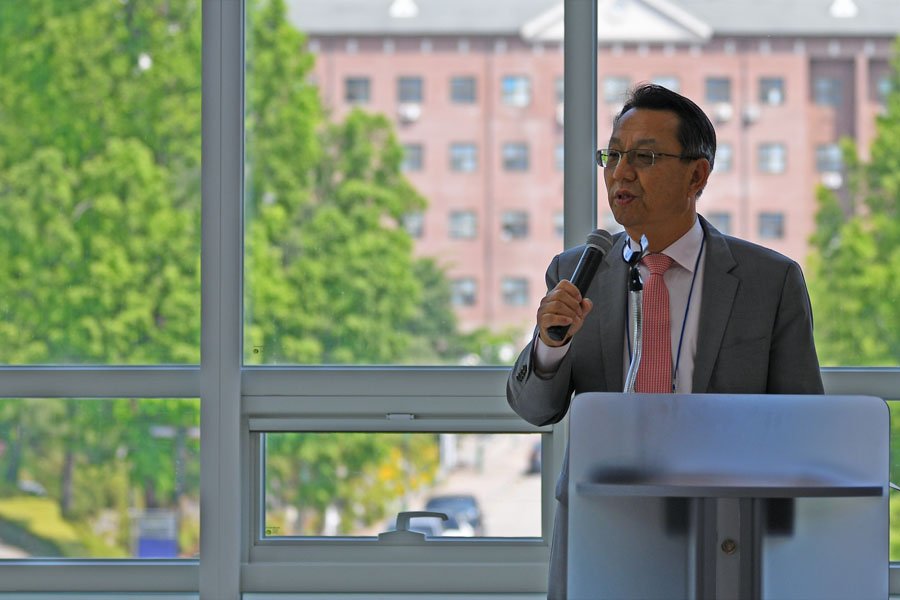


 Student speaker Manuel Ramos Maqueda addresses his classmates at the MIP graduation ceremony June 16, 2019. Photo: Freeman Spogli Institute