Human Rights
News Type
News
Date
Paragraphs

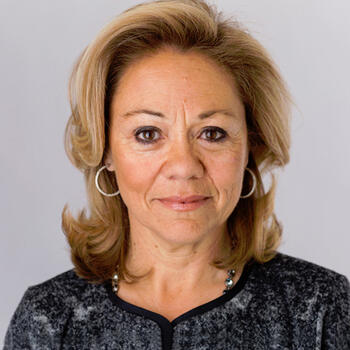
The faculty and staff of Stanford's Center on Democracy, Development and the Rule of Law, as well as the undersigned alumni of the Draper Hills Summer Fellows Program, wish to protest the completely unjustified arrest and pending trial of the researcher Tatiana Kouzina on June 28, 2021 by Belarusian authorities. Ms. Kouzina now faces unspecified criminal charges that could lead to her extended detention.

Following a fraudulent presidential election in August 2020, there have been ongoing peaceful protests and demonstrations in opposition of the Belarusian government and President Alexander Lukashenko. During this time, the government has unjustly arrested thousands of activists and protesters. Waves of repression reached politicians, civil society organizations, media, the research community, and ordinary citizens. The arrest of Ms. Kouzina is another in a series of troubling steps that the Belarusian government has taken against its people. We call for the release of Ms. Kouzina and other political prisoners currently being held in Belarus.

Ms. Kouzina is a highly respected Belarusian expert who was the co-founder, teacher, and researcher at the School of Young Managers in Public Administration (SYMPA) and the Belarusian Institute for Public Administration Reform and Transformation (BIPART). In this capacity, she conducted substantial research in the field and contributed to numerous policy and research documents, including as part of SYMPA's participation in EU-STRAT, an international research project implemented by a consortium of the leading European universities (including the Free University of Berlin and Leiden University, Netherlands) and think tanks in 2016-2019. As a long-time recognized member of the Belarusian research community, Ms. Kouzina has contributed immensely to its development and sustainability. From 2010-2015, she was the Executive Director of the Belarusian Institute for Strategic Studies (BISS) and has cooperated with the Belarus Research Council (BRC), other Belarusian think tanks, and civil society organizations throughout her career.

Ms. Kouzina's arrest is a shocking example of the current Belarusian regime's repressive policies that have attacked other members of the Belarusian research and expert community. As researchers ourselves and members of the broader global democratic community, we strongly protest this arbitrary arrest and demand that Ms. Kouzina be released immediately.

Signed,

Francis Fukuyama, Mosbacher Director of the Center on Democracy, Development and the Rule of Law, Stanford University, USA

Michael McFaul, Director, Freeman Spogli Institute for International Studies, Stanford University, USA

Olga Stuzhinskaya, international affairs and development expert, founder and former director of the Office for a Democratic Belarus in Brussels, CDDRL alumni 2006

Victor Liakh, East Europe Foundation, Ukraine

Hoi Trịnh, Board Member, VOICE, USA

Anna Dobrovolskaya, Memorial Human Rights Center, Россия

Mahdi Al Hajat, free journalist, Iraq

Haykuhi Harutyunyan, Corruption prevention commission, Armenia

Ruby Tetteh, Deputy Director, MOTI, Ghana

Denis Volkov, CDDRL alumni, Russia

Dmytro Potekhin, CEO, Factology.Systems, Ukraine

Abbas Milani, Hamid and Christina Moghadam Director of Iranian Studies, Stanford University, USA

Sasha Jason, Program Manager, Center on Democracy, Development and the Rule of Law, Stanford University, USA

Professor Donald Emmerson, Senior Fellow Emeritus, Stanford University, USA

Jamie O'Connell, Lecturer in Residence, Stanford Law School, and CDDRL affiliated faculty, USA

Belinda Byrne, Program Administrator, Stanford University, USA

Katherine Welsh, Administrative Associate at the Center on Democracy, Development and the Rule of Law, Stanford University, USA

Amr Hamzawy, Senior research scholar, Stanford University, USA

Erik Jensen, Professor of the Practice of Law, Director, Rule of Law Program, Stanford Law School, USA

Anna Grzymala-Busse, Michelle and Kevin Douglas Professor of International Studies, Stanford University, USA

Marcel Fafchamps, Senior Fellow, CDDRL, Stanford University, USA

Yusmadi Yusoff, People's Justice Party (KEADILAN), Malaysia

Olga Aivazovska, Head of Board, Civil Network OPORA, Ukraine

Befekadu Hailu, Center for Advancement of Rights and Democracy (CARD), Ethiopia

Varvara Pakhomenko, Consultant, Russia

Olena Sotnyk, Human rights defender, Ukraine

Elsa Marie DSilva, Red Dot Foundation, India

Laila Kiki, The Syria Campaign, Syria

Alla Kos, Austria

Nino Evgenidze, EPRC, Georgia

James D. Fearon, Professor, Stanford University, USA

Nino Chichua, Georgia Healthcare Group, Georgia

Janaína Homerin, Draper Hills Summer Fellow, Brazil

David Smolansky, Mayor in Exile, Venezuela

Hadeel AlQaq, Jordan

Eka Kemularia, Director, Green Line, Georgia

Yuriy Bugay, Independent consultant, NGO activist, Ukraine

Lauren Weitzman, Program Manager CDDRL, Stanford University, USA

Steve Luby, Professor of Medicine, Stanford University, USA

Hero Image
Tatiana Kouzina
Tatiana Kouzina
All News button
1
Subtitle

The faculty and staff of Stanford's Center on Democracy, Development and the Rule of Law, as well as the undersigned alumni of the Draper Hills Summer Fellows Program, wish to protest the completely unjustified arrest and pending trial of the researcher Tatiana Kouzina on June 28 by Belarusian authorities.

News Type
News
Date
Paragraphs

"Haley's thesis is a critical analysis of the human rights discourse on North Korea. She notes that the human rights abuses are indisputable; but she finds a degree of tone-deafness around human rights activism that she traces to an absence of definition of terms," says Dafna Zur, Associate Professor, Korean Literature and Culture and Director of the Center for East Asian Studies. “Her inquiry led to two threads of analysis: the first is a deconstruction of some of the assumptions made by human rights' actors (and her exposure of their sometimes contradictory approaches); and the second is her reading of North Korean fiction as a way of understanding the relationship between the individual and the state. Haley's thesis brings a fresh perspective on what is typically a highly charged topic, and leaves room for possible policy adjustments.”

In Gordon's own words: "My thesis explores the contentious conversation surrounding North Korean human rights. If there is widespread agreement that North Korea’s human rights situation is appalling, then why is there still such heated disagreement over how best to improve it? What exactly are we talking about when we say ‘human rights’ in the context of North Korea? By way of answering these questions, I argue that the various governments, NGOs, activists, and international bodies that have a stake in the human rights conversation prioritize different historical goals and motives—denuclearization, reunification of the Korean Peninsula, regime change, etc.— that then shape their approaches to human rights.”

“I argue that it is also important to examine how human rights are conceived of within North Korea, in order to better understand—although not condone—the country’s ongoing abuses.” Gordon comments, “In the absence of an open and honest rights dialogue within the DPRK, I analyze state-sanctioned works of fiction, looking at how human rights, as manifested in the relationship between the state and individual, are presented to the North Korean populace. These stories illuminate a concept of human rights that prioritizes the right to survival of the North Korean nation itself; one that is very much at odds with the goals of other stakeholders."

Sponsored by the Korea Program and the Center for East Asian Studies, the writing prize recognizes and rewards outstanding examples of writing by Stanford students in an essay, term paper or thesis produced during the current academic year in any discipline within the area of Korean studies, broadly defined. The competition is open to both undergraduate and graduate students.

Past Recipients:
9th Annual Prize (2020)
8th Annual Prize (2019)
7th Annual Prize (2018)
6th Annual Prize (2017)
5th Annual Prize (2016)
4th Annual Prize (2015)
3rd Annual Prize (2014)
2nd Annual Prize (2013)
1st Annual Prize (2012)


Read More

"Patterns of Impunity" by Robert King on a backgorund showing the flags of North Korea, South Korea, and the United States.
News

Why North Korean Human Rights Matter: Book Talk with Robert R. King

In his new book, "Patterns of Impunity," Ambassador King, the U.S. special envoy for North Korean human rights from 2009 to 2017, shines a spotlight on the North Korean human rights crisis and argues that improving human rights in the country is an integral part of U.S. policy on the Korean peninsula.
Why North Korean Human Rights Matter: Book Talk with Robert R. King
Little white cup of espresso coffee, opened book, blue semi-transparent vase with purple lilac flowers on rustic wooden table in the garden at spring morning after sunrise or at evening before sunset
News

What to Read This Summer — 2021: Book Recommendations by APARC Faculty

APARC faculty suggest dozens of books for your summer reading.
What to Read This Summer — 2021: Book Recommendations by APARC Faculty
Postdoc Spotlight on Nhu Truong, 2020-21 Shorenstein Fellow
Q&As

Postdoc Spotlight: Nhu Truong Compares Government Responsiveness in China and Vietnam

2020-21 Shorenstein Postdoctoral Fellow Nhu Truong, who studies how authoritarian regimes like China and Vietnam respond to social pressure, explains why understanding differences in governance is crucial in an era of fluctuating politics and pandemic.
Postdoc Spotlight: Nhu Truong Compares Government Responsiveness in China and Vietnam
Hero Image
Haley Gordon awarded the tenth annual Korean Studies Writing Prize
All News button
1
Subtitle

Haley Gordon (MA '21, East Asian Studies) was awarded the 10th annual Korea Program Prize for Writing in Korean Studies, for her paper "Nation-Being in North Korea: New Perspectives on Human Rights."

Authors
Callista Wells
News Type
News
Date
Paragraphs

In collaboration with Global:SF and the State of California Governor’s Office of Business and Economic Development, the China Program at Shorenstein APARC presented session five of the New Economy Conference, "Navigating Chinese Investment, Trade, and Technology," on May 19. The program featured distinguished speakers Ambassador Craig Allen, President of the US-China Business Council; David K. Cheng, Chair and Managing Partner of China & Asia Pacific Practice at Nixon Peabody LLPJames Green, Senior Research Fellow at the Initiative for U.S.-China Dialogue on Global Issues at Georgetown University; and Anja Manuel, Co-Founder and Principal of Rice, Hadley, Gates & Manuel LLC. The session was opened by Darlene Chiu Bryant, Executive Director of GlobalSF, and moderated by Professor Jean Oi, William Haas Professor of Chinese Politics and director of the APARC China Program.

U.S.-China economic relations have grown increasingly fraught and competitive. Even amidst intensifying tensions, however, our two major economies remain intertwined. While keeping alert to national security concerns, the economic strength of the United States will depend on brokering a productive competition with China, the world’s fastest growing economy. Precipitous decoupling of trade, investment, and human talent flows between the two nations will inflict unnecessary harm to U.S. economic interests--and those of California.  

Chinese trade and investments into California have grown exponentially over the last decade. But they have come under increasing pressure following geopolitical and economic tensions between the two nations, particularly in the science and technology sectors. Ambassador Craig Allen, David Cheng, James Green, and Anja Manuel explored the role of Chinese economic activity in California in the context of the greater US-Chinese relationship. Watch now: 

Read More

American and Chinese flags
News

U.S.-China Relations in the Biden Era

Dr. Thomas Wright examines the recent history of US-China relations and what that might mean for the new administration.
U.S.-China Relations in the Biden Era
Hero Image
Blue image with event title, time, and date
All News button
1
Subtitle

Ambassador Craig Allen, David Cheng, James Green, and Anja Manuel explore the role of Chinese economic activity in California in the context of the greater US-Chinese relationship.

Authors
Kiyoteru Tsutsui
News Type
Commentary
Date
Paragraphs

This commentary by Kiyoteru Tsutsui and Charles Crabtree was originally published in The Hill.


The recent White House summit meeting between President Biden and Japanese Prime Minister Yoshihide Suga signaled to the world, and especially to China, that the U.S.-Japan alliance is strong and ready for intensifying competition in Asia.

For the first time in more than 50 years, the Japanese and American leaders mentioned Taiwan in their joint statement. China immediately responded with strong words, as expected, but since has moderated its tone. Furthermore, Chinese leader Xi Jinping participated in the U.S.-organized Leaders Summit on Climate the week after the Biden-Suga meeting and took a collaborative stance, a hopeful sign that competition will not eliminate the possibility of some collaboration and that climate change is an area where Beijing, Tokyo and Washington can work together.

But the U.S. and Japan still have at least three concerns about China: Beijing’s continued posturing on Taiwan and the Senkaku Islands; its significant leverage in economic relations; and its repression of human rights in Xinjiang, Hong Kong and beyond. How should the alliance handle these important issues? 

On the security front, America’s return to multilateralism under Biden is a welcome development for Japan and other like-minded states in the region. The U.S.-Japan alliance is obviously central in the coalition of democratic nations concerned about China’s ambitions. The primary goal of these countries ought to be walking the thin line between demonstrating their resolve to counter any aggressive behavior by China with force and avoiding any unnecessary provocation against China. 

Toward that end, the most promising framework is the Quad that includes India and Australia in addition to Japan and the U.S. The first-ever leader-level meeting in March elevated the Quad’s status significantly. While it still is a long way from becoming a NATO-like security apparatus — and it’s not even clear if that’s the consensus goal — it could help stabilize the region by creating a credible counterweight to check China’s territorial ambitions.

Beyond the Quad, the inclusion of other like-minded stakeholders such as South Korea and ASEAN countries on security matters is important. With South Korean President Moon Jae-in’s visit to Washington planned in late May, a good first step for the Biden administration would be to invest some diplomatic capital in mending fences between Japan and South Korea. A full-scale reconciliation between the two regional powers is unlikely this year; Suga faces elections in the fall, for which he needs to consolidate the conservative base, and Moon is a lame duck with limited political power. But some reconciliation would be welcome for the U.S. as it seeks to resurrect the trilateral alliance with Japan and South Korea to complement the Quad in deterring China’s ambitions and addressing the threat posed by North Korea. 

In the economic domain, China is arguably even more difficult to contain, being the largest trade partner for virtually all the countries in the region. Decoupling from China was a key theme at the Biden-Suga summit, but this is a task that has proven much easier said than done. From semiconductors to rare earth minerals, the battle for key materials for the 21st century economy will only intensify, and China’s grand scheme in the Belt and Road Initiative needs to be countered by a similarly grand long-term strategy that would flesh out the Free and Open Indo-Pacific vision.

In this regard, the U.S.-Japan Competitiveness and Resilience Partnership can be quite consequential. In addition to pledging cooperation on “sensitive supply-chain” issues, it outlines the agenda for technological innovation that cuts across security and economic domains, making it a critical tool in the competition with China. This is because whoever develops an edge in transformational technologies — such as artificial intelligence, 5G infrastructure, and outer space development — will enjoy diplomatic and military advantages as well as economic profits. The combined $4.5 billion investment in the partnership is a good first step to ensuring that the U.S. and Japan retain an innovation advantage. Additional expenditures likely will be necessary, though, considering China’s commitment in these areas.

On human rights, Japan and America take different approaches. While the U.S. has called the situation in Xinjiang a genocide and imposed sanctions there, as well as in Myanmar following the military coup, Japan has taken a more subdued stance. This is a standard approach for Tokyo, which prefers to emphasize engagement with violating governments.

The Biden administration seems to accept Suga’s strategy of engagement, and perhaps the diplomatic channel that this approach provides can be useful in negotiating some kind of settlement. However, the strategy of engagement that has produced some benefits in countries such as Thailand and possibly Myanmar is unlikely to be as effective with China. Furthermore, several Western corporations are facing boycotts in China for taking a stand against forced labor in Xinjiang. If Japanese corporations avoid paying the price and continue business as usual, Tokyo might face greater pressure to take some action. Given the central importance of the Chinese market for Japanese businesses, this could give rise to significant tension between Tokyo and Washington. 

On all these dimensions, for Japan and the U.S. to be effective in countering China, both Biden and Suga would have to consolidate domestic support. Biden’s first 100 days generally were seen as successful, with COVID-19 vaccine distribution going smoothly and Congress passing ambitious spending bills. Besides, Biden has at least until the midterm elections in November 2022 to move things forward.

The timetable is less friendly for Suga, who needs to win the Liberal Democratic Party (LDP) presidential election in September and hold a House of Representatives election by October. His fate will be shaped in large measure by his government’s pandemic response and how that influences economic fortunes, and to a lesser extent the success of the Tokyo Olympics. Most Tokyo insiders predict that he will remain in office past October, citing weak opposition both in and outside of the ruling LDP. If, however, COVID-19 vaccine distribution does not move forward by the fall, as projected by the government, and the economy continues to slide, that could still trip him up.

Only with domestic political stability and economic prosperity can Tokyo and Washington take the next steps in projecting strength vis-à-vis China, and that is the best deterrent against China’s expansionist ambitions and toward ensuring peace and stability in the Indo-Pacific area.

Read More

President Biden and President Suga walk through the Rose Garden colonnade at the White House
Commentary

U.S. and Japan Gear Up for a New Era of Competition with China

The time is near when other Asian nations will have to pick a side in the great power competition between the United States and China, says Japan Program Director Kiyoteru Tsutsui.
U.S. and Japan Gear Up for a New Era of Competition with China
A man wearing a face mask prays for the new year at Meiji Shrine in Tokyo, Japan.
Commentary

Japan's Challenges in the Next Year are Greater than its Opportunities

Surging coronavirus cases and ongoing political scandals have docked Suga's approval ratings, but successfully handling the upcoming Olympics and taking further strides with the United States, ASEAN, and South Korea may help him rebound.
Japan's Challenges in the Next Year are Greater than its Opportunities
A loaded shipping liner sails out of port.
Commentary

Let's Keep it the 'Free and Open' Indo-Pacific

Both Japan's Suga and the incoming Biden administration should maintain the language of the "free and open Indo-Pacific" for consistency and to signal their ongoing commitment to maintaining a firm policy stance on China's ambitions.
Let's Keep it the 'Free and Open' Indo-Pacific
Hero Image
President Biden and President Suga walk through the Rose Garden colonnade at the White House Getty Images
All News button
1
Subtitle

From Taiwan and the Senkaku Islands to economics, trade, and human rights issues in Xinjiang and Hong Kong, the U.S.-Japan alliance has plenty to tackle with its policies towards China.

We invite the CDDRL community to join the Leadership Network for Change for our first online event of the year, next Wednesday at 12 PM Pacific time.  Leadership Network for Change alumni Amira Yahyaoui, Nancy Okail, Abdelrahman Mansour, and Mohamad Najem will serve as panelists, while Freeman Spogli Institute and Hoover Institution Senior Fellow Larry Diamond will moderate and oversee a Q+A session at the end of the panel.  Join our panelists as they elaborate on regional developments through the lens of different fields, including human rights, tech in democracy, and changes to policy and activism throughout the COVID-19 pandemic.

The Leadership Network for Change is a network of mid-career, global public policy reformers who have all completed one of CDDRL's practitioner programs (Draper Hills Summer Fellows Program, The Leadership Academy for Development, and the Ukrainian Emergin Leaders Program). To find out more about these programs and our network, you can visit the individual program pages on CDDRL's main website. 

Online, via ZOOM: REGISTER

Abdelrahman Mansour Founder of "We Are All Khaled Said" FB Page
Mohamad Najem Advocacy and Policy Director, Social Media Exchange
Nancy Okail Former Executive Director of TIMEP
Amira Yahyaoui Founder of Mos.com

Image
Digital Activism and Authoritarian Adaptation in the Middle East Agenda (1 of 2)

Image
Digital Activism and Authoritarian Adaptation in the Middle East Agenda (2 of 2)

Panel 1: Digital Activism

Tuesday, May 25, 2021 | 9-10:30 am PT

Opening Remarks: Marc Lynch, Eileen Donahoe, and Larry Diamond

Moderator: Hesham Sallam

  • Wafa Ben-Hassine: “The Hyper-Aware and Not-So-Aware: What's Next for the MENA Region's Activists and Society at Large Vis-a-Vis the Internet?”
  • Adel Iskander: “Re(Membering) Culture and Heritage: Egypt's Latest Political Turf War”
  • Zachary Steinert-Threlkeld: “Civilian Behavior on Social Media During Civil War”
  • Joshua Tucker: “Beyond Liberation Technology? The Recent Uses of Social Media by Pro-Democracy Activists”


Panel 2: Authoritarian Abuses of Internet Technologies

Thursday, May 27, 2021 | 9-10:30 am PT

Moderator: Marc Lynch

  • Marwa Fatafta: “Transnational or Cross-Border Digital Repression in the MENA Region”
  • Andrew Leber: “Social Media Manipulation in the MENA: Inauthenticity, Inequality, and Insecurity” (Co-authored paper with Alexei Abrahams)
  • Marc Owen Jones: “Tracking Adversaries: The Evolution of Manipulation Tactics on Gulf Twitter”
  • Xiao Qiang: “Chinese Digital Authoritarianism and Its Global Impact”


Panel 3: Government Reshaping of Norms and Practices to Constrain Online Activity

Tuesday, June 1, 2021 | 9-10:30 am PT

Moderator: Eileen Donahoe

  • Ahmed Shaheed: “Binary Threat: How State Cyber Policy and Practice Undermines Human Rights in the Middle East and North Africa Region”
  • Mona Elswah, Mahsa Alimardani: "The Hurdles Involved in Content Moderation in the MENA Region"
  • Mohamed Najem: “The Role of the Gulf in Governing Digital Space in the Arab Region”
  • James Shires: “The Techno-Regulation of Critical Communications Infrastructures and Their Political Potential in the Gulf”
  • Alexei Abrahams: “The Web (In)Security of Middle Eastern Civil Society and Media”


Panel 4: Cross-Border Information Operations

Thursday, June 3, 2021 | 9-10:30 am PT

Moderator: Larry Diamond

  • Alexandra Siegel: “Official Foreign Influence Operations: Transnational State Media in the Arab Online Sphere”
  • Hamit Akin Unver: “Russian Disinformation Operations in Turkey: 2015-2020”
  • Shelby Grossman and Renee DiResta: “In-House vs. Outsourced Trolls: How Digital Mercenaries Shape State Influence Strategies”
  • Nathaniel Gleicher: “Covert Manipulation, Overt Influence, Direct Exploit: Understanding and Countering Influence Operations in the Middle East and Beyond”
Authors
News Type
News
Date
Paragraphs

“How can we engage with North Korea on human rights?” That is the question Robert R. King, former U.S. special envoy for North Korean human rights issues at the U.S. Department of State, has long been focused on. King, a visiting scholar and Koret Fellow at APARC in fall 2019, rejoined the Korea Program to discuss his new book, Patterns of Impunity.

In this volume, he provides an inside look into his time as special envoy, traces U.S. involvement and interest in North Korean human rights, offers insights into the United Nations’ role in addressing the North Korean human rights crisis, and discusses the challenges of providing humanitarian assistance to a country with no formal relations with the United States and where separating human rights from politics is virtually impossible.

King was joined by his longtime colleague Jung-Hoon Lee, South Korea's former Ambassador for Human Rights and the ROK’s inaugural Ambassador-at-Large for North Korean Human Rights. Watch their conversation:

[Subscribe to APARC’s newsletters to receive our experts' latest updates.]

The Role of the Special Envoy

As the Biden administration begins to review policy towards North Korea in earnest, King’s book and perspectives are particularly timely. Drawing on over a decade of experience, King explains how the role of the special envoy provides a unique opportunity to influence the policy agenda on human rights. As a senior member within the U.S. State Department, the envoy is in a position to both elevate the importance of rights violations to policymakers in Washington and provide feedback on how policy decisions impact the situation on the ground.     

King outlines several avenues where U.S. policymakers can increase pressure on North Korea to address the ongoing human rights crisis in the country. Predominantly among them is the recommendation to support the work on human rights already done by the UN and UN agencies, such as the reporting of Special Rapporteur Tomás Quintana.

“North Korea is very sensitive about its international legitimacy,” King notes. “Working through the UN and with UN agencies gives greater validity and acceptability to the human rights issues and puts greater pressure on North Korea to follow international norms.”

King’s other recommendations center more directly on the people of North Korea. He urges ongoing support for initiatives and agreements that foster access to information and proper distribution of resources and aid for North Koreans within the country along with freedom of movement for those who are attempting to leave and face crossing hostile borders into China. 

Responsibilities in Seoul

Speaking as King’s counterpart and colleague in South Korea, Jung-Hoon Lee echoed the need for visibility and accountability — both globally and in South Korea — for the DPRK's human rights crisis. “In the public eye and the global context, the human rights condition in North Korea is not very familiar. Why? There’s no access. The North Korean society is completely cocooned. There are terrible human rights conditions in other parts of the world, but there is access in those cases to see what is going on. In North Korea, there are only testimonials. There are no pictures or documentaries of the gulags and atrocities. That’s why it is so important that we keep raising this issue.”

For Lee, this means working with and through many of the same channels that King points to, such as the UN, and recognizing as a global community the scale of the crimes against humanity being committed.

But it also means accepting responsibilities closer to home. Lee firmly rejects the opinion raised by the South Korean Foreign Minister that refocusing on North Korean human rights and reappointing an ambassador to fill Lee’s now-vacant position is “useless.” Such indifference towards human rights issues in North Korea is damaging, warns Lee, citing the scrutiny South Korea suffered during the recent Tom Lantos Human Rights Commission hearings before the U.S. Congress.

The Road Towards Accountability

Human rights are only one facet of U.S. policy toward North Korea, but we undermine the overall relationship with the North if the United States abandons human rights in pursuit of security or economic goals, writes King in his book. "Policy toward North Korea involves interrelated issues that we frequently separate for analytical purposes or because they are dealt with in different ways or by different means. But these issues are interconnected, and they are not really separable."

Ultimately, any meaningful action to address North Korea's human rights violations will require coordinated efforts from international organizations, national governments, and civic organizations. In the third and final part of the Korea Program’s spring 2021 series on human rights in North Korea, forthcoming on May 20, leaders from the private sector will discuss the challenges of bringing together independent actors and organizations to raise awareness and call for accountability in North Korea. Registration for the event is open to the public.  

Read More

[Top left] Gi-Wook Shin; [top right] Roberta Cohen; [bottom left] Tomás Ojea Quintana; [bottom right] Joon Oh
News

Using the UN to Create Accountability for Human Rights Crimes in North Korea

Experts on human rights agree that the UN needs to work through multiple channels to support ongoing investigations and build evidence for future litigations in order to create accountability and pressure the DPRK to desist in committing human rights crimes.
Using the UN to Create Accountability for Human Rights Crimes in North Korea
Small flags of North Korea and China for sale near the China-North Korea border
Commentary

China’s Dangerous Double Game in North Korea

Biden must force Beijing to cooperate fully with Washington or pivot to obvious obstruction writes FSI Center Fellow Oriana Skylar Mastro in her latest op-ed for Foreign Affairs.
China’s Dangerous Double Game in North Korea
Brightly colored ribbons tied to fences around Imjingak Village in the DMZ on the North Korean Border.
News

Koret Conference Convenes Virtually to Discuss Human Rights Crisis in North Korea

Amid escalating inter-Korean tension and increasing economic and social strain on North Koreans in the era of COVID-19, the importance of keeping international attention on the DRPK’s human rights violations is more urgent than ever.
Koret Conference Convenes Virtually to Discuss Human Rights Crisis in North Korea
Hero Image
"Patterns of Impunity" by Robert King on a backgorund showing the flags of North Korea, South Korea, and the United States.
All News button
1
Subtitle

In his new book, "Patterns of Impunity," Ambassador King, the U.S. special envoy for North Korean human rights from 2009 to 2017, shines a spotlight on the North Korean human rights crisis and argues that improving human rights in the country is an integral part of U.S. policy on the Korean peninsula.

Authors
Noa Ronkin
News Type
News
Date
Paragraphs

STANFORD, CA, April 27, 2021 — Stanford University’s Walter H. Shorenstein Asia-Pacific Research Center (APARC) announced today that Burmese journalist Swe Win is the recipient of the 2021 Shorenstein Journalism Award. An acclaimed investigative journalist and human rights defender, Swe Win is the co-founder and editor-in-chief of Myanmar Now, an independent news agency that produces features, analysis, and investigative reports on life in the country in both Burmese and English. Presented annually by APARC, the Shorenstein award is conferred upon a journalist who has contributed significantly to a greater understanding of Asia through outstanding reporting on critical issues affecting the region. Swe Win will receive the award in fall quarter 2021.

Throughout his journalistic career, Swe Win has focused on underreported cases involving physical injury, wrongdoing, and miscarriage of justice in Myanmar. Under his leadership, Myanmar Now has gained recognition for its in-depth, unflinching reports of crimes against the Rohingya and spotlights on the lives of Myanmar’s impoverished communities, for criticizing ultranationalist Buddhist monks, and for its bold coverage of Aung San Suu Kyi’s administration and the Myanmar military, the Tatmadaw. Since the February 1, 2021 military coup, the Myanmar Now team has continued its brave coverage amid physical threats, violence, police raids, and arrests. Swe Win currently leads the Yangon-based Myanmar Now 40-member editorial team from exile and his newsroom is in hiding.

Swe Win has set a shining example to others with his undaunted commitment to advancing human rights and freedom of expression in Myanmar. His work demonstrates the moral force of independent, investigative journalism to speak truth to power.
Gi-Wook Shin
Director, Shorenstein APARC

Swe Win has faced multiple encounters with the military due to his investigative journalism work. In August 2019, soon after Myanmar Now published exposés of the vast business interests of top generals including Min Aung Hlaing, the commander-in-chief of the country’s armed forces, he sustained a gunshot wound while traveling in Rakhine State, a targeted shooting attack in which both civilian and military officials seem to have been involved. Two years earlier, he was arrested and had to defend himself against defamation charges for a Facebook post critical of U Wirathu, a fundamentalist Buddhist monk known for his anti-Muslim rhetoric. In 1998, as a college student during the time of Myanmar’s military regime, he was apprehended for joining the democracy movement and held for seven years as a political prisoner on national security-related charges.

Following his release from prison, Swe Win earned a Master’s degree in journalism from the University of Hong Kong, then worked for the Irrawaddy Magazine and freelanced for international publications including The New York Times and Al Jazeera. When the junta-era media censorship was lifted in 2012, he set up an independent newspaper, The Yangon Globe, and in 2015 cofounded Myanmar Now.

“Swe Win has set a shining example to others with his undaunted commitment to advancing human rights and freedom of expression in Myanmar,” said Gi-Wook Shin, Shorenstein APARC director. “His work demonstrates the moral force of independent, investigative journalism to speak truth to power, and he now leads a courageous, resilient fight for press freedom in the face of brutal attacks on democracy and liberty. It is our honor to recognize him with the Shorenstein Journalism Award.”

Swe Win is the recipient of the 2019 Ramon Magsaysay Award for Emergent Leadership, which is regarded as Asia's equivalent of the Nobel Prize, the 2017 European Union’s Schuman Award for Human Rights, and the 2016 Presidential Certificate of Honor for Social Service through Journalism from the Myanmar Ministry of Information for his groundbreaking investigation into years-long abuse of domestic workers at a Yangon tailor shop.

The Shorenstein Journalism Award, which carries a $10,000 cash prize, honors the legacy of APARC’s benefactor, Mr. Walter H. Shorenstein, and his twin passions for promoting excellence in journalism and understanding of Asia. “This year marks the twentieth anniversary of the Shorenstein Award,” noted Shin. “At a time when the Asia-Pacific region has the biggest number of ‘Predators of Press Freedom,’ to quote Reporters Without Borders, we are grateful more than ever to the Shorenstein family for its support of our Center’s mission and the journalism award program, and to the members of the award selection committee for their expertise and service.”

The selection committee for the Shorenstein Journalism Award includes Wendy Cutler, Vice President and Managing Director, Washington, D.C. Office, Asia Society Policy Institute; James Hamilton, Hearst Professor of Communication, Chair of the Department of Communication, and Director of the Stanford Journalism Program, Stanford University; Raju Narisetti, Publisher, McKinsey Global Publishing, McKinsey and Company; Philip Pan, Weekend Editor and former Asia Editor, The New York Times; and Prashanth Parameswaran, Senior Columnist, The Diplomat.

Nineteen journalists have previously won the Shorenstein award, including most recently Tom Wright, the co-author of the bestseller Billion Dollar Whale and a long-time Asia reporter; the internationally-esteemed journalist and press freedom champion Maria Ressa, CEO and executive editor of the Philippine news platform Rappler; Anna Fifield, formerly the Washington Post’s Beijing Bureau Chief and a veteran North Korea watcher; and Siddharth Varadarajan, the founding editor of the Wire and former editor of The Hindu.

APARC will share information about the 2021 Shorenstein Journalism Award program featuring Swe Win in the fall quarter.

Read More

People holding up images in protest
News

Terms of Engagement: Ambassador Scot Marciel on U.S.-Southeast Asia Relations

The book Ambassador Marciel is writing at Stanford examines policy issues from the implications of the Myanmar crisis to the future of America’s relations with other Southeast Asian nations and the prospects for a U.S. strategic regional focus.
Terms of Engagement: Ambassador Scot Marciel on U.S.-Southeast Asia Relations
[Top left] Gi-Wook Shin; [top right] Roberta Cohen; [bottom left] Tomás Ojea Quintana; [bottom right] Joon Oh
News

Using the UN to Create Accountability for Human Rights Crimes in North Korea

Experts on human rights agree that the UN needs to work through multiple channels to support ongoing investigations and build evidence for future litigations in order to create accountability and pressure the DPRK to desist in committing human rights crimes.
Using the UN to Create Accountability for Human Rights Crimes in North Korea
President Biden and President Suga walk through the Rose Garden colonnade at the White House
Commentary

U.S. and Japan Gear Up for a New Era of Competition with China

The time is near when other Asian nations will have to pick a side in the great power competition between the United States and China, says Japan Program Director Kiyoteru Tsutsui.
U.S. and Japan Gear Up for a New Era of Competition with China
Hero Image
Portrait of Swe Win with text "2021 Shorenstein Journalism Award Recipient" Photograph: Thet Htoo for the Mekong Review - https://mekongreview.com/cause-and-karma
All News button
1
Subtitle

An esteemed investigative journalist and human rights defender, Swe Win is the recipient of the twentieth Shorenstein Award. He currently leads the editorial team of the independent news agency Myanmar Now from exile and his newsroom is in hiding.

-

This is the third event in a three-part series on North Korea Human Rights hosted by APARC's Korea Program in the spring quarter.

Two experts in North Korea human rights issues, Minjung Kim of Save North Korea and Keith Luse of National Committee for North Korea, will discuss the range of humanitarian assistance to North Korea as well as challenges non-government organizations face from South Korea, the U.S. and North Korean governments in providing assistance.

Speakers:

Image
Minjung Kim, Save North Korea. Speaker of May 20 event.
Minjung Kim is Associate Executive Director at Save North Korea (SNK), a non-government organization focusing on human rights in North Korea; and a Vice President at Future Korea Media, a bi-weekly journal focusing on national security and politics in South Korea. Since joining SNK as a founding member 22 years ago, she has been managing various projects from producing mid-wave radio programs, bringing North Korean defectors into South Korea, helping them adjust socially and culturally, to sending leaflet-balloons and hidden cameras into North Korea. Kim is also a visiting researcher at Georgetown University and a research fellow at the Yonsei Institute for Modern Korean Studies. She is a Ph.D. candidate at Yonsei Graduate School of International Studies.

Image
Keith Luse, National Committee on North Korea. Speaker of May 20 event on North Korea human rights.
Keith Luse is Executive Director of the National Committee on North Korea (NCNK), an organization dedicated to promoting principled engagement between the United States and North Korea. NCNK members include representatives of US non-governmental organizations providing humanitarian assistance to North Korea. Other members are former US Ambassadors, nuclear scientists, and members of the academic community. NCNK members specialize in matters related to nuclear nonproliferation, Korean War POW/MIA/human remains; human rights and families divided by the Korean War, among other topics. Luse has made five visits to North Korea. The first occurring in 2002 on behalf of Senator Richard Lugar, then-Chairman of the Senate Agriculture Committee focused on monitoring and accountability regarding the distribution of U.S. food assistance. Subsequent trips for Senator Lugar were during his tenure as Chairman and later Ranking Member of the Senate Foreign Relations Committee.

Yong Suk Lee, deputy director of the Korea Program, will moderate the discussion.


Via Zoom: Register at https://bit.ly/3eocnCk

Authors
News Type
News
Date
Paragraphs

Political attention is turning once again to the Korean Peninsula and the United States’ policy towards both the Democratic People's Republic of Korea. On April 15, 2021, the Human Rights Commission of the United States Congress convened a hearing on “Civil and Political Rights in the Republic of Korea: Implications for Human Rights on the Peninsula.” This follows on the announcement of the first face-to-face White House visit between President Biden and President Moon Jae-In where “North Korea is likely to be high on the agenda.”

In the first of three public events on North Korea Human Rights, APARC’s Korea Program hosted Tomás Ojea Quintana, United Nations Special Rapporteur on the situation of human rights in DPRK; Roberta Cohen, co-chair emeritus of the Committee for Human Rights in North Korea; and former South Korean Ambassador to the United Nations Joon Oh for a discussion of what role the United Nations plays in creating accountability for the ongoing human rights violations and crimes against humanity being enacted by the North Korean government against its people.

The full discussion is available to watch below.

[Subscribe to APARC’s newsletters for updates on our scholars’ research.]

Exploring Means of Enforcing Accountability

Speaking as an independently acting investigator, Special Rapporteur Tomás Ojea Quintana echoed the findings of his predecessors in warning that the activity within North Korea has escalated from human rights violations to international crimes against humanity, including extermination, enslavement, torture, sexual violence, and knowingly inflicting prolonged starvation.

What governing body has the ability to hold national leadership at the highest level accountable for such crimes? Quintana outlines several options. One is the International Criminal Court, the international tribunal seated in The Hauge. However, superpower nations such as the United States, China, and Russia are historically recalcitrant to the jurisdiction of this legal body and could feasibly veto a case against the DPRK sent to the ICC.

Another option is for the UN Security Council to create a hybrid tribunal through which international prosecution could litigate. This option is more ad hoc, but would circumvent some of the potential veto pitfalls to using the ICC.

The Secretary General of the United Nations could also use the pejoratives given under Article 99 of the United Nations Charter to force action and accountability forward. This would be a difficult and even unprecedented means of jurisdiction, but it is supported by an already existing, if rarely enacted, legal framework.

Moving Forward

Each of the avenues proposed by Special Rapporteur Quintana has varying levels of efficacy and shortcomings, particularly in the immediate context of the ongoing COVID-19 pandemic and the further hindrance it has created to gathering evidence and intelligence directly from North Korea. As Roberta Cohen notes,

“No possibility exists right now for International Criminal Court referral, or establishing an ad hoc tribunal, but progress is nonetheless being made in laying the groundwork for eventual criminal prosecution and other aspects of transitional justice.”

Former Ambassador Joon Oh echoes the importance of keeping the issue of human rights and international crimes in North Korea in the spotlight even if immediate legal options stall.

“The issue of accountability is extremely important. These alternative ways [of creating accountability] should be explored. Exploring these avenues adds pressure on North Korea. Even remote possibilities add pressure, which might help change their behavior.”

On April 26, 2021, Ambassador Robert King, former U.S. Special Envoy for North Korean human rights issues will continue the dialogue on accountability in North Korea with a discussion of his forthcoming book, Patterns of Impunity: Human Rights in North Korea and the Role of the U.S. Special Envoy, and the role the South Korean and U.S. governments play in promoting human rights in North Korea. Registration for the book launch is open through the day of the event.  

Read More

Brightly colored ribbons tied to fences around Imjingak Village in the DMZ on the North Korean Border.
News

Koret Conference Convenes Virtually to Discuss Human Rights Crisis in North Korea

Amid escalating inter-Korean tension and increasing economic and social strain on North Koreans in the era of COVID-19, the importance of keeping international attention on the DRPK’s human rights violations is more urgent than ever.
Koret Conference Convenes Virtually to Discuss Human Rights Crisis in North Korea
Small flags of North Korea and China for sale near the China-North Korea border
Commentary

China’s Dangerous Double Game in North Korea

Biden must force Beijing to cooperate fully with Washington or pivot to obvious obstruction writes FSI Center Fellow Oriana Skylar Mastro in her latest op-ed for Foreign Affairs.
China’s Dangerous Double Game in North Korea
(From left to right) Siegfried Hecker, Victor Cha, Oriana Mastro, Gi-Wook Shin, Robert Carlin
News

Experts Discuss Future U.S. Relations with North Korea Amid Escalations

Led by APARC, a panel of scholars hosted by the Freeman Spogli Institute weighs in on the implications of recent events on the Korean peninsula and the ongoing uncertainties in charting a future course with the DPRK.
Experts Discuss Future U.S. Relations with North Korea Amid Escalations
Hero Image
[Top left] Gi-Wook Shin; [top right] Roberta Cohen; [bottom left] Tomás Ojea Quintana; [bottom right] Joon Oh
All News button
1
Subtitle

Experts on human rights agree that the UN needs to work through multiple channels to support ongoing investigations and build evidence for future litigations in order to create accountability and pressure the DPRK to desist in committing human rights crimes.

Subscribe to Human Rights