Human Rights
-

This is a joint event with the Center for Strategic and International Studies (CSIS) in Washington, D.C.

Event Time: October 28, 12:00 PM (PDT)/3:00 PM (EDT)
Please register for this event at the CSIS event website, https://bit.ly/3DC4zI3.

Image
Book cover of The North Korean Conundrum
While North Korea’s nuclear weapons and the security threat it poses have occupied the center stage and eclipsed other issues in recent years, human rights remain important to U.S. policy. The edited volume, The North Korean Conundrum, explores how dealing with the issue of human rights is shaped and affected by the political issues with which it is so entwined. In this book launch event, contributors of the book will discuss the relationship between human rights and denuclearization, and how North Koreans’ limited access to information is part of the problem, and how this is changing.

Speakers:
Victor Cha is Senior Vice President and Korea Chair at CSIS; Vice Dean for Faculty and Graduate Affairs & D.S. Song-KF Professor of Government at Georgetown University. He left the White House in 2007 after serving since 2004 as director for Asian affairs at the National Security Council (NSC). At the White House, he was responsible primarily for Japan, the Korean Peninsula, Australia/New Zealand, and Pacific Island nation affairs. He was also the deputy head of delegation for the United States at the Six-Party Talks in Beijing and received two outstanding service commendations during his tenure at the NSC. He was the 2019-20 Koret Fellow for the winter quarter at Stanford.

Robert King served as the special envoy for North Korean human rights issues, an ambassadorial-ranked position, at the Department of State, from 2009 to 2017. He is a senior advisor to the Korea Chair at the Center for Strategic and International Studies, a senior fellow at the Korea Economic Institute, and a board member of the Committee for Human Rights in North Korea in Washington, D.C. Ambassador King was the 2019-20 Koret Fellow for the fall quarter at Stanford.

Nat Kretchun is Vice President for Programs at the Open Technology Fund (OTF), a congressionally funded non-profit organization that supports the development and deployment of anti-censorship, privacy, and security technologies for populations living under repressive information censorship regimes.

Moderator:
Gi-Wook Shin, Director of Shorenstein Asia-Pacific Research Center and the Korea Program; the William J. Perry Professor of Contemporary Korea, Stanford University

Online event. Register at https://bit.ly/3DC4zI3

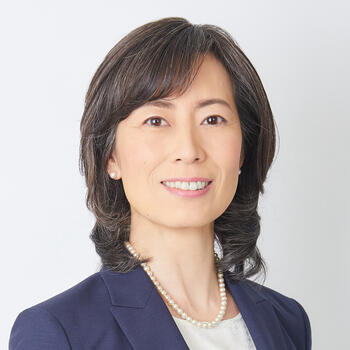
Victor Cha
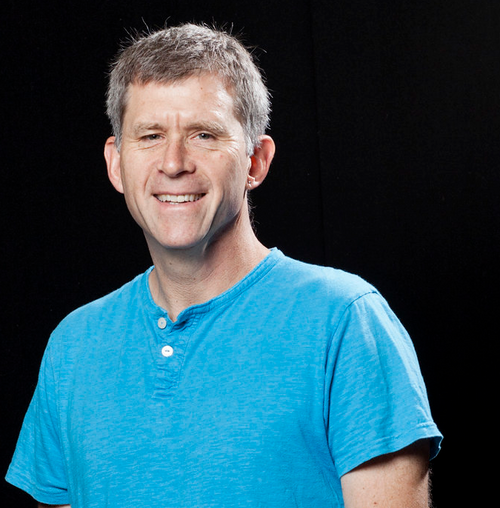
Robert King
Nat Kretchun
Shorenstein APARC
Encina Hall E301
616 Jane Stanford Way
Stanford, CA 94305-6055
(650) 724-8480 (650) 723-6530
0
Senior Fellow at the Freeman Spogli Institute for International Studies
Professor of Sociology
William J. Perry Professor of Contemporary Korea
Professor, by Courtesy, of East Asian Languages & Cultures
Gi-Wook Shin_0.jpg PhD

Gi-Wook Shin is the William J. Perry Professor of Contemporary Korea in the Department of Sociology, senior fellow at the Freeman Spogli Institute for International Studies, and the founding director of the Korea Program at the Walter H. Shorenstein Asia-Pacific Research Center (APARC) since 2001, all at Stanford University. In May 2024, Shin also launched the Taiwan Program at APARC. He served as director of APARC for two decades (2005-2025). As a historical-comparative and political sociologist, his research has concentrated on social movements, nationalism, development, democracy, migration, and international relations.

In Summer 2023, Shin launched the Stanford Next Asia Policy Lab (SNAPL), which is a new research initiative committed to addressing emergent social, cultural, economic, and political challenges in Asia. Across four research themes– “Talent Flows and Development,” “Nationalism and Racism,” “U.S.-Asia Relations,” and “Democratic Crisis and Reform”–the lab brings scholars and students to produce interdisciplinary, problem-oriented, policy-relevant, and comparative studies and publications. Shin’s latest book, The Four Talent Giants, a comparative study of talent strategies of Japan, Australia, China, and India to be published by Stanford University Press in the summer of 2025, is an outcome of SNAPL.

Shin is also the author/editor of twenty-seven books and numerous articles. His books include The Four Talent Giants: National Strategies for Human Resource Development Across Japan, Australia, China, and India (2025)Korean Democracy in Crisis: The Threat of Illiberalism, Populism, and Polarization (2022); The North Korean Conundrum: Balancing Human Rights and Nuclear Security (2021); Superficial Korea (2017); Divergent Memories: Opinion Leaders and the Asia-Pacific War (2016); Global Talent: Skilled Labor as Social Capital in Korea (2015); Criminality, Collaboration, and Reconciliation: Europe and Asia Confronts the Memory of World War II (2014); New Challenges for Maturing Democracies in Korea and Taiwan (2014); History Textbooks and the Wars in Asia: Divided Memories (2011); South Korean Social Movements: From Democracy to Civil Society (2011); One Alliance, Two Lenses: U.S.-Korea Relations in a New Era (2010); Cross Currents: Regionalism and Nationalism in Northeast Asia (2007);  and Ethnic Nationalism in Korea: Genealogy, Politics, and Legacy (2006). Due to the wide popularity of his publications, many have been translated and distributed to Korean audiences. His articles have appeared in academic and policy journals, including American Journal of SociologyWorld DevelopmentComparative Studies in Society and HistoryPolitical Science QuarterlyJournal of Asian StudiesComparative EducationInternational SociologyNations and NationalismPacific AffairsAsian SurveyJournal of Democracy, and Foreign Affairs.

Shin is not only the recipient of numerous grants and fellowships, but also continues to actively raise funds for Korean/Asian studies at Stanford. He gives frequent lectures and seminars on topics ranging from Korean nationalism and politics to Korea's foreign relations, historical reconciliation in Northeast Asia, and talent strategies. He serves on councils and advisory boards in the United States and South Korea and promotes policy dialogue between the two allies. He regularly writes op-eds and gives interviews to the media in both Korean and English.

Before joining Stanford in 2001, Shin taught at the University of Iowa (1991-94) and the University of California, Los Angeles (1994-2001). After receiving his BA from Yonsei University in Korea, he was awarded his MA and PhD from the University of Washington in 1991.

Selected Multimedia

Director of the Korea Program and the Taiwan Program, Shorenstein Asia-Pacific Research Center
Director of Stanford Next Asia Policy Lab, APARC
Date Label
Panel Discussions
-

Image
Bread and Freedom book cover
Egypt’s 2011 uprising is widely held to be a case of either failed democratic transition or inauthentic revolution. Scholars of democratic transitions blame Egypt’s bickering civilian politicians for failing to do the hard work of negotiated compromise to build an inclusive democracy. Scholars of revolution doubt that Egypt’s uprising counts as a revolution, since military generals did not cede the reins after Hosni Mubarak’s fall, and ultimately reconquered the state with their July 2013 coup. But what if instead of viewing Egypt as a uniform failure, we mine it for ideas on how to refresh our concepts of democracy and revolution? In this talk, based on her new book Bread and Freedom, Egypt’s Revolutionary Situation, Mona El-Ghobashy presents an interpretation of Egypt’s 2011 uprising that brings out some lost connections between democracy and revolution.
 

Register Now


SPEAKER BIO

Image
Mona El-Ghobashy
Mona El-Ghobashy is a scholar of the sociology and history of politics in Egypt, and the broader Middle East and North Africa. She is a Clinical Assistant Professor at Liberal Studies at New York University. Her research focuses on the dynamics of political contestation in Egypt before and after the 2011 uprising. Her first book, Bread and Freedom: Egypt’s Revolutionary Situation, was published by Stanford University Press in July 2021.

This event is co-sponsored by the "Ten Years on Project" and the Abbasi Program in Islamic Studies at Stanford University.

Online, via Zoom: REGISTER

Seminars
Authors
Nora Sulots
News Type
News
Date
Paragraphs

The Center on Democracy, Development and the Rule of Law is deeply saddened by the loss of beloved Draper Hills alumnus José Luis Martín C. (“Chito”) Gascón, who passed away after a short battle with COVID-19 on October 9, 2021, at the age of 57.

A Filipino lawyer, human rights activist, and civil organizer, Gascón served as the Chair of the Philippines’ Commission on Human Rights from 2015 to 2021, having been appointed by President Benigno S. Aquino III. Prior to this, he also served as a member of the Human Rights Victims’ Claims Board and as a member of the Philippine Congress, where he helped to pass monumental legislation to promote the prevention of human rights abuses. He contributed to the founding of the International Center for Innovation, Transformation, and Excellence in Governance; the Institute for Leadership, Empowerment, and Democracy; and the Asian Policy Network. Gascón’s career also included teaching law and political science at Ateneo de Manila University and De la Salle University.

Reacting to the news of Chito's death on Twitter, FSI Director Michael McFaul called him “a true hero for human rights.” Larry Diamond also paid tribute, noting that “he was eloquent, fearless, humble, and deeply devoted to democracy” and one of the Philippines’ “great civil society leaders.”

In 2005, Chito was a member of the first class of CDDRL's Draper Hills Summer Fellows Program, which trains global leaders working on the front lines of democratic change. Kathryn Stoner, Mosbacher Director of CDDRL, noted that he was "a pioneer with us and with all that he did."

In addition to his time as a Draper Hills Summer Fellow, Chito Gascón was a Reagan-Fascell Fellow at the National Endowment for Democracy (NED) in 2007. Former NED president and frequent Draper Hills contributor Carl Gershman shared that “Chito was a brilliant and dedicated democracy activist, a gentle personality with a tough inner core and immense courage. He will be sorely missed by countless friends, myself included, and by people around the world who are fighting for democracy and human dignity.”

Draper Hills class of 2005 on Encina Hall stairs
2005 Draper Hills Summer Fellows cohort. Chito is pictured in the back row between Kathryn Stoner and Larry Diamond.
Hero Image
Chito Gascón Photo: Joseph Pascual/Esquire Philippines
All News button
1
Subtitle

A member of the inaugural Draper Hills Summer Fellows Program cohort in 2005, Chito died from COVID-19 on October 9, 2021.

Paragraphs
Cover of North Korean Conundrum, showing a knotted ball of string.

Read our news story about the book >> 

North Korea is consistently identified as one of the world’s worst human rights abusers. However, the issue of human rights in North Korea is a complex one, intertwined with issues like life in the North Korean police state, inter-Korean relations, denuclearization, access to information in the North, and international cooperation, to name a few. There are likewise multiple actors involved, including the two Korean governments, the United States, the United Nations, South Korea NGOs, and global human rights organizations. While North Korea’s nuclear weapons and the security threat it poses have occupied the center stage and eclipsed other issues in recent years, human rights remain important to U.S. policy. 

The contributors to The North Korean Conundrum explore how dealing with the issue of human rights is shaped and affected by the political issues with which it is so entwined. Sections discuss the role of the United Nations; how North Koreans’ limited access to information is part of the problem, and how this is changing; the relationship between human rights and denuclearization; and North Korean human rights in comparative perspective.

Contents

  1. North Korea: Human Rights and Nuclear Security Robert R. King and Gi-Wook Shin
  2. The COI Report on Human Rights in North Korea: Origins, Necessities, Obstacles, and Prospects Michael Kirby
  3. Encouraging Progress on Human Rights in North Korea: The Role of the United Nations and South Korea Joon Oh 
  4. DPRK Human Rights on the UN Stage: U.S. Leadership Is Essential Peter Yeo and Ryan Kaminski
  5. Efforts to Reach North Koreans by South Korean NGOs: Then, Now, and Challenges Minjung Kim
  6. The Changing Information Environment in North Korea Nat Kretchun
  7. North Korea’s Response to Foreign Information Martyn Williams
  8. Human Rights Advocacy in the Time of Nuclear Stalemate: The Interrelationship Between Pressuring North Korea on Human Rights and Denuclearization  Tae-Ung Baik
  9. The Error of Zero-Sum Thinking about Human Rights and U.S. Denuclearization Policy Victor Cha
  10. Germany’s Lessons for Korea Sean King
  11. Human Rights and Foreign Policy: Puzzles, Priorities, and Political Power Thomas Fingar

Desk, examination, or review copies can be requested through Stanford University Press.

June 2022 Update

The Korean version of The North Korean Conundrum is now available, published by the Database Center for North Korean Human Rights (NKDB). Purchase the Korean version via NKDB's website >>

To mark the release of the Korean version of the book, APARC hosted a book talk in Seoul jointly with the Database Center for North Korean Human Rights, on June 9, 2022.
Watch NTD Korea's report of the event:

View news coverage of the event by Korean Media:

All Publications button
1
Publication Type
Books
Publication Date
Subtitle

Balancing Human Rights and Nuclear Security

Authors
Robert R. King
Gi-Wook Shin
Book Publisher
Shorenstein APARC
-

This panel will examine the evolving political conflicts in Tunisia since the July 25 power grab executed by President Kais Saied that has been widely characterized as a step toward cementing authoritarian rule. Our panelists will examine the challenges recent developments have posed to Tunisia’s struggling democracy and the prospects for building consensus around an inclusive process of political reform.
 

Register Now

SPEAKER BIOS
 

Image
Achraf Aouadi
Achraf Aouadi is a Tunisian activist and academic that founded the watchdog organization I WATCH after the Tunisian Revolution in 2011. The organization is committed to fighting corruption and enhancing transparency. Aouadi is a holder of a master’s degree in international relations from the University of Birmingham. He is a former CDDRL Draper Hills fellow.

Image
Saida Ounissi
Saida Ounissi is a member of the Tunisian Assembly of People’s Representatives and previously served as Minister for Employment and Vocational Training. She represents Tunisians living in the North of France for the Ennahdha Party and was first elected in October 2014 and reelected in October 2019. In 1993, her family fled the dictatorship of Ben-Ali for France where she completed all her schooling. In 2005, she joined the University of Paris 1 Panthéon Sorbonne for a double degree in History and Political Science. She obtained her master’s degree at the Institute for the Study of Economic and Social Development and completed her studies with an internship at the African Development Bank in Tunis. In 2016, she was recruited by Prime Minister Youssef Chahed to join his Cabinet as Secretary of State in the Ministry of Employment and Vocational Training, charged with vocational training and private initiative. In 2018, she was promoted as the Minister for Employment and Vocational Training, becoming the youngest minister in Tunisia.

This event is co-sponsored by the Program on Arab Reform and Democracy at CDDRL, Stanford University's Center for African Studies, and the Abbasi Program in Islamic Studies.

Online, via Zoom: REGISTER

Achraf Aouadi
Saida Ounissi
Seminars
-

This event is available through livestream only. Please register in advance to receive a personalized link to watch the webinar:  https://bit.ly/3tNN7wG

Myanmar Back into Darkness: 2021 Shorenstein Journalism Award Recipient Swe Win to Headline Award Panel Discussion

The military coup in February 2021 put an abrupt end to hopes of democracy and liberty in Myanmar.  With every form of free speech now brutally suppressed, one of the major victims of the coup has been the independent press. Newsrooms were raided and dozens of journalists have been arrested. Several publications, including Myanmar Now, had their operating licenses revoked and their websites blocked. Most of the staff of the news outlets targets by the junta were forced to flee to territories along the country's border areas controlled by ethnic armed organizations. From there, they continue their professional work despite the threats to their lives and logistical difficulties.  
 

Join APARC as we honor Burmese investigative journalist Swe Win, editor-in-chief of Myanmar Now and winner of the 2021 Shorenstein Journalism Award. In his award keynote address, Swe Win will speak about journalism under threat in Myanmar, what it is like to report on the crisis in the country from outside while in exile, and Myanmar’s future.

The keynote will be followed by a conversation with Swe Win and two experts: Scot Marciel, a career diplomat, former U.S. ambassador to Myanmar, and currently a visiting practitioner fellow on Southeast Asia at APARC, and Eileen Donahoe, executive director of the Global Digital Policy Incubator at Stanford.

The event will conclude with an audience Q&A session moderated by Donald K. EmmersonDirector of the Southeast Asia Program at APARC.

Follow us on Twitter and use the hashtag #SJA21 to join the conversation.

Speakers:

Image
Photo of Swe Win, winner of 2021 Shorenstein Journalism Award
Swe Win is a Burmese journalist, human rights defender, and the chief editor of Yangon-based news outlet Myanmar Now. He has survived an assassination attempt and detention by his own government. Now he leads Myanmar Now from exile and his newsroom is in hiding.

Swe Win has written extensively on human rights cases that involve physical injury or death, unlawful detention or miscarriage of justice in Myanmar. He is the recipient of the 2019 Ramon Magsaysay Award for Emergent Leadership, which is regarded as Asia's equivalent of the Nobel Prize, the 2017 European Union’s Schuman Award for Human Rights, and the 2016 Presidential Certificate of Honor for Social Service through Journalism from the Myanmar Ministry of Information for his groundbreaking investigation into years-long abuse of domestic workers at a Yangon tailor shop.

Previously, he worked as a senior reporter for the Irrawaddy Magazine and freelanced for international publications such as the New York Times. From 1998 to 2005, he spent seven years in jail for distributing anti-junta material.

Photograph: Thet Htoo for the Mekong Review - https://mekongreview.com/cause-and-karma


Image
Photo of Eileen Donahoe
Eileen Donahoe is the executive director of the Global Digital Policy Incubator (GDPI) at the Cyber Policy Center at Stanford University’s Freeman Spogli Institute for International Studies. GDPI is a global multi-stakeholder collaboration hub for development of policies that reinforce human rights and democratic values in digitized society. Areas of current research include AI and human rights, combating digital disinformation, and governance of digital platforms.

Donahoe served in the Obama administration as the first U.S. Ambassador to the UN Human Rights Council in Geneva, at a time of significant institutional reform and innovation. After leaving government, she joined Human Rights Watch as director of global affairs, where she represented the organization worldwide on human rights foreign policy, with special emphasis on digital rights, cybersecurity, and internet governance. Earlier in her career, she was a technology litigator at Fenwick & West in Silicon Valley.

She serves on the National Endowment for Democracy Board of Directors; the Transatlantic Commission on Election Integrity; the World Economic Forum Future Council on the Digital Economy; University of Essex Advisory Board on Human Rights, Big Data and Technology; NDI Designing for Democracy Advisory Board; Freedom Online Coalition Advisory Network; and Dartmouth College Board of Trustees.


Image
Photo of Scot Marciel
Scot Marciel is a career diplomat with 35 years of experience in Asia and around the world. He is currently a visiting practitioner fellow on Southeast Asia at Shorenstein APARC.

Mr. Marciel served as U.S. Ambassador to Myanmar from March 2016 through May 2020, leading a mission of 500 employees during the difficult Rohingya crisis and a challenging time for both Myanmar’s democratic transition and the United States-Myanmar relationship. Prior to serving in Myanmar, Ambassador Marciel served as Principal Deputy Assistant Secretary for East Asia and the Pacific at the State Department, where he oversaw U.S. relations with Southeast Asia.

In previous roles, he served as U.S. ambassador to Indonesia, the first U.S. ambassador for ASEAN Affairs, deputy assistant secretary of state for Southeast Asia, at U.S. missions in Turkey, Hong Kong, Vietnam, Brazil and the Philippines, and at the State Department in Washington in multiple positions.


About the Shorenstein Journalism Award:

The Shorenstein Journalism Award, which carries a cash prize of US $10,000, recognizes outstanding journalists who have spent their careers helping audiences around the world understand the complexities of the Asia-Pacific region, defined broadly to include Northeast, Southeast, South, and Central Asia and Australasia. Award recipients are veteran journalists with a distinguished body of work. News organizations are also eligible for the award.

The award is sponsored and presented by the Walter H. Shorenstein Asia-Pacific Research Center (Shorenstein APARC) at Stanford University. It honors the legacy of the Center’s benefactor, Mr. Walter H. Shorenstein, and his twin passions for promoting excellence in journalism and understanding of Asia. It also symbolizes the Center’s commitment to journalism that persistently and courageously seeks accuracy, deep reporting, and nuanced coverage in an age when attacks are regularly launched on the independent news media, on fact-based truth, and on those who tell it.

An annual tradition, the Shorenstein Journalism Award alternates between recipients whose work has mostly been conveyed through American news media and recipients whose work has mostly been conveyed through news media in one or more parts of the Asia-Pacific region. Included among the latter candidates are journalists who are from the region and work there, and who, in addition to their recognized excellence, may have helped defend and encourage free media in one or more countries in the region.

Learn more at https://aparc.fsi.stanford.edu/events/shorenstein-journalism-award.

Virtual Webinar Via Zoom

Register at: https://bit.ly/3tNN7wG

Swe Win <br><i>Editor-in-Chief, Myanmar Now; 2021 Shorenstein Journalism Award Winner </i><br><br>
Eileen Donahoe <br><i> Executive Director, Global Digital Policy Incubator, Stanford University </i><br><br>
Scot Marciel <br><i> Career Diplomat, Former U.S. Ambassador to Myanmar; Visiting Practitioner Fellow on Southeast Asia, Shorenstein APARC, Stanford University </i><br><br>
Panel Discussions

Shorenstein APARC
Stanford University
Encina Hall, E312
Stanford,  CA  94305-6055

650-721-0302
1
Visiting Assistant Professor, Japan Program, 2021-2022
charles_crabtree.jpg PhD

Charles Crabtree joined APARC as a visiting assistant professor with the Japan Program for the 2021-22 academic year. Crabtree is an assistant professor in the Department of Government at Dartmouth College. During his time on campus, while on leave from Dartmouth, he researched fairness in politics, with applications to areas including the study of repression, human rights, policing, and immigration. 

Crabtree's research focuses on the politics, sociology, and economics of discrimination across countries in Asia, particularly in Japan, where out-group discrimination continues to mar the lived experiences of many. He examines the consequences of discrimination and evaluates various means of reducing it in politics, the workplace, and everyday life.  His book on this subject, Studying Discrimination: An Experimental Approach, is under contract with Cambridge University Press. He has published his research in various academic journals and regularly writes about American and Japanese politics for prominent national and international media outlets.

Crabtree holds a doctorate in Political Science from the University of Michigan and master's degrees from Pennsylvania State University and Northwestern University. 

Shorenstein APARC
Stanford University
Encina Hall E301
Stanford, CA 94305-6055

650-498-9898
0
haley_gordon.jpg

Haley Gordon recently completed her Master of Arts at Stanford’s Center for East Asian Studies, where she wrote her Master’s thesis on human rights in North Korea. Her research interests include migration, nationalism, and multiculturalism in East Asia, as well as the transnational spread of social movements and culture in a globalized world. Haley received her bachelor’s degree in Ecology & Evolutionary Biology from Princeton University, with a minor in Humanistic Studies. In addition, she has studied the Korean language at Yonsei University and Ewha University in Seoul.

At APARC, Haley works at the Korea Program and the Stanford Next Asia Policy Lab, supporting the projects on Talent Flows and Development, Nationalism and Racism, and Re-Engaging North Korea.

Research Associate, Korea Program

Shorenstein APARC
Stanford University
Encina Hall, Room E301
Stanford, CA 94305-6055

(650) 736-0656 (650) 723-6530
0
mike_breger.jpg

Michael (Mike) Breger joined APARC in 2021 and serves as the Center's communications manager. He collaborates with the Center's leadership to share the work and expertise of APARC faculty and researchers with a broad audience of academics, policymakers, and industry leaders across the globe. 

Michael started his career at Stanford working at Green Library, and later at the Center for Russian, East European and Eurasian Studies, serving as the event and communications coordinator. He has also worked in a variety of sales and marketing roles in Silicon Valley.

Michael holds a master's in liberal arts from Stanford University and a bachelor's in history and astronomy from the University of Virginia. A history buff and avid follower of international current events, Michael loves learning about different cultures, languages, and literatures. When he is not at work, Michael enjoys reading, painting, music, and the outdoors.

Communications Manager
Date Label
Authors
Melissa Morgan
News Type
News
Date
Paragraphs

On August 9, 2020 citizens in the Republic of Belarus went to the polls to vote for their next president. The incumbent was Alexander Lukashenko, a 67-year-old military officer who has kept an iron grip on the presidency for the entire 26 years Bealrus has held elections. But the challenger was an unexpected, new face. Sviatlana Tsikhanouskaya is a 38-year-old English teacher, mother and pro-democracy activist who stepped into a campaign following her husband's arrest and imprisonment in May 2020 for political dissension. In four short months, she galvanized the nation with a message of democracy, freedom and fair elections that reached across opposition factions and gained enough momentum to become a serious contender for the presidency.

On election day, projections estimated an initial win for Tsikhanouskaya at 60%. But when the country's Central Elections Commission announced the election results, Lukashenko carried 80% of the vote, and Tsikhanouskaya a mere 10%. Given the long history of election engineering in Belarus, the results were expected. But what happened next was not. Outraged by the fraud, Tsikhanouskaya's supporters poured into city centers in Brest and Minsk by the tens of thousands, instigating the largest public protests in the history of post-Soviet Belarus. Caught off-guard, the regime hit back with a ruthless wave of violence and political imprisonments, prompting the European Union, NATO and other countries to impose sanctions and condemn Lukashenko as an illegitimate leader.

While Tsikhanouskaya's presidential campaign ended last August, her role as a democratic leader in Eastern Europe has not. In the year since the election, she has traveled the globe to meet with lawmakers, policy experts and heads of state to speak out against the ongoing repression of Lukashenko's regime and advocate for support of Belarus by the international community. The Freeman Spogli Institute for International Studies (FSI) was honored to host Tsikhanouskaya and her delegation at Stanford for a roundtable discussion on the challenges that lay ahead in preparing Belarus for a democratic transition. Director Michael McFaul hosted the discussion, which brought together scholars from across FSI, the Hoover Institute and the Belarusian expatriate community. The full recording is below.

Rather than holding a typical press conference, Tsikhanouskaya's visit at FSI gave members of the Belarusian delegation an opportunity to engage in back-and-forth dialogue with an interdisciplinary panel of experts on governance, history and policy. Tsikhanouskaya and her senior advisors shared their perspectives on the challenges they are facing to build and maintain pro-democracy efforts, while Stanford scholars offered insights from their extensive research and scholarship.

Presidents, Protests and Precedent in Belarus


As leader of the delegation, Sviatlana Tsikhanouskaya gave an overview of the brutality of Lukashenko's regime and the lawlessness that has enveloped the country. But she also reaffirmed the commitment of everyday Belarusians to defending their independence and continuing the work of building new systems to push back against the dictatorship, and encouraged the support of the international democratic community.

"Belarusians are doing their homework. But we also understand that we need the assistance and help of other democratic countries," said Tsikhanouskaya. "That support is vital, because our struggle relates not just to Belarusians, but to all countries who share these common values."

Speaking to the work that Belarusians have already undertaken, Franak Viačorka, a senior advisor to Sviatlana Tsikhanouskaya, described how citizens are creating new means of protesting and organizing. Though they learned some tactics from recent protests in Hong Kong and classic theories by political scientists like Gene Sharp, organizers in Belarus quickly realized that they needed to innovate in order to keep ahead of Lukashenko's crack-downs. Today the opposition is a tech-driven movement that spreads awareness and support quickly through digital spaces and underground channels while avoiding large in-person gatherings that attract government brutality.

By Tanya Bayeva's assessment, these methods of organizing have been effective in capturing widespread support amongst people. A member of the Belarusian diaspora, Bayeva described the sense of empowerment she felt in coming together in a common cause with like-minded people.

"By coming out like this, people have started realizing that it is up to us, the people, and our individual willpower to make a difference," said Bayeva. "We are realizing that the king has no clothes, and that working together we can forward the process of democratization."

But there is still plenty of work ahead. In order to facilitate a more peaceful future transition to a democratic system, there will need to be frameworks in place to bridge the divide between old systems and new. Valery Kavaleuski, the representative on foreign affairs in Sviatlana Tsikhanouskaya's delegation, is focusing extensively on these issues, such as reconciliation processes and plans for future investments between Belarus and the European Union.

"These are political moves that reinforce hope among Belarusians and tells that that they are not alone and that when the change comes, they will have friends by their side to overcome the challenges of the transition period," said Kavaleuski.

Advice from Stanford Scholars: Focus on Processes and People


Responding to the Belarusian delegation's questions and comments, the faculty from FSI and the broader Stanford community offered insights and considerations from a variety of perspectives and disciplines on 'next steps' for the pro-democracy movement.

Francis Fukuyama, the Olivier Nomellini Senior Fellow at FSI and Mosbacher Director at the Center on Democracy, Development and the Rule of Law (CDDRL), cautioned against the impulse to immediately take down the state and bureaucratic systems of the existing regime. While dismantling the mechanisms from the old state may feel emotionally satisfying, examples from history such as post-Nazi Germany and post-invasion Iraq illustrate the crippling effect on efficiency, functionality and the ability of the new order to govern in a vacuum of bureaucratic expertise.

FSI's Deputy Director, Kathryn Stoner, gave similar advice in regard to drafting and implementing a new constitution and conventions.

"People care to a great degree [about a new constitution], but not to months and months of debate and politicians yelling at one another. People can't eat constitutions," said Stoner. "You have to demonstrate that your system is going to be better than what was. When things have not gone well in transitioning countries, it's been because people don't see concrete change. So have a constitutional convention, but make it fast."

Amr Hamzawy, a senior research scholar for the Middle East Initiative at the Center for Democracy, Development and the Rule of Law, also pointed to the importance of engaging the public and building alliances within both the old and new political systems. Based on his observations of the failed Egyptian and Tunisian efforts at democratic transition, he cautioned against discussions of impunity, arguing that while politically and morally symbolic, this practice often backfires and alienates important factions of the state apparatus which are vital for the function and success of a new government.

Hamzawy similarly encouraged carefully blending nationalism and populism to keep divisions within the public sector in check. Imbuing such narratives with pro-democracy rhetoric, he believes, can create a powerful tool for unifying the population around the new government and emerging national identity.  

The advice from the Europe Center's director, Anna Grzymala-Busse, succinctly brought together many of the points made by the faculty panel: "No post-transitional government can achieve all the promises they've made right away," said Grzymala-Busse. "So make the transition about processes rather than specific outcomes, about ensuring the losers are heard along with the winners, and about making sure all people can participate."

Additional participants in the roundtable discussion not noted above include Hanna Liubakova, a journalist and non-resident fellow at the Atlantic Council, Dmytro Kushneruk, the Consul General of Ukraine in San Francisco, and Stanford scholars Larry Diamond, David Holloway, Norman Naimark, Erik Jensen, Kiyoteru Tsutsui and John Dunlop.

Read More

Protesters in Minsk, Belarus on 8/16/20
News

'In Being Together, We Had the Power' - A Belarusian Activist Describes Life on the Front Lines of Minsk Protests

On the World Class Podcast, Belarusian scholar and activist Aleś Łahviniec explains why people are protesting, and what it feels like to be out on the streets in Minsk.
'In Being Together, We Had the Power' - A Belarusian Activist Describes Life on the Front Lines of Minsk Protests
Tatiana Kouzina
News

CDDRL Statement Regarding the Arrest of Tatiana Kouzina by Belarusian Authorities

The faculty and staff of Stanford's Center on Democracy, Development and the Rule of Law, as well as the undersigned alumni of the Draper Hills Summer Fellows Program, wish to protest the completely unjustified arrest and pending trial of the researcher Tatiana Kouzina on June 28 by Belarusian authorities.
CDDRL Statement Regarding the Arrest of Tatiana Kouzina by Belarusian Authorities
Hero Image
Sviatlana Tsikhanouskaya discusses the future of democracy in Belarus with a roundtable of Stanford scholars.
Sviatlana Tsikhanouskaya, Michael McFaul, Franak Viačorka, and Francis Fukuyama participate in a roundtable discussion on democracy in Belarus.
Office of Sviatlana Tsikhanouskaya
All News button
1
Subtitle

Democratic leader Sviatlana Tsikhanouskaya and her delegation joined an interdisciplinary panel of Stanford scholars and members of the Belarusian community to discuss the future of democracy in Belarus.

Subscribe to Human Rights