Trade
(650) 723-3251
0
Donald L. Lucas Endowed Professor in Economics
Professor of Economics
Senior Fellow at the Stanford Institute for Economic Policy Research
3606-kyle-bagwell01.jpg

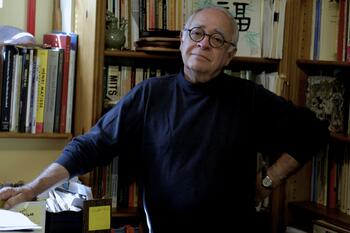
Kyle Bagwell is the Donald L. Lucas Endowed Professor in Economics at Stanford University. He is also a Senior Fellow of the Stanford Institute for Economic Policy Research, a Research Associate of the National Bureau of Economic Research and a Faculty Affiliate of the Stanford Center on Global Poverty and Development.

Bagwell works in the fields of International Trade, Industrial Organization and Game Theory. His research examines a range of theoretical and empirical questions relating to the purpose and design of GATT/WTO. He also explores theories of competition and cooperation in settings where asymmetric information is present. His research has been published in numerous academic journals, and in a book, The Economics of the World Trading System, co-authored with Robert W. Staiger and published by The MIT Press (2002).

Bagwell holds undergraduate degrees in Economics and Mathematics from SMU (1983) and a Ph.D. in Economics from Stanford University (1986). Prior to joining Stanford at the start of 2009, he was a faculty member at Northwestern University (1986-96) and at Columbia University (1996-2008). He was the Kelvin J. Lancaster Professor of Economic Theory at Columbia (2000-08).

Bagwell has served on the editorial boards of numerous academic journals, and he was an Editor at The Rand Journal of Economics (1996-2002). He was a National Fellow of the Hoover Institution (1991-92) and a Fellow at CASBS at Stanford (2014-15). He was the Director of the Stanford Institute for Theoretical Economics (2010-13), and a Reporter for the American Law Institute in its study of Principles of Trade Law: The World Trade Organization (2002-12). He is also a Fellow of the Econometric Society (2005).


Affiliated faculty at The Europe Center
Affiliated faculty at the Stanford Center on Global Poverty and Development
CV
-

Abstract: China's economic growth over the last thirty years has positioned it to project political and economic power across the world.  In 2013, Chinese President Xi Jinping officially launched the “One Belt, One Road” Initiative, later re-branded as the Belt and Road Initiative (BRI), with the goal of economically connecting China to the countries of the Greater Middle East through a new infrastructural network of roads and maritime ports. The Chinese government has reportedly already spent $250 billion on these projects and will spend up to $1 trillion more in the next decade, much of it in Muslim-majority countries.  This project seeks to answer a number of questions about the economic, political and cultural implications of the BRI.  What does the potential rise of a global trading bloc dominated by the authoritarian regimes of China and the Greater Middle East mean for the liberal economic order?  How will the BRI impact the advancement of human rights in the Greater Middle East?  What types of political tensions might arise between China and BRI target countries because of Chinese state economic investments?  And how is a “rising China” viewed by the citizenries of countries in the Greater Middle East?  


Bio: Lisa Blaydes is a Professor of Political Science at Stanford University.  She is the author of Elections and Distributive Politics in Mubarak’s Egypt (Cambridge University Press, 2011).  Professor Blaydes received the 2009 Gabriel Almond Award for best dissertation in the field of comparative politics from the American Political Science Association for this project.  Her articles have appeared in the American Political Science Review, International Studies Quarterly, International Organization, Journal of Theoretical Politics, Middle East Journal, and World Politics. During the 2008-2009 and 2009-2010 academic years, Professor Blaydes was an Academy Scholar at the Harvard Academy for International and Area Studies.  She holds degrees in Political Science (PhD) from the University of California, Los Angeles and International Relations (BA, MA) from Johns Hopkins University.


Lisa Blaydes Professor of Political Science Stanford University
Seminars
Paragraphs

For three and a half decades following the end of the Maoist era, China adhered to Deng Xiaoping’s policies of “reform and opening to the outside world” and “peaceful development.” After Deng retired as paramount leader, these principles continued to guide China’s international behavior in the leadership eras of Jiang Zemin and Hu Jintao. Admonishing Chinese to “keep your heads down and bide your time,” these Party leaders sought to emphasize that China’s rapid economic development and its accession to “great power” status need not be threatening to either the existing global order or the interests of its Asian neighbors. However, since Party general secretary Xi Jinping came to power in 2012, the situation has changed. Under his leadership, China has significantly expanded the more assertive set of policies initiated by his predecessor Hu Jintao. These policies not only seek to redefine China’s place in the world as a global player, but they also have put forward the notion of a “China option” that is claimed to be a more efficient developmental model than liberal democracy.

While Americans are well acquainted with China’s quest for influence through the projection of diplomatic, economic, and military power, we are less aware of the myriad ways Beijing has more recently been seeking cultural and informational influence, some of which could undermine our democratic processes. These include efforts to penetrate and sway—through various methods that former Australian prime minister Malcolm Turnbull summarized as “covert, coercive or corrupting”—a range of groups and institutions, including the Chinese American community, Chinese students in the United States, and American civil society organizations, academic institutions, think tanks, and media.

Some of these efforts fall into the category of normal public diplomacy as pursued by many other countries. But others involve the use of coercive or corrupting methods to pressure individuals and groups and thereby interfere in the functioning of American civil and political life.

All Publications button
1
Publication Type
Journal Articles
Publication Date
News Type
Commentary
Date
Paragraphs

Two women working at a bottling plant in Kangso, P'yongan-namdo, North Korea. Photo Credit: NViktor via Flickr/Creative Commons

“Prices for some products [in North Korea] have fluctuated slightly, but shortages are not reported, and consumption still continues, " writes Andray Abrahamian for 38 North following a visit to North Korea for the 8th International Rason Trade Fair. "Still, sanctions have caused enough problems that expressions of hope for the success of this year’s summit diplomacy are universal among North Koreans in Rason and elsewhere.”
 
 
Hero Image
Two women working at a bottling plant in Kangso, P'yongan-namdo, North Korea
NViktor, Flickr/Creative Commons
All News button
1
-

PLEASE NOTE THIS EVENT WILL NOW RUN FROM 4:45-6:00 PM


What explains variation in access to citizenship rights in China? Why do some governments extend citizenship to migrants while others do not? This talk details the structural barriers to accessing citizenship rights in China through the household registration system, hukou, which treats domestic migrant workers as foreigners in their own country. Over the last twenty years, city governments erected local citizenship regimes, controlling who is allowed to become full citizens locally while keeping unwanted populations out. In this talk, Prof. Vortherms details the sub-national variation in these policies and explains the connection between economic growth and citizenship acquisition. When the local economy is exposed to foreign market forces, local governments are incentivized to open citizenship to high-skilled workers, who have greater marginal benefits for the local economy in the presence of foreign production. Protectionism leads to stricter policies for low-skilled and chain migrants, while lower local fiscal capacity can increase opportunities for buying citizenship through investment. This talk tests these hypotheses on an original database of local naturalization policies in 249 cities in China, and concludes with a discussion of the prospects and implications of recent reforms to the household registration system.


Image
Portrait of Samantha Vortherms
Samantha Vortherms is a postdoctoral fellow at Stanford University's Shorenstein Asia-Pacific Research Center and an Assistant Professor of Political Science at the University of California, Irvine. Her research focuses on comparative political economy, development, social welfare, and survey research. Her current book project, Localized Citizenship in China, examines sub-national variation in access to citizenship rights in China. Prof. Vortherms research has been supported by the National Science Foundation, the Fulbright Program, and the Social Science Research Council. Before her time at Stanford, she received a Ph.D. in Political Science from the University of Wisconsin—Madison and two Master’s degrees in International Relations and Public Policy at the University of Chicago.

Samantha Vortherms <i>Postdoctoral fellow, Stanford Shorenstein APARC, Assistant Professor of Political Science, U.C. Irvine</i>
Lectures
-

For directions to the Jen-Hsun Huang Engineering Center, please click here.


The Asian Infrastructure Investment Bank (AIIB) commenced operations on January 16, 2016. The Bank has approved 24 projects totaling US$4.26 billion to date, and its approved membership totals 84 with 64 members having completed all membership requirements and 20 prospective members in the process of finalizing their membership.
 
President Jin Liqun will give his assessment of the bank’s first two years – its accomplishments and challenges – and the future direction of the Asian Infrastructure Investment Bank. What is the potential impact of AIIB’s financing for regional infrastructure, trade connectivity and economic relations? How can multilateral institutions and various stakeholders best address the US$26 trillion infrastructure gap (from 2016 to 2030) in Asia? How is the AIIB distinguishing itself from other multilateral development banks like the World Bank and the Asian Development Bank? What is the AIIB’s commitment and contributions toward global economic governance and best international practices?


Image
Jin Liqun
Jin Liqun is the inaugural President and Chair of the Board of Directors of the Asian Infrastructure Investment Bank (AIIB). Before being elected as the Bank’s first president, he served as Secretary-General of the Multilateral Interim Secretariat (MIS) tasked with establishing AIIB. Immediately prior to assuming the role of Secretary-General of the MIS, he was Chair of China International Capital Corporation Limited, China’s first joint-venture investment bank. From 2008 to 2013, he served as Chair of the Supervisory Board, China Investment Corporation. From 2009 to 2012, he served as Deputy Chair then subsequently as Chair of the International Forum of Sovereign Wealth Funds. From 2003 to 2008, Jin was Vice President, and then Ranking Vice President, of the Asian Development Bank (ADB), in charge of programs for South, Central and West Asia and private sector operations. He joined the Ministry of Finance in 1980, where he served as Director General and Assistant Minister before becoming Vice Minister in 1998. He was also a Member of the State Monetary Policy Committee. Earlier in his career, he served as Alternate Executive Director for China at the World Bank and at the Global Environment Facility as well as Alternate Governor for China at ADB. Jin holds a master’s degree in English Literature from Beijing Institute of Foreign Languages (now Beijing Foreign Studies University). He was also a Hubert Humphrey Fellow in the Economics Graduate Program at Boston University from 1987 to 1988. Jin is a national of the People’s Republic of China.


Mackenzie Room

Jen-Hsun Huang Engineering Building, 3rd Floor

475 Via Ortega, Stanford, CA 94305

Jin Liqun <i>President and Chair, Asian Infrastructure Investment Bank</i>
-

Cross-Strait economic activities are no longer one-dimensional. Since the Republic of China (ROC) government opened up Taiwan’s doors to Chinese investment in 2009, no systematic research has been carried out to examine the positive and negative consequences of Chinese investment in Taiwan.

The aim, therefore, of this talk is to address the crucial, yet unexplored, comparison: What are the similarities and differences between Taiwanese investment in China and Chinese investment in Taiwan. Taiwanese businesses started to invest in China since late 80s, most of Taiwanese businesses went to China at the time were SMEs, they depended on mainly the rapport (guanxi) with local officials to obtain their economic interests. Nevertheless, since 2009 the Chinese investment in Taiwan seems to adopt a different route. They are not as many as the Taiwanese business in China, and most of Chinese investors in Taiwan are highly monitored by the Taiwanese government.

This talk will start by introducing briefly the historical background of cross-Strait bilateral investment, during the process it will tease out thematic discussion including identity, more specifically Taiwanese businessmen’s identity in China; state and society relationship, more specifically on government and business relationship; and how political dynamics changes affected the economic activities and vice versa, more specifically on the case of ECFA and Sun Flower movement.


[[{"fid":"230230","view_mode":"crop_870xauto","fields":{"format":"crop_870xauto","field_file_image_description[und][0][value]":"","field_file_image_alt_text[und][0][value]":false,"field_file_image_title_text[und][0][value]":false,"field_credit[und][0][value]":"","field_caption[und][0][value]":"","thumbnails":"crop_870xauto","alt":"","title":""},"type":"media","field_deltas":{"2":{"format":"crop_870xauto","field_file_image_description[und][0][value]":"","field_file_image_alt_text[und][0][value]":false,"field_file_image_title_text[und][0][value]":false,"field_credit[und][0][value]":"","field_caption[und][0][value]":"","thumbnails":"crop_870xauto","alt":"","title":""}},"link_text":null,"attributes":{"style":"margin-left: 0px; margin-right: 15px; padding: 0px; float: left; height: 150px; width: 120px;","class":"media-element file-crop-870xauto","data-delta":"2"}}]]Chun-Yi Lee is an Assistant Professor at the school of Politics and International Relations (SPIR) at University of Nottingham. Her last research project is: 'Chinese Investment in Taiwan: Opportunities or Challenges to Taiwan's Industrial Development?' She is also the director of Taiwan Studies Program at University of Nottingham.


Reuben Hills Conference Room
2nd Floor East Wing E207
Encina Hall
616 Serra Street
Stanford, California 94305

Chun-Yi Lee <i>Assistant Professor at the school of Politics and International Relations, University of Nottingham</i>
Lectures
-

The Belt and Road Initiative (BRI) is a project of breathtaking scale that aims to reshape economic geography and enhance China’s centrality in the world.  Estimates for the costs of infrastructure to create a sea and land network linking more than 60 countries from Asia to Europe run upwards of US $6 trillion.  To date, China has committed several hundred billion yuan and created financial institutions to carry out the Belt and Road vision, including the Asian Infrastructure Investment Bank and the Silk Road Fund, alongside the China Development Bank, Export-Import Bank, and state-owned commercial banks. 

Does China have the financial wherewithal to implement this grand scheme?

This talk examines China’s recent development and places the BRI in the long arc of fiscal expansion since the turn of the century.  Under Hu Jintao and Wen Jiabao, the government spent lavishly on boosting public services, especially in the rural areas, using buoyant revenues that grew from ¥1.34 trillion to ¥8.3 trillion during the decade of 2000-2010.  The BRI is a signature program in Xi Jinping’s assertive foreign policy, likewise conceived in an era of high growth and high foreign reserve accumulation.  What happens when China’s growth slows?  Will China’s fiscal institutions be robust enough to manage the transition and avoid overextending its finances under the BRI?


Image
wong
Christine Wong is Professor of Chinese Studies in the Asia Institute and Director of the Centre for Contemporary Chinese Studies at the University of Melbourne. Prior to joining the University of Melbourne, she was Professor of Public Finance and Director of Chinese Studies at the University of Oxford, where she was a Fellow at Lady Margaret Hall. She has also held the Henry M. Jackson Professorship in International Studies at the University of Washington, and taught economics at the University of California, Santa Cruz; University of California, Berkeley; and Mount Holyoke College. Christine has more than twenty years of experience in working with the Ministry of Finance and State Tax Administration in China. She has held senior staff positions in the World Bank and the Asian Development Bank, and worked extensively with other international development agencies including the IMF, OECD, UNDP, UNICEF, and the UK Department for International Development. She is a member of the OECD Advisory Panel on Budgeting and Public Expenditures.

Christine Wong <i>Professor of Chinese Studies and Director of the Centre for Contemporary Chinese Studies, University of Melbourne</i>
-

Making Money: How Taiwanese Industrialists Embraced the Global Economy is a record of a thirty-year research project that Gary G. Hamilton and Kao Cheng-shu began in 1987.  A distinguished sociologist and university administrator in Taiwan, Kao and his research team (which included Prof. Hamilton during his frequent visits to Taiwan) interviewed over 800 owners and managers of Taiwanese firms in Taiwan, China, and Vietnam.  Some were re-interviewed over ten times during this period.  The length of this project allows them a vantage point to challenge the conventional interpretations of Asian industrialization and to present a new interpretation of the global economy that features an enduring alliance between, on the one hand, American and European retailers and merchandisers and, on the other hand, Asian contract manufacturers, with Taiwanese industrialists becoming the most prominent contract manufacturers in the past forty years.


Image
Gary Hamilton
Gary G. Hamilton is a Professor Emeritus of International Studies and Sociology at the University of Washington.  He specializes in historical/comparative sociology, economic sociology, with a special emphasis on Asian societies. He is an author of numerous articles and books, including most recently Emergent Economies, Divergent Paths, Economic Organization and International Trade in South Korea and Taiwan (with Robert Feenstra) (Cambridge University Press, 2006), Commerce and Capitalism in Chinese Societies (London: Routledge, 2006), The Market Makers: How Retailers Are Changing the Global Economy (co-editor and contributor, Oxford University Press, 2011; paperback 2012), and Making Money: How Taiwanese Industrialists Embraced the Global Economy (with Kao Cheng-shu, Stanford University Press, 2018).


This event is organized by the Taiwan Democracy and Security Project, part of the U.S.-Asia Security Initiative at Shorenstein APARC. Formerly the Taiwan Democracy Project at CDDRL.

Gary G. Hamilton <i>Professor Emeritus of International Studies and Sociology, University of Washington</i>
Lectures
News Type
News
Date
Paragraphs

Commenting on President Trump's twelve-day trip to Asia, FSI senior fellow and director of the Southeast Asia Program at Shorenstein Asia-Pacific Research Center Donald K. Emmerson noted that Trump "failed . . . to significantly alter the calculus brings to bear on North Korea."

Trump's approach to foreign policy, one based on forming personal relationships, might have caused him to get the mistaken idea "that he had made a real impact and everybody was getting along," Emmerson suggested.

Emmerson likewise questioned any substantial trade-related results coming out of the trip, saying that many touted achievements were either "already on the table" or were non-binding memoranda of understanding.

That said, Emmerson stressed that if in time President Trump were to realize the dearth of interest in bilateral trade deals, and that the "U.S. is making China great again," he could shift U.S. policy.

The full article is available from the Sinclair Broadcast Group.

Hero Image
xi and trump
Presidents Trump and Xi take part in a business event in Beijing during Trump's twelve-day Asia tour.
WhiteHouse.gov
All News button
1
Subscribe to Trade