Trade
-

Due to venue capacity,

RSVP's for this event have been closed. 

See the livestream here


Image


This event is co-sponsored with

The Stanford Institute

for Economic Policy Research


Doors open at 11:30a.m.

Complimentary valet parking available


For security reasons:
   ~No backpacks or oversized purses will be allowed
   ~All persons subject to search
   ~No food or beverages allowed inside the room

   ~RSVPs for this event are required and will be strictly enforced at check-in


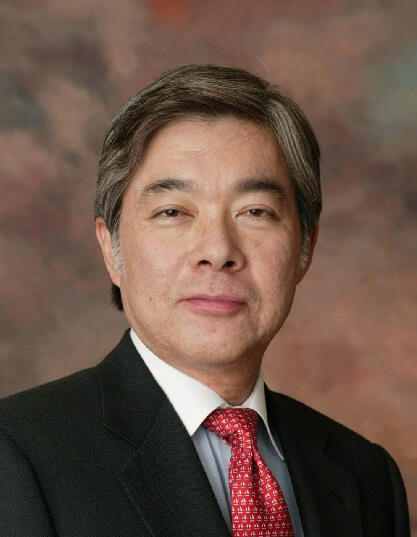
Born in Paris in 1956, Christine Lagarde completed high school in Le Havre and attended Holton Arms School in Bethesda (Maryland, USA). She then graduated from law school at University Paris X, and obtained a Master’s degree from the Political Science Institute in Aix en Provence.

After being admitted as a lawyer to the Paris Bar, Christine Lagarde joined the international law firm of Baker & McKenzie as an associate, specializing in Labor, Anti-trust, and Mergers & Acquisitions. A member of the Executive Committee of the Firm in 1995, Christine Lagarde became the Chairman of the Global Executive Committee of Baker & McKenzie in 1999, and subsequently Chairman of the Global Strategic Committee in 2004.

Christine Lagarde joined the French government in June 2005 as Minister for Foreign Trade. After a brief stint as Minister for Agriculture and Fisheries, in June 2007 she became the first woman to hold the post of Finance and Economy Minister of a G-7 country. From July to December 2008, she also chaired the ECOFIN Council, which brings together Economics and Finance Ministers of the European Union.

As a member of the G-20, Christine Lagarde was involved in the Group's management of the financial crisis, helping to foster international policies related to financial supervision and regulation and to strengthen global economic governance. As Chairman of the G-20 when France took over its presidency for the year 2011, she launched a wide-ranging work agenda on the reform of the international monetary system.

In July 2011, Christine Lagarde became the eleventh Managing Director of the IMF, and the first woman to hold that position.

Christine Lagarde was named Officier in the Légion d'honneur in April 2012. A former member of the French national team for synchronized swimming, Christine Lagarde is the mother of two sons.

Bechtel Conference Center

Christine Lagarde Managing Director Speaker International Monetary Fund
Seminars
-

Financial reform is one of the key priorities identified at the Third Plenum in November while state-owned enterprises got little mention.  But will financial reform possibly lead to a fundamental reform of state-owned companies?

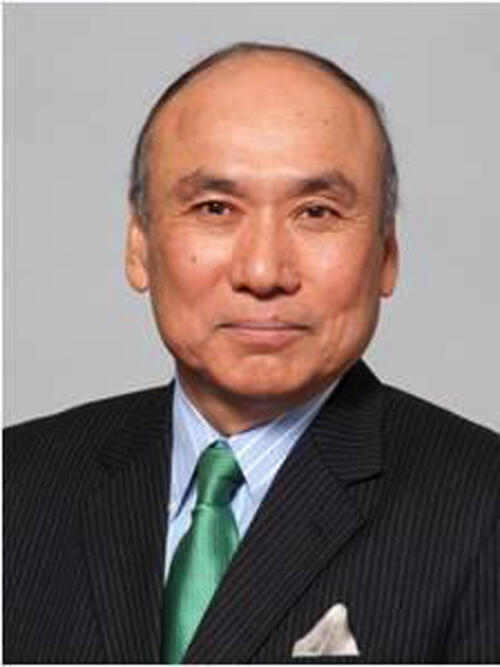
Nicholas R. Lardy, Anthony M. Solomon Senior Fellow, joined the Peterson Institute for International Economics in March 2003. Previously, he was a senior fellow in the Foreign Policy Studies Program from 1995 until 2003. Before Brookings, he served at the University of Washington, where he was the director of the Henry M. Jackson School of International Studies from 1991 to 1995. From 1997 through the spring of 2000, he was also the Frederick Frank Adjunct Professor of International Trade and Finance at the Yale University School of Management. He is an expert on Asia, especially the Chinese economy.

Lardy is a member of the Council on Foreign Relations and is a member of the editorial boards of the China Quarterly, Journal of Asian Business,China Review, and China Economic Review. He received his BA from the University of Wisconsin in 1968 and his PhD from the University of Michigan in 1975, both in economics.

This event is co-sponsored with CEAS and is part of the China under Xi Jinping series.

Philippines Conference Room

Nicholas R. Lardy Anthony M. Solomon Senior Fellow Speaker Peterson Institute for International Economics
Seminars

Despite the fact that physical health and cognitive abilities decline with age, emotion regulation remains stable or improves across the adult lifespan. The consequence of these changes for decision-making is complex and likely varies with choice domain. Here, we investigate this interaction in the domain of intertemporal choice: a broad range of everyday decisions (e.g. healthy eating, retirement savings, exercise) that require trade-offs between immediate satisfaction and long-term wellbeing.

-

A year has passed since the Japanese government embarked on the new economic policy package called “Abenomics” with three “arrows”: aggressive monetary easing, flexible fiscal policy, and a growth strategy. The package is designed to bring the Japanese economy out of 20 years of stagnation and 15 years of deflation, and put it on a sustainable growth path. How effective has the policy package been during the first year of the Abe administration?  Will it succeed in bringing sustainable growth to Japan?  Professor Takatoshi Ito, a prominent expert on the Japanese economy, tackles these questions.

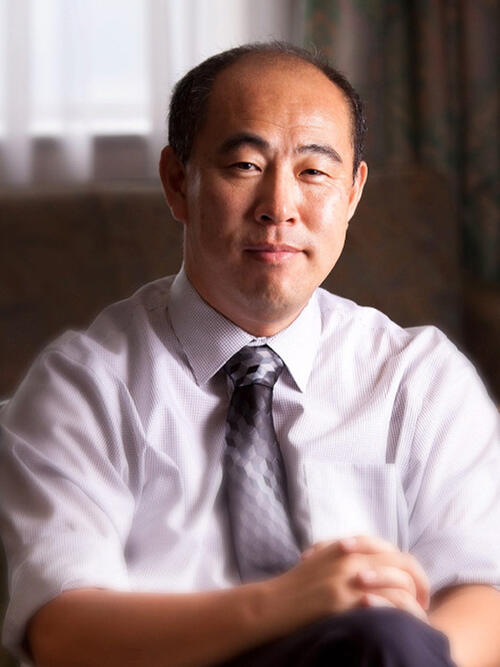
Takatoshi Ito, Professor at Faculty of Economics and Dean of Graduate School of Public
Policy, University of Tokyo, has taught extensively both in the United States and Japan,
including at University of Minnesota, Hitotsubashi University, and Harvard University.
He held visiting professor positions at Harvard University (1986-87 and 1992-94), Stanford
University (as National Fellow; 1984-85); Columbia Business School (fall semester, 2009),
and Tun Ismail Ali Chair Professor at University of Malaya (summer semester, 2008). His
public sector experiences include Senior Advisor in the Research Department, IMF
(1994-97); Deputy Vice Minister for International Affaires at Ministry of Finance
(1999-2001); and a member of the Prime Minister’s Council of Economic and Fiscal
Policy (2006-08). He is an author of many books including The Japanese Economy (MIT
Press), The Political Economy of the Japanese Monetary Policy (MIT Press), and
Financial Policy and Central Banking in Japan (MIT Press), and more than 50
refereed academic journal articles on international finance and the Japanese economy,
including ones in American Economic Review and Econometrica. He has distinguished
academic and research appointments such as President of the Japanese Economic
Association in 2004; Fellow of Econometric Society, since 1992; Research Associate at
National Bureau of Economic Research since 1985; and Faculty Fellow, Centre for
Economic Policy Research, since 2006. His research interest includes capital flows and
currency crises, microstructures of the foreign exchange rates, and inflation targeting. He
contributes frequently op-ed columns and articles to Financial Times, Nihon Keizai Shinbun,
Mainichi Shinbun, and Toyo Keizai Weekly.

Philippines Conference Room

Takatoshi Ito Speaker University of Tokyo
Seminars
-

Abstract: I examine how the shift from an exam to a district based high school assignment rule impacts intergenerational mobility and residential inequality. A stylized model predicts that under district assignment, household income relative to one’s ability becomes a stronger predictor of achievement, and higher income households sort towards and increase housing prices in the better school districts. I test predictions utilizing a unique policy change from South Korea in the 1970s. High school admission had traditionally been exam based in South Korea. However, between 1974 and 1980 the central government shifted several cities to a school district based system. I find that the reform increased intergenerational income elasticity from 0.15 to 0.31, and that higher income households migrated to the reform cities. I next examine whether school districting altered residential land prices within a city using a first differenced boundary discontinuity design. By focusing on the immediate years before and after the creation of school districts in Seoul, I find that residential land prices increased by about 13% point more on average and by about 26% point across boundaries in the better school district. In sum, I find that the shift from a merit to a location based student assignment rule decreases intergenerational mobility and increases residential inequality.

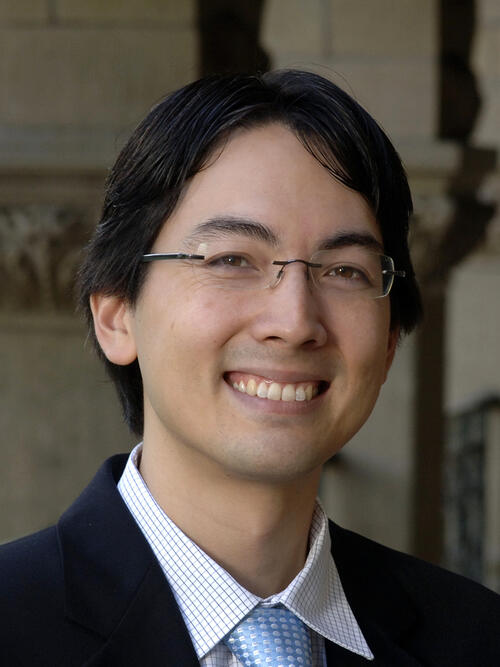
Professor Lee's research intersects the fields of economic development, political economy, urban economics and public economics, and regionally focuses on Korea and East Asia. Some of his recent research on Korea examines the impact of economic sanctions on the urban elites in North Korea and the impact of education policy on intergenerational mobility in South Korea. His research also examines entrepreneurship and urban growth, the efficacy of disaster aid delivery, and the relationship between aid and trade. Professor Lee is a member of the US-Korea Scholar-Policymaker Nexus Program organized by the Mansfield Foundation and the Korea Foundation. He received his PhD in economics from Brown University, master of public policy from Duke University, and bachelor degree in architecture from Seoul National University. As he made the transition from architecture to economics, he worked as an architecture designer and real estate development consultant.

Philippines Conference Room

Yong Suk Lee Assistant Professor of Economics, Williams College Speaker
Conferences

Advanced Registration for this conference is required.  For more information and to register, please click here.


Overview

 This conference focuses on economic aspects of diabetes and its complications.


 A major focal point of the conference will be a comparison of health economic diabetes models both in terms of their structure and performance. This conference builds on six previous diabetes simulation modelling conferences that have been held since 1999. A write-up of a past conference can found by here.


A particular theme of the 2014 challenge will be how to generalise diabetes simulation models for different populations and over time. To what degree are existing models able to adjust for differences risk due to ethnic and socio-economic differences as well as any secular improvements in diabetes care?"

The conference will also have open sessions on all aspects of the health economics of diabetes.

Following previous Mount Hood Challenges, the emphasis will be on comparing model projections to real world or clinical trial outcomes, and explanation and discussion of differences seen between each model and the real world results.


Abstract submissions are invited on the following themes

(1) Modelling diabetes disease progression and its complications

(2) Effect of diabetes on society – its impact on life and work

(3) Economic approaches to measuring quality of life

(4) Quantifying the cost of diabetes and its complications

(5) Methodological aspects of diabetes modelling


Abstract Submission Requirements


ALL ABSTRACTS ARE TO BE SUBMITTED via email mthood2014@gmail.com


SUBMISSION DEADLINE: Friday 28th March 2014


ALL ABSTRACT SUBMISSIONS AND PRESENTATIONS MUST BE IN ENGLISH.

Conference registration is required for all presenters. Note if the abstract is not accepted for presentation, participants that have registered can withdraw from the conference prior to end of April 2014 without financial penalty.


The presenters of research are required to disclose financial support. Abstract review will NOT be based on this information.


The research abstracts, EXCLUDING title and author information, should be no longer than 300 words.


The use of tables, graphs and figures in your research abstract submission are not allowed.


Generic names should be used for technologies (drugs, devices), not trade names.


Research that has been published at any national or international meeting prior to this Conference is discouraged.


MULTIPLE ABSTRACTS ON THE SAME STUDY ARE DISCOURAGED.

Abstracts will be reviewed by the steering committee and notification of acceptance or rejection will be made by 15th April 2014


Bechtel Conference Center

Conferences
-

Image


Abstract:

Subnational conflict is the most widespread, enduring, and deadly form of conflict in Asia. Over the past 20 years (1992-2012), there have been 26 subnational conflicts in South and Southeast Asia, affecting half of the countries in this region. Concerned about foreign interference, national governments limit external access to conflict areas by journalists, diplomats, and personnel from international development agencies and non-governmental organizations. As a result, many subnational conflict areas are poorly understood by outsiders and easily overshadowed by larger geopolitical issues, bilateral relations, and national development challenges. The interactions between conflict, politics, and aid in subnational conflict areas are a critical blind spot for aid programs. This study was conducted to help improve how development agencies address subnational conflicts.


Speaker Bios:

Ben Oppenheim is a Fellow (non-resident) at the Center on International Cooperation at New York University. His research spans a diverse set of topics, including fragile states, transnational threats (including pandemic disease risks and terrorism), and the strategic coherence and effectiveness of international assistance in fragile and conflict-affected areas.

Oppenheim has consulted for organizations including the World Bank, the United Nations, the Asia Foundation, the Institute for the Future, and the Fritz Institute, on issues including organizational learning, strategy, program design, foresight, and facilitation. In 2009, he served as Advisor to the first global congress on disarmament, demobilization, and reintegration, supported by the World Bank and the UN.

In 2013, Oppenheim was a visiting fellow at the Uppsala University Forum on Democracy, Peace, and Justice. His research has been supported by a Simpson Fellowship, and a fellowship with the Institute on Global Conflict and Cooperation. He was also a research fellow with UC Berkeley's Institute of International Studies, affiliated with the New Era Foreign Policy Project.


Nils Gilman is the Executive Director of Social Science Matrix. He holds a B.A., M.A. and Ph.D. in History from the University of California, Berkeley. Gilman’s first scholarly interest was in American and European intellectual history, with a particular focus on the institutional development of the social sciences, the lateral transfer and translation of ideas across disciplinary boundaries, and the impact of social scientific ideas on politics and policy.

Gilman is the author of Mandarins of the Future: Modernization Theory in Cold War America (Johns Hopkins University Press, 2004), the co-editor of Staging Growth: Modernization, Development, and the Global Cold War (University of Massachusetts Press, 2003) and Deviant Globalization: Black Market Economy in the 21st Century (Continuum Press, 2011), as well as the founding Co-editor of Humanity: An International Journal of Human Rights, Humanitarianism, and Development. He also blogs and tweets.

Prior to joining Social Science Matrix in September 2013, Gilman was research director at Monitor 360, a San Francisco consultancy that addresses complex, cross-disciplinary global strategic challenges for governments, multinational businesses, and NGOs. He has also worked at a variety of enterprise software companies, including Salesforce.com, BEA Systems, and Plumtree Software. Gilman has taught and lectured at a wide variety of venues, from the Harvard University, Columbia University, and National Defense University, to PopTech, the European Futurists Conference, and the Long Now Foundation.


Bruce Jones is a senior fellow and the director of the Project on International Order and Strategy in the Foreign Policy program at the Brookings Institution. He is also the director of the Center on International Cooperation at New York University.

Jones served as the senior external advisor for the World Bank’s 2011 World Development Report, Conflict, Security and Development, and in March 2010 was appointed by the United Nations secretary-general as a member of the senior advisory group to guide the Review of International Civilian Capacities. He is also consulting professor at the Center for International Security and Cooperation at Stanford University and professor (by courtesy) at New York University’s department of politics.

Jones holds a Ph.D. from the London School of Economics, and was Hamburg fellow in conflict prevention at Stanford University.

He is co-author with Carlos Pascual and Stephen Stedman of Power and Responsibility: Building International Order in an Era of Transnational Threats (Brookings Press, 2009); co-editor with Shepard Forman and Richard Gowan of Cooperating for Peace and Security (Cambridge University Press, 2009); and author of Peacemaking in Rwanda: The Dynamics of Failures(Lynne Reinner, 2001).

Jones served as senior advisor in the office of the secretary-general during the U.N. reform effort leading up to the World Summit 2005, and in the same period was acting secretary of the Secretary-General’s Policy Committee. In 2004-2005, he was deputy research director of the High-level Panel on Threats, Challenges and Change. From 2000-2002 he was special assistant to and acting chief of staff at the office of the U.N. special coordinator for the Middle East peace process. 

Richard and Rhoda Goldman Conference Room

Ben Oppenheim Ph.D. Candidate in Political Science Speaker UC Berkeley
Nils Gilman Founding Executive Director, Social Science Matrix Speaker UC Berkeley
Bruce Jones Senior Fellow Speaker Brookings Institution
Seminars
Subscribe to Trade