616 Serra StreetEncina Hall E301Stanford, CA94305-6055
0
gilhongk@stanford.edu
gilhong_kim.jpg
Ph.D.
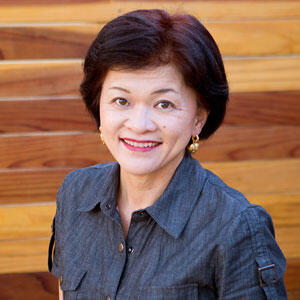
Dr. Gilhong Kim joins the Walter H. Shorenstein Asia-Pacific Research Center for the 2018 year as visiting scholar. He currently serves as the Senior Director and Chief Sector Officer of the Sustainable Development and Climate Change Department at the Asian Development Bank. He will be conducting research on technological development and impact in the Asia-Pacific.
Voice4u is a revolutionary AAC (Augmentative and Alternative Communication) system that helps individuals express their feelings, thoughts, actions, and needs. It is the equivalent of wheelchairs for people who cannot walk. Voice4u is the perfect solution for learning and communication for individuals with autism spectrum disorders (ASD) and the people around them. In the United States, CDC estimates that 1 in 68 children has been identified with autism spectrum disorders as of 2017. The application has been downloaded in 100+ countries and more than 150K units. The product has proven to be commercially viable and has been used by people suffering from other types of developmental disorders including Down syndrome and Asperger’s syndrome, people with other kinds of communication disorders caused by stroke or brain injuries and deafness, seniors who have difficulties with verbal communication, as well as Speech Language Pathologists (SLP) for medical professionals, teachers, or parents. This presentation will focus on how and why Yumi Kubo and Sei Higuchi founded Spectrum Visions, the development of Voice4u, and their future plans.
SPEAKERS:
Yumi Kubo, co-founder and CEO of Spectrum Visions Global, Inc.
Sei Higuchi, Ph.D., co-founder and CTO of Spectrum Visions Global Inc.
BIOS:
Image
Yumi is the co-founder and CEO of Spectrum Visions and has a son with autism. Before founding the company, she was engaged in numerous activities in non-profit organizations such as Parents Helping Parents (PHP). She has given lectures in Japan and the U.S on special education, IFSP (Individual Family Service Plan), IEP (Individual Educational Program) and IET (Individual Educational Transition). Yumi also started several social groups to support children with development delays. Her story was featured in San Jose Mercury News, “Autism Mystery – Family Finds Hope Silicon Valley”. As a part-time instructor at Osaka University, she has been teaching young students entrepreneurship with her unique story
Image
Sei is co-founder and CTO of Spectrum Visions and is leading product development. He received his Ph.D. in Aeronautics & Astronautics from Stanford University in 2009. At Stanford, he developed the adaptive model predictive control algorithm for microkelvin thermal control system. While he was a Ph.D. student, he also supported the autism community in the Bay Area. After completing his Ph.D., he started developing Voice4u. Sei received a BS in Mechanical Engineering from Waseda University, Japan, MS in Aeronautics & Astronautics, and Ph.D. minor in Mechanical Engineering from Stanford University.
AGENDA:
4:15pm: Doors open 4:30pm-5:30pm: Talk and Discussion 5:30pm-6:00pm: Networking
Food security experts identify government support, policy implementation, private sector engagement and investment in smallholder farmers as keys to Africa’s agricultural future.
Food security experts from the Alliance for a Green Revolution in Africa (AGRA) gathered to discuss transforming food production in Africa at Stanford on Nov. 29. The symposium, hosted by the Center on Food Security and the Environment (FSE) examined the challenges, strategies, and possible solutions for catalyzing and sustaining an inclusive agriculture transformation in Africa.
Moderator Ertharin Cousin, FSE visiting fellow and previous World Food Programme director with more than 25 years of experience on hunger, food, and resilience strategies, launched the panel by outlining Africa’s plight. “Today some 100 million of the farmers across Sub-Saharan Africa farm less than 2 hectares of land. Some 80 percent of those living in rural areas are poor. More than 30 percent of the rural population is chronically hungry and 35 percent of the under-five-year-olds are stunted. By 2050, the bulk of the world's population growth will take place on the continent. In fact, some project that 1.3 billion will be added to the continent, and Nigeria’s [population] will grow larger than the size of the United States between now and 2050,” Cousin said
.
While Africa continues to experience the highest occurrence of food insecurity worldwide, the continent also contains over 60 percent of the worlds uncultivated but fertile land. AGRA formed in 2006 to fulfill the vision that Africa can feed itself and the world. Panelists included Agnes Kalibata, AGRA President and former Minister of Agriculture and Animal Resources of Rwanda; Kanayo F. Nwanze, AGRA board member and immediate past president of the International Fund for Agricultural Development; Usha Barwale Zehr, AGRA board member and Director and Chief Technology Officer of Maharashtra Hybrid Seeds Company Private Limited; and Rajiv Shah, AGRA board member, Rockefeller Foundation President and former Administer of USAID.
Kanayo F. Nwanze stressed the importance of agricultural transformation for Africa’s future. “No country in the world ever transformed itself without going through an agrarian change. No country. Europe, 17th; Japan, 18th century; 19th century was the US, your country; China, 20th century. Why should they be different from Africa? So, first and foremost, we have to have total agricultural transformation,” Nwanze said.
AGRA president, Agnes Kalibata, also spoke to the need for policy implementation and government support in helping drive change. “AGRA as an institution can only do so much. But these governments have the potential and the capacity to reach every corner of their countries. The problem is they are challenged by capacity to do that, by capacity to design proper programs, and by capacity to implement these programs,” Kalibata said.
Expanding on governments' ability to impact and drive change, Usha Barwale Zehr highlighted Asia’s success, specifically with strategic partnerships. “…we've done a lot of talking about public/private partnership. Not so much on the ground on implementing it in a manner, which happened in Asia, for instance, where there was policy, and, most importantly, government will. The government was willing to do whatever it took to make sure that agriculture was transformed at the end of it,” Zehr said.
Beyond government and policy support the panelists also addressed the need for innovation and access to seed technologies. “Why is it that the African farmer and the Indian farmer should not have access to what the American farmer has access to today and reaps benefit from it? …So it's the hybrids, the varieties, the GM technology. Tomorrow it'll be the gene-edited products. And after that we will talk about the satellite-based imaging data that we will use for developing drought-tolerant crops for that very, very small micro environment that existed in the one district in Nigeria,” Zehr said.
"By 2050, who is going to feed Africa? … It's the youth of today. But they're not going to be using the same technologies that exist today. Just think of what IT can do, aggregation, organization of farmer's groups. So, the elements are there. I see the agriculture of tomorrow meeting the challenge – for Africa meeting that challenge is Africa being at the forefront of feeding the world. Africa has to be able to feed itself first. And we have all the opportunities there,” Nwanze said.
This is the first installment of the Global Food Security Symposium series hosted by Stanford University's Center on Food Security and the Environment and generously supported by Zach Nelson and Elizabeth Horn. FSE is a joint initiative of the Stanford Woods Institute for the Environment and the Freeman Spogli Institute for International Studies.
Hero Image
Panel members at the Global Food Security Symposium, Nov. 29 2017. | Casey Valentine
GSVlabs is a startup and corporate innovation accelerator located in the heart of Silicon Valley in Redwood City. It houses more than 180 startups and supports corporate innovation programs for more than 25 corporations. During the past few years, GSVlabs has welcomed numerous startups from foreign countries such as Brazil, Mexico, Thailand, China, Korea, Germany, Austria just to name a few. In many cases, these foreign startup acceleration programs are funded by large corporations and governments that see long-term economic benefits of supporting such activities in Silicon Valley. In this public forum, Atsuko Jenks will discuss examples of such corporate and government funded accelerator programs and implications for the efforts by Japanese corporations and Japanese government organizations to accelerate corporate innovation and economic growth of Japan.
SPEAKER:
Atsuko Jenks, Managing Director, Japan, GSVlabs
BIO:
Image
Atsuko oversees development and implementation of corporate innovation and new business development accelerator programs for Japanese corporations at GSVlabs in Redwood City. She is also an advisor for two Silicon Valley technology startups, Grabit and Viewpoint Systems. For nearly 20 years, Atsuko has advised and worked with both US and Japanese companies, assisting them with their cross-Pacific alliance and partnership strategies as well as technology licensing and various commercial agreements. Atsuko is also active in non-profit work as a Board Member of Stanford Business School Alumni Association, an Executive Committee Member of The Tech Museum of Innovation, the San Francisco Chapter President of Tsuda University Alumnae Association, and a member of Stanford Business School Alumni Consulting Team. She was previously Director of Japan Division with Williams-Sonoma in San Francisco, and Consultant at Bain in Tokyo Office. Atsuko holds BA from Tsuda University in International Relations and Global Studies, and MBA from Stanford Graduate School of Business.
AGENDA:
4:15pm: Doors open 4:30pm-5:30pm: Talk and Discussion 5:30pm-6:00pm: Networking
Stanford’s Center on Food Security and the Environment launches new symposium series focused on global food security with panel exploring Africa’s agricultural potential.
Organized by the Center on Food Security and the Environment (FSE), the Nov. 29 symposium is the first in the center’s new Global Food Security Symposium series. Panel members include visiting AGRA board members, who will examine the challenges, strategies, and possible solutions for catalyzing and sustaining an inclusive agriculture transformation in Africa. This symposium marks the third series established by FSE convening thought leaders addressing global food security issues.
Afflicted by conflict, political upheaval, and extreme weather patterns Africa continues to experience the highest occurrence of food insecurity. However, with over 60 percent of the worlds uncultivated but fertile land, there is significant room for improvement. AGRA formed in 2006 to fulfill the vision that Africa can feed itself and the world. As an alliance led by Africans with roots in farming communities across the continent, they work to understand the unique needs of farmers and offer sustainable solutions designed to boost production.
In a region with 27.4 percent of the population currently experiencing food insecurity, creating a sustainable agricultural revolution remains a key solution to improving food security across the area. Moderated by Ertharin Cousin, previous World Food Programme director, with 25 years of experience on hunger, food, and resilience strategies, the panel will explore how an agricultural transformation in Africa can sustain a growing population, relieve hunger, generate jobs, improve social cohesion, and create global exports.
Panel members include: Ertharin Cousin (moderator), Payne Distinguished Lecturer at the Freeman Spogli Institute for International Studies and Visiting Fellow at the Center on Food Security and the Environment, former US Ambassador to the UN Agencies for Food and Agriculture in Rome.
Agnes Kalibata, the President of AGRA and former Minister of Agriculture and Animal Resources of Rwanda.
Kanayo F. Nwanze, the immediate past president of the International Fund for Agricultural Development (IFAD), winner of the Africa Food Prize in 2016, AGRA board member.
Rajiv Shah, Rockefeller Foundation President, former Administer of USAID (2010-15) where he led bipartisan reform and expansion of US efforts combating global food insecurity. During his previous work at the Gates Foundation he helped launched AGRA.
Usha Barwale Zehr, Director and Chief Technology Officer at Maharashtra – one of India’s largest and most successful multinational seed companies – and AGRA board member.
This is the first installment of the Global Food Security Symposium series hosted by Stanford University's Center on Food Security and the Environment and generously supported by Zach Nelson and Elizabeth Horn. FSE is a joint initiative of the Stanford Woods Institute for the Environment and the Freeman Spogli Institute for International Studies.
William F. Miller, a former provost at Stanford University, a founding member of the university's Computer Science Department, and former CEO of SRI, died at the age of 91 on Wednesday, September 27.
Miller held an array of other leadership, industry, and academic roles, but at Shorenstein Asia-Pacific Research Center (APARC), Bill was better known as one of the leaders of the Stanford Program on Regions of Innovation and Entrepreneurship (SPRIE), along with Henry S. Rowen and Marguerite Gong Hancock. SPRIE was established at Shorenstein APARC in 2001 after the publication of The Silicon Valley Edge by Stanford University Press, co-edited by Miller, Rowen, Hancock, and Chong-Moon Lee; the book, the program's research, and Miller and Rowen's vast experience were responsible for a steady stream of visitors to Encina Hall, all looking to understand the Valley's success and replicate it abroad.
Two more books were published by SPRIE, focusing on the rise of innovation in Asia: Making IT: The Rise of Asia in High Tech (2006), and Greater China's Quest for Innovation (2008). In 2011, the program moved to the Graduate School of Business.
Full details on Bill Miller's life, as a leader, an entrepreneur, a tireless advisor and advocate, and as a generous human being, can be found here.
Hero Image
William F. Miller speaks in Madrid in 2007. | Courtesy Stanford Program on Regions of Innovation and Entrepreneurship
Abstract: As the orbital space around earth becomes increasingly crowded, there is an increasing need to capture and manipulate objects ranging from satellites and antennas to “uncooperative” space debris. Robots have been proposed as a solution for clearing debris and manipulating objects in space. However, many of the traditional techniques used for robotic grasping and manipulation will not work. Gecko-inspired adhesives are promising technology, as they work in vacuum, at high and low temperatures, and do not require special hand-holds or other fixtures. Tests in microgravity and in the International Space station have shown that “gecko grippers” are a viable option for eliminating space debris in low Earth orbit and for enhancing missions in space.
Speaker Bio: Professor Mark Cutkosky applies analyses, simulations, and experiments to the design and control of robotic hands, tactile sensors, and devices for human/computer interaction. In manufacturing, his work focuses on design tools for rapid prototyping.
Mark Cutkosky
Professor
Department of Mechanical Engineering, Stanford University
Visiting Scholar, Ukrainian Emerging Leaders Program 2017-18
oleksandars_copy.jpg
OlexandrStarodubtsev is a Ukrainian reformer who is deeply involved in the creation ofa new electronic public procurement system Prozorro, which is one of the most famous reforms in the country. Currently Starodubtsev is the Head of the Public Procurement Regulation Department in The Ministry of Economic Development and Trade of Ukraine, and is an official policy maker in the spheres of public procurement and economic development in Ukraine.
The Prozorro system is famous for its different approaches to bottom-up reform based on the close collaboration between government, business and civil society. In 2016, the Prozorro system won several distinguished international awards, such as the Open Government Partnership Award, the Public Procurement Award, and was also recognized by the European Bank of Reconstruction and Development and Open Contracting Partnership. Moreover, Prozorro and its principles became an inspirational example for other Ukrainian reforms.
Starodubtsev was born in Kharkiv, Ukraine in 1979. He graduated from Kharkiv National University in 2002. Previously he worked on the stock market where he made his career as a back-office specialist up to a managing partner of a Ukrainian branch of a multinational financial institution. He received an MBA degree from the Kyiv-Mohyla Business School and became Alumnus of the Year in its first competition in 2015. He is married and has a son and a daughter.
GROW is an automated solution to evaluate job candidates, developed by Tokyo-based people analytics startup, Institution for a Global Society (IGS). GROW was developed with the idea that the hiring process is often a missed opportunity to collect, utilize and exchange feedback that could change people’s behaviors for the better. The solution has developed into a tool that both helps students to understand their strengths and weaknesses, while at the same time assists HR in hiring based on competencies and personality traits. GROW uses artificial intelligence learning algorithms to analyze assessment data from both candidates and evaluators, looking for patterns to improve its ability to accurately screen candidates over time. In place of human intuition, GROW uses big data to develop a scientific, objective, and constantly-improving engine to recruit, screen, and develop human capital. In his presentation, Founder and CEO of IGS, Masahiro Fukuhara will speak about founding IGS, developing GROW, and the opportunities and challenges that its widespread interest has presented.
Bio
Image
Masahiro Fukuhara is founder and CEO of Tokyo-based people analytics startup Institution for a Global Society (IGS), which he started in 2010. Prior to founding IGS, Fukuhara was managing director at asset management firm Barclays Global Investors (BGI) where he made investment decisions based on computer-driven models. Fukuhara earned his Bachelor’s degree in Economics from Keio University and MBA from INSEAD. He holds Master’s degree (with Honors) in International Finance from Grandes Ecoles HEC and Ph.D. from Tsukuba University Graduate School of Business Sciences (Ph.D. in Business Administration). He is currently a Visiting Professor at the center for FinTEK (Finance, Technology, and Economy) at Keio University as well as adjunct professor at Hitotsubashi University’s Graduate School of International Corporate Strategy.
Agenda
4:15pm: Doors open 4:30pm-5:30pm: Talk and Discussion 5:30pm-6:00pm: Networking
NOTE:This event takes place during Stanford’s Homecoming Weekend. The parking slots in front of Encina Hall will not be available that day, and there may be higher demand than usual for parking on campus. Please take that into consideration when planning your travel.
Masahiro Fukuhara, Founder and CEO, Institution for a Global Society
The conference is brought to you by the Shorenstein Asia-Pacific Research Center Japan Program's Stanford Silicon Valley-New Japan Project and Mistletoe, Inc.
This event is at full capacity. Please contact Amanda Stoeckicht at amst@stanford.edu if you have any questions.
As we enter the coming age of universal automation, this conference seeks to spark a discussion among thought leaders, technologists, and social entrepreneurs about the replacement of human labor by artificial intelligence and robotics and what that might mean for the future of human welfare and labor opportunities. There is increasing debate regarding the possibility of a new underclass of 'zero economic citizens.' How shall we address these challenges? Does the answer lie in lowering the cost of living? Is it the Universal Basic Income? Or something else? What might be the role of technologies for geographic mobility, sustainability, and community platforms.
Along with keynote presentations and panel discussions, the conference will also feature a startup showcase and participatory world-building exercise.
*The below program is subject to change.
Conference Program
8:30-9:00 Registration and Breakfast
9:00-9:05 Welcome
9:05-10:45 Keynote Presentations
Taizo Son(Mistletoe)
Marina Gorbis (Institute for the future)
Sam Altman (Y Combinator)
10:45-11:00 Coffee Break
11:00-12:15 Startup Showcase
Afero
Alesca Life
AstroScale
Binded
Cocoa Motors
Homma
Leomo
ModuleQ
Vivita
Wota
12:15-12:30 Break
12:30-13:00 Mistletoe Fellows Program Announcement
13:00-14:00 Lunch
14:00-15:15 Panel & Debate Sessions: Technology and Social Change in 2045
Panel 1:
Cities of the Future: Removing Barriers to New Ideas with Innovation Districts and Regulatory Sandboxes
Moderator: Ashkan Soltani
Panelists: Neal Gorenflo (Sheareable)
Taizo Son (Mistletoe)
Joe Quirk (Seasteading Institute)
Kaidi Ruusalepp (Funderbeam)
Panel 2:
The Autonomous Lifestyle: Can Tech-Enabled Mobility Improve Welfare and Opportunity?
Moderator: Kenji Kushida (Stanford University)
Panelists: Frances Colon (Cenadores Puerto Rico)
Steve Cousins (Savioke)
Toshi Hoo (IFTF)
Panel 3:
Reimagining Social Entrepreneurship: Designing Collaboration and Community
Moderator: Ernestine Fu (Alsop Louie Partners)
Panelists: Anh Bui (Benetech)
Chuck Eesley (Stanford University)
Daniel Goldman (Ignition Angels)
Luan Niu (Enviu)
15:15-15:30 Break
15:30-17:30 Zero Economic Citizen in 2045: A World Building Exercise
Joshua McVeigh-Schultz (University of Southern California)