Health and Medicine

FSI’s researchers assess health and medicine through the lenses of economics, nutrition and politics. They’re studying and influencing public health policies of local and national governments and the roles that corporations and nongovernmental organizations play in providing health care around the world. Scholars look at how governance affects citizens’ health, how children’s health care access affects the aging process and how to improve children’s health in Guatemala and rural China. They want to know what it will take for people to cook more safely and breathe more easily in developing countries.

FSI professors investigate how lifestyles affect health. What good does gardening do for older Americans? What are the benefits of eating organic food or growing genetically modified rice in China? They study cost-effectiveness by examining programs like those aimed at preventing the spread of tuberculosis in Russian prisons. Policies that impact obesity and undernutrition are examined; as are the public health implications of limiting salt in processed foods and the role of smoking among men who work in Chinese factories. FSI health research looks at sweeping domestic policies like the Affordable Care Act and the role of foreign aid in affecting the price of HIV drugs in Africa.

-

CISAC Interschool Honors Program in International Security Studies

INFORMATION SESSION 

for Stanford undergraduates interested in applying for the 2015-2016 academic year 


 Meet program faculty, current students, and alumni. 

Learn about the program. 

Eat pizza! 


CISAC’s Interschool Honors Program in International Security Studies provides Stanford undergraduates with strong academic records and interest in international security topics from all undergraduate schools and majors the opportunity to earn Honors in International Security Studies by writing a rigorous, policy-relevant thesis. 

Students are admitted to the program on a competitive basis. 

For more information and/or to apply, please visit: http://cisac.fsi.stanford.edu/docs/undergraduate_honors_program

Application deadline: February 27, 2015

Please direct questions to Shelby Speer, Honors Program Coordinator, sspeer@stanford.edu


Image
CISAC Honors 2014


CISAC Interschool Honors Program in International Security Studies
Download pdf

Encina Hall (2nd floor)

Freeman Spogli Institute for International Studies
Stanford University
Encina Hall
616 Serra Street, C137
Stanford, CA 94305-6055

(650) 725-5368 (650) 723-3435
0
Senior Fellow Emeritus at the Freeman Spogli Institute for International Studies
Olivier Nomellini Professor Emeritus in International Studies at the School of Humanities and Sciences
coit_blacker_2022.jpg PhD

Coit Blacker is a senior fellow emeritus at the Freeman Spogli Institute for International Studies, the Olivier Nomellini Professor Emeritus in International Studies at the School of Humanities and Sciences, and a Bass University Fellow in Undergraduate Education. He served as director of FSI from 2003 to 2012. From 2005 to 2011, he was co-chair of the International Initiative of the Stanford Challenge, and from 2004 to 2007, served as a member of the Development Committee of the university's Board of Trustees.

During the first Clinton administration, Blacker served as special assistant to the president for National Security Affairs and senior director for Russian, Ukrainian and Eurasian affairs at the National Security Council (NSC). At the NSC, he oversaw the implementation of U.S. policy toward Russia and the New Independent States, while also serving as principal staff assistant to the president and the National Security Advisor on matters relating to the former Soviet Union.

Following his government service, Blacker returned to Stanford to resume his research and teaching. From 1998 to 2003, he also co-directed the Aspen Institute's U.S.-Russia Dialogue, which brought together prominent U.S. and Russian specialists on foreign and defense policy for discussion and review of critical issues in the bilateral relationship. He was a study group member of the U.S. Commission on National Security in the 21st Century (the Hart-Rudman Commission) throughout the commission's tenure.

In 2001, Blacker was the recipient of the Laurence and Naomi Carpenter Hoagland Prize for Undergraduate Teaching at Stanford.

Blacker holds an honorary doctorate from the Russian Academy of Sciences' Institute of Far Eastern Studies for his work on U.S.-Russian relations. He is a graduate of Occidental College (A.B., Political Science) and the Fletcher School of Law and Diplomacy (M.A., M.A.L.D., and Ph.D).

Blacker's association with Stanford began in 1977, when he was awarded a post-doctoral fellowship by the Arms Control and Disarmament Program, the precursor to the Center for International Security and Cooperation at FSI.

Faculty member at the Center for International Security and Cooperation
Faculty member at the Center on Democracy, Development, and the Rule of Law
Date Label
Coit Blacker Senior Fellow at FSI, Olivier Nomellini Professor in International Studies at the School of Humanities and Sciences Speaker Stanford University
Martha Crenshaw Senior Fellow at FSI and CISAC, Professor of political science by courtesy Speaker Stanford University
Panel Discussions
-

All research in progress seminars are off-the-record. Any information about methodology and/or results are embargoed until publication.

Abstract:

How a government chooses to finance a health intervention has consequences in multiple domains. The choice of financing mechanisms can affect the uptake of health interventions and lead to widespread health gains. In addition to health gains, certain policies like public finance can insure against the need to make expenditures which would otherwise throw households into poverty. We present methods of extended cost-effectiveness analysis (ECEA) for evaluating the consequences of health policies on health, impoverishment and equity which estimate health gains (deaths averted), financial risk protection afforded (cases of poverty averted), and distributional consequences of health policies. The ECEA approach incorporates financial risk protection and equity into the systematic evaluation of health policy. ECEA allows policymakers to determine the efficient purchase of both financial risk protection and equity in addition to health for a given benefits package, toward universal health coverage.

Stephane Verguet Assistant Professor University of Washington
Seminars
-

All research in progress seminars are off-the-record. Any information about methodology and/or results are embargoed until publication.

Co-authored with: Mark R. Cullen, Michael Baiocchi, Pooja Loftus, Victor Fuchs

Abstract:

Sex differences in mortality (SDIM) vary over time and place as a function of social and medical conditions. The magnitude of these variations, and their abruptness in response to large socioeconomic changes, suggest that biological differences alone cannot fully account for observed sex differences in survival. We document “stylized facts” about SDIM with which any theory will ultimately have to contend, drawing from a wide swath of available mortality data, including variation in probability of survival to age 70 by county in the United States, to Human Mortality Database data for 18 high-income countries since 1900, to mortality data within and between developing countries over the time periods for which reasonably reliable data are available. We show that, in each of the periods of economic development after the onset of demographic and epidemiologic transition, cross-sectional variation in SDIM exhibits a consistent pattern of female resilience to mortality under adversity. Moreover, as societies develop, M/F survival first declines and then increases, a “SDIM transition” embedded within the demographic and epidemiologic transitions.
 

Shorenstein APARC
Stanford University
Encina Hall E301
Stanford, CA 94305-6055

(650) 723-9072 (650) 723-6530
0
Senior Fellow at the Freeman Spogli Institute for International Studies
Center Fellow at the Center for Health Policy and the Center for Primary Care and Outcomes Research
Faculty Research Fellow of the National Bureau of Economic Research
Faculty Affiliate at the Stanford Center on China's Economy and Institutions
karen-0320_cropprd.jpg PhD

Karen Eggleston is a Senior Fellow at the Freeman Spogli Institute for International Studies (FSI) at Stanford University and Director of the Stanford Asia Health Policy Program at the Shorenstein Asia-Pacific Research Center at FSI. She is also a Fellow with the Center for Innovation in Global Health at Stanford University School of Medicine, and a Faculty Research Fellow of the National Bureau of Economic Research (NBER). Her research focuses on government and market roles in the health sector and Asia health policy, especially in China, India, Japan, and Korea; healthcare productivity; and the economics of the demographic transition.

Eggleston earned her PhD in public policy from Harvard University and has MA degrees in economics and Asian studies from the University of Hawaii and a BA in Asian studies summa cum laude (valedictorian) from Dartmouth College. Eggleston studied in China for two years and was a Fulbright scholar in Korea. She served on the Strategic Technical Advisory Committee for the Asia Pacific Observatory on Health Systems and Policies and has been a consultant to the World Bank, the Asian Development Bank, and the WHO regarding health system reforms in the PRC.

Director of the Asia Health Policy Program, Shorenstein Asia-Pacific Research Center
Stanford Health Policy Associate
Faculty Fellow at the Stanford Center at Peking University, June and August of 2016
CV
Date Label
Karen Eggleston
Seminars
-

Speaker Bio

14120 Michael Callen
Michael Callen

Assistant Professor, Public Policy

Harvard Kennedy School


Michael Callen is assistant professor of public policy at the Harvard Kennedy School of Government. His recent work uses experiments to identify ways to address accountability and service delivery failures in the public sector. He has published in the American Economic Review, the Journal of Conflict Resolution, and the British Journal of Political Science. He is an Affiliate of Evidence for Policy Design (EPoD), the Bureau for Research and Economic Analysis of Development (BREAD), the Jameel-Poverty Action Lab (J-PAL), the Center for Effective Global Action (CEGA), the Center for Economic Research Pakistan (CERP), Empirical Studies of Conflict (ESOC), and a Principal Investigator on the Building Capacity for the Use of Research Evidence (BCURE): Data and evidence for smart policy design project. His primary interests are political economy, development economics, and experimental economics.

This event is part of the Liberation Technology Seminar Series

**** NOTE LOCATION****

School of Education

Room 128

Michael Callen Assistant Professor, Public Policy, Harvard Kennedy School
Seminars
-

This event is open to Stanford undergraduate students only. 

The Center on Democracy, Development, and the Rule of Law (CDDRL) is currently accepting applications from eligible juniors due February 27, 2015 who are interested in writing their senior thesis on a subject touching upon democracy, economic development, and rule of law (DDRL) from any university department. CDDRL faculty and current honors students will be present to discuss the program and answer any questions.

For more information on the CDDRL Senior Honors Program, please click here.


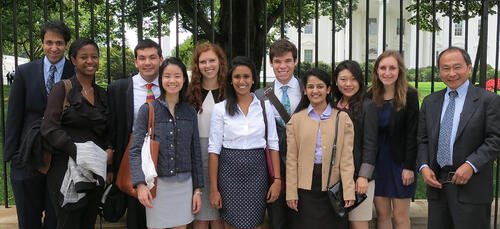
CDDRL Class of 2015 Class of 2015 in front of the White House with Francis Fukuyama.


[[{"fid":"217337","view_mode":"crop_870xauto","fields":{"format":"crop_870xauto","field_file_image_description[und][0][value]":"SHP15 Info Session Flyer","field_file_image_alt_text[und][0][value]":"","field_file_image_title_text[und][0][value]":"","field_credit[und][0][value]":"","field_caption[und][0][value]":"SHP15 Info Session Flyer","field_related_image_aspect[und][0][value]":"","thumbnails":"crop_870xauto","pp_lightbox":false,"pp_description":false},"type":"media","attributes":{"height":1056,"width":870,"class":"media-element file-crop-870xauto"}}]]

Encina Hall, C148
616 Jane Stanford Way
Stanford, CA 94305

0
Olivier Nomellini Senior Fellow at the Freeman Spogli Institute for International Studies
Director of the Ford Dorsey Master's in International Policy
Research Affiliate at The Europe Center
Professor by Courtesy, Department of Political Science
yff-2021-14290_6500x4500_square.jpg

Francis Fukuyama is the Olivier Nomellini Senior Fellow at Stanford University's Freeman Spogli Institute for International Studies (FSI), and a faculty member of FSI's Center on Democracy, Development and the Rule of Law (CDDRL). He is also Director of Stanford's Ford Dorsey Master's in International Policy, and a professor (by courtesy) of Political Science.

Dr. Fukuyama has written widely on issues in development and international politics. His 1992 book, The End of History and the Last Man, has appeared in over twenty foreign editions. His book In the Realm of the Last Man: A Memoir will be published in fall 2026.

Francis Fukuyama received his B.A. from Cornell University in classics, and his Ph.D. from Harvard in Political Science. He was a member of the Political Science Department of the RAND Corporation, and of the Policy Planning Staff of the US Department of State. From 1996-2000 he was Omer L. and Nancy Hirst Professor of Public Policy at the School of Public Policy at George Mason University, and from 2001-2010 he was Bernard L. Schwartz Professor of International Political Economy at the Paul H. Nitze School of Advanced International Studies, Johns Hopkins University. He served as a member of the President’s Council on Bioethics from 2001-2004. He is editor-in-chief of American Purpose, an online journal.

Dr. Fukuyama holds honorary doctorates from Connecticut College, Doane College, Doshisha University (Japan), Kansai University (Japan), Aarhus University (Denmark), the Pardee Rand Graduate School, and Adam Mickiewicz University (Poland). He is a non-resident fellow at the Carnegie Endowment for International Peace. He is a member of the Board of Trustees of the Rand Corporation, the Board of Trustees of Freedom House, and the Board of the Volcker Alliance. He is a fellow of the National Academy for Public Administration, a member of the American Political Science Association, and of the Council on Foreign Relations. He is married to Laura Holmgren and has three children.

(October 2025)

CV
Date Label
Honors Program Director

Encina Hall, C150
616 Jane Stanford Way
Stanford, CA 94305

0
Center Fellow, Freeman Spogli Institute for International Studies
didi_kuo_2023.jpg

Didi Kuo is a Center Fellow at the Freeman Spogli Institute for International Studies (FSI) at Stanford University. She is a scholar of comparative politics with a focus on democratization, corruption and clientelism, political parties and institutions, and political reform. She is the author of The Great Retreat: How Political Parties Should Behave and Why They Don’t (Oxford University Press) and Clientelism, Capitalism, and Democracy: the rise of programmatic politics in the United States and Britain (Cambridge University Press, 2018).

She has been at Stanford since 2013 as the manager of the Program on American Democracy in Comparative Perspective and is co-director of the Fisher Family Honors Program at CDDRL. She was an Eric and Wendy Schmidt Fellow at New America and is a non-resident fellow with the Carnegie Endowment for International Peace. She received a PhD in political science from Harvard University, an MSc in Economic and Social History from Oxford University, where she studied as a Marshall Scholar, and a BA from Emory University.

Date Label
Mentor
News Type
Q&As
Date
Paragraphs

For 14 years, Mariano-Florentino Cuéllar has been a tireless Stanford professor who has strengthened the fabric of university’s interdisciplinary nature. Joining the faculty at Stanford Law School in 2001, Cuéllar soon found a second home for himself at the Freeman Spogli for International Studies. He held various leadership roles throughout the institute for several years – including serving as co-director of the Center for International Security and Cooperation. He took the helm of FSI as the institute’s director in 2013, and oversaw a tremendous expansion of faculty, research activity and student engagement. 

An expert in administrative law, criminal law, international law, and executive power and legislation, Cuéllar is now taking on a new role. He leaves Stanford this month to serve as justice of the California Supreme Court and will be succeeded at FSI by Michael McFaul on Jan. 5.

 As the academic quarter comes to a close, Cuéllar took some time to discuss his achievements at FSI and the institute’s role on campus. And his 2014 Annual Letter and Report can be read here.

You’ve had an active 20 months as FSI’s director. But what do you feel are your major accomplishments? 

We started with a superb faculty and made it even stronger. We hired six new faculty members in areas ranging from health and drug policy to nuclear security to governance. We also strengthened our capacity to generate rigorous research on key global issues, including nuclear security, global poverty, cybersecurity, and health policy. Second, we developed our focus on teaching and education. Our new International Policy Implementation Lab brings faculty and students together to work on applied projects, like reducing air pollution in Bangladesh, and improving opportunities for rural schoolchildren in China.  We renewed FSI's focus on the Ford Dorsey Program in International Policy Studies, adding faculty and fellowships, and launched a new Stanford Global Student Fellows program to give Stanford students global experiences through research opportunities.   Third, we bolstered FSI's core infrastructure to support research and education, by improving the Institute's financial position and moving forward with plans to enhance the Encina complex that houses FSI.

Finally, we forged strong partnerships with critical allies across campus. The Graduate School of Business is our partner on a campus-wide Global Development and Poverty Initiative supporting new research to mitigate global poverty.  We've also worked with the Law School and the School of Engineering to help launch the new Stanford Cyber Initiative with $15 million in funding from the Hewlett Foundation. We are engaging more faculty with new health policy working groups launched with the School of Medicine and an international and comparative education venture with the Graduate School of Education. 

Those partnerships speak very strongly to the interdisciplinary nature of Stanford and FSI. How do these relationships reflect FSI's goals?

The genius of Stanford has been its investment in interdisciplinary institutions. FSI is one of the largest. We should be judged not only by what we do within our four walls, but by what activity we catalyze and support across campus. With the business school, we've launched the initiative to support research on global poverty across the university. This is a part of the SEED initiative of the business school and it is very complementary to our priorities on researching and understanding global poverty and how to alleviate. It's brought together researchers from the business school, from FSI, from the medical school, and from the economics department.  

Another example would be our health policy working groups with the School of Medicine. Here, we're leveraging FSI’s Center for Health Policy, which is a great joint venture and allows us to convene people who are interested in the implementation of healthcare reforms and compare the perspective and on why lifesaving interventions are not implemented in developing countries and how we can better manage biosecurity risks. These working groups are a forum for people to understand each other's research agendas, to collaborate on seeking funding and to engage students. 

I could tell a similar story about our Mexico Initiative.  We organize these groups so that they cut across generations of scholars so that they engage people who are experienced researchers but also new fellows, who are developing their own agenda for their careers. Sometimes it takes resources, sometimes it takes the engagement of people, but often what we've found at FSI is that by working together with some of our partners across the university, we have a more lasting impact.

Looking at a growing spectrum of global challenges, where would you like to see FSI increase its attention? 

FSI's faculty, students, staff, and space represent a unique resource to engage Stanford in taking on challenges like global hunger, infectious disease, forced migration, and weak institutions.  The  key breakthrough for FSI has been growing from its roots in international relations, geopolitics, and security to focusing on shared global challenges, of which four are at the core of our work: security, governance, international development, and  health. 

These issues cross borders. They are not the concern of any one country. 

Geopolitics remain important to the institute, and some critical and important work is going on at the Center for International Security and Cooperation to help us manage the threat of nuclear proliferation, for example. But even nuclear proliferation is an example of how the transnational issues cut across the international divide. Norms about law, the capacity of transnational criminal networks, smuggling rings, the use of information technology, cybersecurity threats – all of these factors can affect even a traditional geopolitical issue like nuclear proliferation. 

So I can see a research and education agenda focused on evolving transnational pressures that will affect humanity in years to come. How a child fares when she is growing up in Africa will depend at least as much on these shared global challenges involving hunger and poverty, health, security, the role of information technology and humanity as they will on traditional relations between governments, for instance. 

What are some concrete achievements that demonstrate how FSI has helped create an environment for policy decisions to be better understood and implemented?

We forged a productive collaboration with the U.N. High Commissioner for Refugees through a project on refugee settlements that convened architects, Stanford researchers, students and experienced humanitarian responders to improve the design of settlements that house refugees and are supposed to meet their human needs. That is now an ongoing effort at the UN Refugee Agency, which has also benefited from collaboration with us on data visualization and internship for Stanford students. 

Our faculty and fellows continue the Institute's longstanding research to improve security and educate policymakers. We sometimes play a role in Track II diplomacy on sensitive issues involving global security – including in South Asia and Northeast Asia.  Together with Hoover, We convened a first-ever cyber bootcamp to help legislative staff understand the Internet and its vulnerabilities. We have researchers who are in regular contact with policymakers working on understanding how governance failures can affect the world's ability to meet pressing health challenges, including infectious diseases, such as Ebola.

On issues of economic policy and development, our faculty convened a summit of Japanese prefectural officials work with the private sector to understand strategies to develop the Japanese economy.  

And we continued educating the next generation of leaders on global issues through the Draper Hills summer fellows program and our honors programs in security and in democracy and the rule of law. 

How do you see FSI’s role as one of Stanford’s independent laboratories?

It's important to recognize that FSI's growth comes at particularly interesting time in the history of higher education – where universities are under pressure, where the question of how best to advance human knowledge is a very hotly debated question, where universities are diverging from each other in some ways and where we all have to ask ourselves how best to be faithful to our mission but to innovate. And in that respect, FSI is a laboratory. It is an experimental venture that can help us to understand how a university like Stanford can organize itself to advance the mission of many units, that's the partnership point, but to do so in a somewhat different way with a deep engagement to practicality and to the current challenges facing the world without abandoning a similarly deep commitment to theory, empirical investigation, and rigorous scholarship.

What have you learned from your time at Stanford and as director of FSI that will inform and influence how you approach your role on the state’s highest court?

Universities play an essential role in human wellbeing because they help us advance knowledge and prepare leaders for a difficult world. To do this, universities need to be islands of integrity, they need to be engaged enough with the outside world to understand it but removed enough from it to keep to the special rules that are necessary to advance the university's mission. 

Some of these challenges are also reflected in the role of courts. They also need to be islands of integrity in a tumultuous world, and they require fidelity to high standards to protect the rights of the public and to implement laws fairly and equally.  

This takes constant vigilance, commitment to principle, and a practical understanding of how the world works. It takes a combination of humility and determination. It requires listening carefully, it requires being decisive and it requires understanding that when it's part of a journey that allows for discovery but also requires deep understanding of the past.

Hero Image
tino mug
All News button
1
-

Whereas Korean health insurance achieved universal coverage of population in 1989, out-of-pocket (OOP) payments has been a major concern because it is as high as about 35% of total health expenditure. Several policies to expand the benefit coverage of National Health Insurance (NHI) were implemented around the year 2005; for example, cost sharing of 20~50% was reduced to 10% for catastrophic illnesses; ceiling on OOP payment was implemented for covered services. This study analyzed the extent to which the policy of expanding benefit coverage for cancer patients reduced income-inequality in health care utilization, the use of tertiary care hospital, and catastrophic payment. Using nationwide claim data of NHI, this study is based on the triple difference estimator to compare cancer patients as a treatment group with liver disease or cardio-cerebrovascular disease as control groups and low-income group with the highest-income group. The results showed that the utilization of outpatient and inpatient services increased more (or decreased less) among low-income patients than high-income ones after the introduction of the policy. For the use of tertiary care hospitals, inpatient admissions increased more in low-income cancer patients than those of high-income ones, but not outpatient visits. While catastrophic payment decreased among cancer patients, high-income cancer patients experienced a greater decrease than those of low income did. Although Korea expanded benefits coverage for catastrophic illnesses, policy debates continue due to insufficient financial protection, which also depends on provider behavior and potential demand inducement associated with the provision of uncovered services and specialist services with high fees. Politics of increasing benefits coverage in Korean NHI will be discussed too.


Image
soonman kwon 074x4
Soonman Kwon is Professor and Former Dean of the School of Public Health, Seoul National University, South Korea. After he received Ph.D. from the Wharton School of the University of Pennsylvania, he was assistant professor of public policy at the University of Southern California in 1993-1996. Prof. Kwon has held visiting positions at the Harvard School of Public Health, London School of Economics, and University of Toronto. He was the president of the Korean Association of Schools of Public Health in 2013-2014 and is the Presidents-Elect of Korean Health Economic Association and Korean Gerontological Society. Prof. Kwon has been on the editorial boards of Social Science and Medicine, Health Economics Policy and Law, BMC Health Services Research, and Ageing Research Reviews. He was the editor of the Korean Journal of Public Health in 2007-2009 and currently the editor of the Korean Journal of Health Economics and Policy.


Image
sujin kim4x4
Sujin Kim is a Takemi fellow in Harvard School of Public Health, interested in how public policy impacts health, health care utilization and health inequality. Sujin currently does research on the role of public policy in elderly depression, impact of health screening policy, and the impact of pharmaceutical pricing policy on provider’s behavior. She has published papers in Health Policy and International Journal of Health Care Finance and Economics. She received her Ph.D. in health policy and management in 2013 from Seoul National University, where she analyzed how policy of expanding NHI benefit coverage in Korea affected inequalities in health care utilization and expenditure. She received M.P.H. in health policy and management and B.Pharm in pharmacy from Seoul National University in 2008 and 2001, respectively.


Presentation
Download pdf

Philippines Conference Room

Encina Hall Central, 3rd Floor

Stanford University

Stanford, CA 94305

Soonman Kwon Professor and Former Dean of the School of Public Health, Seoul National University
Sujin Kim Takemi Fellow at the Harvard School of Public Health
Seminars
-

All research in progress seminars are off-the-record. Any information about methodology and/or results are embargoed until publication.

Abstract:

Nearly half of total health care expenditures in the Veterans Affairs (VA) system are generated by 5% of its patients. These patients generally have complex health and health care needs, including multiple chronic conditions, comorbid mental health conditions, and social stressors, all of which contribute to high rates of hospitalization, urgent care visits, and outpatient encounters. In recent years, a number of intensive primary care models have emerged outside the VA that focus on health systems’ high-risk, high-cost patients. Early evaluations suggest that these models have the potential to improve quality of care and enhance patients’ care experience, while simultaneously keeping utilization in check and using resources more wisely. However, there are few rigorous evaluations of these programs, and studies of their applicability inside the VA are lacking. In 2013, the Palo Alto VA launched a quality improvement (QI) program for high-risk, high-cost patients to augment the VA’s patient centered medical home (Patient Aligned Care Team, or PACT) with Intensive management (ImPACT). ImPACT’s multidisciplinary team offers patients enhanced access, chronic disease management, support during health deteriorations, and social work and recreation therapy. Although ImPACT was designed as a QI program, Palo Alto VA leadership chose to enroll a random sample of eligible patients, providing an opportunity for a randomized controlled evaluation. We will describe this unique QI/research partnership, as well as early findings from the ImPACT pilot study, and discuss implications for future services for high-risk, high-cost patients within the VA system.

Donna Zulman General Medical Disciplines
Steven M. Asch General Medical Disciplines
Seminars
-

All research in progress seminars are off-the-record. Any information about methodology and/or results are embargoed until publication.


Abstract:

Background: As part of efforts to move away from FFS payment, Medicare established the Accountable Care Organization (ACO) initiative.  ACOs are provider based organizations that can share savings with Medicare if spending falls below a financial benchmark and are rewarded if they meet quality metrics.  There are now over 400 ACOs.

Methods: In a difference-in-differences analysis of Medicare, we assess the impact of ACOs on spending, patient satisfaction, and quality.  

Results: Adjusted Medicare spending and spending trends were similar in the ACO and control groups during the pre-contract period.  In 2012, total adjusted per-beneficiary spending differentially changed in the Pioneer ACO group (−$29.2/quarter; P=0.01), consistent with a 1.2% savings.  Savings were significantly greater for ACOs with baseline spending above the local average (P=0.048) and those serving high-spending areas (P=0.04).  Savings were unrelated to financial integration between hospitals and physician groups and significant among ACOs that exited the program. Quality in the Pioneers either improved or was similar.  Patient experiences (in Pioneers and Shared Savings ACOs) were either statistically similar or better that traditional FFS, with the improvements in areas that ACOs can more readily impact and for patients they are likely to target.

Conclusion:  Early results from the ACO program suggest ACOs can achieve savings without lowering quality or patient satisfaction.


Michael Chernew Harvard Medical School
Seminars
-

In collaboration with Kimberly Singer Babiarz, Paul Ma, and Shige Song

All research in progress seminars are off-the-record. Any information about methodology and/or results are embargoed until publication.

Abstract:

During the 1970s, the total fertility rate in rural China fell more than 50% from 6.4 in 1970 to about 3 in 1980, one of the most dramatic fertility declines ever observed. This decline coincides with an intense, widespread fertility control campaign called the ‘Later, Longer, Fewer’ campaign, which aggressively promoted later marriage, longer birth intervals and fewer children prior to the 'One Child Policy' (by when fertility rates were already very low).  In this work in progress, we use a novel dataset combining previously unused data on the province-level initiation of early fertility control policies in combination with detailed birth history data on more than 1.5 million births to study the policy’s effect on fertility.  Importantly, we also study behavioral sex selection under the policy, which is coincident with the rise of sex imbalance at young ages in the Chinese population. Specifically, we study three distinct mechanisms of sex selection: (1) male-biased fertility stopping rules, (2) prenatal sex selection (sex-specific abortion, abandonment, or infanticide), and (3) differential neglect during childhood.

Encina Commons Room 101,
615 Crothers Way,
Stanford, CA 94305-6006

(650) 723-2714 (650) 723-1919
0
Henry J. Kaiser, Jr. Professor
Professor, Health Policy
Senior Fellow at the Freeman Spogli Institute for International Studies
Senior Fellow at the Stanford Institute for Economic Policy Research
Professor, Economics (by courtesy)
grant_miller_vert.jpeg PhD, MPP

As a health and development economist based at the Stanford School of Medicine, Dr. Miller's overarching focus is research and teaching aimed at developing more effective health improvement strategies for developing countries.

His agenda addresses three major interrelated themes: First, what are the major causes of population health improvement around the world and over time? His projects addressing this question are retrospective observational studies that focus both on historical health improvement and the determinants of population health in developing countries today. Second, what are the behavioral underpinnings of the major determinants of population health improvement? Policy relevance and generalizability require knowing not only which factors have contributed most to population health gains, but also why. Third, how can programs and policies use these behavioral insights to improve population health more effectively? The ultimate test of policy relevance is the ability to help formulate new strategies using these insights that are effective.

Faculty Fellow, Stanford Center on Global Poverty and Development
Faculty Affiliate, Stanford Center for Latin American Studies
Faculty Affiliate, Woods Institute for the Environment
Faculty Affiliate, Interdisciplinary Program in Environment & Resources
Faculty Affiliate, Stanford Center on China's Economy and Institutions
CV
Date Label
Grant Miller CHP/PCOR
Seminars
Subscribe to Health and Medicine