Governance

FSI's research on the origins, character and consequences of government institutions spans continents and academic disciplines. The institute’s senior fellows and their colleagues across Stanford examine the principles of public administration and implementation. Their work focuses on how maternal health care is delivered in rural China, how public action can create wealth and eliminate poverty, and why U.S. immigration reform keeps stalling. 

FSI’s work includes comparative studies of how institutions help resolve policy and societal issues. Scholars aim to clearly define and make sense of the rule of law, examining how it is invoked and applied around the world. 

FSI researchers also investigate government services – trying to understand and measure how they work, whom they serve and how good they are. They assess energy services aimed at helping the poorest people around the world and explore public opinion on torture policies. The Children in Crisis project addresses how child health interventions interact with political reform. Specific research on governance, organizations and security capitalizes on FSI's longstanding interests and looks at how governance and organizational issues affect a nation’s ability to address security and international cooperation.

Paragraphs
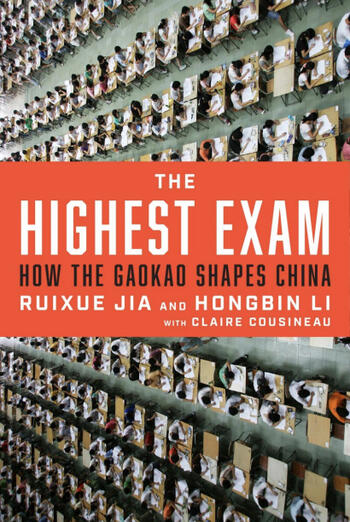
Cover of volume 93 of The China Journal

After the abrupt end of China’s zero-COVID policy at the end of 2022, the debt held by local government financing vehicles (LGFVs) on behalf of their local governments had soared to at least US$8 trillion. Some local governments are now cutting public services due to a lack of funds. The mountains of LGFV debt cannot be explained by COVID public health expenditures, but the impact of COVID determined policy changes that led to the crisis of hidden debt. Paradoxically, China’s success in combatting the first wave of COVID triggered policies that ultimately upended LGFVs. Using quantitative data, we show that changing central government policies during the pandemic created debt and undermined the operation of LGFVs. The three red lines policy instituted against the real estate sector in the middle of the pandemic interacted with the zero-COVID policy to create a perfect storm, pushing hidden local government debt to new highs when the revenue that LGFVs needed to service their debt dried up. COVID exposed the inherent vulnerability of LGFVs and their local governments relying on a noninstitutionalized source of revenue—namely, income tied to the real estate sector—to fill their annual fiscal gaps and underscored the need for systemic fiscal reform.

All Publications button
1
Publication Type
Journal Articles
Publication Date
Journal Publisher
The China Journal
Authors
Jean C. Oi
-
Governance in the Arab World: New Research Agendas

The governance challenges confronting states and societies of the Arab world have continued to limit human development in the countries of the region. In the best functioning Arab states, populations confront problems of economic stagnation, poor or weak governance, and growing income inequality. These problems are compounded in many societies by the additional burdens of political conflict, humanitarian catastrophe, and destruction of critical infrastructure.

This roundtable brings together a group of scholars to reflect on these pressing problems and the imperative for new research agendas and lines of inquiry to address them.

CHAIR: Lisa Blaydes

SPEAKERS:

  • Alexandra Blackman
  • Diana Greenwald
  • Salma Mousa
  • Christiana Parreira
  • David Patel

About the Speakers

Lisa Blaydes

Lisa Blaydes

Professor of Political Science at Stanford University

Lisa Blaydes is a Professor of Political Science at Stanford University. She is the author of State of Repression: Iraq under Saddam Hussein (Princeton University Press, 2018) and Elections and Distributive Politics in Mubarak’s Egypt (Cambridge University Press, 2011). Professor Blaydes received the 2009 Gabriel Almond Award for best dissertation in the field of comparative politics from the American Political Science Association for this project.  Her articles have appeared in the American Political Science Review, International Studies Quarterly, International Organization, Journal of Theoretical Politics, Middle East Journal, and World Politics. During the 2008-2009 and 2009-2010 academic years, Professor Blaydes was an Academy Scholar at the Harvard Academy for International and Area Studies. She holds degrees in Political Science (PhD) from the University of California, Los Angeles, and International Relations (BA, MA) from Johns Hopkins University.

Alexandra Blackman

Alexandra Domike Blackman

Assistant Professor in Cornell University’s Department of Government

Alexandra Domike Blackman is an Assistant Professor in Cornell University’s Department of Government. In 2019-2020, she was a Post-Doctoral Associate at New York University - Abu Dhabi. Blackman’s work focuses on the development of religious identities in the political sphere, the challenges facing female politicians, and political party development in the Middle East. Her work has appeared in the Journal of PoliticsPolitical BehaviorPolitics & Religion, and Journal of Peace Research. Blackman was a Center for Arabic Study Abroad Fellow in Cairo, Egypt (2010-2011) and a Junior Fellow at the Carnegie Endowment for International Peace in Washington, DC (2011-2012).

Diana Greenwald

Diana B. Greenwald

Associate Professor (effective August 2025) in the Department of Political Science at the City College of New York
Diana B. Greenwald is an Associate Professor (effective August 2025) in the Department of Political Science at the City College of New York. Her research focuses on the politics of the Middle East, nationalism, conflict, and state-building. She obtained her Ph.D. in political science from the University of Michigan in 2017. From 2017 to 2018, she was a Postdoctoral Research Fellow at the Middle East Initiative at the Harvard Kennedy School. Her book, Mayors in the Middle: Indirect Rule and Local Government in Occupied Palestine (Columbia University Press, 2024), examines Palestinian local politics under Israeli occupation. This project draws on interviews with municipal leaders and local data on policing, taxing, and spending collected in the West Bank between 2014 and 2019. Greenwald's research has been published in PS: Political Science & Politics, Middle East Law and Governance, and Civil Wars. Her writing has also appeared in The National Interest, The Washington Post's Monkey Cage, +972 Magazine, and Foreign Policy. Her work has been supported by RFCUNY, the United States Institute of Peace, the Rackham Graduate School at the University of Michigan, and the Project on Middle East Political Science.
Salma Mousa

Salma Mousa

Assistant Professor in the Department of Political Science at UCLA

Salma Mousa is a scholar of social cohesion — typically using field experiments and partnerships with local governments and NGOs to explore the question of how to build it in the Middle East and beyond. Currently an Assistant Professor at UCLA's political science department, her research has been published in Science and covered by The Economist, BBC, Der Spiegel, the Times of London, and PBS NOVA. Mousa received her PhD from Stanford University's political science department in 2020 and was previously an Assistant Professor of political science at Yale University.

Christiana Parreira

Christiana Parreira

Assistant Professor in the Department of International Relations and Political Science at the Graduate Institute

Christiana Parreira is an Assistant Professor in the Department of International Relations and Political Science at the Graduate Institute. Her research focuses on the role of local political institutions and actors in governance, looking primarily at post-conflict contexts in the Middle East and North Africa. Her forthcoming book project examines how local governments and elections facilitated predatory state-building practices in Lebanon. In other research, she examines determinants of governance quality and distributive outcomes in Lebanon, Iraq, and elsewhere in the Global South. She received her PhD from Stanford University in 2020. Before joining the Graduate Institute, she served as a postdoctoral associate in the Department of Near Eastern Studies at Princeton University and a pre-doctoral associate at the Harvard Kennedy School's Middle East Initiative.

David Patel

David Siddhartha Patel

Residential Visiting Scholar at the Middle East Initiative at Harvard Kennedy School

David Siddhartha Patel is a residential visiting scholar at the Middle East Initiative at Harvard Kennedy School. His research focuses on religious authority, social order, identity, and state-building in the contemporary Middle East. His book Order Out of Chaos: Islam, Information, and the Rise and Fall of Social Orders in Iraq (Cornell University Press, 2022) examines the role of mosques and clerical networks in generating order after state collapse and is based upon independent field research he conducted in Basra. It won the Best Book Award from the APSA MENA Politics section and honorable mention for the Political Networks section’s Best Book Award. Patel is currently working on two book-length projects. The first, “Defunct States of the Middle East,” chronicles the more than two dozen territorial polities that disappeared from the map of the region after 1918: how they came to be, how they died, and how they are remembered today. The second, “The Market for Ayatollahs,” examines competition and collusion between Shi‘a religious authorities in Najaf in Iraq and Qom in Iran and how that relationship constrains varieties of Shi‘ism in the world today. Before joining MEI, he was a senior fellow and associate director for research at the Crown Center for Middle East Studies at Brandeis University and, previously, an assistant professor of government at Cornell University. He holds a BA in economics and political science from Duke University and a PhD in political science from Stanford University.

Encina Hall E008, Garden-level East (616 Jane Stanford Way, Stanford)

This event is open to Stanford-affiliates only.

Alexandra Domike Blackman
Diana B. Greenwald
0
CDDRL Postdoctoral Scholar, 2020-21
mousa.jpg

An Egyptian-Canadian raised in Saudi Arabia, the UAE, Qatar, and Canada, Salma Mousa received her PhD in Political Science from Stanford University in 2020. A scholar of comparative politics, her research focuses on migration, conflict, and social cohesion.  Salma's dissertation investigates strategies for building trust and tolerance after war. Leveraging field experiments among Iraqis displaced by ISIS,  American schoolchildren, and British soccer fans, she shows how intergroup contact can change real-world behaviors — even if underlying prejudice remains unchanged.   A secondary research agenda tackles the challenge of integrating refugees in the United States. Combining a meta-analytic review, ethnographic fieldwork, and field experiments with resettlement agencies, this project identifies risk factors and promising policies for new arrivals.  Salma has held fellowships at the U.S. Institute of Peace, Stanford’s Immigration Policy Lab, the Freeman Spogli Institute, the Stanford Center for International Conflict and Negotiation, the McCoy Center for Ethics in Society, and the Stanford Center on Philanthropy and Civil Society. Her work has been supported by the Abdul Latif Jameel Poverty Action Lab (JPAL), the Innovations for Poverty Action Lab (IPA), the King Center on Global Development, the Institute for Research in the Social Sciences (IRiSS), the Program on Governance and Local Development (GLD), and the Abbasi Program in Islamic Studies. Her research has been featured by The Economist, BBC, and Der Spiegel,  on the front page of the Times of London and on PBS NOVA.

CV
Salma Mousa
Christiana Parreira
David Siddhartha Patel

Encina Hall West, Room 408
Stanford, CA 94305-6044

(650) 723-0649
0
Senior Fellow at the Freeman Spogli Institute for International Studies
Professor of Political Science
lisa_blaydes_108_vert_final.jpg

Lisa Blaydes is a Professor of Political Science at Stanford University. She is the author of State of Repression: Iraq under Saddam Hussein (Princeton University Press, 2018) and Elections and Distributive Politics in Mubarak’s Egypt (Cambridge University Press, 2011). Professor Blaydes received the 2009 Gabriel Almond Award for best dissertation in the field of comparative politics from the American Political Science Association for this project.  Her articles have appeared in the American Political Science Review, International Studies Quarterly, International Organization, Journal of Theoretical Politics, Middle East Journal, and World Politics. During the 2008-2009 and 2009-2010 academic years, Professor Blaydes was an Academy Scholar at the Harvard Academy for International and Area Studies. She holds degrees in Political Science (PhD) from the University of California, Los Angeles, and International Relations (BA, MA) from Johns Hopkins University.


Affiliated faculty at the Center on Democracy, Development and the Rule of Law
Affiliated faculty at the Center for International Security and Cooperation
Date Label
Lisa Blaydes
Panel Discussions
Date Label
Paragraphs

Vladimir Putin has been the undisputed leader of Russia (either as president or prime minister) for almost 25 years. Barring an accident or assassination, Putin seems almost certain to surpass Joseph Stalin's record long reign over the Soviet Union of 29 years. The durability of Putin's regime comes despite a record of endemic corruption, poor governance, economic growth that gave way to recession, a poorly managed COVID response, and a disastrous invasion of a peaceful neighbor in 2022. Despite all of this, Putin endures. How does he do it? A new book by Hannah Chapman, Dialogue with the Dictator: Authoritarian Legitimation and Information Management in Putin's Russia is a welcome addition to a lengthening list of recent studies seeking to explain the resilience and potential vulnerabilities of authoritarianism and of Putin's regime in particular. In one way or another, all of these books focus on the question that also puzzles Russia's opposition politicians: Why is Putin's autocracy so resilient? Chapman offers one answer in exploring the ways in which his regime uses “participatory technologies” to not only enhance regime legitimacy from Russian society but also to control what information reaches Russian citizens. This article reviews her book in the context of other recent studies of how Putin's autocracy works and why it has lasted so long.

All Publications button
1
Publication Type
Journal Articles
Publication Date
Journal Publisher
Political Science Quarterly
Authors
Kathryn Stoner
Number
qqae125
Authors
News Type
Q&As
Date
Paragraphs

This interview first appeared in The Paper on April 4, 2025. The following English version was generated using machine translation and subsequently edited for accuracy and clarity.


It has been 122 days since South Korean President Yoon Suk Yeol issued an "emergency martial law" order on December 3, 2024. On the morning of April 4, the Constitutional Court of Korea will issue a ruling on Yoon’s impeachment case. From the National Assembly’s motion to impeach to 11 court hearings and now the final verdict, 111 days have passed—far more than for former Presidents Roh Moo-hyun and Park Geun-hye. Over these four months, the divide between the ruling and opposition parties — and within Korean society — has become increasingly apparent. Whether the Constitutional Court can safeguard the Constitution and public trust has become a major focus of public opinion in South Korea.

"I’ve long believed in the resilience of South Korean democracy, but over the past two or three months, I’ve started to worry. In the face of this current political stalemate, I wonder whether Koreans can still accept decisions that contradict their positions," said Gi-Wook Shin, Professor of Sociology at Stanford University, founding director of the Korea Program, and Director of the Walter H. Shorenstein Asia-Pacific Research Center, in an interview with The Paper. He noted that there are no signs South Korea will escape its current political polarization anytime soon — and that the situation may worsen.

Shin entered Yonsei University’s Sociology Department in the late 1970s. In the early 2000s, he founded the Korea Program at Stanford, focusing on social movements and nationalism. In 2024, he published Korea’s Democracy in Crisis: The Threats of Liberalism, Populism, and Polarization, a book whose concerns — resurgent populism and societal polarization — are now vividly reflected in real life.

On December 3, 2024, Yoon declared a state of emergency and described his political opponents as "anti-state forces." The language he used in his televised emergency address was directly reminiscent of the Cold War era. Meanwhile, during Yoon’s administration, opposition parties submitted a record 29 motions for impeachment. These episodes highlight deep rifts in Korean politics, intensifying the fierce struggle between the left and right across all levels of society.

The roots of South Korea’s political divide trace back to the post-WWII era. Under global pressures, political elites on the Korean peninsula quickly split into left-wing, right-wing, and various centrist groups, each hoping to build the country according to their ideals. After the United States and Soviet Union occupied different parts of the peninsula, a sharp ideological confrontation emerged, and the left and right failed to unite to establish a single nation.

During the military rule in South Korea, U.S.-backed authoritarian strongmen governed the country, laying the groundwork for today’s conservative political parties. Meanwhile, leftist forces were strengthened by decades of street protests. Since democratization in 1987, South Korean politics have swung between the left and the right. Under President Yoon, this shift toward the right has become even more pronounced.

Amid the growing hostility between conservatives and progressives, Yoon’s martial law declaration and subsequent impeachment proceedings have amplified South Korea’s political polarization and left-right conflict. Yoon’s supporters have launched massive demonstrations. Conservative voices have grown louder, with many chanting U.S.-style slogans like “Stop the Steal” in homage to Trump’s MAGA movement. Shin warns that among Asian countries, South Korea may be the only one to experience a phenomenon akin to “Trumpism.” A recent survey by Korea’s Center for Conflict Resolution found that most South Koreans see ideological division as the country’s most pressing social issue.

Today’s political confrontation in South Korea is filled with resentment and hostility. That’s why compromise is so difficult. The two sides no longer see each other as legitimate political rivals but as enemies to be defeated at all costs.
Gi-Wook Shin

Conservative Voices Grow Louder, More Extreme


The Paper: From your observations, what changes has this political storm — from emergency martial law to the president’s impeachment — brought to South Korean society?

Gi-Wook Shin: Regarding presidential impeachment, Roh Moo-hyun’s case in 2004 was dismissed by the Constitutional Court, and Park Geun-hye was removed from office in 2017. Both previous cases strictly followed legal procedures with clear rules. But this time, the situation is far more chaotic, with fiercer partisan conflict. In a sense, we’re witnessing a threat to the rule of law.

On the other hand, mass mobilization by both the left and the right is very active, especially the anti-impeachment forces, whose scale and influence are significant. This shows that political polarization has deepened, and social division has worsened — developments that deeply concern me.

The Paper: In this wave of political turmoil, what is the core conflict between conservatives and progressives?

Shin: When martial law was declared, the right tried to assert control over state power and justified their actions with claims that pro-North Korean forces needed to be purged from the country. Their stance clearly supports the South Korea-U.S. alliance. In their protests, you’ll often see both Korean and American flags, as well as images of Trump and Yoon Suk-yeol side by side.

The left, by contrast, believes that this emergency declaration is essentially destroying the democracy that South Koreans fought so hard to achieve. They see the right not just as opponents, but as anti-state and anti-people forces.

Today’s political confrontation in South Korea is filled with resentment and hostility. It has become a kind of “identity politics.” That’s why compromise is so difficult. The two sides no longer see each other as legitimate political rivals, but as “evil forces” or enemies to be defeated at all costs.

The Paper: It’s been over three months since the martial law controversy began. As time passes, conservative voices have grown louder, the ruling People Power Party's approval ratings have rebounded, and anti-impeachment rallies are massive. Are we seeing signs of an expanding conservative base?

Shin: Large-scale protests aren’t new in South Korea. In the past, they were usually led by liberal or progressive groups. In recent years, however, right-wing and conservative forces have increasingly mobilized for protests. This is a new trend. You could already see this during the 2022 presidential election: it was extremely close, with Yoon and Lee Jae-myung separated by less than 1 percent of the vote. Conservatives realized the importance of mobilizing public support to counterbalance the left.

Indeed, conservative voices have grown louder and more extreme. We’re even seeing cases of storming courts and self-immolation. But that doesn’t necessarily mean their numbers are increasing. Overall, South Korea’s population is roughly divided into 30 percent liberals, 30 percent conservatives, and about 40 percent swing voters. Sometimes conservatives use “bluffing” to create the impression of overwhelming influence and suppress progressive mobilization.

The Paper: The far right is now active on the political frontlines, loudly supporting the conservative camp. Some far-right individuals even stormed the court. Right-wing YouTubers have become among Yoon’s most fervent defenders. In this context, will the People Power Party continue shifting further right, or even toward the far right?

Shin: What’s visible now is that the ruling People Power Party has some connection to the far-right forces in the current street protests. Especially in the wake of the martial law declaration and impeachment, the far right has taken the lead in organizing massive demonstrations, mobilizing hundreds of thousands every weekend.

There is latent cooperation between the ruling party and the far right. But now that the impeachment has triggered an early presidential election, the People Power Party must also appeal to a broader base, which means distancing itself from the far right — creating a dilemma.

If the People Power Party continues working with the far right, it may retain its base and ensure right-wing support. But elections are won by swing voters. Distancing from the far right helps avoid being labeled “extreme” and attracts moderates.

Given that the election will happen within 60 days of the impeachment, the ruling party has little time to adjust its campaign strategy. They must quickly decide how to handle their relationship with far-right street forces: should they continue cooperating or distance themselves? This will be a core political challenge in the coming weeks.

South Korea’s current democratic crisis is part of a global trend. [...But ] among Asian countries, it may be the only one to experience something like “Trumpism.”
Gi-Wook Shin

South Korea’s Democratic Crisis Reflects a Global Trend


The Paper: At conservative protests, many people carry signs with slogans like “Stop the Steal,” borrowed from Trump supporters. Trump had the “Make America Great Again” movement. Yoon has the Taegeukgi Budae movement (a far-right group of older conservatives, many of them fundamentalist Christians who strongly support Yoon). How do you see Trump’s influence on Korean politics?

Shin: It’s interesting. Among Asian countries, South Korea may be the only one to experience something like “Trumpism.” Two factors are worth noting.

First, there are organizational similarities between the Korean and American contexts. Yoon and Trump supporters share common traits, especially religious ones. That’s not the case in other Asian countries. For example, the Philippines is Catholic, others are predominantly Muslim or Buddhist. South Korea is the only Asian country where fundamentalist Christians have strong political influence. (Editor’s note: According to Yonhap, Korea’s Yoido Full Gospel Church is currently the largest Christian church in the world.) There seems to be a connection or sense of identification between American evangelicals and Korean Christian fundamentalists.

Second, ideologically, Korea’s right resembles America’s right. Their fondness for slogans like “Stop the Steal” reflects their belief in election fraud conspiracies. YouTube’s influence in Korea is possibly stronger than in most of the world, especially among the far right. It has become a vital tool for mobilization and organizing large-scale protests.

The Paper: South Korea’s democratization was closely tied to the U.S. export of democracy. After the Korean War, with U.S. support, South Korea adopted a democratic constitution and a relatively modern political framework. How has foreign influence shaped Korean democracy? Is it connected to the current democratic crisis?

Shin: U.S. influence on Korean democracy is complex. Until the 1980s, the United States supported South Korea’s military dictators like Park Chung-hee and Chun Doo-hwan. Only after 1987 did the United States back democratic development. But ultimately, it was the Korean people who fought for democracy. That’s why so many opposed the martial law declaration on December 3. They don’t want to give up hard-won freedoms. Many made great sacrifices for democracy.

South Korea has been democratic for over 40 years. What we see today may be tense or even extreme, but many places worldwide are also experiencing democratic backsliding. It’s unclear whether the United States is doing any better, especially in the Trump era. Many European countries — France, Italy, Hungary, the Netherlands, Spain — are facing similar crises.

South Korea’s current democratic crisis is part of a global trend. It’s just that the martial law announcement drew special attention. But populism, polarization, and identity politics are global issues.

The Paper: After democratization, South Korea again saw emergency martial law, fierce clashes between the president and law enforcement, and general chaos. Yet parliament quickly revoked the martial law order, the impeachment process followed legal procedure, and there were no bloodshed or full societal collapse. What has maintained this relative order?

Shin: South Korea has experienced many legal and political crises before. Also, civic engagement is very high: many LGBTQ+ and minority groups are highly politically active, perhaps even more than in the United States. That’s part of why political clashes are so intense, but it also shows a deep sense of civic participation.

Korea is a relatively well-governed country, with a strong bureaucratic system. I used to believe strongly in the resilience of Korean democracy, but over the past two or three months, I’ve started to worry. Can people still accept outcomes that contradict their positions?

In 2017, the Constitutional Court upheld Park Geun-hye’s impeachment, and most Koreans accepted it and moved on. But this time, it’s unclear whether Yoon’s supporters will accept a guilty verdict — they’re already challenging the court’s legitimacy. On the other hand, if the impeachment fails, opponents may also refuse to accept the result.

The political turbulence may persist for months, or even years.

There are no signs that Korea will overcome its political confrontation and polarization anytime soon. The divide may worsen. In the long term, I call for political reform. [...] What truly worries me is that in the next year or two, social division may grow even worse.
Gi-Wook Shin

How to Heal a Divided Society


The Paper: Beyond left-right ideology, what other messages are South Korean protesters trying to express? Also, Korean pop culture has entered these events: people are playing K-pop music and waving glowsticks. How do you see this unique cultural phenomenon?

Shin: Today, there are many legal disputes and procedural questions between the Constitutional Court, regular courts, the Corruption Investigation Office, prosecutors, and police. Sometimes the legal process is inconsistent or fragmented, which confuses the public and weakens faith in the legal system.

But Koreans have a long history of protest culture. They know how to demonstrate in an orderly way. Protests aren’t always serious or violent, sometimes they feel festive or recreational, with music, dancing, and food stalls. Some elderly people even travel from rural areas to Seoul for a day just to enjoy the atmosphere and social gathering.

Also, Korea is a highly centralized society — everything is concentrated in Seoul, and issues can quickly become national news.

The Paper: This political crisis has deepened Korea’s ideological rifts. A recent survey shows that ideological conflict is now seen as the most urgent social problem, even ahead of gender or wealth inequality. What can be done to prevent further division or begin healing?

Shin: There are no signs that Korea will overcome its political confrontation and polarization anytime soon. The divide may worsen. In the long term, I call for political reform.

Korea should adopt a parliamentary system. The current presidential system is “winner-takes-all,” so even if someone wins by less than 1 percent of the vote, they gain total control. A parliamentary system might encourage more cooperation and compromise. But I don’t think Korea currently has the political atmosphere to make that shift.

The electoral system also needs reform. Right now, each district elects just one representative — sometimes by a single vote — giving them total power.

Civic education is another area for reform. Koreans need to learn how to share and compromise. In Korean, “compromise” often carries a negative connotation. But in a democracy, compromise is essential. No one can get everything they want.

These are long-term reforms and there’s a long road ahead. What truly worries me is that in the next year or two, social division may grow even worse.

Read More

A collage of group photos featuring speakers at the Taiwan Forward conference.
News

Stanford Conference in Taipei Ponders Taiwan’s Path Forward in a Changing World

At its first convening in Taiwan, APARC’s Taiwan Program gathered scholars and industry experts to consider policy measures and practices for tackling the technological, economic, social, and demographic forces shaping the island nation’s future and strategies for ensuring its continued growth and success.
Stanford Conference in Taipei Ponders Taiwan’s Path Forward in a Changing World
Anti-Yoon Suk Yeol protesters participate in a rally against impeached President Yoon Suk Yeol in Seoul, South Korea.
Q&As

Interview: Gi-Wook Shin on South Korea's Political and Institutional Crisis

The martial law episode — and all that followed — “reflects a broader global pattern of democratic erosion but also showcases Korea’s unique strengths," Stanford sociologist Gi-Wook Shin says in an interview with The Diplomat magazine.
Interview: Gi-Wook Shin on South Korea's Political and Institutional Crisis
A man standing outside a building inspecting damage to a broken window.
Blogs

Korea’s Bumpy Road Toward Democracy

The historical and sociopolitical contexts of President Yoon’s declaration of martial law and its aftermath
Korea’s Bumpy Road Toward Democracy
Hero Image
Protesters opposed to impeached South Korean president Yoon Suk Yeol gather near the Constitutional Court on April 04, 2025, in Seoul, South Korea.
Chung Sung-Jun/Getty Images
All News button
1
Subtitle

In an interview with the Chinese newspaper The Paper, Gi-Wook Shin, the director of APARC and the Korea Program, discusses the risks posed by South Korea’s division and polarization following President Yoon’s impeachment, the global trend of democratic decline, and actionable reforms to advance and secure South Korea’s democratic future.

Date Label
Authors
Khushmita Dhabhai
News Type
News
Date
Paragraphs

As part of CDDRL’s weekly research seminar series, Francis Fukuyama, Olivier Nomellini Senior Fellow at Stanford’s Freeman Spogli Institute for International Studies (FSI), delivered a talk on the challenge of bureaucratic authority and delegation. Fukuyama, known for his influential works on state-building and governance, used this talk to trace how scholars and policymakers have grappled with the tension between empowering bureaucracies to act effectively and ensuring they remain accountable to political leaders. The talk was not only a theoretical journey but also a response to current debates about the U.S. administrative state and what meaningful reform should look like.

Fukuyama began with the basics of organizational theory. He explained that hierarchies — systems where authority is ranked and flows from the top down — exist because they reduce "transaction costs," or the costs of coordinating and enforcing agreements between people. This insight, developed by economist Ronald Coase, shows why firms and governments prefer internal structures rather than always relying on markets. Oliver Williamson expanded this to explain how organizations manage uncertainty and complexity. Fukuyama then discussed libertarian ideas, which hoped that technology and open networks could flatten hierarchies. These visions, he noted, largely failed because real-world decisions still require clear lines of authority.

As organizations grew more complex, scholars turned to “principal-agent theory.” In this framework, a "principal" (such as an elected official) delegates tasks to an "agent" (like a bureaucrat), but must ensure the agent acts in their interest. Yet, as Herbert Simon and John DiIulio observed, bureaucrats are not simply self-interested — they are also shaped by professional norms, organizational culture, and personal values. Fukuyama stressed that delegation is unavoidable because lower-level agents often hold critical, local knowledge that distant leaders lack. As economist Friedrich Hayek argued, knowledge is dispersed in society, and central planners cannot predict every situation.

However, delegation creates a dilemma: how to give bureaucrats enough freedom to use their expertise, while still keeping them accountable. Formal mechanisms like audits and punishments help, but informal tools such as trust, shared values, and education are just as crucial. Fukuyama pointed to Japan’s "kanban" manufacturing system and military strategies like "mission orders," where frontline actors are trusted to make decisions based on shared goals.

A major paradox Fukuyama addressed is that while anti-corruption efforts seek to limit bureaucratic discretion, political science research shows that too much constraint stifles effectiveness. He proposed an "inverse-U curve," where both too little and too much autonomy harm performance. The right balance depends on the state’s overall capacity.

Applying this to the U.S., Fukuyama challenged claims that bureaucrats are "out of control." Instead, he argued that America’s federal bureaucracy is over-regulated, bogged down by rigid rules that prioritize compliance over results. His work with Katherine Bersch identifies five existing tools for political control, such as appointment and removal powers, showing that bureaucratic autonomy is already tightly managed.

Fukuyama concluded by advocating for genuine reform: deregulating the bureaucracy, empowering implementers to work alongside policymakers, and rebuilding internal state capacity. Inspired by agile management methods and Jennifer Pahlka’s Recoding America, he argued that a flexible, mission-driven public sector is essential to meet the complex challenges of modern governance.

A full recording of Professor Fukuyama's talk can be viewed below:

Read More

Larry Diamond and Francis Fukuyama speaking at a round table in front of a wall of books on a shelf.
Commentary

CDDRL Scholars Explore Impacts of Executive Orders and Policy Changes on Global Democracy

In a new video series, Francis Fukuyama and Larry Diamond discuss how democracy-promoting programs are being eroded under the new administration.
CDDRL Scholars Explore Impacts of Executive Orders and Policy Changes on Global Democracy
Launching viaduct bridge in progress for Pune metro rail project in Pune city, Maharashtra, India.
News

CDDRL’s Leadership Academy for Development Announces New Public-Private Partnerships Program with the International Finance Corporation

The Center on Democracy, Development and the Rule of Law’s (CDDRL) Leadership Academy for Development (LAD) is embarking on a new partnership with the International Finance Corporation to educate senior leaders on infrastructure policy, governance, and public-private partnerships.
CDDRL’s Leadership Academy for Development Announces New Public-Private Partnerships Program with the International Finance Corporation
A red pedestrian traffic light in front of the US Capitol Building in Washington, D.C.
News

Stanford Scholar Issues Call to Action to Protect and Reform the U.S. Civil Service

A new working group led by Francis Fukuyama seeks to protect and reform the U.S. civil service by promoting nonpartisan, effective, and adaptable workforce practices while opposing politicization efforts like "Schedule F."
Stanford Scholar Issues Call to Action to Protect and Reform the U.S. Civil Service
Hero Image
Francis Fukuyama presented his research in a CDDRL seminar on April 3, 2025.
All News button
1
Subtitle

Francis Fukuyama traces how scholars and policymakers have grappled with the tension between empowering bureaucracies to act effectively and ensuring they remain accountable to political leaders.

Date Label
-
The Power of Long-View Leadership: A Conversation with Juan Manuel Santos, Former President of Colombia and Nobel Peace Prize Laureate

In an era of growing uncertainty, the need for visionary leadership has never been greater. On May 1, former President of Colombia and Nobel Peace Prize laureate Juan Manuel Santos will share insights from his remarkable journey, emphasizing the power of long-view leadership in addressing existential threats, fostering dialogue and reconciliation, and building lasting peace.

Drawing from his experience brokering Colombia’s historic peace agreement with the FARC, President Santos will highlight the importance of patience, pragmatism, and moral courage in resolving deep-rooted conflicts. He will explore how leaders must navigate complex global challenges — climate change, economic inequality, and geopolitical tensions — through diplomacy and strategic foresight. With a focus on actionable lessons, this talk provides a compelling roadmap for policymakers, business leaders, and changemakers striving to turn crisis into opportunity. President Santos demonstrates that sustainable peace is not just a political goal but a leadership imperative for the survival and progress of humanity.

The event will begin with opening remarks from Alberto Díaz-Cayeros, Senior Fellow at the Freeman Spogli Institute for International Studies (FSI). Following his keynote address, President Santos will join Héctor Hoyos, Director of the Center for Latin American Studies, in conversation. The event will conclude with an audience Q&A.

This event is co-sponsored by the Center on Democracy, Development and the Rule of Law, the Business, Government & Society Initiative at the Stanford Graduate School of Business, and the Center for Latin American Studies.

about the speakers

Juan Manuel Santos

Juan Manuel Santos

Former President of Colombia and Nobel Peace Prize Laureate

Juan Manuel Santos was the President of Colombia, from 2010 to 2018, and the sole recipient of the Nobel Peace Prize in 2016 for “his resolute efforts to bring the country’s more than 50-year-long civil war to an end”. Before becoming president, he was Minister of Foreign Trade, Minister of Finance, and Minister of Defense.

Santos graduated from the Colombian Naval Academy in Cartagena. He holds a Business and Economics degree from the University of Kansas and did postgraduate studies at the London School of Economics, the Fletcher School of Law and Diplomacy, and Harvard University, where he obtained a Master’s in Public Administration at the Kennedy School.

He is currently the Chairman of the Board of the Compaz Foundation, which he created to contribute to peacebuilding in Colombia. He is also a member of the boards of the International Crisis Group, the Rockefeller Foundation, the Wildlife Conservation Society, the Global Commission on Drug Policy, and the Planetary Guardians.

In November 2024, he was appointed Chair of The Elders, the organization founded by Nelson Mandela to advocate for peace, justice, human rights, and a sustainable planet.

Alberto Díaz-Cayeros

Alberto Díaz-Cayeros

Senior Fellow, Freeman Spogli Institute for International Studies
Professor, by courtesy, of Political Science
full bio
Hector Hoyos

Héctor Hoyos

Director, Center for Latin American Studies
Professor, Iberian and Latin American Cultures
full bio
Alberto Díaz-Cayeros
Héctor Hoyos

CEMEX Auditorium
Stanford Graduate School of Business (655 Knight Way, Stanford)

This is an in-person only event.

Members of the media interested in attending this event should contact cddrl_communications@stanford.edu.

Juan Manuel Santos
Lectures
Date Label
Paragraphs

Economic growth is uneven within many developing countries as some sectors and industries grow faster than others. India is no exception, where anemic performance in manufacturing has been offset by robust growth in services. Standard scholarly explanations fail to explain this kind of variation. For instance, the factor endowments that are required for services—such as an educated workforce or access to electricity and other infrastructure—should also complement manufacturing. Reciprocally, if a state’s institutions hold back manufacturing, they should also impair growth in services. Why have services in India outperformed manufacturing? We examine India’s performance in the computing industry, where a dynamic software services sector has emerged even as its computer hardware manufacturing sector has flagged. We argue that the uneven outcomes between the software and hardware sectors are due to the variable needs of the respective sectors and the state’s capacity to coordinate agencies. The policies required to promote the software sector needed minimal coordination between state agencies, whereas the computer hardware sector required a more centralized state apparatus for successful state-business engagement. Domestic and transnational political networks were critical for the success of the software sector, but similar networks could not deliver the same benefits to the computer hardware industry, which required more coordination-intensive policies than software. A state’s ability to coordinate industrial policy is thus a critical determinant for effective sectoral political networks, shaping sectoral variations within an economy.

All Publications button
1
Publication Type
Journal Articles
Publication Date
Journal Publisher
Studies in Comparative International Development
Authors
Authors
Soraya Johnson
News Type
Q&As
Date
Paragraphs

The "Meet Our Researchers" series showcases the incredible scholars at Stanford’s Center on Democracy, Development and the Rule of Law (CDDRL). Through engaging interviews conducted by our undergraduate research assistants, we explore the journeys, passions, and insights of CDDRL’s faculty and researchers.

Michael Bennon is a Research Scholar and program manager of CDDRL’s Global Infrastructure Policy Research Initiative. Having served as a Captain in the US Army and US Army Corps of Engineers, he now teaches Global Project Finance at Stanford University. His research focuses on infrastructure development, specifically on the importance of restructuring incentives, public-private partnerships, legal regulation, and the shifting landscape of foreign investment in infrastructure.

What inspired you to pursue research in your current field, and how did your journey lead you to CDDRL?


I used to work for the federal government as an engineer. We were constantly running into hurdles, unnecessary red tape, and misaligned incentives — I felt there had to be a better way to do infrastructure development. So, I went to graduate school at Stanford, studying under Dr. Raymond Levitt, who focused on the cross-disciplinary intersection of engineering, international relations, finance, and law. We worked to address gaps in the research world regarding infrastructure development from a project finance perspective.

After graduate school, I continued working with Dr. Levitt and began teaching about the financing of large infrastructure projects. I began collaborating with CDDRL when researching China’s Belt and Road Initiative (BRI) and international infrastructure development more broadly. The throughline of my journey, from focusing on engineering to organization management to law, has been to follow the biggest challenges in infrastructure.

How do you visualize the creation of more effective incentive structures to motivate private companies to further global development? How can the public-private partnership work more effectively?


There's a myriad of flaws in the infrastructure development sector with incentives. The basic disconnect is that in a democracy, elected officials rely on bureaucracy and various agencies to develop complex infrastructure projects, which can lead to a convoluted system. When a government infrastructure project goes over budget, the many groups involved often don’t bear the costs — taxpayers do.

However, effective public-private partnerships can help solve these broken incentives. For example, if a project is structured so that the companies building the infrastructure are also responsible for maintaining it, then they are incentivized to create projects that last.

Internationally, in the old pre-BRI paradigm of development, there were two ways for a developing country to fund its infrastructure: either by borrowing money or financing projects through foreign direct investment. For the latter, there’s a form of private-public partnership, as international investors invest directly into the project instead of through the government.


Effective public-private partnerships can help solve broken incentives. For example, if a project is structured so that the companies building the infrastructure are also responsible for maintaining it, then they are incentivized to create projects that last.
Michael Bennon


How has infrastructure development been used to gain influence in diplomacy? How has our understanding of that tool changed since BRI, and how successful has it been for China?


Infrastructure development has always been a problematic tool for amassing geopolitical influence; it builds friendships when loans are going out, then creates enemies once they’re issued. A recent example is the 1997 Asian financial crisis when Western countries had invested in power plants throughout the continent, only for many countries to default and expropriate. This has happened repeatedly throughout history.

While China’s done quite well at protecting its economic interests in infrastructure projects, it's a mixed bag due to the prevalence of moral hazard, public backlash, and the tarnishing of diplomatic ties. With the state being so heavily involved in BRI, China intervenes when countries want to default or expropriate, protecting its interests and those of state-owned enterprises effectively. However, this can lead to a moral hazard problem because these enterprises feel too protected by China and act without the appropriate caution while building risky projects.

Today, many countries that have received BRI lending have serious relational problems with China, if not at the government level, then among the public. People tend to push back and feel taken advantage of when a foreign country comes in and builds projects, especially with rumor mills churning out narratives about China’s 'debt-trap diplomacy.' These diplomatic challenges were true long before the BRI and persist today.

Why do countries, through BRI or other means, decide to take on infrastructure projects they obviously can’t afford?


Countries often don’t behave rationally — politics, corrupt officials, and conflicting interests all affect policymaking. Also, everyone builds infrastructure projects that may bankrupt them, partly due to an ingrained optimism bias in the infrastructure sector.

We’re in the worst developing country debt crisis in modern history, and countries are having a difficult time navigating a changing infrastructure lending landscape. China is now the largest bilateral lender, and its absence from international organizations like the Paris Club prevents the unified action needed to allow countries to emerge from debt crises. Even the International Monetary Fund (IMF) is struggling to help them, as it is cautious about issuing aid to countries with murky BRI loans to pay back.

Funding for infrastructure development can be used as an incentive for democratization through conditionality on loans. However, many countries are turning away from traditional Western lending institutions in favor of alternative lenders with fewer conditions. How can we balance the importance of conditionality and incentivizing democratization while preventing the decreased reliance on Western institutions?

Conditionality can be positive in promoting democratization, but there have to be limits to it, especially because it becomes less effective when alternative lenders like China exist. Conditionality began as limited to policies that promote democratization, development, and liberalization but has metastasized to the point where lenders are pushing a wide range of policies on borrower countries. Many of these conditions, such as environmental or social protections, are good policies but can be viewed as a manifestation of Western imperialism within these countries. These programs also become futile when countries become simply incentivized to seek Chinese loans instead, which have virtually no conditionality.

Is the turn away from Western lending institutions an inevitable shift, or can policy changes encourage its prodominance again, if that’s something that we want?


Western institutions are better for infrastructure development, as organizations like the World Bank are the best at protecting human rights and preventing environmental disasters. There are also strategic and security reasons for promoting Western institutions — for example, we don’t want Chinese technology companies building telecommunications grids in other countries.

The bigger question is, what would a return to a Western-dominated model of investment look like? Pre-BRI, there was an open, liberal system of direct investment from private companies. BRI represented a pivot to more state-driven investment. Should the US shift to a similar model, or return to private direct investment fueling infrastructure development? The Biden administration’s alternative to BRI for state-driven investment was the Partnership for Global Infrastructure and Investment (PGII). Despite mutual investment in telecommunications and renewable energy, PGII focuses on developing very different sectors than BRI, building social impact projects like healthcare infrastructure.

What is the most exciting or impactful finding from your research, and why do you think it matters for democracy, development, or the rule of law?


I’m focusing on how liberal democracies can get building again, so I researched flaws in domestic infrastructure projects within the US. It revealed how the judicial system was an engine fueling how infrastructure projects are conducted; I realized the extent to which permitting regulation and environmental litigation had been driving my own incentives when I was a bureaucrat. Decisions are often made in response to case law and to ‘litigation-proof’ projects, which can incentivize inefficient and expensive project management. I believe democracies are perfectly capable of building infrastructure projects well, but problems in current building initiatives, from the California High-Speed Rail to our housing crisis, are rooted in the outsized effects of the threat of lawsuits.


I believe democracies are perfectly capable of building infrastructure projects well, but problems in current building initiatives, from the California High-Speed Rail to our housing crisis, are rooted in the outsized effects of the threat of lawsuits.
Michael Bennon


How do you see your research influencing policy or contributing to real-world change?


I do research on practical public-private partnership policy in the United States, working with the Build America Center and the Department of Transportation to directly supply the government with research when needed.

There are policy changes that must occur to promote effective infrastructure development. The US will have to reform institutions that predated BRI to adapt to today’s post-BRI world. The three key institutions are the World Bank, the IMF, and the World Trade Organization (WTO). I hope that my ideas can influence their restructuring. For domestic development, I’m continuing my work with the Build America Center on how governments can more efficiently procure infrastructure projects and help public officials adopt best practices.

Lastly, what book would you recommend for students interested in a research career in your field?


The first book, which is extraordinarily boring but crucial to infrastructure development, is The Strategic Management of Large Engineering Projects: Shaping Institutions, Risks, and Governance. Written by Miller, Lessard, Michaud, and Floricel, it includes the perspectives of MIT engineers on infrastructure project case studies to understand why so many have failed. For some great history, the economist Raymond Vernon’s book Sovereignty at Bay develops the idea that relationships sour over international investment and that it’s not an effective diplomatic tool.

Read More

Launching viaduct bridge in progress for Pune metro rail project in Pune city, Maharashtra, India.
News

CDDRL’s Leadership Academy for Development Announces New Public-Private Partnerships Program with the International Finance Corporation

The Center on Democracy, Development and the Rule of Law’s (CDDRL) Leadership Academy for Development (LAD) is embarking on a new partnership with the International Finance Corporation to educate senior leaders on infrastructure policy, governance, and public-private partnerships.
CDDRL’s Leadership Academy for Development Announces New Public-Private Partnerships Program with the International Finance Corporation
Construction on a building in Sri Lanka
Q&As

Stanford Researchers Explore the Challenges Created By and Reforms Needed to Improve China’s Belt and Road Initiative

Francis Fukuyama and Michael Bennon share their insights on the potential implications of the Belt and Road Initiative (BRI) on global development finance, as well as suggestions for reforms that could bolster international stakeholders’ ability to manage any potential debt crises arising from BRI projects.
Stanford Researchers Explore the Challenges Created By and Reforms Needed to Improve China’s Belt and Road Initiative
Hero Image
Meet Our Researchers: Michael Bennon
All News button
1
Subtitle

Investigating how infrastructure project financing has changed amidst global geopolitical competition and how democracies can more effectively build in the future with CDDRL research scholar Michael Bennon.

Date Label
Authors
Michael Breger
News Type
News
Date
Paragraphs

Three years after Russia’s full-scale invasion of Ukraine and the joint declaration of a "friendship without limits" by Vladimir Putin and Xi Jinping, the two leaders reaffirmed their partnership during a phone call, pledging continued coordination on foreign policy, security, and trade. Meanwhile, President Donald Trump’s controversial Oval Office meeting with Ukrainian President Volodymyr Zelensky and his administration's vitriolic foreign policy rhetoric have raised concerns that Washington may no longer be the reliable partner it once was. Moreover, amid ongoing U.S.-imposed tariffs, India is bracing for the fallout from Trump’s trade war, despite Prime Minister Narendra Modi’s February visit to the White House, which did not yield the concessions and Trump support New Delhi had hoped for.

The 2025 Oksenberg Symposium, titled China’s Strategic Relationships, brought together experts to discuss these evolving strategic relationships between China, the United States, Russia, and India, and to consider their perspectives and strategic adjustments in response to shifting internal and external political, economic, and social dynamics. The discussion, moderated by APARC’s China Program Director Jean Oi, featured panelists Da Wei of Tsinghua University, Alex Gabuev of the Carnegie Endowment for International Peace, Sumit Ganguly of the Huntington Program on Strengthening U.S.-India Relations at the Hoover Institution, and FSI Director Michael McFaul.

This convening followed Chatham House rules to encourage candor, so the following summary does not attribute comments to individual panelists.

A Partnership Without Limits

The panelists first focused on the increasingly complex relationships between Russia, China, and the United States. On the one hand, a growing China-Russia alignment across military, economic, and political domains has been well documented. On the other hand, Russia’s increasing dependence on China — especially after the war in Ukraine — has raised questions about the asymmetry of their partnership.

Even so, the relationship between the two nations remains strong, partly due to their shared distrust of the West. Although China has been cautious about fully endorsing Russia’s invasion of Ukraine, it has refrained from condemning the war, understanding the risks of destabilizing Russia or fostering a Western-aligned regime.

The View from New Delhi

India’s relationships with the United States and China are marked by a delicate balancing act. The U.S.-India partnership has strengthened over the years, driven by shared concerns about China’s growing assertiveness. Still, despite bipartisan support for this relationship, India’s historical experiences, particularly during the Cold War, have left a lingering distrust toward U.S. intentions. That wariness is now increasing under the uncertainties of the Trump administration.

India's relationship with China is complicated by military and economic disparities and by China’s strategic partnerships in South Asia, particularly with Pakistan. India's policy remains cautious, aiming to maintain a non-aligned stance while strengthening defense and trade ties with the United States and managing tensions with China, especially over border disputes.

Beijing’s Patience

U.S.-China relations took center stage at this year’s symposium. China’s rise as a global power has posed a complex challenge for U.S. foreign policy. Under the first Trump administration, China was portrayed as a revisionist power with expansionist ambitions. Trump’s rhetoric framed China as a strategic adversary, drawing comparisons to the Soviet Union under Stalin. This characterization contributed to the perception of a new Cold War and an accelerated decoupling of the two economies. In the second administration, tariffs and a looming trade war define the relationship.

From China’s perspective, the past decade has seen an overemphasis on its relationship with the United States., which at times strained its ties with Russia and India. China’s growing partnership with Russia, motivated by shared concerns over Western policies, has been key in countering perceived threats, particularly NATO’s expansion. However, China has remained cautious about fully endorsing Russia’s actions, such as the invasion of Ukraine, while acknowledging the risks of a collapsing Russian regime.

China’s relations with India have been challenged by border issues, as well as India’s shift away from non-alignment and its growing ties with the United States. These changes have complicated China’s strategic calculations in South Asia, though recent stabilization in Sino-Indian relations shows potential for improvement.

Challenges for Global Stability

The panelists noted that the increasing competition between the four countries is reshaping the international order, creating a more multipolar world where countries are single-handedly pursuing their national interests. This fragmentation of global power poses challenges for international cooperation but also provides China with opportunities to pursue more flexible diplomatic strategies, potentially easing tensions with Russia and India.

The U.S. response to these changes, particularly under Trump, was heavily scrutinized. In both Trump's first and second terms, the administration’s foreign policy marked a radical departure from past practices, blending radical isolationism, unilateralism, and realism. Panelists noted that the erosion of democratic ideals in U.S. foreign policy contrasts with its role in the Cold War era as a champion of democracy and human rights, particularly in opposition to Soviet authoritarianism. This shift has been especially evident in its approach to Taiwan, where there has been limited emphasis on supporting its democratic values amid growing pressure from China.

This new isolationist stance, driven largely by domestic concerns and a belief that the United States has been exploited in global trade, has led to a strategic pivot away from multilateralism. During Trump’s first term, the administration withdrew from key international agreements such as the Paris Climate Accords, the Iran nuclear deal, and the World Health Organization, favoring "America First" policies over collective global action. The continued shift toward isolationism and unilateralism marks a radical departure from previous administrations' commitment to liberal internationalism.

A Rough Road Ahead

Panelists expressed concern that this dramatic shift could leave Washington isolated, undermining its ability to address global challenges like climate change, international security, and the rise of authoritarian regimes. The erosion of key alliances could also diminish U.S. influence, making it harder to counter the growing power of China and Russia.

One panelist observed that while Trump initially framed China as a strategic adversary, his second term saw more conciliatory rhetoric, though his policies — especially the trade war — could ultimately harm U.S. interests. This approach could erode U.S. global influence by weakening international alliances and multilateral institutions that have long underpinned U.S. power. The panelists agreed that Trump’s foreign policy would fundamentally reshape U.S. relationships with key global players.

The symposium underscored the complexity of balancing strategic interests in a rapidly changing world, where traditional alliances are being tested and new dynamics continually emerge. The challenge for China, the United States., Russia, and India is to navigate these relationships in ways that secure their national interests while contributing to broader global stability.

Read More

Pita Limjaroenrat
News

Inside Thailand’s Political Struggle for Democracy: Insights from Pita Limjaroenrat

At a discussion hosted by APARC’s Southeast Asia Program, Thai politician and democracy advocate Pita Limjaroenrat assessed the challenges facing Thailand and provided a hopeful vision for its future, one that relies on perseverance, strategic electoral victories, and the pursuit of a more just and equitable political system.
Inside Thailand’s Political Struggle for Democracy: Insights from Pita Limjaroenrat
Oriana Skylar Mastro on World Class podcast
Commentary

A New Framework for How to Compete with China

Drawing from her book "Upstart," Oriana Skylar Mastro joins Michael McFaul on World Class to discuss what the United States is getting wrong about its strategy toward China, and what America should do differently to retain its competitive advantage.
A New Framework for How to Compete with China
Anti-Yoon Suk Yeol protesters participate in a rally against impeached President Yoon Suk Yeol in Seoul, South Korea.
Q&As

Interview: Gi-Wook Shin on South Korea's Political and Institutional Crisis

The martial law episode — and all that followed — “reflects a broader global pattern of democratic erosion but also showcases Korea’s unique strengths," Stanford sociologist Gi-Wook Shin says in an interview with The Diplomat magazine.
Interview: Gi-Wook Shin on South Korea's Political and Institutional Crisis
Hero Image
Oksenberg Symposium panelists (L to R) Jean C Oi, Alex Gabuev, Sumit Ganguly, Da Wei, Michael McFaul
Oksenberg Symposium panelists Jean C Oi, Alex Gabuev, Sumit Ganguly, Da Wei, and Michael McFaul. [Photo Credit: Michael Breger]
All News button
1
Subtitle

APARC's 2025 Oksenberg Symposium explored how shifting political, economic, and social conditions in China, Russia, India, and the United States are reshaping their strategies and relationships. The discussion highlighted key issues such as military and economic disparities, the shifting balance of power, and the implications of these changes for global stability, especially in the Indo-Pacific region.

Date Label
Authors
Nora Sulots
News Type
Commentary
Date
Paragraphs

In a new video series, CDDRL scholars Francis Fukuyama, the Olivier Nomellini Senior Fellow at the Freeman Spogli Institute for International Studies (FSI) and director of the Ford Dorsey Master's in International Policy, and Larry Diamond, FSI's Mosbacher Senior Fellow in Global Democracy, examine how democracy-promotion programs are being systematically weakened under the new administration. Building on Diamond's recent essay, The Crisis of Democracy Is Here, the discussions highlight growing threats to global democratic institutions and U.S. leadership in defending them.

In the first video, Fukuyama and Diamond discuss how the new United States presidential administration’s actions go beyond policy differences to threaten democratic institutions and the rule of law. They highlight concerns over Elon Musk’s involvement in government operations, potential violations of legal procedures, and efforts to undermine checks and balances. Diamond warns that moves like firing inspectors general and withholding congressionally approved funds signal an authoritarian shift rather than legitimate governance. The conversation urges vigilance in distinguishing policy changes from power grabs that erode democracy.

The second installment discusses the administration’s efforts to cut off funding to democracy-promoting organizations like the National Endowment for Democracy (NED) and USAID, despite congressional approval, which violates the law and undermines democracy. Fukuyama and Diamond highlight how, historically, authoritarian regimes erode the rule of law while claiming democratic legitimacy. They warn that the U.S. is heading toward a constitutional crisis, as Trump's disregard for judicial authority could set a dangerous precedent. Finally, they urge vigilance and legal challenges to uphold liberal democratic principles and institutional checks and balances.

In January, Fukuyama and Diamond also shared their annual review of democracy around the world. Part I focuses on global democracy after the “year of elections,” while Part II examines the state of democracy in the U.S. Both videos can be viewed below.

Read More

[Left to right]: Michael McFaul, Marshall Burke, Steven Pifer, Oriana Skylar Mastro, Didi Kuo, and Amichai Magen on stage.
Commentary

Five Things FSI Scholars Want You to Know About the Threats Our World Is Facing

At a panel during Stanford's 2024 Reunion weekend, scholars from the Freeman Spogli Institute for International Studies shared what their research says about climate change, global democracy, Russia and Ukraine, China, and the Middle East.
Five Things FSI Scholars Want You to Know About the Threats Our World Is Facing
Mike Tomz, Brandice Canes-Wrone, Justin Grimmer, Larry Diamond answer questions in the second "America Votes 2024" panel.
News

America Votes 2024, Part 2: Limits of Forecasting, Declining Trust, and Combating Polarization

Moderated by Michael Tomz, the William Bennett Munro Professor in Political Science and Chair of Stanford’s Department of Political Science, the second panel in our series featured Stanford scholars Brandice Canes-Wrone, Justin Grimmer, and Larry Diamond, each drawing on their research to address the complexities shaping the 2024 election.
America Votes 2024, Part 2: Limits of Forecasting, Declining Trust, and Combating Polarization
A red pedestrian traffic light in front of the US Capitol Building in Washington, D.C.
News

Stanford Scholar Issues Call to Action to Protect and Reform the U.S. Civil Service

A new working group led by Francis Fukuyama seeks to protect and reform the U.S. civil service by promoting nonpartisan, effective, and adaptable workforce practices while opposing politicization efforts like "Schedule F."
Stanford Scholar Issues Call to Action to Protect and Reform the U.S. Civil Service
Hero Image
Larry Diamond and Francis Fukuyama speaking at a round table in front of a wall of books on a shelf.
Larry Diamond and Francis Fukuyama
All News button
1
Subtitle

In a new video series, Francis Fukuyama and Larry Diamond discuss how democracy-promoting programs are being eroded under the new administration.

Date Label
Subscribe to Governance