Business
-

This is a virtual event. Please click here to register and generate a link to the talk. 
The link will be unique to you; please save it and do not share with others.

这是一场虚拟会议,请点击这里报名生成会话链接。

该链接仅供您本人使用,请保存好,不要与他人共享。

The ravages of COVID-19 are now global. But the pandemic first struck in China, and the nation suffered a 6.8% decline in its first-quarter GDP. China is also the first country to move towards a recovery, however, rolling out government measures, re-opening businesses, and re-starting its economy. In this key moment, the Stanford China Program, in collaboration with alumni members of the Stanford Graduate School of Business, surveyed senior executives in China as their companies reboot their operations. In this two-part program, we first unveil potential trends and key takeaways from the survey. In the second half, we host a panel of prominent CxOs from China who give their insights and experiences rebooting their businesses. What are short-term challenges that companies in China currently face? What are some long-term implications of COVID-19 for their operational model, supply chain strategies, technology, and business digitization? What might they also mean, if any, for global trade relations and the future of globalization?

新冠肺炎疫情现在已经演变成为了全球性的公共卫生事件。但是,疫情最早发生在中国,中国第一季度GDP下降了6.8%。而中国也是第一个走向经济复苏的国家,推出了一系列政府举措复工复产、重振经济。在这一关键时期,斯坦福大学中国项目与斯坦福大学商学院的校友合作,向中国企业高管调查了企业经营重振情况。上半场,我们首先将揭示调查的潜在趋势和主要调查结果。下半场,我们将邀请由中国首席官组成的专家组,提供有关重振企业经营的见解和经验。中国企业目前面临哪些短期挑战? 新冠肺炎疫情对其经营模式、供应链战略、技术和业务数字化有哪些长期影响?它们可能对全球贸易关系和全球化未来产生哪些影响?

Agenda (in Pacific Time)

5:00-5:30 PM   Survey Presentation: Key Takeaways
5:30-6:15 PM   China CxO Panel: Discussion
6:15-6:30 PM   Audience Q&A

(北京时间)

6月11日

早上 8: 00-8: 30   调查报告:主要调查结果

早上 8:30-9:15  中国首席官专家组:讨论

早上 9:15-9:45  观众问答

PANEL SPEAKERS

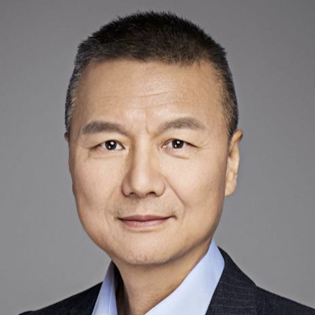
Portrait of Shiqi WangShiqi Wang has served as CEO and President of 21Vianet Group, Inc. since February 2018. Currently, Mr. Wang serves as Vice President of TUS Digital Group, a subsidiary of TUS Holdings, and serves on the board of directors of Beijing CIC Technology Co., Ltd. and Guangzhou Tuwei Technology Co., Ltd. . Mr. Wang has nearly 20 years of experience in the telecommunications industry, working at various renowned international companies, including 11 years with Ericsson, focusing primarily on strategy development and execution, corporate management, and equity investments. Mr. Wang received a bachelor's degree from Tsinghua University and an MBA from Peking University-Vlerick MBA Programme (BiMBA).

王世琪先生自2018年2月起担任世纪互联集团公司CEO兼总裁。在此之前,王世琪先生任启迪控股旗下启迪数字集团副总裁,他还在北京中航讯科技股份有限公司和广州图卫科技股份有限公司担任董事职务。王世琪先生在电信行业拥有近20年从业经验,曾在多家知名跨国公司任职,包括在爱立信公司工作11年,主要专注于公司战略规划与执行、产品管理和股权投资。王世琪先生拥有清华大学工学学士学位、邮电科学研究院工学硕士学位和北京大学Vlerick MBA项目MBA学位。


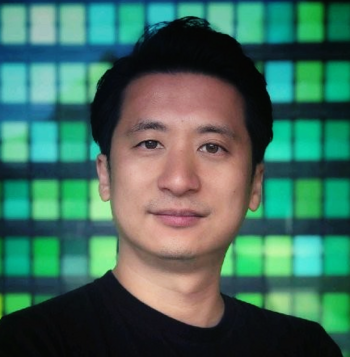
Portrait of Xiang WangXiang Wang is President and Acting CFO of Xiaomi Corporation, responsible for platform functions and for assisting the CEO with Group operations. Mr. Wang joined Xiaomi Corporation in July 2015 served as its Senior Vice President and President for International Business, responsible for global expansion, IP strategy, and strategic partner relationship management. Mr. Wang has more than 20 years of experience in the semiconductor and communications fields, with great vision and comprehensive understanding of next-generation wireless communications. He has played an integral role in shaping Xiaomi’s international business operations including with respect to its intellectual property compliance, management and strategy throughout the world. In 2016, Mr. Wang put together an international team of sales and marketing teams to expand into more markets outside of China. Within just 3 years, he led his teams into over 90 markets. As of Q3 2019, Xiaomi’s international revenue accounted for 48.7% of its total revenue. Today, Xiaomi is ranked among top 5 smartphone brands in over 40 markets. Mr. Wang previously served as the Senior Vice President of Qualcomm and President of Qualcomm Greater China, leading the company’s business and operations in Greater China. Prior to that role, he was Vice President of Qualcomm CDMA Technology, responsible for Qualcomm chipset business and customer service in China. Under his leadership, Qualcomm rapidly extended and strengthened its partnerships with increasing numbers of Chinese manufacturing customers. Before joining Qualcomm, Mr. Wang held key positions in sales and marketing at internationally leading companies, including Motorola and Lucent/Agere. Mr. Wang earned his BSEE from Beijing Polytechnic University.

王翔先生担任小米集团总裁兼代理首席财务官,他负责集团职能平台,协助首席执行官负责集团运营。王翔先生于20157月加入小米集团,任职高级副总裁、国际商务总裁,负责全球业务拓展、知识产权战略以及战略合作伙伴管理。王翔先生在半导体行业与通信领域有着20余年的工作经验,对下一代无线通信技术有卓越的洞见和透彻的理解。在塑造小米的国际商务运营,包括知识产权的合规性、管理和战略方面,他发挥着不可或缺的作用。2016年,王先生组建了一支包含销售与市场的国际团队,来拓展小米集团的海外业务。在三年内,他带领自己的团队将小米推广至超过90多个海外市场。到2019年第三季度为止,小米的海外业务收入占其集团总收入的48.7%。如今小米在40多个海外市场的智能手机品牌中占据着前5的位置。加入小米之前,王先生在高通集团任职高级副总裁以及大中华区总裁,领导高通集团在大中华地区的业务与运营。在此之前他担任高通CDMA科技副总裁,负责高通在中国的芯片组业务以及客户服务。在他的领导之下,高通得以与越来越多的中国制造业客户拓展并加强了合作关系。加入高通之前,王先生在一些顶尖跨国公司如摩托罗拉、朗讯科技/杰尔的销售与市场部门担任重要职位。王翔先生毕业于北京工业大学,拥有电机工程学士学位。


Image
Portrait of Simon Yang
Simon Yang is the CEO of Yangtze Memory Technologies Co., Ltd. (YMTC), who brings YMTC to a new height in 3D NAND industry. As an experienced executive in the semiconductor industry for over 30 years, Dr. Yang served as the CEO of XMC, COO/CTO of SMIC, and CTO/SVP of Chartered Semiconductor (Now GlobalFoundries), in charge of fab operation and technical R&D. Before that, he was in the Portland Technology Development sector of Intel for more than 10 years, in which he led a series of technical R&D projects. Dr. Yang obtained a Bachelor’s Degree from Shanghai University of Science & Technology, and a Master’s Degree and a Doctoral Degree from Rensselaer Polytechnic Institute.

杨士宁博士现担任长江存储 CEO,带领长江存储在 3D NAND 闪存领域屡创佳绩。杨博士在半导体技术研发与运营管理方面拥有超过 30 年的丰富经验,并曾先后担任武汉新芯 CEO、中芯国际 COO/CTO 及特许半导体 (现“格芯”) 公司 CTO/SVP 等核心高层管理职位, 全面负责公司运营管理、技术研发等工作。早前,杨博士还在英特尔 波特兰的研发部门(PTD)工作 10 余年,专注于技术研发。杨博士荣获伦斯勒理工学院硕士和博士学位。迄今为止,杨博士 拥有 40 多项专利,发表过 30 余篇技术论文。

Portrait of Zhiqiang (ZZ) ZhangZhiqiang (ZZ) Zhang is President of ABB in China since October 2018. He has extensive management experience and a deep understanding of the Chinese market, developed during his career at several large global companies over the past three decades. He joined ABB from Sandvik where he was Asia- Pacific Regional Holding Officer and President of Sandvik China, and Member of Sandvik Group Executive Committee. Prior to that, he held leadership positions at several other companies, including Nokia Siemens Networks, where he was President of the Greater China Region, and Siemens VDO Automotive, China, where he was President and CEO. Mr. Zhang is Non-Executive Board member of Georg Fischer AG (Switzerland) and Daetwyler Holding AG (Switzerland). He holds a bachelor’s degree in electronic engineering from Beijing Jiaotong University, China, and a master’s degree in business administration from the Smith School of Business at Queen’s University in Canada.

张志强先生自 2018 10 月起担任 ABB 中国总裁。在此之前, 他在多家大型跨国企业工作三十余年,拥有丰富的管理经验,深 谙中国市场,曾任山特维克中国区总裁、山特维克集团执行管理 委员会成员、诺基亚西门子通信公司中国区总裁、西门子威迪欧 汽车电子中国区总裁兼首席执行官等职务。张志强先生还担任瑞士乔治费歇尔集团独立董事和瑞士德特威勒 控股公司独立董事。张志强先生拥有北京交通大学计算机专业学士学位和加拿大女王 大学商学院工商管理硕士学位。

SURVEY PRESENTERS
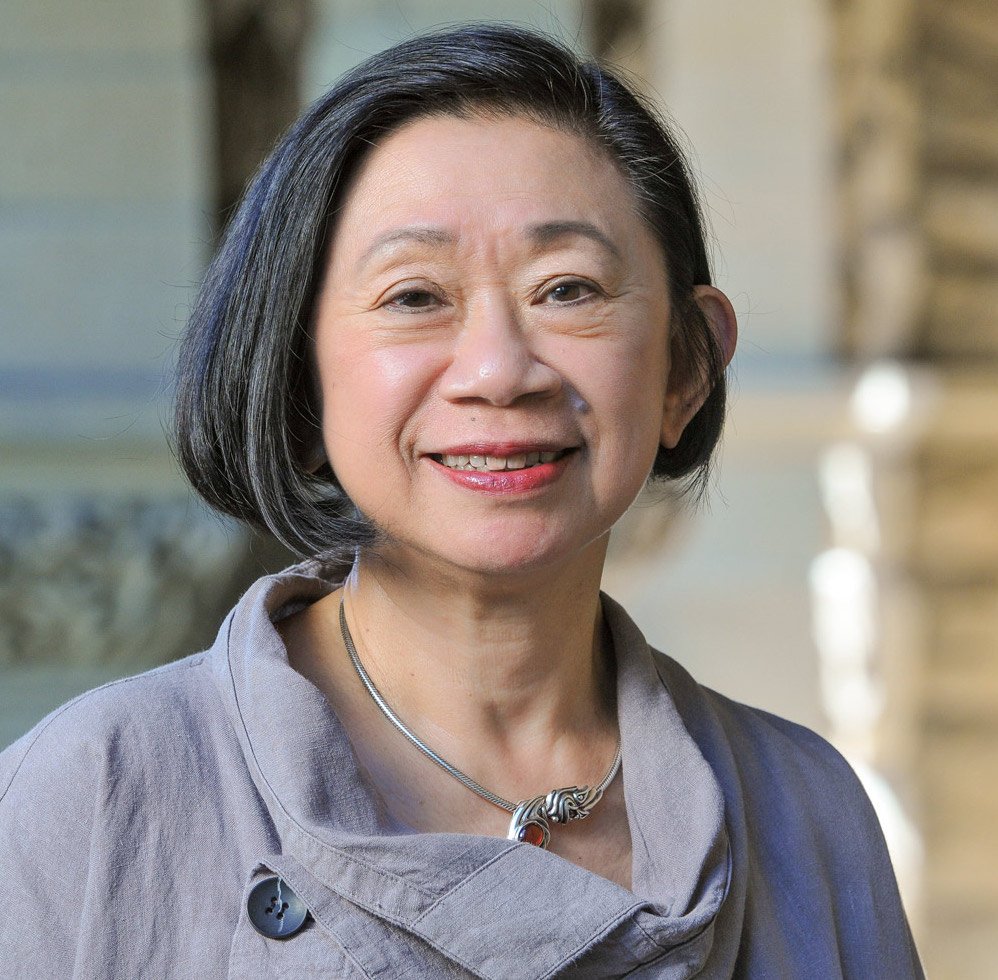
Jean C. OiJean C. Oi is the William Haas Professor of Chinese Politics in the Department of Political Science and a senior fellow in the Freeman Spogli Institute for International Studies at Stanford University. She directs the China Program at the Walter H. Shorenstein Asia-Pacific Research Center and is the Lee Shau Kee Director of the Stanford Center at Peking University. Professor Oi has published extensively on China’s reforms. Recent books include Zouping Revisited: Adaptive Governance in a Chinese County, coedited with Steven Goldstein (Stanford University Press, 2018), and Challenges in the Process of China’s Urbanization, coedited with Karen Eggleston and Yiming Wang (2017). Current research is on fiscal reform and local government debt, continuing SOE reforms, and the Belt and Road Initiative.

戴慕珍教授(Jean C. Oi)是美国斯坦福大学弗里曼•斯伯格国际研究所高级研究员以及政治学系中国政治学威廉•哈斯讲席教授。此外,她在沃尔特·肖恩斯坦亚太研究中心负责中国项目,也是北京大学斯坦福中心的李兆基冠名主任。她著有许多有关中国改革的文章。最近出版的书籍是与史蒂芬•戈尔茨坦合著的《重温邹平:中国县域的适应性治理》(斯坦福出版社,2018年),以及2017年与凯伦•艾格尔顿和王一鸣合著的《中国城市化进程中的挑战》。目前的研究是财政改革和地方政府债务,国企持续改革,以及“一带一路”倡议。

Photo of Christopher ThomasChristopher Thomas was most recently a partner with McKinsey & Company. He served as co-Managing Partner for the Firm’s Global Digital Strategy service line as well as its Global IoT service line; and as the leader of its Asia Semiconductor Practice. Prior to McKinsey, Mr. Thomas spent ten years at Intel. He was the General Manager of Intel China, with joint ownership for the region’s $5 billion-plus P&L. In this role, he grew revenues by more than 50% and oversaw China’s successful elevation from a sales unit to an independent regional P&L business reporting directly into headquarters. Mr. Thomas began his career as a private equity investor at The Blackstone Group in New York City. He is currently a Visiting Professor at Tsinghua University, China’s leading educational institution. He received an MBA from Stanford Business School, where he was an Arjay Miller scholar; a Master of Arts in Political Science from Stanford University; and a Bachelor of Science in Economics, summa cum laude, from the Wharton School.

克里斯托弗·托马斯(Christopher Thomas) 曾任麦肯锡公司的合伙人。他曾担任该公司全球数字战略服务线和全球物联网服务线的共同管理合伙人;以及亚洲半导体业务的领导者。在麦肯锡之前,托马斯先生在英特尔工作了十年。他曾是英特尔中国公司的总经理,共同负责该地区50多亿美元的营运收益业务。在这个职位上,他增加了50%以上的公司收入,并见证中国公司成功地从一个销售点提升为一个独立的地区运营收益业务,并直接向总部汇报。托马斯先生在纽约黑石集团开始了私人股本投资者的职业生涯。他是中国领先的教育机构清华大学的客座教授。他获得了斯坦福大学商学院的工商管理硕士学位,并成为阿杰·米勒学者;从斯坦福大学获得了政治学硕士学位;从沃顿商学院以优异成绩获得了经济学学士学位。

Image
Portrait of Xander Wu
Xander Wu oversees industry development and builds partnerships with the world’s top cloud computing companies for China Mobile International (USA). He helps clients expand their global footprint and advises companies on best practices for digital transformation. Mr. Wu has 13 years' experience in the global 4G and 5G industry, with a track record of achieving a number of the world’s first milestones in 5G and several de-facto standards for 4G and data networks. Mr. Wu graduated from Stanford Graduate School of Business, where he researched digital transformation and advised startups in the energy sector. He serves as a mentor at several incubators such as Plug and Play, helping startups find the right product/market fit and tailor go-to-market strategy.

负责中国移动国际有限公司(美国)的行业发展以及与世界顶级云计算公司建立合作关系。他帮助客户扩大其全球业务范畴,并就数字化转型的最佳实践为公司提供建议。先生在全球4G5G行业拥有13年的经验,在5G领域取得了许多世界上第一个里程碑式的成就,在4G和数据网络方面也取得了一些事实标准。先生毕业于斯坦福大学商学院,他研究了数字化转型,并为能源行业的初创企业提供咨询。他在一些孵化器企业如Plug and Play担任导师,帮助初创企业找到合适的产品及市场,并量身定制进入市场的策略 .


 

Via Zoom Webinar, 在线会议

Register at 报名: https://stanford.zoom.us/webinar/register/WN_8mdqaCjhR3OqydeBkKQK_g

Shiqi Wang (王世琪) CEO, President of 21 Vianet Group, Inc.
Xiang Wang (王翔) President of Xiaomi Corporation
President
CEO
Simon Yang (杨士宁) CEO of Yangtze Memory Technologies Co., Ltd. (YMTC)
Zhiqiang (ZZ) Zhang (张志强) President, ABB (China)
CEO
CEO CEO
Jean C. Oi Director of Shorenstein APARC China Program; William Haas Professor of Chinese Politics, Stanford University
Christopher Thomas Visiting Professor, Tsinghua University
CEO
CEO
Xander Wu (吴雪) China Mobile International (USA)
Panel Discussions
Authors
News Type
News
Date
Paragraphs

In a webinar dated, May 27, 2020, Ohio University Historian Ziad Abu-Rish analyzed the trajectory of Lebanon's Uprising and the impact of the Covid-19 crisis on the contemporary political scene. Abu-Rish examined the multiple crises manifesting in Lebanon today and their impact on the fate of the uprising that began in October 2019. While the currency, fiscal, and infrastructural crises were central to the making of Lebanon’s uprising, he argued, the novel strategic innovations that the protesters made were key to shaping its trajectory relative to past protests. More recently, the COVID-19 pandemic has both exacerbated existing dynamics while also providing respite to the government and some of the traditional political parties. To watch the recording of the talk, please click below.


Hero Image
screen shot 2020 05 29 at 9 10 19 am
All News button
1
-

看微信网页:https://bit.ly/3gRDy8Q
View this page on WeChat: https://bit.ly/3gRDy8Q


This is a virtual event. Please click here to register and generate a link to the talk. 
The link will be unique to you; please save it and do not share with others.


Sponsored by the Stanford China Program and the Stanford Center at Peking University.

The ravages of COVID-19 are now global. But the pandemic first struck in China, and the nation suffered a 6.8% decline in its first-quarter GDP. China is also the first country to move towards a recovery, however, rolling out government measures, re-opening businesses, and re-starting its economy. In this key moment, the Stanford China Program, in collaboration with alumni members of the Stanford Graduate School of Business, surveyed senior executives in China as their companies reboot their operations. In this two-part program, we first unveil potential trends and key takeaways from the survey. In the second half, we host a panel of prominent CxOs from China who give their insights and experiences rebooting their businesses. What are short-term challenges that companies in China currently face? What are some long-term implications of COVID-19 for their operational model, supply chain strategies, technology, and business digitization? What might they also mean, if any, for global trade relations and the future of globalization?

Agenda (in Pacific Time)

5:00-5:30 PM   Survey Presentation: Key Takeaways
5:30-6:15 PM   China CxO Panel: Discussion
6:15-6:45 PM   Audience Q&A

Agenda (in China)

8:00-8:30 AM   Survey Presentation: Key Takeaways
8:30-9:15 AM   China CxO Panel: Discussion
9:15-9:45 AM   Audience Q&A


PANEL SPEAKERS

Portrait of Shiqi WangAlvin Shiqi Wang (王世琪) has served as CEO and President of 21Vianet Group, Inc. since February 2018. Currently, Mr. Wang serves as Vice President of TUS Digital Group, a subsidiary of TUS Holdings, and serves on the board of directors of Beijing CIC Technology Co., Ltd. and Guangzhou Tuwei Technology Co., Ltd. . Mr. Wang has nearly 20 years of experience in the telecommunications industry, working at various renowned international companies, including 11 years with Ericsson, focusing primarily on strategy development and execution, corporate management, and equity investments. Mr. Wang received a bachelor's degree from Tsinghua University and an MBA from Peking University-Vlerick MBA Programme (BiMBA).


Portrait of Xiang WangXiang Wang (王翔) is President and Acting CFO of Xiaomi Corporation, responsible for platform functions and for assisting the CEO with Group operations. Mr. Wang joined Xiaomi Corporation in July 2015 served as its Senior Vice President and President for International Business, responsible for global expansion, IP strategy, and strategic partner relationship management. Mr. Wang has more than 20 years of experience in the semiconductor and communications fields, with great vision and comprehensive understanding of next-generation wireless communications. He has played an integral role in shaping Xiaomi’s international business operations including with respect to its intellectual property compliance, management and strategy throughout the world. In 2016, Mr. Wang put together an international team of sales and marketing teams to expand into more markets outside of China. Within just 3 years, he led his teams into over 90 markets. As of Q3 2019, Xiaomi’s international revenue accounted for 48.7% of its total revenue. Today, Xiaomi is ranked among top 5 smartphone brands in over 40 markets. Mr. Wang previously served as the Senior Vice President of Qualcomm and President of Qualcomm Greater China, leading the company’s business and operations in Greater China. Prior to that role, he was Vice President of Qualcomm CDMA Technology, responsible for Qualcomm chipset business and customer service in China. Under his leadership, Qualcomm rapidly extended and strengthened its partnerships with increasing numbers of Chinese manufacturing customers. Before joining Qualcomm, Mr. Wang held key positions in sales and marketing at internationally leading companies, including Motorola and Lucent/Agere. Mr. Wang earned his BSEE from Beijing Polytechnic University.


Image
Portrait of Simon Yang
Simon Yang (杨士宁) is the CEO of Yangtze Memory Technologies Co., Ltd. (YMTC), who brings YMTC to a new height in 3D NAND industry. As an experienced executive in the semiconductor industry for over 30 years, Dr. Yang served as the CEO of XMC, COO/CTO of SMIC, and CTO/SVP of Chartered Semiconductor (Now GlobalFoundries), in charge of fab operation and technical R&D. Before that, he was in the Portland Technology Development sector of Intel for more than 10 years, in which he led a series of technical R&D projects. Dr. Yang obtained a Bachelor’s Degree from Shanghai University of Science & Technology, and a Master’s Degree and a Doctoral Degree from Rensselaer Polytechnic Institute.


Portrait of Zhiqiang (ZZ) ZhangZhiqiang (ZZ) Zhang (张志强) is President of ABB in China since October 2018. He has extensive management experience and a deep understanding of the Chinese market, developed during his career at several large global companies over the past three decades. He joined ABB from Sandvik where he was Asia- Pacific Regional Holding Officer and President of Sandvik China, and Member of Sandvik Group Executive Committee. Prior to that, he held leadership positions at several other companies, including Nokia Siemens Networks, where he was President of the Greater China Region, and Siemens VDO Automotive, China, where he was President and CEO. Mr. Zhang is Non-Executive Board member of Georg Fischer AG (Switzerland) and Daetwyler Holding AG (Switzerland). He holds a bachelor’s degree in electronic engineering from Beijing Jiaotong University, China, and a master’s degree in business administration from the Smith School of Business at Queen’s University in Canada.


SURVEY PRESENTERS

Jean C. OiJean C. Oi is the William Haas Professor of Chinese Politics in the Department of Political Science and a senior fellow in the Freeman Spogli Institute for International Studies at Stanford University. She directs the China Program at the Walter H. Shorenstein Asia-Pacific Research Center and is the Lee Shau Kee Director of the Stanford Center at Peking University. Professor Oi has published extensively on China’s reforms. Recent books include Zouping Revisited: Adaptive Governance in a Chinese County, coedited with Steven Goldstein (Stanford University Press, 2018), and Challenges in the Process of China’s Urbanization, coedited with Karen Eggleston and Yiming Wang (2017). Current research is on fiscal reform and local government debt, continuing SOE reforms, and the Belt and Road Initiative.


Photo of Christopher ThomasChristopher Thomas was most recently a partner with McKinsey & Company. He served as co-Managing Partner for the Firm’s Global Digital Strategy service line as well as its Global IoT service line; and as the leader of its Asia Semiconductor Practice. Prior to McKinsey, Mr. Thomas spent ten years at Intel. He was the General Manager of Intel China, with joint ownership for the region’s $5 billion-plus P&L. In this role, he grew revenues by more than 50% and oversaw China’s successful elevation from a sales unit to an independent regional P&L business reporting directly into headquarters. Mr. Thomas began his career as a private equity investor at The Blackstone Group in New York City. He is currently a Visiting Professor at Tsinghua University, China’s leading educational institution. He received an MBA from Stanford Business School, where he was an Arjay Miller scholar; a Master of Arts in Political Science from Stanford University; and a Bachelor of Science in Economics, summa cum laude, from the Wharton School.


Image
Portrait of Xander Wu
Xander Wu (吴雪) oversees industry development and builds partnerships with the world’s top cloud computing companies for China Mobile International (USA). He helps clients expand their global footprint and advises companies on best practices for digital transformation. Mr. Wu has 13 years' experience in the global 4G and 5G industry, with a track record of achieving a number of the world’s first milestones in 5G and several de-facto standards for 4G and data networks. Mr. Wu graduated from Stanford Graduate School of Business, where he researched digital transformation and advised startups in the energy sector. He serves as a mentor at several incubators such as Plug and Play, helping startups find the right product/market fit and tailor go-to-market strategy.


Via Zoom Webinar.
Register at: https://bit.ly/2U2r30q

Alvin Shiqi Wang (王世琪) <br>CEO, President of 21Vianet Group, Inc.<br><br>
Xiang Wang (王翔) <br>President of Xiaomi Corporation<br><br>
Simon Yang (杨士宁) <br>CEO of Yangtze Memory Technologies Co., Ltd. (YMTC)<br><br>
Zhiqiang (ZZ) Zhang (张志强) <br>President, ABB (China)<br><br>
Jean C. Oi <br>Director of Shorenstein APARC China Program; William Haas Professor of Chinese Politics, Stanford University<br><br>
Christopher Thomas <br>Visiting Professor, Tsinghua University<br><br>
Xander Wu (吴雪) <br>China Mobile International (USA)<br><br>
Panel Discussions
Paragraphs

A number of formerly regulated multiproduct industries have a transitional or permanent residual regulatory mandate to protect consumers from "excessive" prices. The legislation that deregulated most rail rates contains a statutory mandate for the regulator to protect shippers from "excessive" prices. Fulfilling this mandate has been challenging because of the cost and administrative burden to shippers in obtaining regulatory relief. Moreover, as argued by Wilson and Wolak (2016), the existing rate relief mechanism is based on a cost concept that does not reflect the actual incremental cost of a shipment and it does not adequately address the question of what constitutes an "excessive" rate for a multiproduct firm with significant common costs. This paper analyzes a benchmark price approach to identifying "excessive" prices in multiproduct industries subject to residual price regulation. Our empirical analyses demonstrate how the mechanism can be used to fulfill the statutory mandate to protect shippers from "excessive" prices at substantially lower cost, with less administrative burden, and without significant adverse consequences for the long-term financial viability of the railroads.

All Publications button
1
Publication Type
Working Papers
Publication Date
Journal Publisher
National Bureau of Economic Research
Authors
Frank Wolak
-

This event is available through livestream only. Please register in advance for the webinar by using the link below.

REGISTRATION LINKhttps://bit.ly/2ziVGY2


Japan's startup ecosystem has matured dramatically over the past decade, with greater societal legitimacy, business success, and government support than most observers would have expected 20 years ago. Despite the challenging times ahead with the global pandemic, Japan's startup ecosystem is still poised to inject flexibility and innovation in a system often criticized as too rigid. This panel brings together scholars who have studied and participated in the ecosystem, and one of the key government officials pushing policy supporting the startup ecosystem. 

PANELISTS

Image
Headshot of Masahiro Kotosaka
Masahiro Kotosaka, Associate Professor, Keio University
 
Masahiro Kotosaka is an Associate Professor at Keio University and advisor to several global start-up companies. Before moving to Keio, he was a faculty at Ritsumeikan, a junior faculty at University of Oxford, and was a consultant at McKinsey & Company (Frankfurt/Tokyo). As a practitioner, he worked for sixteen client organizations across nine industries and nine countries, and spent four years running three profitable IT/Retail businesses before joining McKinsey. He graduated from University of Oxford with D.Phil. (PhD) in Management Studies and MSc in Management Research with Distinction.

Image
ishii headshot 2

Yoshiaki Ishii, Director of Science, Technology and Innovation, Cabinet Office, Government of Japan

Since getting his start at the government's Small and Middle Enterprise Agency, Dr. Yoshiaki Ishii has shaped his career almost exclusively around supporting young companies and enhancing innovation. Now, he is the director of the Cabinet Office and responsible for determining how to execute the government's mission of supporting deep tech start-ups and creating an innovation ecosystem. Previously, he served as director of the New Business Policy Office, Economic and Industrial Policy Bureau, METI. He has demonstrated expertise in Small and Medium-sized Enterprises (SME), and Venture Business Policy, Industrial Organisation, and Innovation Policy. Dr. Ishii earned his PhD from Waseda University, in 2012, after completing an MBA at Aoyama Gakuin, in 2000.

Image
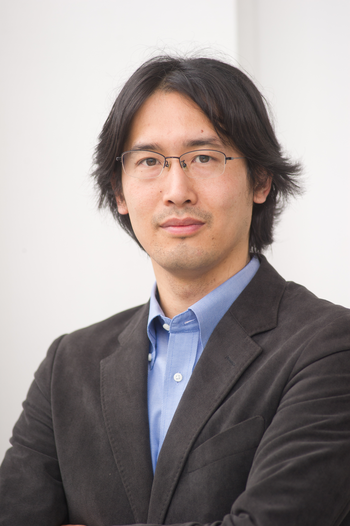
Portrait of Kenji Kushida
Kenji Kushida, Research Scholar, Shorenstein APARC Japan Program (Moderator)
 
Kenji E. Kushida is a Japan Program Research Scholar at the Walter H. Shorenstein Asia-Pacific Research Center and an affiliated researcher at the Berkeley Roundtable on the International Economy. Kushida’s research interests are in the fields of comparative politics, political economy, and information technology. He has four streams of academic research and publication: political economy issues surrounding information technology such as Cloud Computing; institutional and governance structures of Japan’s Fukushima nuclear disaster; political strategies of foreign multinational corporations in Japan; and Japan’s political economic transformation since the 1990s. Kushida has written two general audience books in Japanese, entitled Biculturalism and the Japanese: Beyond English Linguistic Capabilities (Chuko Shinsho, 2006) and International Schools, an Introduction (Fusosha, 2008). Kushida holds a PhD in political science from the University of California, Berkeley. He received his MA in East Asian studies and BAs in economics and East Asian studies, all from Stanford University.

Virtual Webinar Via Zoom.

Registration Link: https://bit.ly/2ziVGY2

Yoshiaki Ishii, Government of Japan
Masahiro Kotosaka, Keio University
Kenji Kushida, Stanford University
Seminars
-

This is a virtual event. Please click here to register and generate a link to the talk. 
The link will be unique to you; please save it and do not share with others.

Data-intensive technologies such as AI may reshape the modern world. We propose that two features of data interact to shape innovation in data-intensive economies: first, states are key collectors and repositories of data; second, data is a non-rival input in innovation. We document the importance of state-collected data for innovation using comprehensive data on Chinese facial recognition AI firms and government contracts. Firms produce more commercial software and patents, particularly data-intensive ones, after receiving government public security contracts. Moreover, effects are largest when contracts provide more data. We then build a directed technical change model to study the state's role in three applications: autocracies demanding AI for surveillance purposes, data-driven industrial policy, and data regulation due to privacy concerns. When the degree of non-rivalry is as strong as our empirical evidence suggests, the state's collection and processing of data can shape the direction of innovation and growth of data-intensive economies.

Image
Portrait of David Yang
David Yang’s research focuses on political economy, behavioral and experimental economics, economic history, and cultural economics. In particular, David studies the forces of stability and forces of changes in authoritarian regimes, drawing lessons from historical and contemporary China. David received a B.A. in Statistics and B.S. in Business Administration from University of California at Berkeley, and PhD in Economics from Stanford. David is currently a Prize Fellow in Economics, History, and Politics at Harvard and a Postdoctoral Fellow at J-PAL at MIT. He also joined Harvard’s Economics Department as an Assistant Professor as of 2020.

Via Zoom Webinar.
Register at: https://bit.ly/2VlhaMm

David Yang Prize Fellow in Economics, History, and Politics; Department of Economics, Harvard University
Seminars
Authors
Callista Wells
News Type
News
Date
Paragraphs

The Stanford Center at Peking University (SCPKU), the Center on Democracy, Development and the Rule of Law (CDDRL), and the APARC China Program jointly hosted a workshop on China’s Belt and Road Initiative (BRI) in early March. The workshop, held on March 2 and 3, welcomed researchers from around the world with expertise in the Initiative. Unfortunately, because of the rapidly developing health emergency related to the coronavirus, participants from not only China, but also Japan, were prevented from attending. As described by Professor Jean Oi, founding director of SCPKU and the China Program, and Professor Francis Fukuyama, director of CDDRL and the Ford Dorsey Master's in International Policy, who co-chaired the workshop, the meeting aimed to provide a global perspective on the BRI, consolidate knowledge on this opaque topic, and determine the best method and resources for future research.  

The workshop began with presentations from several of the invited guests. Dr. Atif Ansar from the University of Oxford’s Saïd Business School kicked off the first day by describing not only the tremendous opportunity that the BRI presents to developing economies, but also the serious pitfalls that often accompany colossal infrastructure projects. Pointing out the poor returns on investment of mega infrastructure projects, Ansar examined the frequest cost and schedule overruns, random disasters, and environmental degradation that outweigh the minimal benefits that they generally yield. China’s own track record from domestic infrastructure projects does little to mitigate fear of these risks, Ansar claimed. In response, he urged professional management of BRI investments, institutional reforms, and intensified deployment of technology in BRI projects. Dr. Ansar was followed by Dr. Xue Gong of the S. Rajaratnam School of International Studies, Nanyang Technological University, Singapore. Dr. Gong’s analysis centered on the extent to which China’s geopolitical motivations influenced its outward foreign direct investments (OFDI). Although her research was still in the early stages, her empirical analysis of China’s OFDI inflows into fifty BRI recipient countries from 2007-2018 nevertheless revealed that geopolitical factors often outweigh economic factors when it comes to China’s OFDI destinations.

Image
Amit Bhandari of Gateway House: Indian Council on Global Relations presents his research at the Belt and Road Workshop.
Participants then heard presentations from Amit Bhandari of Gateway House: Indian Council on Global Relations and Professor Cheng-Chwee Kuik of the National University of Malaysia. Mr. Bhandari’s talk focused on Chinese investments in India’s six neighboring countries, which tend to center more on energy rather than connectivity projects. He first found that the investments are generally not economical for the host countries because they come with high costs and high interest rates. Secondly, he argued that these projects often lacked a clear economic rationale, appearing instead to embed a geopolitical logic not always friendly to India. Professor Kuik, by contrast, provided a counterexample in his analysis of BRI projects in Southeast Asia. He described how, in Southeast Asia, host countries’ reception of the BRI has varied substantially; and how various stakeholders, including states, sub-states and other entities, have used their leverage to shape outcomes more or less favorable to themselves. Kuik’s analysis injected complexity into the often black-and-white characterizations of the BRI. He highlighted the multidimensional dynamics that play out among local and state-level players in pursuit of their goals, and in the process of BRI implementation.

Professor Curtis J. Milhaupt and Scholar-in-Residence Jeffrey Ball, both at Stanford Law School, followed with individual presentations on the role of State-Owned Enterprises (SOEs) in the BRI and the emissions impact of the BRI on climate change, respectively. Professor Milhaupt  characterized Chinese SOEs as both geopolitical and commercial actors, simultaneously charged with implementing Party policies and attaining corporate profits. Chinese SOEs are major undertakers of significant overseas BRI projects, acting not only as builders but also as investors, partners, and operators. This situation, Milhaupt asserted, carries significant risks for SOEs because these megaprojects often provide dismal returns, have high default rates, and can trigger political backlash in their localities. Milhaupt highlighted the importance of gathering firm-level data on businesses actually engaged in BRI projects to better infer geostrategic, financial, or other motivations. Jeffrey Ball turned the discussion to carbon emissions from BRI projects and presented preliminary findings from his four-country case studies. He concluded that, on aggregate, the emissions impact of the BRI is still “more brown than green.” Twenty-eight percent of global carbon emissions may be accounted for by BRI projects, Ball asserted, underscoring the importance of the BRI to the future of global climate change.

The day concluded with presentations by  Michael Bennon, Managing Director at the Stanford Global Projects Center, and Professor David M. Lampton, Oksenberg-Rohlen Fellow at the Freeman Spogli Institute for International Studies. Bennon first presented findings from two empirical case studies of BRI projects and then went on to describe how the BRI is now practically the “only game in town” for infrastructure funding for developing countries. Lengthy environmental review processes at Western multilateral banks have turned the World Bank, for example, from a lending bank into a “knowledge bank,” he argued. He also highlighted that, in general, economic returns on BRI projects for China are very poor, even though recipient countries may accrue macroeconomic benefits from these projects. Finally, Professor Lampton turned the discussion back to Southeast Asia, where China is currently undertaking massive cross-border high-speed rail projects through eight ASEAN countries. He described how each host country had varying capacity to negotiate against its giant neighbor, and how the sequential implementation of these cross-border rail projects also had varying impacts on the negotiating positions of these host countries. BRI played out differently in each country, in other words, eliciting different reactions, push-backs and negotiated terms.

The second day of the workshop was dedicated to working toward a collaborative approach to future BRI research. The group discussed the key gaps in the existing research, including how to know what China’s true intentions are, how to measure those intentions, who the main players and their interests in both China and the host countries are, and even what the BRI is, exactly. Some cautioned that high-profile projects may not be representative of the whole. Participants brainstormed about existing and future sources of data, and stressed the importance of diversifying studies and seeking empirical evidence.

Hero Image
Participants in the Belt and Road Initiative Workshop at Stanford University, March 2-3, 2020.
All News button
1
Authors
Callista Wells
News Type
News
Date
Paragraphs

President Xi Jinping’s tenure has been marked by growing state influence over all spheres of governance in China, including a marked tightening of control over the economy.

Curtis Milhaupt, the William F. Baxter-Visa International Professor of Law at Stanford Law School, addressed the hardening of Party controls over Chinese corporate governance. His lecture to the China Program on February 6 was based on research conducted by Milhaupt in collaboration with Yu-Hsin Lin of City University of Hong Kong, and examined the expanding role of the Chinese Communist Party (CCP) within both state-owned enterprises (SOEs) and privately-owned enterprises (POEs). The influence of the CCP within these enterprises, Milhaupt says, is not as straightforward as it might seem.

Milhaupt posits that the level of control exercised by the CCP on SOEs is lower than one might generally expect. At the same time, the CCP exercises a surprisingly higher level of control over POEs than we would typically assume. To draw these conclusions, Milhaupt uses a set of ten model provisions deemed to be dangjian, or “party-building,” measures that were developed and released by the Central Committee of the CCP. From data compiled between 2015 and 2018 from the charters of publicly-listed companies, Milhaupt shows that 10% of SOEs chose not to adopt any of the provisions distributed by the Central Committee. Meanwhile, 6% of POEs had at least a low level of adoption, despite the fact that the provisions were not directed at them. The reason for such variation, according to Milhaupt, can be explained by the characteristics of the provisions, the SOEs, and the POEs.

Image
Photo of Curtis Milhaupt speaking
Milhaupt breaks the measures into three distinct groups: personnel-related, decision-making, and symbolic. Nearly every corporation that amended its charter adopted the symbolic provisions. As the name suggests, these generally did not require any substantial or meaningful change on the enterprises’ parts. There was a steep drop-off, however, in the level of adoption for the other two types. Only 58% of SOEs who amended their charters adopted the more intrusive, decision-making provisions. Similarly, only 52% of such SOEs adopted the personnel-related provisions. The numbers were even lower for POEs, with only 25% of POEs who amended their charters adopting the decision-making provisions, and only 16% adopting the personnel-related provisions.

Which enterprises adopted which provisions was highly correlated to those enterprises’ characteristics. SOEs were far more likely to amend their charters if they had direct state shareholding, but less likely to amend if they had large non-state shareholders, were further down in the state-ownership chain, or were cross-listed on international stock exchanges. POEs followed a similar structure, with enterprises being more likely to adopt provisions the more politically connected they were or the more direct state shareholding they had.

It remains unclear how the government can actually enforce the dangjian policy, and how these policies will affect the enterprises that adopt it. Despite the official rhetoric behind the dangjian policy, with claims that greater loyalty to the Party will lead to more economic success, Milhaupt expresses doubts:

“What’s [the danajian policy] going to mean for firm performance? Certainly, from a . . . straightforward economics or corporate governance perspective, one would not be optimistic that infiltrating corporations with political influence is going to do good things for firm performance.”

Milhaupt also has concerns about how the strategy will impact international investment, noting the already high levels of suspicion surrounding Chinese motivations: “This [emphasis on loyalty to the Party] would certainly seem to add fuel to the fire, and heighten concerns or suspicions with respect to Chinese outbound economic activity.” As SOEs and POEs continue to navigate both domestic and international markets with their amended charters, the future feasibility of the CCP’s reassertions over the economy is far from certain.

Hero Image
Pedestrians walk past a Madrid branch of the Industrial and Commercial Bank of China (ICBC), one of the largest state-owned enterprises in China.
Jasper Juinen / Getty Images News
All News button
1
-

Many observers, and many investors, believe that young people are especially likely to produce the most successful new firms. Integrating administrative data on​ firms, workers, and owners, we study startups systematically in the U.S. and find​ that successfull entrepreneurs are middle-aged, not young. The mean age at​ founding for the 1-in-1,000 fastest growing new ventures is 45.0. The findings are​ similar when considering high-technology sectors, entrepreneurial hubs, and​ successful firm exits. Prior experience in the specific industry predicts much greater​ rates of entrepreneurial success. These findings strongly reject common hypotheses​ that emphasize youth as a key trait of successful entrepreneurs.

Speaker:

Image
dsc 0355 javier miranda

Javier Miranda, Principal Economist, Economy-Wide Statistics Division, US Census Bureau

Bio:

Javier Miranda is Principal Economist at the U.S. Census Bureau where he began his career in 1998. Javier received his Ph.D. in Economics from American University in 2004. Previous to joining the Census Javier was a research consultant at the World Bank and the Urban Institute. Javier has published papers in the areas of industrial organization, technological change, job creation, entrepreneurship and firm financing. Among his publications are articles in the American Economic Review, Journal of Economic Literature, American Economic Journal Macroeconomics, Review of Economic and Statistics, IMF Review, World Bank Economic Review, Journal of Business Valuation and Economic Loss, NBER Macroeconomics Annual, and multiple books and chapters.  Javier received the Director's Award for Innovation (2007) and the U.S. Department of Commerce Bronze Medal (2011). His contributions to data infrastructure are notable. Javier Miranda is responsible for the development of the Longitudinal Business Database and the Business Dynamics Statistics and is the Synthetic Longitudinal Business Database v3. Together with the USPTO Javier has led the development the Business Dynamics Statistics of Innovative Firms a longitudinal database of firms, patents, and inventors. Javier Miranda is also President of the Board of SEM an adult education and job readiness program designed to address the root causes of poverty, illiteracy, and violence in Washington DC.

Advisory on Novel Coronavirus (COVID-19)

In accordance with university guidelines, if you (or a spouse/housemate) have returned from travel to mainland China or South Korea in the last 14 days, we ask that you DO NOT come to campus until 14 days have passed since your return date and you remain symptom-free. For more information and updates, please refer to the Stanford Environmental Health & Safety website: https://ehs.stanford.edu/news/novel-coronavirus-covid-19.


Javier Miranda, Principal Economist, Economy-Wide Statistics Division, US Census Bureau
Seminars
Authors
Mariko Yang-Yoshihara
News Type
Blogs
Date
Paragraphs

Last fall, SPICE provided me an opportunity to design and organize its first post-collegiate online course. The Stanford-Hiroshima Collaborative Program on Entrepreneurship (SHCPE’s Japanese-friendly pronunciation, “shu-ppe”) was conducted in collaboration with the Hiroshima Business and Management School (HBMS) at the Prefectural University of Hiroshima (PUH). HBMS offers the only Master of Business Administration (MBA) program in Japan’s western region of Chugoku and Shikoku. Interacting with amazing individuals on both sides of the Pacific, this unique experience brought me priceless moments.

Innovation in Itself

SHCPE, a course to help nurture entrepreneurial thinking, was an innovation in itself. The program was born out of Governor Hidehiko Yuzaki’s vision to design and implement a social challenge to help accelerate Hiroshima’s regional growth. Harnessing the resources of Stanford and Silicon Valley, the new online class was launched to empower the students and to revitalize the business sector in Hiroshima. SPICE created the curricular content and HBMS provided the learning environment designed to maximize the academic experience for the students. As the course’s curriculum designer, I leveraged the expertise of my fellow SPICE online instructors and applied design thinking, a method developed by Stanford faculty, practiced widely in Silicon Valley, and popularized globally to understand the end-user, challenge our assumptions, and reconstruct alternative perspectives to generate innovative ideas.

Bridging Silicon Valley and Hiroshima

SHCPE’s 18 MBA students in Hiroshima met every Saturday morning for three hours from September 28 to November 16, 2019 to connect online with Japanese entrepreneurs, professionals, and scholars in Silicon Valley. The first virtual class focused on discussing the mindset expected for the course as well as the conceptual framework. In the following six weeks, we welcomed guest speakers who shared their diverse experiences. What were their prior experiences, expertise, and insights? What resources did they have to achieve their goals? What were the major promoters and impediments to their journeys? Through active exploration of these questions, the students were exposed to real-life case studies to analyze Silicon Valley’s ecosystem and think critically about entrepreneurial competence and qualification. The course was conducted entirely in Japanese.

The guest speakers engaged and energized the HBMS students. Akira Onozato spoke about the evolution of Silicon Valley over the past three decades. His diverse experiences as a serial entrepreneur painted a rich picture of the San Francisco Bay Area’s growth cycle. Akira’s story provided a great segue to Rika Nakazawa’s lecture on the mindset and culture surrounding startups. Rika highlighted grit, tolerance of failure, and branding as important assets of successful entrepreneurs. Dr. Fumiaki Ikeno spoke on the landscape and trends in the medical device industry. He pointed to Japan’s declining productivity and economic competitiveness and discussed the persistent fear of failure as a major impediment to promoting entrepreneurship. As an active venture capitalist on both sides of Pacific, Seiji Miyasaka explained the funding schemes and financial cycles surrounding the investment climate of startups. Using case studies, he highlighted the role of investors who act as coaches to aspiring entrepreneurs. Tatsuki Tomita’s definition of a startup was shaped by his own experiences of starting multiple companies. His discussion of the pivot pyramid provided a visual guideline for how startups can experiment with ideas and find their product-market fit. Tasha Yorozu shared her expertise as a legal counsel, walking through the steps of starting a business in Silicon Valley. Along with Jumpei Ishii, a visiting legal counsel from Japan, Tasha further discussed their observations of successful startup practices and common pitfalls. The diversity of SHCPE guests represented the vibrant Silicon Valley community. 

Active Learning and Knowledge Construction

While these professionals provided informative accounts of their expertise, SHCPE’s ultimate goal was to help each HBMS student to develop a mindset of an active learner. The MBA students were constantly challenged to think critically about the weekly theme, and work in pairs or teams to discuss assigned topics. The experience offered a dynamic and interactive learning environment for the Japanese students in their 30s, 40s, and 50s who had been accustomed to traditional lecture-style formats. SHCPE’s curriculum based on design thinking adopted an inquiry-based learning pedagogy, which engaged every student through weekly assignments and in-class discussions. During the first class, the students were informed that SHCPE would not teach them entrepreneurship. Instead, this course would provide them with the opportunity to reconstruct their knowledge of entrepreneurship and innovation based on what they observe, hear, and feel during the class. In addition, the students were required to provide feedback after each class, which was utilized to redesign the lesson plans for the following week.

This active and experiential mindset was envisioned by Dr. Gary Mukai, Director of SPICE and a renowned Japan–U.S. educator. “At SPICE, we provide students an opportunity to own their learning experience. Education is about empowering the students,” Dr. Mukai asserts. This tradition comes from the American philosopher and education reformist John Dewey, who said, “I believe finally, that education must be conceived as a continuing reconstruction of experience; that the process and the goal of education are one and the same thing.” SHCPE’s inaugural curriculum aimed to implement this philosophy through direct, real-life interaction with founders and movers in Silicon Valley, and through the iterative process to deconstruct and reconstruct their knowledge on entrepreneurship.

Innovation Through Education

What SHCPE aimed to achieve was innovation through education. The weekly three-hour online class was roughly divided into three parts: guest lecture, class discussion, and interview. Prior to the interview session, a pre-assigned team of three students met with me in a separate online room and brainstormed their interview questions. For the majority of the students, it was their very first time to formally interview a person, and the experience brought a novel learning opportunity to think critically about entrepreneurial competence. Many commented on the challenge and the excitement of getting to know strangers by engaging them in a thoughtful conversation. The weekly interview highlighted the philosophy, aspiration, and raw sentiments of the guest speakers, evoking passion, energy, and empathy among the students.

Stanford-Hiroshima Collaborative Program on Entrepreneurship (SHCPE) staff with Ken-ichi Nakamura, President of the Prefectural University of Hiroshima SHCPE 2019 team with Ken-ichi Nakamura, President of the Prefectural University of Hiroshima
Through observations and discussions, the SHCPE participants built their own knowledge and understanding of what constitutes entrepreneurship. To conclude the eight-week course, I had the chance to visit Hiroshima to offer the last SHCPE class in person, and to observe first-hand their reaction to the curriculum design. Meeting the students as well as the HBMS faculty and staff who supported SHCPE, was an incredibly rewarding experience. My class focused on education and empowerment. The students discussed in teams how they might develop a curriculum to promote entrepreneurship in Hiroshima. Much to everyone’s delight, one of the students expressed his hope to apply what he learned in this course and serve as an angel investor to support local startups. The class culminated with a closing ceremony during which each student was presented an official Certificate of Completion. My trip to Hiroshima also provided a valuable opportunity to visit Governor Yuzaki as well as PUH President Ken-ichi Nakamura, who emphasized the importance of adding a real-life, global perspective to the HBMS curriculum. Programs such as SCHPE were made possible through these leaders’ foresight and support.

SHCPE strived to adopt the pedagogy of active learning and the toolsets of design thinking to implement Governor Yuzaki’s vision of “learning innovation.” The course appears to have succeeded in helping to realize his vision as one student reflected upon his experience:

This class does not intend to offer answers [to the question what entrepreneurship is]. Instead, it urges the students to constantly think on their own and engage themselves in learning. This is very different from the Japanese traditional pedagogy, which relies on rote memorization and mechanical process of practice problems. This class highlighted the fundamental difference in the philosophy of how we look at education, and I enjoyed this eye-opening experience.

SHCPE ’19 concluded with much enthusiasm. SPICE looks forward to continuing its partnership with HBMS to build upon the invaluable lessons learned from the inaugural program. With Stanford e-Hiroshima, an online course for high school students managed and taught by my colleague Rylan Sekiguchi, SPICE will continue its efforts to empower the people in Hiroshima.

Acknowledgement

I am greatly indebted to Dr. Gary Mukai for providing me this invaluable opportunity. Special thanks go to Carey Moncaster, Dr. HyoJung Jang, Jonas Edman, Meiko Kotani, Naomi Funahashi, Rylan Sekiguchi, Sabrina Ishimaru, Dr. Tanya Lee, and Waka Takahashi Brown for their valuable comments on the preliminary curriculum. I thank all of my colleagues at SPICE for their support and encouragement throughout the process.

My special gratitude goes to Akira Onozato, Dr. Fumiaki Ikeno, Jumpei Ishii, Rika Nakazawa, Seiji Miyasaka, Tatsuki Tomita, and Tasha Yorozu who took the time out of their busy Friday evening to participate in the virtual classroom. Their contagious enthusiasm energized the students.

Last but not least, I would like to express my deep appreciation to my collaborators at HBMS. I thank Professor Katsue Edo for his hard work and commitment to implement the program, Professor Yasuo Tsuchimoto for his technical expertise and dedication to administer the distance-learning, Professor Narumi Yoshikawa for supporting in-class discussions, and Kazue Hiura, Yoshihiko Oishi, and Kenji Okano for their capable assistance and thoughtful arrangements. Last but not least, my heartfelt congratulation goes to the 18 MBA students who successfully completed SHCPE ’19. The inaugural class will always have a special place in my heart.


To stay informed of news about Stanford e-Japan and SPICE’s other programs, join our email list and follow us on FacebookTwitter, and Instagram.


Related article:


Hero Image
Students and staff of the 2019 Stanford-Hiroshima Collaborative Program on Entrepreneurship (SHCPE)
Kazue Hiura
All News button
1
Subscribe to Business