Business
-

The Internet Freedom Fellows program brings human rights activists from across the globe to Geneva, Washington, and Silicon Valley to meet with fellow activists, U.S. and international government leaders, and members of civil society and the private sector engaged in technology and human rights. A key goal of the program is to share experiences and lessons learned on the importance of a free Internet to the promotion of freedom of expression and freedom of assembly as fundamental human rights.  As a part of the Silicon Valey tour, the six fellows for this year will stop at Stanford for a round table discussion. 

The fellows will present their work pertaining to internet freedom and challenges they face, that we will have a chance to discuss.  The event is free and open to the public.
You can find more information about the fellowship program at:


The internet freedom fellows for this year are:


Mac-Jordan Disu-Degadjor

@MacJordaN


A co-founder and executive of the sole blogging association in Ghana, Blogging Ghana, Mr. Disu-Degadjor promotes the freedom of expression through blogs and social media both on and off-line. Starting in 2009, Mac-Jordan and other young Ghanaians organized 18 BarCamps across Ghana, providing aspiring Ghanaian bloggers with technical help and networking opportunities. These conferences are designed to inspire youth to get on-line wherever and however they can.

On several occasions, Mac-Jordan has presented on the need to use blogs and other social media to amplify youth voices. In 2009, Global Voices appointed him as their aggregator for Ghana, and Dr. Dorothy Gordon, the Director-General of Ghana's Advanced Information Technology Institute, stated that he was a critical and necessary voice for the advancement of the nation.

Michael Anti

@mranti


Michael Anti was a computer programmer before turning to journalism in 2001. He is a longstanding advocate for a freer internet in China, noting that social media is the force that may ultimately challenge the political foundation of the country. Mr. Anti believes that the internet will facilitate a new conception of civic participation, inspiring the Chinese to see freedom of speech as a fundamental right. Microsoft MSN was forced to delete his award winning blog under pressure from the Chinese government, causing a media uproar in 2005. He has been an advocate of Virtual Private Networks for Chinese citizens, stating that those who don’t use them are “second-class citizens in the world of the internet.” Mr. Anti is known for his prolific career as a journalist, his 2012 Ted Talk, and his commitment to a freer China.

Edetaen Ojo

@EdetOjo; @MRA_ Nigeria


Edetaen Ojo is the director of The Media Rights Agenda, an organization that promotes excellence and professionalism in journalism. He spearheaded and orchestrated the movement that led the Nigerian legislature to pass the Freedom of Information Act, which empowers journalists to seek and access information from government establishments.

Mr. Ojo holds over twenty years of experience promoting and defending internet freedom as part of the broader right to freedom of expression, through monitoring transgressions and limitations on freedom and human rights online. His involvement in international human rights includes positions on the advisory group for the BBC World Service Trust-led Africa Media Development Initiative (AMDI) and the Task Force of the UN Economic Commission for Africa (UNECA). Mr. Ojo also serves as Convenor (Chair) of the International Freedom of Expression Exchange (IFEX), a global network of organizations with its secretariat in Toronto, Canada.

Grigory Okhotin

@okhotin; @OvdInfo


Grigory Okhotin is a prominent journalist and human rights activist in Russia. Previously the director of the news site Inosmi.RU, Mr. Okhotin resigned in protest of the censorship imposed upon public media in Russia. After his resignation, Mr. Okhotin began writing publically about censorship and human rights violations in Russia.

After experiencing detainment himself, Mr. Okhotin co-founded the portal ovdinfo.org to provide a public forum for sharing information about Russian citizens detained while exercising their right to freedom of assembly. Mr. Okhotin’s website is unique in that it provides real-time detailed information about those who have been detained, and features mini-interviews in which activists describe the manner of their arrest and the conditions of their confinement. According to Mr. Okhotin, “That helps us to understand what happens behind closed doors.”


Usamah Mohamed

@simsimt


Usamah Mohamed is a computer programmer and human rights activist, who currently owns and operates an IT business in Khartoum. During the recent wave of anti-government demonstrations in Sudan, Mr. Mohamed organized peaceful demonstrations from the Twitter page he supervises and supplied international media with fresh pictures and news on demonstrations across the country. The government took several steps to halt Mr. Mohamed’s work, including subjecting him to a period of detention. Undeterred, Mr. Mohamed continues to use social media to promote human rights in Sudan. The U.S. Embassy follows his blog daily, considering it an important source of news and opinions about Sudan. In April 2012, Usamah was chosen to be a part of the Sudan Social Media Team to meet with the U.S. Department of State’s special representative to Muslim communities, Farah Pandith.

Mr. Mohamed currently trains activists to use online tools effectively and efficiently. This includes training on blogging, bypassing online censorship, using circumvention tools, digital and online security, citizen journalism, effective audio and video recording, and live-tweeting for the coverage of events such as protests, sit-ins, and forums.


Bronwen Robertson


Bronwen Robertson is the Director of Operations for a London based NGO called Small Media. While in Iran working on a PhD in music, Ms. Robertson became interested in working for the rights of repressed Iranians, especially homosexuals. In Iran, Ms. Roberson spearheaded a research project and report entitled “LGBT Republic of Iran: An Online Reality?” The report, published in May of this year, led to a number of projects that connect Farsi speaking communities worldwide. One such project is a website called Degarvajeh, which gives online support to the LGBT community by providing general information and the proper Farsi vocabulary to discuss LGBT issues in a non-derogatory fashion.

Through Small Media, Ms. Robertson works to counter Iran’s efforts to block websites and censor information. Small Media spends much of its time working on creating new and innovative ways to make the internet safe and useful for Iranians. The group holds numerous online training sessions in personal online security, citizen journalism, and general information. They also report on related issues such as cultural censorship in Iran, Iranian women sports, and struggles faced by Iranian Bloggers. Recently, the group held an awareness raising workshop to demonstrate the challenges faced by Iranians using the internet under oppression.

CISAC Conference Room

Panel Discussions
0
Former Henri H. and Tomoye Takahashi Senior Fellow in Japanese Studies at the Freeman Spogli Institute for International Studies
Former Professor, by courtesy, of Finance at the Graduate School of Business
takeo_hoshi_2018.jpg PhD

Takeo Hoshi was Henri and Tomoye Takahashi Senior Fellow at the Freeman Spogli Institute for International Studies (FSI), Professor of Finance (by courtesy) at the Graduate School of Business, and Director of the Japan Program at the Shorenstein Asia-Pacific Research Center (APARC), all at Stanford University. He served in these roles until August 2019.

Before he joined Stanford in 2012, he was Pacific Economic Cooperation Professor in International Economic Relations at the Graduate School of International Relations and Pacific Studies (IR/PS) at University of California, San Diego (UCSD), where he conducted research and taught since 1988.

Hoshi is also Visiting Scholar at Federal Reserve Bank of San Francisco, Research Associate at the National Bureau of Economic Research (NBER) and at the Tokyo Center for Economic Research (TCER), and Senior Fellow at the Asian Bureau of Finance and Economic Research (ABFER). His main research interest includes corporate finance, banking, monetary policy and the Japanese economy.

He received 2015 Japanese Bankers Academic Research Promotion Foundation Award, 2011 Reischauer International Education Award of Japan Society of San Diego and Tijuana, 2006 Enjoji Jiro Memorial Prize of Nihon Keizai Shimbun-sha, and 2005 Japan Economic Association-Nakahara Prize.  His book titled Corporate Financing and Governance in Japan: The Road to the Future (MIT Press, 2001) co-authored with Anil Kashyap (Booth School of Business, University of Chicago) received the Nikkei Award for the Best Economics Books in 2002.  Other publications include “Will the U.S. and Europe Avoid a Lost Decade?  Lessons from Japan’s Post Crisis Experience” (Joint with Anil K Kashyap), IMF Economic Review, 2015, “Japan’s Financial Regulatory Responses to the Global Financial Crisis” (Joint with Kimie Harada, Masami Imai, Satoshi Koibuchi, and Ayako Yasuda), Journal of Financial Economic Policy, 2015, “Defying Gravity: Can Japanese sovereign debt continue to increase without a crisis?” (Joint with Takatoshi Ito) Economic Policy, 2014, “Will the U.S. Bank Recapitalization Succeed? Eight Lessons from Japan” (with Anil Kashyap), Journal of Financial Economics, 2010, and “Zombie Lending and Depressed Restructuring in Japan” (Joint with Ricardo Caballero and Anil Kashyap), American Economic Review, December 2008.

Hoshi received his B.A. in Social Sciences from the University of Tokyo in 1983, and a Ph.D. in Economics from the Massachusetts Institute of Technology in 1988.
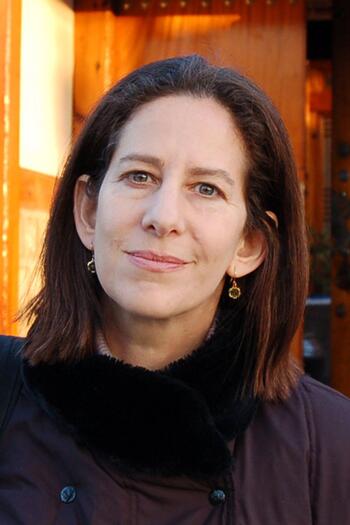
Former Director of the Japan Program at the Shorenstein Asia-Pacific Research Center
CV
-

Abstract
Ever since we started to organize ourselves socially, we have thought hard and long about how to ensure that we can develop checks on the power that we entrust to some in our organization, and how we can ensure that this power is not abused or misused in different ways. There are several different ways to accomplish this goal - from balancing power between different institutions to limiting it in time. One particularly effective and interesting way to accomplish this goal has always been transparency. If we as members of an organization, citizens in a state or just human beings gain insight into how power is used, and how decisions are made, we can review the exercise of power and act on what we find.

But designing transparency is hard, and requires careful thought. As in all institutional design, the end result needs to reflect the set of relationships in the society we live in, and it needs to change when our circumstances materially change as well. In this essay I will argue that we need to examine what it would mean to change from passive access as the goal of our transparency design to active disclosure, and what new institutional challenges that will present us with.

Nicklas Lundblad is senior policy counsel and head of public policy for Google in Mountain View where he leads a small team of policy experts in analyzing and advising on public policy. He has worked with tech policy since he wrote his first article on the politics of crypto in 1994. Prior to joining Google he was senior executive vice president of the Stockholm Chamber of Commerce and co-founded Swedishcurrent affairs magazine Neo.. He currently serves on the Swedish ICT-council, advising the Swedish ICT-minister, works as a member of Swedish foreign minister Carl Bildt's reference group on Internet Freedom and has been a member of several corporate and organizational boards. Nicklas was recently elected member of the Royal Engineering Academy in Sweden and is an Eisenhower fellow. In 2009 he was recognized as ICT-person of the year by the two largest computer and business publications in Sweden. He holds a B.A. in philosophy, a L.LM and a PhD in applied information technology. He has served on the e-Europe Advisory Board advising then-ICT-commissioner Reding on i2010 as well as represented Google in the OECD, ICC and WTO.

Wallenberg Theater

Nicklas Lundblad Senior Policy Counsel and Head of Public Policy Speaker Google
Seminars
-

North Korea, arguably the most isolated country in the world, poses unique challenges for journalists. Access to the country is severely limited and even when a journalist is able to gain entry, the secretive and repressive nature of the state significantly limits what can be learned. Still, despite these difficult conditions, the realities of North Korean life are increasingly finding their way into various media, from newspaper reporting and on-line media to thinly fictionalized accounts.

This panel will take a multi-faceted look at the coverage of North Korea through the journalist (represented by 2012 Shorenstein Journalism Award winner Barbara Demick), the editor, the development/relief worker, and the novelist.

Panelists include:

Image
Barbara Demick
Barbara Demick, has been Beijing bureau chief for the Los Angeles Times since 2008. She has focused on human trafficking, corruption, and minorities, as well as North Korea. Demick is the author of two books -- Nothing to Envy: Ordinary Lives in North Korea and Logavina Street: Life and Death in a Sarajevo Neighborhood. Her work has won awards from the Asia Society, the Overseas Press Club, the American Academy of Diplomacy, among others. Her North Korea book, which has been translated into more than 20 languages, recently won the International Book Award on Human Rights. She is a graduate of Yale and taught a seminar on coverage of repressive regimes at Princeton University. She lives in Beijing with her son Nicholas.

Image
Susan Chira
Susan Chira, was named assistant managing editor for news for the New York Times in September 2011. Previously, she had served as foreign editor (since January 2004), and as editorial director of book development (since September 2002). Before that, Chira was the editor of the "Week in Review" section at the Times (since October 1999), after having served as deputy foreign editor of the newspaper (since February 1997). Earlier, she served in a variety of reporting positions including national education correspondent, Tokyo correspondent (from October 1984 until February 1989), metropolitan reporter in the Albany and Stamford bureaus, and reporter for the "Business Day" section.
 

Image
Katharina Zellweger
Katharina Zellweger, a Pantech Fellow, joined the Korean Studies Program at the Walter H. Shorenstein Asia-Pacific Research Center after five years of living in Pyongyang where she has served as the North Korea country director for the Swiss Agency for Development and Cooperation (SDC). Through her SDC and earlier work, she has witnessed modest economic and social changes not visible to most North Korea observers. Her research at the Center has drawn on her over 15 years of humanitarian work in North Korea and explore how aid intervention can stimulate positive sustainable change there


Image
Adam Johnson
Adam Johnson is an associate professor of English, with emphasis in creative writing, at Stanford University. A Whiting Writers’ Award winner, his fiction has appeared in Esquire, Harper's, Playboy, Paris Review, Granta, Tin House, and Best American Short Stories. He is the author of Emporium, a short-story collection, and the novel Parasites Like Us, which won a California Book Award. His novel The Orphan Master's Son, a novel set in North Korea, has just been published by Random House. His books have been translated into sixteen languages. Johnson was a 2010 National Endowment for the Arts Fellow.

Bechtel Conference Center

Conferences
-

Abstract:

The World Bank and IFC's Doing Business project has used indicators capturing important dimensions of the business environment to catalyze reforms in a large number of countries. In its tenth year of operation, this talk will focus on the methodological underpinnings of the project, the results obtained on the ground, the challenges ahead and why this matters for the goal of poverty reduction and economic convergence. For more information, please visit: www.doingbusiness.org

Speaker Bio:

Augusto Lopez-Claros became the director of global indicators and analysis in the World Bank–IFC Financial and Private Sector Development Vice Presidency in March 2011. Previously he was chief economist and director of the Global Competitiveness Program at the World Economic Forum in Geneva, where he was the editor of the Global Competitiveness Report, the Forum’s flagship publication, as well as a number of regional economic reports.

Before joining the Forum he was an executive director with Lehman Brothers (London) and a senior international economist. He was the International Monetary Fund’s resident representative in the Russian Federation during 1992–95. Before joining the IMF, Lopez-Claros was a professor of economics at the University of Chile in Santiago. He was educated in England and the United States, receiving a diploma in mathematical statistics from Cambridge University and a PhD in economics from Duke University. He is a much-sought-after international speaker, having lectured in the last several years at some of the world’s leading universities and think tanks. In 2007 he was a coeditor of The International Monetary System, the IMF, and the G-20: A Great Transformation in the Making? and The Humanitarian Response Index: Measuring Commitment to Best Practice, both published by Palgrave. He was the editor of The Innovation for Development Report 2009–2010: Strengthening Innovation for the Prosperity of Nations, published by Palgrave in November 2009.

Encina Ground Floor Conference Room

Augusto Lopez-Claros Director of Global Indicators and Analysis Speaker The World Bank-IFC
Seminars
-

Abstract:

The roots of the revolts known as the Arab Spring lie in many sources but one of the leading causes was the high rates of unemployment, low skill levels, and the growth of the youth populations. Now Arab governments are faced with the dual challenges of creating new political and economic systems that can meet the needs and demands of the peoples of their countries. This presentation will focus on the role of the private sector and the need to build an entrepreneurial eco-system that can foster rapid economic growth. Practical examples of reform programs will be emphasized drawing from the work of the Center for International Private Enterprise.

Speaker Bio:

John D. Sullivan is the executive director of the Center for International Private Enterprise (CIPE), an affiliate of the US Chamber of Commerce. As associate director of the Democracy Program, Sullivan helped to establish both CIPE and the National Endowment for Democracy in 1983. After serving as CIPE program director, he became executive director in 1991. Under his leadership CIPE developed a number of innovative approaches that link democratic development to market reforms: combating corruption, promoting corporate governance, building business associations, supporting the informal sector, and programs to assist women and youth entrepreneurs. Today, CIPE has more than 90 full-time staff with offices in Afghanistan, Egypt, Iraq, Pakistan, Romania, Russia, and Ukraine.

Sullivan began his career in Los Angeles’ inner city neighborhoods, helping to develop minority business programs with the Institute for Economic Research and the Office of Minority Business Enterprise. In 1976 he joined the President Ford Election Committee in the research department on campaign strategy, polling, and market research.  Sullivan joined the public affairs department of the U.S. Chamber of Commerce in 1977 as a specialist in business and economic education.

Encina Ground Floor Conference Room

John D. Sullivan Executive Director Speaker The Center for International Private Enterprise (CIPE)
Seminars

November 15, 2012

Due to circumstances beyond our control, SPRIE announces its withdrawal as co-organizer of the ‘2012 Forum on Global Competitiveness and Sustaining Company Growth’ and its Leadership Program on December 6-7, 2012. Thank you for your interest.

The Stanford Program on Regions of Innovation and Entrepreneurship (SPRIE)
Stanford Graduate School of Business, Stanford University


因实际情况超出我研究部控制范围,斯坦福区域创新与创业精神研究部(SPRIE)宣布退出承办原定于2012年12月6日、7日在斯坦福大学举行的“2012年全球竞争力与可持续发展论坛及领导力培训”项目。感谢关注。

特此通知。

斯坦福大学商学院-斯坦福区域创新与创业精神研究部
2012年11月15日

Oberndorf Event Center, Stanford Graduate School of Business

Workshops
Subscribe to Business