Foreign Policy
-

Abstract: Numerous polls show that U.S. public approval of Truman’s decision to drop atomic bombs on Hiroshima and Nagasaki has declined significantly since 1945. Scholars and pundits have suggested that this is a sign of the emergence of a “nuclear taboo.”  Such polls, however, do not force respondents to contemplate the tradeoff the U.S. government believed it faced in 1945: choosing between the use of nuclear weapons and a ground invasion of Japan to end the Pacific War. This paper reports on survey experiments recreating that kind of a tradeoff in a hypothetical war with Iran. In order to avoid a ground assault on Tehran that was predicted to kill 20,000 American soldiers, 60% of the U.S. public approved of an atomic attack on an Iranian city that would kill 100,000 civilians and 60% approved of an atomic attack that would kill 2,000,000 civilians. Sixty-seven percent preferred a conventional bombing attack that was estimated to kill 100,000 Iranian civilians. Moreover, the prospect of killing more noncombatants appeared to trigger beliefs in retribution and complicity, as a way of justifying the decisions. Our findings suggest that U.S. public support for the principle of noncombatant immunity is shallow. 

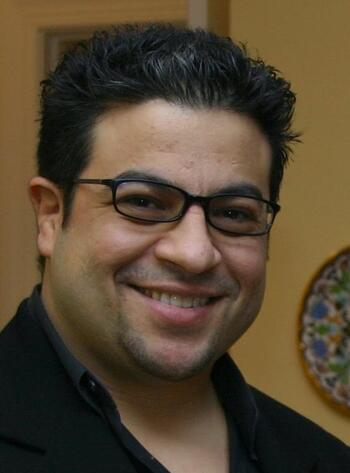
About the Speaker: Scott D. Sagan is the Caroline S.G. Munro Professor of Political Science, the Mimi and Peter Haas University Fellow in Undergraduate Education, and Senior Fellow at the Center for International Security and Cooperation and the Freeman Spogli Institute at Stanford University. He also serves as Project Chair for the American Academy of Arts and Sciences’ Initiative on New Dilemmas in Ethics, Technology, and War and as Senior Advisor for the American Academy of Arts and Sciences’ Global Nuclear Future Initiative. Before joining the Stanford faculty, Sagan was a lecturer in the Department of Government at Harvard University. From 1984 to 1985, he served as special assistant to the director of the Organization of the Joint Chiefs of Staff in the Pentagon. Sagan has also served as a consultant to the office of the Secretary of Defense and at the Sandia National Laboratory and the Los Alamos National Laboratory. 

Sagan is the author of Moving Targets: Nuclear Strategy and National Security (Princeton University Press, 1989); The Limits of Safety: Organizations, Accidents, and Nuclear Weapons (Princeton University Press, 1993); and, with co-author Kenneth N. Waltz, The Spread of Nuclear Weapons: An Enduring Debate (W.W. Norton, 2012). He is the co-editor of Planning the Unthinkable (Cornell University Press, 2000) with Peter R. Lavoy and James L. Wirtz; the editor of Inside Nuclear South Asia (Stanford University Press, 2009); and co-editor of a two-volume special issue of Daedalus, On the Global Nuclear Future (Fall 2009 and Winter 2010), with Steven E. Miller. Sagan’s recent publications include “A Call for Global Nuclear Disarmament” in Nature (July 2012); “Atomic Aversion: Experimental Evidence on Taboos, Traditions, and the Non-Use of Nuclear Weapons” with Daryl G. Press and Benjamin A. Valentino in the American Political Science Review (February 2013); and, with Matthew Bunn, the American Academy of Arts and Sciences occasional paper, “A Worst Practices Guide to Insider Threats: Lessons from Past Mistakes” (2014).

Sagan was the recipient of the National Academy of Sciences William and Katherine Estes Award in 2015 and the International Studies Association's International Security Studies Section Distinguished Scholar Award in 2013. He has also won four teaching awards: Stanford’s 1998-99 Dean’s Award for Distinguished Teaching; Stanford's 1996 Hoagland Prize for Undergraduate Teaching; the International Studies Association’s 2008 Innovative Teaching Award; and the Monterey Institute for International Studies’ Nonproliferation Education Award in 2009. 

CISAC
Stanford University
Encina Hall, E202
Stanford, CA 94305-6165

(650) 725-2715 (650) 723-0089
0
The Caroline S.G. Munro Professor of Political Science
The Bass University Fellow in Undergraduate Education  
Senior Fellow, Freeman Spogli Institute for International Studies
rsd25_073_1160a_1.jpg PhD

Scott D. Sagan is Co-Director and Senior Fellow at the Center for International Security and Cooperation, the Caroline S.G. Munro Professor of Political Science, and the Bass University Fellow in Undergraduate Education at Stanford University. He also serves as Co-Chair of the American Academy of Arts and Sciences’ Committee on International Security Studies. Before joining the Stanford faculty, Sagan was a lecturer in the Department of Government at Harvard University and served as special assistant to the director of the Organization of the Joint Chiefs of Staff in the Pentagon.

Sagan is the author of Moving Targets: Nuclear Strategy and National Security (Princeton University Press, 1989); The Limits of Safety: Organizations, Accidents, and Nuclear Weapons (Princeton University Press, 1993); and, with co-author Kenneth N. Waltz, The Spread of Nuclear Weapons: An Enduring Debate (W.W. Norton, 2012). He is the co-editor of Insider Threats (Cornell University Press, 2017) with Matthew Bunn; and co-editor of The Fragile Balance of Terror (Cornell University Press, 2022) with Vipin Narang. Sagan was also the guest editor of a two-volume special issue of DaedalusEthics, Technology, and War (Fall 2016) and The Changing Rules of War (Winter 2017).

Recent publications include “Creeds and Contestation: How US Nuclear and Legal Doctrine Influence Each Other,” with Janina Dill, in a special issue of Security Studies (December 2025); “Kettles of Hawks: Public Opinion on the Nuclear Taboo and Noncombatant Immunity in the United States, United Kingdom, France, and Israel”, with Janina Dill and Benjamin A. Valentino in Security Studies (February 2022); “The Rule of Law and the Role of Strategy in U.S. Nuclear Doctrine” with Allen S. Weiner in International Security (Spring 2021); “Does the Noncombatant Immunity Norm Have Stopping Power?” with Benjamin A. Valentino in International Security (Fall 2020); and “Just War and Unjust Soldiers: American Public Opinion on the Moral Equality of Combatants” and “On Reciprocity, Revenge, and Replication: A Rejoinder to Walzer, McMahan, and Keohane” with Benjamin A. Valentino in Ethics & International Affairs (Winter 2019).

In 2022, Sagan was awarded Thérèse Delpech Memorial Award from the Carnegie Endowment for International Peace at their International Nuclear Policy Conference. In 2017, he received the International Studies Association’s Susan Strange Award which recognizes the scholar whose “singular intellect, assertiveness, and insight most challenge conventional wisdom and intellectual and organizational complacency" in the international studies community. Sagan was also the recipient of the National Academy of Sciences William and Katherine Estes Award in 2015, for his work addressing the risks of nuclear weapons and the causes of nuclear proliferation. The award, which is granted triennially, recognizes “research in any field of cognitive or behavioral science that advances understanding of issues relating to the risk of nuclear war.” In 2013, Sagan received the International Studies Association's International Security Studies Section Distinguished Scholar Award. He has also won four teaching awards: Stanford’s 1998-99 Dean’s Award for Distinguished Teaching; Stanford's 1996 Hoagland Prize for Undergraduate Teaching; the International Studies Association’s 2008 Innovative Teaching Award; and the Monterey Institute for International Studies’ Nonproliferation Education Award in 2009.     

Co-director of the Center for International Security and Cooperation
CV
Date Label
Professor of Political Science, FSI Senior Fellow; Faculty Member CISAC CISAC, Stanford University
Seminars
News Type
Commentary
Date
Paragraphs

Indonesian President Joko “Jokowi” Widodo was recently in Washington, D.C., for his first-ever presidential visit to the United States. In an op-ed for the East Asia Forum, Stanford scholar Donald Emmerson examines what the two countries can do to continue to build cooperation gained on the trip.

The op-ed can be viewed by clicking here, and an archive of Emmerson’s editorials on the East Asia Forum can be found by clicking here.

Hero Image
rtx1tcm6
U.S. President Barack Obama and Indonesia's President Joko Widodo shake hands after their meeting at the White House, Oct. 26, 2015.
Reuters/Jonathan Ernst
All News button
1
Paragraphs

Growing evidence demonstrates that climatic conditions can have a profound impact on the functioning of modern human societies, but effects on economic activity appear inconsistent. Fundamental productive elements of modern economies, such as workers and crops, exhibit highly non-linear responses to local temperature even in wealthy countries. In contrast, aggregate macroeconomic productivity of entire wealthy countries is reported not to respond to temperature= while poor countries respond only linearly. Resolving this conflict between micro and macro observations is critical to understanding the role of wealth in coupled human–natural systems and to anticipating the global impact of climate change. Here we unify these seemingly contradictory results by accounting for non-linearity at the macro scale. We show that overall economic productivity is non-linear in temperature for all countries, with productivity peaking at an annual average temperature of 13 °C and declining strongly at higher temperatures. The relationship is globally generalizable, unchanged since 1960, and apparent for agricultural and non-agricultural activity in both rich and poor countries. These results provide the first evidence that economic activity in all regions is coupled to the global climate and establish a new empirical foundation for modelling economic loss in response to climate change, with important implications. If future adaptation mimics past adaptation, unmitigated warming is expected to reshape the global economy by reducing average global incomes roughly 23% by 2100 and widening global income inequality, relative to scenarios without climate change. In contrast to prior estimates, expected global losses are approximately linear in global mean temperature, with median losses many times larger than leading models indicate.

All Publications button
1
Publication Type
Journal Articles
Publication Date
Journal Publisher
Nature
Authors
-

Image
heritage bureaucracies

This conference aims to further our understanding of the institutional cultures, funding schemes and power structures underlying transnational institutions, with a particular focus on heritage bureaucracies. We bring together scholars working at the intersection of archaeology, anthropology, sociology and law to offer a broader understanding of the intricacies of multilateral institutions and global civic society in shaping contemporary heritage governance. Speakers will provide ethnographic perspectives on the study of international organizations, such as the UN and EU, in an effort to show the entanglement of political and technical decision-making.

A 2-day international conference organized by Claudia Liuzza and Gertjan Plets.

Speakers:

Brigitta Hauser-Shäublin (Institute of Ethnology, Göttingen University)
Ellen Hertz (Institute of Ethnology, University of Neuchâtel)
Miyako Inoue (Department of Anthropology, Stanford University)
Claudia Liuzza (Department of Anthropology, Stanford University)
Brigit Müller (Ecole des Hautes Etudes en Sciences Sociales, Paris)
Elisabeth Niklason (Department of Archeaology, Stockholm University)
Gertjan Plets (Stanford Archaeology Center, Stanford University)
Cris Shore (Department of Anthropology, The University of Auckland)
Ana Vrdoljak (Department of Law, University of Technology, Sydney)

Co-sponsored by Stanford Archaeology Center, Cantor Arts Center, Department of Anthropology, Center for Russian, East European & Eurasian Studies, Stanford Humanities Center, The Europe Center, France-Stanford Center for Interdisciplinary Studies, The Mediterranean Studies Forum.

Contact: heritagebur@gmail.com

Stanford Archaeology Center (BLDG 500)
488 Escondido Mall
Stanford University

Workshops
News Type
News
Date
Paragraphs

South Korea must stand with the United States in the event of escalated tensions between China and the United States in the South China Sea, Stanford professor Gi-Wook Shin advised at a forum in Seoul on November 19th.

"Flexibility is necessary, but what's more important is…principle," said Shin, emphasizing the importance of South Korea’s alliance with the United States over its strategic partnership with China.

The full article (in English) may be viewed on the Yonhap News website.

Hero Image
14358811168 6d39e1f78a o
The U.S. and Philippine navies conduct a bilateral exercise in the South China Sea, June 2014.
Flickr/U.S. Navy
All News button
1
News Type
Q&As
Date
Paragraphs

Last Friday's multiple terrorist attacks in Paris that killed 129 people and injured over 350 was the topic of KQED Radio’s “forum with Michael Krasny" (Monday, Nov. 16, 2015).   The discussion centered around the potential impact to US and European strategy for fighting ISIS, immigration policy, and to French nationalism, values and public discourse on multiculturalism and open borders.

Participating in the panel was French literature associate professor and TEC faculty affiliate Cécile Alduy.  Alduy is the author of the recent book Marine Le Pen's Words: Deciphering the New National Front's Discourse.

Joining Alduy were Bloomberg Paris bureau chief Geraldine Amiel, UC Berkeley professor of public policy Michael Nacht, and Brookings’ Center for Middle East Policy fellow William McCants.

Visit KQED Radio's Forum web article “France Closes Borders After Multiple Terror Attacks in Paris" to download a recording of this interview.

Hero Image
Image of A banner with the drawing "Peace for Paris" of French artist Jean Jullien.
A banner with the drawing "Peace for Paris" of French artist Jean Jullien hangs on the facade of the city hall in Nantes, France, November 16, 2015, as people observe a minute of silence to pay tribute to the victims of the series of deadly attacks on Friday in Paris.
REUTERS/Stephane Mahe
All News button
1
Authors
News Type
News
Date
Paragraphs


NATO must bolster its presence in Europe as a way to counter Russian aggression in the region.

That was the message from General PHILIP M. BREEDLOVE, the supreme allied commander of the North Atlantic Treaty Organization (NATO), when he visited Stanford on Monday.

“Europe is clearly at a crossroads,” he said.

Breedlove addressed the need for a strong NATO amid the evolving geopolitical climate in Europe. Of great concern are Moscow’s intrusions into Ukraine, Crimea and Georgia in Eastern Europe in recent years.

“We have to recalibrate what we’re thinking,” he said. NATO is building up its troop rotations to deal with hostile moves in the region, for example.

Breedlove spoke to a couple hundred people at the Koret Taube Conference room in the Gunn Building. Breedlove’s speech was sponsored by The Europe Center in the Freeman Spogli Institute for International Studies (FSI).

“Highly dynamic” is how Breedlove described Europe’s security situation as a resurgent Russia seeks to “rewrite” the rules of international order. “They have been aggressive and coercive in their use of diplomatic, military and economic tools,” he said.

Lies and distortions characterize Russia’s attempt to change borders and bully its neighbors, Breedlove added. Russian President Vladimir Putin’s greater goal is to destabilize NATO and chip away at the alliance. Russia is acting in the east, south and north of Europe, including forays into the Arctic Circle and near Japan.

“This is all about extending Russian control” over its neighbors, Breedlove said.

Massive, seemingly endless migration coming from the Middle East into Europe poses a monumental crisis, he added. “The situation is creating serious political problems for political leaders” in European countries, he said. On top of this, possible terrorists and foreign fighters within the sheer numbers of migrants are extremely difficult to track, he added.

These European and NATO challenges intersect in the case of Syria and Russia’s involvement there, Breedlove said. “Russia’s striving to project [itself] as a world power.”

Syria is an opportunity for Putin to shift the world’s attention from his country’s aggressions in the Ukraine to the Middle East, he said. Breedlove disputed Putin’s rationale – fighting ISIS and terrorism – for intervening in Syria. “There’s a clear gap between his words and actions.”

Time will tell if Russia overextends itself in its adventurism, Breedlove said. For NATO, it must “rebuild its capacity” to address such threats. “Defend territory, people and values” is how he defined NATO’s mission.

A free, peaceful and prosperous Europe is much more attractive to the world than a menacing Russia that lacks similar values and attributes, he noted.

The security of Europe is Breedlove’s “daily business,” said MICHAEL MCFAUL, director of FSI. “You could not have a more well informed person speak about European security.”

McFaul noted that a new initiative series on European security, sponsored by the Europe Center, will bring other speakers and events to campus.

Breedlove, a distinguished graduate of Georgia Tech’s ROTC program, has flown combat missions, mostly in the F-16 jet, and has served as vice chief of staff for the U.S. Air Force and commander of the U.S. Air Force in Europe and Africa.

“I feel right at home, because this is the type of weather we have in Belgium,” he quipped on a rainy day at Stanford.


This article was originally published in The Stanford Report on November 9, 2015.

Hero Image
Photo of General Philip M. Breedlove
All News button
1
News Type
News
Date
Paragraphs

The leader of U.S. Pacific Command, Adm. Harry B. Harris, Jr., addressed U.S. nautical movements in the South China Sea while also calling for sustained military cooperation between China and the United States in a speech at Stanford Center at Peking University (SCPKU) on Tuesday.

Led by Ambassador Karl Eikenberry, a group of Stanford faculty and scholars from the Walter H. Shorenstein Asia-Pacific Research Center (APARC) listened to the speech from Stanford via an interactive, live videoconference at the Graduate School of Business. The speech was followed by a question and answer session, co-facilitated by Stanford professor Jean Oi in Beijing.

The admiral’s visit to SCPKU was part of a larger trip to China, which included discussions between senior Chinese and American military officials.

News media covered Admiral Harris’ remarks delivered at the SCPKU, which co-sponsored the event with Shorenstein APARC's U.S.-Asia Security Initiative. Articles appeared in the New York Times and Wall Street Journal (subscription may be required to view), among other publications.

Hero Image
image2
A group of faculty and scholars at Stanford participate in a videoconference with the leader of U.S. Pacific Command, Adm. Harry B. Harris, Jr., in Beijing on Nov. 3, 2015.
Ryan Blake
All News button
1
Subscribe to Foreign Policy