Foreign Policy
Paragraphs

The seventeenth session of the Korea-U.S. West Coast Strategic Forum held on June 29, 2017 in Seoul convened senior South Korean and American policymakers, scholars and regional experts to discuss North Korea policy and recent developments on the Korean Peninsula. Hosted by the Sejong Institute in association with the Shorenstein APARC, the forum continued its focus on Northeast Asian regional dynamics, the North Korea problem, and the state of the U.S.-Republic of Korea alliance. The participants engaged in candid, productive discussion about issues relating to these topics.

 
All Publications button
1
Publication Type
Policy Briefs
Publication Date
Authors
News Type
News
Date
Paragraphs

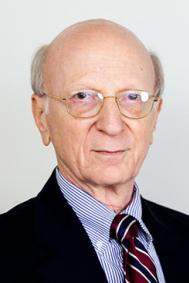
John W. Lewis, a Stanford political scientist who pioneered new ways of thinking about U.S.-China relations and launched some of the first Asian study programs in higher education, died Monday at his home on the Stanford campus. He was 86.

John W. Lewis


Lewis was a prolific scholar and one of the preeminent China specialists of his generation. His deep commitment to using insights from academic research to inform policy deliberations and solve important problems related to international relations and security led him to establish several centers and institutes at Stanford. These institutions supported collective undertakings involving scholars and officials from all over the globe and inspired dozens of graduate students to follow Lewis’ lead to make a tangible difference toward a more peaceful world.

He founded and directed the Center for East Asian Studies from 1969 to 1970, the Northeast Asia-United States Forum on International Policy (now the Walter H. Shorenstein Asia-Pacific Research Center), from 1983 to 1990, and, along with theoretical physicist Sidney Drell, co-founded Stanford’s Center for International Security and Cooperation (CISAC) in 1983, serving as a co-director until 1991. Stanford’s Center for International Security and Arms Control, CISAC’s precursor, was founded by Lewis and Drell in 1970. Lewis also led CISAC’s Project on Peace and Cooperation in the Asian-Pacific Region.

Expert on Asia

Lewis, the William Haas Professor of Chinese Politics, Emeritus, and a senior fellow at CISAC and the Freeman Spogli Institute for International Studies (FSI), joined the Stanford faculty in 1968 after teaching for seven years at Cornell University, coming to campus as an expert on China at the apex of public unrest regarding the Vietnam War. As a teacher, he helped lead an interdisciplinary course on nuclear arms and disarmament and engaged in simulated arms control talks with students.

In addition to his work on China, Lewis was a pioneer in dealing with North Korea. He visited the North in 1986 and numerous times thereafter, always with the deep conviction that it was vitally important to listen and learn.  He opened doors long closed by inviting North Korean, South Korean and U.S. officials to meet at Stanford in the early 1990s, and afterwards hosted official North Korean delegations.

He was invited to visit the North Korean nuclear center at Yongbyon after the collapse of the U.S.-North Korea Agreed Framework in 2002.  This and subsequent visits with Stanford colleagues provided virtually the only direct information on developments at the site, said Thomas Fingar, a Shorenstein APARC Fellow at FSI.

Sig Hecker, a CISAC senior fellow and the former director of the Los Alamos National Laboratory, recalls traveling to North Korea with Lewis in January 2004, a significant time in the country’s nuclear program.

“I would never have gone to North Korea without John,” Hecker said. “He had developed a relationship that allowed us to establish an effective means of communication during the times our governments were not talking. I had worked closely with John on North Korea ever since. He was incredibly knowledgeable and had an intensity that motivated everyone around him.”

Passion for peace

Lewis was extremely active in his retirement, visiting his CISAC office in Encina Hall daily, writing books, giving lectures and archiving his materials. While recovering from a recent fall, Lewis was constantly on the phone with colleagues and continued to collaborate until he lost his ability to speak, said his daughter, Amy Tich, BA ’85.

Above all, he was an advocate of peace, education and talking with – and learning about – the nature of one’s perceived rivals, such as China and North Korea, instead of allowing misinformation and misunderstandings to spread. The word “cooperation” in the title of CISAC emanates from this belief.

How ironic, said Tich, that her father’s death came at a time when relations between the U.S. and North Korea over the North’s nuclear tests are filled with tension.

“He had amazing relationships all across Asia,” Tich said. “He believed in what he was doing to the core of his being. He wanted world peace, to save the world from nuclear war.”

John’s son, Stephen Lewis, AB ’80, MS ’80, MBA ’84, said, “He lived a remarkable life. He made enormous strides in Korean relations and Chinese relations. And he did it with a sense of humor and humility that earned him the right to push because only from pushing through issues do you get answers.”

A Renaissance scholar

Lewis was the Renaissance scholar who bridged the gap between the academic and policy worlds. In the 1970s, he was a major player in the restoration of academic exchanges with China and established ties between U.S. and Chinese academic and governmental institutions that continue today.

In the 1980s, he built enduring ties with the Institute for Far Eastern Studies in Moscow that enhanced understanding and collaboration among Americans, Russians, and Chinese.  He launched a project to gather medical expertise at Stanford to deal with North Korea’s severe drug-resistant tuberculosis problem, a project that took him twice to Mongolia to explore the possibility of a regional effort against TB.

Lewis was never satisfied with simply having a problem discussed, said Fingar. He ended every meeting with assembled experts on North Korean issues with a prodding, “A useful discussion. Now, what can we do?”

Lewis helped American business executives, academics, government officials and military officers establish contacts and networks in China. He also led two congressional delegations to Asia. In recognition of his impact, Lewis was invited to serve on the Committee on International Security and Arms Control of the National Academy of Sciences; the Joint Committee on Contemporary China of the Social Science Research Council; and the National Committee on U.S.-China Relations.

The Stanford scholar also did consulting work for the Los Alamos National Laboratory, Lawrence Livermore National Laboratory, the U.S. Department of Defense, the Senate Select Committee on Intelligence, and the Office of Technology Assessment of the U.S. Congress.

Born in King County, Washington, in 1930, Lewis gained his first exposure to international issues and institutions as a teenage page at the San Francisco meeting that established the United Nations. His interest in China was inspired by the stories and achievements of missionary relatives who built schools for Chinese girls. After graduating from Deep Springs College (California) in 1949, Lewis earned  his bachelor’s degree (1953), master’s degree (1958) and doctorate (1962) at UCLA. His service as a gunnery officer in the U.S. Navy (1954-1957) kindled his interest in security issues and Korea.

Publications, research

Lewis wrote and co-authored numerous influential books on Asia and international security, including Leadership in Communist China (1963); and  The United States in Vietnam (1967) (with George Kahin); and China Builds the Bomb (1988).

“John’s numerous books about Chinese decision-making regarding nuclear weapons and the Korean War were path-breaking,” said Scott Sagan, a professor of political science and senior fellow at CISAC and FSI. “His work permitted us to see behind ‘the bamboo curtain’ and understand Mao [Zedong] and his successors with more clarity than was possible before.”

Lewis received numerous letters from colleagues and former students in his final days and Tich read all of them to him. Among the praise bestowed on Lewis was his “ability to inspire in me and others profound curiosity and dedication to scholarship,” that he provided “a model of how to bring values to bear on scholarship and global citizenship,” and “[He] represented the perfect mix of academic research and real-time involvement with the world.”

CISAC co-director and FSI Senior Fellow Amy Zegart remembers Lewis’ generosity and enthusiasm.

“I can still remember knocking on John’s door as a young grad student 20 years ago and sheepishly asking if he might be willing to conduct a directed reading course with me about China’s foreign policy,” Zegart said. “He said ‘yes’ immediately. His generosity of spirit and commitment to teaching still infuse CISAC today, and will shape Stanford students for generations to come. It is a true honor to co-direct the center that John and Sid Drell created.”

Lewis is survived by Jacquelyn Lewis, his wife of 63 years; his children Stephen Lewis, Amy Tich and Cynthia Westby; and five grandchildren, Brian, BA ’15, Taryn, Kylie, Katie and Rhys.

In keeping with his life-long commitment to teaching students and training successors, the family requests that anyone wishing to honor Professor Lewis do so by contributing to the John and Jackie Lewis Fund at Stanford University, which supports funding for Stanford graduate students and postdoctoral fellows  doing research on matters related to Asia. Donations to the fund should be made out to Stanford University and sent to the John and Jackie Lewis Fund, in care of Scott Nelson, Freeman Spogli Institute for International Studies, 616 Serra Street, Stanford, California, 94305.

In an oral history interview with the Stanford Historical Society, Lewis recounts his earlier days on campus and the impact of his career. Videos of an 80th birthday celebration for Lewis can be found here.

Hero Image
John Lewis
All News button
1
616 Serra StreetEncina Hall E301Stanford, CA94305-6055
0
kim_kyou_hyun

Kyou-hyun Kim joined the Korea Program at Shorenstein Asia-Pacific Research Center as the program's 2017-18 Koret Fellow.

A career diplomat by training, Kyou-hyun Kim most recently served as senior secretary to the president for foreign affairs and national security in South Korea from October 2015 to May 2017. During his fellowship, Kim will review South Korea’s past administrations’ policies toward North Korea and aim to focus on a path leading to unification of two Koreas for permanent peace and stability in and around the Korean Peninsula.  He will also attempt to map out ways to narrow the physical, economic, societal and identity gaps between South and North Korea in order to help the South Korean public to tolerate and accept North Koreans as equal citizens in a unified Korea. His two main research questions will be (1) how to build the internal capability for socioeconomic transformation in North Korea, and (2) how to build domestic support for reunification in South Korea.

Kim received a Doctor of Dental Surgery from the School of Dentistry at Seoul National University, and a Master of Public Administration from Harvard University.

Visiting Adjunct Professor
2017-2018 Koret Fellow
616 Serra StreetEncina Hall E301Stanford, CA94305-6055
0
hyun_seung_cho.jpg Ph.D.

Ashton Cho is a 2017-2018 Shorenstein Postdoctoral Fellow in Contemporary Asia. His research focuses on U.S. and Chinese foreign policy towards East Asia's regional institutions with a broader interest in U.S.-China relations, the political economy of East Asia, and qualitative and mixed research methods. During his time at Shorenstein APARC Ashton will be developing his book manuscript on how U.S. and China compete over East Asia's institutional architecture.

Ashton holds a Ph.D. in Political Science from Columbia University and a BSc and MSc from the London School of Economics.

He is located in the Central West wing at C338-I-2 and can be reached at ashtoncho@stanford.edu

More information can be found on his personal webpage www.ashtoncho.com

 
2017-2018 Shorenstein Postdoctoral Fellow in Contemporary Asia
Authors
News Type
News
Date
Paragraphs

Stanford welcomes Cousin, a global hunger expert, to the Center on Food Security and the Environment.

The Freeman Spogli Institute for International Studies (FSI) at Stanford University is pleased to announce that former U.S. Ambassador and World Food Programme (WFP) Director Ertharin Cousin will serve as this year’s Frank E. and Arthur W. Payne Distinguished Lecturer and Visiting Fellow at the Center on Food Security and the Environment (FSE).  

Cousin brings over 25 years of experience addressing hunger and food security strategies on both a national and international scale. As U.S. Ambassador to the United Nations Agencies for Food and Agriculture, she focused on advocating for longer-term solutions to food insecurity and hunger, and at WFP she addressed the challenges of food insecurity in conflict situations.

“Dr. Cousin’s outstanding leadership at the WFP and extensive experience in public service exemplifies the attributes we seek for Payne Lecturers,” says FSI Director Michael McFaul. The Payne Distinguished Lectureship is awarded to scholars with international reputations as leaders, with an emphasis on visionary thinking, practical problem solving, and the capacity to clearly articulate an important perspective on the global political and social situation. Past Payne Lecturers include Bill Gates, Nobel Laureate Mohamed El Baradei, UNAIDS Executive Director Peter Piot, and novelist Ian McEwan.

As a visiting fellow with FSE, Cousin will be working to further her research focus on global food security and humanitarian efforts. In November 2015, FSE welcomed Cousin as the featured speaker in their Food and Nutrition Symposium series, where she presented her paper “Achieving food security and nutrition for the furthest behind in an era of conflict and climate change.” FSE Director, Roz Naylor, sees Cousin’s appointment as a pivotal opportunity for FSE and FSI to advance a global agenda on food security and human rights. “Ertharin Cousin is one of the most inspirational leaders we could ever hope to attract to Stanford as a year-long visitor,” Naylor says.

“This is a truly humbling, yet exciting prospect,” says Cousin. “This position provides an opportunity for scholarly work and dialogue with distinguished academics across Stanford's schools and policy institutes.  I also look forward to the opportunity to convene thought leaders from a broad variety of backgrounds, who can help us explore some of the intractable issues plaguing humanitarian and development practitioners today.”

Following the completion of her term with the WFP, Cousin accepted an appointment as a Distinguished Fellow with The Chicago Council on Global Affairs, which conducts research on food and agriculture, global cities, economics, energy, immigration, security, public opinion, and water. Cousin hopes her appointments can provide a unique collaborative opportunity to expand her work on food security and nutrition issues.

“In my career I have never before been given the opportunity of pursuing intellectual inspiration. Just thinking about the ‘what’s possible’ gives me genuine pleasure,” Cousin said.

About FSE

The Center on Food Security and the Environment (FSE) is a research center at Stanford University, jointly funded by the Freeman Spogli Institute for International Studies and the Stanford Woods Institute for the Environment.

Hero Image
04 10 2014ertharin cousin
WFP Executive Director Ertharin Cousin speaks to a little boy in the Central African Republic during her visit in late March 2014. Photo: WFP
All News button
1
-


For this special theme panel, the Taiwan Democracy Project has invited presentations that examine important changes in Taiwan’s party politics and cross-Strait relations since the election of President Tsai Ing-wen and a DPP majority in the legislature in Taiwan in January 2016. The event will be held in San Francisco, CA, directly following the conclusion of the American Political Science Association annual conference there, and is open to the public. Conference attendees with an interest in Taiwan are especially encouraged to attend.


The event will include two panels followed by open discussion:


12:00-1:30pm  

Panel I. Party Politics after the 2016 Elections

1.     Nathan Batto, “The KMT Party Organization”

2.     Austin Wang, “The DPP Party Organization”

3.     Da-chi Liao, “New Party Organizations”

Chair: Larry Diamond, Stanford University

Discussant: Kharis Templeman, Stanford University


2:00-3:30pm  

Panel II. Cross-Strait Relations and Taiwan’s Foreign Policy after the 2016 Elections

4.     Dalton Lin,  “Beijing’s Taiwan Policy after the 2016 Elections”

5.     Shirley Lin,  “Taiwan and the High Income Trap”

Chair: Kharis Templeman

Discussant: Larry Diamond 


The Taiwan Democracy Project is a research program affilated with the Center on Democracy, Development, and the Rule of Law at the Freeman Spogli Insitute for International Studies, Stanford University. This event is made possible by generous support from the Taipei Economic and Cultural Office in San Francisco.

Taiwan Politics after the 2016 Election
Download pdf
Beijing's Taiwan Policy after the 2016 Elections
Download pdf
The DPP after 2016
Download pdf

2nd Floor, Olympic Room

Westin St. Francis Union Square, 

335 Powell St.

San Franciso, CA 94102

Nathan Batto Assistant Research Fellow, Institute of Political Science Academia Sinica
Austin Wang Doctoral Candidate Duke University
Da-Chi Liao Professor, Institute of Political Science National Sun Yat-sen University
Dalton Lin Assistant Professor of International Affairs Georgia Tech
Shirley Lin Professor of Political Science University of Virginia and Chinese University of Hong Kong
Panel Discussions
Paragraphs

President Donald Trump's ominous threat to unleash “fire and fury” on North Korea succeeded at least in garnering the attention of not only Kim Jong Un but the globe. The vague assertion of readiness to carry out a preventive attack on North Korea, even to use nuclear weapons, roiled stock markets, sent Japanese to look for bomb shelters and prompted alarmed warnings against the use of force from both foes and allies, including South Korean President Moon Jae-in. The piece is available in Chinese, English and Japanese.

All Publications button
1
Publication Type
Commentary
Publication Date
Journal Publisher
Dun Jiao Du
Authors
Daniel C. Sneider
Subscribe to Foreign Policy