Foreign Policy
-

For Fall Quarter 2021, FSI will be hosting hybrid events. Many events will be open to the public online via Zoom, and limited-capacity in-person attendance for Stanford affiliates may be available in accordance with Stanford’s health and safety guidelines.

                                                Register for Zoom                                                         Register for In-Person
                                                           (Open to all)                                                                    (Stanford affiliates only)              


Why is democracy so threatened in America and around the world? And what can we do about it? Join Ben Rhodes to explore the answers to these questions and discuss his recent book, After the Fall.

Image
Ben Rhodes

In 2017, as Ben Rhodes was helping Barack Obama begin his next chapter, the legacy they had worked to build for eight years was being taken apart. To understand what was happening in America, Rhodes decided to look outward. Over the next three years, he traveled to dozens of countries, meeting with politicians, activists, and dissidents confronting the same nationalism and authoritarianism that was tearing America apart. Part memoir and part reportage, After the Fall investigates how much America’s fingerprints are on a world we helped to shape, through our post–Cold War embrace of unbridled capitalism and our post-9/11 nationalism and militarism; our mania for technology and social media; and the racism that fueled the backlash to America’s first Black president. At the same time, Rhodes learns from stories of a diverse set of characters—from Barack Obama himself to Cuban rebels to a rising generation of international leaders—that looking squarely at where America has gone wrong makes clear how essential it is to fight for what America is supposed to be, for our own country and the entire world.

Ben Rhodes is a writer, political commentator, and national security analyst. He is currently a contributor for NBC News and MSNBC; co-host of Pod Save the World; a senior advisor to former President Barack Obama; and chair of National Security Action, which he co-founded with Jake Sullivan in 2018. From 2009-2017, Ben served as a Deputy National Security Advisor to President Obama. In that capacity, he participated in all of President Obama’s key decisions, and oversaw the President’s national security communications, speechwriting, and public diplomacy.

Writer, political commentator, and national security analyst
Ben Rhodes | Writer, political commentator, and national security analyst
Seminars
Authors
Melissa Morgan
News Type
News
Date
Paragraphs

In 2015, Volodymyr Zelenskyy was at the height of a successful career as an entertainer. Though trained as a lawyer at the Kryvyi Rih Institute of Economics in Eastern Ukraine, the then 37 year old Zelenskyy was a successful comedian and public personality. As the star of the popular TV show, Servant of the People, he played a local history teacher who inadvertently becomes the president of Ukraine following a viral video rant about corruption.

No one watching comedic President Zelenskyy then could have possibly imagined the real-life plot twist that would follow. In an incredible act of life imitating art, in April 2019, Volodymyr Zelenskyy once again stood on stage in front of a cheering crowd, but this time as the actual president of Ukraine.

He won in a landslide election against incumbent president Petro Poroshenko on a platform of systemic change and progress using an almost exclusively virtual campaign. Speaking from his headquarters on election night, he affirmed the exuberance and hope of his supporters: “I can say as a citizen of Ukraine to all countries of the post-Soviet Union: Look at us — everything is possible.”

This same message shaped the theme of President Zelenskyy’s remarks at his historic address from the Freeman Spogli Institute for International Studies (FSI) at Stanford University on September 2. The first Ukrainian president to ever visit California, President Zelenskyy, First Lady Olena Zelenska and their delegation joined a group of FSI faculty members led by FSI Director Michael McFaul at an outdoor event held in the Encina Courtyard.

In his remarks, Zelenskyy drew inspiration from Steve Jobs’ famous "How to Live Before You Die" commencement address given at Stanford in 2005.

"This is one of the most famous speeches ever given at Stanford,” he said. “It's about believing in dreams and overcoming the impossible. This is the same as my story. I am just a common guy from a common family from a common industrial town in Eastern Ukraine. Yet here I am today at Stanford, because everything is possible."

He continued, “It is the same for Ukraine. Many people look at us and think that it will be impossible to achieve the goals we hope for. But we know that our critics are wrong. The people of our country love democracy and freedom and will not let threats take those things away. We know that anything is possible."

Looking to the future, Zelenskyy outlined the steps his administration is undertaking to bring increased digitization to Ukraine. These efforts include launching fully electronic passports, moving business and legal services online and expanding the scope of e-goverance. The hope is that this meld of new technology will help curb corruption while simultaneously creating more equitable opportunities and better access to public services for more Ukranians.

Speaking on the ambitious scope of these plans, the president acknowledged, “There will be resistance to the changes and innovations that we are going to make.” Nonetheless, he remains committed to the work ahead of strengthening democratic institutions in Ukraine and building on the progress that has already been made.  “We do not have a ‘Ukrainian Dream,’ yet,” he said. “But we have a ‘Ukrainian Goal’ and a ‘Ukrainian Mission’ to make the future we want for our country.” An edited recording of his remarks is below.

Keeping with Stanford tradition, Zelenskyy took questions from the audience after his prepared remarks. A variety of students and Stanford community members from Russia, Burma, Belarus and beyond had the opportunity to engage the president on a range of issues including U.S.-Ukraine relations, armament sales abroad and concerns over Russian aggression in Crimea and influence Eastern Ukraine. Of particular meaning was Zelensky’s affirmation and support for the democratic movement in Belarus led by Svaitlana Tsikhanouskaya, whom FSI hosted earlier this summer at a faculty roundtable.

Image
Tweet from Franak Viačorka

Students and faculty alike were appreciative of the president’s candor and good nature in addressing difficult topics.

Image
Tweet from Rose Gottemoeller
Image
Tweet from Graham Webster
Image
Tweet from Me Me Khant
Image
Tweet from Omar Pimentel

Following the formal remarks, President Zelenskyy and First Lady Zelenska had an opportunity to meet with Stanford President Marc Tessier-Lavigne in the Memorial Church Courtyard. Prior to leaving, the First Lady also sat down with leaders and students from Stanford's Office of Accessible Education (OAE), an area of interest she would like to support and better develop in Ukraine.

For FSI, the president’s visit was another affirmation of the special connection between Ukraine and the Stanford community. Since 2016, the Center on Democracy, Development and the Rule of Law has hosted the Ukrainian Emerging Leaders Program, which provides a 10-month academic training fellowship in support of mid-career practitioners working actively as policy-makers, legal professionals, entrepreneurs and leaders of civil society organizations in Ukraine.

Speaking to this shared history in his opening introductions, FSI Director Michael McFaul emphasized the crucial need for ongoing support and intellectual investment into Ukraine. “The fight for democracy and independence in Ukraine is one of the most important causes in the world today,” he affirmed. “Not just for Ukrainians, but for all who cherish the ideals of democracy, liberty and sovereignty.”

To President Zelenskyy, McFaul extended a future invitation: “You are always welcome back, either as president or in retirement as a professor.”

“With the classes you offer, I will think about it,” Zelenskyy replied with a smile.

Read More

President Zelenskky addresses Stanford students and community members via a live video address in the CEMEX auditorium.
News

President Volodymyr Zelenskyy Calls on Students to Lead as Future Ambassadors in a Special Video Address at Stanford

Ukraine’s President Volodymyr Zelenskyy spoke to the Stanford community in a special video address about his country’s war against Russia for independence, freedom, and global democracy, which he said requires the continued support of all the people of the free world.
President Volodymyr Zelenskyy Calls on Students to Lead as Future Ambassadors in a Special Video Address at Stanford
Larry Diamond speaking in the Bechtel Conference Center in Encina Hall
Commentary

"We Have Entered a New Historical Era": Larry Diamond on the Future of Democracy

Speaking at the April 2022 meeting of the FSI Council, Larry Diamond offered his assessment of the present dangers to global democracy and the need to take decisive action in support of liberal values.
"We Have Entered a New Historical Era": Larry Diamond on the Future of Democracy
Sviatlana Tsikhanouskaya discusses the future of democracy in Belarus with a roundtable of Stanford scholars.
News

Belarusian Leader Sviatlana Tsikhanouskaya Meets with Stanford Scholars for Roundtable on Democracy in Belarus

Democratic leader Sviatlana Tsikhanouskaya and her delegation joined an interdisciplinary panel of Stanford scholars and members of the Belarusian community to discuss the future of democracy in Belarus.
Belarusian Leader Sviatlana Tsikhanouskaya Meets with Stanford Scholars for Roundtable on Democracy in Belarus
Hero Image
President Volodymyr Zelenskyy of Ukraine speaks at the Freeman Spogli Institute for International Studies Rod Searcey
All News button
1
Subtitle

President Zelenskyy outlined the steps his administration is undertaking to bring increased digitization to Ukraine, curb corruption and create more equitable access to public services for more Ukrainians.

-

This is a virtual event. Please click here to register and generate a link to the talk. 
The link will be unique to you; please save it and do not share with others.

Co-sponsored by the Stanford Center at Peking University.

In honor of its release, contributors Mary Bullock, Thomas Fingar, and David M. Lampton will join editor Anne Thurston for a panel discussion of their volume Engaging China: Fifty Years of Sino-American Relations (Columbia University Press, 2021).

Recent years have seen the U.S.-China relationship rapidly deteriorate. Engaging China brings together leading China specialists—ranging from academics to NGO leaders to former government officials—to analyze the past, present, and future of U.S.-China relations. Bullock, Fingar, Lampton, and Thurston will reflect upon the complex and multifaceted nature of American engagement with China since the waning days of Mao’s rule. What initially motivated U.S.’ rapprochement with China? Until recent years, what logic and processes have underpinned the U.S. foreign policy posture towards China? What were the gains and the missteps made during five decades of America’s engagement policy toward China? What is the significance of our rapidly deteriorating bilateral relations today? Speakers will tackle these questions and more at this critical time when tensions between the U.S. and China continue to intensify.

For more information about Engaging China or to purchase a copy, please click here.


Image
Portrait of Mary Bullock
Mary Bullock, president emerita of Agnes Scott College, is an educator and scholar of U.S. – China relations. She served as the founding executive vice-chancellor of Duke Kunshan University from 2012-2015. Previous positions include distinguished visiting professor at Emory University, director of the Asia Program of the Woodrow Wilson Center, and director of the Committee on Scholarly Communication with the People’s Republic of China. She is vice-chair of the Asia Foundation, a trustee of the Henry Luce Foundation, and a member of the Schwarzman Academic Advisory Committee and the Council on Foreign Relations. She received her M.A. and Ph.D. in Chinese history from Stanford University. Her most recent publications include The Oil Prince’s Legacy: Rockefeller Philanthropy in China (2011) and, as co-editor, Medical Transitions in Twentieth Century China (2014).
 

Image
Portrait of Tom Fingar
Thomas Fingar is a Shorenstein APARC Fellow in the Freeman Spogli Institute for International Studies at Stanford University. He was the inaugural Oksenberg-Rohlen Distinguished Fellow from 2010 through 2015 and the Payne Distinguished Lecturer at Stanford in 2009. From 2005 through 2008, he served as the first deputy director of national intelligence for analysis and, concurrently, as chairman of the National Intelligence Council. Fingar served previously as assistant secretary of the State Department’s Bureau of Intelligence and Research (2000-01 and 2004-05), principal deputy assistant secretary (2001-03), deputy assistant secretary for analysis (1994-2000), director of the Office of Analysis for East Asia and the Pacific (1989-94), and chief of the China Division (1986-89). Between 1975 and 1986 he held a number of positions at Stanford University, including senior research associate in the Center for International Security and Arms Control.

Fingar's most recent books are The New Great Game: China and South and Central Asia in the Era of Reform, editor (Stanford, 2016), Uneasy Partnerships: China and Japan, the Koreas, and Russia in the Era of Reform (Stanford, 2017), and Fateful Decisions: Choices that will Shape China’s Future, co-edited with Jean Oi (Stanford, 2020).
 

Image
Portrait of David M. Lampton
David M. Lampton is Senior Fellow at the SAIS Foreign Policy Institute and Professor Emeritus at Johns Hopkins--SAIS. Immediately prior to his current post he was Oksenberg-Rohlen Fellow at Stanford University’s Asia-Pacific Research Center from 2019-2020. For more than two decades prior to that he was Hyman Professor and Director of China Studies at the Johns Hopkins University School of Advanced International Studies. Lampton is former Chairman of the The Asia Foundation, former President of the National Committee on United States-China Relations, and former Dean of Faculty at SAIS. Among many written works, academic and popular, his most recent book (with Selina Ho and Cheng-Chwee Kuik) is Rivers of Iron: Railroads and Chinese Power in Southeast Asia (University of California Press, 2020). He received his B.A., M.A., and Ph.D. degrees from Stanford University in political science where, as an undergraduate student, he was a firefighter. Lampton has an honorary doctorate from the Russian Academy of Sciences’ Institute of Far Eastern Studies. He is a Life Trustee on the Board of Trustees of Colorado College and was in the US Army Reserve in the enlisted and commissioned ranks.


Image
Portrait of Anne Thurston
Anne Thurston is the director of the Grassroots China Initiative, where she works with local NGOs in China. Thurston is a former associate professor at Johns Hopkins SAIS, assistant professor at Fordham University, and was a China staff member at the Social Science Research Council. She has been the recipient of fellowships from the Rockefeller Foundation, the John D. and Catherine T. MacArthur Foundation, the United States Institute of Peace, the Woodrow Wilson International Center for Scholars and the National Endowment for the Humanities. Thurston is also a member of the National Committee on US-China Relations. Thurston is the author of numerous publications, including The Noodle Maker of Kalimpong: The Untold Story of My Struggle for Tibet (2015), and Muddling Toward Democracy: Political Change in Grass Roots China (1998). She received her Ph.D. in political science from the University of California, Berkeley.

Via Zoom Webinar. Register at: https://bit.ly/38ME0m3

Mary Bullock <br>President Emerita, Agnes Scott College<br><br>
Thomas Fingar <br>Shorenstein APARC Fellow, Stanford University<br><br>
David M. Lampton <br>Professor Emeritus, Johns Hopkins School of Advanced International Studies (SAIS); Senior Fellow, SAIS Foreign Policy Institute<br><br>
Anne F. Thurston <br>Director, Grassroots China Initiative; China Studies Affiliated Scholar, Johns Hopkins--SAIS
Seminars
-

This is a virtual event. Please click here to register and generate a link to the talk. 
The link will be unique to you; please save it and do not share with others.


Peter Martin joins us to discuss his recent book, China's Civilian Army: The Making of Wolf Warrior Diplomacy. Chinese diplomacy in the past several years has become more assertive and its diplomats have used sharper language, earning them the title "wolf warriors." The book traces the roots of China's approach to diplomacy back to the communist revolution of 1949 and tells the story of how it's evolved through social upheaval, famine, capitalist reforms and China's rise to superpower status. It draws on dozens of interviews and -- for the first time -- on the memoirs of more than 100 retired Chinese diplomats.


Image
Portrait of Peter Martin
Peter Martin is a political reporter for Bloomberg News. He has written extensively on escalating tensions in the US-China relationship and reported from China's border with North Korea and its far-western region of Xinjiang. He previously worked for the consultancy APCO Worldwide in Beijing, New Delhi, and Washington, where he analyzed politics for multinational companies. In Washington, he served as chief of staff to the company's global CEO. His writing has been published by outlets including Foreign Affairs, the National Interest, the Guardian, the Jamestown China Brief, the Diplomat and the Christian Science Monitor. He holds degrees from the University of Oxford, Peking University and the London School of Economics.

Via Zoom Webinar. Register at: https://bit.ly/3zDZ3D0

Peter Martin Defense Policy and Intelligence Reporter, Bloomberg News
Seminars

Shorenstein APARC
Stanford University
Encina Hall, Room E301
Stanford, CA 94305-6055

(650) 736-0656 (650) 723-6530
0
mike_breger.jpg

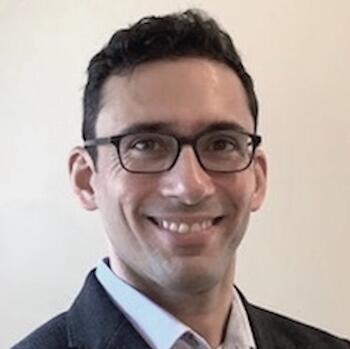
Michael (Mike) Breger joined APARC in 2021 and serves as the Center's communications manager. He collaborates with the Center's leadership to share the work and expertise of APARC faculty and researchers with a broad audience of academics, policymakers, and industry leaders across the globe. 

Michael started his career at Stanford working at Green Library, and later at the Center for Russian, East European and Eurasian Studies, serving as the event and communications coordinator. He has also worked in a variety of sales and marketing roles in Silicon Valley.

Michael holds a master's in liberal arts from Stanford University and a bachelor's in history and astronomy from the University of Virginia. A history buff and avid follower of international current events, Michael loves learning about different cultures, languages, and literatures. When he is not at work, Michael enjoys reading, painting, music, and the outdoors.

Communications Manager
Date Label
News Type
Commentary
Date
Paragraphs

Vice President Kamala Harris traveled to Hanoi on Tuesday, August 24, as part of a high-stakes visit to Southeast Asia this week that aims to bolster economic and security ties with U.S. partners in Singapore and Vietnam. Ms. Harris is the first U.S. Vice President to visit Vietnam.

Vietnamese online newspaper VnExpress spoke with APARC Southeast Asia Program Director Donald K. Emmerson about the significance of Harris’ visit. The following is an expanded version of the interview.  


VnExpress: What does the visit mean to the United States, to Vietnam, and to the U.S.-Vietnam relationship?

Emmerson: U.S.-Vietnam relations have steadily and markedly improved in recent years, especially in the security realm. A case in point is the recent visit of the U.S. secretary of defense. The first-ever visit to Hanoi by a sitting American vice-president, Kamala Harris, is meant to further strengthen U.S.-Vietnam relations. Their importance will be underscored by Kamala Harris’s status in the U.S. government, second only to President Biden’s. Their scope will be advanced by the prominence of nonmilitary topics on her agenda.

The two governments have agreed to call their relations “comprehensive.” By attending to economic and social cooperation as well as security matters, the visit will better illustrate that inclusive label. It is even possible that the United States and Vietnam could, in the not too distant future, upgrade their relationship by calling it not only “comprehensive” but “strategic” as well.

VnExpress: In Hanoi, Harris will launch the U.S. Centers for Disease Control and Prevention regional office in Southeast Asia. Why did the United States choose Vietnam for the CDC regional office? And what is your assessment of the Vietnam-U.S. medical cooperation, particularly during the COVID-19 pandemic?

Emmerson: In the realm of health, Vietnam offers a record of achievement and challenge. Based on official statistics, Vietnam appears to have countered the virus more effectively than most Asian countries. Yet it still needs to deal more thoroughly with the consumption of wildlife sold in wet markets where future viruses can bridge the gap from animals to people. COVID-19, which began in neighboring China, has killed nearly 4.5 million people worldwide and worsened the lives of almost everyone on the planet. A regional office of the US Centers for Disease Control and Prevention in Vietnam could reduce the threat of future pandemics while helping to strengthen health systems and policies throughout Southeast Asia.  

VnExpress: What do you think about Vietnam's role in the region and in the world?

Emmerson: Nearly five decades have passed since the end of Vietnam’s successful “Resistance War against America” in 1975 and the failure of China’s invasion of Vietnam in 1979. The challenge for Vietnam going forward will be to maintain the resilience and autonomy that it has earned at such a high cost in lost lives. Kamala Harris’s visit can contribute to that goal. If and as inter-state peace continues to prevail in East Asia, one can also hope that Vietnam’s leaders will feel less threatened and thus possibly less obliged to curtail the rights and freedoms of their own people.  

As for Vietnam’s role in the region (and, indirectly, the world), one priority could be for Hanoi to coordinate its policies on the South China Sea with those of other Southeast Asian claimant states and possibly with other states who use the sea and also oppose China’s campaign to control its waters.

Read More

Silhouettes carrying a flag of Indonesia with a sunset or sunrise in the background
Commentary

Good News for Indonesian Studies

Good News for Indonesian Studies
Figures of Kuomintang soldiers are seen in the foreground, with the Chinese city of Xiamen in the background, on February 04, 2021 in Lieyu, an outlying island of Kinmen that is the closest point between Taiwan and China.
Commentary

Strait of Emergency?

Debating Beijing’s Threat to Taiwan
Strait of Emergency?
Flags of Asian states and text "Symposium: The Stakes in Asia"
Commentary

Talking Democracy: A Symposium on Asia

On a panel discussion hosted by the political quarterly 'Democracy,' Donald K. Emmerson joins experts to assess how the Biden administration is navigating the U.S. relationships in Asia.
Talking Democracy: A Symposium on Asia
Hero Image
SINGAPORE (Aug. 23, 2021) Vice President Kamala Harris visits combat ship USS Tulsa, part of a deployment in the U.S. 7th Fleet area of operation in support of a free and open Indo-Pacific region.
U.S. Navy photo by Mass Communication Specialist 3rd Class Richard Cho via Flickr
All News button
1
Subtitle

Emmerson talks to VnExpress about the implications of Harris’ visit to Hanoi, the first such visit by a U.S. vice president.

Authors
Oriana Skylar Mastro
News Type
Commentary
Date
Paragraphs

In her recent Foreign Affairs essay, The Taiwan Temptation: Why Beijing Might Resort to Force, Center Fellow Oriana Skylar Mastro argues that Chinese leaders now consider a military campaign to take Taiwan a real possibility and cautions that the United States cannot by itself alter Beijing’s calculus on Taiwan. The essay sparked a heated debate. In the September/October issue of Foreign Affairs, several scholars — Rachel Esplin Odell and Eric Heginbotham, Bonny Lin and David Sacks, and Kharis Templeman — provide counterarguments to Mastro's analysis and she responds to their criticism. Read her complete rebuttal below.


Sign up for APARC newsletters to receive our experts' analysis and commentary. 


Rachel Esplin Odell and Eric Heginbotham, Bonny Lin and David Sacks, and Kharis Templeman all argue that China is unlikely to attempt armed unification with Taiwan. Although I appreciate their perspectives, they do not present any new evidence that would make me reconsider my assessment that the risk of Chinese aggression across the Taiwan Strait is real and growing. To the contrary, they repeat many of the increasingly dangerous misperceptions that I sought to dispel in my original article—namely, that China does not have the military capabilities to pull off an amphibious invasion, that the economic costs of an invasion would be sufficient to deter Chinese President Xi Jinping, and that China can afford to wait indefinitely to achieve its most important national goal of unification. My critics assume that insofar as there are risks, they can be dealt with through relatively limited adjustments in U.S. policy and military posture — a position with which I still strongly disagree. 

Let’s take these arguments in order. My critics say that I have exaggerated China’s military capabilities and understated the difficulties of an invasion. But their assessments rely on outdated or largely irrelevant comparisons. Odell and Heginbotham, for instance, note that the United States needed more naval tonnage to capture Okinawa from Japan in 1945 than China has today. But this example is inapposite. Japan’s military was more than six million strong in 1945 and had been fighting for over a decade; Taiwan’s military consists of 88,000 personnel and two million reservists, of whom only 300,000 are required to complete even a five-week refresher training course. Tonnage, moreover, is not a useful metric. Modern navies have moved to lighter, more flexible fleets. Odell and Heginbotham point out that civilian ships were of only limited use in the Falklands War, but the United Kingdom used just 62 of them in that campaign. The People’s Armed Forces Maritime Militia has many thousands of ships and is closer to a naval force than a civilian one. If China were to mobilize all its naval vessels, including its new large amphibious transport ships and civilian ships, it could hypothetically carry hundreds of thousands of troops across the 80-mile-wide Taiwan Strait in a short period of time. Even if the United States had enough warning to optimally position its submarines, it does not have enough munitions to target such a large force. 

For their part, Lin and Sacks argue that to believe China can take Taiwan by force is to fall for a Chinese misinformation campaign. They warn that “analysts should not accept at face value China’s claim that it could easily win a fight against Taiwan.” But no one, not even the cockiest of People’s Liberation Army analysts, argues that a full-scale attack on Taiwan would be easy, only that the PLA could prevail at an acceptable cost. Moreover, my assessment of Chinese military capabilities is not based on Chinese discourse or the results of war games alone. Reams of unbiased and rigorous analysis—from the U.S. Department of Defense’s annual report to Congress on China’s military modernization to Congressional Research Service reports on Chinese naval modernization to hundreds of studies by think tanks and defense-affiliated organizations, such as the RAND Corporation—suggest that the PLA has made unparalleled advances in the past two decades and could take on the United States in certain scenarios. Indeed, Heginbotham himself argued in 2017 that “the balance of power between the United States and China may be approaching a series of tipping points, first in contingencies close to the Chinese coast (e.g., Taiwan).” 

I do not mean to suggest that a Chinese invasion would be a cakewalk. Taiwan could get some shots in, but it does not have the ability to defend itself. Luckily, the United States would, I believe, come to Taiwan’s aid and could still prevail in many scenarios. Taiwan is far from a lost cause. But ten years ago, the United States would have prevailed in any scenario. Because there are now some scenarios in which U.S. strategists think the United States could lose, it is not unfathomable to think that Chinese strategists have come to a similar conclusion. 

My critics also argue that economic considerations will deter Beijing. Should China attempt to use force to assert control over Taiwan, the international response would be severe enough to imperil Xi’s ambitious development goals. But as I argued in my original article, Chinese analysts have good reason to think the international response would be weak enough to tolerate. China could even reap economic benefits from controlling Taiwan, whose manufacturers accounted for more than 60 percent of global revenue from semiconductors last year. The United States is heavily reliant on Taiwanese semiconductors. Should China take Taiwan, it could conceivably deprive the United States of this technology and gain an economic and military advantage. 

But economic costs or benefits, while part of Beijing’s calculus, are unlikely to be the determining factor. Xi’s top priority is protecting China’s sovereignty and territorial integrity—as Beijing defines it. China’s Belt and Road Initiative, its militarization of the South China Sea, and its sanctions against countries that offend it, such as Australia or South Korea, all demonstrate that Chinese leaders are willing to subordinate economic considerations to considerations of power and prestige. In a speech marking the 100th anniversary of the Chinese Communist Party in July, Xi warned against foreign attempts to bully or oppress China, declaring that “anyone who dares try to do that will have their heads bashed bloody against the great wall of steel forged by over 1.4 billion Chinese people.” Those words should be taken seriously. 

Finally, my critics argue that China has no need to attempt to forcibly unify with Taiwan. Lin and Sacks think peaceful unification is working; Templeman believes China can wait indefinitely to resolve the issue. I disagree because I think unification is a top priority for the Chinese Communist Party and Taiwan will not give up its autonomy without a fight. 

A Chinese invasion is by no means imminent or inevitable, but Beijing is now seriously considering initiating a conflict to gain political control over Taiwan, whereas in the past the only scenario in which it would have used force was to prevent Taipei from declaring independence. I agree with Templeman that China is unlikely to invade in the next four years (although I think this is largely because China could benefit from more time to prepare, not because it fears U.S. President Joe Biden’s resolve), but his argument that China can wait indefinitely is logically and empirically flawed. As I argued in my original article, Xi has made numerous statements that suggest he wants to achieve unification during his reign. It would be unwise to dismiss these as mere rhetoric, since he has repeatedly voiced his intention to assert control over other territorial claims before doing exactly that — in the South China Sea, by building military infrastructure and conducting naval drills, and in Hong Kong, by imposing a harsh national security law last year.

Beijing still needs to put boots on the ground to gain full political control of Taiwan.
Oriana Skylar Mastro

Templeman argues that if China believes the United States is in decline, then it has every reason to wait on Taiwan. But in the eyes of Chinese strategists, American decline actually hastens the need for action. Power transition theory, which holds that war becomes more likely as the gap between a rising power and an established great power diminishes, is also studied in Beijing. And although U.S. strategists fret that a rising China, dissatisfied with the U.S.-led international order, will become aggressive and start a conflagration, Chinese strategists fear a different pathway to war. They worry that the United States, unable to accept its inevitable decline, will make a dangerous last-ditch effort to hold on to its unrivaled great-power status. By this logic, a declining United States is more dangerous than a stable, ascendant one. 

Lin and Sacks make a different argument for why Beijing does not need to attempt armed unification. They believe that Chinese leaders remain committed to their long-standing approach of limited coercion coupled with economic incentives showcasing the benefits of unification because that strategy is working. As evidence of Beijing’s progress, Lin and Sacks point to polling that shows the majority of people in Taiwan support the status quo, not independence. But it is an enormous leap from not supporting independence to desiring or conceding to unification. As Lin and Sacks themselves acknowledge, China has employed this strategy of limited coercion and economic inducements for decades, but Taiwan is no closer to being a part of mainland China. In a September 2020 poll conducted by National Chengchi University, only six percent of Taiwanese citizens preferred eventual or immediate unification. So although Lin and Sacks are correct that Beijing will likely continue with its carrot-and-stick approach, it will still need to put boots on the ground to gain full political control of Taiwan. 

My critics also raise concerns about some of the policy implications of my argument. Odell and Heginbotham warn against focusing too much on the credibility of the U.S. military threat when it comes to deterrence, rightly highlighting the equal importance of reassurance. They warn that changes in U.S. policy toward Taiwan could convince Beijing that the United States now supports Taiwanese independence — a misperception that could lead to war. But my argument is for a change in posture, not in policy: the United States should develop the force posture and operational plans to deny China its objective in Taiwan and then credibly reveal these new capabilities. It should not make dangerous policy changes that would risk provoking a Chinese military response. Indeed, I have argued elsewhere that even if a war breaks out over Taiwan and the United States wins, Washington should not demand Taiwan’s independence as one of the terms of peace. 

Templeman raises a separate concern: that highlighting the potential costs of defending Taiwan could bolster the case of those advocating that Washington abandon Taipei. If this were a serious worry, I would be the first to shift my work to more private channels. But those calling for the United States to reconsider its commitment to defend Taiwan are still in the minority, and the Biden administration has been clear that it would come to Taiwan’s aid in the event of an invasion.

Moreover, the reaction of the U.S. Department of Defense to the threat posed by China’s growing military power has been not to back down but to ramp up efforts to counter it. From new doctrines that enhance joint capabilities between the U.S. Air Force and the U.S. Navy to base-resilience initiatives to efforts to improve U.S. early warning systems in the region, the Pentagon is firing on all cylinders to ensure it can deter and, if necessary, defeat China in a wide range of conflict scenarios. U.S. Cyber Command, the U.S. Space Force, and the Department of Defense’s Joint Artificial Intelligence Center were all established partly to counter Chinese advantages in those organizations’ respective domains. If Lin and Sacks are correct that China exaggerates its capabilities to try to convince the United States to give up, Beijing has achieved the opposite.   

In the end, all my critics highlight an important truth: the situation across the Taiwan Strait has been relatively stable for 70 years because of the United States. Washington has managed to convince Beijing that armed unification would fail and that China would pay a hefty price for trying. But China is not the same country it was 70 years ago. Its rapid military modernization, spectacular economic ascent, and growing global influence have changed Beijing’s calculus on many issues. It has taken a more assertive approach to international institutions; built one of the world’s largest, most capable militaries; and extended its economic influence deep and far throughout the world. It would be wishful thinking to assume that China has not also changed its thinking on Taiwan.

Indeed, although my critics argue that China is unlikely to invade, they still recommend that Taiwan improve its defenses and that the United States enhance its military posture in the region — not exactly a vote of confidence in Beijing’s restraint. I had hoped to convince skeptics that China is now seriously considering armed unification, but at least our debate has yielded a consensus that more must be done in Taipei and Washington to enhance deterrence across the Taiwan Strait.

Read More

An Island that lies inside Taiwan's territory is seen with the Chinese city of Xiamen in the background.
Commentary

The Taiwan Temptation

Why Beijing Might Resort to Force
The Taiwan Temptation
A case holding lunar rock and debris collected from the Moon by China's space program that is part of a display at the National Museum of China is seen on March 2, 2021 in Beijing,
Commentary

Chinese Space Ambition

On the American Foreign Policy Council Space Strategy podcast, Center Fellow Oriana Skylar Mastro discusses how China views space and why the United States must not surrender global leadership in pursuing aspirational and inspirational space goals.
Chinese Space Ambition
Indian Prime Minister Narendra Modi rides in a tank at Longewala in Jaisalmer, Rajasthan, 14 November 2020.
Commentary

India, China, and the Quad’s Defining Test

The Ladakh crisis between China and India seems to have settled into a stalemate, but its trajectory could again turn suddenly. If it flares into a limited conventional war, one of its incidental victims could be the Quad.
India, China, and the Quad’s Defining Test
Hero Image
Figures of Kuomintang soldiers are seen in the foreground, with the Chinese city of Xiamen in the background, on February 04, 2021 in Lieyu, an outlying island of Kinmen that is the closest point between Taiwan and China.
An Rong Xu/ Getty Images)
All News button
1
Subtitle

Debating Beijing’s Threat to Taiwan

Date Label
Authors
Oriana Skylar Mastro
News Type
Commentary
Date
Paragraphs

This commentary was first published by The Lowy Institute.


Two recent naval exercises demonstrate the potential for Russia-China cooperation in the Indian Ocean, and how the two present a much greater threat to a continued US role and influence in the region than either would individually.

Last year, South Africa hosted a maritime exercise with Russia and China, the first-ever trilateral exercise among the three countries. Exercise Mosi was designed, according to the South African Navy, to “enhance interoperability and maritime security“ and showed the three countries’ willingness to work together to counter security threats at sea, such as terrorism and piracy. There were the obligatory social and cultural activities, and then military maneuvers that focused on a surface gunnery exercise, helicopter cross-deck landings, boarding operations and disaster control exercises.

China and Russia followed this up in December 2019 with another trilateral maritime exercise with Iran in the Gulf of Oman called Exercise Marine Security Belt. The exercises included live-fire drills and an anti-piracy exercise involving Iranian commandos. According to the Iranian naval commander, the exercises’ message was that “Iran cannot be isolated.” A Chinese spokesman stated: “The naval drills aim to deepen exchange and cooperation among the navies of the three countries, and display their strong will and capability to jointly maintain world peace and maritime security”.

Both China and Russia have gradually been increasing their presence in the Indian Ocean. Russia recently announced it would establish a naval facility in Port Sudan on the Red Sea. China opened its first overseas base in Djibouti in 2017, and China’s navy has increased operations in the Indian Ocean region over the past three decades.


Sign up for APARC newsletters to receive our experts' analysis and insights.


The Covid-19 crisis may have slowed further moves towards cooperation this year. Moscow just hosted the 12th BRICS summit virtually, which doesn’t lend itself to deep military engagement. But the trilateral exercises are notable because they signal Moscow’s and Beijing’s desire to cooperate in the region. And more importantly, they reveal that regional powers such as South Africa and Iran, as well as other countries, welcome the increased role of China and Russia.

Relations between South Africa and the United States were already strained when Pretoria agreed to the trilateral exercises last year. Under the Trump administration, the United States grew critical of South Africa’s UN voting record. Washington also declined to exempt the country from hikes in tariffs on US imports of steel and aluminum. In contrast, China has pledged the most investments of any country in South Africa. Russia has followed in its footsteps in building political, military and trade ties across sub-Saharan Africa.

Iran has even more reason to build relations with China and Russia. Since the US withdrawal from the Iran nuclear deal in 2018, Iran has strengthened its ties to China and Russia, using multi-billion-dollar loans from the two countries to resist US sanctions and deepening defense cooperation and intelligence sharing.

Smaller countries can also find the Russia-China nexus useful. According to a Chinese-language source, Sudan, a long-standing regional partner of China, first proposed hosting a Russian base in 2017 as a counterbalance “against aggressive acts of the United States”.

In other words, China and Russia together may be better equipped to compete with the United States and its allies in the Indian Ocean region for influence, for several reasons.

Moscow may be more willing than Beijing to play the ringleader role in organizing and directing opposition against the United States, but it doesn’t have the economic heft to make such cooperation a winning proposition for Indian Ocean states.

While China has considerable resources, it is more concerned about provoking the United States and potentially worsening already poor relations. China often argues that it is a different type of great power, one that does not engage in hegemonic behavior such as alliance formation. China is also keen to avoid sparking a countervailing coalition against it.

For these reasons, Beijing often tones down its rhetoric about the nature of its relationship with Russia. China claimed the Indian Ocean exercises do “not target any third party”. For Russia, however, overtly undermining the United States is a key component of its strategy and plays well domestically for Putin.

On the other hand, China has the economic resources to wield influence and invest heavily in Indian Ocean countries. In Pakistan alone, Beijing has pledged an estimated $87 billion in funding and completed roughly $20 billion worth of projects. Recently, Beijing and Tehran reportedly agreed to a 25-year deal to expand China’s investment in Iranian banking, telecommunications, ports and railways in exchange for oil.

While China and Russia are nowhere near dominating the Indian Ocean region militarily, their combined influence may promise trouble for the United States and its partners. The two countries will likely work together to inure their partners to international pressure, including over human rights violations. And those partners will receive security benefits (such as military access) and economic benefits (such as preferential economic ties) in return. Although it seems a bit exaggerated, there is some truth to Iranian Admiral Hossein Khanzadi’s declaration that strategic coordination with Russia and China means “the era of American free action in the region is over”.

China and Russia may be slow in enhancing their strategic coordination in the Indian Ocean slowly, but the intent is there. The United States and its allies may still be dominant militarily. But we should be careful not to fall under the illusion that this guarantees influence. With China and Russia presenting themselves as strong alternative powers, the United States and like-minded countries have to work that much harder to promote sustainable economic development, protect international rules and norms, and ensure peace and security in the region.

Read More

Joe Biden and Lt. Gen. Lloyd J. Austin III attend a ceremony welcoming troops home at Fort Bragg in North Carolina on April 8, 2009.
Commentary

The Real Reason Biden’s Pick for Pentagon Chief is the Wrong Choice

Does Joe Biden's choice of Army Gen. Lloyd Austin III for secretary of defense offer a "safe choice" at the expense of preparing a strong front in the great-power competition with China and advancing women in senior leadership roles at the Defense Department?
The Real Reason Biden’s Pick for Pentagon Chief is the Wrong Choice
The Australian flag flies outside the Great Hall of the People in Beijing
Commentary

Free Nations Must Speak for Australia

The Biden administration needs to rethink the entire nature of alliances for an era of heavy-handed economic diplomacy from Beijing says Oriana Skylar Mastro and Zack Cooper in an op-ed for the Australian Financial Review.
Free Nations Must Speak for Australia
A warship sailing in the South China Sea and a photo of three soldiers standing guard in front of a Chinese traditional building
News

China’s South China Sea Strategy Prioritizes Deterrence Against the US, Says Stanford Expert

Analysis by FSI Center Fellow Oriana Skylar Mastro reveals that the Chinese military has taken a more active role in China’s South China Sea strategy, but not necessarily a more aggressive one.
China’s South China Sea Strategy Prioritizes Deterrence Against the US, Says Stanford Expert
Hero Image
putin jinping cropped
Russian President Vladimir Putin shakes hands with Chinese President Xi Jinping during a signing ceremony in Beijing's Great Hall of the People on June 25, 2016. (Photo by Greg Baker-Pool/Getty Images).
All News button
1
Subtitle

Rhe US and its allies may have military dominance in the region, but it’s no guarantee of influence.

Authors
Callista Wells
News Type
News
Date
Paragraphs

In collaboration with Global:SF and the State of California Governor’s Office of Business and Economic Development, the China Program at Shorenstein APARC presented session five of the New Economy Conference, "Navigating Chinese Investment, Trade, and Technology," on May 19. The program featured distinguished speakers Ambassador Craig Allen, President of the US-China Business Council; David K. Cheng, Chair and Managing Partner of China & Asia Pacific Practice at Nixon Peabody LLPJames Green, Senior Research Fellow at the Initiative for U.S.-China Dialogue on Global Issues at Georgetown University; and Anja Manuel, Co-Founder and Principal of Rice, Hadley, Gates & Manuel LLC. The session was opened by Darlene Chiu Bryant, Executive Director of GlobalSF, and moderated by Professor Jean Oi, William Haas Professor of Chinese Politics and director of the APARC China Program.

U.S.-China economic relations have grown increasingly fraught and competitive. Even amidst intensifying tensions, however, our two major economies remain intertwined. While keeping alert to national security concerns, the economic strength of the United States will depend on brokering a productive competition with China, the world’s fastest growing economy. Precipitous decoupling of trade, investment, and human talent flows between the two nations will inflict unnecessary harm to U.S. economic interests--and those of California.  

Chinese trade and investments into California have grown exponentially over the last decade. But they have come under increasing pressure following geopolitical and economic tensions between the two nations, particularly in the science and technology sectors. Ambassador Craig Allen, David Cheng, James Green, and Anja Manuel explored the role of Chinese economic activity in California in the context of the greater US-Chinese relationship. Watch now: 

Read More

American and Chinese flags
News

U.S.-China Relations in the Biden Era

Dr. Thomas Wright examines the recent history of US-China relations and what that might mean for the new administration.
U.S.-China Relations in the Biden Era
Hero Image
Blue image with event title, time, and date
All News button
1
Subtitle

Ambassador Craig Allen, David Cheng, James Green, and Anja Manuel explore the role of Chinese economic activity in California in the context of the greater US-Chinese relationship.

Subscribe to Foreign Policy