Institutions and Organizations
-

Abstract: Adjudication of national security poses complex challenges for courts. In Judicial Review of National Security, David Scharia explains how the Supreme Court of Israel developed unconventional judicial review tools and practices that allowed it to provide judicial guidance to the Executive in real-time. In this book, he argues that courts could play a much more dominant role in reviewing national security, and demonstrates the importance of intensive real-time inter-branch dialogue with the Executive, as a tool used by the Israeli Court to provide such review. This book aims to show that if one Supreme Court was able to provide rigorous judicial review of national security in real-time, then we should reconsider the conventional wisdom regarding the limits of judicial review of national security. 

About the Speaker: Dr. David Scharia (PhD, LLM) heads the Legal and Criminal Justice Group at the United Nations Security Council Counter Terrorism Committee Executive Directorate (CTED). Before joining the United Nations, Dr. Scharia worked at the Supreme Court division in the Attorney General office in Israel where he was lead attorney in major counter-terrorism cases. Dr. Scharia served as a Member of the experts’ forum on "Democracy and Terrorism” established by Israel leading think-tank the Israel Democratic Institute. He was National Security Scholar-in-Residence at Columbia Law School and currently serves as a member of the professional board of the International Institute for Counter Terrorism (ICT). Dr. Scharia is a renowned expert on law and terrorism and the author of two books.  

Encina Hall (2nd floor)

David Scharia Coordinator of the Legal and Criminal Justice Group at the United Nations Security Council Counter Terrorism Committee Executive Directorate (CTED) Speaker United Nations Security Council
Seminars
-

Abstract: In the early morning hours of March 28, 1979, began a series of events that led to a partial meltdown of the reactor core at Unit 2 of the Three Mile Island nuclear plant and the worst accident in the history of the commercial nuclear power industry in the United States. Catalyzed by this event, the industry leadership formed an independent oversight entity, the Institute of Nuclear Power Operations, resourced its technical staffing, and ceded significant authorities to it in the areas of operational oversight, training and accreditation, the sharing of operational experience and provision of assistance to plants in need. As the former President and CEO of INPO, Admiral Ellis will discuss the requirements for effective self-regulation, specifically, and consider the issues surrounding broader employment of the concept.

About the Speaker: James O. Ellis Jr. is an Annenberg Distinguished Visiting Fellow at the Hoover Institution and a CISAC Affiliate. He retired as president and chief executive officer of the Institute of Nuclear Power Operations (INPO), a self-regulatory nonprofit located in Atlanta, Georgia, on May 18, 2012. In 2004, Admiral Ellis completed a thirty-nine-year US Navy career as commander of the United States Strategic Command. In this role, he was responsible for the global command and control of US strategic and space forces. 

His sea service included carrier-based tours with three fighter squadrons and command of the USS Abraham Lincoln, a nuclear-powered aircraft carrier. His shore assignments included commander in chief, US Naval Forces, Europe, and Allied Forces, Southern Europe, where he led United States and NATO forces in combat and humanitarian operations during the 1999 Kosovo crisis. 

Ellis holds two masters’ degrees in aerospace engineering and is a member of the National Academy of Engineering.


Self-regulation in the US Commercial Nuclear Power: Why Does It Work And Why Can’t It Be Replicated?
Download pdf

Encina Hall (2nd floor)

James O. Ellis Jr Annenberg Distinguished Visiting Fellow at the Hoover Institution and CISAC Affiliate Speaker Hoover Institution, CISAC
Seminars
Authors
News Type
Commentary
Date
Paragraphs

The Walter H. Shorenstein Asia-Pacific Research Center honored Wall Street Journal reporter Jacob Schlesinger with the Shorenstein Journalism Award last Monday. Schlesinger received the award, which includes a $10,000 cash prize, for his work on Japan that spans nearly three decades.

Since 2002, the annual award has sought to recognize journalists who are outstanding in their field of reporting on the Asia-Pacific, and whose work has helped enhance Western understanding of the region. A jury selects the finalist, which alternates each year between an American and Asian journalist.

At an evening ceremony, Stanford professor Gi-Wook Shin presented Schlesinger with the award surrounded by supporters and friends including Michael Armacost and John Roos '77, (J.D. ‘80), two former U.S. ambassadors to Japan, who both came to know Schlesinger personally during their diplomatic posts.

Earlier in the day, Schlesinger delivered a keynote speech on Japan’s economy and the media. Stanford economist Takeo Hoshi and Shorenstein APARC associate director Daniel Sneider joined him on the panel, along with New York Times deputy executive editor Susan Chira.

Schlesinger was a visiting fellow at Shorenstein APARC at Stanford's Freeman Spogli Institute for International Studies. Under the advisory of then-Shorenstein APARC director Daniel Okimoto, he worked on a book manuscript at Stanford which became Shadow Shoguns: The Rise and Fall of Japan’s Postwar Political Machine.

“No foreign journalist has covered Japan longer, or understood its political economy more deeply, than Jacob M. Schlesinger…” Okimoto said in the award announcement.

Schlesinger is based at the Journal’s Tokyo bureau as Senior Asia Economics Correspondent and Central Banks Editors, Asia, and tweets with the handle @JMSchles.

He answered a few questions for Shorenstein APARC about Japan’s political and economic climate, as well as the changing face of media there.

Image

Schlesinger spoke on a panel with Stanford's Daniel Sneider and Takeo Hoshi, and The New York Times's Susan Chira, followed by a private evening reception.

You’ve covered Japan for the Wall Street Journal for nearly a decade on the ground, in the late 1980s and early 90s and again since 2009. What has changed, or remained the same?

When I first covered Japan in the late ‘80s and early ‘90s, there was huge interest in -- and also a fair amount of mistrust and hostility toward -- Japan. Americans feared that Japan’s economy was going to somehow “defeat” ours (though I don’t think that notion ever really made sense), and constantly accused Japan of unfairly taking advantage of the global free trade system, exporting heavily to us while keeping its market closed to our goods.

After the bubble burst, and, more recently, Japan’s trade surplus disappeared, the anger toward Japan dissipated. But so, in some ways, did the interest. There are far fewer foreign correspondents today in Japan than there were when I was first there 25 years ago.

I think that the rise of Prime Minister of Japan Shinzo Abe, and Abenomics, has revived interest in Japan a bit, but in different ways. People want to know if Japan will rebound, in part as a counterweight to China, which has really surged in economic and political influence in the time since I was last in Japan. That perhaps may be one of the biggest changes -- the fact that so much is now seen through the prism of China. For a time China simply overshadowed Japan but now it has actually, in some ways, revived interest in it. 

What are the greatest challenges you’ve found in explaining the state of the Japanese economy and U.S.-Japan relations?

As I say, one challenge has been in getting people interested, and in explaining to them why it matters. China in particular has become such a big story that Americans sometimes lose sight of Japan's significance as well.

Another challenge is that Japan is a country where change, even big change, often happens in slow, subtle, steady steps. Japanese rhetoric tends to downplay the dramatic and to cast things in indirect terms, which can make it harder to describe statements and developments in ways that are accurate, and will seem interesting to readers.

Can you describe Abenomics and its current status?

Abenomics is Prime Minister Abe's program to try and end Japan's long slump, sometimes branded the “lost decades.” The most concrete and effective action to date has been a much more aggressive policy of monetary stimulus, following Abe's shake-up at the Bank of Japan (the nation’s central bank), where he imposed new leadership. That might be able to lift short-term growth. But Abe’s ambition to raise Japanese growth over the long-run – to a pace near that enjoyed by the United States and other advanced economies – requires extensive structural reforms. Abe has talked a lot about implementing such reforms, but has so far been rather timid in what he has proposed and pursued.

Abenomics also hit a deep pothole in 2014, when Abe decided to proceed with a plan to raise the sales tax, a policy aimed at reducing Japan’s very large outstanding government debt. The depressing impact of the tax basically offset the gains from the Bank of Japan’s stimulus, and Japan last year fell into recession.

It now appears that Japan is slowly pulling out of the recession, and, to ensure that his stimulus polices now work at full force, Abe has delayed plans for a second tax hike that had been scheduled for this year. That may set back long-held goals to reduce government debt, but it should help the chief Abenomics goal of exiting the long deflationary slump.

I'd say overall that Abenomics has a decent chance of lifting Japanese growth a bit higher than it would otherwise have been, but that a dramatic change in Japan’s fortunes would probably require a more dramatic change in policies, something Abe has promised but hasn’t really shown signs of seriously pursuing.

Recently, the United States invited Prime Minister Abe for a state visit (in addition to leaders of other Asian nations). What issues would likely top the agenda?

Both countries are hoping, overall, that the visit will deepen ties between the two governments at a time of great change and challenge in Asia. Whatever one might think of Prime Minister Abe and his agenda, this visit does offer a special opportunity to expand relations, simply because he has now been in office long enough to make multiple trips to Washington as prime minister -- a rare feat over the past quarter century of Japan's notorious carousel politics. The Japanese government is eager for Abe to be able to address a session of the U.S. Congress, which could carry great symbolic significance. He would be the first Japanese leader to do so in more than half a century, since Prime Minister Hayato Ikeda in the early 1960s. That's a pretty long gap, when you consider that Japan has, over that period, long been hailed as one of America's most important allies.

In terms of specific issues, the chief economic agenda item is the Trans-Pacific Partnership free trade pact. It's an ambitious project attempting to set the economic rules for the Pacific economies for the 21st century. And while 12 countries are included, the United States and Japan are by far the biggest, and both sides are hoping that a bilateral agreement by the time Abe meets President Obama could give the broader deal sufficient momentum to be concluded this year.

On the military front, the United States and Japan are updating the terms of their mutual defense pact and hope to do so in ways that will give Japan's military more latitude to participate in joint operations.

While not part of the official agenda, Americans will be eager to hear what Abe has to say about history issues as the world marks the 70th anniversary of the end of World War II.

Abe and his aides have repeatedly challenged some of the established views of Japan and its behavior during the war, including recently directly asking the American publisher McGraw-Hill to change its account of so-called “comfort women,” women forced into prostitution under Japan's war-time military. Such statements and actions have irritated many Americans and stoked anger in China and South Korea. American officials in particular are concerned about deteriorating relations between Japan and South Korea -- the two principle U.S. military allies in Asia -- and are eager for Abe to try and do more to bridge the gap, particularly on history issues. 

Newspapers have played a large role in Japanese society; the nation boasts one of the highest readerships in the world. Where do you see the future of news media in Japan?

Japan, as you say, has one of the most -- perhaps the most -- literate and well-informed populations in the world. News readership and news viewership is extremely high. People are extremely knowledgeable about current events.

Oddly, for a country that is also very tech literate, digital media has been relatively slow to catch on in Japan. Most people still get their main news from print papers, or magazines, and there has not been -- at least not yet -- a real surge in new, credible online-only, or online-originated media sources to challenge the mainstream media, the way platforms like Politico, the Huffington Post, or BuzzFeed have popped up in the United States.

The Japanese media has also suffered from some serious setbacks to its credibility in recent years. There was tremendous soul-searching after the 2011 Fukushima nuclear disaster about whether the Japanese press had done enough, either before the accident, or in the immediate aftermath, to cover aggressively the flaws and mistakes in the country's nuclear energy policies.

More recently, over the past year there have been damaging battles, in varying degrees, over the accuracy, and independence, of three of the country's largest, and most-respected news organizations, the Asahi Shimbun newspaper, the Yomiuri Shimbun newspaper, and the NHK national broadcaster. I worry that the result, fair or not, could prompt further erosion in the credibility of the Japanese media. That's potentially a big problem at a time of great change, great political and policy debate -- and when the political opposition is so weak that the media arguably has a heightened role at this moment as a check on power.

You were a visiting scholar at Shorenstein APARC. How did your time at the Center impact your work?

The Center was a tremendous opportunity for me in so many ways. It is rare for a journalist to be able to break out of the steady deadline pressures of a newsroom, and soak up an academic atmosphere. Being at Shorenstein APARC was a fantastic way to do that. It offered the best elements of an ivory tower, without feeling isolated. It gave me chances to interact with policymakers there as visiting fellows, as well as some of the top experts in the field who were based there.

I have to give particular thanks to Dan Okimoto, who ran Shorenstein APARC at the time and Jim Raphael, who was director of research. When I was at Shorenstein APARC, I was researching and writing a book on Japanese politics. The feedback from Dan, Jim and others made it a much better work. But beyond the book, the depth and perspective that I gained from my immersion at Shorenstein APARC has helped shape my writing since then.

Hero Image
award shot
Stanford professor Gi-Wook Shin (Right) presented the 2014 Shorenstein Journalism Award to Wall Street Journal reporter Jacob Schlesinger (Left).
Rod Searcey
All News button
1
Date Label
-

About the Speaker: Lieutenant General (retired) Khalid Kidwai is advisor to Pakistan’s National Command Authority and pioneer Director General of Pakistan’s Strategic Plans Division, which he headed for an unprecedented 15 years. He is one of the most decorated generals in Pakistan and was awarded the highest civil award Nishan-i-Imtiaz, as well as Hilal-i-Imtiaz and Hilal-i-Imtiaz (Military). Winner of the Sword of Honor at Pakistan’s Military Academy, he later saw frontline combat action in erstwhile East Pakistan and was a prisoner of war in Pakistan’s 1971 war with India. General Kidwai conceived, articulated, and executed Pakistan’s nuclear policy and deterrence doctrines into a tangible and robust nuclear force structure. General Kidwai is also the architect of Pakistan’s civilian Nuclear Energy Program and National Space Program.

Encina Hall (2nd floor)

Khalid Kidwai advisor to Pakistan’s National Command Authority Speaker
Seminars
Paragraphs

"North Korean Human Rights: A Long Journey with Little Progress" examines human rights in the Democratic People's Republic of Korea (DPRK, or North Korea) and the approaches that the European Union has taken to address the situation. In this paper, Mike Cowin provides perspective on EU-DPRK engagement; the two sides officially established diplomatic relations in May 2001. The EU and its members have continued to raise the human rights issue during bilateral meetings. But, North Korea says it will continue to refuse dialogue if the EU continues to sponsor resolutions against North Korea at the UN Human Rights Commission/Council. The EU has rejected this as a precondition. "The EU has had no incentive or justifiable reason to take the initiative to break out of this chicken-and-egg dilemma...The DPRK has also maintained its position. The gap between the two sides has therefore widened," he writes. Cowin suggests the EU could take additional steps to restart EU-DPRK engagement.

Mike Cowin is the 2014-15 Pantech Fellow in the Korea Program at the Walter H. Shorenstein Asia-Pacific Research Center. Before coming to Stanford, he served as the deputy head of mission at the British Embassy in Pyongyang, North Korea. He has also served in the British embassies in Seoul from 2003 to 2007, and in Tokyo from 1992 to 1997.

All Publications button
1
Publication Type
Policy Briefs
Publication Date
Journal Publisher
Shorenstein Asia-Pacific Research Center
Authors
Mike Cowin
News Type
News
Date
Paragraphs

The human rights situation in North Korea has gained considerable attention lately, due in part to an official report released by the United Nations last year. The landmark report condemned North Korea for systematic and widespread human rights violations.

Now for three weeks in March, the UN human rights council meets in Geneva for its regular session. North Korea’s human rights situation is a top agenda item, marked by a rare appearance by North Korean Foreign Minister Ri Su Young. In Dec. 2014, the UN General Assembly urged the Security Council to take up the situation of North Korea, including a possible referral of those responsible for prosecution in the International Criminal Court.

Looking beyond UN – U.S. – North Korea engagement, the European Union and its members have long-raised similar concerns. In a new policy brief “North Korean Human Rights: A Long Journey with Little Progress,” Mike Cowin details the human rights situation and institutions involved from a British perspective.

“The DPRK will need to make considerable efforts if it is to undermine more than a handful of the hundreds of testimonies of abuse that have been collected and brought to the world’s attention,” writes Cowin, a former deputy chief of mission at the British Embassy in Pyongyang.

Cowin is the Pantech Fellow in the Korea Program at the Walter H. Shorenstein Asia-Pacific Research Center. Before coming to Stanford, he also served in the embassies in Seoul from 2003 to 2007, and in Tokyo from 1992 to 1997.

The EU and North Korea have held seemingly incompatible positions for the past 11 years, and the March council meetings are unlikely to change that impasse. However, Cowin suggests that the EU should seek ways to have more impact.

“Perhaps the EU, which has often led the world on human rights, could find some way to talk with the DPRK, establishing a mutually acceptable way to restart engagement,” he writes.

Cowin says restarting engagement may take the form of quiet, long-term confidence building.

The Korea Program has published additional works focused on human rights in North Korea, including a paper that looks at living with disabilities in North Korea by Katharina Zellweger and an op-ed by Gi-Wook Shin calling for international consensus on the North Korea problem. Engaging North Korea is also a research focus of the Korea Program, which last year produced a policy paper on North-South Korean relations and the prospect for unification.

Hero Image
un hrc 28th session Flickr/United Nations
All News button
1
-

At the NATO Summit in Wales in September 2014, NATO leaders were clear about the security challenges on the Alliance’s borders. In the East, Russia’s actions threaten our vision of a Europe that is whole, free and at peace.  On the Alliance’s southeastern border, ISIL’s campaign of terror poses a threat to the stability of the Middle East and beyond.  To the south, across the Mediterranean, Libya is becoming increasingly unstable. As the Alliance continues to confront theses current and emerging threats, one thing is clear as we prepare for the 2016 Summit in Warsaw: NATO will adapt, just as it has throughout its 65-year history.

Image
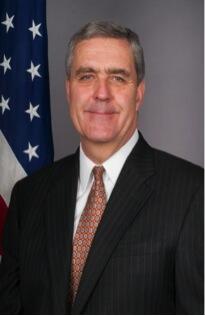
Douglas Lute, Ambassador of the United States to NATO


In August 2013, Douglas E. Lute was sworn-in as the Ambassador of the United States to the North Atlantic Treaty Organization (NATO).  From 2007 to 2013, Lute served at the White House under Presidents Bush and Obama, first as the Assistant to the President and Deputy National Security Advisor for Iraq and Afghanistan, and more recently as the Deputy Assistant to the President focusing on Afghanistan, Pakistan and India.  In 2010, AMB Lute retired from the U.S. Army as a Lieutenant General after 35 years on active duty.  Prior to the White House, he served as the Director of Operations on the Joint Staff, overseeing U.S. military operations worldwide. He served multiple tours in NATO commands including duty in Germany during the Cold War and commanding U.S. forces in Kosovo.  He holds degrees from the United States Military Academy and Harvard University.

A light lunch will be provided.  Please plan to arrive by 11:30am to allow time to check in at the registration desk, pick up your lunch and be seated by 12:00 noon.

Co-sponsored by The Europe Center, the Freeman Spogli Institute for International Studies, the Center for International Security and Cooperation and the Center for Russian, East European and Eurasian Studies.


Douglas Lute United States Ambassador to NATO Speaker
Lectures
Authors
News Type
Commentary
Date
Paragraphs

Elizabeth Blake, Habitat for Humanity International’s General Counsel and team leader of its Government Relations and Advocacy operations, spoke to students at the Freeman Spogli Institute on February 25 as part of the Program on Human Rights Winter Speaker Series that examined U.S Human Rights NGO’s and International Human Rights. 

Habitat for Humanity is a Christian not-for-profit organization that started in 1974 with the credo that every person has a human right to secure shelter and tenure of land. Most of its work is overseas, where Habitat for Humanity has built homes for over 3 million people in over 70 countries. Using security of tenure as its cornerstone, it especially assists women and children who are the most vulnerable to homelessness and insecure tenure. Habitat for Humanity has also recently expanded into housing microfinance, water and sanitation, risk reduction and response, and in creating Habitat Resource Centers.    

Blake’s provocative starting salvo was that “NGOs often do harm and frequently waste money.” Instead, they need to work better among themselves and invite partnerships with other NGOs, governments, and multi-lateral partners. This is not simply a moral imperative but also a practical necessity given the size of the U.S. not-for-profit sector, which as an employer of 13 million people is a significant part of the national economy.   

Habitat for Humanity’s approach maximizes its impact abroad through four principles:

1.     Community development starts with its people – people are the true assets;

2.     International community development must be based upon priorities set by the local community itself;

3.     The test of success of any community development is that local capacity is improved; and

4.     “Accompaniment” – a term first coined by Paul Farmer of Partners in Health: Habitat for Humanity works with and works for the people of that community.

This last principle is the most important: Habitat for Humanity has 1 million volunteers each year who work together with communities, or as Blake says, “scraping walls together with people from a local community is a different relationship to handing out soup” and ensures “going from aid to empowerment.”

Responding to questions from Dana Phelps, program associate for the Program on Human Rights and moderator of the event, Blake emphasized the relevance of her corporate background to working in the non-profit world.  As a graduate of Columbia University’s School of Law, she brings her extensive corporate experience to her work at Habitat, and stressed that “non-profits are businesses – a major corporate undertaking” for which her business background had trained her “not to take no for an answer.” 

Blake also explained that while Habitat for Humanity is a multi-denominational Christian organization, it is not registered as a church.  This means it is subject to anti-discrimination laws in its hiring practices and daily operations. It does not engage in prosthletyzing but instead sees itself as a morals-based organization.   

When Blake was further pressed on how “accompaniment” works in practice, she emphasized that Habitat for Humanity does not impose its values and morals on communities, but instead has intentionally slow processes that ensure communities adapt new practices in their own time. For example, when questioned on the impact of gender-equality housing improvements, Blake said, “Habitat for Humanity doesn’t make the first running – it tends to go in to communities that are already taking the running on gender equality.” 

Helen Stacy, Director of the Program on Human Rights


Hero Image
dsc 0411
Elizabeth Blake, former SVP of Habitat for Humanity, speaks at Stanford
Dana Phelps
All News button
1
Authors
News Type
Commentary
Date
Paragraphs

Julie Cordua, executive director of Thorn, a non-profit organization founded by Ashton Kutcher and Demi Moore, spoke passionately on the topic child exploitation and sexual abuse imagery for the Stanford Program on Human Rights’ Winter Speaker Series U.S Human Rights NGOs and International Human Rights on February 4, 2015.

Cordua addressed the Stanford audience about the importance of technology for acting as the “digital defenders of children." She provided a chilling account of child sexual exploitation, first describing the problem and then going on to challenge preconceived notions about it. For example, she highlighted that in order to tackle the issue, it must first be understood that it concerns a highly vulnerable population; most child victims of sexual exploitation come from extremely abusive backgrounds and many have been sexually abused by one or more parents.

Cordua emphasized that technology innovations have contributed to a proliferation of child exploitation and sexual abuse imagery through the use of encrypted networks that make it extremely difficult to hunt down perpetrators and find victims. Cordua feels that while technology is intensifying the problem, technology is also the solution.  Examples she gave were the development of algorithms that aim to track perpetrators and their victims and advertisements that encourage pedophiles to seek help.

Helen Stacy, director of the Program on Human Rights, queried Cordua on Thorn’s relationship with the government and private sector, as well as on Thorn’s approach for testing the efficacy of their programs. Cordua responded that Thorn does not apply for government funds so as to maintain independence over their projects but that they actively cultivate strong relationships with politicians and law enforcers. In relation to evaluation metrics, Cordua acknowledged that metrics are especially difficult in such a cryptic field as it is nearly impossible to know what numbers they are dealing with from the onset. Questions from the audience included effective strategies for changing the conversation of pedophilia in the public sphere, the emotional stamina required for pursuing such work, and strategies for connecting with and providing a safe platform for victims of child sexual exploitation.

Dana Phelps, Program Associate, Program on Human Rights


Hero Image
dsc 0476
Julie Cordua, executive director of Thorn, speaks at Stanford
Dana Phelps
All News button
1
Authors
News Type
Commentary
Date
Paragraphs

Carolyn Miles, CEO and president of Save the Children, spoke on her organization’s efforts to protect children’s rights in many countries of the world at the Stanford Program on Human Rights’ Winter Speaker Series U.S Human Rights NGOs and International Human Rights on February 11, 2015.

Throughout her talk, Miles addressed the Stanford audience about the importance of protecting the basic needs of children, proclaiming the Save the Children mission: Every child deserves a childhood.  She spoke about the urgent needs of child refugees in Syria, the organization’s biggest and most challenging hurdle at present. The audience grew still when Miles played a Save the Children commercial capturing a Syrian child’s experience in one year of her life during the wake of the crisis. Miles raised other important issues, such as the critical importance of developing longer-term strategies that support children in the aftershock of crises, which often can be more damaging than the initial crisis itself. For example, in the aftermath of Hurricane Katrina when thousands of children were displaced, organizations such as the Red Cross had no plan in place for caring for children in shelters beyond a short period of time. Save the Children trained Red Cross workers in preparedness techniques and strategies for emergency aftermath.

Helen Stacy, director of the Program on Human Rights and moderator of the event, questioned Miles on the organization’s strategy for accessing marginalized communities; prioritizing children that are forgotten or ignored; and the concern of overeducating and preparing children in countries with a depleted workforce. Miles believes that focusing on the hard-to-reach populations will close the gap between the majority and the minority, and that studies show that this is achievable when governments are made to feel accountable to their marginalized peoples when witnessed on an international level. In relation to unrealistically preparing children for the workforce, Miles stated that in the Middle East this may potentially be a problem, but that Save the Children endeavors to prepare students through matching their skillsets to jobs that are already available. When Stacy challenged Miles on the Western mindset that frames the Save the Children mission that “every child deserves a childhood," Miles agreed that it is a Western attitude but stood by her stance that she believes that all children under the age of eighteen are entitled to certain basic rights, regardless of non-Western cultural norms indicating otherwise. Questions from the audience included fundraising issues, learning from undesirable program evaluation results, dealing with diversity when designing projects and innovation in children’s rights.

Dana Phelps, Program Associate, Program on Human Rights


Hero Image
dsc 0475
Carolyn Miles, CEO and president of Save the Children
Dana Phelps
All News button
1
Subscribe to Institutions and Organizations