Institutions and Organizations
News Type
News
Date
Paragraphs

Emerging technologies, stemming from the heart of Silicon Valley and extending to Asia and beyond, have pushed the bounds of how stories are told by journalists and the way in which readers interact with them. The Shorenstein Journalism Award, an annual prize given by the Shorenstein Asia-Pacific Research Center (APARC), celebrates 15 years of recognizing distinguished journalists for their innovative and responsible journalism amid social and technological change.

The prize began with “the idea of a media award for a person who has the most significant impact on the relationship with Asia-Pacific nations in the United States,” according to Walter H. Shorenstein, who spoke about his twin interests of Asia and the press in a 2010 oral history project interview and was the benefactor after whom the center is named.

Shorenstein APARC and Harvard’s Shorenstein Center on Media, Politics and Public Policy jointly presented the award for six years. Shorenstein APARC has continued the initiative, and each year, brings the award winner to Stanford to talk with the broader campus community, and since 2011, has alternated between a recipient from the West, who has mainly addressed an American audience, and a recipient from Asia.

The prize seeks to inspire the next generation of U.S. journalists focused on Asia, as well as Asian journalists, who pave the way for press freedom in their countries.

Award winners have explored a multitude of topics over the years, from human rights in North Korea to the rise of democracy in Indonesia and from the U.S.-Japan alliance to gender equality in India. And this year adds an additional view on China; veteran journalist Ian Johnson will address religion and value systems in a panel discussion on May 1 with Xueguang Zhou, Stanford professor of sociology, and Orville Schell, director of the Asia Society's Center on U.S.-China Relations, moderated by Daniel C. Sneider, Shorenstein APARC associate director for research.

To mark the award’s tenure, Shorenstein APARC asked award alumni to answer the question, “What do you think the future holds for journalism in/about Asia?” Their responses are below.


Image
crossette 3x4 bw
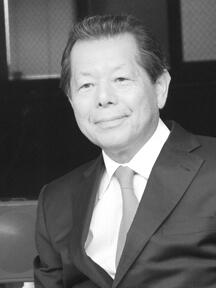
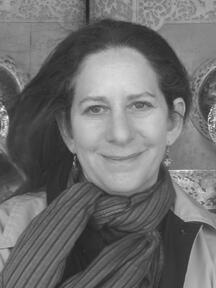
Asia is big, with 60 percent of the world's people and a third of its land. The conditions in which journalists work go to the extremes, from the longstanding establishment press of Japan or India to the blanket repression of it in Laos or China. But if there is one word to describe Asian journalism of the future, it is Youth. Creative, energetic young people, armed with connectivity, pack Internet cafes and journalism classes, where they can find them. Their interests are broad, they are open-minded and well informed. Western reporters will benefit from their guidance as colleagues.

Barbara Crossette is the U.N. correspondent for The Nation and a columnist for India Abroad. She received the Shorenstein Journalism Award in 2010.


Image
funabashi 3x4 bw

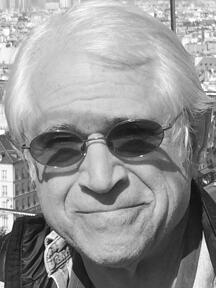
Journalism in Asia has had a long history of covering revolutions and wars. However, peace has reigned over Asia for near on 40 years. Yet, the peace and stability in Asia looks increasingly precarious. Asia too is not immune to populist nationalism. In this climate, Asia could yet again become the battleground for dislocation, revolution and war. Journalism, on top of reacting to potential crises, will be critical for proactively finding ways to prevent and defuse crises in the region.

Yoichi Funabashi is the chairman of the Rebuild Japan Initiative Foundation. He received the Shorenstein Journalism Award in 2015.


Image
buruma 3x4 bw
The scope for independent journalism, checking the powers that be, is shrinking everywhere, not least in Asia. China's rise as a major political and commercial power will be a growing challenge to the freedom of the press. The best thing journalists writing about Asian affairs can do, especially those who are lucky enough to work for free and independent media, is to continue to write as honestly as they can, without bowing to political or commercial pressures. This very much includes pressures at home, in countries that still have liberal democratic institutions. Good journalism on Asia, or anywhere else, will continue to be produced as long as the critical spirit remains undaunted.

Ian Buruma is a writer and the Paul W. Williams Professor of Democracy, Human Rights, and Journalism at Bard College. He received the Shorenstein Journalism Award in 2008.


Image
mydans 3x4 bw
The frontier in the battle for press freedom in Southeast Asia has moved into cyberspace, where independent voices have presented a new challenge to government control of information. In Vietnam, Malaysia, Thailand, Singapore, Indonesia and newly open Myanmar, upstart websites and blogs have proliferated. But it hasn't taken long for those in charge to gain the upper hand, and following the example of China, all have found ways to bring these open forums under varying degrees of control, from censorship to harassment to prison terms. The flamboyant Philippines remains the exception, and the future there too has become uncertain.

Seth Mydans is a contributing writer for the New York Times. He received the Shorenstein Journalism Award in 2009.


Image
demick 3x4 bw
The United States tends to export its best and worst fashions elsewhere in the world. An example of the latter is President Trump’s tendency to denounce any media coverage he dislikes as “fake news.” The Chinese Communist Party has picked up on that trick, earlier this month using the “fake news” defense to deny a story that a human rights lawyer was tortured, a practice all too common in China. The implications are chilling for the Chinese domestic press and for foreign correspondents covering China. While our own president is denouncing us as “enemies of the people,” we can hardly expect the U.S. government to stand up for us when the intolerant regime in Beijing tries to muzzle our reporting.

Barbara Demick is the Los Angeles Times’ bureau chief in New York and was formerly bureau chief in Beijing and in Seoul. She is the author of Nothing to Envy: Ordinary Lives in North Korea and Logavina Street: Life and death in a Sarajevo Neighborhood. She received the Shorenstein Journalism Award in 2012.


Image
zaw 3x4 bw
In some parts of Asia, the space for freedom of expression has shrunk immensely and there are challenges for all of us covering sensitive issues in countries where journalists increasingly face the Computer Crime Act, censorship, tight space, intimidation and threats – moreover, they also continue to face authoritarian rulers’ unjustified clampdown and high-handed attitudes. Asia is complex – in some corners of our region, many diverse ethnic minorities live in conflict zones and in war without peace – for decades journalists travel there to report stories. But it is our job – isn’t it? Journalists here ought to tell stories and unearth many untold news to readers across Asia. While facing prison walls, threats and lawsuits, journalists also face media tycoons and cronies who want them to be a mouthpiece of commercial conglomerates – they must resist them. Commercial media kills independent journalism. Long before journalists in Asia realized that objectivity alone doesn’t work in Asia but courage, independent reporting and searching the truth are more important than ever before. Last but not least, Asia has the fastest growing economies in the world thus an independent media is needed to keep voices from Asia alive.

Aung Zaw is the founder and editor-in-chief of The Irrawaddy. He received the Shorenstein Journalism Award in 2013.


Image
schlesinger 3x4 bw
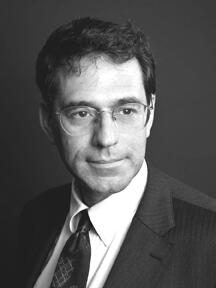
Donald Trump is challenging many long-held, American consensus policies – including those toward Asia. Trade, diplomacy and security relationships between the United States and Asia – and among Asian nations – are now all in flux. The challenge for journalists on both sides of the Pacific will be sorting out the noise, understanding the concrete actions and reactions, and explaining the implications for a global audience. That mission will be made more difficult – and more vital – by the growing hostility toward journalism from many of the leaders unleashing this transformation.

Jacob Schlesinger is a senior Washington correspondent for the Wall Street Journal. He received the Shorenstein Journalism Award in 2014.


Image
schell 3x4 bw
I am very pessimistic about the ability of thoughtful and informative journalism to survive anywhere in the world given the gale force winds of state propaganda, commercial market pressure and "fake news" that now buffet it. And no where is such reporting more urgently needed than in regard to Asia where China's different value and political pose a stark challenge. To keep a well-informed public, we may well have to finally recognize here in the United States that good and independent reporting cannot be entirely a purely commercial process any more than are our great universities.

Orville Schell is the Arthur Ross Director of the Center on U.S.-China Relations at the Asia Society in New York, and former dean of the School of Journalism at the University of California, Berkeley. He received the Shorenstein Journalism Award in 2003.


Image
pomfret 3x4
I am very optimistic about the future of journalism in Asia because I am optimistic about the future of Asia writ large. I am especially optimistic about the future of journalism in China. Despite the dark days that my Chinese colleagues face today, there is no shortage of well-trained, hungry reporters in China who will ultimately help push China in a more positive direction. I think this is, to use the Chinese Communist Party's verbiage, "the historical trend." Just think about the scoops to be had when China begins to open the vast archives of the Chinese Communist Party? Obviously, this won't happen tomorrow, but I am confident that this day is less far off than it sometimes seems.

John Pomfret was a foreign correspondent with the Washington Post for many years. He is the author of The Beautiful Country and the Middle Kingdom: America and China from 1776 to the Present. He received the Shorenstein Journalism Award in 2007.

 

Hero Image
journalism award headline
A pair of people read newspapers outside in Seoul, South Korea.
Chung Sung-Jun/Getty Images
All News button
1
News Type
News
Date
Paragraphs
South Korea’s Constitutional Court upheld a parliamentary decision to impeach President Park Geun-hye on Friday. She becomes the country’s first democratically elected leader to be forcibly removed from power, following allegations of corruption that have incited widespread protests for months.
 
Gi-Wook Shin, director of the Shorenstein Asia-Pacific Research Center, answers some questions about the impact of Park’s impeachment and path ahead for South Korea.
 
What happens next?
 
The ruling declares that President Park is no longer president and that she must vacate Blue House, the official residence of the South Korean head of state. Indeed, she returned to the residence where she had lived before assuming the presidency. A presidential election will be held within 60 days, most likely on May 9. In the meantime, South Korean Prime Minister Hwang Kyo-ahn, who was appointed as acting president, will continue in that role until the election. 
 
The decision made by the court was only one part of the investigation into Park’s political scandals and alleged corruption. The verdict delivered on March 10 states that Park committed a grave violation of constitutional law. Park could still face charges for corruption and cronyism, as a separate legal process is ongoing, and she could be put into jail.
 
How are people in South Korea responding to the ruling so far?
 
Most people are accepting the ruling. The decision to confirm Park’s impeachment was largely expected. One noteworthy aspect of the ruling, though, was its unanimity – all eight judges on the court voted to confirm her impeachment. This collective stance aimed to message an agreement that ‘it’s time to move on’ and to minimize the potential for discord in government and society.
 
Following months of protests in Seoul, the reactions on the streets have been fairly restrained. However, there is a contingent that supported Park throughout the trial and they still refuse to accept the ruling. Park herself also expressed defiance, rather than accepting the verdict, reportedly saying, “It will take time, but the truth will eventually be revealed.” Political tensions will continue, perhaps even after the upcoming election.
 
What motivated the protests and impeachment process, and what does it represent?
 
Beyond the political scandals, the protests are more broadly an expression of popular discontent over a range of issues. Following two decades of rapid modernization, South Koreans are experiencing growing inequality, high youth unemployment, and fatigue over two presidential terms by conservative parties. Civic participation was a main driver behind the protests. The protests were large scale and prolonged but certainly not unusual for South Korea. Historically speaking, South Korea has a pattern of a strong state setting itself against a contentious civil society. As was evident in 2016-17, political parties, instead of addressing the issues and public opinion, were being led by the movements themselves.
 
The impeachment trial and civic activism represent neither a crisis of politics nor a crisis of democracy for South Korea. Rather, it shows that Korean democracy has progressed since it accelerated its democratic transition in the late 1980s. Throughout Park’s case, democratic procedures were followed by the National Assembly, special prosecutor and the Constitutional Court – and that’s a good sign. Nonetheless the real test for Korean democracy may yet have to come, as some supporters of Park and perhaps she herself have indicated that the verdict is unfair and unconstitutional. Going forward, I am still optimistic that these events will encourage the government to be more careful with exercise of power and more attentive to societal issues.
 
What are the main issues that the government now faces?
 
National unity and stability will be the main priorities of the next president of South Korea. He or she will have to find a way to bridge the deep divide between progressives and conservatives, and work on the issues that have motivated such wide unrest across the country. An orderly presidential election and transfer of power from the Park administration to the next are equally essential. The next president faces a unique circumstance, however, in that the new administration will begin its work the day following the election, without the typical transition period.
 
These events also underscore the limitations of the current single five-year term presidential system in South Korea. While the Korean presidency is still powerful, the current system has proved to be ineffective as the president becomes a 'lame duck' after 3 or 4 years into office, making it difficult to pursue any long-term policy agenda. Korea needs constitutional reform to enact a greater balance of power and policy continuity.

Read more about this topic in a paper featured in the academic journal Asian Survey and an analysis piece in The Diplomat by Gi-Wook Shin and Rennie J. Moon, or watch a video featuring a panel discussion from earlier this year.


Hero Image
seoul protest candle
Activists of all ages gather in Seoul city center for a candlelight rally on Dec. 10, 2016.
Chung Sung-Jun/Getty Images
All News button
1
News Type
News
Date
Paragraphs
Admiral Harry B. Harris, Jr., commander of U.S. Pacific Command (USPACOM), visited the Shorenstein Asia-Pacific Research Center last Friday. Throughout the day, he met with faculty, fellows and students and delivered a keynote speech to the broader Stanford community.
 
In his remarks titled Deterring Revisionist Powers, Harris described how the Indo-Asia-Pacific region fits in the context of the “global operating system,” a term used to illustrate the norms and standards that have defined the international system since the end of World War II. Harris also explained how USPACOM is ensuring continued international access to the shared domains of the Indo-Asia-Pacific, which include use of the air, sea and cyber domains.
 
Harris also led discussions on the strategic environment and security challenges that the United States faces. He engaged in an exchange with various audience members on current security dilemmas such as North Korea’s nuclear program, the South China Sea, and the state of U.S. alliances and partnerships in the Indo-Asia-Pacific region.
 
The Chatham House Rule applied to Harris’ public presentation, and his subsequent meetings were closed to the public and news media.
 
Harris was later featured at a meeting held at the Highly Immersive Classroom at the Graduate School of Business. Faculty and students at Stanford conversed by way of video teleconference with affiliates at Stanford Center at Peking University (SCPKU), Beijing. U.S.-Asia Security Initiative Director Karl Eikenberry and SCPKU Executive Director Josh Cheng moderated the dialogue.
 
Admiral Harris’ visit to Stanford was co-sponsored by Ambassador Eikenberry and Admiral Gary Roughead, Robert and Marion Oster Distinguished Military Fellow at the Hoover Institution.
Hero Image
2017march admharris visit online
Admiral Harry B. Harris, Jr., commander of U.S. Pacific Command, delivers remarks titled "Deterring Revisionist Powers" at the Bechtel Conference Center, March 3, 2017.
Debbie Warren
All News button
1
Paragraphs

South Korean President Park Geun-hye faced a leadership crisis after revelations that she relied on a confidant with no official position for key decision-making in state affairs. Heavy industry met with serious financial difficulties, and a strong anti-corruption law was enacted. North Korea tested more nuclear weapons and missiles. Controversy over the deployment of Terminal High Altitude Area Defense strained South Korea’s relations with China.

All Publications button
1
Publication Type
Journal Articles
Publication Date
Journal Publisher
Asian Survey
Authors
Gi-Wook Shin
Rennie Moon
Number
1
-

About the Event: NATO is entering today the 4th phase of its history and must adapt to changes in today’s security environment in order to remain relevant. NATO’s ability to adapt will ultimately redefine NATO’s place in the world.  General Mercier will discuss challenges facing NATO faces such as maintaining the unity between members in the Alliance, addressing potential crises in Eastern Europe, reopening dialogue with Russia, and addressing instability on NATO-member borders.

About the Speaker: General Denis Mercier is the North Atlantic Council as Supreme Allied Commander Transformation. Prior to this assignment, he served as the French Air Force Chief of Staff from 2012-2015.

He graduated with a Master’s of Science from the French Air Force Academy in 1981, qualifying as a fighter pilot in 1983. He has more than 3000 flying hours including 182 hours in combat missions. Gen. Mercier commanded the 1/12 "Cambrésis" Fighter Squadron, a founding unit of the NATO Tiger association. He participated in numerous other NATO exercises and operations, including Operation Deny Flight over Bosnia-Herzegovina in 1994, "Strong Resolve” in 1998, and Operation Allied Force in Kosovo.

From 1999 to 2002, Gen. Mercier was deputy head of the combined joint task force deputy branch at Regional Headquarters where he contributed to the development of the Combined Joint Task Force concept. He was a member of the combined analysis team for exercise "Allied Effort '01" and an evaluator of the CJTF HQ for Exercise "Strong Resolve '02". He also acted as liaison officer for the Commander Striking Fleet Atlantic stationed in Norfolk, VA.

He later served as the commander of Reims Air force base, integrating Mirage F1CR squadrons with ISAF in Afghanistan. From 2004 to 2008 he served as the head of the plans division at the French Air Force headquarters and was nominated as a flag officer in 2007. He then commanded the French Air Force Academy in Salon-de-Provence. As senior military advisor for the Minister of Defence from 2010-2012, Gen. Mercier prepared and participated in all NATO ministerial meetings, summits in Lisbon and Chicago, and was special advisor to Operation Unified Protector over Libya.

Among other awards, Gen. Mercier has been awarded the rank of Grand Officier of the French Legion of Honor and, among other distinctions, an officer of the National Order of Merit.

Encina Hall, 2nd floor

General Denis Mercier Supreme Allied Commander Transformation, NATO
Seminars
News Type
Commentary
Date
Paragraphs

The populist backlash against globalization is being felt acutely across Europe as well as here in the US. And yet whether you look at it from an economic, political or military perspective, transnational cooperation has become an integral part of our global landscape. Hear CDDRL Mosbacher Director Francis Fukuyama on the future of globalization for World Affairs

Hero Image
screen shot 2017 02 22 at 12 18 02 pm
All News button
1
Authors
News Type
News
Date
Paragraphs
The future of relations between China and the United States depends on the readiness of both governments to focus on resolving shared challenges, longtime journalist John Pomfret said at the Shorenstein Asia-Pacific Research Center (APARC) last Wednesday.
 
“The reality of the U.S.-China relationship is collaboration and competition,” said Pomfret, who served for 15 years as a foreign correspondent, describing the nature of interaction between the two countries that began to normalize relations in 1972.
 
Pomfret's remarks were delivered at a colloquium entitled, “The United States and China in the Era of Donald Trump,” which explored the unorthodox approach Donald Trump took during his campaign on a range of issues related to China, and implications for the bilateral relationship now that Trump has assumed the U.S. presidency.
 
Pomfret over the course of his journalism career spent seven years covering China, including during the 1989 Tiananmen Square protests and from 1998 through 2003 as the bureau chief for the Washington Post in Beijing, and recently authored the book, The Beautiful Country and the Middle Kingdom, which examines U.S.-China relations from 1776 to the present. He won the 2007 Shorenstein Journalism Award, an annual honor conferred to a journalist who produces outstanding reporting on Asia.
 
“It’s clear that a new type of reciprocity is needed to right the balance in the U.S.-China relationship, but just whether Trump and his team have the wherewithal to do it…is very much an open question,” he said.
 
Trump continues to promise to restore manufacturing jobs in the United States, but fulfillment of that promise could come in conflict with its trade relationship with China, where much manufacturing of U.S. products takes place, he said.
 
Equally important in the U.S.-China relationship is how to address North Korea and its nuclear weapons and ballistic missiles program, which remains an “extremely complicated” and pressing situation, he said.
 
Pomfret expressed uncertainty about the Trump administration’s capacity to change China’s position from the status quo, which has long supported the North Korean regime by way of trade and relaxed implementation of U.N. sanctions despite repeated provocations.
 
Yet, amidst the vague foreign policy positions projected by Trump toward China, “there is one positive, and that is that he has the Chinese off-balance,” Pomfret admitted.
 
For Pomfret, his appearance at Stanford was a bit of a homecoming; he spoke to an audience of 200 faculty, students and community members at the colloquium sponsored by the China Program and Center for East Asian Studies, the center from which he received his master’s degree in 1984.
 
Asked about the future of China and its governance, he noted that today’s China is markedly different than when he was there in the 1980s studying as a student, and later, working as a journalist. The generational changes are stark, said Pomfret, relaying a sense of optimism that the country would become more democratic over time.
 
“The amount of personal freedoms that the average Chinese person has has expanded exponentially. I think the desire of Chinese people to have more agency over their lives will continue to grow – that’s clear.”
 
Innovation will be a determinant of China’s future growth, said Pomfret, coupling the idea that societies that have knowledge-driven economies typically demand more freedoms. Without innovation, China will fall into the middle-income trap, he said, “I don’t think they want to be there; they are an incredibly proud nation.”
 
Hero Image
china uscapital reuters Reuters/Hyungwon Kang
All News button
1
-

Abstract: The formal constitutional character of the presidential office – that is, the method of electing the president, and the powers both granted and denied to the president -- was defined by the men who drafted the Constitution in Philadelphia in the summer of 1787 and has, for all practical purposes, remained largely unchanged ever since.

The presidency’s place in American political culture, however, is another matter, because in the 230 years since the Constitution was framed, that culture has evolved -- in many ways dramatically -- along with the society and the economy it reflects.

The tension between the static constitutional character of the presidency and the dynamic political culture, society, and economy in which it is embedded – and especially the technologies, even more especially the communication technologies that have emerged over the last century -- will be the main focus of this paper.

About the Speaker: David M. Kennedy is the Donald J. McLachlan Professor of History, Emeritus, at Stanford University. 

His teaching has included courses in the history of the twentieth-century United States, American political and social thought, American foreign policy, national security strategies, American literature, and the comparative development of democracy in Europe and America.

Reflecting his interdisciplinary training in American Studies, which combined the fields of history, literature, and economics, Kennedy's scholarship is notable for its integration of economic and cultural analysis with social and political history, and for its attention to the concept of the American national character. His 1970 book, Birth Control in America: The Career of Margaret Sanger, embraced the medical, legal, political, and religious dimensions of the subject and helped to pioneer the emerging field of women's history.  Over Here: The First World War and American Society (1980) used the history of American involvement in World War I to analyze the American political system, economy, and culture in the early twentieth century. Freedom From Fear: The American People in Depression and War, 1929-1945 (1999) recounts the history of the American people in the two great crises of the Great Depression and World War II. With Thomas A. Bailey and Lizabeth Cohen, Kennedy is also the co-author of a textbook in American history, The American Pageant, now in its sixteenth edition. He is a frequent contributor to the New York Times, the Los Angeles Times, The Atlantic, and other publications and media outlets.

Birth Control in America was honored with the John Gilmary Shea Prize in 1970 and the Bancroft Prize in 1971. Over Here was a Pulitzer Prize finalist in 198. Freedom From Fear won the Pulitzer and Francis Parkman Prizes, in 2000.

Professor Kennedy has been a visiting professor at the University of Florence, Italy, and has lectured on American history in Italy, Germany, Turkey, Scandinavia, Canada, Britain, Australia, Russia, and Ireland. He has served as chair of the Stanford History Department, and as director of Stanford's Program in International Relations, as well as Associate Dean of the School of Humanities and Sciences. He founded Stanford’s Bill Lane Center for the American West, was its Director from 2003-2013, and remains a member of its Advisory Council. In 1995-96, he was the Harmsworth Professor of American History at Oxford University. He is an elected Fellow of the American Academy of Arts and Sciences as well as the American Philosophical Society. From 2002 to 2011 he served on the Board of the Pulitzer Prizes (chair, 2010-2011) joined  the Board of the New York Historical Society in 2008, and in 2013 became a Trustee of the California Academy of Sciences. Since 2000, he has served as the Editor of the Oxford History of the United States. Secretary of Agriculture Tom Vilsack in 2015 appointed Kennedy to the Advisory Council for the Pacific Northwest National Scenic Trail, which will run from Glacier National Park in Montana to the Pacific shore in Washington State. 

Encina Hall, 2nd floor

Donald J.McLachlan Professor of History, Emeritus Director Emeritus, Bill Lane Center for the American West Stanford University
Seminars
Paragraphs

Scholars at Stanford's Shorenstein Asia-Pacific Research Center in the Freeman Spogli Institute for International Studies assess the strategic situation in East Asia to be unsettled, unstable, and drifting in ways unfavorable for American interests. These developments are worrisome to countries in the region, most of which want the United States to reduce uncertainty about American intentions by taking early and effective steps to clarify and solidify U.S. engagement. In the absence of such steps, they will seek to reduce uncertainty and protect their own interests in ways that reduce U.S. influence and ability to shape regional institutions. This 23-page report entitled “President Trump’s Asia Inbox” suggests specific steps to achieve American economic and security interests.

All Publications button
1
Publication Type
Policy Briefs
Publication Date
Journal Publisher
Shorenstein Asia-Pacific Research Center
Authors
Gi-Wook Shin
Takeo Hoshi
Thomas Fingar
Kathleen Stephens
Daniel C. Sneider
Donald K. Emmerson
Subscribe to Institutions and Organizations