Energy

This image is having trouble loading!FSI researchers examine the role of energy sources from regulatory, economic and societal angles. The Program on Energy and Sustainable Development (PESD) investigates how the production and consumption of energy affect human welfare and environmental quality. Professors assess natural gas and coal markets, as well as the smart energy grid and how to create effective climate policy in an imperfect world. This includes how state-owned enterprises – like oil companies – affect energy markets around the world. Regulatory barriers are examined for understanding obstacles to lowering carbon in energy services. Realistic cap and trade policies in California are studied, as is the creation of a giant coal market in China.

-
This event is open to Stanford undergraduate students only. 
 
The Center on Democracy, Development, and the Rule of Law (CDDRL) will be accepting applications from eligible juniors on who are interested in writing their senior thesis on a subject touching upon democracy, economic development, and rule of law (DDRL) from any university department.  The application period opens on January 13, 2020 and runs through February 14, 2020.   CDDRL faculty and current honors students will be present to discuss the program and answer any questions.
 
For more information on the Fisher Family CDDRL Honors Program, please click here.
 
Image
honors info session 2019

CDDRL
Encina Hall, C152
616 Jane Stanford Way
Stanford, CA 94305-6055

(650) 725-2705 (650) 724-2996
0
Senior Fellow at the Freeman Spogli Institute for International Studies
Professor, by courtesy, of Political Science
Stedman_Steve.jpg PhD

Stephen Stedman is a Senior Fellow at the Freeman Spogli Institute for International Studies (FSI) and the Center on Democracy, Development and the Rule of Law (CDDRL), an affiliated faculty member at CISAC, and professor of political science (by courtesy) at Stanford University. He is director of CDDRL's Fisher Family Honors Program in Democracy, Development and Rule of Law, and will be faculty director of the Program on International Relations in the School of Humanities and Sciences effective Fall 2025.

In 2011-12 Professor Stedman served as the Director for the Global Commission on Elections, Democracy, and Security, a body of eminent persons tasked with developing recommendations on promoting and protecting the integrity of elections and international electoral assistance. The Commission is a joint project of the Kofi Annan Foundation and International IDEA, an intergovernmental organization that works on international democracy and electoral assistance.

In 2003-04 Professor Stedman was Research Director of the United Nations High-level Panel on Threats, Challenges and Change and was a principal drafter of the Panel’s report, A More Secure World: Our Shared Responsibility.

In 2005 he served as Assistant Secretary-General and Special Advisor to the Secretary- General of the United Nations, with responsibility for working with governments to adopt the Panel’s recommendations for strengthening collective security and for implementing changes within the United Nations Secretariat, including the creation of a Peacebuilding Support Office, a Counter Terrorism Task Force, and a Policy Committee to act as a cabinet to the Secretary-General.

His most recent book, with Bruce Jones and Carlos Pascual, is Power and Responsibility: Creating International Order in an Era of Transnational Threats (Washington DC: Brookings Institution, 2009).

Director, Fisher Family Honors Program in Democracy, Development and Rule of Law
Director, Program in International Relations
Affiliated faculty at the Center for International Security and Cooperation
Date Label

Encina Hall, C150
616 Jane Stanford Way
Stanford, CA 94305

0
Center Fellow, Freeman Spogli Institute for International Studies
didi_kuo_2023.jpg

Didi Kuo is a Center Fellow at the Freeman Spogli Institute for International Studies (FSI) at Stanford University. She is a scholar of comparative politics with a focus on democratization, corruption and clientelism, political parties and institutions, and political reform. She is the author of The Great Retreat: How Political Parties Should Behave and Why They Don’t (Oxford University Press) and Clientelism, Capitalism, and Democracy: the rise of programmatic politics in the United States and Britain (Cambridge University Press, 2018).

She has been at Stanford since 2013 as the manager of the Program on American Democracy in Comparative Perspective and is co-director of the Fisher Family Honors Program at CDDRL. She was an Eric and Wendy Schmidt Fellow at New America and is a non-resident fellow with the Carnegie Endowment for International Peace. She received a PhD in political science from Harvard University, an MSc in Economic and Social History from Oxford University, where she studied as a Marshall Scholar, and a BA from Emory University.

Date Label
Authors
News Type
Blogs
Date
Paragraphs

Representing 14 different countries, the Ford Dorsey Master’s in International Policy (MIP) first-year class is a diverse group. Of the 8 men and 21 women, some have worked in government, some have served in the military, and others just completed their undergraduate degrees. Their academic interests range from migration; to clean energy; to women’s, children’s and LGBTQIA rights; and they spend their free time woodworking, practicing Kung Fu, and listening to true-crime podcasts.

The Freeman Spogli Institute for International Studies spoke to five of the incoming first-year students about their backgrounds, passions, and dreams for the future. These are their stories.

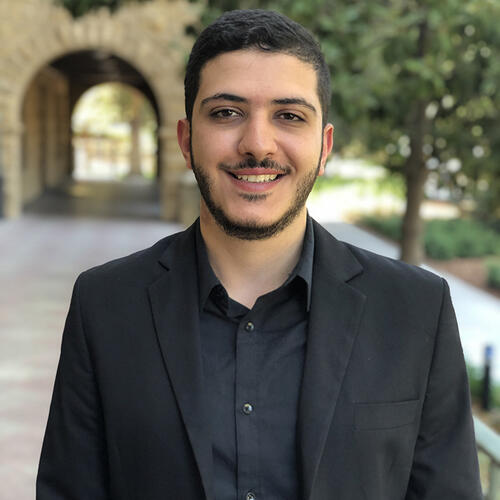
Serage Amatory, 22. (Chouf, Lebanon) 

Image
serage1

“I’ve been living in Egypt for the last four years and attending American University in Cairo, where I double-majored in political science and multimedia journalism. My background is in human rights, and I plan to keep working in human rights after school. I worked as a journalist at one of the few nonpartisan TV stations in Lebanon, and I also worked at the Ministry of Foreign Affairs in Lebanon.

I’ve also made two documentary films — one is about the transgender community in Cairo, and the second film tells the stories of five male victims of rape and sexual assault in Cairo. I enjoy talking about issues that other people don’t want to talk about. I get a lot of disapproval from people all the time, but that's what motivates me — I want to be speaking about people who don’t have someone speaking about them. Someone has to bring attention to things that aren't in the mainstream, and that's what I like to do.

The Master’s in International Policy program here is amazing, and I love that you have the option to specialize in a topic — I’d like to study something concrete and know exactly what I'm going to be doing with it after I graduate. I studied really general topics in undergrad, and now I feel like it's time to augment my general education with something that's more specific. I came in with the expectation that I'm going to be specializing in governance and development, and while I still want to do that, I also really think I might want to take some cyber classes now. So we’ll see — I’m just really happy to be here.”

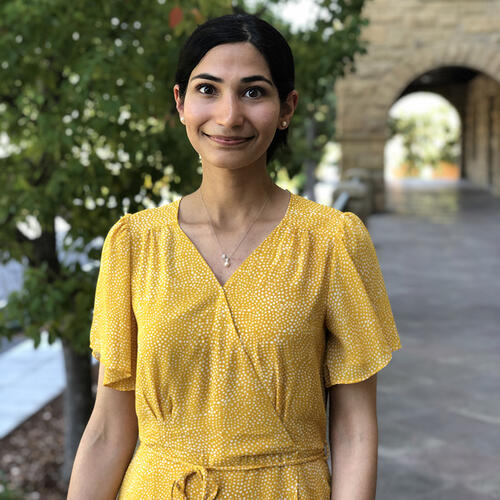
Maha Al Fahim, 21. (Vancouver, Canada and Abu Dhabi, United Arab Emirates) 

Image
maha1

“My interest in public policy started when I was 14. I wrote a nonfiction book about child abuse and gender discrimination, and it was based on my mother's story — she grew up in an abusive family. And in publishing that book, I really saw the power of writing to expose policy issues. When I went to Princeton for my undergraduate education, I wanted to hone my communication skills, because I saw communication as a really powerful tool. I wrote for the Daily Princetonian newspaper and Business Today magazine, and I was also chair of Princeton Writes, a program to promote writing among the community and celebrate the power of words.

Now I'm working on a novel. It's called "Shaolina", and it's set in China. The novel explores gender dynamics and financial and physical power. I traveled to China last summer to do research for the book, and I got to train with a Shaolin monk for 8 hours a day — we would wake up at 5 a.m. and run through the mountains, it was crazy. It was so cool to immerse myself in the experience like that. For me, Kung Fu is not just a sport, it’s a way of life. I've learned so many life lessons from Kung Fu: patience, perseverance, and balance, to name a few.

I love how Stanford is focusing on the future of policy, because as issues get more complex, you need not just qualitative skills, but also quantitative skills. And you need to be able to think creatively and innovatively. Our cohort is small — around 30 students — and I really like it. There are people here from very diverse backgrounds, and it has been really cool to hear so many different international perspectives.” 

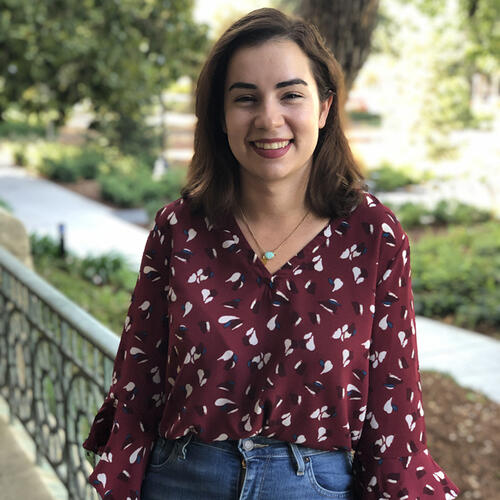
Angela Ortega Pastor, 25. (Madrid, Spain) 

Image
angela1

“I studied economics at NYU Abu Dhabi, and then I worked for three years in Paris for the Organization for Economic Co-operation and Development (OECD) as an energy data manager in oil and gas topics. I worked a lot with the different countries within the OECD as well as with other organizations to help collect data, and we put all of that data into comprehensive reports so that other people and companies can use it for analysis. I really liked working there. I liked the international dynamic - everybody came from very different backgrounds and different places, so it was very congenial to learn from other people.

I'm an economist by training, and that impacts the way I like to look at the problems within the energy field. Such as, 'How can we get consumers and companies to want to transition to clean energy? Does it mean that we need to put policies in place, or regulate the market? Or are pure economic incentives going to do the trick?' There are a lot of professors at Stanford who have done research in that sphere, so that was also a big push for me to come here.

I really like Stanford so far. I've found that people here are very welcoming and happy to help. I was a bit worried about that - when you move somewhere new, you sometimes worry about cliques and how focused people will be on their own lives. But everyone that I've encountered has been really nice and helpful. It's made feel like, 'OK - I can figure out how this place works and eventually feel at home.'”

Craig Nelson, 37. (Minneapolis, Minnesota) 

Image
craig1

“I'm an infantry officer in the U.S. Army. I graduated from West Point in 2006, and I'm in my 14th year of service. I've done eight deployments across both Iraq and Afghanistan, and I've also spent a good amount of time stationed in Europe. My wife, Michelle, and I just moved to Palo Alto from Vicenza, Italy, with our 2-year-old son, Max. Michelle and I love to travel, we love being stationed abroad, and we think that the best way to complete a 20-year career in the Army is to be abroad as much as possible and see parts of the world that we would not otherwise be exposed to.

Overall what I hope to learn here is a better way for the American Army to help to implement the policy that I was a part of as the U.S. Army's forward-deployed unit in Europe. I was able to see where policy derived by our elected officials is actually implemented at a tactical level. I’d like to go back to the Army and implement that policy with a refined understanding of where it comes from and how it's generated.

Before social media became as ubiquitous as it is now, I think people were in groups based largely on where they're from - a certain area code, or a neighborhood, or a school. Now it's possible to identify with a group completely without respect to geographic location, and I think that's because of social media. I'm interested in how that drives security policy - how does that change cyber security policy, and how does that change the way that my country interfaces with its allies and its partners?

When I go back to the Army, I hope to be in a position of greater responsibility and leadership. And I think that this experience will broaden me in a way that I would not have achieved if I had stayed in the operational Army and done a more traditional job following what I just did in Italy.”

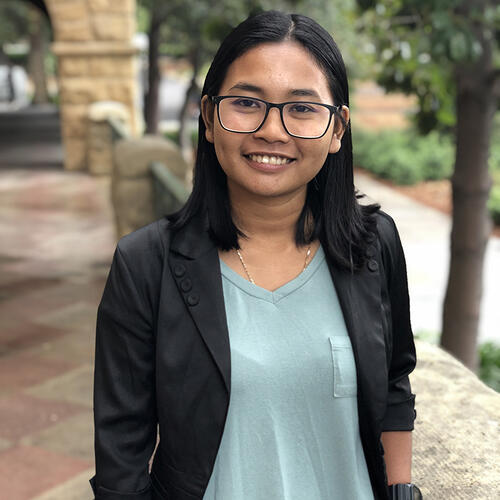
Sievlan Len, 23. (Toul Roveang Village, Cambodia) 

Image
sievlan1

“I earned my bachelor’s degree in global affairs from the American University of Phnom Penh in Cambodia. I did two internships before coming to Stanford: one was with a consulting firm, where I was working mainly on migration research and youth participation initiatives at the sub-national level. I also worked for a foundation that works on strengthening political parties in Cambodia. It was a really interesting experience, and it gave me the idea of doing my bachelor's thesis on migration.

My interests right now are in migration, development, and education. And I’m interested to learn about how the three interact, and how we can make the most out of migration. I'm so excited to explore the interdisciplinary aspects of the Master’s in International Policy program, because I've always felt that you can't separate these issues one from another — migration itself is very interdisciplinary, there is both a political and an economic side to it.

I come from a village in Cambodia, and I'm one of the luckiest in that I had the opportunity to pursue higher education. One of my dreams and goals is that everyone in Cambodia — including girls — have equal access to education, and at least to finish high school, and have the opportunity to pursue their dreams in universities if they’d like to. Where I grew up, I saw a lot of potential not being fulfilled because of people’s circumstances — poverty, or elders not valuing education. I really want to see that change. I want everyone to be able to reach their full potential.”

Hero Image
mipphotocropped
Vienna Exchange student Mourad Chouaki and Ford Dorsey Master’s in International Policy (MIP) first-year students Corie Wieland, Rehana Mohammed and Maria Fernanda Porras Jacobo on the grass of the Stanford Oval in September 2019. Photo: Maria Fernanda Porras Jacobo.
All News button
1
-

DAY 1: Friday October 11


8:30 – 9:00am         Breakfast


9:00 – 9:15am         Introductory Remarks


9:15 – 11:15am       Panel 1: The Boundaries of Authoritarianism post-Arab Uprisings

Amr Hamzawy, Stanford University

“The Discourse of Authoritarianism in Egypt”

Sean Yom, Temple University

“Mobilization without Movement: The Curse of the Arab Spring in Jordan”

Samia Errazzouki, University of California, Davis

“Political and Economic Stagnation in Morocco: Twenty Years into King Mohamed VI’s Reign”

Chair: Lisa Blaydes, Stanford University


11:15-11:30am        Coffee Break


11:30-1:30pm          Panel 2: Popular Uprisings and Uncertain Transitions

Thomas Serres, University of California, Santa Cruz

“Beyond the ‘Isaba: A Political Economy of the Algerian Hirak”

Lindsay Benstead, Portland State University

“Religious Ideology or Clientelism? Explaining Voter Preferences in Tunisia’s Transitional Elections”

Khalid Medani, McGill University

"The Prospects and Challenges of Democratic Consolidation in Sudan: Understanding the Roots, Dynamics and Potential of an “Impossible” Revolution""

Chair: Hicham Alaoui, Harvard University


1:30-2:30pm             Lunch


2:30-4:30pm             Panel 3: Politics, Succession and Sectarianism in the GCC States

Toby Matthiesen, Oxford University

“Saudi Arabia and the Arab Counter-Revolution”

Michael Herb, Georgia State University

“Monarchical Institutions and the Decay of Family Rule in the Gulf”

Farah Al-Nakib, California Polytechnic State University

“Kuwait's New Urbanism: Palace Projects and the Erosion of the Public”                                   

Chair: Hesham Sallam, Stanford University


DAY 2: Saturday October 12


8:30 – 9:00am          Breakfast


9:00 – 11:00am       Panel 4: Social Strife and Proxy Conflict in the Middle East

Lina Khatib, Chatham House

“Syria’s Conflict: The Intersections of the International and the Domestic”

Stacey Philbrick Yadav, Hobart and William Smith Colleges,

“Can Allies in War Become Partners in Peace? 
Foreign Agendas, Foreign Investment, and Peacebuilding in Yemen”

David Patel, Brandeis University

“Institutions and Competition in Post-Occupation Iraq”

Chair: Amr Hamzawy, Stanford University


11:00-11:15am        Coffee Break


11:15-1:15pm          Panel 5: International Forces in the Arab Political Arena

Lisa Blaydes, Stanford University

“Will China's 'Belt and Road' Initiative Steady or Destabilize Arab Authoritarians?”  

Abbas Milani, Stanford University,

“Iran and its Role in the Prospects of Democracy in the Arab World”

Colin Kahl, FSI, Stanford University

“US Policy Toward a Changing Middle East”

Ayca Alemdaroglu, FSI, Stanford University

“The Rise and Fall of ‘neo-Ottomanism’”

Chair: Larry Diamond, Stanford University


SPEAKER BIOS


Image
hicham alaoui

Hicham Alaoui is an established voice calling for political reform in the Arab world. He is currently a research fellow based at the Weatherhead Center for International Affairs at Harvard University, and is pursuing a D.Phil. at the University of Oxford.  Previously at Stanford, he was a Consulting Professor at the Center for Democracy, Development, and Rule of Law, and advisory board member at the Freeman Spogli Institute. He has published on democratic reforms in the Middle East for journals such as Politique Internationale, Le Debat, Pouvoirs, Le Monde Diplomatique, and Journal of Democracy. He has contributed to The New York Times, Le Monde, La Nouvelle Observateur, El Pais, and Al-Quds. He also served on the MENA Advisory Committee for Human Rights Watch. He holds degrees from Princeton and Stanford. [Back to top]


Image
ayca

Ayça Alemdaroğlu (Ph. D. Cambridge, 2011) (Ph. D. Cambridge, 2011) is the associate director of the Keyman Modern Turkish Studies Program and research assistant professor of sociology at Northwestern University. Her research has engaged with a broad range of theoretical and ethnographic issues, including youth culture and politics, gender and sexuality, experiences of modernity, nationalism, eugenics and higher education. Between 2011-2015, Alemdaroğlu taught in the Anthropology Department and Introductory Studies at Stanford University. Her most publications include "Spatial Segregation and Class Subjectivity in Turkey” published in Social and Cultural Geography; and “Dialectics of Reform and Repression: Unpacking Turkey’s Authoritarian Turn” (with Sinan Erensu) in ROMES. [Back to top]


Image
lindsay b 2

Lindsay J. Benstead  is Associate Professor of Political Science in the Mark O. Hatfield School of Government and Director of the Middle East Studies Center (MESC) at Portland State University. Previously, she served as Fellow in the Middle East Program and the Women’s Global Leadership Initiative at the Woodrow Wilson International Center for Scholars in Washington, DC (2018-2019) and Kuwait Visiting Professor at SciencesPo in Paris (fall 2016). She is an Affiliated Scholar in the Program on Governance and Local Development (GLD) at the University of Gothenburg and Yale University. Benstead has conducted surveys in Morocco, Algeria, Tunisia, Libya, and Jordan and contributes to the Transitional Governance Project. Her research on women and politics, public opinion, and survey methodology has appeared in Perspectives on Politics, International Journal of Public Opinion Research, Governance, and Foreign Affairs. She holds a Ph.D. in Public Policy and Political Science from the University of Michigan in Ann Arbor and served as a doctoral fellow at Yale University and a post-doctoral fellow at Princeton University. [Back to top]


Image
lisa blaydes

Lisa Blaydes is a Professor of Political Science at Stanford University and a Senior Fellow at the Freeman Spogli Institute for International Studies. She is the author of Elections and Distributive Politics in Mubarak’s Egypt (Cambridge University Press, 2011). Her articles have appeared in the American Political Science ReviewInternational Studies QuarterlyInternational OrganizationJournal of Theoretical PoliticsMiddle East Journal, and World Politics. She holds degrees in Political Science (PhD) from the University of California, Los Angeles and International Relations (BA, MA) from Johns Hopkins University. [Back to top]


Image
Larry Diamond

Larry Diamond is a senior fellow at the Hoover Institution and at the Freeman Spogli Institute for International Studies. For more than six years, he directed FSI’s Center on Democracy, Development, and the Rule of Law, where he now leads its Program on Arab Reform and Democracy and its Global Digital Policy Incubator. He is the founding co-editor of the Journal of Democracy and also serves as Senior Consultant at the International Forum for Democratic Studies of the National Endowment for Democracy. His research focuses on democratic trends and conditions around in the world, and on policies and reforms to defend and advance democracy. His 2016 book, In Search of Democracy, explores the challenges confronting democracy and democracy promotion, gathering together three decades of his writing and research, particularly on Africa and Asia. He is author of Ill Winds: Saving Democracy from Russian Rage, Chinese Ambition, and American Complacency, published in 2019 by Penguin Press. He is now writing a textbook on democratic development. [Back to top]


Image
samia e

Samia Errazzouki is a PhD student focusing on early modern Northwest African history. Prior to UC Davis, she worked as a journalist based in Morocco reporting for the Associated Press, and later, with Reuters. Samia also worked as a research associate in Morocco with the University of Cambridge, researching the dynamics of surveillance and citizen media in light of the "Arab Spring." She is currently a co-editor with Jadaliyya. Her work and commentary has appeared in various platforms including The Washington PostBBCForeign PolicyThe GuardianAl Jazeera, the Carnegie Endowment's Sada Journal, the Journal of North African Studies, and the Middle East Institute, among others. Samia holds an MA in Arab Studies from Georgetown University and a BA in Global Affairs from George Mason University. [Back to top]


Image
amr hamzawy cropped

Amr Hamzawy is a Senior Research Scholar at CDDRL. He studied political science and developmental studies in Cairo, The Hague, and Berlin. He was previously an associate professor of political science at Cairo University and a professor of public policy at the American University in Cairo. Between 2016 and 2017, he served as a senior fellow in the Middle East program and the Democracy and Rule of Law program at the Carnegie Endowment for International Peace, Washington, DC. His research and teaching interests as well as his academic publications focus on democratization processes in Egypt, tensions between freedom and repression in the Egyptian public space, political movements and civil society in Egypt, contemporary debates in Arab political thought, and human rights and governance in the Arab world. He is currently writing a new book on contemporary Egyptian politics, titled Egypt’s New Authoritarianism. Hamzawy is a former member of the People’s Assembly after being elected in the first Parliamentary elections in Egypt after the January 25, 2011 revolution. He is also a former member of the Egyptian National Council for Human Rights. Hamzawy contributes a weekly op-ed to the Egyptian independent newspaper al-Shorouk and a weekly op-ed to the London based newspaper al-Quds al-Arabi[Back to top]


Image
michael herb square 620x620

Michael Herb is professor and chair of political science at Georgia State University. His work focuses on Gulf politics, monarchism and the resource curse. He is the author of The Wages of Oil: Parliaments and Economic Development in Kuwait and the UAE (Cornell University Press, 2014) and All in the Family: Absolutism, Revolution, and Democracy in the Middle Eastern Monarchies (SUNY ‎‎1999), in addition to numerous articles. He maintains the Kuwait Politics Database, a comprehensive and authoritative source of information on Kuwaiti elections.  He has twice won Fulbright awards to study in Kuwait. [Back to top]


Image
colin kahl

Colin H. Kahl is co-director of the Center for International Security and Cooperation, the inaugural Steven C. Házy Senior Fellow at the Freeman Spogli Institute for International Studies, and a Professor, by courtesy, in the Department of Political Science at Stanford University. He is also a Strategic Consultant to the Penn Biden Center for Diplomacy and Global Engagement. From October 2014 to January 2017, he was Deputy Assistant to the President and National Security Advisor to the Vice President. In that position, he served as a senior advisor to President Obama and Vice President Biden on all matters related to U.S. foreign policy and national security affairs, and represented the Office of the Vice President as a standing member of the National Security Council Deputies’ Committee. From February 2009 to December 2011, Dr. Kahl was the Deputy Assistant Secretary of Defense for the Middle East at the Pentagon. In this capacity, he served as the senior policy advisor to the Secretary of Defense for Egypt, Iran, Iraq, Israel and the Palestinian territories, Saudi Arabia, Syria, Yemen, and six other countries in the Levant and Persian Gulf region. In June 2011, he was awarded the Secretary of Defense Medal for Outstanding Public Service by Secretary Robert Gates. From 2007 to 2017 (when not serving in the U.S. government), Dr. Kahl was an assistant and associate professor in the Security Studies Program at Georgetown University's Edmund A. Walsh School of Foreign Service. From 2007 to 2009 and 2012 to 2014, he was also a Senior Fellow at the Center for a New American Security (CNAS), a nonpartisan Washington, DC-based think tank. From 2000 to 2007, he was an assistant professor of political science at the University of Minnesota. In 2005-2006, Dr. Kahl took leave from the University of Minnesota to serve as a Council on Foreign Relations International Affairs Fellow in the Office of the Secretary of Defense, where he worked on issues related to counterinsurgency, counterterrorism, and responses to failed states. In 1997-1998, he was a National Security Fellow at the John M. Olin Institute for Strategic Studies at Harvard University. Current research projects include a book analyzing American grand strategy in the Middle East in the post-9/11 era. A second research project focuses on the implications of emerging technologies on strategic stability. He has published numerous articles on international security and U.S. foreign and defense policy in Foreign Affairs, Foreign Policy, International Security, the Los Angeles Times, Middle East Policy, the National Interest, the New Republic, the New York Times, Politico, the Washington Post, and the Washington Quarterly, as well as several reports for CNAS. His previous research analyzed the causes and consequences of violent civil and ethnic conflict in developing countries, focusing particular attention on the demographic and natural resource dimensions of these conflicts. His book on the subject, States, Scarcity, and Civil Strife in the Developing World, was published by Princeton University Press in 2006, and related articles and chapters have appeared in International Security, the Journal of International Affairs, and various edited volumes. Dr. Kahl received his B.A. in political science from the University of Michigan (1993) and his Ph.D. in political science from Columbia University (2000). [Back to top]


Image
lina khatib

Lina Khatib is Head of the Middle East and North Africa Program at Chatham House. She was formerly director of the Carnegie Middle East Center in Beirut and co-founding Head of the Program on Arab Reform and Democracy at Stanford University’s Center on Democracy, Development, and the Rule of Law. Her research focuses on the international relations of the Middle East, Islamist groups and security, political transitions and foreign policy, with special attention to the Syrian conflict. She is a research associate at SOAS, was a senior research associate at the Arab Reform Initiative and lectured at Royal Holloway, University of London. She has published seven books and also written widely on public diplomacy, political communication and political participation in the Middle East. She is a frequent commentator on politics and security in the Middle East and North Africa at events around the world and in the media. [Back to top]


Image
toby m press photo tm

Toby Matthiesen is a Senior Research Fellow in the International Relations of the Middle East at the Middle East Centre, St. Antony’s College, University of Oxford. He was previously a Research Fellow at Pembroke College, Cambridge, and at the London School of Economics and Political Science and gained his doctorate from the School of Oriental and African Studies (SOAS). He is the author of Sectarian Gulf: Bahrain, Saudi Arabia, and the Arab Spring That Wasn't (Stanford University Press, 2013), and The Other Saudis: Shiism, Dissent and Sectarianism (Cambridge University Press, 2015). His current research focuses on Sunni-Shii relations and the legacies of the Cold War in the Middle East. [Back to top]


Image
Medani 2 sc

Khalid Medani is currently associate professor of political science and Islamic studies at McGill University, and has also taught at Oberlin College and Stanford University. Dr. Medani received an A.B. in development studies from Brown University (1987), an MA in development studies from the Center for Contemporary Arab Studies at Georgetown University (1994), and a PhD in political science from the University of California, Berkeley (2003). His research focuses on the political economy of Islamic and ethnic politics in Egypt, Sudan and Somalia. He has published widely on the roots of civil conflict and the funding of the Islamic movement in Sudan, the question of informal finance and terrorism in Somalia, the obstacles to state building in Iraq, and the role of informal networks in the rise of Islamic militancy. Dr. Medani has worked as a researcher at the Brookings Institution and at Stanford University’s Center for International Security and Cooperation (CISAC). He also served as a Homeland Security Fellow at Stanford University from 2006-2007, and has worked with a variety of international organizations including the United Nations Development Program (UNDP), and the UN Office of the Coordinator of Humanitarian Affairs. Dr. Medani has also served as a senior consultant for a variety of governments on issues such as the roots of Islamic militancy, the Darfur crisis, youth politics in Sudan, and electoral reforms in Morocco including the governments of the United States, the Netherlands, the United Kingdom, and Norway. He is a previous recipient of a Carnegie Scholar on Islam award from the Carnegie Corporation of New York. [Back to top]


Image
milani

Abbas Milani is the Hamid & Christina Moghadam Director of Iranian Studies and Adjunct Professor at the Center on Democracy, Development and Rule of Law at the Freeman Spogli Institute at Stanford University. He has been one of the founding co-directors of the Iran Democracy Project and a research fellow at the Hoover Institution. His expertise is U.S.-Iran relations as well as Iranian cultural, political, and security issues. Until 1986, he taught at Tehran University’s Faculty of Law and Political Science, where he was also a member of the Board of Directors of the university’s Center for International Relations. After moving to the United States, he was for fourteen years the Chair of the Political Science Department at the Notre Dame de Namur University. For eight years, he was a visiting Research Fellow in University of California, Berkeley’s Middle East Center. [Back to top]


Image
al nakib headshot

Farah Al-Nakib is Assistant Professor of History at California Polytechnic State University in San Luis Obispo.  She received her PhD (2011) and MA (2006) in History from the School of Oriental and African Studies in London. Her book Kuwait Transformed: A History of Oil and Urban Life (Stanford University Press, 2016) analyzes the relationship between the urban landscape, the patterns and practices of everyday life, and social behaviors and relations in Kuwait, and traces the historical transformation of these three interrelated realms in the shift from the pre-oil to oil eras. Her current research focuses on collective memory and forgetting in Kuwait, and on the Iraqi invasion and occupation of Kuwait in 1990-91.  Her articles have been published in numerous peer reviewed journals and various edited volumes. Until 2018 Al-Nakib was Associate Professor of History and Director of the Center for Gulf Studies at the American University of Kuwait. [Back to top]


Image
dspatel medium

David Siddhartha Patel is the Associate Director for Research at the Crown Center for Middle East Studies at Brandeis University. His research focuses on religious authority, social order, and identity in the contemporary Arab world. He conducted independent field research in Iraq on the role of mosques and clerical networks in generating order after state collapse, and his book, Order Out of Chaos: Islam, Information, and Social Order in Iraq, is being prepared for publication by Cornell University Press. Patel has also recently written about the Jordanian Muslim Brotherhood; ISIS in Iraq; and dead states in the Middle East. He teaches courses on Middle Eastern politics, research design, and GIS and spatial aspects of politics. Before joining the Crown Center, Patel was an assistant professor of government at Cornell University. Patel received his B.A. from Duke University in Economics and Political Science and his Ph.D. from Stanford University in Political Science, where he also was a fellow at CDDRL and CISAC. He studied Arabic in Lebanon, Yemen, Morocco, and Jordan. [Back to top]


Image
hesham sallam headshot

Hesham Sallam is a Research Associate at CDDRL and serves as the Associate-Director of the Program on Arab Reform and Democracy. He is also a co-editor of Jadaliyya ezine and a former program specialist at the U.S. Institute of Peace. His research focuses on Islamist movements and the politics of economic reform in the Arab World. Sallam’s research has previously received the support of the Social Science Research Council and the U.S. Institute of Peace. Past institutional affiliations include Middle East Institute, Asharq Al-Awsat, and the World Security Institute. He is editor of Egypt's Parliamentary Elections 2011-2012: A Critical Guide to a Changing Political Arena (Tadween Publishing, 2013). Sallam received a Ph.D. in Government (2015) and an M.A. in Arab Studies (2006) from Georgetown University, and a B.A. in Political Science from the University of Pittsburgh (2003). [Back to top]


Image
thomas

Thomas Serres is a lecturer in the Politics Department at UC Santa Cruz and a specialist of North African and Mediterranean politics and his scholarship focuses on questions of crisis, economic restructuring and authoritarian upgrading. His first book was published in French by Karthala in 2019. It studies the politics of catastrophization in post-civil war Algeria and is entitled Algeria and the Suspended Disaster: Managing the Crisis and Blaming the People under Bouteflika. He has also recently co-edited the volume North Africa and the Making of Europe: Governance, Institutions, Culture, which was published by Bloomsbury Academic Press in 2018. [Back to top]


Image
stacey philbrick yadav

Stacey Philbrick Yadav is Associate Professor and chair of the Department of Political Science at Hobart and William Smith Colleges. She has written extensively about Islamist-Leftist and intra-Islamist dynamics in Yemen, including Islamists and the State: Legitimacy and Institutions in Yemen and Lebanon, and was a contributor to the “Rethinking Political Islam” project at the Brookings Institution. Focusing increasingly on Yemen’s evolving war dynamics, she co-edited Politics, Governance, and Reconstruction in Yemen’s War for the Project on Middle East Political Science and the spring 2019 issue of Middle East Report devoted to the conflict. Philbrick Yadav serves on the executive committee of the American Institute for Yemeni Studies, and is currently a non-resident fellow at the Crown Center for Middle East Studies at Brandeis University. [Back to top]


Image
sean yom headshot closeup

Sean Yom is Associate Professor of Political Science at Temple University and Senior Fellow in the Middle East Program at the Foreign Policy Research Institute. His research explores authoritarian politics, institutional stability, and historical identity in these countries, as well as their implications for US foreign policy. His publications include From Resilience to Revolution: How Foreign Interventions Destabilize the Middle East (Columbia University Press, 2016); the Routledge textbooks Societies of the Middle East and North Africa (2019) and Government and Politics of the Middle East and North Africa (2019); and numerous articles in academic journals and popular media. He is currently writing a new book, under contract, on the history and politics of Jordan. [Back to top]

Conferences
0
rsd19_072_0267a.jpg

Lindsay Krall was a MacArthur Postdoctoral Fellow at CISAC, 2019-2020. She couples Earth science with energy policy to study the back-end of the nuclear fuel cycle, focusing on geologic repository development. She began this research in 2009, coincident with the termination of the United States’ project to develop a repository for high-level nuclear waste. After completing her bachelor's degree in Industrial and Operations Engineering at the University of Michigan in 2011, she moved to Stockholm to work at the Swedish Nuclear Fuel and Waste Management Company. In 2017, Lindsay was awarded a Ph.D. in geochemistry by Stockholm University, and between 2017 and 2020, she was a MacArthur post-doctoral fellow, first at George Washington University and then, at CISAC. During this time, she assessed the technical viability of concepts to dispose of spent nuclear fuel in deep boreholes and she characterized the radioactive waste streams that might be generated in advanced fuel cycles and discussed their implications for geologic disposal.

Affiliate

616 Jane Stanford Way
Encina Hall East, 4th Floor
Stanford, CA 94305

0
Research Affiliate
Rodrigo portrait square 1 9.18.23.jpg
Date Label

Program on Energy and Sustainable Development

616 Jane Stanford Way

Encina Hall East, 4th Floor

Stanford, CA. 94305-6055

0
Research Affiliate at PESD
ian_hardman_headshot.jpeg
Date Label
Authors
News Type
News
Date
Paragraphs

Every summer, the Draper Hills Summer Fellows Program brings together international leaders who are pioneering new approaches to advance social and political change in some of the most challenging global contexts. The fellows spend three weeks living and taking classes on the Stanford campus, visiting Silicon Valley tech companies and building a network.

Representing business, government and the nonprofit sector, fellows are working on the frontlines of democratic change to combat the global rise of authoritarianism and populism. The Freeman Spogli Institute for International Studies spoke to five of the fellows about the impact of the Draper Hills program on their work and activism. These are their stories.

Shaili Chopra, India

shaili3 Shaili Chopra, founder of SheThePeopleTv. Photo: Alice Wenner
“I run a platform called SheThePeopleTv. It's a platform for women, and it aims to share news, opinions, data and statistics through a gendered lens. Women are a critical part of democracy — from where I come, in India, we have 600 million women. That's half of the country's population. I think they must also have half of the country’s voice, which they don't.

“I think a big plus of a program like Draper Hills is that when we are all working in the general construct of democracy, we have shared problems, and we also look for shared solutions. It's very empowering to be around people who understand these situations, or have found solutions or overcame them in their countries, or are going through similar problems. You can discuss them and get a sense of solidarity and a sense of empathy.”

Wiem Zarrouk, Tunisia

wiem1 Wiem Zarrouk, senior advisor to the Minister of Development, Investment and International Cooperation in Tunisia. Photo: Alice Wenner

“I’ve been working for the Tunisian government for three years as an advisor to the Minister of Development, Investment and International Cooperation. I am leading the government reforms to improve Tunisia's ranking in the World Bank Competitiveness Report - Doing Business.

“In Tunisia, we’ve set up most of our democratic institutions, and now we want to improve the business environment to attract more investment in local businesses. Eight years ago, the people went into the streets demanding more jobs. The challenge in Tunisia right now is economic, that’s why economic reforms are important to our government.

“I think the impact of the Draper Hills program will be immediate. I’ve learned a lot here about the link between development and democracies, so it really covers the scope of my work. And it's been great to learn about the theoretical side — the professors are really speaking about things that impact our daily work.” 


Ujwal Thapa, Nepal

ujwal1 Ujwal Thapa, president of the BibekSheel Nepali youth movement. Photo: Alice Wenner

“Bibeksheel Nepali is basically a political startup. It’s a youth-led movement, and we’re focused on changing the norms and mindsets of the culture in Nepal. We work a lot with citizens to instill the values of transparency, empathy and humility because we think democracy needs to be more emotional instead of just logical. I think liberal democracy needs to be understood more in the context of humanity. So it’s an experiment that we're doing in Nepal.

“When we started with the experiment, we decided not to focus only on the state, but thought about a few more components: one is our citizens, another is the society and the third is the government. Nepal recently came out of a violent civil war, and we just built a new constitution that is much more tolerant. Transparency is another value that we want to instill, because of the long isolationist and autocratic dictatorship that has existed in the past.

“Draper Hills is bringing all of these practitioners together who are experimental and innovative. And the world needs better collaboration from people who really believe in the ideals of the 21st century, which are liberal, democratic and more humanistic. That’s one of the strongest aspects of the Draper Hills program.”


N.S. Nappinai, India

nappinai1 N.S. Nappinai, senior practitioner in the Supreme Court of India and Bombay High Court. Photo: Alice Wenner

“I'm a lawyer — I specialize in cyber laws. My work throughout my career has been focused on ensuring responsible technology and the use of technology to fight crime. Two years ago I was appointed by the Supreme Court of India as Amicus Curiae on a matter related to protecting against the uploading of videos and images of gang rape and child pornography online.

“Some of the social media platforms had very good reporting mechanisms, whereas it was more hidden on other platforms. So we ensured that this issue was brought to the forefront so that people know that these are things that can be reported and some action can be taken. The whole idea was that as long as you identify such content at the earliest possible time, then you help the victim that much more.

“For me, balancing victims' rights with free speech is very important. This was a big dilemma that I faced, in terms of ‘How much of what I am doing is likely to stifle free speech?’ A lot of discussions at Draper Hills have helped formulate and structure my thoughts, and it's very nice to get the perspective from people from 26 other countries.”


Hinda Bouddane, Morocco

hinda1 Hinda Bouddane, the first vice president of the elected provincial council of the city of Fez. Photo: Alice Wenner

“I'm involved in women's empowerment and education for girls in Morocco. And especially for women in rural areas — they are less privileged, and many of them don't know their rights. So my fight through JA Worldwide and my activism is to empower these women and to raise awareness about their rights and the importance of education for girls.

“Education for girls is really important in fighting discrimination against women. Education empowers women to become financially independent, say no to violence, and to get engaged in the public sphere. Through that, women can be a part of the democratic process not only by voting, but also by taking part from within and running for office.

At Draper Hills, we're deepening our knowledge about topics like the rule of law, democracy and human rights, and hearing many different perspectives. And importantly, we are building a great network to connect many intelligent people from around the world, and we will work together to foster democratic values.”


Hero Image
draper hills for web
The 2019 Draper Hills Class of 2019 at the Freeman Spogli Institute for International Studies. Photo: Stanford Center on Democracy, Development and the Rule of Law
All News button
1
-
Abstract: Russia is a major energy exporter and has used those exports to advance its geopolitical goals. Based on her book "The New Geopolitics of Natural Gas” (Harvard UP, 2017), Dr. Agnia Grigas will discuss the recent transformation in global energy markets and the resulting shift in the geopolitics of energy, specifically relations between key producing and competing states such as Russia and the United States, and key consuming regions such as Europe and developing Asia. Focusing on natural gas, Dr. Grigas will address Russia’s energy challenge to European security and steps the United States can and should take to mitigate this challenge.
 
Seminar Recording: https://youtu.be/EImxZfGJN9o
 
Speaker Biography: 
 
Image
Dr. Agnia Grigas is a strategic advisor on energy and geopolitical economy for US government institutions and multinational corporations. She is the author of three acclaimed books: "The New Geopolitics of Natural Gas,"​  "​Beyond Crimea: The New Russian Empire,"​ and "The Politics of Energy and Memory between the Baltic States and Russia."  She serves as nonresident Senior Fellow at the Atlantic Council, Associate at Argonne National Laboratory and advisory board member for the McKinnon Center for Global Affairs at Occidental College, the Vilnius Institute for Policy Analysis and LITGAS.  She holds a Master’s and Doctorate in International Relations from the University of Oxford and a BA in Economics and Political Science from Columbia University. Follow via: @AgniaGrigas & grigas.net


Agnia Grigas Strategic Advisor
Authors
Rodney C. Ewing
News Type
Q&As
Date
Paragraphs

Q&A with Professor Rodney C. Ewing, Frank Stanton Professor in Nuclear Security and co-director at the Center for International Security and Cooperation (CISAC) in the Freeman Spogli Institute for International Studies (FSI). Interview with Katy Gabel Chui.

Your previous research with this team helped identify the types of radioactive particles that can become airborne and were transported away from Fukushima during the 2011 nuclear disaster.

This most recent paper goes further to show how these Cesium (Cs)-rich silica particles behave in several types of fluids, including simulated human lung fluid, concluding that the particles are fully dissolved in the latter after more than 35 years. What might that mean for human health in the Fukushima area and beyond?

The first breakthrough was the recognition that such particles, a few microns in diameter, existed, a discovery by Japanese scientists at the Meteorological Research Institute, Tsukuba, in 2013. The particles are important because they were dispersed over distances of tens of kilometers and were “carriers” of highly radioactive Cs. Our team’s previous work, led by Professor Satoshi Utsunomiya, mainly focused on the characterization of the particles and their constituents at the atomic-scale and surveyed their distribution in the area away from the Fukushima Daiichi nuclear power plants. Our earliest work from 2016 can be found online. A good summary of the history of the work on these cesium-rich microparticles was recently published in Scientific American.

This latest paper published in Chemosphere is the 6th in a series of papers on the Cs-rich microparticles. We describe the behavior of these particles when exposed to different types of fluids: ultra-pure water, artificial sea water and simulated lung fluid. The microparticles dissolve in all three fluids, reaching a long-term but a continuing, slow rate of release after just three days. Essentially, the calculated release rate of cesium depends on the rate of dissolution of the silica glass matrix and the initial size of the particles. In the simulated lung fluid, the particles are modelled to fully dissolve after more than 35 years.

What is the simulated lung fluid made of, and how does it work in simulation? How do you estimate 35 years?

The constituents of typical lung fluid were simply mixed to simulate its composition based on a recipe reported by previous studies. The lung fluid is different from the other solutions because it contains organic compounds and has a different chemistry, i.e., higher sodium and chlorine content. The estimates of residence time in the body assumes that the particles are inhaled and find their way to the pulmonary system. The calculation of residence time is based on assumptions about the size and composition of the microparticles, and we used the long-term release rate from the experiments. We assumed a spherical shape and a constant decrease in size as the leaching process continued. The rate can vary depending on the actual shape, internal texture, composition (such as occurrence of intrinsic Cs-phase inclusions), and precipitation of secondary phases that may form a “protective” coating on the cesium-rich microparticles (CsMPs). The rate of release was fastest in the simulated lung fluid.

The important result is to realize that the Cs-rich silica particles dissolve slowly in the environment and in the body. Essentially, the release extends for several decades.

How can nuclear energy experts and policy makers use this research to avoid future risk?

Understanding the form and composition of materials that host and disperse radionuclides is the first step in completing a careful dose calculation. Based on these results, the fraction of Cs contained in the silica particles will not be rapidly “flushed” through the environment or the body, but rather will be released over several decades.


Hero Image
rodewingheadshot2014
All News button
1
-

Second Conference on "The Political Economy of Japan under the Abe Government"

March 1 - 2, 2019

Philippines Conference Room

Sponsored by: Japan Society for Promotion of Science, Japan Foundation Center for Global Partnership, and Freeman Spogli Institute for International Studies (Stanford University)

Organizers: Takeo Hoshi and Phillip Lipscy


Program

3/1/2019

8:45am   Breakfast

9:05am    Welcome Remark     Toru Tamiya (JSPS San Francisco Office)
                                                   Osamu Honda (Japan Foundation Center for Global Partnership)

9:15am  "Abenomics and Japan's Entrepreneurship and Innovation: Is the Third Arrow Pointed in the Right Direction for Global Competition in the Silicon Valley Era?", Kenji Kushida (Stanford University)

Discussant:
Yong Suk Lee (Stanford University)

10:15am  Break

10:30am  "Abe’s Womanomics Policy: Did it have Effect on the closing of Gender Gap in Managers?", Nobuko Nagase (Ochanomizu University)

Discussant:
Curtis Milhaupt (Stanford University)

11:30am  Move to SIEPR Building for Lunch and Keynote Speech

11:45am  Lunch to conference participants

12:15pm  Lunch and Panel Discussion on Abenomics at SIEPR Building

Moderator: Takeo Hoshi
Panelists: Joshua Hausman
                   Takatoshi Ito
                  Nobuko Nagase
                  Steve Vogel

1:45pm   Panel ends and walk back to Encina Hall

2:00pm    "Abenomics, the Exchange Rate, and Markup Dynamics in Japanese Industries", Kyoji Fukao (Hitotsubashi University) and Shuichiro Nishioka (West Virginia University)

Discussant:
Yuhei Miyauchi (Stanford University and Boston University)

3:00pm  Break

3:30pm   "Abe's Reverse Course: How a Labor Shortage Transformed Labor Politics and Policy", Steven Vogel (University of California, Berkeley)

Discussant:
Kenji Kushida (Stanford University)


4:30pm   "The Crisis that Wasn’t: How Japan Has Avoided a Bond Market Panic", Mark T. Bamba and David E. Weinstein (Columbia University)

Discussant:
Johannes Wieland (University of California, San Diego)

5:30pm     Adjourn


3/2/2019

8:30am   Breakfast

9:00am   Welcome Remark
                 Moto Ono (Japan Foundation Center for Global Partnership)

9:10am   "The Enduring Challenges of History Issues", Mary McCarthy (Drake Univesity)

Discussant:
Phillip Lipscy (Stanford University)

10:10am  Break

10:25am "Expansion of the Prime Minister's Power in the Japanese Parliamentary System", Harukata Takenaka (National Graduate Institute for Policy Studies)

Discussants:
Patricia Maclachlan (University of Texas)

11:25pm  "Abenomics: Est. in 2013, or 2007?", Takatoshi Ito (Columbia University)

                   Discussants:
                  Takeo Hoshi (Stanford University)

12:25pm  Lunch

1:30pm  "Abenomics, Monetary Policy, and Consumption", Joshua Hausman (University of Michigan), Takashi Unayama (Hitotsubashi University), and Johannes Wieland (University of California, San Diego)

Discussant:
Thuy Lan Nguyen (Santa Clara University)

2:30pm   "The Great Disconnect: The Decoupling of Wage and Price Inflation in Japan", Takeo Hoshi (Stanford University) and Anil Kashyap (University of Chicago)

Discussant:
Takashi Unayama (Hitotsubashi University)

3:30pm  Break

4:00pm   "Introduction", Takeo Hoshi (Stanford University) and Phillip Lipscy (Stanford University)

5:30pm  Adjourn


Conferences
Subscribe to Energy