International Relations

FSI researchers strive to understand how countries relate to one another, and what policies are needed to achieve global stability and prosperity. International relations experts focus on the challenging U.S.-Russian relationship, the alliance between the U.S. and Japan and the limitations of America’s counterinsurgency strategy in Afghanistan.

Foreign aid is also examined by scholars trying to understand whether money earmarked for health improvements reaches those who need it most. And FSI’s Walter H. Shorenstein Asia-Pacific Research Center has published on the need for strong South Korean leadership in dealing with its northern neighbor.

FSI researchers also look at the citizens who drive international relations, studying the effects of migration and how borders shape people’s lives. Meanwhile FSI students are very much involved in this area, working with the United Nations in Ethiopia to rethink refugee communities.

Trade is also a key component of international relations, with FSI approaching the topic from a slew of angles and states. The economy of trade is rife for study, with an APARC event on the implications of more open trade policies in Japan, and FSI researchers making sense of who would benefit from a free trade zone between the European Union and the United States.

-

This event is available through livestream only. Please register in advance for the webinar by using the link below.

REGISTRATION LINKhttps://bit.ly/34pAVrb

Inside the Billion Dollar Whale Scandal: 2020 Shorenstein Journalism Award Recipient Tom Wright to Headline Award Panel Discussion

The $7 billion 1Malaysia Development Bhd (1MDB) scandal, one of the largest-ever financial frauds, exposed the depths of corruption in global markets. The story starts in Malaysia, but a raft of institutions from Goldman Sachs to Big Four auditors and Manhattan lawyers enabled the graft. Five years after the story came to light, almost no one has gone to jail. What’s in store for the main players, how can our justice system ensure history does not repeat itself, and how do political actors shape the trajectories of anticorruption efforts in Asia?
 

Tom Wright, winner of the 2020 Shorenstein Journalism Award, addresses these questions and more in his keynote address.

Wright is the coauthor of the New York Times bestseller Billion Dollar Whale, which unravels the story of one of the world's greatest financial scandals involving the multibillion-dollar looting of the Malaysian sovereign wealth fund 1MDB. Wright’s work sparked investigations by law enforcement and regulators in multiple countries and outrage in Malaysia, where the ruling coalition, after 61 years in power, suffered a landslide defeat in a shocking 2018 election.

The keynote will be followed by a guided interview with the award winner led by Meredith Weiss, Professor and Chair of Political Science at the Rockefeller College of Public Affairs and Policy, University at Albany, SUNY.

The event will conclude with an audience Q&A session moderated by Donald K. EmmersonDirector of the Southeast Asia Program at the Walter H. Shorenstein Asia-Pacific Research Center.

Follow us on Twitter and use the hashtag #SJA20 to join the conversation.

Speakers:
Image
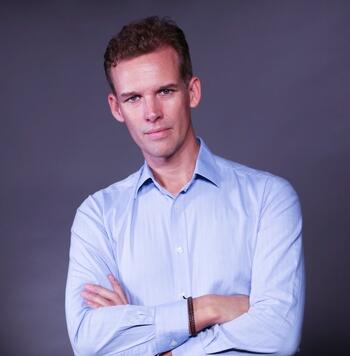
Portrait of Tom Wright, winner of 2020 Shorenstein Journalism Award
Tom Wright is an author, journalist, and speaker who over the past twenty-five years has lived and worked mainly in South and Southeast Asia. He is a Pulitzer finalist, a Loeb winner, and co-author of the New York Times bestseller Billion Dollar Whale, about the 1MDB scandal. A theme running through Tom’s work is the blight of corruption in Asia, abetted by Western companies and institutions. He started his career with Reuters in Indonesia in the 1990s at a time when Gen. Suharto’s military dictatorship was crumbling. During the Asian financial crisis of 1997-1998, Tom joined Dow Jones Newswires in Bangkok, later moving to the Wall Street Journal.
 
He has investigated corruption in Indian companies, the failure of the U.S. civilian aid program for Pakistan, and was one of the first journalists to arrive at the scene of the raid in which Navy SEALs killed Osama bin Laden. In 2013, Tom spearheaded the coverage of the Rana Plaza factory disaster in Bangladesh, which killed over 1,000 people, earning the Wall Street Journal a Sigma Delta Chi award from The Society of Professional Journalists. The series exposed how international garment manufacturers turned a blind eye to safety violations in order to reduce costs.
 
As Asia Economics Editor in Hong Kong, Tom managed a number of correspondents in the region, while continuing to report. In 2015, he began investigations into the 1MDB scandal, an almost unbelievable series of events in which bankers at Goldman Sachs helped a young Malaysian financier steal at least $4 billion from Malaysian state fund 1MDB, one of the largest financial frauds of all time. The three-year investigation showed the degree to which Western institutions, from Wall Street banks, law firms, auditors, and even Hollywood film companies, ignore malfeasance in the pursuit of profits.
 

Image
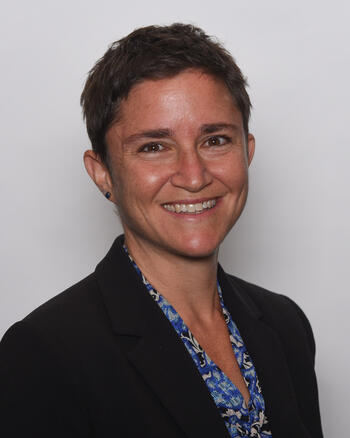
Portrait of Meredith Weiss, Professor and Chair of Political Science in the Rockefeller College of Public Affairs and Policy at the University at Albany, State University of New York
Meredith Weiss is Professor and Chair of Political Science in the Rockefeller College of Public Affairs & Policy at the University at Albany, State University of New York. Her research addresses social mobilization and civil society, the politics of identity and development, parties and elections, institutional reform and (anti)corruption, and subnational governance in Southeast Asia, with particular focus on Malaysia and Singapore. She has conducted fieldwork in those two countries as well as Indonesia, the Philippines, and Timor-Leste, and has held visiting fellowships or professorships in Australia, Japan, Malaysia, the Philippines, Singapore, and the US.

Her books include Protest and Possibilities: Civil Society and Coalitions for Political Change in Malaysia (2006), Student Activism in Malaysia: Crucible, Mirror, Sideshow (2011), The Roots of Resilience: Political Machines and Grassroots Politics in Southeast Asia (2020), and eleven edited or co-edited volumes, most recently, The Political Logics of Anticorruption Efforts in Asia (2019) and Toward a New Malaysia? The 2018 Election and Its Aftermath (2020).  Her articles appear in Asian Studies ReviewAsian SurveyCritical Asian StudiesDemocratizationJournal of Contemporary AsiaJournal of DemocracyTaiwan Journal of Democracy, and elsewhere.

Professor Weiss co-edits the Cambridge University Press Elements book series on Politics and Society in Southeast Asia and is an associate editor for Southeast Asia of the Association for Asian Studies’ (AAS) Journal of Asian Studies. She co-founded the Southeast Asian Politics related group of the American Political Science Association (APSA) and chairs the APSA’s Asia Workshops steering committee, is past chair of the AAS’s Southeast Asia Council, and is on the Southeast Asia Research Group (SEAREG) Council. She received her MA and PhD in Political Science from Yale University and a BA in Political Science, Policy Studies, and English from Rice University.


About the Shorenstein Journalism Award:

The Shorenstein Journalism Award, which carries a cash prize of US $10,000, recognizes outstanding journalists who have spent their careers helping audiences around the world understand the complexities of the Asia-Pacific region, defined broadly to include Northeast, Southeast, South, and Central Asia and Australasia. Award recipients are veteran journalists with a distinguished body of work. News organizations are also eligible for the award.

The award is sponsored and presented by the Walter H. Shorenstein Asia-Pacific Research Center (Shorenstein APARC) at Stanford University. It honors the legacy of the Center’s benefactor, Mr. Walter H. Shorenstein, and his twin passions for promoting excellence in journalism and understanding of Asia. It also symbolizes the Center’s commitment to journalism that persistently and courageously seeks accuracy, deep reporting, and nuanced coverage in an age when attacks are regularly launched on the independent news media, on fact-based truth, and on those who tell it.

An annual tradition, the Shorenstein Journalism Award alternates between recipients whose work has mostly been conveyed through American news media and recipients whose work has mostly been conveyed through news media in one or more parts of the Asia-Pacific region. Included among the latter candidates are journalists who are from the region and work there, and who, in addition to their recognized excellence, may have helped defend and encourage free media in one or more countries in the region.

Learn more at https://aparc.fsi.stanford.edu/events/shorenstein-journalism-award.

Virtual Webinar Via Zoom

Registration Link: https://bit.ly/34pAVrb

Tom Wright <br>Journalist, Author, Speaker</br><br>
Meredith Weiss <br>Professor and Chair of Political Science, University at Albany,SUNY</br>
Seminars
-

This event is being live-streamed on Zoom. Registration is required: https://stanford.zoom.us/webinar/register/WN_PTnI4nwGRLCERCHdP-cogw

On August 9, 2020, Belarus held a presidential election, which Alexander Lukashenko — Belarus' president of 26 years — claimed to have won with 80 percent of the vote. Exit polling, however, demonstrated that the opposition leader, Svetlana Tikhanovskaya, actually garnered wide popular support. Since the election, Belarusians have taken to the streets to demand a new election and/or that Lukashenko step down. But the regime appears intent on remaining in power and has used force against peaceful protesters. Workers in key factories have since gone on strike, and widespread protests continue. 

Join us for a special zoom seminar on Wednesday, August 19 from 11:30 a.m. to 12:45 p.m. PDT with Michael A. McFaul, Director of the Freeman Spogli Institute and former US Ambassador to Russia; Anna Grzymala-Busse, senior fellow at the Freeman Spogli Institute for International Studies and the director of The Europe Center; and Francis Fukuyama, Senior Fellow and Mosbacher Director of the Center on Democracy, Development and the Rule of Law and Director of the Ford Dorsey Master's in International Policy Program at FSI in a session on the events in Belarus that will be moderated by Kathryn Stoner, Senior Fellow and Deputy Director of the Freeman Spogli Institute.

Panel Discussions
Paragraphs

During the severe acute respiratory syndrome (SARS) outbreak in 2003, Taiwan reported 346 confirmed cases and 73 deaths. Of all known infections, 94% were transmitted inside hospitals. Nine major hospitals were fully or partially shut down, and many doctors and nurses quit for fear of becoming infected. The Taipei Municipal Ho-Ping Hospital was most severely affected. Its index patient, a 42-year-old undocumented hospital laundry worker who interacted with staff and patients for 6 days before being hospitalized, became a superspreader, infecting at least 20 other patients and 10 staff members. The entire 450-bed hospital was ordered to shut down, and all 930 staff and 240 patients were quarantined within the hospital. The central government appointed the previous Minister of Health as head of the Anti-SARS Taskforce. Ultimately the hospital was evacuated; the outbreak resulted in 26 deaths. Events surrounding the hospital’s evacuation offer important lessons for hospitals struggling to cope with the COVID-19 pandemic, which has been caused by spread of a similar coronavirus.

 
All Publications button
1
Publication Type
Journal Articles
Publication Date
Journal Publisher
Journal of Hospital Medicine
Authors
C. Jason Wang
Number
2020
News Type
News
Date
Paragraphs

As the COVID-19 pandemic continues to take massive tolls on lives and livelihoods at home and abroad, students have been thrown into turmoil and are facing uncertainties about funding, graduation, research opportunities, and career choices. At Shorenstein APARC, we are committed to supporting Stanford students as best we can. We are therefore announcing today new quarter-long research assistantships for current undergraduate and graduate students working in the area of contemporary Asia. These opportunities are in addition to our recent internship and fellowship offerings.

Guidelines

Shorenstein APARC is seeking to hire motivated and dedicated undergraduate and graduate students as paid research assistants who will work with assigned APARC faculty members on projects focused on contemporary Asia, studying varied issues related to the politics, economies, populations, security, foreign policies, and international relations of the countries of the Asia-Pacific region.

2020-21 research assistant positions will be offered in the fall, winter, spring, and summer quarters. We expect to hire up to 10 research assistants per quarter.

Application Cycles
Students should submit their applications by the following deadlines:

  • Applications for fall 2020 by September 1, 2020;
  • Applications for winter 2020 by December 1, 2020;
  • Applications for spring 2021 by March 1, 2021.
     

The positions are open to current Stanford students only. Undergraduate- and graduate-level students are eligible to apply.

All positions will be up to 15 hours per week for undergraduate students and up to 20 hours per week for graduate students (minimum of 10 hours per week). The hourly pay rate is $17 for undergraduate students, $25 for graduate students.

Hiring is contingent upon verification of employment eligibility documentation.

The fall-quarter employment start date is September 16, 2020.

Successful candidates may request appointment renewal for a consecutive quarter.

Apply Now

  • Complete the application form and submit it along with these 3 required attachments:
  • Arrange for a letter of recommendation from a faculty to be sent directly to APARC. Please note: the faculty members should email their letters directly to Kristen Lee at kllee@stanford.edu.
     

We will consider only applications that include all supporting documents.

Read More

A young boy prays after releasing a floating lantern onto the Motoyasu River in front of the Atomic Bomb Dome in Hiroshima, Japan.
Commentary

Why the US-Japan Partnership Prospered Despite Hiroshima and Nagasaki

There has been little diplomatic conflict between the United States and Japan over the atomic bombings of Hiroshima and Nagasaki during WWII, but that stability could change in the future, writes Japan Program Director Kiyoteru Tsutsui in an op-ed for The Hill.
Why the US-Japan Partnership Prospered Despite Hiroshima and Nagasaki
Portrait of Oriana Mastro with text: "Q&A with Oriana Skylar Mastro"
Q&As

FSI’s Incoming Center Fellow Oriana Skylar Mastro Discusses Chinese Ambitions, Deteriorating U.S.-China Relations

Mastro, whose appointment as a Center Fellow at Shorenstein APARC begins on August 1, considers the worsening relations between the world’s two largest economies, analyzes Chinese maritime ambitions, and talks about her military career and new research projects.
FSI’s Incoming Center Fellow Oriana Skylar Mastro Discusses Chinese Ambitions, Deteriorating U.S.-China Relations
Shiran Shen (left) and Lizhi Liu (right)
News

Former Doctoral Students Win Prestigious Dissertation Awards

Interdisciplinary environmental scholar Shiran Victoria Shen is the recipient of the Harold D. Lasswell Award and political economist Lizhi Liu is the recipient of the Ronald H. Coase Award in recognition of their outstanding doctoral dissertations.
Former Doctoral Students Win Prestigious Dissertation Awards
Hero Image
Encina Courtyard Rod Searcey
All News button
1
Subtitle

To support Stanford students working in the area of contemporary Asia, the Shorenstein Asia-Pacific Center is offering research assistant positions for the fall, winter, and spring quarters of the 2020-21 academic year.

-

Join the Cyber Policy Center on August 26th, at 10 a.m. pacific time, for a look how governments around the world are pushing to ban strong encryption. The talk will feature speakers Sam Woolley, Riana Pfefferkorn and Mathew Baum as they explore the different policy issues being used by governments to justify their agendas. This event is open to the public, but registration is required.

REGISTER


Matthew A. Baum (Ph.D., UC San Diego, 2000) is the Marvin Kalb Professor of Global Communications and Professor of Public Policy at Harvard University's John F. Kennedy School of Government and Department of Government. His research focuses on delineating the effects of domestic politics on international conflict and cooperation in general and American foreign policy in particular, as well as on the role of the mass media and public opinion in contemporary American politics. His research has appeared in over a dozen leading scholarly journals, such as the American Political Science ReviewAmerican Journal of Political Science, and the Journal of Politics. His books include Soft News Goes to War: Public Opinion and American Foreign Policy in the New Media Age (2003, Princeton University Press), War Stories: The Causes and Consequences of Public Views of War (2009, Princeton University Press, co-authored with Tim Groeling), and War and Democratic Constraint: How the Public Influences Foreign Policy (2015, Princeton University Press, co-authored with Phil Potter). He has also contributed op-ed articles to a variety of newspapers, magazines, and blog sites in the United States and abroad. Before coming to Harvard, Baum was an associate professor of political science and communication studies at UCLA. 

Riana Pfefferkorn is the Associate Director of Surveillance and Cybersecurity at the Stanford Center for Internet and Society. Her work focuses on investigating and analyzing the U.S. government's policy and practices for forcing decryption and/or influencing crypto-related design of online platforms and services, devices, and products, both via technical means and through the courts and legislatures. Riana also researches the benefits and detriments of strong encryption on free expression, political engagement, economic development, and other public interests.

Dr. Samuel Woolley is a writer and researcher. He is an assistant professor in the School of Journalism and in the School of Information (by courtesy) at the University of Texas at Austin.  He is the program director of propaganda research at the Center for Media Engagement at UT. Woolley's work focuses on the ways in which emerging technology are leveraged for both democracy and control. He is the author of the book "The Reality Game: How the Next Wave of Technology Will Break the Truth" (PublicAffairs), an exploration of how tools from artificial intelligence to virtual reality are being used in efforts to manipulate public opinion and discusses what society can do to respond. He is the co-editor (with Dr. Philip N. Howard), of the book "Computational Propaganda" (Oxford University Press), a series of country-based case studies on social media and digital information operations. 

Authors
Kiyoteru Tsutsui
News Type
Commentary
Date
Paragraphs

This op-ed by Kiyoteru Tsutsui originally appeared in The Hill.


On Aug. 6, 1945, an American B-29 named the Enola Gay dropped and detonated a five-ton atomic bomb over the Japanese city of Hiroshima. The bomb’s 15-kiloton explosion claimed the lives of about 70,000 people instantly. While there’s some debate about the total number of individuals who ultimately died because of bomb-related injuries and radiation poisoning, the total number of fatalities likely exceeded 100,000 and potentially even 200,000.

Despite the colossal damage that the American military inflicted on Hiroshima, and subsequently on Nagasaki on Aug. 9, 1945, Japan soon would develop a warm, productive relationship with its war-time rival that has lasted to this day. According to a national survey of 1,586 Japanese citizens that we conducted this May, residents of Japan rank America as their best economic and military ally today and also in 20 years, when compared to other large, wealthy countries. Favorable views about America extend outside foreign policy into Japan’s culture, food, and products, which have been deeply ingrained into the fabric of Japanese cultural and social life. 

On the heels of one of the most devastating military defeats in human history, how has this pro-American sentiment been sustained for so long in Japan, and why has the dropping of atomic bombs, a potentially deeply divisive issue, rarely been politicized in the U.S.-Japan relations? (Continue reading the full article in The Hill.)

[Subscribe to our newsletters to get the latest commentary from APARC scholars.]

Read More

Prime Minister Shinzō Abe of Japan and President Donald Trump of the United States walk alongside the White House in Washington D.C.
Commentary

Don't Take Our Allies for Granted, Even Japan

As political tensions in the Asia-Pacific increase, Kiyoteru Tsutsui, senior fellow and Japan Program director, cautions the United States from taking long-standing economic and military allies like Japan for granted.
Don't Take Our Allies for Granted, Even Japan
Portrait of Kiyoteru Tstutsi
News

Kiyoteru Tsutsui Joins FSI as a Senior Fellow

Tsutsui, whose research focuses on social movements, globalization, human rights and political sociology, will lead the Japan Program at the Asia-Pacific Research Center.
Kiyoteru Tsutsui Joins FSI as a Senior Fellow
Hero Image
A young boy prays after releasing a floating lantern onto the Motoyasu River in front of the Atomic Bomb Dome in Hiroshima, Japan.
Junko Kimura, Getty Images
All News button
1
Subtitle

There has been little diplomatic conflict between the United States and Japan over the atomic bombings of Hiroshima and Nagasaki during WWII, but that stability could change in the future, writes Japan Program Director Kiyoteru Tsutsui in an op-ed for The Hill.

-

**Please note all CDDRL events are scheduled using the Pacific Time Zone


About the Event: How does the widespread frustration that often accompanies democratic transitions shape the political cleavages underlying the party systems that emerge from them? Nine years after the 2010–11 uprising, Tunisia’s 2019 elections took place against a backdrop of widespread frustration with the party system that emerged during the ensuing transition. The elections presented opportunities to a diverse set of outsiders, many of whom brandished antiparty system messages, including unapologetic boosters of the former ruling party, a would-be plutocrat jailed on charges of corruption, and a broad set of antiparty independents. Drawing upon campaign materials and a nationally representative postelection survey, this presentation will describe the differences in the antiparty system messages and the ways that nostalgia underlies them. Through this analysis, I will consider a set of theoretical propositions arising from the literature on the dynamics of political cleavages in party systems in new democracies. 


About the Speaker: 

Image
Nathan Grubman
Nate Grubman is a Postdoctoral Fellow at the Center on Democracy, Development, and the Rule of Law at Stanford University. In the fall, he will receive his PhD in political science from Yale University. His dissertation uses the case of postuprising Tunisia to explore the question of why party systems in many new democracies furnish few economic policy choices, as well as the consequences of this absence of choice. More broadly, his research focuses on political nostalgia, ideology, corruption, and authoritarian legacies in new democracies. 

Online, via Zoom: REGISTER

0
CDDRL Postdoctoral Scholar, 2020-21
nate.jpg

I am a teaching fellow in Civic, Liberal, and Global Education (COLLEGE) at Stanford University. I teach courses focused on democracy, citizenship, and the politics of development. My research focuses on party systems, ideology, nostalgia, and corruption during transitions from authoritarian rule, especially in North Africa. My book manuscript focuses on the question of why democratization in Tunisia failed to address the social and economic grievances that precipitated it. My work has appeared in the Journal of Democracy, MERIP Middle East Report Online, and Washington Post Monkey Cage

I received my PhD in political science (with specialties in comparative politics, quantitative methods, and political economy) from Yale University in December 2020. I have a BA in international relations from Tufts University, an MS in applied economics from Johns Hopkins University, and an MA and MPhil in political science from Yale. I have spent more than three years living in Egypt, Morocco, and Tunisia. My CV is available here.

Postdoctoral Fellow at the Center on Democracy, Development, and the Rule of Law at Stanford University.
Seminars
-

**Please note all CDDRL events are scheduled using the Pacific Time Zone

About the Event:

Can intergroup contact build social cohesion after war? I randomly assigned Iraqi Christians displaced by the Islamic State of Iraq and Syria (ISIS) to an all-Christian soccer team or to a team mixed with Muslims. The intervention improved behaviors toward Muslim peers: Christians with Muslim teammates were more likely to vote for a Muslim (not on their team) to receive a sportsmanship award, register for a mixed team next season, and train with Muslims 6 months after the intervention. The intervention did not substantially affect behaviors in other social contexts, such as patronizing a restaurant in Muslim-dominated Mosul or attending a mixed social event, nor did it yield consistent effects on intergroup attitudes. Although contact can build tolerant behaviors toward peers within an intervention, building broader social cohesion outside of it is more challenging.


About the Speaker:

Image
mousa
Salma Mousa is an Egyptian scholar of migration, conflict, and social cohesion.  Prior to joining CDDRL, Salma held fellowships at the U.S. Institute of Peace, Stanford's Immigration Policy Lab, the Freeman Spogli Institute, the Stanford Center for International Conflict and Negotiation, the McCoy Center for Ethics in Society, and the Stanford Center on Philanthropy and Civil Society.  Her research is forthcoming as a cover article in Science, and has been covered by The Economist, the BBC, and Der Spiegel, and featured on the front page of the Times of London and PBS NOVA.  Salma received a PhD in Political Science from Stanford in 2020.


Online, via Zoom: REGISTER


0
CDDRL Postdoctoral Scholar, 2020-21
mousa.jpg

An Egyptian-Canadian raised in Saudi Arabia, the UAE, Qatar, and Canada, Salma Mousa received her PhD in Political Science from Stanford University in 2020. A scholar of comparative politics, her research focuses on migration, conflict, and social cohesion.  Salma's dissertation investigates strategies for building trust and tolerance after war. Leveraging field experiments among Iraqis displaced by ISIS,  American schoolchildren, and British soccer fans, she shows how intergroup contact can change real-world behaviors — even if underlying prejudice remains unchanged.   A secondary research agenda tackles the challenge of integrating refugees in the United States. Combining a meta-analytic review, ethnographic fieldwork, and field experiments with resettlement agencies, this project identifies risk factors and promising policies for new arrivals.  Salma has held fellowships at the U.S. Institute of Peace, Stanford’s Immigration Policy Lab, the Freeman Spogli Institute, the Stanford Center for International Conflict and Negotiation, the McCoy Center for Ethics in Society, and the Stanford Center on Philanthropy and Civil Society. Her work has been supported by the Abdul Latif Jameel Poverty Action Lab (JPAL), the Innovations for Poverty Action Lab (IPA), the King Center on Global Development, the Institute for Research in the Social Sciences (IRiSS), the Program on Governance and Local Development (GLD), and the Abbasi Program in Islamic Studies. Her research has been featured by The Economist, BBC, and Der Spiegel,  on the front page of the Times of London and on PBS NOVA.

CV
CDDRL Postdoctoral Scholar
Seminars
-

**Please note all CDDRL events are scheduled using the Pacific Time Zone

About the Event:

What are the costs of the Chinese regime's fixation on quelling dissent in the name of political order, or “stability”? Using novel datasets and a variety of methodologies, Welfare for Autocrats shows how China has reshaped its major social assistance program, Dibao, around this preoccupation, turning an effort to alleviate poverty into a tool of surveillance and repression. This distortion of Dibao damages perceptions of government competence and legitimacy and can trigger unrest among those denied benefits. Welfare for Autocrats traces how China's approach to enforcing order transformed at the turn of the 21st century and identifies the phenomenon of seepage whereby one policy—in this case, quelling dissent—alters the allocation of resources and goals of unrelated areas of government. These findings challenge the view that concessions and repression are distinct strategies in authoritarian regimes and departs from the assumption that all tools of repression were originally designed as such.


About the Speaker:

Image
JenPan
Jennifer Pan is an Assistant Professor of Communication, and an Assistant Professor, by courtesy, of Political Science and Sociology at Stanford University. Her research resides at the intersection political communication and authoritarian politics, showing how authoritarian governments try to control society, how the public responds, and when and why each is successful. Her work has appeared in peer-reviewed publications such as the American Political Science ReviewAmerican Journal of Political ScienceComparative Political StudiesJournal of Politics, and Science.

Online, via Zoom: REGISTER

Jennifer Pan Assistant Professor of Communication, and an Assistant Professor, by courtesy, of Political Science and Sociology at Stanford University
Seminars
-

Image
Social Media and Democracy book symposium

Please join the Cyber Policy Center for a discussion of Social Media and Democracy: The State of the Field and Prospects for Reform, a new book with chapters by scholars and faculty at the Cyber Policy Center. The book explores the emerging multi-disciplinary field of social media and democracy, by synthesizing what we know, identifying what we do not know and obstacles to future research, and charting a course for the future inquiry. Chapters by leading scholars cover major topics – from disinformation to hate speech to political advertising – and situate recent developments in the context of key policy questions. In addition, the book canvasses existing reform proposals in order to address widely perceived threats that social media poses to democracy. 

Please note that we will also have a YouTube livestream available for potential overflow or for anyone having issues connecting via Zoom: https://youtu.be/KXtMB-3DlHc

REGISTER


AGENDA subject to change, with Q&A integrated throughout

  • 9 a.m.: Introduction with Nathaniel Persily, James B. McClatchy Professor of Law at Stanford Law School and the Faculty Co-Director of the Stanford Cyber Policy Center and Joshua A. Tucker, Professor of Politics, affiliated Professor of Russian and Slavic Studies, and affiliated Professor of Data Science at New York University
  • 9:15 a.m.-10:30 a.m.
    • Misinformation, Disinformation, and Online Propaganda with Andrew M. Guess, Assistant Professor of Politics and Public Affairs at Princeton University.
    • Online Hate Speech with Alexandra A. Siegel, Assistant Professor of Political Science at the University of Colorado Boulder
    • Bots and Computational Propaganda: Automation for Communication and Control with Samuel C. Woolley, Assistant Professor at the School of Journalism at the University of Texas at Austin
    • Online Political Advertising in the United States with Travis N. Ridout, Thomas S. Foley Distinguished Professor of Government and Public Policy in the School of Politics, Philosophy and Public Affairs at Washington State University and Co-Director of the Wesleyan Media Project
  • 10:30 a.m.: 10 min break
  • 10:40 a.m - 11:40 a.m.: 
    • Democratic Creative Destruction? The Effect of a Changing Media Landscape on Democracy with Rasmus Kleis Nielsen, Director of the Reuters Institute for the Study of Journalism and Professor of Political Communication at the University of Oxford
    • Misinformation and Its Correction with Adam J. Berinksy, Mitsui Professor of Political Science at Massachusetts Institute of Technology (MIT) and Director of the MIT Political Experiments Research Lab

    • Comparative Media Regulation in the United States and Europe with Francis Fukuyama, Olivier Nomellini Senior Fellow at the Freeman Spogli Institute for International Studies and the Mosbacher Director of the Center on Democracy, Development, and the Rule of Law at Stanford University and Andrew Grotto, William J. Perry International Security Fellow at the Center for International Security and Cooperation, Research Fellow at the Hoover Institution, and Director of the Program on Geopolitics, Technology, and Governance at the Stanford Cyber Policy Center

  • 11:40 a.m.: 10 min break
  • 11:50 a.m - 12:30 p.m.: 
    • Facts and Where to Find Them: Empirical Research on Internet Platforms and Content Moderation with Daphne Keller, Director of the Program on Platform Regulation at the Stanford Cyber Policy Center
    • Democratic Transparency in the Platform Society, with Robert Gorwa, doctoral student in the Department of Politics and International Relations at the University of Oxford
  • 12:30 p.m.Closing and final Q&A with Nathaniel Persily and Joshua A. Tucker


Adam J. Berinsky

Encina Hall, C148
616 Jane Stanford Way
Stanford, CA 94305

0
Olivier Nomellini Senior Fellow at the Freeman Spogli Institute for International Studies
Director of the Ford Dorsey Master's in International Policy
Research Affiliate at The Europe Center
Professor by Courtesy, Department of Political Science
yff-2021-14290_6500x4500_square.jpg

Francis Fukuyama is the Olivier Nomellini Senior Fellow at Stanford University's Freeman Spogli Institute for International Studies (FSI), and a faculty member of FSI's Center on Democracy, Development and the Rule of Law (CDDRL). He is also Director of Stanford's Ford Dorsey Master's in International Policy, and a professor (by courtesy) of Political Science.

Dr. Fukuyama has written widely on issues in development and international politics. His 1992 book, The End of History and the Last Man, has appeared in over twenty foreign editions. His book In the Realm of the Last Man: A Memoir will be published in fall 2026.

Francis Fukuyama received his B.A. from Cornell University in classics, and his Ph.D. from Harvard in Political Science. He was a member of the Political Science Department of the RAND Corporation, and of the Policy Planning Staff of the US Department of State. From 1996-2000 he was Omer L. and Nancy Hirst Professor of Public Policy at the School of Public Policy at George Mason University, and from 2001-2010 he was Bernard L. Schwartz Professor of International Political Economy at the Paul H. Nitze School of Advanced International Studies, Johns Hopkins University. He served as a member of the President’s Council on Bioethics from 2001-2004. He is editor-in-chief of American Purpose, an online journal.

Dr. Fukuyama holds honorary doctorates from Connecticut College, Doane College, Doshisha University (Japan), Kansai University (Japan), Aarhus University (Denmark), the Pardee Rand Graduate School, and Adam Mickiewicz University (Poland). He is a non-resident fellow at the Carnegie Endowment for International Peace. He is a member of the Board of Trustees of the Rand Corporation, the Board of Trustees of Freedom House, and the Board of the Volcker Alliance. He is a fellow of the National Academy for Public Administration, a member of the American Political Science Association, and of the Council on Foreign Relations. He is married to Laura Holmgren and has three children.

(October 2025)

CV
Date Label
Francis Fukuyama
Robert Gorwa
Andrew Guess

CISAC
Stanford University
Encina Hall, C428

Stanford, CA 94305-6165

(650) 723-9866
0
Andrew Grotto

Andrew J. Grotto is a research scholar at the Center for International Security and Cooperation at Stanford University.

Grotto’s research interests center on the national security and international economic dimensions of America’s global leadership in information technology innovation, and its growing reliance on this innovation for its economic and social life. He is particularly interested in the allocation of responsibility between the government and the private sector for defending against cyber threats, especially as it pertains to critical infrastructure; cyber-enabled information operations as both a threat to, and a tool of statecraft for, liberal democracies; opportunities and constraints facing offensive cyber operations as a tool of statecraft, especially those relating to norms of sovereignty in a digitally connected world; and governance of global trade in information technologies.

Before coming to Stanford, Grotto was the Senior Director for Cybersecurity Policy at the White House in both the Obama and Trump Administrations. His portfolio spanned a range of cyber policy issues, including defense of the financial services, energy, communications, transportation, health care, electoral infrastructure, and other vital critical infrastructure sectors; cybersecurity risk management policies for federal networks; consumer cybersecurity; and cyber incident response policy and incident management. He also coordinated development and execution of technology policy topics with a nexus to cyber policy, such as encryption, surveillance, privacy, and the national security dimensions of artificial intelligence and machine learning. 

At the White House, he played a key role in shaping President Obama’s Cybersecurity National Action Plan and driving its implementation. He was also the principal architect of President Trump’s cybersecurity executive order, “Strengthening the Cybersecurity of Federal Networks and Critical Infrastructure.”

Grotto joined the White House after serving as Senior Advisor for Technology Policy to Commerce Secretary Penny Pritzker, advising Pritzker on all aspects of technology policy, including Internet of Things, net neutrality, privacy, national security reviews of foreign investment in the U.S. technology sector, and international developments affecting the competitiveness of the U.S. technology sector.

Grotto worked on Capitol Hill prior to the Executive Branch, as a member of the professional staff of the Senate Select Committee on Intelligence. He served as then-Chairman Dianne Feinstein’s lead staff overseeing cyber-related activities of the intelligence community and all aspects of NSA’s mission. He led the negotiation and drafting of the information sharing title of the Cybersecurity Act of 2012, which later served as the foundation for the Cybersecurity Information Sharing Act that President Obama signed in 2015. He also served as committee designee first for Senator Sheldon Whitehouse and later for Senator Kent Conrad, advising the senators on oversight of the intelligence community, including of covert action programs, and was a contributing author of the “Committee Study of the Central Intelligence Agency’s Detention and Interrogation Program.”

Before his time on Capitol Hill, Grotto was a Senior National Security Analyst at the Center for American Progress, where his research and writing focused on U.S. policy towards nuclear weapons - how to prevent their spread, and their role in U.S. national security strategy.

Grotto received his JD from the University of California at Berkeley, his MPA from Harvard University, and his BA from the University of Kentucky.

Research Scholar, Center for International Security and Cooperation
Director, Program on Geopolitics, Technology, and Governance
Date Label
Andrew Grotto
0
top_pick_rsd25_070_0254a.jpg

Daphne Keller is the Director of Platform Regulation at the Stanford Program in Law, Science, & Technology. Her academic, policy, and popular press writing focuses on platform regulation and Internet users'; rights in the U.S., EU, and around the world. Her recent work has focused on platform transparency, data collection for artificial intelligence, interoperability models, and “must-carry” obligations. She has testified before legislatures, courts, and regulatory bodies around the world on topics ranging from the practical realities of content moderation to copyright and data protection. She was previously Associate General Counsel for Google, where she had responsibility for the company’s web search products. She is a graduate of Yale Law School, Brown University, and Head Start.

SHORT PIECES


ACADEMIC PUBLICATIONS


POLICY PUBLICATIONS


FILINGS

  • U.S. Supreme Court amicus brief on behalf of Francis Fukuyama, NetChoice v. Moody (2024)
  • U.S. Supreme Court amicus brief with ACLU, Gonzalez v. Google (2023)
  • Comment to European Commission on data access under EU Digital Services Act
  • U.S. Senate testimony on platform transparency


PUBLICATIONS LIST

Director of Platform Regulation, Stanford Program in Law, Science & Technology (LST)
Social Science Research Scholar
Date Label
Daphne Keller
Rasmus Kleis Nielsen
Stanford Law School Neukom Building, Room N230 Stanford, CA 94305
650-725-9875
0
James B. McClatchy Professor of Law at Stanford Law School
Senior Fellow, Freeman Spogli Institute
Professor, by courtesy, Political Science
Professor, by courtesy, Communication
headshot_3.jpg

Nathaniel Persily is the James B. McClatchy Professor of Law at Stanford Law School, with appointments in the departments of Political Science, Communication, and FSI.  Prior to joining Stanford, Professor Persily taught at Columbia and the University of Pennsylvania Law School, and as a visiting professor at Harvard, NYU, Princeton, the University of Amsterdam, and the University of Melbourne. Professor Persily’s scholarship and legal practice focus on American election law or what is sometimes called the “law of democracy,” which addresses issues such as voting rights, political parties, campaign finance, redistricting, and election administration. He has served as a special master or court-appointed expert to craft congressional or legislative districting plans for Georgia, Maryland, Connecticut, New York, North Carolina, and Pennsylvania.  He also served as the Senior Research Director for the Presidential Commission on Election Administration. In addition to dozens of articles (many of which have been cited by the Supreme Court) on the legal regulation of political parties, issues surrounding the census and redistricting process, voting rights, and campaign finance reform, Professor Persily is coauthor of the leading election law casebook, The Law of Democracy (Foundation Press, 5th ed., 2016), with Samuel Issacharoff, Pamela Karlan, and Richard Pildes. His current work, for which he has been honored as a Guggenheim Fellow, Andrew Carnegie Fellow, and a Fellow at the Center for Advanced Study in the Behavioral Sciences, examines the impact of changing technology on political communication, campaigns, and election administration.  He is codirector of the Stanford Program on Democracy and the Internet, and Social Science One, a project to make available to the world’s research community privacy-protected Facebook data to study the impact of social media on democracy.  He is also a member of the American Academy of Arts and Sciences, and a commissioner on the Kofi Annan Commission on Elections and Democracy in the Digital Age.  Along with Professor Charles Stewart III, he recently founded HealthyElections.Org (the Stanford-MIT Healthy Elections Project) which aims to support local election officials in taking the necessary steps during the COVID-19 pandemic to provide safe voting options for the 2020 election. He received a B.A. and M.A. in political science from Yale (1992); a J.D. from Stanford (1998) where he was President of the Stanford Law Review, and a Ph.D. in political science from U.C. Berkeley in 2002.   

CV
Date Label
Nathaniel Persily
Travis Ridout
Alexandra A. Siegel
Joshua A. Tucker
Samuel C. Woolley
Subscribe to International Relations