International Relations

FSI researchers strive to understand how countries relate to one another, and what policies are needed to achieve global stability and prosperity. International relations experts focus on the challenging U.S.-Russian relationship, the alliance between the U.S. and Japan and the limitations of America’s counterinsurgency strategy in Afghanistan.

Foreign aid is also examined by scholars trying to understand whether money earmarked for health improvements reaches those who need it most. And FSI’s Walter H. Shorenstein Asia-Pacific Research Center has published on the need for strong South Korean leadership in dealing with its northern neighbor.

FSI researchers also look at the citizens who drive international relations, studying the effects of migration and how borders shape people’s lives. Meanwhile FSI students are very much involved in this area, working with the United Nations in Ethiopia to rethink refugee communities.

Trade is also a key component of international relations, with FSI approaching the topic from a slew of angles and states. The economy of trade is rife for study, with an APARC event on the implications of more open trade policies in Japan, and FSI researchers making sense of who would benefit from a free trade zone between the European Union and the United States.

0
Matt Masterson

Matt Masterson is a former non-resident policy fellow with the Stanford Internet Observatory. He served as Senior Cybersecurity Advisor at the Department of Homeland Security, where he focused on election security issues. He previously served as a Commissioner at the Election Assistance Commission from December 2014 until March 2018, including serving as the Commission’s Chairman in 2017-2018. Prior to that, he held staff positions with the Ohio Secretary of State’s office, where he oversaw voting-system certification efforts and helped develop an online voter registration system. Matt holds a law degree from the University of Dayton School of Law and BS and BA degrees from Miami University in Oxford, Ohio.

As part of his Stanford Internet Observatory fellowship, Matt compiled and published an oral history of the 2020 election, "The Guardians of Democracy."

Former Non-Resident Fellow, Stanford Internet Observatory
-


We provide a counterpoint to recent political developments, including the storming of the US Capitol, using novel evidence on 95,314 extreme right-wing supporters and Nazi collaborators in France, which experienced intense polarization in the 1930s and 1940s. We show how democratic values can be undermined by exogenous networks of influential individuals, including heroes. Heroes are specially positioned to widen the `Overton Window’ and legitimize views previously considered deeply repugnant. Social networks of individuals sharing such an identity can transmit and reinforce this influence, leading to escalating commitments that entrench political positions and make debiasing more difficult. However, heroes can also use their legitimacy to strengthen democracy. A link to our Vox Column is here, and to the working paper is here

Saumitra Jha


Saumitra Jha is an associate professor of political economy at Stanford’s Graduate School of Business, a senior fellow at the Freeman-Spogli Institute for International Affairs and convenes the Stanford Conflict and Polarization Lab.

Saum’s  research focuses upon understanding the effectiveness of organizations and innovations that societies have developed to address the problems of violence and other political risks, and to seek new lessons for fostering peace and development. His research has been published in leading journals in economics and political science, including Econometrica, the Quarterly Journal of Economics, the American Political Science Review and the Journal of Development Economics, and he serves on a number of editorial boards. His research on ethnic tolerance has been recognized with the Michael Wallerstein Award for best published article in political economy from the American Political Science Association and his co-authored research on heroes was awarded the Oliver Williamson Award for best paper by the Society for Institutional and Organizational Economics in 2020. In 2020, Jha was also honored to receive the Teacher of the Year Award, voted by the students of the Stanford GSB Sloan Fellows Program.

For more information, please visit his website: https://saumitra.people.stanford.edu/


Co-sponsored by the Global Populisms Project.

Online via Zoom: Register

Saumitra Jha speaker Stanford University
Authors
News Type
Commentary
Date
Paragraphs

    For nearly five decades, nuclear arms control has been an exclusive enterprise between Washington and Moscow. The resulting agreements have provided significant constraints on the U.S.-Soviet (later, U.S.-Russian) nuclear relationship while mandating substantial reductions in their arsenals. However, since the 2010 New Strategic Arms Reduction Treaty, which reduced U.S. and Russian strategic nuclear forces to levels not seen since the 1960s, no further progress has been made. Instead, the nuclear arms control regime appears to have broken down, leading some to conclude that the era of negotiated arms limitations has passed.


    The U.S. government has decisions to make: is it prepared to accept a world in which nuclear weapons go unconstrained, or do the reasons that led Washington to pursue limits on nuclear arms for more than 40 years remain valid? If the latter, U.S. officials will face a broad set of issues. Formal agreements can no longer entail just constraining U.S. and Russian strategic nuclear forces; they invariably will have to address related issues, including non-strategic nuclear arms, the nuclear forces of other countries, and perhaps missile defense. These questions will confront the U.S. government with a range of tough choices, such as whether to accept some limits on missile defense in order to secure limits on non-strategic nuclear weapons, and how hard to press for constraints on China’s modest nuclear arsenal. This article explores those issues and choices.

Read the rest at The Brown Journal of World Affairs

Hero Image
Photo of man smiling
All News button
1
Subtitle

For nearly five decades, nuclear arms control has been an exclusive enterprise between Washington and Moscow. The resulting agreements have provided significant constraints on the U.S.-Soviet (later, U.S.-Russian) nuclear relationship while mandating substantial reductions in their arsenals.

Authors
Ryan A. Musto
News Type
Commentary
Date
Paragraphs

The UN General Assembly’s first resolution, passed 75 years ago on January 24, 1946, looked to “deal with the problems raised by the discovery of atomic energy.” Specifically, Resolution 1(I) created the UN Atomic Energy Commission (UNAEC) and charged it with making proposals for “the elimination from national armaments of atomic weapons” and the use of atomic energy “only for peaceful purposes.”1

Read the rest at Arms Control Association

Hero Image
People in a meeting United Nations
All News button
1
Subtitle

In commemoration of its 75th anniversary, CISAC Fellow Ryan A. Musto looks back at the UN’s first-ever resolution and finds that it “was not the lodestar many in the nuclear policy community imagine,” with lessons for the 2017 UN Ban Treaty soon to become international law.

-

* Please note all CISAC events are scheduled using the Pacific Time Zone.


Seminar Recording:  https://youtu.be/rOmLa_XcaJc


About the Event: The Trump Presidency has changed transatlantic security relations permanently and fundamentally.  Former UK Ambassador to NATO Sir Adam Thomson, currently Director of the European Leadership Network, will look at the implications for relations between NATO and the European Union at the start of President Biden’s term.  Although some progress on NATO-EU cooperation has been made in the past few years, it was in the shadow of the challenges that Trump posed to both organizations.  Washington and America’s European allies and partners will need to repair the damage to the transatlantic relationship and take a new approach to working together. 


About the Speaker: Sir Adam Thomson has been the Director of the European Leadership Network since 2016. The ELN is an independent, non-partisan, network of leaders from all across the continent dedicated to a safer Europe.

Adam had a 38 year diplomatic career in the British Diplomatic Service. His final posting was as the UK Ambassador to NATO 2014 - 2016. From 2010 Adam served as British High Commissioner to Pakistan and between 2002 and 2006 he was British Ambassador and Deputy Permanent Representative to the United Nations in New York.  Other postings included Moscow (1981-3), NATO (1983-6) and Washington DC (1991-5). He headed the Foreign Office’s Security Policy Department 1998 – 2002.

Virtual Seminar

Adam Thomson Director The European Leadership Network
Seminars
-

Image
Russia Resurrected: It's Power and Purpose in a New Global Order

REGISTER HERE

An assessment of Russia that suggests that we should look beyond traditional means of power to understand its strength and capacity to disrupt international politics.

Too often, we are told that Russia plays a weak hand well. But, perhaps the nation's cards are better than we know. Russia ranks significantly behind the US and China by traditional measures of power: GDP, population size and health, and military might. Yet 25 years removed from its mid-1990s nadir following the collapse of the USSR, Russia has become a supremely disruptive force in world politics. Kathryn E. Stoner assesses the resurrection of Russia and argues that we should look beyond traditional means of power to assess its strength in global affairs. Taking into account how Russian domestic politics under Vladimir Putin influence its foreign policy, Stoner explains how Russia has battled its way back to international prominence.

From Russia's seizure of the Crimea from Ukraine to its military support for the Assad regime in Syria, the country has reasserted itself as a major global power. Stoner examines these developments and more in tackling the big questions about Russia's turnaround and global future. Stoner marshals data on Russia's political, economic, and social development and uncovers key insights from its domestic politics. Russian people are wealthier than the Chinese, debt is low, and fiscal policy is good despite sanctions and the volatile global economy. Vladimir Putin's autocratic regime faces virtually no organized domestic opposition. Yet, mindful of maintaining control at home, Russia under Putin also uses its varied power capacities to extend its influence abroad. While we often underestimate Russia's global influence, the consequences are evident in the disruption of politics in the US, Syria, and Venezuela, to name a few. Russia Resurrected is an eye-opening reassessment of the country, identifying the actual sources of its power in international politics and why it has been able to redefine the post-Cold War global order.

This event is co-sponsored with the Center for Democracy, Development and the Rule of Law, Center for International Security and Cooperation and the Freeman Spogli Institute for International Studies.

Zoom

FSI
Stanford University
Encina Hall C140
Stanford, CA 94305-6055

(650) 736-1820 (650) 724-2996
0
Satre Family Senior Fellow, Freeman Spogli Institute for International Studies
kathryn_stoner_1_2022_v2.jpg MA, PhD

Kathryn Stoner is the Mosbacher Director of the Center on Democracy, Development, and the Rule of Law (CDDRL), and a Senior Fellow at CDDRL and the Center on International Security and Cooperation at FSI. From 2017 to 2021, she served as FSI's Deputy Director. She is Professor of Political Science (by courtesy) at Stanford and she teaches in the Department of Political Science, and in the Program on International Relations, as well as in the Ford Dorsey Master's in International Policy Program. She is also a Senior Fellow (by courtesy) at the Hoover Institution.

Prior to coming to Stanford in 2004, she was on the faculty at Princeton University for nine years, jointly appointed to the Department of Politics and the Princeton School for International and Public Affairs (formerly the Woodrow Wilson School). At Princeton she received the Ralph O. Glendinning Preceptorship awarded to outstanding junior faculty. She also served as a Visiting Associate Professor of Political Science at Columbia University, and an Assistant Professor of Political Science at McGill University. She has held fellowships at Harvard University as well as the Woodrow Wilson Center in Washington, DC. 

In addition to many articles and book chapters on contemporary Russia, she is the author or co-editor of six books: "Transitions to Democracy: A Comparative Perspective," written and edited with Michael A. McFaul (Johns Hopkins 2013);  "Autocracy and Democracy in the Post-Communist World," co-edited with Valerie Bunce and Michael A. McFaul (Cambridge, 2010);  "Resisting the State: Reform and Retrenchment in Post-Soviet Russia" (Cambridge, 2006); "After the Collapse of Communism: Comparative Lessons of Transitions" (Cambridge, 2004), coedited with Michael McFaul; and "Local Heroes: The Political Economy of Russian Regional" Governance (Princeton, 1997); and "Russia Resurrected: Its Power and Purpose in a New Global Order" (Oxford University Press, 2021).

She received a BA (1988) and MA (1989) in Political Science from the University of Toronto, and a PhD in Government from Harvard University (1995). In 2016 she was awarded an honorary doctorate from Iliad State University, Tbilisi, Republic of Georgia.

Download full-resolution headshot; photo credit: Rod Searcey.

Mosbacher Director, Center on Democracy, Development and the Rule of Law
Professor of Political Science (by courtesy), Stanford University
Senior Fellow (by courtesy), Hoover Institution
CV
Date Label
Author/Speaker <i>Senior Fellow and Deputy Director at the Freeman Spogli Institute for International Studies, Stanford University</i>

Encina Hall
616 Jane Stanford Way
Stanford, CA 94305-6055

0
Senior Fellow, Freeman Spogli Institute for International Studies
Ken Olivier and Angela Nomellini Professor of International Studies, Department of Political Science
Peter and Helen Bing Senior Fellow, Hoover Institution
mcfaul_headshot_2025.jpg PhD

Michael McFaul is the Ken Olivier and Angela Nomellini Professor of International Studies in Political Science, Senior Fellow at the Freeman Spogli Institute for International Studies, and the Peter and Helen Bing Senior Fellow at the Hoover Institution, all at Stanford University. He joined the Stanford faculty in 1995 and served as FSI Director from 2015 to 2025. He is also an international affairs analyst for MSNOW.

McFaul served for five years in the Obama administration, first as Special Assistant to the President and Senior Director for Russian and Eurasian Affairs at the National Security Council at the White House (2009-2012), and then as U.S. Ambassador to the Russian Federation (2012-2014).

McFaul has authored ten books and edited several others, including, most recently, Autocrats vs. Democrats: China, Russia, America, and the New Global Disorder, as well as From Cold War to Hot Peace: An American Ambassador in Putin’s Russia, (a New York Times bestseller) Advancing Democracy Abroad: Why We Should, How We Can; and Russia’s Unfinished Revolution: Political Change from Gorbachev to Putin.

He is a recipient of numerous awards, including an honorary PhD from Montana State University; the Order for Merits to Lithuania from President Gitanas Nausea of Lithuania; Order of Merit of Third Degree from President Volodymyr Zelenskyy of Ukraine, and the Dean’s Award for Distinguished Teaching at Stanford University. In 2015, he was the Distinguished Mingde Faculty Fellow at the Stanford Center at Peking University.

McFaul was born and raised in Montana. He received his B.A. in International Relations and Slavic Languages and his M.A. in Soviet and East European Studies from Stanford University in 1986. As a Rhodes Scholar, he completed his D. Phil. in International Relations at Oxford University in 1991. 

CV
Date Label
Moderator <i>Director at the Freeman Spogli Institute for International Studies, Professor, Political Science Senior Fellow, Hoover Institution, Stanford University</i>
Seminars
-

What rules for the web? That question has been given new urgency on January 6th. The European Union, at the end of 2020, proposed the Digital Services Act (DSA). This new legislation aims at creating clarity about the responsibility of tech platforms and intermediaries. European rules, just as the General Data Protection Regulation (GDPR) did, will likely have ripple effects worldwide. Is there room for transatlantic alignment? How do values translate into enforceable rules? Can fundamental rights and economic growth go hand in hand? And who keep the gatekeepers in check? We will dive into the proposed Digital Services Act with leading European experts.

Join Stanford Cyber Policy Center's Marietje Schaake, International Policy Director and former Member of European Parliament in conversation with the CPC’s Daphne Keller, Director of the Center for Internet and Society, Guillermo Beltrà Navarro, European Union’s Digital Policy Lead, Eliška Pírková, Access Now’s Europe Policy Analyst and Joris van Hoboken, Professor of Law at the Vrije Universiteit Brussels.


0
top_pick_rsd25_070_0254a.jpg

Daphne Keller is the Director of Platform Regulation at the Stanford Program in Law, Science, & Technology. Her academic, policy, and popular press writing focuses on platform regulation and Internet users'; rights in the U.S., EU, and around the world. Her recent work has focused on platform transparency, data collection for artificial intelligence, interoperability models, and “must-carry” obligations. She has testified before legislatures, courts, and regulatory bodies around the world on topics ranging from the practical realities of content moderation to copyright and data protection. She was previously Associate General Counsel for Google, where she had responsibility for the company’s web search products. She is a graduate of Yale Law School, Brown University, and Head Start.

SHORT PIECES


ACADEMIC PUBLICATIONS


POLICY PUBLICATIONS


FILINGS

  • U.S. Supreme Court amicus brief on behalf of Francis Fukuyama, NetChoice v. Moody (2024)
  • U.S. Supreme Court amicus brief with ACLU, Gonzalez v. Google (2023)
  • Comment to European Commission on data access under EU Digital Services Act
  • U.S. Senate testimony on platform transparency


PUBLICATIONS LIST

Director of Platform Regulation, Stanford Program in Law, Science & Technology (LST)
Social Science Research Scholar
Date Label
0
marietje.schaake

Marietje Schaake is a non-resident Fellow at Stanford’s Cyber Policy Center and at the Institute for Human-Centered AI. She is a columnist for the Financial Times and serves on a number of not-for-profit Boards as well as the UN's High Level Advisory Body on AI. Between 2009-2019 she served as a Member of European Parliament where she worked on trade-, foreign- and tech policy. She is the author of The Tech Coup.


Non-Resident Fellow, Cyber Policy Center
Fellow, Institute for Human-Centered Artificial Intelligence
Date Label
Guillermo Beltrà Navarro
Joris van Hoboken
Eliška Pírková
-

* Please note all CISAC events are scheduled using the Pacific Time Zone.


Seminar Recording: https://youtu.be/Ot8lMxDSb34


About the Event: This paper addresses a single question: What explains the lack of civil war recurrence in El Salvador since the 1992 Chapultepec Accords? This lack of recurrence presents a unique puzzle given the fact that the civil war’s underlying causes remain unresolved. A well-established body of scholarship has identified a host of variables critical in explaining civil war recurrence, but much less ink has been spilled to explain non-recurrence. As such, I examine the factors identified in scholarship to be correlated with civil war recurrence to determine what they might tell us about civil war non-recurrence. I argue that the civil war non-recurrence in El Salvador rests not only on the durability of the agreement’s coercive/military and political provisions but also on the rebel group’s organizational design. To test this argument, I process trace along the recurrence variables and find support for my argument.   


About the Speaker: Meg K. Guliford is a Penn Provost Postdoctoral Fellow in residence at Perry World House. Her broad research agenda reflects an interest in political violence, conflict processes, and U.S. foreign policy. Her research has been supported by the U.S. Institute of Peace and the Eisenhower Institute. Guliford’s career in the federal government began as a Presidential Management Fellow for the U.S. Marine Corps Headquarters and has included a civilian deployment to Iraq and work for the Institute for Defense Analyses and the Under Secretary of Defense for Intelligence. Guliford will receive her Ph.D. in International Relations from Tufts University’s Fletcher School of Law and Diplomacy. She received her M.P.P. from the Harvard Kennedy School and a B.A. from the University of Pennsylvania.

Virtual Seminar

Meg K. Guliford Provost Postdoctoral Fellow University of Pennsylvania
Seminars
Authors
Oriana Skylar Mastro
News Type
Commentary
Date
Paragraphs

This op-ed by Aynne Kokas and Oriana Skylar Mastro was originally published in the Australian Financial Review.


The images of bare-chested, flag-waving MAGA loyalists overtaking the US Capitol flooded US social media and news channels in the days following the January 6 siege against the electoral college count. Memed and amplified, the same images circulated widely on Chinese social media and state-owned news sites without even the need for critical commentary.

The literal destruction of the US Capitol at the hands of President Donald Trump's followers required little imagination to characterize abroad as the downfall of American democracy.

There are many reasons for pessimism. According to one of the most authoritative indexes, Polity, the United States is no longer the world’s oldest continuous democracy, dropping in status to a system that is part democracy, part dictatorship.

Beyond the domestic concerns faced in the aftermath of the breach of one of America's most hallowed buildings, the Capitol siege was a win for China. US soft power, one of its comparative advantages in the great power competition, has taken a huge hit.

[Sign up for APARC's newsletters to get the latest updates from our scholars.]

Soft power is “the ability to get what you want through persuasion or attraction in the forms of culture, values, and policies”.⁠ The US has been the primary beneficiary of soft power, with its globally recognized brands, pop culture, fast-food chains, world-renowned universities, and political values.

It is relatively low cost and high impact compared with other forms of power. The United States' relative attractiveness is one of the reasons America prevailed in the Cold War.

The Chinese government is having a propaganda field day. More than ever, the US looks like a country in decline, discouraging to allies and potential partners. Chinese commentators have noted that America's days as the "city on the hill" have come to an end. This is karma, some say, payback for the US supporting opposition groups, as in Hong Kong. As one netizen commented on the popular microblog website Weibo: "So lucky to be born in China."

Beijing has tried to leverage its comparative advantages to build soft power through pathways other than political values.

China has also been trying to increase its soft power through traditional mechanisms such as building its media, education, and tourism sectors. It has enjoyed only moderate success in these areas because of its censorship, pollution, and lack of independent civil society.

But COVID-19 has led to the strengthening of other Chinese public diplomacy efforts, such as its landmark Belt and Road Initiative global trade and investment scheme.

Related initiatives such as the Digital Silk Road, a program to build out global digital infrastructure using Chinese technology, and the Health Silk Road, a plan to export Chinese health expertise through things such as COVID-19 laboratories and vaccine diplomacy, draw on China's comparative advantage in a top-down soft power approach.

Meanwhile, the Trump administration has undermined the historical sources of US soft power. It has shuttered visa lines, investigated international students on campus, and driven the rise of a culture of nationalism. The cancellation of the Fulbright US Student Program and the Peace Corps program in China are prime examples. And the COVID-19 decreased US media production, educational exchange and tourism, which shrank opportunities for promoting its democratic values on the global stage.

A bird’s-eye view of America's relative soft power may seem to offer cause for optimism. Even after four years of Trump's buffoonery and "America First", the US is still far ahead of China, ranking fifth in overall soft power, while China ranks 24th. And isn’t this what matters in competition?

Yes and no. The problem is two-fold. First, the US relies more on its political values as a soft power source than Beijing does. Ironically, this has especially been the case during the Trump administration. National Security Adviser Robert O’Brien has argued that democracies and authoritarian countries such as China “are offering a different approach to the world”. Secretary of State Mike Pompeo has argued to international audiences that democracy is “what we’ve got right”.

Second, Beijing has tried to leverage its comparative advantages to build soft power through pathways other than political values, especially where a top-down government approach is effective. China set up COVID-19 testing labs in Palestine in agreement with Israeli and Palestinian authorities. It extended its hand in Africa by building more than 70 percent of its 4G infrastructure.

Depending on need, useful solutions can be as compelling as political principles.The future of the US as a world leader is at stake. American military base access worldwide depends on perceived political alignment between the US and its allies. In the tech sector, the widespread adoption of US platforms relies on other countries finding that benefits to allowing in foreign platforms outweigh the potential political risks.

Successful multilateral treaty negotiations on issues such as global trade and climate change rely on the perception of a dependable US political system.

Strengthening democracy at home and moving away from "America First" policies will go a long way in reconstructing the trust and relationships central to soft power. But the United States will always be seen as a country in which the election of Donald Trump to the presidency, and now the storming of the Capitol, were possible.

President-elect Joe Biden will soon learn that soft power, once lost, may be difficult to revive.

Read More

President Biden walks past a row of Chinese and American flags.
News

APARC Experts on the Outlook for U.S.-Asia Policy Under the Biden Administration

Ahead of President-elect Biden’s inauguration and on the heels of the attack on the U.S. Capitol by a pro-Trump mob that has left America shaken, an APARC-wide expert panel provides a region-by-region analysis of what’s next for U.S. policy towards Asia and recommendations for the new administration.
APARC Experts on the Outlook for U.S.-Asia Policy Under the Biden Administration
U.S. Navy and Indian Navy ships steam in formation in the Indian Ocean.
News

How to Mitigate the Risks of Chinese Military Expansion in the Indian Ocean Region

China’s expanding military capacity in the Indian Ocean region poses risks for the United States and its partners, writes South Asia Research Scholar Arzan Tarapore in 'The Washington Quarterly,' offering a framework by which the Quad and others can build strategic leverage to curtail China’s capacity to coerce small states or posture for war.
How to Mitigate the Risks of Chinese Military Expansion in the Indian Ocean Region
President-elect Joe Biden and Chinese President Xi Jinping
News

Biden Administration Will Rely On U.S. Allies for Support as Tensions with China Continue to Rise

On the World Class Podcast, international security expert Oriana Skylar Mastro says conflict between China and Taiwan is plausible within the next 15 years, and the U.S. will likely be involved.
Biden Administration Will Rely On U.S. Allies for Support as Tensions with China Continue to Rise
Hero Image
National Guard at the US Capitol
National Guard at the US Capitol ahead of the inauguration on January 15, 2021 in Washington, DC. After last week's Capitol Riot the FBI has warned of additional threats against the US Capitol and in all 50 states.
Liz Lynch/ Getty Images
All News button
1
Subtitle

The US depends far more on its soft power than authoritarian China does. Once it is lost, it is hard to get back.

-

This is a virtual event. Please click here to register and generate a link to the talk. 
The link will be unique to you; please save it and do not share with others.

Since the death of Mao Zedong in 1976, the Communist Party of China (CCP) has been vexed by a simple question: What is it fighting for? As the country began to adopt market reforms in the 1980s and 1990s, CCP theorists were forced into contortions providing ideological justifications for policies that appeared overtly capitalist. Deng Xiaoping’s concept of “Socialism with Chinese characteristics” came to be seen as a theoretical fig leaf rather than a description of an egalitarian economic system, and by the 2000s, a consensus emerged that the CCP had completely abandoned any pretense of pursuing the Marxist vision it purported to hold. With the rise of Xi Jinping, however, the Party talks with renewed vigor about Marxism-Leninism and the goal of achieving actual, existing socialism. Has the CCP re-discovered communism?  In this talk, CSIS Freeman Chair in China Studies Jude Blanchette will discuss the abandoned and existing legacies of Mao Zedong, Marxism-Leninism, and the CCP’s vision of socialism.
 

Image
Portrait of Jude Blanchette
Jude Blanchette holds the Freeman Chair in China Studies at the Center for Strategic and International Studies (CSIS).  Previously, he was engagement director at The Conference Board’s China Center for Economics and Business in Beijing, where he researched China’s political environment with a focus on the workings of the Communist Party of China and its impact on foreign companies and investors.  Prior to working at The Conference Board, Blanchette was the assistant director of the 21st Century China Center at the University of California, San Diego.  Blanchette has written for a range of publications, including Foreign Affairs and Foreign Policy, and his Chinese translations have appeared in the Wall Street Journal and the Financial Times. His book, China’s New Red Guards: The Return of Radicalism and the Rebirth of Mao Zedong, was published by Oxford University Press in 2019.


Image
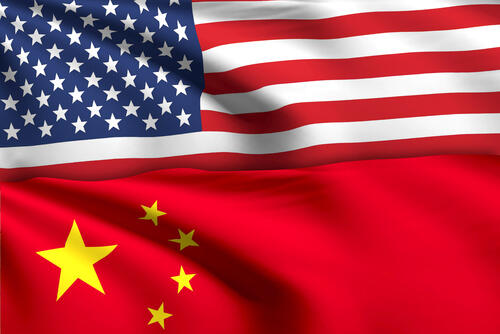
American and Chinese flags
This event is part of the 2021 Winter/Spring Colloquia series, Biden’s America, Xi’s China: What’s Now & What’s Next?, sponsored by APARC's China Program.


Via Zoom Webinar. Register at: https://bit.ly/35KfpgE

Jude Blanchette Freeman Chair in China Studies, Center for Strategic and International Studies
Seminars
Subscribe to International Relations