International Relations

FSI researchers strive to understand how countries relate to one another, and what policies are needed to achieve global stability and prosperity. International relations experts focus on the challenging U.S.-Russian relationship, the alliance between the U.S. and Japan and the limitations of America’s counterinsurgency strategy in Afghanistan.

Foreign aid is also examined by scholars trying to understand whether money earmarked for health improvements reaches those who need it most. And FSI’s Walter H. Shorenstein Asia-Pacific Research Center has published on the need for strong South Korean leadership in dealing with its northern neighbor.

FSI researchers also look at the citizens who drive international relations, studying the effects of migration and how borders shape people’s lives. Meanwhile FSI students are very much involved in this area, working with the United Nations in Ethiopia to rethink refugee communities.

Trade is also a key component of international relations, with FSI approaching the topic from a slew of angles and states. The economy of trade is rife for study, with an APARC event on the implications of more open trade policies in Japan, and FSI researchers making sense of who would benefit from a free trade zone between the European Union and the United States.

Authors
J. Luis Rodriguez
News Type
Commentary
Date
Paragraphs

Abstract

Latin American foreign-policy elites defend the principle of non-intervention to shield their countries’ autonomy. By 2005, however, most Latin American foreign policy elites accepted the easing of limits on the use of force in international law. They supported the Responsibility to Protect (R2P), which regulates the use of force to protect populations from mass atrocities. The paper presents a comparison of the Brazilian, Chilean, and Mexican positions in the R2P debates to understand why they supported this norm. During the debates leading to the emergence of R2P, these elites questioned a central premise of liberal internationalism: the idea that great powers would restrain their use of military force as part of their commitment to a liberal international order (LIO). Using Republican international political theory, I argue that these Latin American foreign-policy elites viewed a restricted humanitarian-intervention norm as a new defence against great powers interfering in developing countries. Instead of trusting that great powers would restrain their actions, these elites advocated for a humanitarian-intervention norm that would prevent uncontrolled humanitarian interventions.

Read the rest at Cambridge Review of International Affairs 

Hero Image
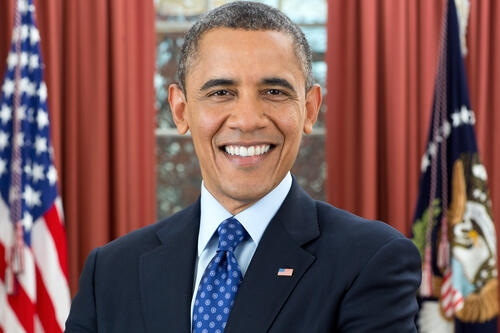
man in suit Rod Searcey
All News button
1
Subtitle

The paper looks at how Brazil, Chile, and Mexico approached debates on humanitarian intervention norms in the early 2000s. These countries attempted to simultaneously address humanitarian crises collectively and prevent abuses of humanitarian norms by great powers.

Authors
News Type
Commentary
Date
Paragraphs

On February 24, Vladimir Putin launched the Russian military on what he termed a “special military operation,” his euphemism for a massive invasion of Ukraine. Two weeks later, the Russian military has fallen well short of expectations, in large part due to the Ukrainian army’s courage and tenacity.

The fighting could continue for weeks or longer, taking more lives on top of the thousands already lost. The Kremlin has expressed maximalist demands as the price for a cease-fire and did not react positively when Kyiv hinted at some readiness to compromise. The key question: Will Putin agree to a real negotiation, or will he continue to press on with his war of choice?

TWO WEEKS OF WAR

Putin justified the invasion with a host of falsehoods: People in Donbas in eastern Ukraine had “been facing humiliation and genocide;” Russia sought to “denazify Ukraine” as neo-Nazis had seized power in Kyiv; and Ukraine had gone “as far as to aspire to acquire nuclear weapons.” The lie that Kyiv sought nuclear weapons was particularly pernicious; in the 1990s, Ukraine gave up the world’s third-largest nuclear arsenal, inherited from the Soviet Union, in large part because Russia committed to respect Ukraine’s territorial integrity and to not use force against it.

The Russian army launched into Ukrainian territory from multiple directions. After two weeks, Russian forces have made progress in the south, occupying Kherson and isolating Mariupol. However, the Russians have had a more difficult time in the north. The Ukrainians repulsed the effort to make a quick grab of Kyiv and fought fiercely in defense of Chernihiv and Kharkiv.

The fighting has taken a large human toll. As of March 9, the United Nations estimated that more than 500 civilians have been killed (likely a vast undercount) and some 2.1 million refugees have fled the country, numbers that grow by the day, particularly as the Russian military conducts indiscriminate artillery and rocket attacks on major cities. The war has also cost Russia. Its Ministry of Defense reported on March 2 that some 500 Russian soldiers had been killed in action. On March 8, the Pentagon estimated, albeit with “low confidence,” that the war had claimed the lives of 2,000 to 4,000 Russians soldiers.

If the Kremlin was surprised by the underperformance of its military and the resolve of the Ukrainians, it was equally surprised by the Western reaction. NATO has deployed thousands of troops to the Baltic states, Poland, Romania, and Bulgaria. The United States, European Union, Britain, Canada, and others, including Switzerland, Singapore, Japan, Australia, and New Zealand, slapped major financial and other sanctions on Russia, including on its central bank. The ruble crashed, and the central bank, anticipating the coming spike in inflation, doubled its key lending rate to 20%. On March 8, President Joe Biden announced that the United States would ban the import of oil, natural gas, and coal from Russia.

Perhaps most shocking to the Kremlin were the changes in Germany, which in one week swept away five decades of policy toward Russia. Berlin suspended the Nord Stream 2 gas pipeline; reversed a policy of not supplying arms to conflict zones in order to send weapons to Ukraine; and dramatically raised defense spending. Germany will hit the NATO-agreed goal of 2% of gross domestic product devoted to defense in its next budget (as opposed to years later) and add a one-time plus-up of 100 billion euros for military needs, more than twice what the country spent on defense in 2021.

THE WAR GOING FORWARD

Russian military operations appear aimed at taking much or all of Ukraine east of a line running from Kyiv in the north to Odesa on the Black Sea. Russian ground forces have not yet entered the western third of the country. Russian units in the north appear to be preparing to attack Kyiv.

The Russian military’s operations plan to date has been described by one knowledgeable analyst as “bizarre” and not exploiting Russian advantages. That said, the Russian military, with some 125 battalion tactical groups in Ukraine, has mass and numbers. If mass and numbers determine who will win this war, Russia will prevail.

That raises the question of Putin’s political goal. If the Russians defeat the Ukrainian military and take Kyiv, Putin presumably wants to put in place a pro-Russian government. Sustaining that government, however, would almost certainly require occupation by Russian military and security forces. They would face a population that is angry, nationalistic and, in many cases, armed — and that would resist. Such an occupation could prove a major drain on an economically weakened Russia.

However, wars are about more than numbers. By all appearances, Ukrainians are highly motivated and determined, and President Volodymyr Zelenskyy has come into his own as a true and inspiring wartime leader. For now, the question of Russia prevailing remains an “if,” not a “when.” If the Ukrainians hold out, one outcome could be stalemate, with continued fighting but neither side able to dislodge the other. If the military costs pile up on the Russian side, the Kremlin retains the option — though Putin would not want to exercise it — of calling it quits and going home, perhaps somehow proclaiming victory.

A NEGOTIATED SETTLEMENT?

The Kremlin press spokesman on March 7 laid out a set of demands for a halt to Russian military actions: Ukraine should cease military operations, agree to neutrality and put that in its constitution, accept that Crimea is part of Russia, and recognize the independence of the so-called Donetsk and Luhansk “people’s republics” in Donbas. Left unspoken, but almost certainly on the list, is a new government in Kyiv and a prior demand for demilitarization.

It is difficult to see the Zelenskyy government accepting these demands, which might buy it only a cease-fire. (If it did, many Ukrainians could well continue the fight.) Still, on March 8, Zelenskyy suggested he might no longer press for NATO membership and was open to “compromise” on Donbas. He said he would not accept ultimatums and called for a real dialogue with Moscow.

The Kremlin gave no positive reaction to Zelenskyy’s comments. Nothing came from a March 10 meeting between Ukrainian Foreign Minister Dmytro Kuleba and Russian Foreign Minister Sergey Lavrov in Turkey. If Moscow showed interest in a true negotiation with Kyiv, the United States and NATO could also renew their offers to negotiate on arms control, risk reduction, and transparency measures that could make a genuine contribution to European security, including Russia’s. The West could also make clear that, if Russian forces left Ukraine, there would be sanctions relief (though the West might retain some sanctions in place to ensure Moscow’s follow-up).

A settlement effort thus could proceed along three tracks: a negotiation between Kyiv and Moscow, a negotiation on measures to enhance Europe’s security, and a discussion of sanctions relief. Yet those tracks can go nowhere absent a change in the Kremlin’s approach.

Will Putin rethink his objectives? On his current course, a military “victory” would appear to entail a years- or decades-long occupation of a hostile, anti-Russian Ukraine, political isolation from most of the world, and economic sanctions that will devastate the Russian economy. One would think there has to be a better option.

Originally for Brookings Order from Chaos Blog

Hero Image
Russia globe
All News button
1
Subtitle

On February 24, Vladimir Putin launched the Russian military on what he termed a “special military operation,” his euphemism for a massive invasion of Ukraine.

-

VIDEO RECORDINGS

Read the full transcript of President Barack Obama's keynote.

PANEL I

10:00-11:30am

THE TRUST PROBLEM: What is the role of the U.S. government in facilitating consensus and reducing polarization at home?

Renée DiResta is the Research Manager at the Stanford Internet Observatory. She investigates the spread of malign narratives across social networks, and assists policymakers in understanding and responding to the problem.
renee diresta

KEYNOTE | PRESIDENT BARACK OBAMA

12:15pm

Image
President Barack Obama

President Barack Obama will deliver a keynote speech about disinformation and challenges to democracy in the digital information realm. The Obama Foundation is co-hosting the event.

PANEL II

2:00-3:30pm

DESIGNING FOR DEMOCRATIC DISCOURSE: What is the role for media and tech companies to ensure quality, access, and participation?

Marietje Schaake is international policy director at Stanford University Cyber Policy Center and international policy fellow at Stanford’s Institute for Human-Centered Artificial Intelligence.
Marietje Schaake

PANEL III

3:45-5:15pm

THE THREAT OF DIGITAL AUTHORITARIANISM: What are the most effective ways to defend open democratic systems in a global digitized world?

Eileen Donahoe is the Executive Director of the Global Digital Policy Incubator (GDPI) at Stanford University, FSI/Cyber Policy Center. She served as U.S. Ambassador to the United Nations Human Rights Council during the Obama administration.
Photo of Eileen Donahoe

The student lottery administered by FSI is now closed. Randomly selected students have been notified via email.

Eileen Donahoe
Marietje Schaake
Renee DiResta
Barack Obama
Symposiums
-

A SCCEI Spotlight Speaker Event


Friday, April 22, 2022          6 - 7 PM Pacific Time 
Saturday, April 23, 2022    9 - 10 AM Beijing Time


U.S.-China Relations in the Age of Uncertainty

The US-China relations are entering into an uncertain era. More than any other bilateral relations in the world, the US-China relations are characterized by complexities. The two countries compete in multiple arenas, but the competition takes place in a broad context of mutual dependency and collaborations. The Russian invasion of Ukraine may further unravel US-China relations. This talk will discuss and examine these issues.

This event features Yasheng Huang, Professor of Global Economics and Management at the MIT Sloan School of Management. He is joined by Scott Rozelle, co-director of Stanford Center on China's Economy and Institutions, and Helen F. Farnsworth Senior Fellow at the Freeman Spogli Institute for International Studies (FSI) and the Stanford Institute for Economic Policy Research (SIEPR), who will moderate a discussion about the major themes of the research. A question and answer session with the audience follows the discussion.


About the Speakers
 

Image
Yasheng Huang headshot.
Yasheng Huang is Epoch Foundation Professor of International Management, Professor of Global Economics and Management, and Faculty Director of Action Learning at Sloan School of Management, Massachusetts Institute of Technology. He is currently involved in research projects in three broad areas: 1) political economy of contemporary China, 2) historical technological and political developments in China, and 3) as a co-PI in “Food Safety in China: A Systematic Risk Management Approach” (supported by Walmart Foundation, 2016-). He has published numerous articles in academic journals and in media and 11 books in English and Chinese. His book, The Rise and the Fall of the EAST: Examination, Autocracy, Stability, and Technology in Chinese History and Today, will be published by Yale University Press in 2023.
 

Image
Headshot of Dr. Scott Rozelle
Scott Rozelle is the Helen F. Farnsworth Senior Fellow and the co-director of Stanford Center on China's Economy and Institutions in the Freeman Spogli Institute for International Studies and Stanford Institute for Economic Policy Research at Stanford University.  For the past 30 years, he has worked on the economics of poverty reduction. Currently, his work on poverty has its full focus on human capital, including issues of rural health, nutrition and education. For the past 20 year, Rozelle has been the chair of the International Advisory Board of the Center for Chinese Agricultural Policy, Chinese Academy of Sciences (CAS). Most recently, Rozelle's research focuses on the economics of poverty and inequality, with an emphasis on rural education, health and nutrition in China. In recognition of this work, Dr. Rozelle has received numerous honors and awards. Among them, he became a Yangtse Scholar (Changjiang Xuezhe) in Renmin University of China in 2008. In 2008 he also was awarded the Friendship Award by Premiere Wen Jiabao, the highest honor that can be bestowed on a foreigner.


Questions? Contact Debbie Aube at debbie.aube@stanford.edu


Watch the recording:

Scott Rozelle

Zoom Webinar

Yasheng Huang
Lectures
Authors
News Type
Q&As
Date
Paragraphs

Ukrainian President Volodymyr Zelensky pleaded with the West to send fighter jets to help against Russian aggression but when Poland offered to transfer Soviet-era MiG-29s, the Pentagon called the transfer untenable.

To learn more about fighter jets and the people who fly and maintain them, we spoke to CISAC senior fellow Dean Winslow, a professor of medicine and former Air Force colonel who has 1150 military flying hours including 431 combat hours and 263 combat sorties and extensive operational experience in fighter, tactical airlift, and combat rescue missions.

Winslow reached out to his former colleague, Ben Lambeth, a long-time specialist in international security affairs and air warfare with the RAND Corporation, who has extensive flight experience in more than 40 different combat aircraft types, including Eastern bloc aircraft. Here are excerpts from our conversation:

Q: What did you make of this conversation between Ukraine, Poland and the United States?

Ben Lambeth: The Ukrainian AF has more than a couple dozen each of single-seat and combat-configured MiG-29s and Su-27s and presumably an equivalent or even larger-sized contingent of pilots trained to fly them. What is their current state of play? 

Also, why are the Ukrainians requesting Polish MiG-29s to begin with? Has much of the existing Ukrainian fighter force been destroyed on the ground by Russian air and cruise-missile strikes?

Q: How are MiG-29s used?

Dean Winslow: The primary mission is as an air superiority fighter, like our F 15 Eagle, so it's an air-to-air fighter.

Dean Winslow flying L-39C, April 2019 Dean Winslow flying L-39C, April 2019

Q: Can pilots who have trained in similar aircraft fly these jets?

Lambeth: At bottom, fighter pilots are fighter pilots the world over, and when given a problem, they will figure it out. If the Ukrainian AF is urgently asking for Polish MiG-29s, they must have a good reason for it and must believe that they will make a difference.

Winslow: It would not be too much of a stretch for a pilot, let's say who's already an experienced and qualified in a MiG 29 Ukrainian aircraft to fly a Polish aircraft.  As little as a couple of days of “differences training” between aircraft types (similar to what commercial airline pilots undergo routinely when transitioning from an earlier to a later model of a Boeing 737), would likely be adequate for an experienced MiG 29 pilot. Having either simulators or even low-tech procedures trainers would make such a transition even easier.

Lambeth: A mission-ready Su-27 pilot could probably get barely combat-qualified for air-to-air in a MiG-29 with a minimum of cross-training needed to master the involved procedures and switchology. Things like just starting the jet, getting the radar up, and mastering all the associated checklist procedures. This couldn't happen in just an hour or two, but possibly in a day or two.

Winslow: What separated the really, really good fighter pilots from people like me, who, you know, I'm just a reasonably competent civilian pilot, is the fact that a good fighter pilot has the amazing ability to not only maneuver the aircraft, but to also operate these incredibly complex weapons systems while flying at near supersonic speeds and experiencing high G forces.

A good fighter pilot has the amazing ability to not only maneuver the aircraft, but to also operate these incredibly complex weapons systems while flying at near supersonic speeds and experiencing high G forces.
Dean Winslow

I'm pretty sure that they have some type of what's called a pulse Doppler fire control radar system in their aircraft. And the software can be more or less sophisticated. I still can't talk about all of the features that we had in our Eagles, but I'm sure now they're different because the last time I was in a F-15 was 26 years ago. But even then, the software that supported the radar was very sophisticated. And learning how to operate the fire control radar and all the different modes that you would need to track and target multiple aircraft simultaneously is challenging. In addition, these aircraft have sophisticated threat warning systems for detection and tracking of surface to air and air to air threats.

Q: How difficult is it to maintain the aircraft?

Winslow: I hate to use the word supply chain. People are now using that term a lot in the civilian world too—but the challenge of maintaining adequate supplies of spare parts that you would need to maintain that aircraft is formidable.

Dean Winslow with Maj Bob Coffman with F-15B after flying NATO mission, RAF Lossiemouth (Scotland), 1990. Dean Winslow with Maj Bob Coffman with F-15B after flying NATO mission, RAF Lossiemouth (Scotland), 1990.

While these are modern aircraft, they still are incredibly maintenance intensive. I think with the F-4 Phantom that we figured that usually it was something like for every hour the aircraft flew, it was as much as 12 to 15 man/woman hours to keep them mission ready.


(Dean Winslow with Maj Bob Coffman with F-15B after flying NATO mission, RAF Lossiemouth (Scotland), 1990.)

Hero Image
A Mig-29 'Fulcrum' executing a high banking Port turn at the Karup airshow.
A MiG-29 'Fulcrum' executing a high banking Port turn at the Karup airshow.
Urilux
All News button
1
Subtitle

Q & A with Dr. Dean Winslow and Ben Lambeth

-

For spring quarter 2022, CISAC will be hosting hybrid events. Many events will offer limited-capacity in-person attendance for Stanford faculty, staff, fellows, visiting scholars, and students in accordance with Stanford’s health and safety guidelines, and be open to the public online via Zoom. All CISAC events are scheduled using the Pacific Time Zone. 


About the Event: Existing literature posits that the main challenge for nuclear security guarantees lies in making the promise of protection sufficiently credible. If allies do not believe their guarantor will actually come to their aid, they may seek alternate means of protection, including by investing in nuclear infrastructure. Credible security guarantees, on the other hand, are thought to reassure allies. In contrast to this approach, Dr. Sukin argues that credible nuclear guarantees can backfire. These guarantees can cause clients to fear that their guarantors will drag them into a precipitous nuclear conflict. Fears of nuclear escalation by their guarantor can drive clients to distance themselves from their alliance or seek stronger independent nuclear capabilities. Using survey experiments and case studies of U.S. alliances in East Asia and Europe, this project explores the risks of credible U.S. nuclear security guarantees.


About the Speaker: Dr. Lauren Sukin is currently a MacArthur Nuclear Security Fellow at Stanford University’s Center for International Security and Cooperation. In September 2022, she will join the Department of International Relations at the London School of Economics and Political Science as an Assistant Professor of International Relations. Dr. Sukin holds a Ph.D. (2021) and M.A. (2020) from the Department of Political Science at Stanford University. She also holds A.B.s from the Departments of Political Science and Literary Arts at Brown University (2016). Dr. Sukin’s research examines issues of international security, focusing on the role of nuclear weapons in international politics.

Virtual to Public. Only those with an active Stanford ID with access to William J Perry Conference Room in Encina Hall may attend in person. 

Lauren Sukin
Seminars
-

For spring quarter 2022, CISAC will be hosting hybrid events. Many events will offer limited-capacity in-person attendance for Stanford faculty, staff, fellows, visiting scholars, and students in accordance with Stanford’s health and safety guidelines, and be open to the public online via Zoom. All CISAC events are scheduled using the Pacific Time Zone. 

About the Event: Artificial intelligence (AI) has enormous potential for both positive and negative impact, especially as we move from current-day systems towards more capable systems in the future. However, as a society we lack an understanding of how the developers of this technology, AI researchers, perceive the benefits and risks of their work, both in today's systems and impacts in the future. In this talk, Gates will present results from over 70 interviews with AI researchers, asking questions ranging from "What do you think are the largest benefits and risks of AI?" to "If you could change your colleagues’ perception of AI, what attitudes/beliefs would you want them to have?"


About the Speaker: Dr. Vael Gates is a postdoctoral researcher at the Institute for Human-Centered Artificial Intelligence (HAI) and the Center for International Security and Cooperation (CISAC) at Stanford University. They study perceptions of AI safety, and are currently interviewing technical AI researchers to understand their views about risks from AI. They previously completed their PhD at UC Berkeley, formalizing and testing computational models of social collaboration.

Virtual

Vael Gates
Seminars
-

For spring quarter 2022, CISAC will be hosting hybrid events. Many events will offer limited-capacity in-person attendance for Stanford faculty, staff, fellows, visiting scholars, and students in accordance with Stanford’s health and safety guidelines, and be open to the public online via Zoom. All CISAC events are scheduled using the Pacific Time Zone. 

SEMINAR RECORDING

Virtual to Public. Only those with an active Stanford ID with access to William J Perry Conference Room in Encina Hall may attend in person. 

Gorakh Pawar
Seminars
image of encina hall at stanford with blue overlay and headshots of Valerie Shen of Third Way and Aman Nair of CIS

Join us on Tuesday, March 15th from 12 PM - 1 PM PT for “Global Perspectives on Crypto-Asset Regulation” featuring Valerie Shen of Third Way, Aman Nair of the Centre for Internet and Society, in conversation with Kelly Born of the Hewlett Foundation. This weekly seminar series is jointly organized by the Cyber Policy Center’s Program on Democracy and the Internet and the Hewlett Foundation’s Cyber Initiative.

About The Seminar: 

Since the launch of Bitcoin, the world’s first cryptocurrency, just over 10 years ago, the cryptocurrency market has grown to over $2.4 trillion, tripling in value in the last year alone. In addition to its many purported benefits, cryptocurrency poses challenges to the environment, privacy, financial stability, and more. Cryptocurrencies have played an increasing role in the rise of cybercrimes, including ransomware and money laundering. In light of this the Biden Administration, European Union, Indian government, and countries around the world are actively exploring regulatory options to address these and other concerns. On March 15 join Aman Nair of India’s Centre for Internet and Society and Valerie Shen of Third Way, in conversation with Kelly Born of the Hewlett Foundation, to discuss the use cases and limitations of crypto-assets, compare relevant regulatory regimes from around the world, discuss the debate over the proper legal and regulatory framework for crypto-enabled crime, and explore how to govern crypto-assets while supporting widespread financial stability.

Speakers:

Image
Valerie Shen
Valerie Shen directs Third Way's National Security Program and Cyber Enforcement Initiative, a nonpartisan dedicated to strengthening governments’ abilities to identify, stop, and bring malicious cyber actors to justice. Third Way’s National Security program focuses on cutting edge policy ideas and to keep our country safe  against foreign adversaries in the ever-changing and developing cyber ecosystem.  Valerie served as the Chief National Security Counsel to the House Oversight and Reform Committee for Chairman Elijah E. Cummings. She oversaw all national security and homeland security matters from cyber operations and federal law enforcement, to counterterrorism, defense, and counterintelligence. Valerie was also an investigative counsel for the Select Committee on Benghazi and the Senate Homeland Security and Governmental Affairs Committee. Valerie was also a post-doctoral fellow at Georgetown University’s Center for National Security focusing on China’s social media and influence operations. Valerie earned her J.D. from Georgetown University Law Center and her bachelor's degree in Politics from Pomona College.

Image
Aman Nair
Aman Nair is a policy researcher at the Centre for Internet and Society, India (CIS). He leads the financial technologies research agenda at CIS and has been focusing on research on crypto-assets and blockchain technology. He also works on issues of data governance and access to justice. 

Authors
Amy Zegart
News Type
Q&As
Date
Paragraphs

American adversaries such as Russia and China are using cyber-enabled deception operations to spread divisive messages. In 2016, Houston’s Islamic Da’wah Center became the site of two dueling protests, both of which began in online communities formed by a Kremlin-backed organization. Discovering and calling out specific disinformation campaigns can be difficult, but by increasing awareness that our adversaries are actively trying to inflame divisions in our society, we can begin to counter these insidious efforts.

Watch with PolicyEd

Hero Image
Woman with brown hair
All News button
1
Subtitle

American adversaries such as Russia and China are using cyber-enabled deception operations to spread divisive messages.

Subscribe to International Relations