
International Relations

FSI researchers strive to understand how countries relate to one another, and what policies are needed to achieve global stability and prosperity. International relations experts focus on the challenging U.S.-Russian relationship, the alliance between the U.S. and Japan and the limitations of America’s counterinsurgency strategy in Afghanistan.

Foreign aid is also examined by scholars trying to understand whether money earmarked for health improvements reaches those who need it most. And FSI’s Walter H. Shorenstein Asia-Pacific Research Center has published on the need for strong South Korean leadership in dealing with its northern neighbor.

FSI researchers also look at the citizens who drive international relations, studying the effects of migration and how borders shape people’s lives. Meanwhile FSI students are very much involved in this area, working with the United Nations in Ethiopia to rethink refugee communities.

Trade is also a key component of international relations, with FSI approaching the topic from a slew of angles and states. The economy of trade is rife for study, with an APARC event on the implications of more open trade policies in Japan, and FSI researchers making sense of who would benefit from a free trade zone between the European Union and the United States.

-
Dr. Chiozza investigates the popular basis of support for suicide terrorism carried out against Americans and other Western targets in Iraq. Using survey data from six countries in the Middle East and South Asia, he investigates how demographic factors, such as gender, education, and age, interact with specific predispositions and attitudes, including fear of the United States, anti-Semitism, and personal anomie, to explain who would consider suicide terrorism against American and Western targets in Iraq justifiable. Methodologically, he employs Classification and Regression Tree (CART) models, a novel methodology that allows for a parsimonious identification of interactive and non-linear effects in the data. Dr. Chiozza shows that fear of the U.S. trumps other motivations in the countries that are geographically closer to Iraq.

Giacomo Chiozza (speaker) is an Assistant Professor of Political Science in the Travers Department of Political Science at the University of California, Berkeley. He holds a PhD from Duke University and a BA from the Università degli Studi di Milano. Before joining the Berkeley Political Science department, he was a post-doctoral fellow in national security at the Olin Institute for Strategic Studies at Harvard University. His research interests include the study of foreign perceptions of the United States in the American World Order and the quantitative analysis of conflict processes. He is the author of "A Crisis like No Other? Anti-Americanism at the Time of the Iraq War" (European Journal of International Relations, forthcoming); "Disaggregating Anti-Americanism: An Analysis of Individual Attitudes Towards the United States" (In Keohane and Katzenstein, Anti-Americanisms in World Politics, 2007), as well as of articles on leaders and conflict processes that were published in the American Journal of Political Science, the Journal of Conflict Resolution, and the Journal of Peace Research.

Aila Matanock (discussant) is a doctoral student in political science at Stanford.  She received an undergraduate degree magna cum laude in Social Studies from Harvard University, while working with the Belfer Center’s Managing the Atom Project and with the Los Alamos National Laboratory.  After graduation, she took a job at the RAND Corporation as a research assistant where she analyzed projects on terrorism and nuclear weapons.  Her current research is on social support for terrorism, the effect of nuclear weapons on conventional conflict, and the reasons for varying levels of shared sovereignty in international agreements.

Reuben W. Hills Conference Room

Giacomo Chiozza Assistant Professor of Political Science Speaker University of California, Berkeley
Seminars
-

Economic security, sustainable development, clean energy and energy security, better regulations, greater innovativeness and the growing share of Polish economy in the international market; these are the main priorities of the Polish government and Ministry of Economy. How is Poland going to handle the 21st Century challenges? How will Poland find its niche in the globalized economy? These are the questions that will be discussed by the Polish Deputy Prime Minister and Minister of Economy, Mr. Waldemar Pawlak.

Born in 1959, Mr. Waldemar Pawlak graduated from the Warsaw University of Technology with an engineering degree in automotive and construction machinery. He has served as a member of the Polish Parliament since 1989; as President of the board of the Warsaw Commodities Exchange from 2001 to 2005; as Prime Minister of Poland in 1992 and again in 1993 to 1995; and as Deputy Prime Minister and Minister of Economy of Poland since November 2007.


This seminar is jointly sponsored by the Forum on Contemporary Europe, the Center for Democracy, Development and the Rule of Law, the U.S.-Polish Trade Council, and the Consulate General of the Republic of Poland in Los Angeles.

Oksenberg Conference Room

Waldemar Pawlak Deputy Prime Minister and Minister of Economy, Poland Speaker
Seminars
-
Steven E. Miller is Director of the International Security Program, Editor-in-Chief of the quarterly journal, International Security and also co-editor of the International Security Program's book series, BCSIA Studies in International Security (which is published by the MIT Press). Previously, he was Senior Research Fellow at the Stockholm International Peace Research Institute (SIPRI) and taught Defense and Arms Control Studies in the Department of Political Science at the Massachusetts Institute of Technology. Miller is a Fellow of the American Academy of Arts and Sciences, where he has been a member of their Committee on International Security Studies (CISS). He is also co-chair of the U.S. Pugwash Committee, a member of the Council of International Pugwash, a member of the Advisory Committee of the Stockholm International Peace Research Institute (SIPRI), a member of the Scientific Committee of the Landau Network Centro Volta (Italy), and formerly a member of the Council of the International Institute for Strategic Studies (IISS).  Miller was born and raised in North Hollywood, California. He did his undergraduate degree at Occidental College in Los Angeles. He received a Master of Arts in Law and Diplomacy (MALD) and a PhD in international relations from the Fletcher School of Law and Diplomacy. He is married to Deborah K. Louis. They have two sons: Jonathan (1989) and Nicholas (1997).

Reuben W. Hills Conference Room

Steven E. Miller Editor-in-Chief Speaker <i>International Security</i>
Seminars
-

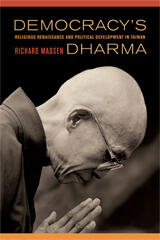
This is a CDDRL's Special Event within our Democracy in Taiwan Program. It is also co-sponsored by the Public Diplomacy/Emerging Publics Project of the Center for the Pacific Rim at University of San Francisco. In this seminar, Dr. Richard Madsen will talk about his new book that explores the religious renaissance that has reformed, revitalized, and renewed the practices of Buddhism and Daoism in Taiwan and how this religious renaissance embraces democracy modernity.  

Image
10896
Richard Madsen is distinguished professor and chair of the sociology department at the University of California, San Diego and a co-author (with Robert Bellah et al.) of The Good Society and Habits of the Heart which received the Los Angeles Times Book Award and was jury nominated for the Pulitzer Prize. He has authored or co-authored five books on China, including Morality and Power in a Chinese Village for which he received the C. Wright Mills Award; China's Catholics: Tragedy and Hope in an Emerging Civil Society; and China and the American Dream.  He also co-edited (with Tracy B. Strong) The Many and the One: Religious and Secular Perspectives on Ethical Pluralism in the Modern World. His latest book is Democracy’s Dharma: Religious Renaissance and Political Development in Taiwan.

Richard Madsen received an MA in Asian studies and a Ph.D. in sociology from Harvard.

"Madsen is a genial and well-informed guide, both to social-political change in Taiwan and to the ins and outs of religious movements. His engaging writing skillfully interweaves profound insights and themes into the descriptive analytical narrative. Democracy's Dharma presents new material based on recent research while offering a fresh spin on thinking about Asian religions."–Thomas Gold, editor of Social Connections in China: Institutions, Culture, and the Changing Nature of Guanxi

Philippines Conference Room

Richard Madsen Distinguished Professor Speaker Department of Sociology at the University of California, San Diego
Conferences
-
Mr. Melia has been Deputy Executive Director since May 2005.  He was previously Director of Research at the Institute for the Study of Diplomacy, and Adjunct Professor in the School of Foreign Service, at Georgetown University in Washington, DC where he continues to teach graduate courses about democracy promotion. For more than a dozen years, Melia held senior posts at the National Democratic Institute for International Affairs (NDI), a leading non-governmental organization engaged in the promotion of democracy worldwide. From 1998 to 2001, he was the Institute's Vice President for Programs. Earlier, he managed the Institute's programs in Central and Eastern Europe (1988 to 1993), in the Middle East (1993 to 1996), and directed programs in more than a dozen African countries. 

Mr. Melia was Associate Director of the Free Trade Union Institute of the AFL-CIO (1986 to 1988). Prior to that he served for six years as Legislative Assistant for foreign and defense policy to U.S. Senator Daniel Patrick Moynihan (D-NY).  Thomas Melia received his M.A. in Africa Studies from the Johns Hopkins University School of Advanced International Studies.

CISAC Conference Room

Thomas O. Melia Deputy Executive Director Speaker Freedom House
Seminars
Paragraphs

With the inauguration in February 2008 of South Korean President Lee Myung-bak, The Korea Society and Stanford University’s Walter H. Shorenstein Asia-Pacific Research Center launched a nonpartisan group of former senior U.S. government officials, scholars, and other American experts on Korea to explore how to revitalize the U.S. alliance with the Republic of Korea (ROK) after nearly a decade of strains and tensions.

New Beginnings group members believe that the United States cannot afford to lose the opportunity presented by President Lee’s desire to build a global partnership. The group has identified several steps that the United States, in cooperation with the ROK, could take to move the alliance into a new era.

All Publications button
1
Publication Type
Policy Briefs
Publication Date
Journal Publisher
Shorenstein APARC
Authors
Robert Carlin
Gi-Wook Shin
Daniel C. Sneider
David Straub
-
Explore how breakthrough socially and environmentally responsible supply chain practices can fundamentally change business models, lead to overall improved business performance, and strengthen organizations

A part of the Responsible Supply Chain Conference at the Graduate School of Business.

Sponsored by The Stanford Center for Social Innovation, and Stanford Global Supply Chain Management Forum

Stanford Graduate School of Business
Stanford University
Stanford, CA 94305

Conferences

Energy and Environment Building - 4205
473 Via Ortega
Stanford University
Stanford, CA 94305

0
Graduate student

Kaitlin Shilling has spent most of her career working in the non-governmental sector, and specifically in post-crisis development, which she is now studying in more depth at Stanford University. Just prior to returning to the ivory tower, Ms. Shilling spent over a year and a half working for DAI, a development consulting company, on two USAID-funded projects in Jalalabad, Afghanistan. She began as the Director of Finance and Operations for the Afghanistan Immediate Needs Project, and then moved to the Alternative Livelihoods Project to run the Gender and Micro-Enterprise Department. Her work on both of these projects involved collaborating with other NGOs, donors, and UN agencies working in the region.

Before moving to Afghanistan, Ms. Shilling worked in the home office of DAI for almost two years in the Crisis Mitigation and Recovery Group at DAI. Ms. Shilling's work included projects in Indonesia, East Timor, and Liberia, in addition to writing proposals to win new business. While at Stanford, Kaitlin will pursue research relating to post-crisis reconstruction with a focus on incorporating natural resource management into program design.

-

Abstract
We will present our observations from a visit to India’s nuclear facilities and several think tanks during March 2008. We will comment on India’s nuclear research programs, nuclear energy development, and the implications for the proposed U.S.-India nuclear deal and for scientific collaboration between our countries. We visited the Indira Gandhi Center for Atomic Research (IGCAR) in Kalpakkam, the Bhabha Atomic Research Center (BARC) in Trombay, had detailed discussions with the top leadership of the India Department of Atomic Energy (DAE), and also visited several institutes in Bangalore and Chennai to discuss nuclear energy and nuclear nonproliferation.

Chaim Braun is a vice president of Altos Management Partners, Inc., and a CISAC science fellow and affiliate. He is a member of the Near-Term Deployment and the Economic Cross-Cut Working Groups of the Department of Energy (DOE) Generation IV Roadmap study. He conducted several nuclear economics-related studies for the DOE Nuclear Energy Office, the Energy Information Administration, the Electric Power Research Institute, the Nuclear Energy Institute, Non-Proliferation Trust International, and others. Braun has worked as a member of Bechtel Power Corporation's Nuclear Management Group, and led studies on power plant performance and economics used to support maintenance services. Braun has worked on a study of safeguarding the Agreed Framework in North Korea, he was the co-leader of a NATO Study of Terrorist Threats to Nuclear Power Plants, led CISAC's Summer Study on Terrorist Threats to Research Reactors, and most recently co-authored an article with former CISAC Co-Director Chris Chyba on nuclear proliferation rings.

Siegfried Hecker is a professor (research) in the Department of Management Science and Engineering, a senior fellow at FSI, and co-director of CISAC. He is also an emeritus director of Los Alamos National Laboratory. Hecker's research interests include plutonium science, nuclear weapon policy and international security, nuclear security (including nonproliferation and counter terrorism), and cooperative nuclear threat reduction. Over the past 15 years, he has fostered cooperation with the Russian nuclear laboratories to secure and safeguard the vast stockpile of ex-Soviet fissile materials. His current interests include the challenges of nuclear India, Pakistan, North Korea, and the nuclear aspirations of Iran. Hecker works closely with the Russian Academy of Sciences and is actively involved with the U.S. National Academies, serving on the National Academy of Engineering Council and its International Programs Committee, as chair of the Committee on Counterterrorism Challenges for Russia and the United States, and as a member of the National Academies Committee on International Security and Arms Control Nonproliferation Panel.

Reuben W. Hills Conference Room

Chaim Braun CISAC Fellow and CISAC Affiliate Speaker

CISAC
Stanford University
Encina Hall, C220
Stanford, CA 94305-6165

(650) 725-6468 (650) 723-0089
0
Senior Fellow, Freeman Spogli Institute for International Studies, Emeritus
Research Professor, Management Science and Engineering, Emeritus
hecker2.jpg PhD

Siegfried S. Hecker is a professor emeritus (research) in the Department of Management Science and Engineering and a senior fellow emeritus at the Freeman Spogli Institute for International Studies (FSI). He was co-director of CISAC from 2007-2012. From 1986 to 1997, Dr. Hecker served as the fifth Director of the Los Alamos National Laboratory. Dr. Hecker is an internationally recognized expert in plutonium science, global threat reduction, and nuclear security.

Dr. Hecker’s current research interests include nuclear nonproliferation and arms control, nuclear weapons policy, nuclear security, the safe and secure expansion of nuclear energy, and plutonium science. At the end of the Cold War, he has fostered cooperation with the Russian nuclear laboratories to secure and safeguard the vast stockpile of ex-Soviet fissile materials. In June 2016, the Los Alamos Historical Society published two volumes edited by Dr. Hecker. The works, titled Doomed to Cooperate, document the history of Russian-U.S. laboratory-to-laboratory cooperation since 1992.

Dr. Hecker’s research projects at CISAC focus on cooperation with young and senior nuclear professionals in Russia and China to reduce the risks of nuclear proliferation and nuclear terrorism worldwide, to avoid a return to a nuclear arms race, and to promote the safe and secure global expansion of nuclear power. He also continues to assess the technical and political challenges of nuclear North Korea and the nuclear aspirations of Iran.

Dr. Hecker joined Los Alamos National Laboratory as graduate research assistant and postdoctoral fellow before returning as technical staff member following a tenure at General Motors Research. He led the laboratory's Materials Science and Technology Division and Center for Materials Science before serving as laboratory director from 1986 through 1997, and senior fellow until July 2005.

Among his professional distinctions, Dr. Hecker is a member of the National Academy of Engineering; foreign member of the Russian Academy of Sciences; fellow of the TMS, or Minerals, Metallurgy and Materials Society; fellow of the American Society for Metals; fellow of the American Physical Society, honorary member of the American Ceramics Society; and fellow of the American Academy of Arts and Sciences.

His achievements have been recognized with the Presidential Enrico Fermi Award, the 2020 Building Bridges Award from the Pacific Century Institute, the 2018 National Engineering Award from the American Association of Engineering Societies, the 2017 American Nuclear Society Eisenhower Medal, the American Physical Society’s Leo Szilard Prize, the American Nuclear Society's Seaborg Medal, the Department of Energy's E.O. Lawrence Award, the Los Alamos National Laboratory Medal, among other awards including the Alumni Association Gold Medal and the Undergraduate Distinguished Alumni Award from Case Western Reserve University, where he earned his bachelor's, master's, and doctoral degrees in metallurgy.

Date Label
Siegfried S. Hecker Co-Director of CISAC and Professor (Research), Department of Management Science and Engineering; FSI Senior Fellow Speaker
Seminars
-
As we find ourselves at the start of the "biological century" with a wealth of potential benefits to public health, agriculture, and global economies, it is almost deliberately naive to think that the extraordinary growth in the life sciences might not be exploited for nefarious purposes. A report published in 2006 by an ad hoc committee of the National Academies of Science recognized that the breadth of biological threats is much broader than commonly appreciated and will continue to expand for the foreseeable future. The nature of these threats, and a set of potential approaches with which to mitigate these threats, will be reviewed.

David Relman, MD, is professor of medicine, and of microbiology and immunology at Stanford University. He is also chief, infectious diseases section, at the VA Palo Alto Health Care System in Palo Alto, California. His research is directed towards the characterization of the human indigenous microbial communities, with emphasis on understanding variation in diversity, succession, the effects of disturbance, and the role of these communities in health and disease.  This work brings together approaches from ecology, population biology, environmental microbiology, genomics and clinical medicine.  In addition, his research explores the classification structure of humans and non-human primates with systemic infectious diseases, based on patterns of genome-wide gene transcript abundance in blood and other tissues. The goals of this work are to recognize classes of pathogen and predict clinical outcome at early time points in the disease process, as well as to gain further insights into virulence. Past scientific achievements include the description of a novel approach for identifying previously-unknown pathogens, the identification of a number of new human microbial pathogens, including the agent of Whipple's disease, and some of the most extensive analyses to date of the human indigenous microbial ecosystem. See http://relman.stanford.edu

Among his other activities, Dr. Relman currently serves as Chair of the Board of Scientific Counselors of the National Institute of Dental and Craniofacial Research (NIH), Chair of the Institute of Medicine's Forum on Microbial Threats (U.S. National Academies of Science), member of the National Science Advisory Board for Biosecurity, and advises several U.S. Government departments and agencies on matters related to pathogen diversity, the future life sciences landscape, and the nature of present and future biological threats.  He co-chaired a three-year study at the National Academy of Sciences that produced a report entitled, "Globalization, Biosecurity, and the Future of the Life Sciences" (2006). He is a member of the American Academy of Microbiology. Dr. Relman received the Squibb Award of the IDSA in 2001, and was the recipient of both the NIH Director's Pioneer Award, and the Distinguished Clinical Scientist Award from the Doris Duke Charitable Foundation, in 2006.

Reuben W. Hills Conference Room

David Relman Professor of Medicine and of Microbiology and Immunology Speaker Stanford University
Seminars
Subscribe to International Relations