International Relations

FSI researchers strive to understand how countries relate to one another, and what policies are needed to achieve global stability and prosperity. International relations experts focus on the challenging U.S.-Russian relationship, the alliance between the U.S. and Japan and the limitations of America’s counterinsurgency strategy in Afghanistan.

Foreign aid is also examined by scholars trying to understand whether money earmarked for health improvements reaches those who need it most. And FSI’s Walter H. Shorenstein Asia-Pacific Research Center has published on the need for strong South Korean leadership in dealing with its northern neighbor.

FSI researchers also look at the citizens who drive international relations, studying the effects of migration and how borders shape people’s lives. Meanwhile FSI students are very much involved in this area, working with the United Nations in Ethiopia to rethink refugee communities.

Trade is also a key component of international relations, with FSI approaching the topic from a slew of angles and states. The economy of trade is rife for study, with an APARC event on the implications of more open trade policies in Japan, and FSI researchers making sense of who would benefit from a free trade zone between the European Union and the United States.

-

Brian Levy currently is Head of the Bank's Governance and Anti-Corruption Secretariat in the World Bank - from where co-ordinates implementation of the Bank Group's GAC strategy. He is the author of Governance Reform: Bridging Monitoring and Action (World Bank, 2007), which builds on his 2006 work on governance monitoring featured in the 2006 Global Monitoring Report, Mutual Accountability: Aid, Trade and Governance . He worked in the World Bank's Africa Vice Presidency from 1991 to 2003 on the challenges of strengthening the institutional underpinnings of African development, for the last four years as sector manager of the Africa Public Sector Reform and Capacity Building Unit. He was a member of the core team which produced the World Bank's 1997 World Development Report, The State in a Changing World.  He has published numerous books and articles on the interactions between public institutions, the private sector and development in Africa, East Asia, and elsewhere, most recently editing (jointly with Sahr Kpundeh) the volume, Building State Capacity in Africa (World Bank Institute, 2004) Prior to joining the Bank he was assistant professor in development economics at Williams College in Williamstown, Massachusetts. He completed his Ph.D in economics at Harvard University in 1983.

CISAC Conference Room

Brian Levy Adviser, Public Sector Governance Speaker The World Bank
Seminars
-

Richard Goldstone served on South Africa's Transvaal Supreme Court from 1980 to 1989 and the Appellate Division of the Supreme Court from 1990 to 1994. During the transition from apartheid to multiracial democracy, Goldstone headed the Goldstone Commission investigations into political violence in South Africa. He was credited with playing an indispensable role in the transition and became a household name in South Africa, attracting widespread international support and interest. Goldstone's work investigating violence led to him being nominated to serve as the first chief prosecutor of the United Nations International Criminal Tribunal for the former Yugoslavia and for Rwanda. On his return to South Africa he took up a seat on the newly-established Constitutional Court of South Africa. In 2009, Goldstone led an independent fact-finding mission created by the UN Human Rights Council to investigate international human rights and humanitarian law violations related to the Gaza War.

James Campbell's research focuses on African American history and the wider history of the black Atlantic. He is particularly interested in the long history of interconnections and exchange between Africa and America, a history that began in the earliest days of the transatlantic slave trade and continues into our own time.  In recent years, his research has moved in the direction of so-called “public history," the ways in which societies tell stories about their pasts, not only in textbooks and academic monographs but also in historic sites, museums, memorials, movies, and political movements.

Peter Berkowitz is the Tad and Dianne Taube Senior Fellow at the Hoover Institution, Stanford. He is cofounder and director of the Israel Program on Constitutional Government, a member of the Policy Advisory Board at the Ethics and Public Policy Center and served as a senior consultant to the President's Council on Bioethics. His scholarship focuses on the interplay of law, ethics, and politics in modern society. His current research is concerned with the material and moral preconditions of liberal democracy in America and abroad.

CISAC Conference Room

Richard Goldstone Former Justice of the Constitutional Court of South Africa Keynote Speaker
James Campbell Professor of History Panelist Stanford University
Peter Berkowitz Tad and Dianne Taube Senior Fellow Speaker Hoover Institution, Stanford University
Seminars
-

Building on the foundation of 2009-10 workshop Legalizing Human Rights in Africa, the 2010-11 interdisciplinary research workshop will extend the examination of human rights discourse and institutions in Africa to broader questions around second and third generation rights. The workshop will canvas human rights insights from a broad sweep of disciplinary expertise, such as history, science, engineering anthropology, sociology, philosophy, law and political science. The goal of the workshop is to broaden human rights scholarship beyond single disciplinary domains.

Because the field of second and third generation human rights is broad, we have narrowed the discussion topics to the most urgent ones that are well suited to interdisciplinary analysis by anticipated workshop participants. Initial sessions will lay the foundation for the generational framework of human rights in Africa and the recent progression beyond civil and political rights. The workshop will proceed to discuss a wide range of the most significant and timely second and third generation human rights challenges in Africa.

Co-sponsored by the Center on African Studies and the Stanford Humanities Center.

Board Room, Humanities Center

Richard Goldstone Former Justice of the Constitutional Court of South Africa Speaker
Helen Stacy Moderator
Workshops
-

Dr. Katzenstein completed his undergraduate and medical degrees as well as a residency in Internal Medicine and Fellowship training in Infectious Diseases at the University of California San Diego. He continued fellowship training in virology and Infectious Diseases with Dr. Colin Jordan at U.C. Davis, moving to the University of Minnesota to a faculty position in Infectious Disease in 1984. He was a visiting lecturer for two years in the Departments of Medical Microbiology and Medicine at the University University of Zimbabwe as the AIDS epidemic was first recognized in Southern Africa. In 1987, he returned to the U.S. to take up a senior research fellowship at the Center for Biologics Evaluation and Research (CBER) at the Food and Drug Administration in the Vaccine Branch, evaluating early candidate HIV Vaccines and diagnostics. Dr. Katzenstein returned to California in 1989 to work with Dr. Thomas Merigan and the AIDS Clinical Trials Group. He continues an active collaboration with his colleagues in Zimbabwe and Southern Africa in prevention, perinatal transmission and vaccine research. At Stanford, Dr. Katzenstein participates in studies of multiple drugs and drug combinations in Clinical Trials in the U.S. and Europe and is the principal investigator for Stanford's Virology Service Laboratory in the center for AIDS Research. At Stanford he teaches an undergraduate course in Global AIDS, attends on the Infectious Disease service and supervises both laboratory and clinical fellows conducting AIDS Research. He remains actively involved in studies of HIV infection in Zimbabwe, spending 2-3 months a year in Southern Africa.

Professor Katzenstein's research interests include treatment and evaluation of HIV infection in the United States and Europe through the AIDS Clinical Trials Group (ACTG). His international HIV pathogenesis work includes studies in Zimbabwe, South Africa. The lab currently is focused on drug resistance, envelope tropism and the pathogenesis of HIV.

Encina West 208

Helen Stacy Moderator
David Katzenstein Professor (Research), Medicine - Infectious Diseases; Member, Bio-X Speaker Stanford University
Workshops
-

The Muslims of South Asia made the transition to modern economic life more slowly than the region’s Hindus. In the first half of the twentieth century, they were relatively less likely to use large-scale and long-living economic organizations, and less likely to serve on corporate boards. Providing evidence, this paper also explores the institutional roots of the difference in communal trajectories. Whereas Hindu inheritance practices favored capital accumulation within families and the preservation of family fortunes across generations, the Islamic inheritance system, which the British helped to enforce, tended to fragment family wealth. The family trusts (waqfs) that Muslims used to preserve assets across generations hindered capital pooling among families, and they were ill-suited to profit-seeking business. Whereas Hindus generally pooled capital within durable joint family enterprises, Muslims tended to use ephemeral Islamic partnerships. Hindu family businesses facilitated the transition to modern corporate life by imparting skills useful in large and durable organizations.

Timur Kuran is Professor of Economics and Political Science, and Gorter Family Professor of Islamic Studies at Duke University. His research focuses on social change, including the evolution of preferences and institutions. He has just completed a book, The Long Divergence (Princeton University Press, forthcoming 2010), on the role that Islam played in the economic rise of the Middle East and, subsequently, in the institutional stagnation that accompanied the region's slip into a state of underdevelopment. Some of the archival work on which this book was based will be published, also in 2010, as a ten-volume bi-lingual set entitled Kadı Sicilleri. Among Kuran's earlier publications are Private Truths,(Harvard University Press, Işığında 17. Yüzyıl İstanbul'unda Ekonomik Yaşam / Economic Life in Seventeenth-Century Istanbul, as Reflected in Court Registers Public Lies: The Social Consequences of Preference Falsification 1995) and Islam and Mammon: The Economic Predicaments of Islamism (Princeton University Press, 2004), each translated into several languages, including Turkish.

Link to paper:  http://papers.ssrn.com/sol3/papers.cfm?abstract_id=1656038

Encina Ground Floor Conference Room

Timur Kuran Professor of Economics and Political Science Speaker Duke University
Seminars
-

Philip Keefer is a Lead Research Economist in the Development Research Group of the World Bank. Since receiving his PhD in Economics from Washington University at St. Louis, he has worked continuously on the interaction of institutions, political economy and economic development. His research has included investigations of the impact of insecure property rights on economic growth; the effect of political credibility on the policy choices of governments; and the sources of political credibility in democracies and autocracies. It has appeared in journals that span economics and political science, ranging from the Quarterly Journal of Economics to the American Review of Political Science, and has been influenced by his work in a wide range of countries, including Bangladesh, Brazil, the Dominican Republic, Indonesia, México, Perú, Pakistan and the Philippines.

CISAC Conference Room

Philip Keefer Lead Research Economist Speaker World Bank
Seminars
-

Abbas Kadhim is an Assistant Professor of National Security Affairs at the Naval Postgraduate School, Monterey, California.  He also holds a Visiting Scholar status at Stanford University since 2005.  Between 2003 and 2005, he taught courses on Islamic theology and ethics at the Graduate Theological Union in Berkeley, California.

His recent publications include: "a Case of Partial Cooperation: the 1920 Revolution and Iraqi Sectarian Identities" (forthcoming); "Forging a Third Way: Sistani's Marja‘iyya between Quietism and Wilāyat al-Faqīh, in Iraq, Democracy and the Future of the Muslim World, edited by Ali Paya and John Esposito, Routledge,  July  2010;  "Widows' Doomsday: Women and War in the Poetry of Hassan al-Nassar," in Women and War in Muslim Countries, ed. Faegheh Shirazi, Austin: The University of Texas Press, June 2010; "Opting for the Lesser Evil: US Foreign Policy Toward Iraq, 1958-2008," in Bob Looney (ed.) Handbook of US Middle East Relations, London: Routledge, 2009; and Shi`i Perceptions of the Iraq Study Group, Strategic Insights, vol. VI, issue 2 (March 2007).

His book translations include Shi‘a Sects: A Translation with an Introduction and Notes, London: Islamic College for Advanced Studies Press (2007); Wahhabism: A Critical Essay, by Hamid Algar (Arabic Translation), Köln, Germany: Dar al-Jamal (2006); and Runaway World: How Globalization is Reshaping our Lives, by Anthony Giddens (Arabic Translation), with Dr. Hassan Nadhem, Beirut: (2003).

His current projects include editing the Routledge Handbook of Governance in the Middle East and North Africa, London: Routledge (forthcoming 2011) and finishing a manuscript on The 1920 Revolution and the Making of the Modern Iraqi State (under review).

Encina Ground Floor Conference Room

Abbas Kadhim Assistant Professor Speaker Naval Postgraduate School, Monterey, California
Seminars
-

Ben Rowswell is a Canadian diplomat with a specialization in statebuilding and stabilization. As Representative of Canada in Kandahar from 2009 to 2010 he directed the Kandahar Provincial Reconstruction Team, leading a team of more than 100 American and Canadian diplomats, aid workers, civilian police and other experts in strengthening the provincial government at the heart of the Afghan conflict. Having served before that as Deputy Head of Mission in Kabul, Rowswell brings a practitioner's knowledge of Afghanistan and of statebuilding in general to the CDDRL.

His previous conflict experience includes two years as Canada's Chargé d'Affaires in Iraq between 2003 and 2005, and with the UN in Somalia in 1993. He has also served at the Canadian embassy in Egypt and the Permanent Mission to the UN, and as a foreign policy advisor to the federal Cabinet in Ottawa. An alumnus of the National Democratic Institute, he founded the Democracy Unit of the Canadian foreign ministry.

Rowswell is a Senior Associate of the Center for Strategic and International Studies and the co-editor of "Iraq: Preventing a New Generation of Conflict" (2007). He studied international relations at Oxford and at Georgetown University's School of Foreign Service.

CISAC Conference Room

Encina Hall
616 Serra Street
Stanford, CA 94305

0
CDDRL Visiting Scholar 2010-11
Rowswell_pic.jpg

Ben Rowswell is a Canadian diplomat with a specialization in statebuilding and stabilization. As Representative of Canada in Kandahar from 2009 to 2010 he directed the Kandahar Provincial Reconstruction Team, leading a team of more than 100 American and Canadian diplomats, aid workers, civilian police and other experts in strengthening the provincial government at the heart of the Afghan conflict. Having served before that as Deputy Head of Mission in Kabul, Rowswell brings a practitioner's knowledge of Afghanistan and of statebuilding in general to the CDDRL.

His previous conflict experience includes two years as Canada's Chargé d'Affaires in Iraq between 2003 and 2005, and with the UN in Somalia in 1993. He has also served at the Canadian embassy in Egypt and the Permanent Mission to the UN, and as a foreign policy advisor to the federal Cabinet in Ottawa. An alumnus of the National Democratic Institute, he founded the Democracy Unit of the Canadian foreign ministry.

Rowswell is a Senior Associate of the Center for Strategic and International Studies and the co-editor of "Iraq: Preventing a New Generation of Conflict" (2007). He studied international relations at Oxford and at Georgetown University's School of Foreign Service.

Ben Rowswell Visiting Scholar 2010-11 Speaker CDDRL
Seminars

not in residence

0
Postdoctoral Fellow
Betts,_Alexander.jpg

Dr. Alexander Betts is the Hedley Bull research fellow in International Relations in the Department of Politics and International Relations at the University of Oxford, where he is also director of the MacArthur Foundation-funded Global Migration Governance project. He received his MPhil (with distinction) and DPhil from the University of Oxford. His research focuses on the international politics of refugee protection and migration. His main academic focus is on understanding the conditions under which international cooperation takes place in the refugee regime and other areas of migration. In particular, the theoretical focus of his work is on the dynamics of international institutions: on a ‘horizontal' level (across issue-areas and policy fields) and on a ‘vertical' level (between the global and the national level). He has worked on a range of policy issues including forced migration and development, protracted refugee situations, and the protection of vulnerable irregular migrants.  His research has a geographical focus on Sub-Saharan Africa, and he has carried out extensive fieldwork across the region, including in South Africa, Botswana, Kenya, Tanzania, Ethiopia, Djibouti, and the DRC. He has taught a range of graduate courses including ‘International Relations Theory', ‘International Relations of the Developing World' and ‘Forced Migration and International Relations'. He is on the Executive Committee of the International Association for the Study of Forced Migration (IASFM). He has previously worked for UNHCR, and been a consultant to UNHCR, IOM, and the Council of Europe.


(Profile last updated in September 2011.)

CV
News Type
News
Date
Paragraphs

Image
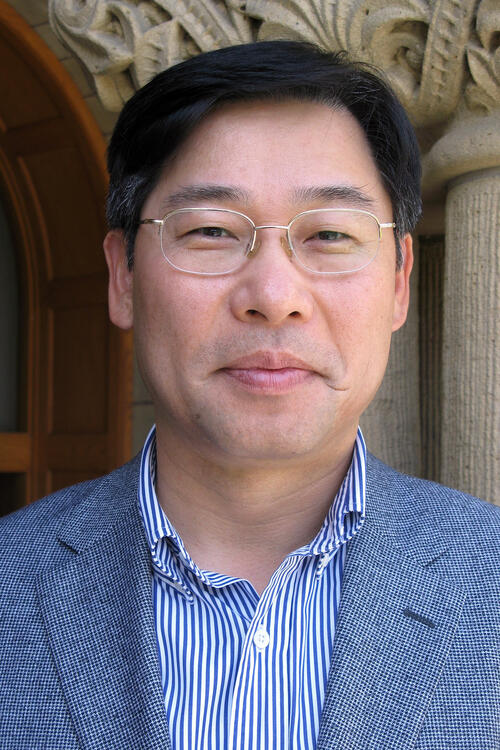
Earn Key Joo, a vice president with the Human Resources Development Center of Samsung Electronics, is a current fellow with the Corporate Affiliates Program of the Walter H. Shorenstein Asia-Pacific Research Center (Shorenstein APARC) at Stanford University. Joo, who has worked with Samsung for 25 years, is based at the company's headquarters in Seoul, South Korea. He has extensive auditing experience, including evaluating the management and operational business units and investigating the illegal activities of employees.

While Samsung's headquarters are based in Seoul, the larger research and development and operational offices are located in Suwon, a city in close proximity to Seoul. Samsung is the current leader of the global electronics market, manufacturing everything from televisions to refrigerators, and semiconductors to mobile phones. It is especially strong in the LED television, color monitor, memory chip, and LCD panel product sectors. Samsung is now trying to advance in the mobile phone market with the introduction of its Galaxy S smartphone, which is available in the United States.

Joo is currently researching ways for Samsung to maintain its market lead. Even as the current leader, he said, market changes could affect the company's success. Joo is studying the case of Sony, a previous electronics market leader, and the factors that led to the loss of its position. His advisor for the project is Gi-Wook Shin, director of Shorenstein APARC and the Korean Studies Program.

In addition to his research project, Joo is taking advantage of his time at Stanford University to improve his English-language skills. He is proficient at reading English, and is using the opportunity to strengthen his speaking ability. He also hopes in the coming months to attend more events, especially in order to learn about the systems of other companies. Joo has already participated in site visits to Cisco, the Federal Reserve Bank of San Francisco, and Palo Alto Utilities.

Joo, who has previously not had the experience of living abroad and has had few opportunities to engage with people from other countries, says, "This is a very good time for me to widen my global perspective." He wants to interact as much as possible with the other fellows-who come from diverse work sectors and different countries in Asia-to exchange information, including best practices, based on each fellow's unique professional experience.

After he returns to Korea, Joo plans to take some of the information he has gained from his research and his exchange of knowledge with other fellows and share it with different development and marketing teams at Samsung, in addition to applying it in his own job. Samsung, Joo believes, is in need of creativity now and he is exploring ways it can develop this in its employees.

In between research and company visits, Joo has been able to spend valuable time with his family, which has traveled with him from Korea. They are planning to visit as many places as possible in the United States and have already visited Yellowstone National Park and are planning a trip to Alaska.

 

Hero Image
JooEarnKey2
All News button
1
Subscribe to International Relations